city attorney

City officials ask how thousands of sensitive LAPD files got leaked

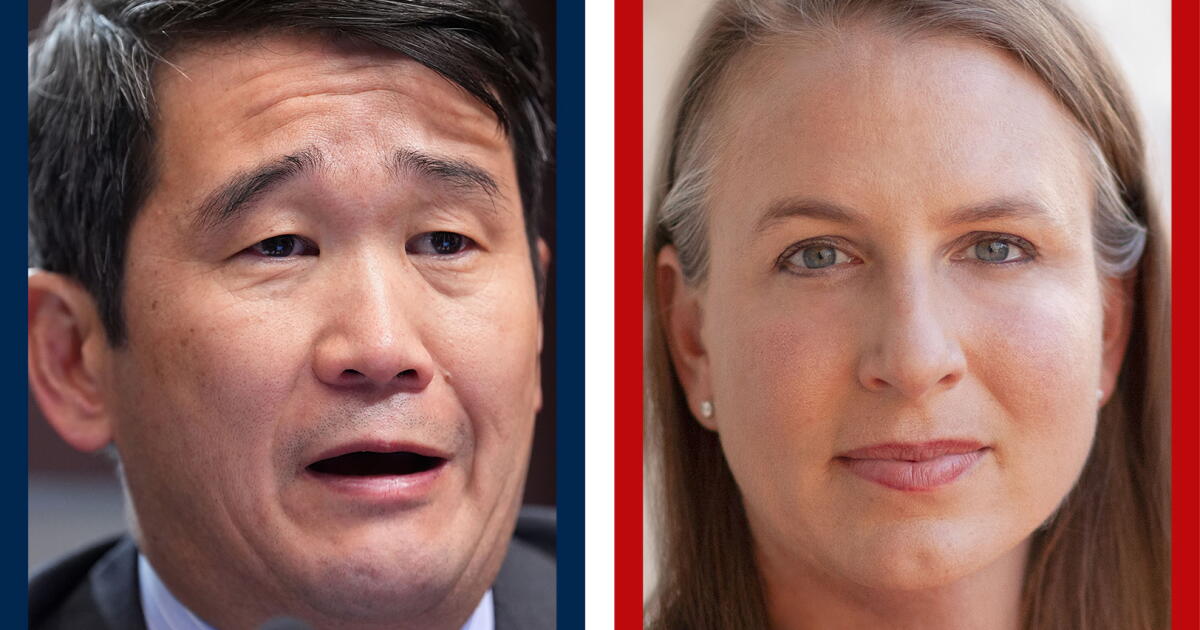
In the aftermath of a recent data breach that saw hackers make off with a vast trove of confidential police records, Los Angeles leaders have sought an explanation from the city’s top lawyer, whose office was targeted.

What they have gotten so far, according to Councilmember Ysabel Jurado, are answers that only leave more questions.

In an interview, Jurado said she had expected City Atty. Hydee Feldstein Soto to appear before the Government Operations committee this week, but instead had received an internal report offering a “high level view” of the breach that left many key details unaddressed.

“When did the city attorney’s office become aware, what actions were taken, and why were city officials not notified promptly?” Jurado said. “Right now, we’re still left to question and trying to assemble the information.”

The Times reported the existence of the hack last week, prompting further scrutiny by public officials — some of whom, like Jurado, said they hadn’t previously been informed. Since then, The Times has reviewed an inventory of 337,000 files that were compromised.

The documents amount to millions of pages, and appear to mostly come from civil lawsuits against the city that have been resolved in court. They range in nature from trip-and-fall cases to police excessive force.

During a brief discussion at the council committee Tuesday morning, Jurado said she had received information that an internal link used by the city attorney’s office to access the files had been clicked at least 5,000 times on the first day of the breach, which is thought to have occurred sometime in March.

The files were not secured by a password, according to sources who spoke previously with The Times and requested anonymity because they were not authorized to discuss the ongoing investigation. A senior police official last week assured the department’s civilian bosses, the Police Commission, that none of the department’s own systems had been compromised.

Jurado said she wanted answers for why and how the city had managed to leave exposed sensitive records, such as medical reports, autopsy photos and witness names.

“It’s just horrific to think that that was out there,” Jurado said.

The city attorney’s office responded to questions from The Times by referring to a public report issued April 17, which said a preliminary investigation indicated that “the incident was contained to that third-party environment, and that no other City applications, systems, or department records were accessed or affected.”

The report noted that the hackers teased “small samples” of the data on its dark web site over a week starting March 20, before publishing the whole thing on March 27. The data were taken down after about eight hours, and then reappeared again twice in early April, the report said.

In a separate letter to the police union, the office said it would begin notifying people whose information was compromised “without unreasonable delay.”

The inventory reviewed by The Times shows personnel files for LAPD officers who were accused of using excessive force against a Black military veteran during a traffic stop in 2021. Another file included the identities of witnesses who saw a man die after LAPD officers knelt on him during an arrest, the records reviewed by The Times showed.

Thousands of hours of uncut body camera footage were released. There were also medical records from thousands of cases in which police and other city employees were accused of misconduct. At least 1,060 of the files are labeled as confidential, the inventory says.

The city attorney’s office has said that it alerted senior LAPD officials and the city’s IT department as soon as they discovered the leak, and has in the weeks since been in regular contact with other city departments to assess the scope of the leak. The FBI has begun investigating the matter.

The situation has already cost Feldstein Soto, who is up for reelection, the endorsement of the powerful union for the LAPD’s rank-and-file officers, which withdrew its support after accusing the city attorney of failing to disclose the full extent of the breach.

The leak follows Feldstein Soto’s efforts to weaken the state’s public records law after the release of many police officer photos and other materials, which she demanded be returned.

Several attorneys whose cases were included in the list of compromised files told The Times they have not yet heard from city officials. Some said they could foresee the records leaked being used as justification to reopen old cases — or initiate new ones.

“I’m curious to know what exactly it is that the city attorney’s office had that they may not have disclosed to us in discovery,” Arnoldo Casillas, an attorney for the family of Eric Rivera, a 20-year-old man whose family sued after he was killed by police in Wilmington in 2017 and whose files are among those included in the leak, according to the inventory reviewed by The Times.

The case was later dismissed, but the family has filed an appeal.

Other attorneys whose lawsuits against the city and LAPD were listed among the hacked materials said they wanted to know exactly what was included in the files.

Robert Glassman, who successfully sued for $18 million last year on behalf of two elderly brothers who were badly injured when a speeding LAPD squad car broadsided their vehicle, said he also hadn’t heard from the city attorney’s office.

“You’d think that they would notify [the affected parties] and tell them that they’re working to get their information back,” he said.

Experts said similar cyberattacks on government offices across the country have shown it can take months or years for the dust to fully settle and the full scope of the damage to emerge.

James E. Lee, president of the Identity Theft Resource Center, a nonprofit organization that provides advice and assistance related to identity theft, said last year alone the center documented an all-time high of 3,322 hacks.

That’s almost certainly an undercount, given the number of cases that go undetected or unreported, Lee said. Of the recorded incidents, roughly 165 targeted government agencies — up from 47 in 2020, he said.

In the past, according to Lee, many attacks of government entities were carried out by state-sponsored actors, but the emergence of AI-powered hacking tools have allowed everyday people to carry off such incursions.

“They want data that they can repurpose: anything that’s going to have financial information, anything that’s going to have driver’s license information is going to be very valuable to them,” he said.

Matthew McNicholas, a lawyer who has represented many officers in their lawsuits against the city, said he has fielded numerous calls from clients worried their personnel and medical records were exposed.

The leaked records, the inventory shows, include a case in which McNicholas sued the city on behalf of a victim who said they’d been sexually molested as a minor by an employee at a city-run recreational center.

McNicholas said he is worried that the leak will expose the private information of police whistleblowers who came forward to reveal discrimination and other misconduct.

The Associated Press contributed to this report.

Source link

L.A. officials raise alarms over crippling Olympic costs

Los Angeles officials are expressing growing fears that taxpayers and the city treasury could be hit with a round of crippling costs to support the 2028 Olympic Games if the city doesn’t ink a rigorous deal to assure a “zero–cost” Games.

Some city officials have long been concerned that taxpayers could be left with massive bills if the Olympics don’t generate the income organizers have promised. Delays in finalizing a deal between City Hall and the Olympics committee have heightened those tensions.

The exact costs to L.A. and other local governments remain unknown, as officials wait to hear from LA28 and federal security agencies about exactly what services they will need. Recent controversy over the ties between Casey Wasserman, the head of the L.A. Olympics, and Jeffrey Epstein have added to the uncertainty over the finances in the minds of some city leaders.

City Atty. Hydee Feldstein Soto and Councilmember Monica Rodriguez both issued letters demanding a contract pledging that LA28 cover any of the city’s future costs that arise as the city plays host to hundreds of thousands of athletes and fans.

The contract, more than six months overdue, is needed “to foreclose any scenario in which funds might go back to the wealthy backers and investors of the LA 28 organization without reimbursing taxpayer funded extraordinary costs,” the city attorney wrote to council members.

Rodriguez agreed in a separate letter this week that the city needs a contract that assures that the Olympics organization will pay any excess costs for policing, transportation, trash pickup and more, so that taxpayers are not burdened or “core city services” slashed.

That should take priority over the private nonprofit LA28 building a “Legacy Fund” to bankroll future youth sports programs, public sports facilities and the like, argued the city officials, who are both up for reelection this year.

“Bankruptcy cannot be the legacy of these Games,” Rodriguez wrote, without elaborating on what she meant, though L.A.’s top budget official recently projected a deficit, unconnected to the Olympics, of “several hundred million” dollars.

LA28 officials responded with a statement they issued previously, saying, in part, that “LA28 remains committed to delivering the safest, most secure, and fiscally responsible Games that will benefit Angelenos for decades to come,” adding, “We remain engaged in good faith negotiations and look forward to our continued partnership with the City of Los Angeles.”

LA28 Chief Executive Reynold Hoover said at a press event Wednesday that ticket sales were one vehicle for the host committee to assure that taxpayers didn’t get stuck with a big bill down the road.

The stakes remain high for both sides. The private LA28 group needs the city’s police, fire, sanitation, streets and transportation services to deliver a successful event. The city wants the sports extravaganza to succeed, not only to burnish its image on an international stage, but also to assure there is enough money to pay for all the extra tasks city workers will perform.

The LA28 leaders project the Games will cost more than $7.1 billion. They say that money will come from a variety of sources: nearly $1 billion from the International Olympic Committee, $437 million from international marketing rights, $2.5 billion from corporate sponsors in the U.S., $2.5 billion from ticket sales and hospitality packages, $344 million from licensing and merchandise and $405 million in other revenue.

LA28 reports being ahead of schedule on the revenue front. But city officials worry that unforeseen events — including an economic downturn or natural disaster — could blow up the income model, with one of many wild cards being the willingness of President Trump and the Republican-controlled Congress to follow through with a funding pledge to the Democratic-controlled city.

L.A. officials have long expressed concern that Trump and Congress might belatedly yank away $1 billion already set aside to reimburse state and local governments for security, planning and other Olympics-related costs.

While the two elected officials and some others, including an attorney representing city employees, raised alarms, an individual with knowledge of the talks between the city and LA28 said that a tentative agreement would likely be before the City Council “within two or three weeks.”

The knowledgeable individual, who asked not to be named because of the sensitive nature of the discussion, said negotiators on both sides must bear in mind how a third party, the federal government under Trump, is integral to the financing model.

The source tracking the negotiations said that both sides needed to make sure the pact creates a path to “maximize federal resources, which were dedicated by Congress for the Games,” adding: “The contract needs to avoid saying that LA28 is going to pay, for example, for all of the LAPD’s extra costs in such a way that the federal government says, ‘Fine, then you don’t get any of the federal money.’ We can’t afford to leave a billion dollars on the table.“

City Administrative Officer Matt Szabo, one of those bargaining for the city, struck a positive note.

“We are invested in a successful Olympics. The organizing committee knows that it needs the city and city services to have a successful Games,” said Szabo. “It’s in both the city’s and the organizing committee’s best interest to have a successful Games. We’re joined at the hip and we’ll succeed together, or not.”

The 2028 Games have been designated a National Special Security Event, placing it in the same category as major party political conventions and Super Bowls. The U.S. Secret Service sets the security plan for those events.

Officials in L.A. have said they are still waiting to learn from the Secret Service how broad the security “blast area” should be around each athletic venue. The federal agency will then dictate how many police and federal agents will flood those zones, which include the Los Angeles Memorial Coliseum, Exposition Park and Crypto.com Arena.

Attorney Connie Rice, who represents L.A. city employees concerned about how the city will pay for the Games, said that her clients still had questions. Rice, whose past litigation helped force LAPD reforms, said that employees helping to plan for security said they had estimated that the Los Angeles Police Department and the Los Angeles County Sheriff’s Department, alone, would need at least $1 billion to pay for extra security during the Games.

The current federal allocation would not get the city and county of Los Angeles $1 billion since many other jurisdictions, including Long Beach, Oklahoma City and the state of California also will be competing for U.S. funding. And the federal government has not yet released its “notice of funding opportunity” — laying out the parameters for claiming a part of the $1 billion.

Rice argued that the city gave up its best leverage when it signed an earlier agreement to host the Games. “Who is going to pay the bill, or who are they even going to send the invoices to, when the Games are over and LA28 is dissolved?” Rice asked. “LA28 has no obligation to raise money once the event is over.”

Los Angeles city officials expect to have requests by October from LA28 for the services the Games organization needs at each venue. The Games organizing group has agreed to pay any costs that exceed the city’s typical expenditures. But there is not a clear understanding of what constitutes a customary level of service. The massive event is expected to require an array of services, including trash pickup, bus service, street closures, park maintenance, drinking water stations and building inspections of temporary Olympic structures.

In her letter late last month to City Council members, the city attorney raised a slew of questions about the fiscal contract with LA28. Feldstein Soto contended the Games had a “heightened risk exposure … given the recent claims against LA 28 Chairman Casey Wasserman.”

Wasserman’s name appeared in the files about convicted sexual predator Epstein, with records showing the then-28-year-old sports marketer had gone on a two-week tour of Africa sponsored by Epstein and later exchanged risque emails with Epstein accomplice Ghislaine Maxwell. Though some activists demanded Wasserman leave his post as LA28 chair and called for a Games boycott, there has been no apparent reduction in sponsorships or ticket sales because of the furor.

As city attorney, Feldstein Soto is advising the city officials negotiating the Olympic contract. Her letter says she will insist that “transparent audit rights and procedures” be put into place to assure the city treasury does not take a hit in supporting the Games.

The letter raises the possibility that natural disasters or other emergencies could cut into LA28’s bottom line. It also asks: “What happens if the federal government does not pay the assume $1 billion [or] … [w]hat happens if the city’s actual expenses exceed $1 billion?” Feldstein Soto’s answer: “In either situation, this office believes that all surplus funds must reimburse the city and its taxpayers first, as promised, before any surplus funds are available for a [LA28] legacy or tribute fund.”

Source link

In Anaheim and Sacramento, a two-front challenge to Angels’ L.A. name

Two decades after owner Arte Moreno decided the Angels should play under the Los Angeles name, elected officials representing Anaheim are pursuing two paths toward getting their hometown back into the team name.

Assemblyman Avelino Valencia, whose district includes Angel Stadium, has introduced state legislation that could require any sale or new lease of the stadium property be conditioned upon the team reverting to the Anaheim Angels name.

Meanwhile, Anaheim Mayor Ashleigh Aitken has asked the city attorney to explore whether the Angels have violated their current lease by dropping the Anaheim name from legal documents.

Valencia’s bill — dubbed the “Home Run for Anaheim Act” — aims to mandate what the city of Anaheim could not negotiate in its ill-fated deal with Moreno in 2019: If a team owner wants to develop the parking lots around the city stadium, the team should carry the city’s name.

“The Angels have been supported by the city and its residents for 60 years,” Valencia said. “I think it’s rightfully owed to the residents that, if the team wants to play in Anaheim and be in partnership with Anaheim when it comes to future developments of that stadium and surrounding property, then the name should also resemble that.”

Angels spokeswoman Marie Garvey said the team had no comment.

The Angels’ current stadium lease extends through 2032, with the team holding options to extend the lease through 2038.

The city and team had agreed on a deal in which the Angels would remain in Anaheim through 2050, with the team buying the 150-acre stadium property for $150 million, renovating or replacing the stadium, and building a ballpark village atop the parking lots.

The state objected, however. The Surplus Land Act requires public property up for sale must first be made available for affordable housing, and the city negotiated only with the Angels. The city agreed to a $96-million settlement.

The Anaheim City Council ultimately killed the deal three years later, after an FBI investigation uncovered — and former mayor Harry Sidhu acknowledged in a plea agreement — that Sidhu provided confidential information to the team “so that the Angels could buy Angel Stadium on terms beneficial to the Angels” and that he “expected a $1,000,000 campaign contribution from the Angels.” The government has not alleged any wrongdoing by the Angels.

Valencia’s bill was developed in consultation with city leaders and publicly endorsed by Aitken and former mayors Tom Daly and Tom Tait.

Under the bill, if the city can obtain an exemption from the Surplus Land Act, the team could not buy or lease Angel Stadium unless “materials refer to that team as the Anaheim Angels.”

The bill would only apply to Anaheim, and its provisions would not take effect “if the city of Anaheim is able to come to an agreement with the Major League Baseball team known as the Los Angeles Angels about their affiliation.”

Valencia said the city could make a case for an exemption because he believed the Surplus Land Act was designed for smaller properties like school sites and municipal office buildings. He said the community should have the primary say in how such land should be used, even if that might mean less housing on the Angel Stadium site.

“We definitely need more housing because it’s so dang expensive to live, but the amount of housing (in Anaheim) that has gone up in the last 10, 15 years, I think, mitigates some of that,” Valencia said.

“I think folks in Anaheim think that Anaheim is doing their fair share of developing housing. I don’t want to muddy the concept by saying Anaheim is saying, ‘We don’t need any more housing. We have been so proactive in that space. But I think people are going to be thrilled that we want to make the Angels have Anaheim back in the name.”

In 2005, after city officials declined Moreno’s request to change the team name from Anaheim Angels to Los Angeles Angels, the owner adopted the “Los Angeles Angels of Anaheim” name. The city sued and lost, with a jury finding that the Angels had not violated a stadium lease requirement that the team name “include the name Anaheim therein.”

When the city sued the Angels and asked for an injunction to stop the name change pending trial, Orange County Superior Court Judge Peter Polos denied the request. He did, however, warn the Angels he would grant the injunction if the team dropped the “of Anaheim” and simply called themselves the Los Angeles Angels.

In 2006, after the city had lost its lawsuit, Polos ruled the team could market itself by whatever name it wished. By 2016, the team called itself the Los Angeles Angels. In state records, the legal entity is Angels Baseball LP.

“When it comes to official designations, and to how they’re registered, I want us to look into how Anaheim is being used by the team in any official filings,” Aitken said, “and what their requirements are to do so.”

When Aitken asked City Attorney Robert Fabela to investigate, Fabela said the matter would be discussed in closed session as a “potential litigation item.”

Source link