citizenship

Justices uphold Trump’s expanded data checks to spot noncitizens who registered to vote

The Supreme Court on Friday upheld President Trump’s expanded use of government data to spot non-citizens who are registered to vote.

The justices granted an emergency appeal from Trump’s lawyers and set aside a judge’s order that blocked use of this data on the grounds it was error-prone, particularly for naturalized citizens.

Justices Ketanji Brown Jackson, Sonia Sotomayor and Elena Kagan dissented.

The decision will aid states that seek to scrub their voter rolls and remove those who are not citizens.

Several Republican-led states including Texas and Florida supported the administration’s appeal.

The use of the new database “allowed Texas to more efficiently, promptly, and economically ensure the accuracy of its voter rolls,” the state said. It was “able to run its entire list of 18 million voters” through the expanded system of checks “in bulk and for no cost.”

It’s not clear the decision will have much impact in California and other Democratic-led states. It is likely to have a limited impact in the month ahead because the law forbids states from purging their voter rolls in the 90 days prior to an election.

The court, in an unsigned opinion, said the law supported use of the data.

“The federal Government has an obligation to respond to requests from state and local election officials seeking to verify the citizenship of voters,” the court said. “The order below prevents the federal government from using the program it believes is best suited to the task.”

The administration said the Department of Homeland Security can respond to more than 1 million requests per day to check if a person appears to be a citizen or not based on Social Security records and other data files.

If not, state or county election officials may require these suspect voters to furnish proof of their citizenship.

However, states and local election boards are not required to conduct these searches. The administration also said its data reports are not final proof of citizenship.

Upholding these data searches “would not require states, candidates, parties, or voters to do anything,” Solicitor Gen. D. John Sauer told the court. “It would simply make available to states additional information. … States that wish to use that information in the course of ensuring that only eligible citizens cast ballots this November should be free to do so.”

In dissent, Jackson said the court’s order creates the “risk that states might cancel the voter registrations of at least some recently naturalized citizens or force such persons to provide proof of citizenship before voting.”

The new system of voter checks is based on the 40-year-old Systematic Alien Verification for Entitlements, or SAVE, that was created by Congress. Then, the goal was to check if applicants were entitled to receive federal benefits.

Last year, Trump issued an executive order directing Homeland Security to expand the reach of SAVE to provide states “access to appropriate systems for verifying the citizenship or immigration status of individuals registering to vote or who are already registered to vote.”

It is a federal crime for non-citizens to register and vote.

Trump has long maintained that non-citizens are voting, but he has had little evidence to support that claim.

Voting rights advocates sued, contending the new “mass verification” system was not authorized by Congress and relied on data that is protected as private under the law.

In June, U.S. District Judge Sparkle Sooknanan, a Biden appointee, agreed and blocked use of the expanded searches. The administration has “trampled on the privacy rights of American citizens in a manner that threatens the sacred right to vote,” she said.

On Sept. 4, the U.S. court of appeals by a 2-1 vote refused to overturn her ruling, prompting the administration’s fast-track appeal.

The voting rights advocates, led by the League of Women Voters, had urged the court to stand aside.

“The government has recklessly created an error-laden master citizenship database that endangers millions of Americans’ privacy and voting rights,” they said.

The data searches are flawed, they argued, because they “only reflect a person’s citizenship status when they applied for a Social Security number. That status does not automatically update if the person later naturalizes.”

Texas admitted that the mass checks yield “some inaccurate information.” It said 2,724 people were cited as “potential non-citizens” among its 18 million registered voters.

In response, county officials had to check further to confirm the citizenship of these voters, the state said.

Last week, the Supreme Court dealt Trump a defeat when it blocked use of his proposed postal rules that could have prevented millions of voters from casting ballots by mail.

In a brief order, the court said Trump’s claims of power over states and their voting were “unlikely to succeed.”

But in the case of the expanded data files, the court said the law appears to favor the administration.


Source link

Efforts to silence ‘NAZA’ filmmakers, Macklemore only amplifies them

There’s no better way to draw attention to an artist’s work than threatening to shut it down.

Take this week, when Macklemore was kicked off singer-songwriter Ed Sheeran’s tour at the behest of concert venue owners who found the rapper’s on-stage pleas to “Free Palestine” offensive.

Now Macklemore, who hasn’t had a major hit since the 2010s, is relevant again. He has the support of artists, fans and thousands more outraged by his dismissal and the humanitarian catastrophe in Gaza. The “Thrift Shop” rapper has emerged a hero, and a chastened Sheeran and Gillette Stadium owner Robert Kraft have pledged to donate millions toward humanitarian causes in “the region.”

The stakes are considerably higher for Israeli documentarians Yuval Abraham and Rachel Szor. Israeli Prime Minister Benjamin Netanyahu threatened this week to revoke their citizenship for what he called the “shocking incitement” that is of their forthcoming documentary, “NAZA.”

NAZA is an acronym used by Israeli military intelligence to describe the number of civilians it estimates will be killed in an airstrike. The documentary captures the actions of Israel’s military after the Oct. 7, 2023, Hamas attack in footage shot at night from Tel Aviv rooftops. “NAZA” also features anonymous interviews with intelligence officers and soldiers from the Israel Defense Forces, and builds on reporting first published by the Israeli-Palestinian publication +972 Magazine, the Hebrew-language outlet Local Call and The Guardian to make the case that mass civilian deaths were built into Israel’s target decisions in Gaza.

When “NAZA” premiered at the Venice Film Festival on Sept. 10, the documentary received a 25-minute standing ovation, setting a festival record. It went on to win the prestigious Special Jury Prize.

Soon after, the directors came under attack from members of Israel’s government, with Culture Minister Miki Zohar accusing them of “treason against the state” and calling for their citizenship to be revoked.

But it’s Netanyahu who’s providing free publicity for “NAZA,” ensuring that everyone outside the film festival circuit will know of the documentary by the time of its official North American premiere at the New York Film Festival on Sept. 26.

In a move that’s likely designed to quash “NAZA’s” release and silence its directors, the prime minster pledged this week to advance two bills that would address the “immense damage” done to Israeli soldiers in the film.

Netanyahu explained in a social media clip that one bill would “revoke the citizenship of anyone who defames soldiers, and the second [bill will] hit them in their pockets and increase the statutory damages for defamation they can ⁠be sued for by 20 times. We ⁠will hit them both in their pockets and in their citizenship, as their place is not with us.”

Macklemore lost his place on a pop music tour for speaking out against Israel’s military. Abraham and Szor may lose their place as Israeli citizens. The pair were already considered controversial for their 2024 documentary, “No Other Land,” a film chronicling five years of displacement and violence in the life of Palestinians in a small village in the occupied West Bank. It won the 2025 documentary feature film Oscar.

They explained in a statement why making “NAZA” was so important.

“We made this film out of a sense of obligation to use our position as Israeli filmmakers and journalists to examine the systems behind the mass killing of Palestinian civilians for which our country is responsible,” the statement said. “While filming members of Israel’s military on rooftops at night in Tel Aviv over the past three years, we found ourselves asking the very questions that were asked by our grandparents’ generation and throughout the 20th century: How does one group of people allow the total dehumanization of another? What do the inner workings of such a system look like? … The film lets us explore something deeper than we could in our investigative journalism alone: not only the words being said, but also those that are not said, the silence. It is up to all of us to break that silence.”

The filmmakers have said that they’re using an “innovative distribution model” to bring the film to audiences “as quickly as possible.” It’s slated to reach Los Angeles on Oct. 9 before rolling out in theaters nationwide.

“NAZA” may not need a robust marketing plan if Netanyahu and the Israeli government continue to condemn the film and threaten its creators with expulsion from their own country. Censorship, and worse, are the surest way to elevate an artist and their work. Just ask Macklemore.

Source link

Netanyahu threatens to revoke Israeli citizenship of NAZA filmmakers | Israel-Palestine conflict News

Israeli prime minister pledges to advance two bills aimed at addressing the ‘immense damage’ done to Israeli soldiers.

Israeli Prime Minister Benjamin Netanyahu has pledged to pass a law that would revoke the citizenship of anyone who defames ⁠Israel’s soldiers, including the directors of NAZA, a documentary about Israeli soldiers’ killings of civilians in Gaza.

Directed by Israeli journalists Yuval Abraham and Rachel Szor, NAZA documents allegations that mass civilian deaths were built into Israel’s target decisions in its genocidal war against Palestinians in Gaza – something Netanyahu and the army reject.

Recommended Stories

list of 4 itemsend of list

The film won the Special Jury Prize at the Venice Film Festival last week. During his acceptance speech, Abraham said “our country is doing these crimes” and highlighted that Israel is systematically and deliberately targeting Palestinians in Gaza.

“NAZA” takes its title from an Israeli ⁠military term for expected “collateral casualties” and is built around anonymous interviews with intelligence officers and soldiers.

It has been harshly criticised in Israel, with the military examining potential legal action against those involved in it.

But it has also played into the charged domestic political atmosphere before Israel’s October 27 election, as public opinion polls suggest Netanyahu’s ‌right-wing coalition could fall short of a majority in parliament.

On Tuesday, Netanyahu accused several of his election rivals of failing to take a tough stand against the documentary, claiming this made them unfit for office.

On Wednesday, he pledged to advance two bills that he said would address the “immense damage” done to Israeli soldiers in the film.

“The first [order]: To revoke the citizenship of anyone who defames [Israeli] soldiers, and the second: To hit them in their pockets and increase the statutory damages for defamation they can ⁠be sued for by 20 times,” Netanyahu said in a social media video. “We ⁠will hit them both in their pockets and in their citizenship, as their place is not with us.”

Netanyahu cited three examples in proposing the bills: “The recent film NAZA which portrayed [Israeli] officers and soldiers as war criminals”, 2025 remarks by left-wing ex-general-⁠turned-politician Yair Golan that “a sane country does not kill children as a hobby”, and a military legal officer’s 2024 leak of a video showing ⁠soldiers abusing a Gaza detainee.

In 2022, Israel’s Supreme Court passed a law that permits stripping citizenship from Israelis who carry out actions that constitute a breach of trust against the state. Any new legislation would likely face similar court challenges.

More than 73,000 Palestinians, most of them civilians, have been killed in Israel’s genocidal war on Gaza since October 2023, according to health authorities.

Source link

Why Spain’s new Sahrawi citizenship law matters to Morocco | News

Spain’s Congress has approved a bill that would open a special route to Spanish citizenship for Sahrawis born in Western Sahara while the disputed territory was under Spanish occupation.

The bill passed by 168 votes to 31, with 145 abstentions. It must still go through the Senate before it can become law.

So what exactly would the measure do, and why is Morocco watching it closely?

What does the bill do?

The proposed law would allow people born in Western Sahara before September 29, 1977, to apply for Spanish nationality through a special procedure without having to meet the normal residency requirements. First-degree descendants would also be covered.

It would also shorten the duration of the residence requirement for eligible Sahrawis legally living in Spain. Instead of the usual 10 years, they would be able to apply after two years.

Supporters describe the measure as a way of addressing what they see as a historical injustice.

Spain was the colonial power in Western Sahara until it ended its administration of the territory in 1976. The territory has remained disputed ever since, with Morocco considering it part of its sovereignty, while the separatist Polisario Front seeks independence.

Why does Morocco care?

The law would not change the territorial status of Western Sahara. It would not recognise an independent Sahrawi state, nor would Spanish citizenship give its holders sovereignty over the territory.

The concern in Rabat is instead about the relationship the law could create between Spain and people with direct links to Western Sahara.

Reuters has reported that between 70,000 and 110,000 people could eventually qualify, although estimates vary. Anyone who obtains Spanish nationality would also become a European Union citizen and acquire the rights that come with that status.

Potential beneficiaries could include eligible Sahrawis living in Western Sahara as well as members of the Sahrawi refugee population around Tindouf in Algeria, where the Polisario Front is based.

For Morocco, that could mean a larger community of Spanish and EU citizens with personal or family ties to an issue at the centre of its relationship with Madrid.

Why is the timing important?

The bill comes after a significant change in Spain’s policy towards Western Sahara.

In 2022, Prime Minister Pedro Sanchez’s government backed Morocco’s autonomy proposal for the territory, describing it as the most serious, realistic and credible basis for resolving the dispute.

That decision helped repair relations between Madrid and Rabat after a major diplomatic crisis. Since then, the two countries have strengthened cooperation on migration, security, trade and other areas.

The new citizenship measure does not formally change Spain’s support for the autonomy proposal. Madrid can argue that supporting autonomy as a political solution is one matter, while dealing with the consequences of its former colonial rule is another.

But the two issues are difficult to separate completely from Morocco’s perspective because both concern Western Sahara.

What is the debate inside Spain?

The bill has also divided Spain’s political parties.

The governing Socialist Party and its allies in Sumar supported it. The conservative People’s Party abstained, while Vox voted against it.

The disagreement has centred partly on how Spain should address the legacy of its former rule in Western Sahara and on the legal route proposed for granting nationality.

The debate is important to the Moroccan side because it shows that the measure is not simply a technical change to Spanish nationality law. It has also become part of a discussion inside Spain about its colonial past and its relationship with Western Sahara.

Moroccan and international media have also focused on the measure. While Moroccan media have highlighted its potential implications for Spain’s policy towards Western Sahara and its relations with Rabat, Reuters has reported that the move could further strain relations between Spain and Morocco.

Does the bill recognise the Polisario?

No. The proposed nationality route does not recognise the Polisario Front or an independent Sahrawi state.

Nor does acquiring Spanish citizenship indicate support for the Polisario. Nationality is a legal status, and Sahrawis hold different political positions.

The connection to the Polisario is nevertheless relevant because many Sahrawi refugees live around Tindouf, where the Polisario has its headquarters and administers the refugee camps.

If eligible people from those communities acquire Spanish nationality, they would become Spanish and EU citizens while retaining their existing personal and political identities.

Why is Spain referring to its colonial past?

Spain was the colonial power in Western Sahara until it ended its administration of the territory in 1976.

Supporters of the bill argue that people born in the territory during Spanish rule were left in a difficult legal position after Spain withdrew. They therefore present the measure as a way of addressing what they consider a historical wrong.

Spain has used historical ties in nationality policy before.

In 2015, it introduced a procedure allowing Sephardic Jews who could establish their Sephardic origin and a special connection with Spain to apply for Spanish nationality. The measure was linked to the expulsion of Jews from Spain beginning in 1492.

That precedent is relevant to the Moroccan debate because Spain has previously used historical ties to establish a special route to nationality.

And what about Ceuta and Melilla?

This is where the issue becomes particularly sensitive for Morocco.

Morocco considers Ceuta and Melilla an integral part of its territory and sovereignty. The two cities are located on Morocco’s northern coast in North Africa and are under Spanish administration.

Spain rejects Morocco’s claim and considers the cities Spanish territory. Successive Spanish governments have maintained that their sovereignty over Ceuta and Melilla is not negotiable.

The Moroccan argument here could be about how historical ties are treated.

If Spain can draw on its historical and colonial relationship with Western Sahara to create a special nationality route for Sahrawis, and has previously used historical ties with Sephardic Jews, whose connection to Spain dates back more than five centuries, Morocco could ask why its own historical and geographical relationship with Ceuta and Melilla should be considered irrelevant when it makes its claim to sovereignty over the two cities.

For eight centuries, Muslim dynasties, including the Almoravids and Almohads, ruled parts of the Iberian Peninsula.

Morocco’s potential argument is therefore narrower: if historical ties can help establish present-day legal rights, then history and geography can also form part of the case it makes about two cities located on the North African coast.

What would the law change for Morocco?

In territorial terms, very little.

The citizenship measure would not change who controls Western Sahara, determine the territory’s final status or alter the United Nations-led political process. Nor does it, in itself, change Spain’s official position in support of Morocco’s autonomy proposal.

Its significance lies mainly in the relationship between Spain and Morocco. The measure brings Spain’s colonial history in Western Sahara into a broader domestic political debate, raising questions about how that history should be addressed and what its growing political significance could mean for the delicate relationship between Madrid and Rabat.

Source link

Spain’s Parliament backs citizenship for Western Saharans born before 1977 | Migration News

After lower house approval, the bill to grant tens of thousands of Sahrawis citizenship now goes to the Spanish Senate.

Spanish lawmakers have backed legislation that would grant citizenship to tens of thousands of Western Saharans who were born when Spain ran the disputed territory now largely controlled by Morocco.

Spain’s lower house of Parliament on Thursday approved the legislation 168-31, with 145 abstentions.

Recommended Stories

list of 3 itemsend of list

The bill still requires Senate approval before becoming law.

The text grants Spanish nationality to Sahrawis born before September 29, 1977 and to their children through naturalisation, even if they never resided in Spain.

Although the exact number of beneficiaries is unknown, Sahrawi groups estimate that between 70,000 and 120,000 people could benefit from the legislation, which supporters described as addressing a “historical injustice” by colonial Spain in the Western Sahara.

Tensions with Morocco

The vote comes at a particularly sensitive time for Madrid’s historically delicate relations with Rabat due to the migration crisis in Spain’s north African territory of Ceuta, and the mass arrival of at least 70,000 migrants from Morocco in July.

Spain’s leftist government has avoided blaming Morocco – which does not recognise Spanish sovereignty over Ceuta and Spain’s other North African territory of Melilla – but the right accuses Rabat of orchestrating the surge for political motives.

Morocco claims sovereignty over Western Sahara and began asserting control over the territory after Spanish ⁠rule ended.

The Algerian-backed Polisario Front independence movement seeks recognition ⁠of an independent state called the Sahrawi Arab Democratic Republic.

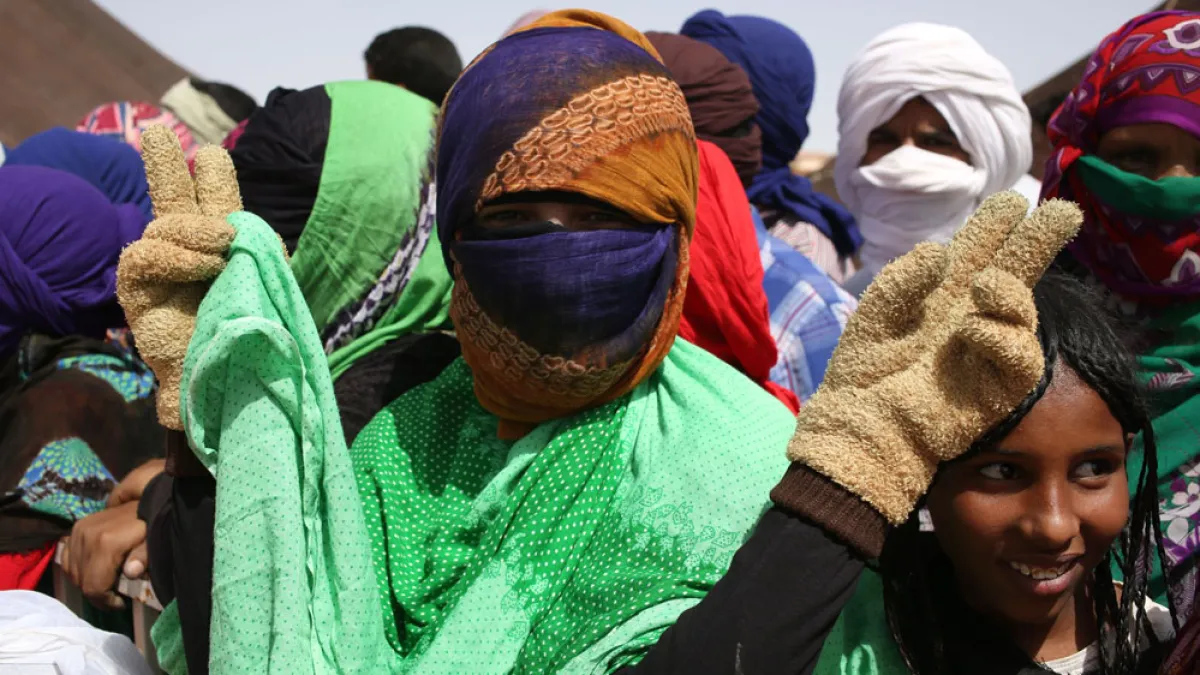
Many Sahrawis live in refugee camps in Tindouf in western Algeria, or elsewhere abroad, while others remain in Western Sahara.

Against this backdrop, the initiative to grant Spanish nationality to Sahrawis has divided opinion in Morocco but not prompted condemnation from the government.

Moroccan media quoted Ramadan Messaoud, a member of the Royal Advisory Council for Saharan Affairs, as saying in July that Rabat had “no problem” with Sahrawis obtaining Spanish citizenship. Others had done so “over the past few years”, noted Messaoud, who is also president of the Sahrawi Association for Human Rights.

‘Restoring’ identity

Western Sahara was a Spanish colony until 1975, when Spain relinquished its administration under agreements with Morocco and Mauritania.

Spain’s ruling Socialist Party and its junior left-wing partner Sumar, which filed the initiative, were among those who supported the bill, ‌while the opposition conservative People’s Party abstained and far-right Vox voted against it.

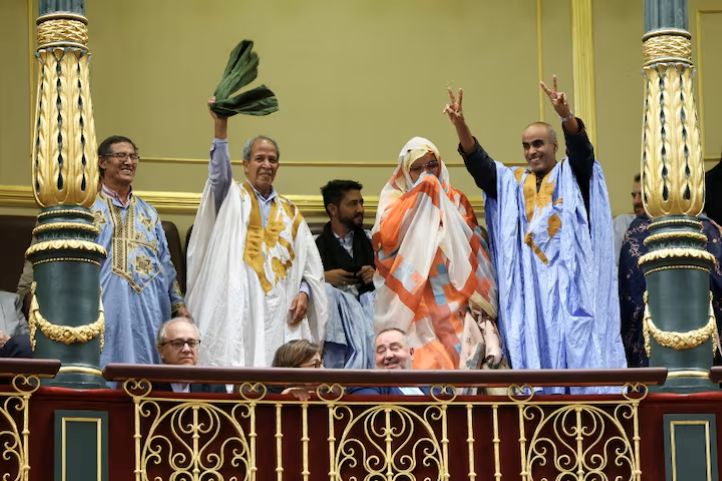
“With the adoption of this legislation, we are restoring – and I emphasise, restoring – the Spanish national identity card to those Sahrawis who once held it and from whom this state took it away,” said Tesh Sidi of the leftist Sumar coalition, the first woman of Sahrawi origin ⁠to serve in Spain’s Parliament.

The bill will now go to the Senate, where amendments are expected, before returning to the lower house for final approval.

Source link

Arab News | Spain approves citizenship for Sahrawis born under Spanish rule

MADRID: Spain’s ‌lower house voted on Thursday to grant citizenship to Sahrawis born when Madrid administered the North African territory of Western Sahara as a colony, a move that could inflame delicate relations with Morocco.

The legislation, which a statement from parliament said was approved with 168 votes in favor, 31 against and 145 abstentions, would also allow descendants of those granted citizenship to acquire it.

Some 70,000 to 110,000 Sahrawis could be eligible for Spanish citizenship, according ‌to local media.

Spain’s ‌ruling Socialist Party and its junior ‌left-wing partner Sumar, which filed the initiative, were among those who supported the bill, while the opposition conservative People’s Party abstained and far-right Vox voted against it.

“With the adoption of this legislation, we are restoring – and I emphasise, restoring – the Spanish national identity card to those Sahrawis who once held it and from whom this state ‌took it away,” said Tesh ‌Sidi of the leftist Sumar coalition, the first woman of Sahrawi ‌origin to serve in parliament.

Tensions with Morocco

Tensions have ‌grown between Spain and Morocco following the mass arrival of at least 70,000 migrants in Spain’s North African enclave of Ceuta in July.

Spain controlled Western Sahara under various administrative arrangements ‌from 1884 until 1976. Morocco claims sovereignty over Western Sahara and began asserting control over the territory after Spanish rule ended.

The Algerian-backed Polisario Front independence movement seeks recognition of an independent state called the Sahrawi Arab Democratic Republic.

Many Sahrawis live in refugee camps in Tindouf, Algeria, or elsewhere abroad, while others remain in Western Sahara. Spain had supported a referendum in the territory — in line with United Nations resolutions — until Sanchez’s government reversed course in 2022 and backed Morocco’s position. Tensions eased somewhat after that shift, with Madrid describing Rabat’s autonomy proposal for Western Sahara as “serious, credible and realistic”.

Source link

Judge blocks Trump’s latest try at limiting birthright citizenship

The Supreme Court of the United States is seen in June in Washington, D.C., on the day the high court ruled against President Donald Trump’s 2025 executive order against birthright citizenship. On Wednesday, a federal judge ruled against Trump’s latest executive orders attempting to limit the law. Photo by Bonnie Cash/UPI | License Photo

Sept. 2 (UPI) — A federal judge on Wednesday blocked U.S. President Donald Trump‘s latest attempt at limiting birthright citizenship, saying Trump’s order “is almost certainly unconstitutional.”

Trump signed two executive orders related to the topic on Aug. 6, about a month after the U.S. Supreme Court struck down his earlier order banning birthright citizenship.

One of the August orders expanded the list of non-citizens whose children would not be granted citizenship automatically. These categories include children of whom either parent is “an alien enemy” or “a foreign government employee.”

The other would ban so-called birth tourism, which is when a traveler enters another country specifically to give birth there for citizenship reasons – a practice that is already illegal.

U.S. District Judge Deborah Boardman said in Wednesday’s ruling that the August executive orders are likely unconstitutional “for the simple reason that the Supreme Court … already decided that the children in the class are citizens at birth” in its June ruling.

“This Court must, once again, preliminarily enjoin enforcement of the President’s most recent attempt to strip the right to citizenship from them,” Boardman wrote.

Birthright citizenship stems from the 14th Amendment to the U.S. Constitution, which states that “All persons born or naturalized in the United States, and subject to the jurisdiction thereof, are citizens of the United States and of the State wherein they reside.”

In its June decision, the Supreme Court voted 6-3 against Trump’s original executive order, which sought to end birthright citizenship for any children born to parents who are not U.S. citizens.

Chief Justice John Roberts said there was “scant evidence” for Trump’s interpretation of the principles of the 14th Amendment, which was ratified in 1868 after the U.S. Civil War to protect the rights ofthe formerly enslaved.

“Citizenship then and now, was the right to have rights — to freely participate in our political community,” Roberts wrote. “… We keep that promise today.”

Trump said the Supreme Court ruling “was too bad for our Country” and called on Congress to pass legislation against birthright citizenship.

Source link

US judge blocks Trump’s latest effort to limit birthright citizenship | Courts News

The ruling follows a 6-3 decision from the Supreme Court that found Trump’s effort to limit birthright citizenship was illegal.

A United States federal judge in Maryland has blocked President Donald Trump’s latest effort to roll back birthright citizenship, after the Supreme Court ruled that his last attempt violated the Constitution.

District Judge Deborah Boardman issued a preliminary injunction on Wednesday against Trump’s new executive order, which was issued on August 6.

Recommended Stories

list of 3 itemsend of list

The new order took aim at what Trump has called “birth tourism”, the practice of intentionally giving birth on foreign soil.

It sought to deny citizenship to children of foreign nationals in certain groups, including those accused of engaging in a commercial transaction to obtain citizenship or classified as an “alien enemy”.

Boardman, however, said the order was unconstitutional for the same reason Trump’s previous effort failed. She cited the Supreme Court’s June decision in the case Barbara v Trump.

The order “is almost certainly unconstitutional as applied to the certified class for the simple reason that the Supreme Court in Barbara already decided that the children in the class are citizens at birth”, she wrote.

“This Court must, once again, preliminarily enjoin enforcement of the President’s most recent attempt to strip the right to citizenship from them.”

In the Barbara case, the Supreme Court ruled six to three that birthright citizenship was protected under the Fourteenth Amendment of the Constitution.

Birthright citizenship confers automatic citizenship on anyone born in the US, outside of a handful of narrow exceptions, such as the children of diplomats or invading armies.

The constitutional basis for birthright citizenship has been upheld in several Supreme Court cases over the years, most notably in US v Wong Kim Ark, the case of an American man born to Chinese parents.

But Trump campaigned for a second term as president on the pledge to crack down on immigration into the country.

One of his promises was to reform the concept of birthright citizenship. Trump and his allies have argued that children of temporary or undocumented immigrants do not qualify for the right, as they are not under the “jurisdiction” of the US.

Since the Supreme Court defeat in June, Trump and his allies have continued to probe for ways to challenge the constitutional protections for birthright citizenship.

Wednesday’s legal challenge was brought by immigrant rights advocates and families, including groups like the Asylum Seeker Advocacy Project.

They had previously won an injunction from Boardman last year, blocking the Trump administration from enforcing his initial executive order about birthright citizenship.

Last week, Boardman instructed the plaintiffs to revise their complaint to specifically address the second executive order, rather than relying on the same material used for the first.

But she signalled scepticism at the time about the constitutionality of Trump’s latest attempt, calling it “unprecedented”.

“The Supreme Court has spoken: Children in the certified class are ‘citizens at birth’,” she wrote in Wednesday’s decision.

Source link