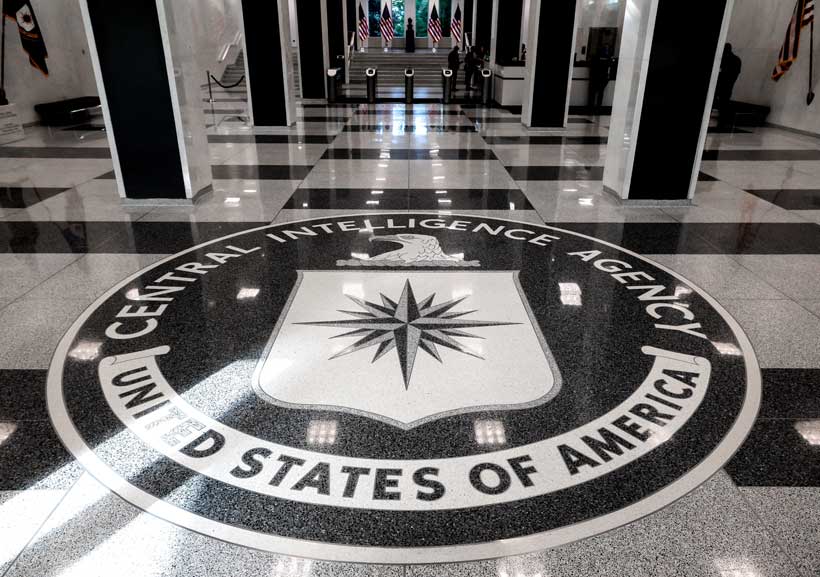
The CIA’s China Playbook and the Shadow War
In a recent move, China’s top general and a longtime confidant of President Xi Jinping, Zhang Youxia, and Joint Staff chief Liu Zhenli were removed from the Central Military Commission (CMC). An editorial published in Liberation Army Daily described both men as “seriously betraying the trust and expectations” of the Communist Party of China (CPC) and the CMC.
Beyond corruption allegations, Zhang was reportedly accused of leaking core technical data on China’s nuclear weapons programme to the United States. In the aftermath, the Central Intelligence Agency (CIA) released a Mandarin language recruitment video targeting disaffected Chinese soldiers. Titled “The Reason for Stepping Forward To Save the Future,” portrays a disillusioned midlevel officer choosing to contact American intelligence. The outreach appears aimed at deepening internal doubts and positioning itself as an alternative confidant for officers who may feel exposed. However, this is not the first time the agency has sought to infiltrate the country.
A History of Intelligence Operations and Resets
Intelligence rivalry stretches back to the late 1940s, when the CIA tried to monitor the Soviet nuclear programme by placing listening devices within China and along its Soviet border. Surveillance also extended to the Xinjiang region, tracking uranium, gold, petroleum, and Soviet aid to the CPC during its war with the US backed Guomindang for regional control. Despite these efforts, the intelligence gathered remained minimal at best, from October 1950 to July 1953 the agency also failed to achieve its primary objective of diverting significant resources away from China’s military campaign in Korea.
As Cold War rivalries hardened, the CIA launched Operation Circus in the late 1950s to support Tibetan rebels against the CPC. The CIA supplied guerrilla groups, including the most active Chushi Gangdruk group, with arms and ammunition and trained fighters at Camp Hale. Allen Dulles, then CIA deputy director, saw the effort as an opportunity to destabilize the CPC and counter Communist influence across Asia. The group continued its operations from Nepal until 1974, when funding ended after US-China rapprochement.
During the 1970s and 1980s, the CIA cooperated with Chinese intelligence under Project Chestnut, establishing listening posts in the northwest to monitor Soviet communications. In 1989, as the Tiananmen Square protests rocked the CPC, the CIA provided communications equipment, including fax machines and typewriters to protestors. It also assisted in the escape of protest leaders with the help of sympathizers in Hong Kong under Operation Yellow Bird. Relations deteriorated in 2001, when an aircraft built in the US for General Secretary Jiang Zemin was found to contain at least 27 listening devices, including one embedded in the headboard of a bed, operable via satellite.
However, these gains proved fragile as major setbacks soon followed, with reports that between 2010 and 2012 Chinese authorities dismantled a large CIA network. In total, between 18 and 20 sources were killed or imprisoned, according to two former senior American officials. One asset was reportedly shot in front of colleagues in the courtyard of a government building as a warning to others suspected of working with the CIA.
Espionage in the Xi Jinping Era
Estimates in 2024 suggested the Ministry of State Security (MSS) employed as many as 800,000 personnel, compared with roughly 480,000 at the height of the KGB. After taking power in 2012, Xi further consolidated control over its security apparatus, chairing a high level national security task force.
His approach also followed revelations that an American informant network had infiltrated the MSS. An executive assistant to MSS Vice Minister Lu Zhongwei was discovered in 2012 to have passed sensitive information to the CIA. The ministry was also influenced by former security chief Zhou Yongkang, who was charged with abuse of power and intentionally leaking state secrets in 2014. He was subsequently expelled from the politburo in one of the most consequential purges in the country’s history.
In light of these developments, Xi’s “comprehensive state security concept,” promulgated in 2014, linked internal and external threats and underscored the dangers of destabilization through foreign subversion and infiltration. He also enacted the 2014 Counter Espionage Law, revised in 2023 to broaden espionage definitions, coinciding with detentions of foreign firm employees and tighter data controls.
Under his leadership, another major initiative allowed the MSS to establish direct public contact in 2015 through a hotline and website urging citizens to report threats to national security. In 2017, MSS offered rewards of up to 500,000 RMB for reporting suspected threats. In the same year, counterintelligence services also launched a broad awareness campaign through websites, animations, and television dramas promoting this “special work,” often targeting journalists, academics, and Chinese American and Taiwanese businesspeople.
Chinese courts have also imposed severe punishments in such cases. In April 2025, a former employee of a military research institute was sentenced to life imprisonment for selling secret documents to foreign intelligence agencies. The ruling followed the sentencing of a former engineer to death in March on similar charges.
China also deploys operatives abroad to curb criticism and preserve regime stability. Overseas police stations reportedly directed by provincial MSS offices combine administrative services with intelligence functions. One established in New York by the Fuzhou Public Security Bureau drew headlines in 2023. In fact, the earliest cyber incidents targeting UK government systems in the early 2000s originated not from Russia but from China, and were aimed at gathering information on overseas dissident communities, including Tibetan and Uighur groups.
New Intelligence Order Enters a Decisive Era
As China’s influence grew in the 2000s, Western policymakers were focused on the war on terror and interventions in Afghanistan and Iraq. At the same time, political leaders often preferred that intelligence chiefs avoid publicly naming China. Businesses faced mounting pressure to prioritize access to its vast market, while remaining reluctant to acknowledge that their proprietary information was being targeted.
In 2021, the FBI reported opening a new Chinese espionage case roughly every 12 hours, most involving cyber disruption. Cybersecurity and Infrastructure Security Agency (CISA), the Department of Justice, and other US bodies repeatedly identified MSS affiliated actors in advisories and indictments. Analysts assess MSS linked groups have surpassed PLA associated actors in both the sophistication and scope of their hacking campaigns. In 2024, authorities announced that Salt Typhoon had breached major US telecommunications companies in one of the most damaging publicly reported cyber campaigns. The National Security Agency (NSA) also noted that China’s reliance on indigenous technology makes its networks harder to track.
Former CIA director William J. Burns, under the Biden administration described these intelligence shortcomings as a “pacing challenge.” The administration created a China Mission Centre and a technology intelligence centre to address it. An executive order was also issued in 2024, prohibiting funding for Chinese semiconductors, microelectronics, quantum computing, and certain AI applications in sectors that are considered capable of enhancing military capabilities.
When the Trump administration returned in 2025, it triggered significant disruptions across the US government. In early May 2025, plans were announced to cut 1,200 positions at CIA and 2,000 at the NSA, with similar reductions reportedly planned for other intelligence bodies as well. Such cuts were expected to disrupt operations and deter long term asset relationships. The “Signalgate scandal” further revealed that senior national security officials had shared classified information in an unsecured Signal group chat. These avoidable lapses posed a serious threat to operational security and heightened the risks faced by intelligence assets worldwide.
As China pursues its vision of a unipolar world while escalating espionage and global security threats, international attention on its actions has intensified. Trump’s planned visit to China in April 2026 will be closely watched to assess whether the recruitment videos are part of a broader strategy targeting Xi’s establishment or merely a pressure tactic.