From churches and castles to wonderfully weird Portmeirion: exploring Wales’s north-west coast on foot and by train | Wales holidays
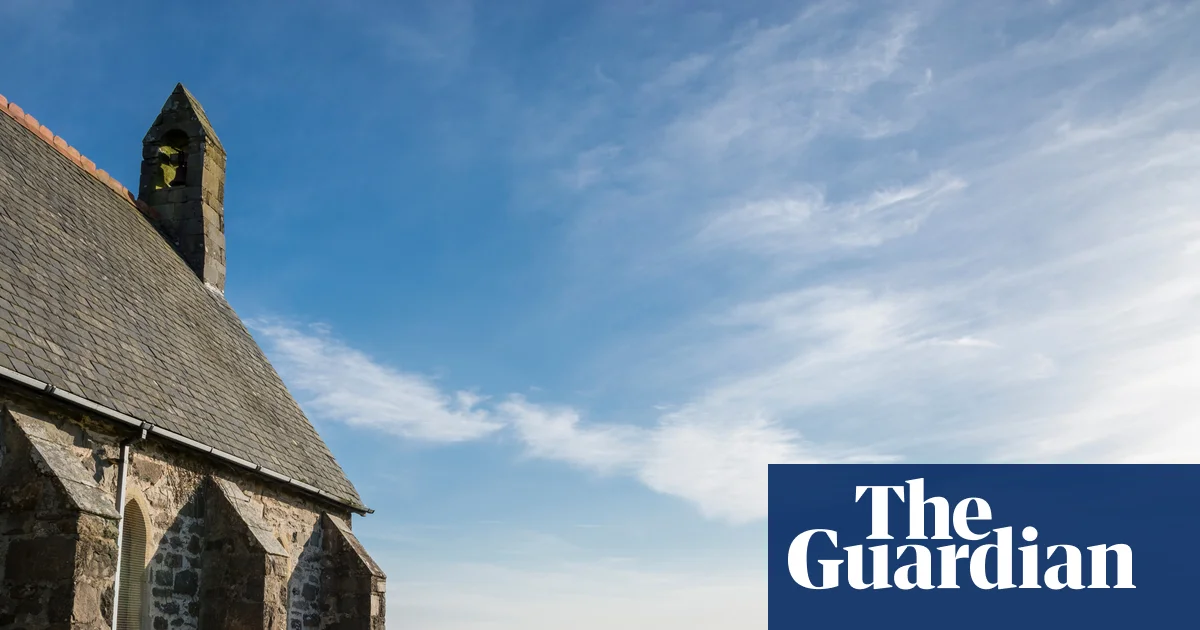
From the graveyard of St Michael’s in Ynys, Wales, the view was ravishing: the Italianate oddity of Portmeirion sparkled on the opposite shore; the peaks of Eryri (Snowdonia) rippled in the distance; and, within the River Dwyryd’s broad swirl, sat the tidal island of Ynys Gifftan. “No one’s lived there for years,” said a passerby pointing to the isle, “but it’s just been put up for sale – £350,000, if you fancy it.”
I rather did, but sadly my modest savings don’t stretch that far. Wales’s “armpit”, geographically speaking – which is how some people refer to that chunk of Gwynedd where estuaries perspire into Cardigan Bay before it curves round the outstretched Llŷn peninsula – looked like a spectacular place to be marooned.
I’d come here because I thought it might be a particularly good place for coastal exploring by rail and on foot. The Cambrian Line, which starts in Shrewsbury, runs west to the bay, before turning north along Gwynedd’s shore. Here, it’s accompanied by the Wales Coast Path and, launched in 2024, the Cadfan Way, a 128-mile (206km) pilgrimage following sixth-century St Cadfan from his church in the seaside town of Tywyn to the ruins of the monastery he founded on Ynys Enlli (Bardsey Island), off the Llŷn’s tip.
I began in Machynlleth. This handsome market town by the River Dyfi is where the Cambrian Line begins to feel connected to the sea. It also has a disproportionate number of excellent indie shops, and one of the country’s best restaurants – though I skipped Gwen’s 20-course, £295 feast and grabbed supplies from the Royal House deli instead (very tasty, very good value). Then I boarded the train.
I was soon rattling through an increasingly saturated land. The mouth of the Dyfi began to yawn into bird-beloved mudflats, salt marsh and sandbanks; the train passes right between the Dyfi Osprey Project’s 360-observatory and the osprey nests it observes. Wider and wider the waterway became until, eventually, at white-washed Aberdyfi, the line hit the coast, sometimes running so close to the sea’s edge that you couldn’t see the join.
We pootled north, via towns like Tywyn – starting point for St Cadfan pilgrimages – and teeny halts like Tonfanau, site of an army base during the second world war, now sheep-grazed ruins. Like many Cambrian Line stops, Tonfanau is request only; those on the platform should stick out an arm.
At Harlech, no requests are necessary – the train itself couldn’t help but be halted by the vision of Harlech Castle. Edward I’s crag-top stronghold was started in 1282, took seven years to build and still looks fearsome. I disembarked here, hiked up to the fortress and entered with ease via the modern floating bridge; back in the day, would-be intruders faced concentric walls, portcullises and a “killing zone” where arrows were fired from the sides, missiles dropped from above. The weather was gloomy, curtailing the views but piling on atmosphere. I spiralled up the dark stone staircases and circled the battlements, alone but for the hooded jackdaws. It gave me the shivers.
I spent the night at Y Branwen hotel, in the castle’s shadow, and left Harlech the next day on foot, murk replaced by blazing sunshine. I was headed north along the coast, although the rocky Rhinogs rising behind the village looked tempting … “There’s no one in those hills,” Branwen’s owner David Penny told me. However, I stuck to Plan A, and wasn’t disappointed. Rounding Harlech Point, I was slapped by that view down the Dwyryd, soon passing isolated St Michael’s and my fantasy island.
Following the Cadfan Way for a while, I hiked from Ynys to St Tecwyn’s, an even lonelier church, seemingly ministering to no one from its eyrie above the estuary. It was here that poet and priest Jim Cotter was inspired to found the Small Pilgrim Places network; he wrote of St Tecwyn’s: “I’m at what must be one of the most extraordinary places in the whole of Wales.”
I had to agree, though Portmeirion, across the Dwyryd estuary, gives it a run for its money. This fantastical resort village, the trippy creation of Sir Clough Williams-Ellis, celebrates its centenary this year and remains wonderfully weird, with its candy palette, tricks of perspective and salvaged architectural paraphernalia. I popped into the Prisoner Shop, which sells memorabilia related to the cult TV show of the same name, filmed here in the 1960s. I wondered if it was still popular? “Oh yes,” the cashier confirmed. “Even with young people, they watch it on YouTube. Its themes – surveillance, freedom – feel relevant today.”
I stayed at Portmeirion’s Castell Deudraeth, a Gothic pile with big rooms, a good restaurant and The Prisoner looping on channel 801. But best was strolling into the village at sunrise, no one around, watching the sun crack the opposite hills, hit the top of the campanile and flood into the hot-pink camellia groves.
Porthmadog station wasn’t far, a short walk through the woods and across the mile-long cob that fords the Glaslyn estuary, Eyri summits keeping watch. From here on, I used a mix of train and boot to reach Pwllheli, the end of the Cambrian Line.
That wasn’t always the case. A horse-drawn tramway, built in the 1890s by businessman Solomon Andrews, used to run farther west to his estate in Llanbedrog. Andrews turned the site’s Victorian mansion, Plas Glyn-y-Weddw, into an art gallery and charged a shilling for a combined tram and gallery ticket. Now, 130 years later, I paid nothing at all. The old tramway track is part of the Wales Coast Path – an easy, breezy four-mile stroll along the bay – and Plas Glyn-y-Weddw is free entry. Saved from ruin in the 1980s, it’s one of the oldest galleries in Wales, showcasing work by Welsh artists, and serving great cake inside its modern cafe, which squats beside the house like a giant silver sea urchin.
I scoffed a scone, then ambled through the Winllan woods on trails first developed by Andrews for his paying visitors. Andrews also placed the figurehead of an old ship on Mynydd Tir y Cwmwd, the heathery headland above. It was eventually destroyed and now the twisted metal Tin Man, or Iron Man, stands in its place, enjoying quite the spot. I could retrace my route from here, Cardigan Bay arcing away into a mountain-backed haze. It made a pleasing journey’s end, with the knowledge that getting home meant riding that charming train line back again.
The trip was supported by the Wales Coast Path. Cambrian Line tickets are cheaper bought in advance; a day rover ticket costs £21. Y Branwen in Harlech has doubles from £110 B&B. Castell Deudraeth has doubles from £208 B&B, including Portmeirion entry