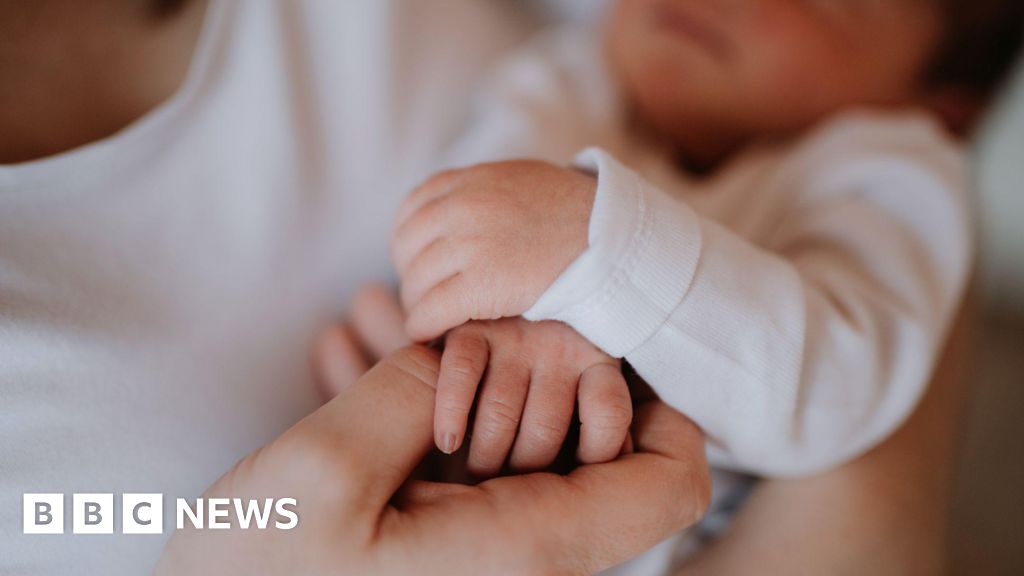
Church of England to apologise for role in historical forced adoption
Tens of thousands of babies were taken from their unmarried mothers in the three decades after World War Two.
Source link
Tens of thousands of babies were taken from their unmarried mothers in the three decades after World War Two.
Source link

Taylor Frankie Paul is breaking from the Church of Jesus Christ of Latter-day Saints.
The embattled “Secret Lives of Mormon Wives” star announced on Easter Sunday that she’s parting ways with the religion she built her brand on.
“Born and raised Mormon (lds) and I’ll always have love and respect towards it,” she wrote Sunday in an Instagram story. “I’ll even continue to go with my family at times, with that being said, it’s time to detach myself from it.”
Paul launched her career as a Mormon mom-fluencer on TikTok before she landed “The Secret Lives of Mormon Wives,” the reality television series that leveraged her #MomTok success.
The series offered a look at Mormon moms in Utah that subverted viewers’ expectations. Paul drank alcohol and scandalized her online following when she admitted that her social circle participated in “soft swinging” in which they swapped partners for hookups but “didn’t go all the way.” The series followed her through the aftermath of a divorce and an on-again, off-again relationship with Dakota Mortensen, all of which is frowned upon by the Mormon church.
“I strongly believe in Christ, God, the bible, the divine,” she continued in her post. “I believe we are loved whether we are praying in [a] church building or from a bathroom floor at home.”
Paul was set to lead Season 22 of ABC’s “The Bachelorette” until a leaked video of a 2023 domestic dispute between Paul and Mortensen made its way across the internet. Though the entire season had been taped, ABC nixed the premiere, and “Secret Lives” also paused production. Her casting was a break from “The Bachelorette” tradition in that she had not been a contestant on a previous season of “The Bachelor.”
Now police are investigating allegations of a second and third domestic violence incident involving Paul and Mortensen, and as a result of the inquiry Paul has temporarily lost custody of the son she shares with Mortensen. A hearing regarding the protective order is set for Tuesday and may determine whether a final protective order is granted by the Utah court.
“The last 40 days felt like hell on earth,” Paul wrote in a separate Instagram post on Sunday. The post stitched together photos of Bible scripture, Paul crying, pain relief patches and personal notes scrawled through notebooks.
“Through every panic attack I prayed for strength as I could feel my body breaking down and out from the distress of it all. … I’ve prayed since I was young and never strayed away because I believe he wants us to ask for help especially during our lowest points.”
TAYLORSVILLE, Utah — For decades, Democrats’ only chance of getting elected to Congress from the conservative state of Utah was by convincing voters that they were sensible moderates, not like the zealous progressives from California or Colorado.
But the political landscape has changed, thanks to a redistricting shakeup that created a deep blue district anchored by Salt Lake City. Suddenly, congressional candidates are trying to outflank each other on the left in an unusual race that could help determine whether Democrats take back control of the U.S. House in the midterms.
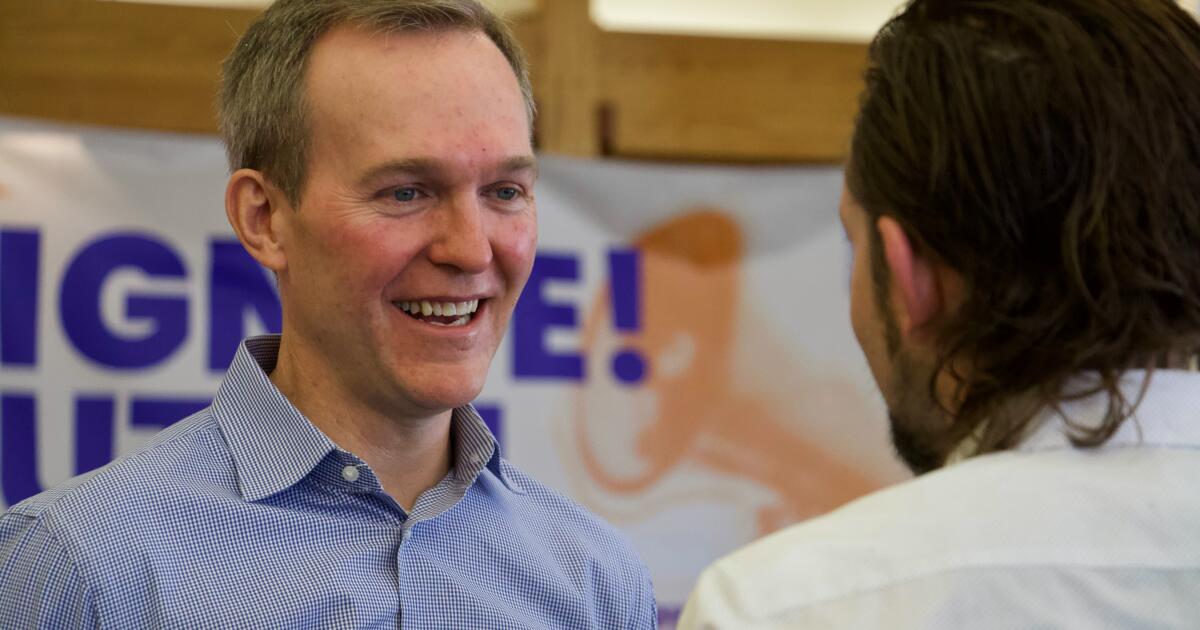
Exhibit A is Ben McAdams, a former congressman who once described himself as pro-life and voted against a federal minimum wage increase. As he mounts a comeback campaign in a much more Democratic district, he pledged his support for abortion rights and raising the minimum wage during a recent forum for young voters.
As primary opponents criticized McAdams as the most conservative among them, he insisted that he’s only “moderate in tone.”
It’s a far different approach than McAdams used in 2018, when he ousted a Republican incumbent in the midterms of President Donald Trump’s first term. While representing the southwest Salt Lake Valley and parts of deep-red Utah County in the former 4th district, he was considered the most conservative House Democrat during his single term by one analysis, before losing reelection to a Republican.
McAdams is now running in the new 1st district, including all of Salt Lake City and much of its suburbs, which emerged from a years-long legal battle over Utah’s congressional map.
Whoever wins the primary will likely win the November general election, and McAdams faces a half-dozen Democratic opponents.
“What makes me a strong candidate is the fact that I’ve actually delivered on a lot of things people are talking about,” McAdams told The Associated Press. “It’s easy to have a strongly worded tweet or talking points, but I can actually follow that up with accomplishments that are making life better.”
Democratic National Committee Chairman Ken Martin views Utah’s 1st district as a foothold in a red state that could not only help the party win the House this year but set it up for long-term success. He said the party is pouring more money into Utah than ever before — at least $22,500 a month — to build infrastructure ahead of the 2030 census, when the fast-growing state could gain House seats.
The recipe for success, Martin said, is a willingness to meet voters where they’re at and a platform that reflects “not just the majority of Democrats, but the majority of the people in the district.”
Unlike state Republicans, the Democrats are holding an open primary on June 23, meaning anyone in the district can vote, regardless of party affiliation. That could benefit a candidate like McAdams, who built a broad base during his previous campaign. But state party leaders have said they’re confident that registered Democrats have a strong enough majority to decide the primary.
Democrats have historically struggled to gain solid footing in Utah, where about half the population belongs to The Church of Jesus Christ of Latter-day Saints. Members of the faith known widely as the Mormon church have always leaned Republican.
Even though the church is headquartered in Salt Lake City, the capital is one of the only places where Democrats hold local control and religion takes a back seat in politics.
Martin expects the youth vote will be key to winning in Utah and building longevity there. Utah is the youngest state, with a median age of about 32.
“This is a group that’s up for grabs,” he told the AP, noting that Democrats too often assume young voters are with them. He said that could mean Utah “is one of the biggest potential swing states in the country.”
Robert Axson, chairman of the Utah Republican Party, rejected that notion.
“Everything I am seeing shows the younger generation continuing to lead in the promotion of our conservative principles,” he said. “While we see the generational passing of the torch, there is not a political swing away from the values that make Utah a wonderful place to call home.”
Several young voters who came to meet candidates on a Saturday morning in Taylorsville said they hoped to capitalize on the opportunity to elect a progressive.
Milo Hohmann, 22, of Holladay, said state Sen. Nate Blouin is the “firebrand” that Utah needs in Congress.
Perhaps the most vocal Democrat in the Republican-led state legislature, Blouin has racked up endorsements from some of the country’s most prominent progressives, including Sen. Bernie Sanders and Reps. Pramila Jayapal, Greg Casar and Maxwell Frost.
Blouin said he aims to energize an electorate that has grown accustomed to settling for someone who will “play nice” with Republicans.
He jabbed at McAdams’ voting record while defending himself against criticisms that he has never passed legislation. Blouin said he’s been effectively blacklisted by Republican legislative leaders, and at least two bills that he originally sponsored passed after they advanced under other lawmakers’ names.
“I don’t measure progress by how many times you can get pats on the back from Republicans,” he told the AP.
His stance resonated with Hohmann, a transportation engineer, who said Utah has “an electric moment” to elect a Democrat who won’t compromise their values.
Hannah Paisley Zoulek, 19, of Millcreek, said she’s leaning toward Blouin or his colleague in the state Senate, former teacher Kathleen Riebe. But she had a concern about Blouin.
“I struggle a bit with Senator Blouin’s emphasis on how hard he holds his own positions,” Zoulek said. “It’s great if you want to make a statement, but not necessarily if you want to do the work.”
Neither Hohmann nor Zoulek thought McAdams was the right fit for the new district given his more moderate past.
Ben Iverson, who will be voting for the first time this year, disagrees.
The 17-year-old from Cottonwood Heights considers himself very progressive and said he thinks McAdams is “a great option.” He noted that McAdams voted to impeach Trump in 2019, despite knowing it could cost him reelection.
“I don’t think left-wing voters want a moderate Democrat who will capitulate to the right,” Iverson said, adding that he thinks McAdams has successfully shed the moderate label.
Throughout his life, Iverson said McAdams has been a mainstay of local politics. He was Salt Lake County’s state senator, then its mayor, and represented much of the area in his previous congressional district.
“I’ve been in the trenches, rolling up my sleeves, saying not ‘How do we pass a bill that will never become law?’ but ‘How do we actually enact legislation that will make people’s lives better?’” McAdams said.
Schoenbaum writes for the Associated Press.

Amid allegations of three domestic violence incidents involving reality TV star Taylor Frankie Paul, fans are worried about whether MomTok can survive this.
Paul, who gained an online following after founding MomTok — a loosely connected group of TikTokers who made content about their lives as members of the Church of Jesus Christ of Latter-day Saints — previously pleaded guilty in abeyance to a third-degree felony count of aggravated assault following a fight with former boyfriend Dakota Mortensen in 2023.
MomTok inspired the Hulu reality show “The Secret Lives of Mormon Wives,” which follows eight women in Salt Lake City who grapple with their relationship with the church. The first season explored the fallout of the group’s “soft swinging” scandal, which Paul exposed on TikTok prior to filming.
Throughout its four seasons, “Mormon Wives” has featured lighthearted content like the moms’ love of the soda shop Swig and more weighty topics, including gender roles within the Mormon church. “Mormon Wives” has also crossed over with various Disney reality shows, including “Dancing With the Stars,” “The Bachelorette” and “Vanderpump Villa.”
However, filming on Season 5 of “Mormon Wives” was paused and Paul’s season of “The Bachelorette” was shelved in the wake of domestic abuse allegations. A second investigation, which began in late February, gained even more attention when a video from Paul’s 2023 domestic dispute with Mortensen was made public. The footage showed Paul putting Mortensen in a headlock and throwing metal barstools while the couple fought. Paul’s daughter can be heard crying and was injured during the incident, according to the police report.
Paul, Whitney Leavitt, Mayci Neeley and Mikayla Matthews begin making videos together on TikTok. Their content focuses on motherhood and their relationship with the church mixed with dancing and skits.
Paul posts a video on TikTok announcing her divorce from her husband, Tate Paul. Fans begin speculating what led to their divorce.
On TikTok Live, Paul explains that she and her husband had been in an open relationship and were part of a “soft swinging” group with other members of MomTok. Paul says she had violated the group’s rules by meeting with a partner without her husband’s knowledge, which contributed to their divorce.
Hulu begins filming the first season of “Mormon Wives.” After a fight with Mortensen, Paul is arrested and charged with assault, criminal mischief and commission of domestic violence in the presence of a child, according to the Herriman Police Department. Filming of the show is put on hold during the investigation.
Paul enters a plea in abeyance to a third-degree felony count of aggravated assault. The agreement allows charges to be reduced after three years, if Paul meets the requirements of her plea deal.

Dakota Mortensen and Taylor Frankie Paul share 2-year-old son Ever.
(Fred Hayes / Disney)
Paul has a son, Ever, with Mortensen. While the pair had been dating throughout Paul’s pregnancy, they choose to end their relationship and co-parent their son.
The first season of “Mormon Wives” is released on Hulu. The series follows cast members Jen Affleck, Jessi Draper, Demi Engemann and Layla Taylor, as well as Leavitt, Neeley, Matthews and Paul from the original group of MomTokers. The pilot episode, “The First Book of Taylor,” explores the fallout of the swinging scandal and ends with Paul’s 2023 arrest. The second episode picks up nearly a year after the incident.
The show is Hulu’s most-watched unscripted season premiere of 2024 and is renewed just a month after its premiere.
Mortensen and Paul seemingly reconcile their relationship.
Paul and Mortensen break up. On Christmas, Paul posts on TikTok that she “wouldn’t wish this pain upon anyone.”

Demi Engemann, Mikayla Matthews, Mayci Neeley, Layla Taylor, Whitney Leavitt, Miranda Hope and Taylor Frankie Paul in Season 2 of “The Secret Lives of Mormon Wives.”
(Fred Hayes / Disney)
Season 2 of “Mormon Wives” is released. Miranda Hope joins the cast.
During an episode of Alex Cooper’s hit podcast “Call Her Daddy,” Paul announces she will star as “The Bachelorette.” Paul is the first-ever Bachelorette to have not competed on “The Bachelor.”
While FaceTiming Paul before she begins filming “The Bachelorette,” Mortensen apologizes for his behavior and tells Paul “save a rose for me.” This conversation is shown in the fourth season of the show in March 2026.
”Mormon Wives” Season 3 premieres.
The Draper City Police Department makes contact with Paul and Mortensen regarding an open “domestic assault investigation” between the two, with allegations being made in both directions.
Season 4 of “Mormon Wives” is released.
Filming for Season 5 of “Mormon Wives” is paused as the new investigation involving Paul and Mortensen becomes public.

Taylor Frankie Paul’s season of “The Bachelorette” was canceled three days before it was set to premiere.
(Michael Kirchoff / Disney)
TMZ publishes a previously unreleased video taken by Mortensen during his February 2023 altercation with Paul. It shows Paul throwing barstools at Mortensen as her then-5-year-old daughter cries. After the video’s release, ABC cancels Paul’s season of “The Bachelorette.”
Mortensen is granted temporary custody of Ever, his 2-year-old son with Paul, according to documents obtained by People.
The West Jordan Police Department in Utah begins investigating a third incident of domestic abuse between Paul and Mortensen, which occurred in “early-mid 2024.” No charges have been filed as the investigation is ongoing.
Paul has been denied visitation until their protective order hearing on April 7, which may determine whether a final protective order is granted by the court.

ONE spot in the capital dubs itself ‘London’s quirkiest church’ because inside you’ll find a soft play – and a fully stocked bar for the parents.
Inside St James Church in West Hampstead, London, you will find the Sherriff Centre.
Rather unusually, the venue is a blend of different things including a post office, children’s soft play centre, cafe and even a stationery shop.
The soft play area – called Hullabaloo – spans one side of the church and features all you would expect of a soft play centre.
In the section for kids aged between two and 10-years-old, there are three levels featuring two slides, crawl tunnels and hidey holes.
The soft play also has separate sections for babies up to 23 months with a ball pit, puzzles and games and a sensory mirror.
Read more on travel inspo
One person commented on social media: “Wow what a unique soft play!”
Another added: “What a fun idea and a great way to start the weekend.”
There are also SEN sessions available, and the venue is available for private party hire.
The Sanctuary Cafe and Bar serves cake, coffee and even wine.
Even though the venue doesn’t serve more than snacks, it has teamed up with Pizza Bun London in Hampstead for an exclusive offer for visitors heading to the soft play.
The soft play is open each day between 9am and 5pm, with the last booking at 4pm.
But there are Play Late sessions too, where kids can play as parents enjoy a glass of wine at the bar.
The next Play Late session is March 20, followed by April 10 and May 22.
Tickets cost £5.50 for babies or £7.50 for juniors and adults go free.
The centre also runs weekly baby and toddler classes such as Petite Performers, with ballet and dancing.
Sometimes there are Sofar Sounds live music events on at the church too.
Memberships are available for the soft play, with a babies membership costing £15 per month for four sessions.
A Bronze membership then costs £10 a month for two soft play sessions, Silver costs £20 a month for three sessions, a 10 per cent discount at the cafe and early access to book event tickets.
Finally, a Gold membership costing £40 per month, gets you six soft play sessions, a 10 per cent discount at the café, two Sofar Sounds tickets and early access to book event tickets.
The soft play is just a couple of minutes’ walking from West Hampstead underground and train stations.
It isn’t the only church to have something unusual inside…
In Redbridge, London, a swimming pool described as “magical” can be found in an old hospital church.
It is a Virgin Active gym now with a 24-metre pool as well as showers, hot tub and steam room.
For more places to take your kids, a travel expert shares the best free London attractions for kids.
Plus, the English counties with the most free family activities from pony sanctuaries and steam railways to soft plays.

