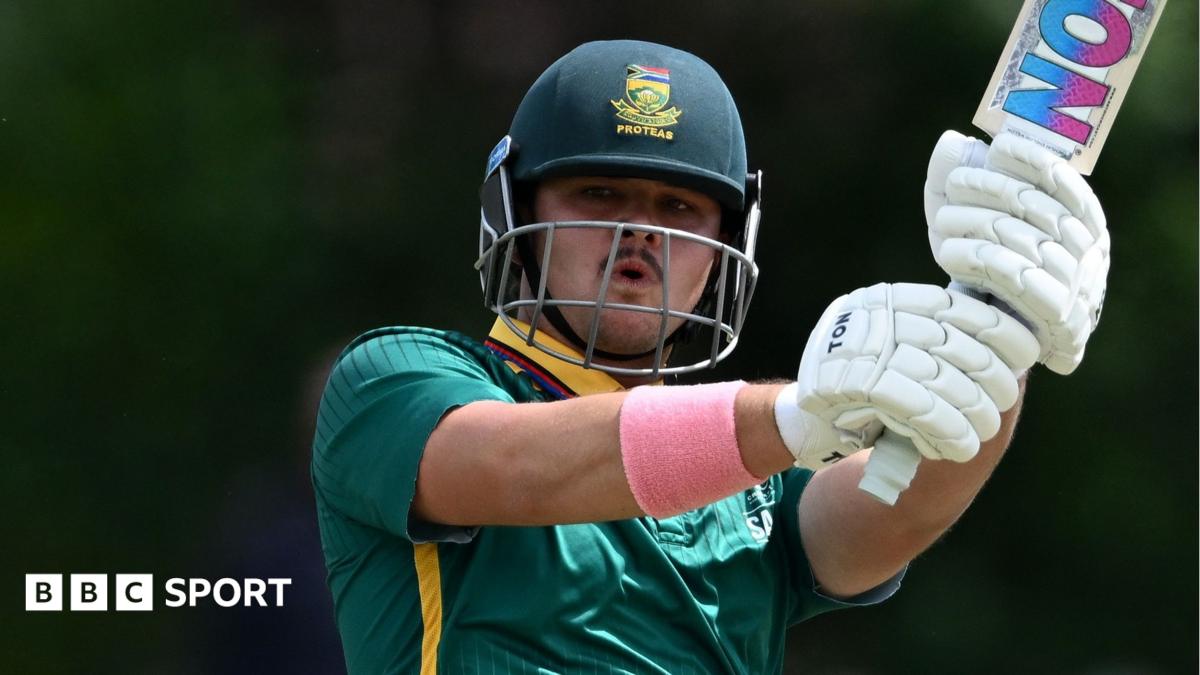
Lhuan-dre Pretorius has broken Chris Gayle’s record for the highest score in a men’s T20 match with an unbeaten 188 in a domestic fixture in South Africa.
The 20-year-old South African’s knock off 79 deliveries, including 13 sixes and 15 fours, helped Titans post 267-3 against Knights in the CSA T20 Challenge.
It eclipsed the 175 made by Gayle for Royal Challengers Bangalore (now Bengaluru) against Pune Warriors in the 2013 Indian Premier League.
Pretorius, who has played 17 T20s, three one-dayers and two Tests for South Africa, finished with a strike rate of 237.97.
He made his half-century off 24 balls but only required 16 more balls to get to three figures and then got to 150 off just 58 deliveries.
Titans then bowled out Knights for 143 to wrap up an emphatic 124-run victory at the Mangaung Oval in Bloemfontein.
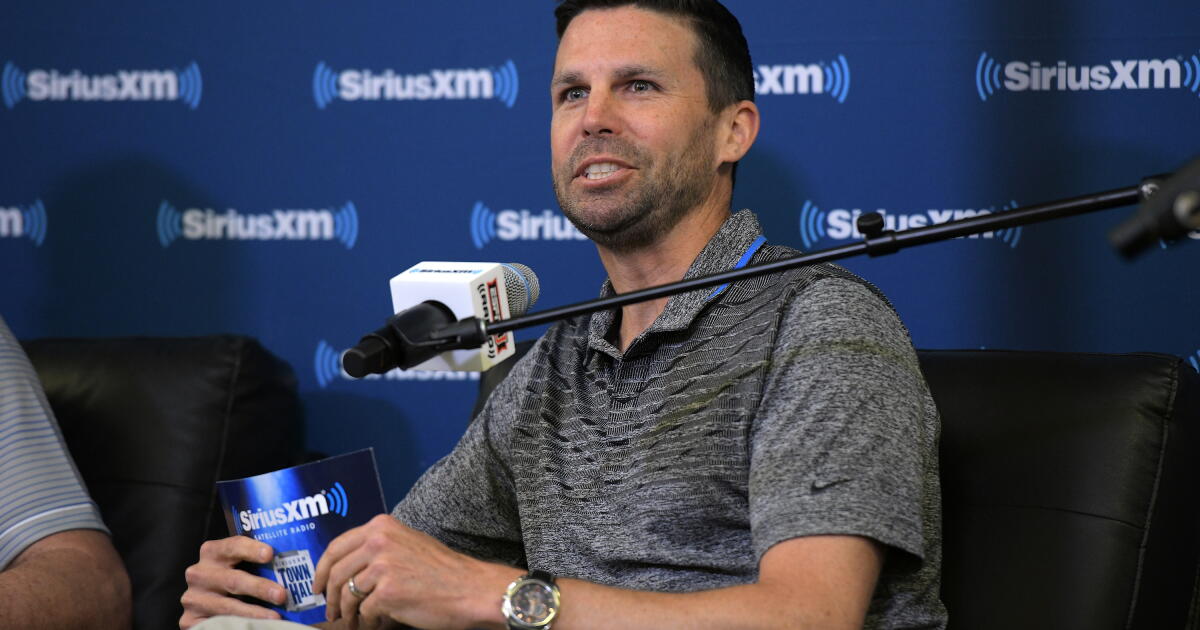
Tributes accumulated rapidly for Chris Spatola, a popular ESPN college basketball analyst who died Monday. He was 47.
Spatola is the son-in-law of legendary former Duke coach Mike Krzyzewski and was an assistant coach with the Blue Devils from 2007 to 2012. He married Krzyzewski’s daughter, Jamie, and the couple had three children together.
The cause of death has not been publicly disclosed.
“There are no words to adequately express our heartbreak over the loss of our beloved Chris Spatola,” the Krzyzewski family said in a statement through Duke. “Chris served our country, was a devoted husband and father, and was such an important part of our family. We are deeply grateful for the outpouring of love, thoughts, and prayers we have received during this incredibly difficult time. We respectfully ask for privacy as our entire family, particularly Jamie and her three beautiful children, grieve and process this unimaginable loss.”
Spatola served in the U.S. Army after playing basketball at Army and studying at the U.S. Military Academy from 1998-2002. He deployed in Operation Iraqi Freedom and was awarded the Joint Service Commendation Medal for exceptional combat performance and the Army Commendation Medal for outstanding leadership.
As a player, Spatola was a four-year starter at guard and twice was named All-Patriot League. He commented on his military service for ESPN Press Room in 2018:
“Serving in the Army has made me better in every facet of my life — a better husband, father, professional,” Spatola said. “It exposed me to adversity, how to react to and deal with tough times and situations, and showed me that teams are better when you’re more concerned about serving others, serving the teammate to your right and left, and serving the mission. It forced me to realize there is no substitute for being prepared … and showed me that character matters.”
Spatola was on the Duke coaching staff in 2010 when the Blue Devils won one of their five national championships under Coach K. Soon after leaving Duke, Spatola was hired by ESPN and SiriusXM. He called games and appeared in studio for ESPN for the last 13 years.
“Chris Spatola brought a unique perspective to ESPN’s college basketball coverage, shaped by his experiences as a student-athlete, Army veteran, coach and broadcaster,” ESPN wrote in a statement. “He was thoughtful, prepared and passionate about the sport, earning the respect of colleagues, coaches, players and fans alike. We extend our heartfelt condolences to his loved ones during this difficult time.”
Fellow analysts flooded social media with an outpouring of praise.
“I am devastated over the passing of my friend and colleague Chris Spatola,” Jay Bilas wrote on Instagram. “Chris was a wonderful human being. A point guard at West Point, Chris was … a man of great humility and unusually high character. A great family man that was devoted to his wife Jamie and their wonderful family. Chris was selfless .… a fabulous colleague and knowledgeable basketball man. With Chris, it was never about him, it was only about the game, the players, the coaches, and the fans. Heartbroken beyond words to lose such a great friend, yet grateful beyond words to have known him.”
Longtime basketball analyst and Duke graduate Seth Davis also commented on Spatola’s friendship.
“I could not possibly come up with the words to describe how shocked and devastated I am to learn of Chris Spatola’s untimely passing. It will never make sense or seem real. Chris was one of the all time great dudes. A terrific broadcaster but most of all a treasured friend who absolutely adored and doted on his family…. May his memory be a blessing.”
Chris Brown is speaking out after lawmakers honored him during his concert in Arlington, Texas, then apologized for the honor.
On Sept. 12, U.S. Rep. Jasmine Crockett (D-Texas) and Democratic Texas Rep. Venton Jones appeared at AT&T Stadium for Brown and Usher’s R&B Tour, where they honored both singers for their contributions to music. The politicians presented them with a Congressional Record recognition and state proclamation.
“Right now, we are experiencing Black joy to the highest level,” Crockett said on stage. “And I wanted to make sure we document that in the Congressional Record.”
Usher was not on stage when either honor was presented.
The incident sparked public backlash because of Brown’s history of domestic violence. In June 2009, the “Forever” singer pleaded guilty to one count of felony assault for physically attacking Rihanna.
On Monday, the 37-year-old singer and dancer took to social media to apologize to Crockett for the criticism she received following the recognition, uploading a photo of the two to his Instagram story with text that read: “I apologize for any backlash you have to deal with for awarding for me. I’m not political but I move off of frequency and energy and I’m so grateful. Once again, thank you.”
But by Tuesday, Jones released a statement apologizing to his constituents for his role in presenting Brown with a state resolution.
“Over the past few days, I have listened closely to the conversations, concerns, and heartfelt feedback shared across our community following my presentation honoring Chris Brown with a state resolution,” Jones said.
Jones, who first assumed his role in 2023, said that the presentation was an attempt to reach voters ahead of the Nov. 3 midterm election.
“First and foremost, I want to acknowledge the women, the Black women, whom my actions have hurt. In moments like these, I think it’s important to be specific and just as loud with an apology as our original actions were,” Jones added in his statement. “I apologize.”
After Jones’ statement, Brown called out the representative.
“I didn’t ask to be honored because I knew some s— like this would happen and [Venton Jones] immediately started tap dancing and apologizing because he didn’t wanna lose voters and support,” Brown wrote on Sept. 15 on his Instagram. “I have a great idea.. how about [y’all] leave me the f— alone and let me focus on the fans that spent their money to actually see and support me.”
Outside of the most widely recognized incident involving Rihanna — which occurred hours before the couple was set to appear at the 2009 Grammy Awards — there have been multiple domestic violence allegations against Brown, including by his ex-girlfriend Karrueche Tran. She was granted a restraining order against the singer in 2017.
Brown has been accused in several other cases of violence against women from 2018 to 2022, either dismissed, settled out of court, or the investigation dropped.
This summer, the singer pleaded guilty to beating up a man in a London nightclub with a glass bottle in 2023. There is an active $50-million suit against Brown and members of his entourage by four male concertgoers who allege they faced a “brutal, violent assault” backstage following a Fort Worth, Texas, show in 2024.
Speaking on a podcast, JoJo Siwa discussed whether she’d date women againCredit: TiktokThe singer and dancer discussed her relationship with Love Island alum Chris HughesCredit: Instagram
JoJo and Chris met and struck up a bond on last year’s Celebrity Big BrotherCredit: ITVBefore Chris, JoJo had been dating Kath EbbsCredit: Getty
“Once realised I wasn’t grossed out by the thought of him being a boy, I was like “whoa.”
JoJo continued: “It was definitely… it was weird, because I’d never thought that before.”
The star explained while she had attractive male friends, she never thought of them romantically – joking her bridal party would be “all dudes.”
JoJo went on: “With Chris… it actually was fascinating because I physically thought I would never be with a dude, ever. I just never thought it was possible.
“And people always go, “What if something happened with Chris, who would you date? – boys or would you go for girls?
“At this point, I have no right to say. You can find interviews on me where I’ve sworn how gross dudes are and I’ll never be with one.
“And now I’m head over heels in love with one.
“People always ask that and it’s always just like, “I have no right to say”, but I really do think that Chris is very much so a special dude.”
VENICE, Italy — When Skyler Gisondo turns up in “Primetime” as “Decoy Dan” Plum, an aspiring 23-year-old actor cast to play teenage bait for an unsuspecting pedophile, the camera can’t take its eyes off him.
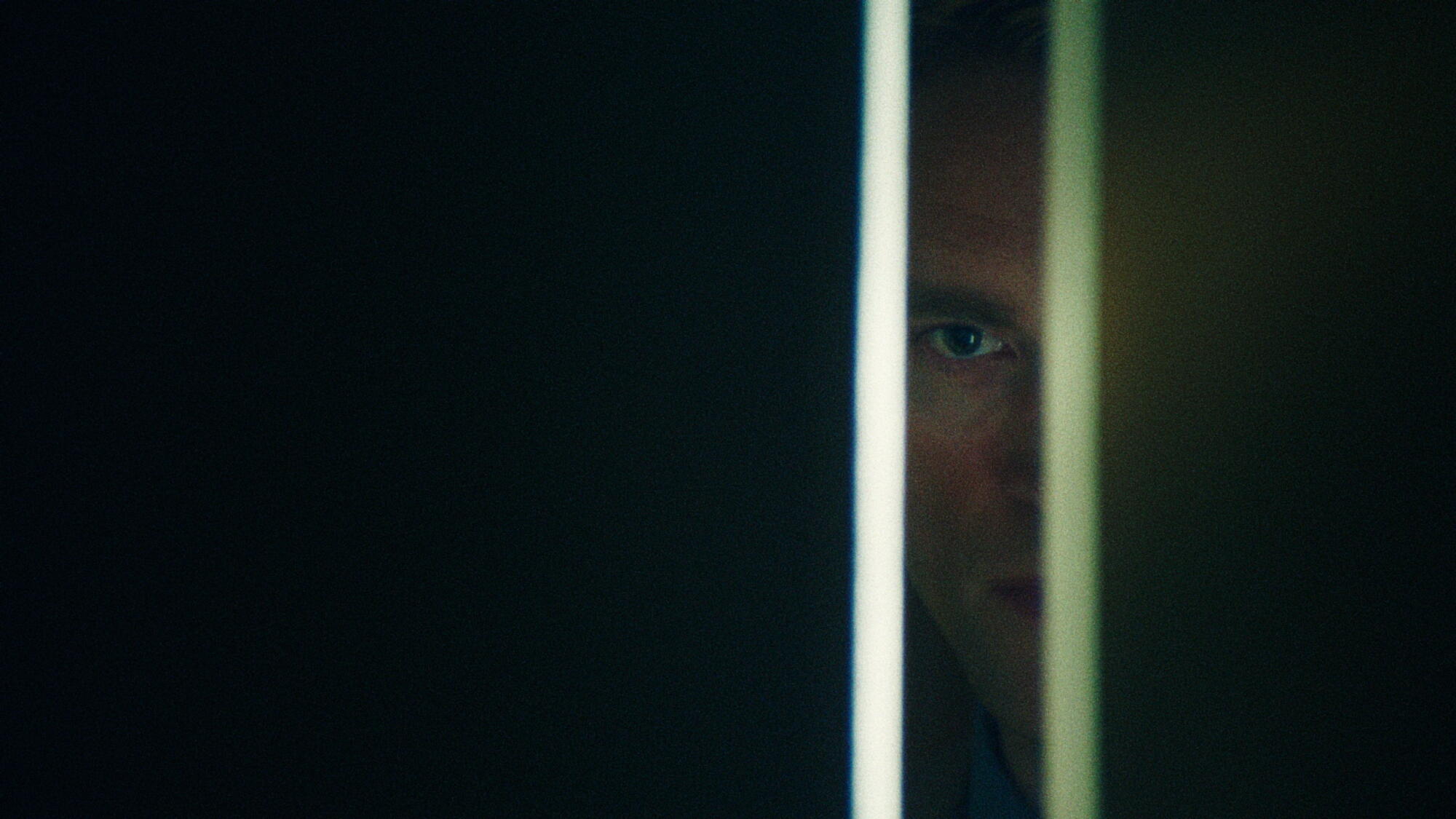
The second trap set in director Lance Oppenheim’s lurid sweeps-ploitation drama about “To Catch a Predator” follows Gisondo’s face, most often in extreme close-up, as Dan processes what he’s gotten himself into, attempts to make small talk with the predator and finally flees off set, where he sits down, steadies himself and sheds a shaken tear. The suspect, meanwhile, is an afterthought, or more accurately a punchline: He only truly captures the camera’s attention when he drops trou, rips the top off a canister of whipped cream and sprays.
It’s an arresting formal choice, repeated from the opening sequence — that of the viral “You see how this looks, right?” moment from the trailer — to the climatic suicide of Rockwall County, Texas, Assistant Dist. Atty. Bill Conradt Jr., whose case is explored in the Esquire magazine article on which Ajon Singh’s screenplay is based. With rare exception, “Primetime” doesn’t have the guts to look its predators in the eye.
And perhaps it doesn’t need to. The film directs its most gleeful energies instead to taking “To Catch a Predator” host Chris Hansen (Robert Pattinson) down a peg. The former “Dateline NBC” correspondent, who turned a newsmagazine segment about men soliciting teens for sex online into a hidden-camera sensation in the mid-aughts, comes off here as a self-serious showboat who’s mistaken tabloid trash for accountability journalism. (As one audio technician complains, “Guy thinks he’s f— Mike Wallace.”) It’s not just that stentorian voice, either. Envy of “Dateline” co-anchor Stone Phillips provides as much motivation as ratings pressure from TV executive Jeff Zucker (playing himself), with Hansen micromanaging his crew, insulting his producer, Andie (Merritt Wever), and neglecting his wife and kids in the process.
At least in the film’s early going, this yearning for adulation is played for cringeworthy comedy, and effectively so; my hardest laugh came when Hansen screens the rough cut of a new episode for his young sons and brags to them about “To Catch a Predator” being moved to a better time slot. As the tone moves toward horror, though, the decision to make the host the story quickly stops paying dividends. Indeed, though the real-life broadcaster may not find all the ego-deflation very funny, even Hansen — who told my colleague Stephen Battaglio that he objects to the film using his name and likeness under the label “inspired by true events” — would have to admit that “Primetime” avoids the thorniest questions about the true-crime empire he built.
Robert Pattinson as Chris Hansen in “Primetime.”
(A24)
Compared with David Osit’s superb 2025 documentary “Predators,” a kaleidoscopic examination of the phenomenon from the perspective of Hansen, the decoys, the suspects, law enforcement, journalistic ethics and the filmmaker’s own experience as a survivor of child sexual abuse, “Primetime” seems remarkably incurious about “To Catch a Predator” and its consequences. It would probably be too much to ask a scripted feature to explore the challenge of achieving convictions against defendants ensnared on an episode of “Dateline,” or to delve into the legal niceties of surreptitious recording. But the suspects here are so anonymized — seen in profile or steep angles through a hidden camera lens, spied at a distance on a monitor in video village, heard as a disembodied voice on a phone or read via text in an instant message — that there’s not much to argue over anyway. The predators are reduced from people to “perverts,” of scarcely more interest to “Primetime” than to the bloodthirsty viewer Hansen meets on a plane.
When an entrapped rabbi attacks Hansen during a sting, screaming in his own tight close-up, “You don’t have the right to do this. Who do you think you are?” the film briefly, mercifully breaks this pattern, and generates an electric moment of moral uncertainty. But it doesn’t last. Instead, in its depiction of the Conradt case — ostensibly meant to underscore “To Catch a Predator’s” worst extremes — “Primetime” stumbles into some of the very same gutter sleaze tactics as the original series, transforming what was in reality a grim mid-afternoon standoff into a tense, pitch-dark operation punctuated by lightning strikes, power outages and night-vision cameras.
Such poetic license offers little new insight into a topic that has already been picked over for two decades, but it might be forgiven were Hansen as easily dramatized as he is made fun of. Alas. “Primetime” itself seems to know this — why else hire Gisondo to play Jimmy Olsen to Pattinson’s unlikable Man of Zeal — yet proceeds to construct its second half around Hansen’s unraveling: an extramarital affair, about to be exposed in the National Enquirer; ratings losses to ABC competitor “Lost”; desperation to reel in a “whale” and willingness to cut corners to do it. By the time the film again confronts the specter of something wicked under “To Catch a Predator’s” glossy surface, it comes in the form of Hansen’s own phantoms, introduced in a grueling flashback to India in the 1990s and carried through to the film’s conclusion. Why we’re to care about this apparent flash of horror, if not of conscience, remains unexplained. What about the faintly ludicrous figure of the foregoing 100-plus minutes was supposed to make me care about his moral compass?
In the final estimation, then, “Primetime” isn’t a Chris Hansen hit piece. In fact, it’s so in love with its flawed protagonist that it can’t see he’s the least compelling character in the movie, an ambitious, arrogant, grasping, unscrupulous man we’ve met countless times before. Which may explain the film’s final bit of poetic license. The last we last see of Hansen, muttering lines from his script as the police process the Conradt crime scene, suggests a man disturbed, perhaps even chastened, by what he has witnessed. But of course the real-life Hansen continues his sting operations to this day under the banner of “Takedown,” a series on his streaming service TruBlu, and both there and in “Predators” he appears utterly unshaken, unhaunted, unbowed. So for all the tension between the film and its subject to come through in the press of late, the gulf between them is not so wide as one might suspect.