Zuffa Boxing’s first show in the UK, featuring Chris Billam-Smith, appears set to go ahead on Saturday despite legal action from rival promoter Boxxer.
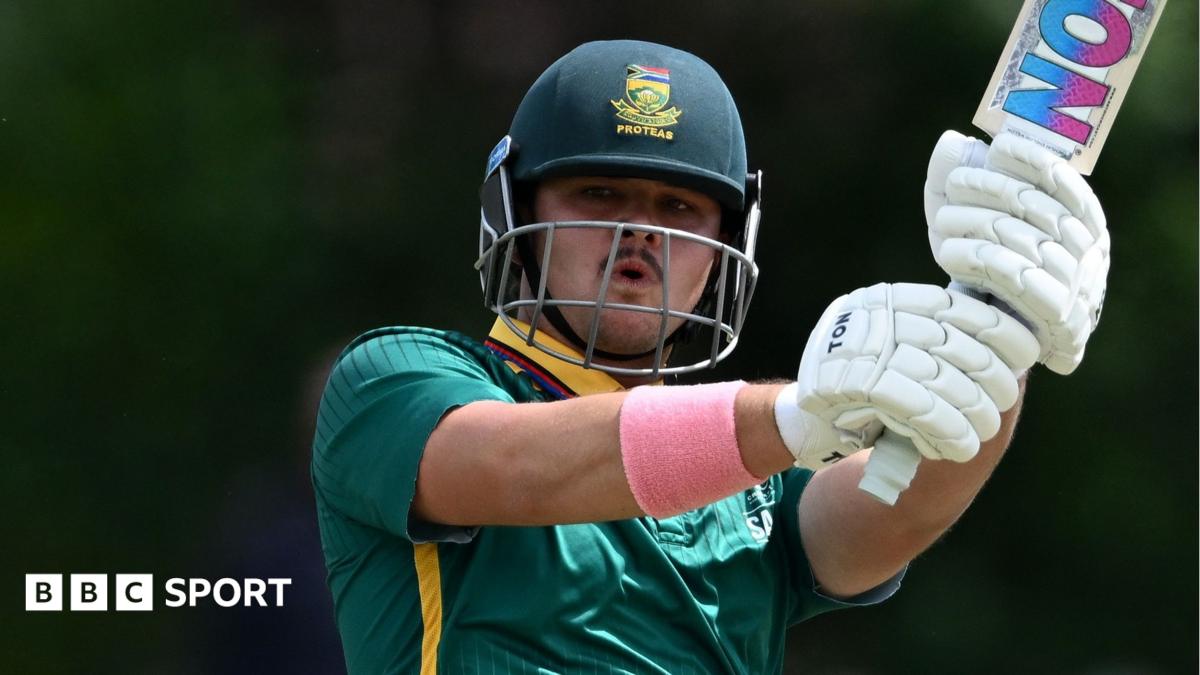
Former WBO cruiserweight champion Billam-Smith is scheduled to fight Canadian Ryan Rozicki at the Bournemouth International Centre as the headline bout, with fellow Britons Jack Massey and Sam Hickey both on the undercard.
The event is due to be shown on Sky Sports, but promoter Boxxer claims to have contractual rights involving fighters on the bill and says they are appearing without “consent or authorisation”.
BBC Sport understands that Zuffa does not accept the claims by Boxxer and plans to proceed with the event as planned.
“Boxxer can confirm it is seeking urgent injunctive relief against Zuffa Boxing and Sky Sports concerning the promotion and proposed participation of fighters who remain subject to binding contractual obligations to Boxxer,” said a statement from Boxxer.
“Boxxer have ensured that all parties involved are fully aware of the contractual obligations owed to Boxxer by the fighters being promoted for Saturday’s event. Despite this, those fighters continue to be advertised and promoted without Boxxer’s consent.
“As a result of the conduct it has witnessed in recent months, Boxxer has been left with no option but to seek further relief from the English courts.”
Zuffa Boxing, which was founded by UFC president Dana White and backed by Saudi Arabian funding, is looking to rival the sport’s established promoters.
Hi, and welcome to another edition of Dodgers Dugout. My name is Houston Mitchell and I sort of wished Chris Taylor had signed a one-day contract to retire as a Dodgers.
Are you a true-blue fan?
Get our Dodgers Dugout newsletter for insights, news and much more.
By continuing, you agree to our Terms of Service, which include arbitration and a class action waiver. You agree that we and our third-party vendors may collect and use your information, including through cookies, pixels and similar technologies, for the purposes set forth in our Privacy Policy such as personalizing your experience and ads.
Taylor is one of those guys who become a fan favorite because they seem to be wringing every ounce of athletic ability out of their body. We could identify with Taylor, because we could imagine us playing the way he did. Play like Shohei Ohtani? No. But play like Taylor? We could fool ourselves into believing that if we just stuck with it, we could have been Chris Taylor. He was us on the field.
This newsletter began a couple of weeks before the 2015 season. And I believe the first group of angry emails I got about something the Dodgers did was June 19, 2016, when the Dodgers traded pitcher Zach Lee to Seattle for some guy named Chris Taylor.
Lee had been touted as one of the best Dodgers pitching prospects in years. In the minors in 2015, he went 13-6 with a 2.63 ERA. Sure, he had a terrible outing in what turned out to be his only start with the Dodgers (4.2 IP, 11 hits, one walk, three strikeouts, 13.50 ERA), but that could happen to anyone. He was the pitcher of the future. Until he wasn’t. And to trade him for this Taylor guy, who in three seasons with the Mariners hit .240/.296/.296? Surely they could have gotten more for him than that! (They couldn’t and don’t call me Shirley.)
So, Taylor had a steep hill to climb. In 34 games with the Dodgers in 2016, he hit .207. And then, well, there’s a reason why Jerry DiPoto, who was GM of the Mariners for the trade, called it the worst deal he ever made.
Before the 2017 season, the Dodgers, or Taylor, or both, unlocked something offensively. He hit .288/.354/.496 with 34 doubles, 21 homers, 72 RBIs and 17 stolen bases in 2017 while playing five different positions and was a key player on the team that reached the World Series before losing to the Houston Astros*. Taylor hit two homers during the NLCS and one during the World Series. He was named co-MVP of the NLCS with Justin Turner. Little-known fact: He didn’t make the team out of spring training. He was brought up from the minors on April 19, 2017, when Logan Forsythe suffered a broken toe when hit by a pitch. How would Dodger, and Taylor’s, fortunes have changed if Forsythe wasn’t hit by that pitch?
In 2018 he hit .254/.331/.444, with 35 doubles and 17 homers, .262/.333/.462 with 29 doubles and 12 homers in 2019 and .270/.366/.476 during the COVID-shortened 2020 season. He made his first and only All-Star team in 2021. And then the wheels started falling off, as he struggled his last couple of seasons with the team.
Here’s a guy who was with the team from 2016-25, and what do we know about him? Not much. He never sought the spotlight, just did his job every day to the best of his abilities.
“He is the consummate pro, the way he did a trust fall when he got here,” Dodgers president of baseball operations Andrew Friedman said when the Dodgers released Taylor last season. “He came in hungry and wanting to get better, and dove in with our hitting guys, with our position coaches. … He was a huge part of so much success that we’ve enjoyed. Can’t say enough about the human, the worker, the teammate, the player.”
If you dig a little deeper into Taylor, you discover he quietly helped families who were hurt by the devastating wildfires in 2025. His CT3 Foundation raised millions of dollars for organizations in L.A. and his hometown Virginia Beach, including Children’s Hospital Los Angeles, Variety Boys and Girls Club, the Friendship Foundation, Los Angeles Fire Department Foundation, Children’s Hospital of the Kings Daughters, and Roc Solid Foundation.
Taylor’s first career home run was a grand slam with the Dodgers. His 100th career home run was a grand slam with the Dodgers, making him the only player in history whose first and 100th home runs were grand slams!
He appeared in 80 postseason games with L.A., hitting .247/.351/.441 with 13 doubles, nine homers and 26 RBIs. The most important homer may have been his walk-off in the 2021 wild-card game against St. Louis. You can watch that here.
He made an incredible catch in Game 7 of the 2018 NLCS against the Brewers. You can watch that here.
He always reminded me of that great quote from the movie “Rudy,” which I am going to alter a bit here:
“You’re 5 foot nothin’, 100 and nothin’, and you have barely a speck of athletic ability … And you’re gonna walk outta here with two World Series rings.”
Thank you, Chris Taylor, for the memories.
*-The Astros cheated during that season and postseason.
Injuries!
Wow, that’s like, three exclamation points in one newsletter. A record. I bought a bunch at the dollar store and need to get rid of them.
Injuries struck the Dodgers this week, and this time not to pitchers.
Kiké Hernández, fresh off the IL, had gone four for four in two games with two doubles and a homer when he came out of Tuesday’s game with what was diagnosed as a torn oblique. He will be out quite a while.
He initially got injured while taking batting practice before his first game back.
“I was pretty embarrassed about it,” Hernández told reporters Wednesday. “I thought it was just weird tightness. Never done an oblique before. So I didn’t really know what I was feeling. Came in today, wasn’t feeling great. I got treatment, but I thought I could play. … Compared to some of the things I’ve played through in the past, it was nothing. And, yeah, it was a little more than nothing.”
On Wednesday. Teoscar Hernández strained his left hamstring while trying to beat out a grounder.
“Don’t know how severe it is; he tested well,” Dave Roberts said after the game. “… There’s just no timeline, but something like that obviously is going to be a few weeks at the minimum. Disappointing. He’s been playing so well and he’s a big part of what we’re doing. So to lose him for any length of time is not great.”
Teoscar had been on a hot streak lately, so it’s doubly infuriating.
Alex Freeland and Ryan Ward were recalled from the minors to replace the injured duo.
Whoops! My bad
Remember that consecutive scoreless innings streak by the bullpen we talked about last time? It ended the night the newsletter came out. Sorry about that.
Up next
Friday: Philadelphia (Zack Wheeler, 4-0, 1.67 ERA) at Dodgers (*Justin Wrobleski, 6-2, 3.07 ERA), 7:15 p.m., Apple TV, AM 570, KTNQ 1020
Saturday: Philadelphia (Andrew Painter, 1-5, 5.40 ERA) at Dodgers (Roki Sasaki, 3-3, 4.93 ERA), 7:10 p.m., Sportsnet LA, AM 570, KTNQ 1020
Sunday: Philadelphia (*Jesús Luzardo, 4-4, 4.38 ERA) at Dodgers (Yoshinobu Yamamoto, 4-4, 3.09 ERA), 1:10 p.m., Sportsnet LA, AM 570, KTNQ 1020
Have a comment or something you’d like to see in a future Dodgers newsletter? Email me at houston.mitchell@latimes.com. To get this newsletter in your inbox, click here.
Opinions are divided on whether dog owners should allow their beloved pets to lick their faces or not – but Springwatch’s Chris Packham has some strong scientific backing for his take
12:40, 28 May 2026Updated 12:42, 28 May 2026
Chris is shown with his dogs Sid and Nancy(Image: Supplied)
It’s one of those questions that can divide even the closest friends: would you let a dog lick your face? Medical opinions vary.
Professor Graham Roberts, honorary consultant paediatrician in paediatric allergy and respiratory medicine, is quoted in medical journal The Hippocratic Post as saying that that babies brought up in homes with pets are far less likely to suffer from allergies than babies who grow up in pet-free homes. He states: “If you are born into a household where there is a pet, you are less likely to be allergic.”
But others, such as Professor John Oxford, emeritus professor of virology and bacteriology at Queen Mary University of London, is strongly opposed to excessively close contact with dogs.
He points out: “It is not just what is carried in saliva. Dogs spend half of their life with their noses in nasty corners or hovering over dog droppings so their muzzles are full of bacteria, viruses and germs of all sorts.”
But for BBC Springwatch’s Chris Packham, there’s no debate. Speaking on the Oh My Dog podcast, the naturalist told host Jack Dee: “When we cut our finger, what’s the first thing we do? We lick it. And you lick it because there are bacterial fauna in your saliva which have antiseptic and healing properties.”
Similarly, he says, there’s a health benefit to be gained from dogs’ saliva: “In days of old, when they were having medieval battles and doing unspeakable things to one another with swords, there were a lot of wounded people and they would allow the camp dogs to come and lick their wounds. They discovered that if the dog was licking the wound… it would be less less likely to get infected.”
All domestic dogs are ultimately descended from wolves, and Chris says that while a small amount of a dog’s saliva can be good for us, wolves’ saliva has even more healing power: “I’ve been licked by wolves, been kissed by wolves,” he says, “and they have even cleaner, or bacteriologically richer, saliva than than dogs.” They’ve never been treated with antibiotics or other medicines that might compromise their natural state, he says.
Chris adds that when wolves lick each other, it’s part of ensuring the survival of the pack: “When wolves go back to their their den, in order to carry the food which they may have caught many kilometres away, they eat it and swallow it, and partially digest it.
“So when they get back to the den, the pups lick their lips and that stimulates the adult wolves to regurgitate the food.”
“Now obviously,” Chris adds, “dogs have lost that habit – they don’t regurgitate for their young. But that licking is retained into adulthood in dogs because it’s a greeting.”
Similarly, he adds, when dogs eat each other’s poo, there is a valid reason for it. While it might seem disgusting to us – providing support for the opponents of face-licking – this also dates back to wolf behaviour.
“Research has been done recently in California,” Chris explains, “which shows that they will only eat faeces that are between one and two or three days old.”
Chris adds: “It was a relic to wolf behaviour. Because adult wolves will come back and eat all of the faeces in the den area when they’ve got cubs… because it’s a way of reducing parasite load because the eggs of those parasites are in the faeces, and they don’t want their young to get them.
“So that apparently appalling behaviour, because everyone’s nauseated by the fact that their dog eats other dogs’ faeces, that comes from the wolf and it’s about reducing parasites.”
When actors from TV’s top comedy series recently gathered for The Envelope’s Emmy Comedy Roundtable, any lessons they’d learned over the years about how not to break quickly went out the window — this year’s guests made each other laugh early and often.
Contributing to the hilarity were Danielle Deadwyler, whose English professor in HBO’s “Rooster” has her life disrupted by a bestselling writer; Donald Faison, who reprises the role of Christopher Turk, now chief of surgery, in the revival of ABC’s medical sitcom “Scrubs”; Sabrina Impacciatore, who embodies the vain managing editor of a failing regional newspaper on Peacock’s “The Paper”; Justine Lupe, who plays Morgan, a flighty but loyal sister and podcast co-host in Netflix’s rom-com “Nobody Wants This”; Lamorne Morris, who portrays New York City journalist Robbie Robertson in Prime Video’s Depression-set “Spider-Noir”; and Chris Perfetti, who features on “Abbott Elementary” as awkward but well-intentioned social studies teacher Jacob Hill.
In the course of our conversation, participants discussed surviving bad reviews, what fans misunderstand about comedy and, yes, how they keep a straight face during funny scenes (if not on The Envelope roundtable). Read excerpts from the conversation below.
What is the last thing that made you laugh out loud, whether it was meant to be funny or not?
Lupe: I have a one-and-a-half year-old. She’s just starting to talk. She doesn’t really say a lot of words at once, but she started doing this thing where, when she’s going poop, she just goes, “Oh, wow. Oh, wow.” And every time it’s just so cute.
Perfetti: I also do that when I poop, so please tell her it’s normal… I don’t know, guys. It’s scary times. I don’t find myself laughing out loud very much anymore. I guess to that end, I watch Jimmy Kimmel’s monologue every night and I think that it’s pretty drop-dead gorgeous. It’s so funny, and he’s using that platform in such a gorgeous way.
Faison: My daughter was playing a volleyball game against a very formidable opponent. I’m just going to put it out there: LeBron James’ daughter. She was serving and pushed everybody back with her serve. Boom! Everybody backs up. Now she’s got everybody out of bounds, then she taps it real soft and it falls in front of them. I laughed out loud. I was just so impressed, and my daughter looked at me like, “You mother—. Don’t you enjoy that!”
Impacciatore: A couple of days ago I was fighting with my boyfriend and it was a very bad fight and I really wanted him to understand my reasons. I was trying to put on my trousers and unfortunately I put two legs in one [side]. He started to laugh so loud and I was so upset. And then I started to laugh loud too. But it’s horrible when it happens, because I’m a very serious person when I fight.
Donald, the last season of “Scrubs” concluded in 2010. Now Dr. Turk is back working at the hospital with his buddy J.D. (Zach Braff) and a lot of the original cast. What was it like stepping back into that world?
Faison: When the pandemic happened, Zach and I did a rewatch podcast of “Scrubs,” and that’s where all of this started to formulate again. In doing the rewatch podcast, we researched what the fans liked, what we liked, and what we thought was funny. And we were very honest about it. If it sucked, we said it sucked. Then the T-Mobile [ad campaign with Faison and Braff] happened. So for the past five or six years, I’ve been playing Turk to Zach Braff’s J.D. When the revival came around, it was easy to slip back in because we had been doing this banter for so long. The only thing that’s different is that he’s older, but maturity has not set in with him yet. He’s a 50-year-old kid who’s really good at cutting people open and training younger people, but for the most part, he’s still silly.
Chris, “Abbott Elementary,” which follows several teachers at an underfunded public school in Philly, is heading into its sixth season. That means you’ve been playing Jacob for quite some time. Do you ever find the line between your personalities blurring?
Perfetti: The line between Chris and Jacob is definitely blurring. When we first started, I was shocked that [creator] Quinta [Brunson] saw me as this person. We weren’t alike at all, but I trusted that she saw something [in me] she wanted to exploit. Now, I would be so lucky to steal some of what he’s got going on. He’s unbelievably loyal and ambitious and really comfortable in his own skin. He leads from that place. And I need to shut the hell up and stop telling the writers things about my own life because now they’re showing up in the show. So truly the line between Chris and Jacob is getting weirder.
Danielle, “Rooster” takes place at a fictitious college. You actually have several degrees, including multiple master’s. Did you draw on your own experience in academia for “Rooster”?
Deadwyler: I was a student, and that’s a very different dynamic than being an administrator or a professor. But I dig education. I dig the intention of the environment, the debate, the ongoing pushing of the self and weaving that into your personal life. It’s all super connected. So I just brought that to the show.
You’re renowned for your work in intense films like “Till” and “The Piano Lesson.” Do you use a different muscle for comedy?
Deadwyler: I was always saying to the [“Rooster”] team, ‘Hey, guys, I feel good. I can breathe. I have energy to do things. Is that normal for people?’ So yes, it’s a completely different muscle. But [co-star] Steve [Carell] says this beautiful thing that characters don’t know whether they’re in a comedy or a drama. And that’s about as true as it gets. You bring full rigor and development and discipline to the making of a role, regardless of what genre.
Justine, how much do you relate to your character Morgan in the interfaith romantic comedy “Nobody Wants This”? Or is it more like you want to fix her?
Lupe: I don’t know if I want to fix her because that’s what’s compelling about her. I have so much fun playing the mess of Morgan. I relate to her. I started off where she was kind of a semiautobiographical story of [show creator] Erin Foster’s relationship with her sister, Sara. Then immediately the ship left the dock when I took the character. Justine has now taken over this idea of who this person is, and it’s a lot more sloppy and unbridled. The mess of her is actually me, because I’m a little bit sloppy as a person.
The show really captures the relationship between siblings, and sisters in particular.
Lupe: I identify with the idea of being someone who’s evolved past their original home life, and then going back into circumstances with your family, and regressing immediately. I wanted to play with that dynamic. Morgan might think that she’s evolved past certain things and then the minute she’s codependent with her sister, they devolve back into the bratty kid-like versions of themselves that are like picking on each other. I know the feeling, when you go back home and you’re like, “Wow, have I grown up at all?”
Lamorne, “Spider-Noir” is based on a Marvel comic and is set in an exaggerated version of 1930s New York. Audiences have the choice to watch the series in black and white or in color. How does the tone change between the two styles?
Morris: I watched both and they both have their own unique qualities. I would say the way folks should watch it is the way we traditionally watched TV as a people. You start in black-and-white and then when color was introduced, you would go back and watch those same films when they added color to it. While we’re filming it, [I was thinking] “How are they gonna make this visual effect look cool in black-and-white?” And then you watch it in black-and-white and you go, “What the f—?!” And I go back and watch it in color and go, “Holy — it looks great in color, too.” Everything down to the wardrobe [and] the set design, you watch it in black-and-white and it looks bold and as vivid as if it were in color. But then when you watch it in color and you go, “Holy crap, that house is blue, that suit is orange.” So just go watch it in both versions.
Sabrina, your character in “The Paper” wants to be the managing editor of the Toledo Truth Teller, but she’s really all about the clickbait. How much did you know about that conflict in modern journalism?
Impacciatore: I made sure not to know anything about it because Esmeralda doesn’t have a clue. Esmeralda is not a real journalist. Esmeralda is there for some mysterious reasons that I’m trying to figure out. She’s the queen of bull—, so I made sure not to know anything about journalists. And because I had played Valentina in “White Lotus,” I wanted to make sure that this character is going to be completely different from her. She must be out loud, she must be big. So I made some choices about her, for example, the nails. I still have these nails because I’m still shooting, but usually I don’t have long nails. But these nails started to make me think in a different way, to move my hands in a different way. Like these are guns, weapons to manipulate people. [Touches Morris with her nails.]
Morris: Consider myself manipulated.
Impacciatore: I’m the opposite. I have no filters in life. I am my own worst enemy. I’m too transparent. I don’t know how to hide feelings. So I thought, “What does she do?” Because it’s a documentary, she thinks one day she will be a star. So I have her have hair like Rita Hayworth the first day I arrived on set. They were looking at me like, “What is she doing?” They didn’t get it, so I had to explain that she wants to be a star. Once you start to play a manipulative person, you see manipulation everywhere. It’s like now I’m losing a bit of innocence, because I don’t trust anybody anymore. Now randomly I say, “Are you trying to manipulate me?”
“The Paper” and “Abbott Elementary” are mockumentaries. Does it make a difference in how you’re performing when it’s shot in that style?
Perfetti: On our best day, we’re trying to dupe people into believing that it’s real life. But similarly, I think Jacob thinks that he will be the star of this documentary whenever it comes out. He’ll be an executive producer on it. So there’s very much an element of having one foot in the audience’s experience. His outrage is heightened because he knows it’s being captured on film. I grew up doing plays and so it’s an easy dynamic to borrow from. When you’re on stage, even on your best days, you always have even a pinkie in the audience’s experience. You have to be able to be in conversation with them. The mockumentary format really allows for that and I think it informs the show in a really beautiful way.
Impacciatore: The first time that I watched “The Office,” I thought, “This project is incredible, but the light is so horrible. I will look so ugly.” I was trying not to be chosen for this project because I was so scared to be so ugly. So when I arrived on set as the character, I brought my own ring light and I said, “Guys, Esmeralda, because she knows she’s in a documentary, she needs her own lighting.” I got away with it. To me, comedy is a very serious thing.
What do audiences underestimate or misunderstand about what it takes to make a comedy?
Deadwyler: The assumption is that you’re being funny, and it’s not that at all. When you [Chris] just talked about doing plays, I was thinking theater is the thing that enabled me to really lean into the joy and transition into working on “Rooster.” There’s a rhythm and a quality of engagement that I learned completely in the theater world that applied to the gelling and the cohesion of “Rooster” in all of the scenes. So leaning into drama enables you to lean into the hilarity or the quirkiness or awkwardness of humor.
Morris: If the script is funny, it’s going to be funny if you’re an actor playing it real. And obviously you have throughout history those characters who know how to add to that, who can ham it up in such a way. Chris Farley and those guys. The Belushis, the Will Ferrells. They can take something really funny and just say, “I’m gonna add my stamp to it so when you see this type of humor, you know it was from me.” Then you have your Judd Apatows of this world who can create a funny environment and all the actors are basically playing it real and playing it straight.
Faison: People think you’re actually that funny or you’re that quick and you can come up with those jokes that fast. But really you’re saying somebody else’s words and you’re being somebody else. Somehow I got labeled as a stand-up comic. I’ve never done stand-up in my life, but I’ve been in so many comedies that people think, “He must be funny in real life.” I imagine Jack Black must hate going outside because everybody’s, “Do that skandosh, sliggidy, diggity thing that you do!”
Deadwyler: They want you to do that you do for drama, too.
Morris: “Make me cry”?
Deadwyler: They want you to give them the feeling that they know you for, because that’s all they’ve witnessed of you. They want me to ride a horse. They want me to cry. And it’s like, “I’m just trying to get these chicken wings and go home.”
And trying to break out of that, whatever that is, and move on to the next thing that you want to do.
Faison: For a long time it was very difficult as an actor to do anything else other than comedy, because you could get typecast. That’s something that happens right away. You could be the best friend for the rest of your life if you’re not careful.
Morris: I came up in traditional comedy. Second City, Chicago. When I was a kid, I didn’t care about anything else other than like making people laugh. So in plays and things, I was always cast as the comic relief, back in my ham-it-up days. Up until the beginning of my TV career with “New Girl.” I didn’t know who I wanted to be on that show. I didn’t know who I was and I’m thankful to the staff for just allowing me to grow into that character. But what I grew into was a f— clown. I just was like, “Oh man, I get to do this for seven years.” I loved every minute of it.
When you get recognized out in public or somebody knows they know you from something, who have you been misidentified as? Or do they simply call you by your character’s name?
Faison: I was at sushi once and it was actually another famous person that came up to me, I’m not gonna say their name. And he looks at me and goes, “Alfonso?” I said, “Nope.” And he hightailed it out so quick. I was like, “I gotta call Alfonso Ribeiro and tell him that somebody thought that I was him at a restaurant.” I’m glad to be recognized, but I am not Alfonso Ribeiro.
Morris: People think I’m everybody, but there’s one guy I get. Malcolm Barrett. This has been going on for 15 years. A good friend from theater school, we did every play together, he called me when I moved to L.A. and was like, “Dude, congratulations on your AT&T commercial!” I was like, “What AT&T commercial?” And he’s like, “The one where you’re playing Pop-a-Shot basketball.” And I’m like, “That’s not me.” Years later, everyone, people would come up to Malcolm all the time and say, “Congrats on ‘New Girl.’”
Perfetti: I cannot go to Philadelphia because I suddenly now have 5 million new family members. I don’t get mistaken for an actual person, but I do love the moment where you pass them on the sidewalk or on the subway and you see the wheels churning in their mind.
Lupe: I have a yoga teacher that still calls me Willa [her character from “Succession”]. I’ve been going to her for like a year and she’ll be like, “And Willa, you want to move into down dog.”
Justine, you’ve been referred to as a scene-stealer more than once for your work in “Succession” and “Nobody Wants This.” What do you make of that?
Lupe: That was the thing about “Succession.” I started when I was 26 and I felt like I got to be a fly on the wall in so many incredible scenes with all-star actors. To even be even seen among that kind of company, it makes me so happy. I feel the same way about “Nobody Wants This.” I look around and I’m like, “Wow, these are just incredible people that I’m working with.” So it’s nice to know that people are even registering my existence.
Perfetti: Willa is responsible for what I think may be one of the funniest TV moments ever. I can’t remember which season where you read your reviews and throw the iPad overboard, but it lives in my mind rent-free. The sound you make, the way that you just kind of stare off into the distance afterward, it’s one of the greatest things I’ve ever seen.
Do you read reviews of your work?
Morris: I did a movie called “Sandy Wexler” with Adam Sandler and he said to me, “Hey buddy, when a film comes out, don’t read the reviews.” He’s like, “Who cares? We got our own thing going.” … It allowed him to stay true to who he is for his fan base, which is larger than life. If you start caring so much about what people think about your art, it’s going to change what got you there in the first place. That’s what Jamie Foxx talked about after winning an award, you don’t want to switch it up all of a sudden because everybody looks at you like you’re this great actor, you won this thing, and you start doing things differently.
Impacciatore: On set, if someone gives me a feedback about something that he liked, I don’t want to hear that because it feels like a trap. And I don’t want to know what worked and what didn’t work because I want to be free. I want to explore things. Reading a review … it’s something rational that is describing something irrational. Like to me, acting is an irrational act. It’s wild when it happens. It’s going somewhere else and not even knowing what you did.
Faison: I tend to not look at reviews. This was the first time ever in my life … when “Scrubs” came out this time around. It’s because we made it for the fans. It was strictly for the fans. So when we put it out and the critics were very nice this time around, that was cool. And then you get to Reddit and Instagram and you’re waiting for them to be like, “You guys suck!” “How dare you?!” And that didn’t show up. It was like, well, I’m gonna read the reviews then.
Lupe: I once had a critic call me a “bargain-basement Gwyneth Paltrow.”
Morris: You’re like, “Gwyneth Paltrow, you say?”
Lupe: As long as the word Gwyneth is in there, I’m OK.
Morris: If someone calls me “a bootleg Eddie Murphy,” I’m retiring.
Faison: “He kind of reminds me of a poor man’s Richard Pryor.” Why, thank you.
Lupe: There was like a part of me where I was like, “Well, if I can make it through that, then whatever. Who cares? It’s just fun to hear people’s perceptions of what you’re putting out there. How people interpret it. Because sometimes you can’t see the forest through the trees. If you have enough perspective, it’s interesting to hear the dialogue about the things that you’re working on.
Deadwyler: If it’s productive, I find that critical analysis is useful. But if it’s critical stabbing, that’s useless to me.
Faison: I have a question for all of you guys. When it comes to acting on set, do you prefer to see what you just did or do you prefer to trust what the director says? When it comes to comedy, I wanna see what the f— we are doing just to make sure we’re in the rhythm.
Lupe: I don’t watch it in the moment. I’ve gotten easier on myself watching things after they’re released. When I first watched my work, I just wanted to like, in all honesty, tear my face off. It was really a tough experience.
Morris: If I trust the director, I never look at the monitor. No knock on, like first-time directors, because I work with a lot of first-time directors that I trust, but there are some from time to time that just go, “It’s great,” every take. And so sometimes I have to go, “Just give me a second, let me see.” … A couple of times [they’d tell me], “Everything you did was brilliant.” And I know for a fact it wasn’t. So now I don’t trust s— you say.
The Envelope’s 2026 Emmy Comedy Roundtable: Lamorne Morris, from left, Justine Lupe, Chris Perfetti, Danielle Deadwyler, Donald Faison and Sabrina Impacciatore.
Chris, the cast on “Abbott” are so good at bouncing lines off one another. How are you not breaking all the time, or are you?
Perfetti: It’s certainly gotten harder as we’ve gotten closer. We’re all trying to make each other break now. But we’re pretty good. The show is sort of made on the fly and we’re constantly throwing jokes away or trying to see how far we can push something. I think a lot of what we find funny on “Abbott” is people trying to avoid pain. Even when it’s ridiculous, it doesn’t feel too hard to keep our feet on the ground. We’re also so blessed with the mockumentary [format]. The story is very much told by the camera. So I’m always on, and something that comes up in that take might make it into the final cut because there’s three cameras going at all times. But Quinta probably breaks the most because … she genuinely forgets about some of the jokes that she writes. And so when she hears it again, it takes her by surprise.
Lupe: There is something to that energy of people enjoying being in that kind of space with each other, like on the verge of laughing. Riding the line of being just about to break, it’s so much fun. The chemistry between them is so palpable. When you see a break like that, you’re like, “Wow, they’re really enjoying each other.”
Morris: [It’s hard when] I’m literally loopy, it’s late and I know this actor I’m working with is a f— killer. I start laughing before we roll, and I’m like, “This is gonna be so difficult.”
Lupe: And then it’s like that thing when you’re like a little kid, where someone’s like, “Stop laughing” and it makes it worse because you are trying so hard not to laugh.
Impacciatore: If there is that moment where we can break, there is a real abandonment and there is a real freedom … It’s the most beautiful feeling about being an actor. It’s about feeling less lonely.
Faison: Danielle, you’re working with Steve. First of all, he’s gonna break everybody. I’m pretty clear that everybody on set’s gonna laugh because he’s just got that. But has anybody made him break yet? And who is that person? I know if I made Steve Carell break in the middle of a scene, I’m dancing for a while. I’m gonna be calling my mom like, “Yo, he f— laughed at my joke!”
Deadwyler: I know that they wilded out the day the bed broke [during a fight scene with co-star Phil Dunster]. But I have not seen him break in that way. He is so rigorous. He’s about building the character, building a dynamic, trying to tell a full story.
Lupe: He also must have so much practice from “The Office.”
Deadwyler: He’s strong.
Faison: I laugh harder at “Saturday Night Live” when they break than when they keep it together.
The victory of Chris Rabb in a US House of Representatives primary in Pennsylvania represents a boost to Democrats’ progressive flank, a movement that has come under heavy pressure in recent years.
Running to represent a district stretching across Philadelphia, widely considered the “bluest” in the country, Rabb handily defeated his top competitors. The state lawmaker carried about 44 percent of the vote, compared with about 30 percent for State Senator Sharif Street and 24 percent for paediatric surgeon Ala Stanford.
Recommended Stories
list of 3 itemsend of list
With no Republicans on the ballot in the primary, Rabb is expected to skate to victory in the midterm.
While all candidates sought to highlight progressives’ bona fides in the race, Rabb skewed farthest left, railing against the political machinery that has long played kingmaker in local politics.
He also broke from his opponents on US policy towards Israel. He has pledged to join 12 current members of Congress in signing a resolution recognising the Nakba and has urged his competitors to describe Israel’s actions in Gaza as a “genocide” on the campaign trail.
In one exchange with voters, Stanford appeared to say that using the term “genocide” was “harmful”. Street, whose victory would have made him Philadelphia’s first Muslim member of Congress, has also been criticised for a lack of clarity on the issue.
In a statement, Kendra Brooks and Nicolas O’Rourke, cochairs of the Pennsylvania Working Families Party, said the race was a weathervane for Democrats.
“The question in this race was not whether we would elect a Democrat, but what kind of Democrat we would choose,” they said.
“The people of Philadelphia made their choice clear: bold, working-class leadership, and an end to the broken status quo.”
Indeed, the race in many ways mirrored internal strife for Democrats, kicked into overdrive following the party’s routing in the 2024 election.
Street, the former chair of the Pennsylvania Democratic Party, and Stanford, who was endorsed by outgoing Representative Dwight Evans, have largely been viewed as representing the party’s longstanding establishment.
Underscoring that perception, earlier this Month, Axios reported that Pennsylvania Governor Josh Shapiro had urged building unions supporting Street not to run attack advertisements against Stanford, over concerns it would boost Rabb’s chances.
Rabb, meanwhile, had been endorsed by a series of progressive stalwarts, including Representatives Ocasio-Cortez, Representative Ilhan Omar and Senator Chris Van Hollen and progressive groups, including Justice Democrats and the Sunrise Movement.
The Socialist Democrats of America, who endorsed Rabb early on in the race, have been largely credited with leveraging their ground operation before the primary win.
“We will be with Congressman Rabb every step of the way in the fight to abolish ICE (Immigration and Customs Enforcement), free Palestine and win Medicare for All,” the group said on Wednesday.
Progressives targeted
Rabb’s win represents a sign of hope for progressives, who have been heavily targeted in primary races, particularly for their criticism of Washington’s longstanding support for Israel.
In 2024, both Cori Bush of Missouri and Jamaal Bowman of New York, members of the so-called Progressive “squad” in Congress, lost their primary races amid a massive influx of spending by AIPAC and pro-Israel lobby groups. All told, AIPAC and affiliated groups spent about $25m to unseat the pair.
Progressives have so far seen a mixed bag this primary season. Analilia Mejia saw an early surprise victory when she defeated former Representative Tom Malinowski in February.
Malinowski, who has long portrayed himself as a centrist, was targeted by AIPAC in the 11-way race, in a strategy that has been viewed as a major backfire for the pro-Israel lobby. Instead of boosting a pro-Israel candidate, AIPAC’s targeting indirectly buoyed Mejia, a staunch critic.
In Texas, pro-Palestine pastor and civil rights leader Frederick Haynes III also won his primary race. Haynes was also endorsed by the Justice Democrats, an organisation launched in 2017 to support progressive candidates. The group has endorsed 15 candidates so far this year.
Three other progressive candidates, Junaid Ahmed and Kat Abughazaleh in Illinois, and Nida Allam in North Carolina, lost their primaries amid a massive onslaught of opposition spending from pro-Israel and artificial intelligence-aligned groups.
Still, Justice Democrats spokesperson Usamah Andrabi said Rabb’s victory was an energising sign before a slate of competitive races in June.
Also in Pennsylvania, incumbent Representative Summer Lee easily sailed to victory in her Democratic primary race in Pittsburgh.
“The sky is the limit,” Andrabi told Al Jazeera, “and it is clear that the Democratic base is desperate for a new generation of leadership that not only takes on Republican extremism but takes on the Democratic establishment and their corporate backers all at once.”
Battlelines draw
Tuesday’s primaries across six states saw the battle lines for the midterm election in November further drawn.
The vote will determine which party controls the US Senate and the US House of Representatives, which will set the pace for US President Donald Trump’s second term in office.
Most notably on the Republican side, US Representative Thomas Massie lost his primary race to Trump-backed challenger Ed Gallrein, in what was the most expensive House primary race in history.
Massie had broken with Trump on the investigation into billionaire financier Jeffrey Epstein, the war in Iran, and US support for Israel. His loss indicated Trump’s enduring hold over the party.
But it remained to be seen if that influence would extend to the general election, with Trump’s approval ranking tanking in recent months amid the war with Iran and its knock-on economic fallout. Polls have shown the president’s support has been particularly hard hit among independents, who typically do not vote in primaries.
In Georgia, two Republicans, Congressman Mike Collins and former football coach Derek Dooley, will advance to a run-off election on June 16 in the US Senate race. The winner will take on Democrat Jon Ossoff in one of the closest-watched races of the season.
Meanwhile, Democrat Keisha Lance Bottoms, the former mayor of Atlanta, won the party’s primary in the gubernatorial race. Two Republicans, Rich Jackson and Burt Jones, meanwhile, will head to a run-off.
The race is set to be consequential, with election administration – and the redrawing of congressional maps – in the state looming large in 2024 and potentially set to play a key role in the 2028 race.
On Mother’s Day, let’s salute two single mothers who became the No. 1 fans for their sports-playing sons and stayed by their side through good and bad times.
Sylmar pitcher Matthew Torres has tried to make it through life without a father after his parents’ separation when he was 12.
“He’s not been to any high school games,” Torres said.
Enter his mother, Roxanne, who has raised four boys and one girl by multitasking and embracing sports activities. She intervened to help Matthew make it through tough times.
“Her bringing me to church and getting to know God has made me the man I am today,” the 6-foot-3, 185-pound senior said.
Torres became the No. 1 pitcher in the Valley Mission League this season with an 8-0 record while also hitting .488. He helped Sylmar win the league title and become the No. 1 seed for the City Section Division I playoffs.
He has a secret plan scheduled for Sunday to salute his mother. Who doesn’t like surprises?
At Carson High, All-City quarterback Chris Fields has a mother, Shere Fletcher, who could play or coach football the way she has dived headfirst into learning the sport to be at the side of her son.
There were once tough times as a family. Fields said the family was “impoverished.” Mom worked multiple jobs while also studying but sacrificed everything to make sure her son and daughter could have a bright future. She became a paralegal and never misses a practice or game. She should be called “Coach Fletcher” but prefers mom.
“I’ve been through everything with my mom,” Fields said.
Her Mother’s Day gift since the 49ers are her favorite team is a vintage Jerry Rice jersey and a trip to Santa Anita.
There are plenty of moms who’ve spent countless hours driving, feeding and motivating their sports-playing sons and daughters through highs and lows.
Happy Mother’s Day to all.
This is a daily look at the positive happenings in high school sports. To submit any news, please email eric.sondheimer@latimes.com.
Wood’s spot-kick, smashed high beyond Emi Martinez, was his 200th career goal and gives Forest something to defend at Villa Park next week.
The New Zealand international only returned this month, having been sidelined since October with his knee issue.
He missed the entirety of Sean Dyche’s reign, having surgery in December, but started the quarter-final first-leg draw in Porto three weeks ago.
Lucas Digne’s baffling decision to raise his arms and handle the ball as Omari Hutchinson tried to keep it in play gave Wood his chance with 19 minutes left.
There was an audible cheer when Wood stepped up to take the penalty – Morgan Gibbs-White having missed from the spot against Strum Graz and Braga this season.
There was a sense of expectation, which is only fair as Wood has not missed a penalty in 10 years – since failing to score against Hull for Leeds in April 2016.
He has now scored 28 successive spot-kicks.
“That’s what I have to do and that’s what I try to do. It’s the job, the responsibility that my team gives me,” he told TNT.
“It’s cup competitions. They come down to small margins at times. Both teams played very well. But it’s small moments that can potentially change games. Thankfully it went in our favour tonight and hopefully again next week.
“It’s one leg of the tie. It’s nice to have the advantage but going to Villa Park will be a tough game. They’re good at their place. But we’ve done the job here at home and now hopefully we’ll build into next week.”
He scored in last Friday’s 5-0 Premier League win at Sunderland – his first goal since a penalty against Midtjylland in October – and has six goals in 19 games for club and country this season.
Wood, 34, has explained he will have to manage his knee injury for the rest of his life – but after watching so much of Forest’s battle against the Premier League drop from the sidelines, he is just glad to be back in action and scoring.
“That’s all I wanted to do,” he said. “I wanted to get back fit and firing to help my team as best as I can at the end of the season. I knew we had a lot to play for when I was fighting to get fit and it’s showing. It’s some big competitions to be a part of.
“We’re in the crunch end of the season. We need to perform on both parts and we’ll be looking to do that for sure.”
Hughton then moved into management, where he guided both Newcastle and Brighton to promotion to the Premier League.
He also had spells in charge of Birmingham, Norwich and Nottingham Forest, and was most recently manager of Ghana.
“I had very good advice and all the treatment options were given to me, and I decided to have my prostate removed. The recovery has gone really well,” he added.
“I’m one year post-operation and I feel good. It’s all gone very well. I’ve got a lot of energy.”
Prostate Cancer UK chief executive Laura Kerby said: “Chris’ story is ultimately a positive one. But it’s also a timely reminder of the dangers of prostate cancer and we thank him for sharing his story in the football community, and helping men.
“Prostate cancer is now the most common cancer in the UK, and it’s still the only major cancer without a screening programme. It doesn’t give you signs or symptoms in its earlier stages when it’s more treatable, so awareness is everything.”
Four months after being pushed into retirement by the Clippers, future Hall of Famer Chris Paul apparently took delight in the team’s quick exit from the postseason Wednesday night.
Paul, the Clippers’ all-time assists leader, called out teammates, coaches and executives during his short second stint with the team early this season. In an effort to inject accountability during the team’s 6-21 start, Paul instead angered many, including head coach Tyronn Lue, who wasn’t on speaking terms with Paul at the end.
“Everyone was fed up,” a league source told The Times in December.
Paul, who is second to John Stockton in NBA career assists with 12,552, posted at the time about his being cut on social media, saying “Just Found Out I’m Being Sent Home,” along with a peace emoji.
For their part, the Clippers turned around their season, going 36-19 after a horrific start to finish with a winning record for the 15th consecutive season at 42-40.
Then came the dispiriting loss to the Warriors and the 40-year-old Paul’s opportunity to get in the last meme, even though it wasn’t exactly original. Philadelphia 76ers star Joel Embiid posted the same one when the team traded guard Ben Simmons in 2022.