Chris Wright

Trump: Saudi Arabia must join Abraham Accords as part of nuclear deal

July 23 (UPI) — President Donald Trump said on social media Thursday that Saudi Arabia must sign the Abraham Accords as part of its nuclear deal with the United States.

Trump added that the nuclear deal will be approved but Saudi Arabia’s entry into the Abraham Accords is a required condition.

“The Civil Nuclear Deal (There will be no enrichment of material!) being made between the United States Department of Energy and Saudi Arabia, which pertains only to non-military use such as the ones that Iran and UAE (and others) already have, will be approved, but it is totally subject to Saudi Arabia joining the very respected and successful Abraham Accords,” Trump wrote. “The United States is not opposed to Civil (Non-Enriched) Nuclear Facilities.”

Energy Secretary Chris Wright and Saudi Energy Minister Prince Abdulaziz bin Salman signed the agreement on Wednesday. The Department of Energy says U.S. companies will benefit from the deal with involvement in establishing nuclear facilities in Saudi Arabia to the tune of billions of dollars.

The nuclear deal is to last 30 years and will involve the United States supporting Saudi nuclear development.

The Abraham Accords are meant to normalize relations between Israel and Arab nations in the Middle East, including the United Arab Emirates. Saudi Arabia’s entry into the Abraham Accords would be a step toward a diplomatic relationship with Israel.

Saudi Arabia has called for progress toward Palestinian statehood, a sticking point that has drawn Israel’s criticism of the nuclear deal with the United States.

Lawmakers on both sides of the aisle have also voiced skepticism over the nuclear deal, fearing that it may ultimately lead to the enrichment of uranium and plutonium for the development of nuclear weapons.

“This agreement will set off a nuclear race in the region, further disincentivizing Iran from limiting its own program,” Sen. Chris Murphy, D-Conn., posted on social media.

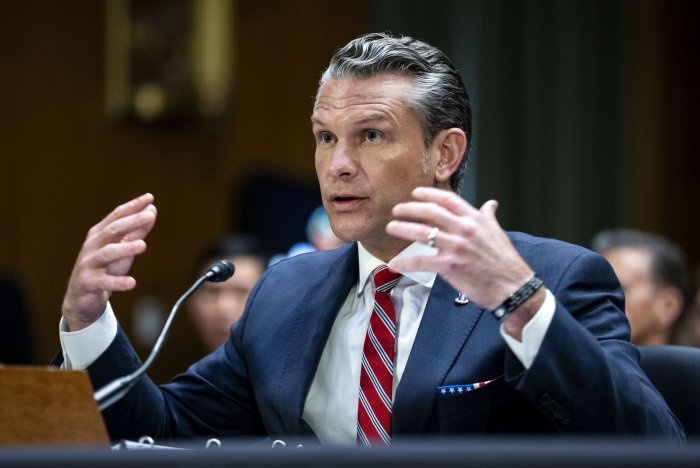
Secretary of Defense Pete Hegseth speaks during a Senate Appropriations Committee hearing on President Donald Trump’s June 24 supplemental funding request at the U.S. Capitol on Tuesday. Photo by Bonnie Cash/UPI | License Photo

Source link

Trump: Proposal is ‘unacceptable,’ but Iran signals openness to peace talks

Iran’s Foreign Minister Abbas Araghchi speaks at a press conference after attending the BRICS Foreign Ministers’ Meeting at the Embassy of the Islamic Republic of Iran in New Delhi, India, Friday. Araghchi signaled a willingness to negotiate with the United States. Photo by Rajat Gupta/EPA

May 15 (UPI) — President Donald Trump told reporters Friday that the first sentence of Iran’s peace proposal was “unacceptable” and accused the country of backtracking on its nuclear policy, but Iran signaled it’s still ready to negotiate.

Trump said the first sentence was an “unacceptable sentence, because they have fully agreed no nuclear, and if they have any nuclear of any form, I don’t read the rest,” CNN reported he said. He added that he is unsatisfied with the “level of guarantee from them.”

Trump said Iran had agreed to give up its enriched uranium, which he calls “nuclear dust.” But “then they took it back,” he said.

But Iranian Foreign Minister Abbas Araghchi said Friday that discussion about uranium enrichment “is currently not on the agenda of discussions or negotiations,” but the country is willing to talk about it later in negotiations, according to Iran’s news agency Tasnim.

Iran has said it doesn’t plan to build a nuclear weapon but has refused to give up its uranium.

Trump’s comments were on his trip from Beijing after meeting with Chinese President Xi Jinping.

When reporters asked if Xi had agreed to pressure Iran to reopen the Strait of Hormuz, the president replied, “We don’t need favors,” but that “we may have to do a little cleanup work,” without clarifying what he meant.

“We had a little monthlong cease-fire, I guess you’d call it, but we have a blockade that’s so effective, that’s why we did the cease-fire.”

China appears hesitant to get involved in the conflict, Al Jazeera reported.

Trump said the United States and China agree that the strait must be opened and the war must end. About half of China’s crude oil comes through the strait.

Araghchi said Iran would welcome Chinese diplomacy to help defuse the war with the United States.

“Any effort made by the Chinese to support diplomacy will be welcomed by the Islamic Republic of Iran,” he said at a press conference in New Delhi, India. He was attending the BRICS foreign ministers’ meeting.

But he also said that Iran considers itself as the protector of the strait.

Araghchi said on X that with Indian Foreign Minister Subrahmanyam Jaishankar, he “clarified that Iran will always carry out [its] historical duty as protector of security” in the Strait of Hormuz.

He added that “all friendly nations” can “rely on safety of commerce.”

Following his visit with Xi, Trump also said he is considering removing sanctions on Chinese companies that have been buying Iranian oil as the war and high gas prices linger.

“I’m going to make a decision over the next few days. We did talk about that,” Trump said on Friday.

U.S. Energy Secretary Chris Wright told CNBC Friday that China will likely buy more oil from the United States.

“I suspect we’ll see a growth in their oil imports from the United States,” Wright said.

“But ultimately, the world needs to get the Persian Gulf open. Iran’s attempt to hold the whole world hostage, people know it’s temporary.

“One way or the other, we will see an end to the Iranian nuclear program and we will see free flow of traffic through the Strait of Hormuz. That can happen relatively rapidly with an agreement with Iran,” he said.

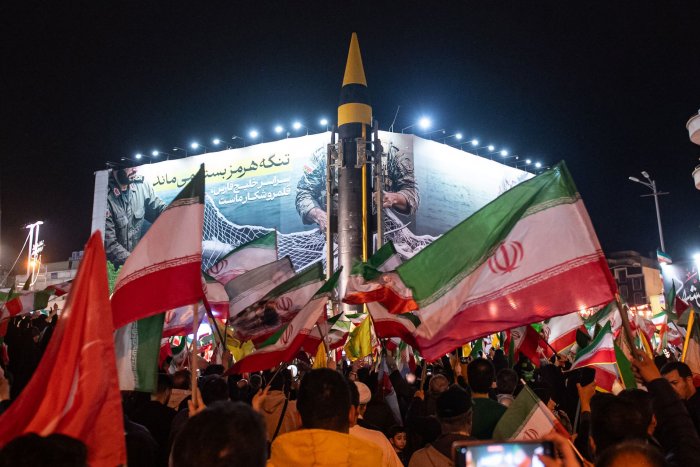
A missile identified as “Khorramshahr-4” was on display during a public rally in Tehran’s Enghelab Square on April 21, 2026. Photo by Behnam Tofighi/UPI | License Photo

Source link

Wright: Trump ‘open’ to suspending gas tax during Iran War price surge

May 10 (UPI) — Energy Secretary Chris Wright said Sunday the Trump administration is “open” to the possibility of suspending the federal tax on gasoline sales as prices spike amid the U.S.-Israeli war against Iran.

Wright said during an appearance on NBC’s Meet the Press he and Trump are “open to all ideas” to lower energy prices, including following the lead of some U.S. states in temporarily shelving taxes on gas at the pump amid the price surge.

“All measures that can be taken to lower the price at the pump and lower the prices for Americans, this administration is in support of,” he said. “We are constantly looking for different ideas.”

Citing previous measures such as releasing oil from the U.S. strategic petroleum reserves and “revising federal regulations on summer gasoline blends to make it easier for American refineries to produce more gasoline,” Wright said the suspension of the 18-cents-per-gallon federal tax on gas is also on the table.

“We are working every day to offset this rise in prices because of a critical conflict in Iran to drive prices down, and we’re open to all such ideas,” he said.

Wright’s comments came as the average national price of a gallon of unleaded gasoline stood at $4.52 per gallon as of Sunday, according to the Automobile Association of America.

U.S. drivers have seen sharp increases in pump prices in recent weeks after Iran blocked the vital Strait of Hormuz waterway connecting Persian Gulf oil and natural gas producers with world markets.

The move came in retaliation to a wave U.S.-Israeli bombing attacks on Iran beginning Feb. 28, which Washington and Tel Aviv claim were necessary to prevent the imminent development of a nuclear weapon by Iran’s rulers.

The price of regular gas last week surged 25 cents for the second consecutive week to $4.55 — $1.40 higher than they were a year ago and marking their highest level since 2022, the AAA reported.

Crude oil prices have dipped below $100 per barrel while a fragile cease-fire between the United States and Iran has been in place and negotiations to reopen the Strait have been ongoing. But with global oil supplies tightening, upwards pressure on pump prices continues.

In a separate appearance on CBS News’ Face the Nation on Sunday, Wright refused to predict were gas prices were heading.

“I don’t know the future of gas prices,” he said while admitting that “gasoline and diesel prices are up, and they will remain up while this conflict’s in place, and then they will come back down.

“And, ultimately, they’ll come back down lower than they were before.”

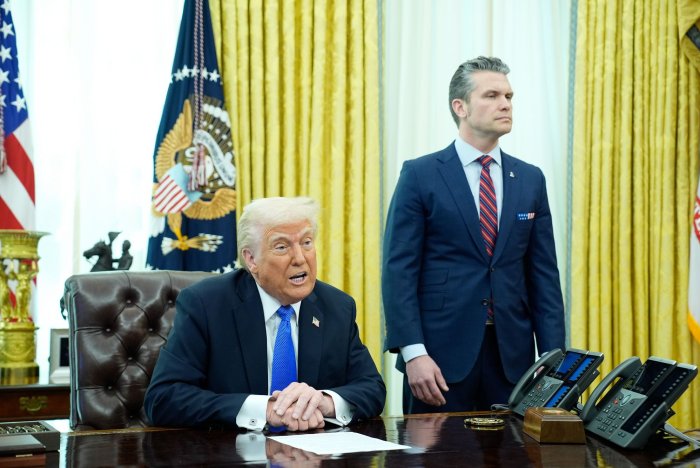
President Donald Trump is joined by Defense Secretary Pete Hegseth as he announces that Boeing has won a contract for a new fighter jet in the Oval Office of the White House on Friday. Photo by Yuri Gripas/UPI | License Photo

Source link