
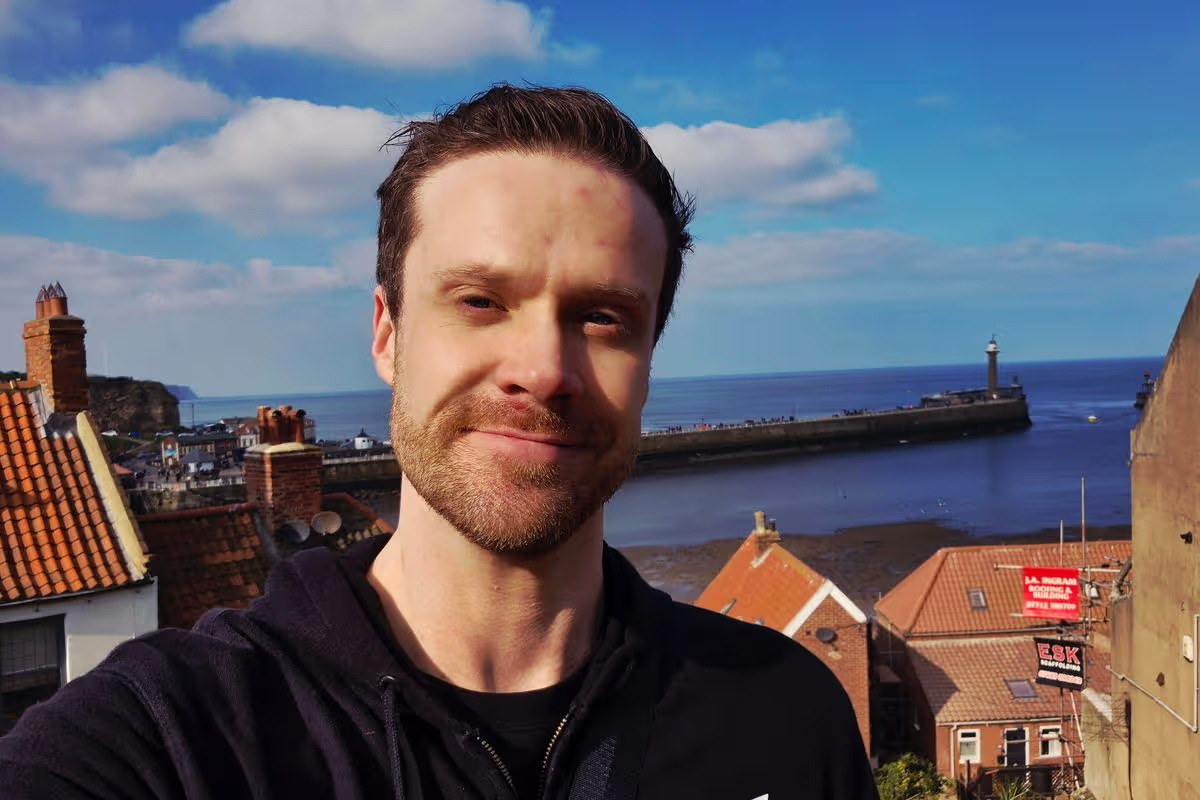
In this picturesque North Yorkshire town, famed for its seafood and imposing abbey, I indulged in fish and chips, admired the views, and enjoyed a walk up a particularly famous set of steps

I paid a visit to a picturesque North Yorkshire harbour town
(Image: Matt Davies)
A seaside town with award-winning fish and chips, friendly locals, and a literary claim to fame can be summed up in one word. In an enviable assignment last weekend, I paid a visit to the picturesque North Yorkshire harbour town of Whitby, famed for its imposing Gothic abbey ruins, prominent links to Dracula and Captain Cook, and, of course, its nationally renowned fish and chips.
As I drove into town on a bright Saturday morning in March—one of the first truly sunny days of the year—I couldn’t help but notice a sign proclaiming Whitby as the “Home of Scampi” (or words to that effect), which immediately raised my expectations for the day’s task.
Whitby’s reputation for seafood is well known, with an abundance of chippies to choose from. Among them is Trenchers on New Quay Road – the proud winner of this year’s Best Restaurant at the prestigious National Fish and Chip Awards.
In what was perhaps a testament to Trenchers‘ recent culinary acclaim, I was surprised to find a long queue already forming outside the restaurant when I arrived at around 10.30am.
Accompanied by my excitable cocker spaniel, Luna, I opted for Trenchers’ takeaway next door, where I found myself in the company of just one other patron, who was quick to praise the quality of Whitby’s seafood.
Opting for cod, chips, mushy peas and a side of curry sauce for £16 in total, I sat on a bench opposite the eatery and took in the seaside scene, where market traders catered to the busy foot traffic at pop-up stalls.
Quickly polishing off my chippy lunch, a delicious serving of fish with light, crispy (albeit slightly pale) batter and golden chips, I found myself hard-pressed to find anything to criticise, mentally awarding the meal a comfortable 8.5 out of 10.
Having disposed of the rubbish, I decided to take a stroll into the harbour area towards Whitby Swing Bridge over the River Esk, so I could access the other side of the town and the looming abbey on the hillside.
As I breathed in the sea air and admired the views across the water, my attention was drawn to an impressive ship, which I later discovered was The Whitby Endeavour restaurant.
Luna and I set off on a walk to the bridge, only to discover that it was temporarily closed. It meant that I had to walk some distance around to reach the other side, according to some friendly locals, but I was keen to walk off my meal, so we set off.
As I crossed a larger bridge, I was offered spectacular views over the entire town, the river flowing beneath me and many boats resting on the bank next to the train tracks awaiting their next outing.
I eventually worked my way around to the other side and passed the Tolkien-themed Middle Earth Tavern as I entered the narrow, shop-filled Church Street. There, I found myself ogling the many books, trinkets and baked goods on display.
Next, I made my way to the famous 199 Steps on Whitby’s East Cliff, which lead up to St Mary’s Church and the breathtaking 7th-century Whitby Abbey beyond.
In Bram Stoker’s Dracula, the titular vampire takes the form of a dog and bounds up the steps to the church. In similarly exuberant fashion, Luna hauled me up all 199; though, in my case, it was likely a blessing for my fitness.
Stopping for several photos along the way, I couldn’t help but be left awestruck by how beautiful Whitby is; it’s something that you really notice as you ascend the steps, each level revealing a different angle of the town.
Once you arrive at the church, its distinctive Gothic atmosphere is palpable – dozens of gravestones overlook the town below, while a sharp sea breeze envelops you as you admire the coastal vistas.
Whitby Abbey is also a sight to behold, a majestic ruin that’s sure to inflame the imagination of any visiting history buffs, and to top it all off, there was a dog-friendly café nearby.
After a quick latte and a Twix – while Luna enjoyed some water and a few meaty dog treats – we made our way back down the steps, just as the crowds began to gather in the early afternoon.
In a surprising but touching twist that may offer some insight into the beauty of the town, I even spotted a man going down on one knee and proposing to his girlfriend outside the church.
Once we were safely back in the car, I ultimately found myself wishing that I could have stayed longer. Whitby has found itself a lifelong fan, one who will most definitely be returning.
And, if I had to sum it up in one word, although this is a hard task with a place I like so much, it would probably have to be stunning.