‘Aprende Peque,’ ‘Spanish with Liz’ teach kids Spanish on YouTube
Before the onset of YouTube, U.S. parents had very limited options when it came to video programs that helped teach their children Spanish.
There was, of course, the ever-popular Nickelodeon show “Dora the Explorer” and before that, the PBS show “Amigos,” that looked to instill the basics of Spanish into kids across America.
These programs — while useful, innovative and entertaining — never allowed for full-on Spanish-language immersion for viewers, relying heavily on English as their primary tongue.
Now, kid-friendly videos for language acquisition can be found on all corners of the internet with YouTube playing host to the lion’s share of the market, ranging from partially in Spanish to only in Spanish.
The Times spoke to three of the most viewed Spanish-language educators for children on YouTube to see what goes behind creating highly engaging children’s content.
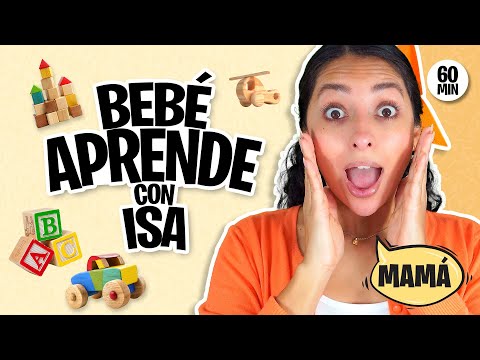
Isa Muñoz — “Aprende Peque”

Isa Muñoz, 33, had known from a young age that she wanted to become a teacher.
Growing up in the Baja California city of Mexicali, Muñoz’s parents worked as teachers, as did many of her aunts and uncles. Seeing how fulfilling her family members’ careers were, she dedicated her life to educating young children.
After graduating with a bachelor’s degree and master’s in special education, she worked as a preschool teacher and a private tutor before one day receiving a call from veteran program producers Alexandra Cohen and Karen Garzon.
Born and raised in Venezuela, but now raising children in Miami, Cohen and Garzon were disappointed after scouring the internet for video tools to help them make learning Spanish fun and effective for their respective children and finding few helpful resources.
To fill this gap in the market, the duo teamed up with their lifelong friend Jessica Rutenberg to create the Spanish-only educational YouTube channel “Aprende Peque.”
As the idea came into fruition, the team searched for the perfect person to be the face of their channel — specifically someone who had experience working with kids and understood how to efficiently communicate with them.

That’s where Muñoz came in.
As part of the auditioning process, she flew out to Miami from Mexicali to try out for the role. The trip resulted in two days of filming which produced three full episodes of the program that included 21 featured songs.
In the almost three years since “Aprende Peque” launched, the channel has gained 1.05 million subscribers on YouTube and posted more than 500 videos, which have amassed more than 500 million views.
The thumbnail of each video features Muñoz’s ever-emotive face, as well as her signature orange-and-white outfit and large orange head bow. More than just adding an energetic face to the videos, she also integrates elements from the latest studies on child education into each episode.
Interwoven between Muñoz’s warm, patient and interactive lessons are musical numbers that range from nursery range to rock to folksy with visuals that fluctuate between grounded and fantastical.
While Muñoz had always envisioned herself as an educator, she wasn’t as ready to be known for singing.
Muñoz works closely with the program’s musical director, Pablo Estacio, to craft the songs featured in each video. The Venezuelan native has served as the bassist and songwriter for the band Bacalao Men for over 27 years and earned a bachelor’s degree in music production and engineering from the lauded Berklee College of Music.
“Pablo has helped me tune, refine and shape my voice to the point that it’s at right now,” she said.
Those musical detours are crucial to breaking up the episodes into distinct sections and provide renewed points of interaction in videos that often last between 40 minutes and an hour.
The process of crafting such long and engaging videos often takes between three and five weeks, Muñoz noted.
“It takes about a week to write one script,” she said. “After that, we film the episode, which takes about 12 hours. Then comes the part that requires the most amount of time, which is editing and integrating any necessary animations.”
The team aims to complete two to three episodes monthly in order to have a constant stream of content year-round.
While making “Aprende Peque” episodes is creatively exhilarating, Muñoz said it’s the fan reaction and interaction that mean the most to her.
“We’re so lucky that our audience has so much love to give and that they send that love through their messages,” she said. “I personally get motivated by knowing that this whole project is actually helping children.
“For a person to reach a point where they believe that the program has worked so well that they feel compelled to write in to thank us is so wonderful,” she said. “That’s something that we’re so thankful for and something that inspires us.
On a personal level, Muñoz has also experienced moments of deep connection with her family thanks to “Aprende Peque.”
“My mom has joined me on several occasions at meet and greets and I’ve seen her shed tears of joy when she sees the impact that the program has had on kids,” she said.
Liz De León — “Spanish with Liz”

In contrast to Muñoz, Liz De León, 39, never really thought of entering the education space before kick-starting her YouTube channel “Spanish with Liz.”
The native Texan was born in El Paso, but spent the first few years of her life just across the Mexican border in Ciudad Juárez. She moved back to Texas for middle and high school before ultimately settling in California for work.
De León was inspired to start her YouTube channel after having kids of her own.
“Once my kids were born, I wanted them to grow up with my culture and my language and the roots that I value so much,” she said.
At first, De León thought she would be able to find plenty of helpful of educational videos online. But much like Cohen and Garzon, she soon found that many of the visual resources out there came up short when it came to teaching fundamental elements of Spanish.
“A lot of it was catered toward only grabbing the attention of the child with a lot of ice cream and candy and sweets and high energy,” she said. “It didn’t teach the true fundamentals of things moms worry about.”
De León’s husband was the one who first suggested that she record herself singing songs that she created to teach her kids. She began to consider it more seriously after a relative told her that her teaching style was similar to the uber-popular kids’ YouTuber Ms. Rachel.
“That’s when I was first introduced to an educator on-screen that I felt aligned with when it came to teaching — with clear pronunciation, a storyline, making sure everything that was spoken was foundational and root words,” she said. “I really liked her format and thought, ‘She’s just a regular person like me and she did it.’ So I just did it.”
Filmed in front of a green screen in one of the rooms of her San Diego home, De León’s videos aim at helping young children learn vocabulary for specific real-life situations.
Donning her signature pink T-shirt and rocking a slicked-back ponytail, she attempts to minimize the stress of things like going to the airport or a dentist visit by introducing kids to the many elements that factor into those experiences. She creates levity in the videos by having colorful animated backgrounds, through the use of puppets and by singing songs throughout.
Raised in a household that put a premium on education, De León had looked at life through the eyes of a student — which proved particularly helpful as a registered nurse specializing in anesthesia.
“If you ask any medical person, they are teachers. Half of your job is education and teaching people how to stay healthy and to take care of themselves,” De León said. “You have to learn to cater to what’s developmentally appropriate to each person. You learn about child behavior, child psychology and the formation of the brain and how they learn.”
Each episode is crafted with two very important subjects in mind for De León: her two kids, who are 4 and 5. As the kids develop, so does the show.
“They are now understanding the episodes at a deeper level,” she said. “For example, we just watched the Halloween episode a couple of months ago and they now understood that October is a month within the year.”
Her children are also her first round of critics and help her understand what works and what doesn’t. Perhaps most importantly, they are De León’s gauge for how engaging her songs are.

“They help me with the music, actually,” she said. “If they don’t learn it and it doesn’t stick with them I know it’s not good enough. Then I redo it. They’re very much my little co-creators.”
One of the reasons “Spanish with Liz” has reached more than 18 million views on YouTube is the obvious care and research that goes into every video. Being a nurse and having a physician husband, De León has extensive access to medical professionals that let her borrow tools and inform her on what they’ve seen be effective methods for working with children.
“Something unique about our channel, is that we’ve thought about the storyline, how we’re gonna say things, the phrases, what works, what doesn’t work, what kids are afraid of and how we’re gonna tackle all that,” she said. “ So much purpose goes into each episode and then we try to borrow the equipment that’s actually going to be used so they can see it.”
And when she doesn’t have an expert on a topic immediately at her disposal, De León seeks out professionals who can thoroughly inform her. For example, when working on an episode about potty training, she took a class from two potty training experts.
Being that making videos is her third job behind being a nurse and a mom, time is a fleeting asset for the YouTuber. Because of that, each video takes about two months to create from start to finish with De León serving as the writer, director, songwriter and preliminary editor. She is aided by her husband who helps record and occasionally functions as a puppeteer, an additional editor, a composer, a designer and a babysitter, whose help allows her the time to record.
But having a team like that doesn’t pay for itself and that’s where De León’s more than 78,000 YouTube subscribers come into play.
According to the content creator, all the money made from the channel goes into paying for the fees associated with production and the rest goes to donating to three different charities — one that helps immigrant families in the U.S.; another is an orphanage in Mexico; and the final one is World Central Kitchen, which provides food relief in response to humanitarian, climate and community crises.
De León still often finds herself shocked that she’s able to have a platform that helps empower people to achieve new goals and that she’s touched so many lives through her videos.
“Isn’t it crazy that YouTube can change someone’s life?” she asked. “I think of all the artists that came up from putting their music out there on YouTube. I feel like it’s a place the whole world can tap into, mostly for good.”
Miss Nenna — “Spanish for Minis”

From her early days of growing up in the L.A. area, Miss Nenna, 32, felt a deep connection to the universal language of math. So profound was her interest that she obtained a bachelor’s degree in civil engineering and now works at a utility firm in the San Diego area.
As an eighth grader, when she served as a math tutor, Miss Nenna thought about what went into becoming an effective teacher.
“I thought about how I could help someone learn to understand it and make it fun,” she said. “So it was always really fun trying to figure out what worked for some students and what what didn’t work for others.”
She has since taken that ethos and turned it into the YouTube channel “Spanish for Minis,” which has 289,000 subscribers and has amassed over 31 million views. As is popular in the genre, her videos are broken into segments that involve a mix of direct instruction, interactive conversation and exceedingly catchy sing-alongs.
Just like with De León, Miss Nenna first got into the video-making game based on a suggestion from her husband made back in 2022.
“He saw a lot of potential in me because I have a bubbly personality around kids,” she said. “He mentioned I should try teaching Spanish and science to kids and added that it would benefit our child.”
It wasn’t until the couple’s 16-month-old son was diagnosed with speech delay that she really got serious about making videos so that her son could interact with her when she was away.
When the project first began, Miss Nenna had no experience with shooting and editing videos.
“I just sat with my husband and we’d watch videos on how to edit, how to use different graphics, how to make sure it’s OK for us to use certain songs,” she said. “So a lot of trial and error and a lot of research, since it’s just the two of us.”
“Spanish for Minis” videos are filmed at the couple’s residence in front of a green screen and each episode takes about 40 hours to complete.
“None of it is ever scripted. I kind of just set the camera myself and all the lighting,” she said. “I get a basket and I put a bunch of toys in it from my kids’ playroom, then I walk into a room and I record myself.”
While filming, Miss Nenna imagines that she is speaking directly to her almost-4-year-old son or 1-year-old daughter in order to make sure she’s in the right headspace.
The topics of the videos aim to evolve with the ever-changing needs of her son. Most of the earlier “Spanish for Minis” videos were focused on babies and now they have transitioned into content for toddlers.
Production on Miss Nenna’s videos has slowed down in recent months as she has focused her time on raising her children, but she has goals to put out two videos each month in 2026.
One of the more rewarding aspects of “Spanish for Minis” is the interactions that Miss Nenna has with parents and children who watch the program.
“I get messages every day, and I try my best to respond to as many as I can because I love connecting with the parents online,” she said. “I also have Cameo where I make personalized videos. Those are a lot of fun because I always message the parents and it’s like, ‘Hey, give me every single detail about what your kid loves. I want to make sure this is a really personalized video and that they enjoy it.’”