charter reform commission

New push for LAPD oversight moves toward November ballot

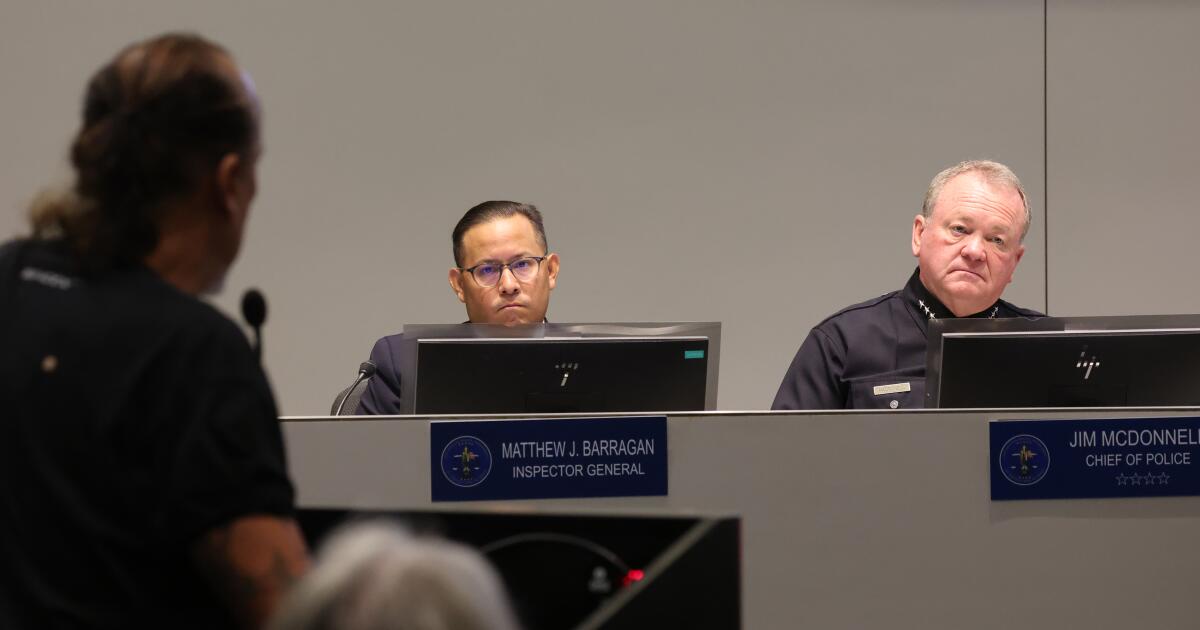
A series of proposed changes to the city’s charter — essentially its constitution — could give elected leaders in Los Angeles more oversight of the police department and enable the chief to fire problematic officers, reforms long sought by advocates that are likely to once again face fierce opposition.

Among the recommendations approved last week by the city’s Charter Reform Commission was a proposal that would require any LAPD accountability-related motion or ordinance passed by the City Council to automatically become law if not acted on by the Police Commission within 60 days.

Once the language is finalized, the proposals must clear the City Council and its committees before they can be put to voters on November’s ballot.

Another proposal would give city leaders the ability to override the policy decisions by the Police Commission, a board appointed by the mayor that sets the LAPD policies, oversees its budget and serves as a civilian watchdog.

With the police chief taking criticism for a recent rise in shootings by officers, several proposals sought to strengthen accountability for the use deadly force. One recommendation could require the LAPD to purchase “no less than” $1 million of liability insurance for its roughly 8,700 officers. The insurance would be used to cover legal fees if an officer is found liable for a wrongful injury or death, instead of tapping into the city’s General Fund budget.

Another potential change would “clarify and strengthen” the police chief’s ability to “to initiate and pursue the removal of officers with documented, repeated histories of harm or misconduct.”

Under city rules, the chief of police does not have the authority to fire an officer. Instead, they must send officers whose misconduct they deem severe to disciplinary panels, which occasionally lead to lighter penalties. The new proposal would give the City Council the power to override decisions not to fire, still leaving officers the right to appeal through the courts.

Mayor Karen Bass vetoed a similar bid to rework the disciplinary process in 2024.

The latest proposals drew cautious optimism from activists, many of whom claim the Police Commission is too cozy with the LAPD and have pushed for stronger independent oversight.

Godfrey Plata, deputy director of the nonprofit L.A. Forward, called the proposals a “huge victory” in the fight for police accountability.

“Months ago, police reform wasn’t even on the Charter Commission’s to-do list. Today, because community members came together to force conversations that likely never would have happened on their own, we have multiple reforms headed to City Council,” Plata said.

The Police Commission and LAPD issued nearly identical statements that said they are looking forward to working with the City Council on the charter reform process.

An LAPD spokesman declined to say how Chief Jim McDonnell felt about the proposal, saying it wasn’t “in his interests to give his opinion on something like this as long as it’s still with the full council.”

Samantha Stevens, a Los Angeles political consultant and former legislative staffer, said she is worried the proposed changes are a shortsighted solution to address police abuses that will create another layer of bureaucracy.

“If we don’t like how they’re running things, we should replace the commissioners.” she said. “I don’t know that this will be as effective when you’ve got 15 councilmembers now telling LAPD what to do in their own districts. Is that now too many cooks in the kitchen?”

The charter commission, which has been meeting since last July, must send all its recommended changes to the City Council by April 2.
Source link

L.A. City Council should expand to 25 members, charter reform commission says

The size of the Los Angeles City Council should increase from 15 to 25 seats, the city’s Charter Reform Commission recommended Thursday.

On a 9-2 vote, the commission backed the council expansion, with supporters saying that smaller ethnic groups, including Black and Asian American and Pacific Islander residents, would be better represented.

The council has consisted of 15 members since 1925, when the city had fewer than 600,000 residents, compared with 3.9 million today.

“I think we owe the people of Los Angeles to walk out of this room saying that we are a commission that’s concerned about equity, that we are a commission that is concerned about Black and AAPI folks who live in this city,” said Commissioner James M. Thomas, who supported the expansion.

The commission also recommended ranked choice voting, where voters list candidates in order of preference, for municipal elections beginning in 2032. The city should also establish a new position, chief financial officer, which would essentially be a title change for what is now called the city administrative officer, the commission recommended.

By April 2, the commission, which has been meeting since last July, must send all its recommendations to the City Council on changes to the city’s governing charter. The council will then vote on which changes will go before city voters as ballot measures in November.

Thursday’s meeting was packed with supporters of City Controller Kenneth Mejia, who feared that the commission would gut his office’s watchdog role.

Among the CFO’s duties would be preparing the city budget, advising the mayor on fiscal policy and producing revenue forecasts — duties currently under the CAO.

Tim Riley, owner of Heavy Water Coffee Shop in Chinatown, said trust in government is at an all-time low and urged the commission to keep the controller’s powers intact.

“Kenneth has been the only form of government that we have felt has represented us as a community,” Riley said.

City Administrative Officer Matt Szabo spoke briefly and confirmed his support for designating the CAO as the city’s chief financial officer, without impacting the controller’s office. The CFO role recommended by the commission does not take away any duties from the controller.

In 1925, each of the 15 City Council members represented about 38,000 residents. Now, each council district has an average of 265,000 residents. If the council grows to 25, each member would represent roughly 159,000 residents.

The commission did not discuss whether the council members’ salaries and office budgets should remain the same, potentially increasing costs for taxpayers.

Nick Caputo, who has been chronicling the charter reform commission‘s progress online, advocated during public comment for the commission to endorse more than 23 seats. The commission had debated for weeks about whether to go as low as 23 seats or as high as 31, settling on 25 as a compromise.

With smaller council districts, Caputo said, residents will be represented by people who know their neighborhoods better.

“I’m happy that they did go to 25,” Caputo said Friday. “I think that would be a tremendous boost for not just representation, but also you’ll get real specialists.”

Commissioner Carla Fuentes noted that three City Council members — Nithya Raman, Ysabel Jurado and Heather Hutt — have publicly supported expanding the council to 25.

“This is a huge moment for the commission,” Chairperson Raymond Meza said after Thursday night’s meeting. “We have been hearing from hundreds of stakeholders, academics, members of the public, other interested parties — and to be able to begin drafting charter language for the City Council to consider is pretty momentous.”

During the debate on ranked choice voting, Commissioner Diego Andrades explained that the city would no longer hold a primary election, which would save money. Instead, all candidates would run in a general election.

Commissioner Christina Sanchez expressed concern that non-English speaking voters and those in under-served communities might have trouble understanding the complexities, which drew ire from the crowd.

“Are you calling us stupid?” two people said.

The commission also passed a recommendation that the city should approve an ordinance for language accessibility and educating residents about the new voting system.

Two days earlier, the commission voted unanimously to bifurcate the duties of the city attorney, currently an elected official who prosecutes misdemeanors and represents the city in civil litigation. Under the commission’s proposal, an appointed city attorney would take over the civil litigation duties, while an elected city prosecutor would handle the misdemeanors.

The decision to bifurcate the position came after consulting with good governance groups, the public and city departments, Andrades said. The current system allows a city attorney eyeing higher office to potentially offer bad advice to a sitting mayor, and conflicts of interest could occur on issues like police-related settlements and misconduct, he said.

Times staff writer Dave Zahniser contributed to this report.

Source link