A British expat living in Benidorm has shared the best time to visit Spain’s beloved seaside hotspot, ideal for those looking to avoid crowds while still enjoying perfect weather
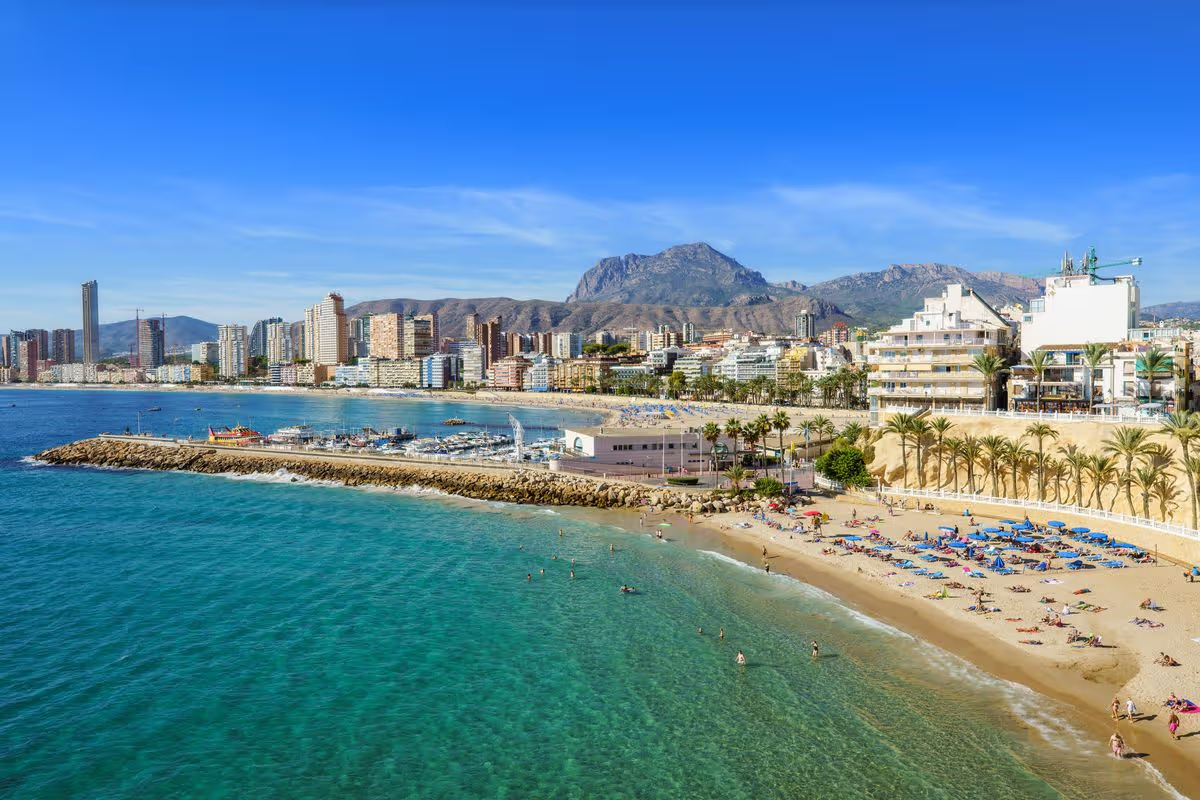
Benidorm is a popular holiday destination and one Brit who’s lived there for 30 years has shared the best time to visit (stock image)(Image: Sergio Formoso via Getty Images)
A British expat living in Spain has revealed the best time to visit the popular coastal hotspot of Benidorm in order to dodge the “crowds” and “chaos”.
Benidorm is a hugely popular seaside resort in Spain, renowned for its vibrant nightlife, vast selection of hotels and towering skyscrapers, golden sandy beaches, busy cafés and restaurants, and much more. It’s a firm favourite for countless hen and stag dos, while others sing the praises of its charming Old Town and the stunning natural, rugged coastline – a far cry from the images most commonly associated with the resort.
According to the annual report published by the Visit Benidorm Foundation, the destination welcomed just over three million visitors in 2025, a rise of 7.7 per cent on 2024’s figures.
The total number of overnight stays surpassed 16 million, an increase of 3.4 per cent on 2024’s bookings. It marked the first time in Benidorm’s history the resort had recorded such numbers.
Many Brits choose to up sticks and move to Benidorm for its reliably sunny skies all year round and a more laid-back way of life.
That’s certainly true of Geoff, who shares content on social media under the name “Benidorm Resort Expert”.
He bills himself as a “Benidorm Travel Expert” having lived and worked in the Spanish resort for 33 years, with his content centred on providing “deals, trips and advice” about life in the popular destination.
In a recent TikTok video, Geoff recommended visiting Benidorm during the cooler periods. Speaking directly to camera, he began: “Everyone wants Benidorm at its hottest but they’ve got it wrong. We’ve just had three days of red alert – this is the first time, ever, three days on the bounce and honestly, we’ve been melting out here.
Content cannot be displayed without consent
“But this morning, look at it. Temperature’s dropped five or six degrees, we’ve got a bit of cloud, there’s a gentle breeze and the sea, it’s like a mill pond.”
He continued: “No crowds, no chaos, no 40 degree heat bouncing off the pavement; just a calm morning, a bit of grounding, feet in the sand and literally the whole beach to myself.”
Geoff was full of praise for the tranquil early morning atmosphere on offer. He added: “The day hasn’t kicked off yet and this right here is the best bit of it – 24 degrees, sea like glass, and not a soul rushing anywhere.
“Forget the heatwave hype, this is when Benidorm is at its best.”
Benidorm isn’t the only destination grappling with scorching temperatures brought on by a heatwave, with Britain experiencing Spain-like conditions as record-breaking heat swept across the country.
However, this week the stifling temperatures have finally begun to ease across parts of the UK.
Met Office deputy chief forecaster Tony Wisson said: “Toward the weekend, high pressure will continue to build in across most of the UK as it extends from the Azores.
“This will lead to more settled, warm or very warm conditions for many, especially across England and Wales, though some rain may still affect the far north.”
He added: “The forecast for this weekend suggests that temperatures could approach high 20°C across parts of England, perhaps 30°C in parts of the southeast, with values of mid to high 20°C in Wales.
“Although a return to heatwave conditions is looking increasingly likely for some areas, the likelihood of such extreme high temperatures or high levels of humidity as last week is currently low.”
European airlines and airports call for flexibility to suspend digital border system amid severe delays.
Published On 2 Jul 20262 Jul 2026
The European Union’s new digital border check system is causing severe disruption to travel, with passengers facing five-hour queues and departure gates closing with planes only half-full, industry representatives have warned.
In an open letter published online on Wednesday, the top representative bodies for Europe’s airports and airlines said that delays caused by the bloc’s recently-implemented Entry/Exit System (EES) had reached a “critical point”.
Recommended Stories
list of 4 itemsend of list
“The current implementation of the EES is creating severe operational consequences, disrupting passengers and putting border authorities, airports and airlines under unsustainable pressure,” Airports Council International Europe, Airlines for Europe, and the International Air Transport Association said in a joint letter addressed to European Commission President Ursula von der Leyen.
“We therefore urge your immediate intervention before the situation deteriorates further during the peak summer travel season.”
With European airports expected to handle 40 million more passengers in July and August than the previous two months, EU leaders “must take stock of the reality of the current situation and of what our air transport system will face over the coming weeks”, the lobby groups said.
“Without additional flexibility, existing challenges will inevitably intensify,” they said.
“As representatives of Europe’s aviation sector, we have a responsibility to warn that this would result in a significant worsening of an already very difficult situation for passengers.”
Warning that the travel disruption was undermining the reputation of the EU and European tourism, the industry groups said it was crucial that the continent continued to be an “efficient, welcoming and competitive” destination.
“Reports already suggest that some international travellers are reconsidering trips to Europe because of the prospect of excessive border delays,” they said.
A police officer scans a passport during a presentation of an automated terminal for registration to the Entry/Exit System (EES) at the Vaclav Havel airport in Prague, Czech Republic, on October 14, 2025 [David W Cerny/Reuters]
Until the stability of the EES is ensured and adequate staffing levels are in place, EU member states should be immediately granted the flexibility to “completely suspend” the new system whenever passenger numbers exceed the “operational capacity” of border facilities, the lobby groups said.
The World Travel and Tourism Council, the world’s largest representative body for tourism-related businesses, said on Wednesday that it endorsed the letter’s calls, warning that the delays could put up to 41 million arrivals and $45.4bn in visitor spending at risk.
“If lengthy delays become accepted practice, travellers will look elsewhere,” WTTC President and CEO Gloria Guevara said in a statement.
“Europe cannot afford to compromise its competitiveness or the experience it offers millions of visitors.”
The European Commission did not immediately respond to a request for comment sent by Al Jazeera outside of regular business hours.
The EU began rolling out the EES in October as a replacement for passport stamping.
The system records each traveller’s name, passport information, fingerprints and facial images, and his or her date and place of entry and exit.
The European Commission announced that the ESS was “fully operational” across the Schengen Area in April, but the system has been blamed for lengthy delays since its introduction, including cases of flights leaving before many of their passengers were able to board.
THERE’S been a new plea to suspend the new passport checks this summer amid fears of even more chaos this summer.
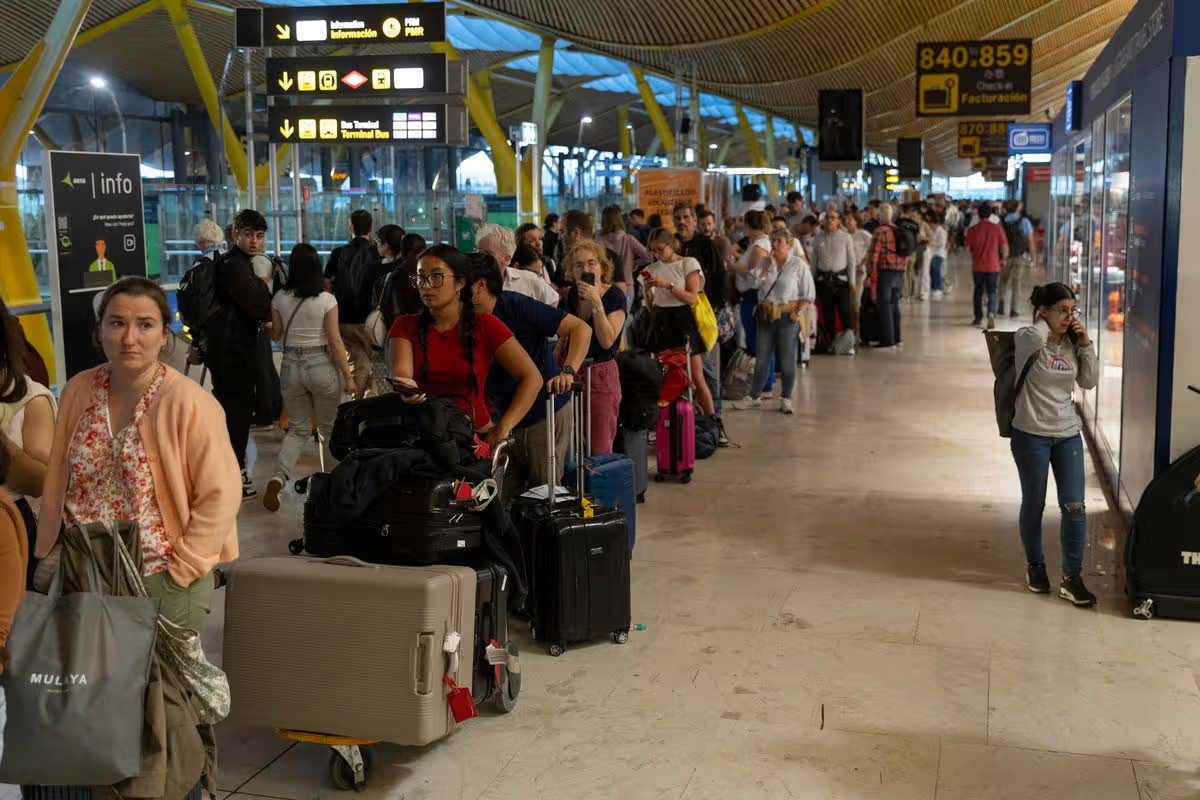
So far, some airlines have had to leave passengers behind and there are already queues of up to six hours at border control.
Sign up for the Travel newsletter
Thank you!
Airlines and airports have asked for EES checks to be suspended for the summerCredit: Alamy
The situation is only predicted to get worse with summerholidays on the horizon when millions of Brits including lots of families will be heading abroad.
Passenger numbers are predicted to increase by an extra 40million across Europe in July and August.
As a result, a number of airlines and airports have submitted a letter the president of the European Commission asking to suspend EES checks.
A number of industry groups have said they’ve reached a “critical point”.
They continued: “Passengers have already been forced to queue for extended periods outside terminal buildings and on exposed aprons because border control facilities cannot process arrivals quickly enough.
“Airlines face half-empty planes at gate closing time, while passengers are stuck in border control queues.”
The groups have asked the authority to allow airports to “completely suspend” the EES when “passenger volumes exceed the operational capacity of border control facilities”.
They’ve said that “immediate intervention” is needed before the situation “deteriorates further during the peak summer travel season”.
There has also been a call for “flexibility’ in September as well.
The Entry Exit System (EES) involves people from third-party countries such as the UK having their biometrics taken to enter the Schengen Area.
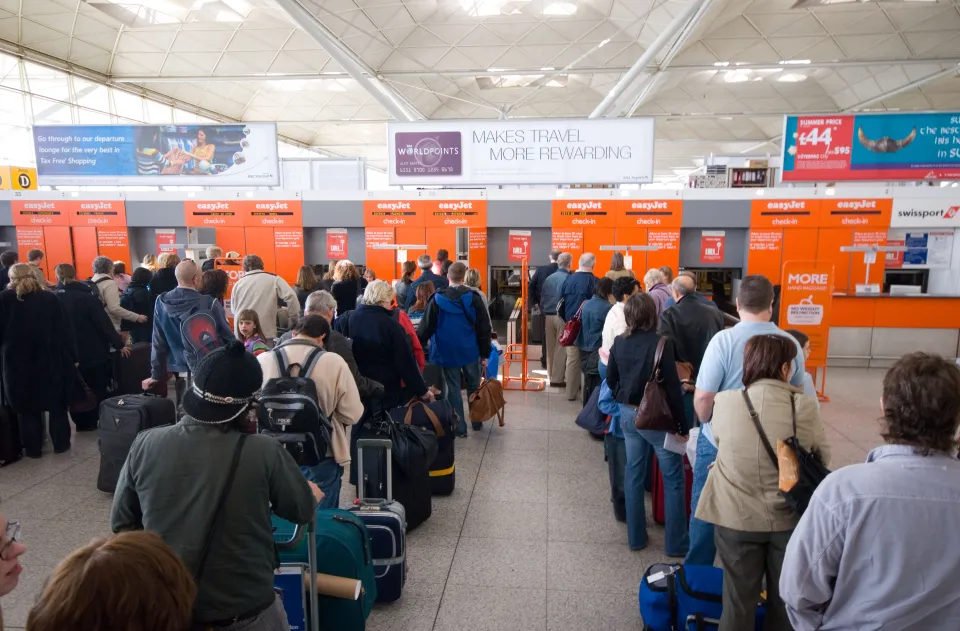
There are already queues of up to six hours for BritsCredit: Alamy
The progressive rollout began in October 2025 and has caused a number of problems.
THE ongoing heatwave has caused chaos at the UK’s airports with more than 1,000 flights either delayed or cancelled.
Airports affected on Saturday include Heathrow, Gatwick, and Edinburgh, with 1,019 flights delayed and 160 axed, as air traffic restrictions were put in place overnight.
Sign up for the Travel newsletter
Thank you!
Passengers wait for their flights at the North Terminal at Gatwick Airport (archive photo)Credit: AlamyLightning strikes over London hitting Canary Wharf in the early hours of the morningCredit: Alamy
London Heathrow had 440 flights delayed, Gatwick 425, 120 at Edinburgh, Leeds Bradford had 20 and London City had 14, according to the tracking website FlightRadar.
Heathrow had 103 flights cancelled, while Gatwick had 46, there were six at London City and five at Edinburgh.
A British Airways (BA) flight from Santiago, Chile, was the longest delayed, it had been due to land at 10am but is now expected to arrive at 9pm.
London saw its skies light up as lightning hit and downpours came in following day of extreme temperatures that saw the month’s record temperature broken on three consecutive days.
London Heathrow had 103 flights cancelled and 440 flights delayed (archive photo)Credit: AlamyImpressive lightning storm over the Rampion Offshore Wind Farm late last nightCredit: Story Picture Agency
Thunderstorms forced airports to limit the number of flights that could take off and land, meaning holidaymakers were left stranded or facing severe delays.
BA put the delays down to London’s “weather conditions,” pointing to the Met Office’s amber “extreme heat” warning which covered the capital, the south-east and East Anglia.
This has now been extended by the Met Office to cover Sunday until 9pm.
Gatwick Airport urged passengers to contact their airline to check the status of their flight.
A spokesperson said that temporary air traffic restrictions had caused flight cancellations and delays “due to thunderstorms”.
A spokesman for London City Airport said: “Flights are gradually returning to normal following this morning’s weather-related air traffic restrictions.
“There have been some associated delays and cancellations.”
The thunderstorm also caused Edinburgh Airport to be hit by the air space restrictions with four arrivals and 15 departures delayed.
Leeds Bradford Airport also suffered with three departures delayed Saturday morning.
A spokesman for British Airways said: “Like other airlines, we’ve had to make some adjustments to our schedule today due to Air Traffic Control restrictions caused by adverse weather conditions affecting parts of UK airspace.
“While the vast majority of our customers will be unaffected, we apologise for the inconvenience caused and our teams are working hard to help those impacted get their journeys back on track.”
A spokesman for NATS, which runs air traffic control in Britain, said: “Forecasted severe weather across the south-east of England is causing disruption to flights today, with aircraft needing to avoid affected areas.
“Our teams are managing traffic safely and working to reduce delays, but weather disruption is expected to continue through the rest of today.
“Passengers should contact their airline for the latest information on their flight.”
While temperatures are predicted to fall over the weekend the Met Office still has an amber extreme heat warning in place until 9pm on Sunday.
An amber warning means officials expect significant impacts on health and social care services, with an increased risk of illness and deaths among older and vulnerable people.
The cooler weekend comes in the wake of several days of rare red heat warnings, the most severe warning where there is a danger to life.
US stocks have rallied on hopes that the tentative deal to end the US-Israel war on Iran will restore stability to energy supply chains roiled by months of disruption in the Strait of Hormuz.
The S&P 500 rose 1.7 percent on Monday, taking the benchmark index within touching distance of its all-time high.
Recommended Stories
list of 4 itemsend of list
The tech-focused Nasdaq Composite jumped 3.1 percent, aided by a 19.6 percent gain by SpaceX, which on Friday made the biggest market debut in history and minted the world’s first trillionaire in Elon Musk.
The blue-chip Dow Jones Industrial Average climbed 0.9 percent, closing at a record high.
Brent crude futures, the primary benchmark for global oil prices, fell nearly 5 percent to just above $83 a barrel, the lowest price since the first week of the conflict.
Asian stock markets were largely flat on Monday morning, after surging the previous day on the back of US President Donald Trump’s announcement of his deal with Tehran.
As of 01:30 GMT, Japan’s benchmark Nikkei 225 was 0.01 percent lower, while South Korea’s Kospi, the best-performing major index this year, was down 0.06 percent.
In Taiwan, the TAIEX was up 0.2 percent.
Hong Kong’s Hang Seng Index was down 0.07 percent.
Jay Goldberg, a senior analyst for tech-related equities at the Chicago-based Seaport Research Partners, said the announcement of the US-Iran deal had tilted investors’ risk balancing act towards buying into the market.
“To oversimplify, the debate has been: AI spending is strong, but there’s a war going on,” Goldberg told Al Jazeera.
“The war is over, it seems, so that side of the argument falls away. Investors are now feeling better about taking on more risk,” Goldberg said.
While Washington and Tehran’s framework has raised hopes for a return to stability in global energy markets, it is expected to take months before energy flows fully return to normal, due to the massive backlog of vessels around the Strait of Hormuz and the need to ensure the waterway is safe from Iranian naval mines.
According to the International Shipping Chamber, about 500 ships are still waiting to pass through the strait, which normally carries about one-fifth of global supplies of oil and liquefied natural gas.
SINKHOLES found under a railway bridge have caused all trains to and from Gatwick airport to be suspended leaving thousands of passengers stranded.
The holes near Purley Bridge in South London required “urgent repairs”, engineers from Network Rail have said and the line isn’t expected to open until tomorrow morning.
Sign up for the Travel newsletter
Thank you!
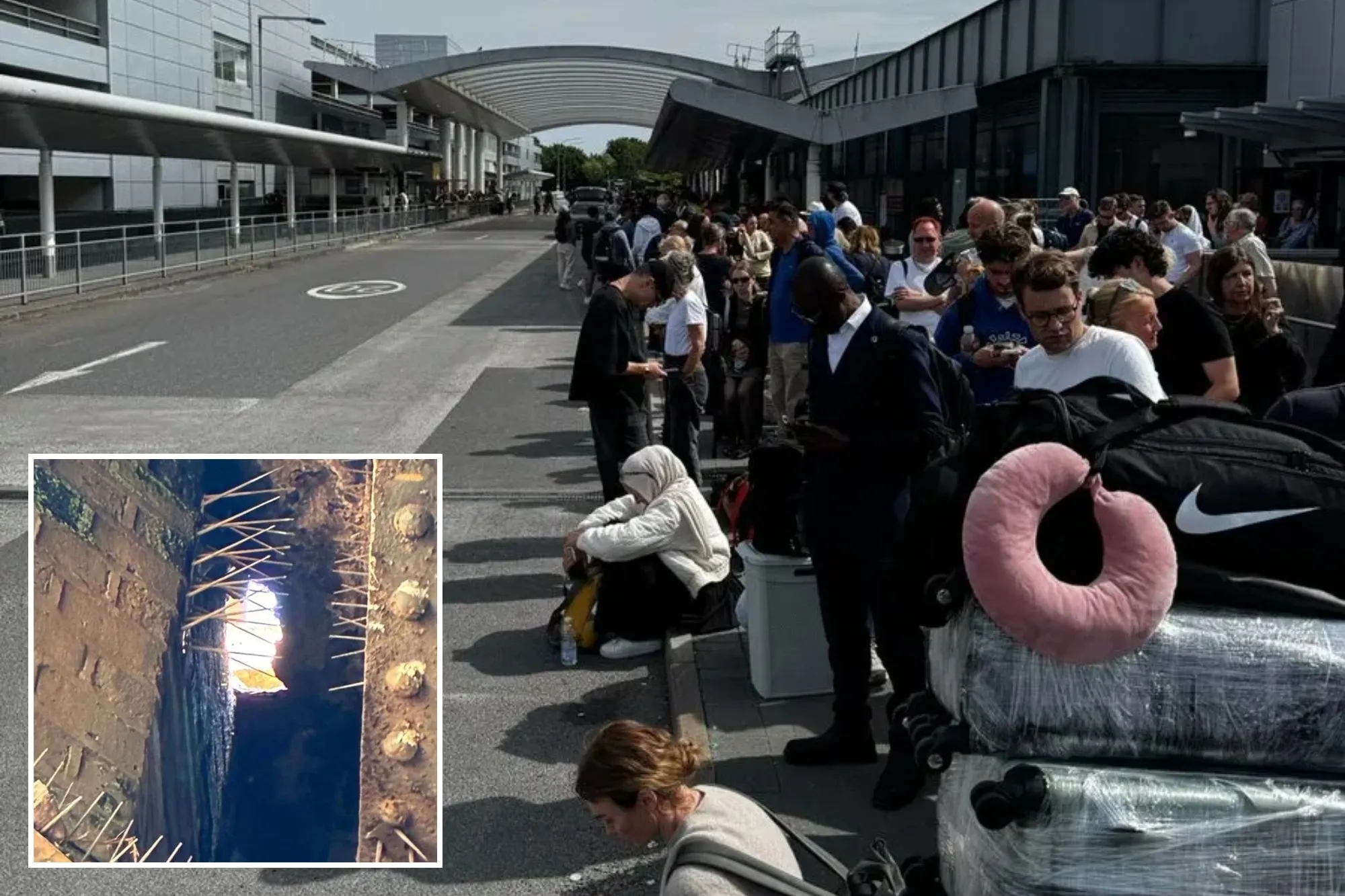
Sinkholes on a railway bridge have suspend all trains to Gatwick AirportCredit: X/@SouthernRailUKTravellers lined the road outside the airport amid the chaosCredit: X
All services between Purley and East Croydon were closed while an inspection was carried out by a structural engineer.
This has put a stop to all trains heading to Gatwick Airport and Brighton from London Bridge or London Victoria and left thousands stranded.
Travellers lined the road outside the airport while others waited hours for a rail replacement bus service.
The rail disruption has forced many passengers to drive to the airport resulting in major congestion as hundreds of cars try to get to the terminals.
The sinkholes need ‘urgent repair’ engineers have saidCredit: X/@SouthernRailUKThe railway line is set to reopen tomorrow morningCredit: X/
Many have taken to social media to express their fury and fear as tempers in the gathering crowds start to flare.
One user said: “Absolute shambles at Gatwick airport! People queuing for over 2 hours to get network replacement coach into London. Tempers flaring amongst crowds. I’m scared!!!”
Others said they were having to fork out for inflated Uber fares back to London.
They posted: “@uber why on earth do you think it’s acceptable to charge people £250 to get from Gatwick Airport to Croydon with all the trains being cancelled? Absolutely criminal!,”
Network Rail explained: “Sinkholes were spotted on the bridge, meaning that ballast, the stones that the track sits on, was falling through the gap, making the track unstable.
“We’ve since carried out a thorough inspection of the bridge and are working to safely plug the gaps so that trains can safely run again.”
Sinkholes appear when rock at the surface collapses and leaves a big hole.
They are often saucer-shaped and can form for many reasons.
A London Gatwick spokesperson said: “There are currently no trains running between Gatwick Airport and London Victoria or London Bridge due to blocked rail lines at Purley.
“Passengers travelling to the airport are advised to consider alternative routes and allow extra time for their journey.
“For those travelling from Gatwick Airport into London, rail replacement bus services are operating between the airport and East Croydon.
“Due to high demand, passengers at the airport may experience longer waiting times for rail replacement services, and we appreciate your patience while alternative transport is in place.”
Network Rail later took to X to apologise for the disruption and said the lines had to be closed “for the safety of passengers”.
“Over the course of the afternoon our engineers have carried out thorough inspections on the bridge and have worked to plug the sinkholes, allowing trains to safely run again,” they said.
“Though trains are now running we do expect there to be disruption into the night so we’re urging passengers to check before travelling.
“We will be accepting today’s tickets on tomorrow’s services due to the disruption today.”
However, Southern Rail still urged passengers not to travel, saying: “You are strongly advised to delay your journey. A very limited service is now able to run, however these services are expected to be full.”
The new EU Entry/Exit System (ESS) was fully implemented on Friday 10, April, with significant travel disruptions happening as a result. Holidaymakers have found themselves in long queues lasting hours as they try to pass through the digital border system.
It has even left some missing their flights and having their holidays in tatters. The EES has replaced manual passport stamping and requires all Brits travelling to the Schengen area to “create a digital record” and register their biometric details, including fingerprints and a photograph.
As delays continue at European airports, there have been mounting worries about how it will affect travel during the summer holidays, which is famously one of the busiest periods to fly.
Travel expert Simon Calder says there has been “a litany” of people stuck in queues at Dover for hours or even missing their flights home due to delays.
He described the system as a “Euro shambles” before being pressed on where in Europe is the worst impacted by the new process. Simon named Milan Malpensa, Lisbon, Paris Charles de Gaulle, Frankfurt and Copenhagen as the airports with the “worst” delays.
Simon said on The Travel Expert podcast: “From what I have experienced, and certainly one of them is Milan Malpensa. The fingerprint stuff took an hour, and I was the first one off the EasyJet plane from Gatwick.
“Then, I went through the other terminal to check out and it took 45 minutes that time but they wanted those fingerprints again, which is absolutely not in the rules.”
He added: “I have heard terrible stories from Lisbon, other places frequently mentioned, Paris Charles de Gaulle and Frankfurt. Both of them are huge hubs where you have got a lot of people flying from various regional airports across the UK into Paris and Frankfurt to connect.
“That’s okay if you are going intercontinental but if you are trying to connect to somewhere in Europe it is awful.”
Simon explained he had a friend travel to Frankfurt last weekend, who experienced 90 minute queues.
A friend was there last weekend and it took 90 mins, connection could be toast. Simon went on to name Copenhagen as also experiencing bad delays.
Co-host Greg Dickinson said: “This was a rare instance where the Foreign Office said you may encounter long queues in or out of the airport.”
Despite the issues, Simon was optimistic about the future of travel this summer. When asked if he thinks there will be more delays this summer, he said: “I would hope we might see a bit less.”
‘Worst’ European airports for ESS delays
Milan Malpensa
Lisbon Airport, also known as Humberto Delgado Airport
Al Jazeera’s Milena Veselinovic reports from Belfast, where protests over a recent stabbing have escalated into violent riots. Tensions flared after a Sudanese asylum seeker was charged with attempted murder. Riot police have deployed to the scene as buses and vehicles are set alight.
NEW biometric checks for UK travellers at European borders may not “stabilise” for another two years, officials have warned.
The new EES system has caused chaos and long queues at airports with no plans to relax the checks during the busy summer period.
Sign up for the Travel newsletter
Thank you!
EES system has caused chaos for UK travellersCredit: Alamy
The Entry Exit System (EES) involves people from third-party countries such as the UK having their fingerprints registered and photographs taken to enter the Schengen Area.
This Area consists of 29 European countries, mainly in the EU, and around 1,700 border crossing points requiring the use of EES.
For most UK travellers, the process is done at foreign airports with the digital record being kept for three years.
The airline body International Air Transport Association recently warned border queues could reach six hours this summer.
Airports in Spain, Portugal, France and Italy have been reported to be among the worst affected.
This comes after more than 100 easyJet passengers missed a flight from Milan Linate to Manchester in April because of delays at passport desks caused by the ramping up of EES.
Uku Sarekanno, deputy executive director of EU border agency Frontex, said some member states are “struggling” to adopt the new system.
During a summit of travel industry leaders organised by Abta in Westminster, Sarekanno said: “We expect that the situation will stabilise in one or two years.
“The most challenging part is the first enrolment, that is the moment where fingerprints and facial images will be taken.
“If a person is visiting the EU again (within three years), they don’t have to go through the same process, so they can have a more fast track of entry.”
Experts say queues are going to get even worse for British holiday makers this summer with queue times potentially stretching to as much as six hours.
According to The Times, Rafael Schvartzman warned that the EES systems are being operated differently between airports, which is causing the problem.
Schvartzman said: “What we are seeing is a very hard risk of really challenging times or waiting times, talking about expectations of three, four, five, six hours which is unacceptable.
“We know for a fact there are many cases where people have lost flights or their connectivity.”
More to follow… For the latest news on this story keep checking back at The Sun Online
Thesun.co.uk is your go-to destination for the best celebrity news, real-life stories, jaw-dropping pictures and must-see video.
The first rule of a primary election is: Don’t make too much of the results.
The intrepid folks who bother to cast a ballot in these first-round races are largely a group of engaged voters, and drawing conclusions from such a narrow minority is a losing game.
So however the final June results tally out, the lessons learned won’t easily translate to the larger electorate that will almost surely show up in November. But if this election doesn’t tell us much about what fall voters will do, it does tell us something about the Democratic Party that dominates this state: It’s chaotic, to put it gently. And no, that’s not entirely the fault of the “jungle” primary.
Traditional rules seem to have broken down (not a bad thing) and new ones haven’t yet emerged. The old guard has lost control, and maybe vision, and the result is more candidates willing to sidestep seniority and a wait-your-turn mentality to try their luck — especially younger progressives.
Sometimes that chutzpah works, sometimes it doesn’t, but it’s a mirror of the national trend of Democratic infighting and a glimpse into just how fragmented the party has become as it tries to figure out who it stands for and who it supports before the 2028 presidential election.
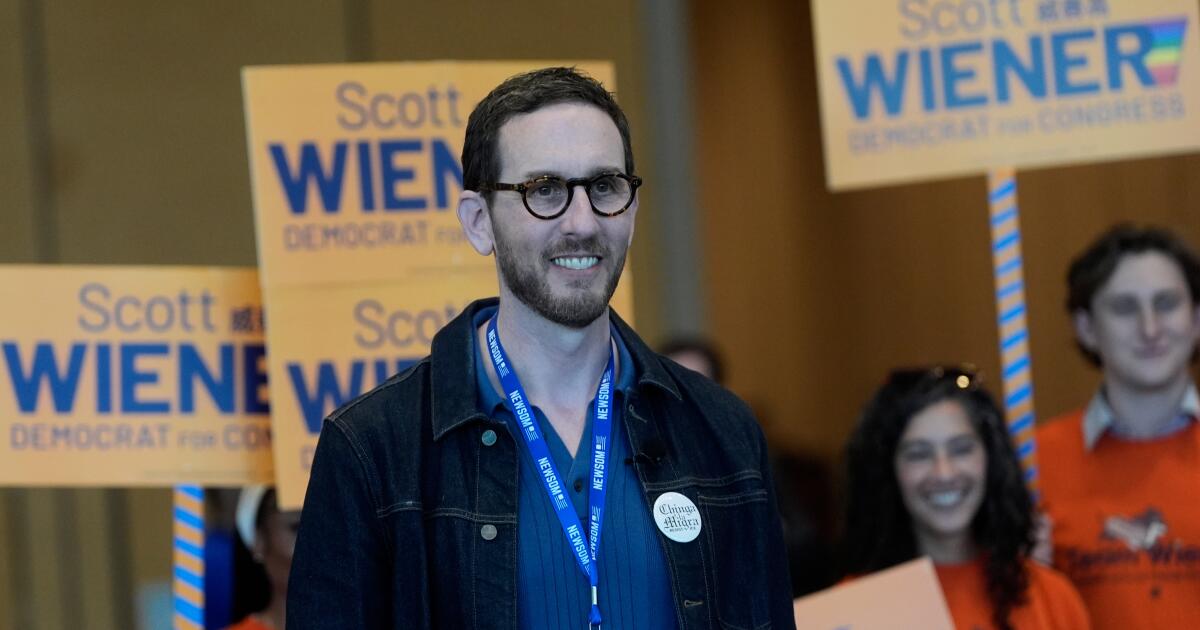
“I feel like I’m definitely running against major institutional forces, but that’s how it is,” state Sen. Scott Wiener told me recently. “At times we see sort of a little bit of a fortress mentality, and other perspectives are not welcome, and younger folks, newer voices are not welcome, and and that’s a dynamic that plays out in a lot of different places.”
Wiener, who could be considered king of the line-jumpers, just took the top spot in the San Francisco-centered race to represent the 11th Congressional District, the seat held by Nancy Pelosi since 1987, when Wiener was 17.
By most accounts, Pelosi and Wiener had a mostly cordial relationship until last year, when he entered the race before she announced her retirement. Though Wiener had been clear for years that he planned such a run when Pelosi stepped down, Pelosi is an icon in the city, beloved by constituents and uncontested as queen of the old guard.
Announcing his campaign before she officially made that decision — or had the chance to choose her successor — sent shock waves through the political firmament. When Pelosi endorsed Supervisor Connie Chan in May, it was seen by many as a sign of her displeasure. Chan, who had struggled to gain traction in the primary, came in second with the Pelosi boost and will face Wiener in November.
Across the state, there were other races with upstart contenders. In Southern California, Jake Levine, a progressive Democrat who served in the Obama White House, took on incumbent Brad Sherman. Sherman, who at 71 has served almost 30 years in Congress, resoundingly beat out Levine by more than 20 points.
In Sacramento, there is Mai Vang, a progressive City Council member, who is challenging Rep. Doris Matsui, another member of the old guard royalty. Vang is in a tie for second place with a Republican contender as remaining votes are counted.
And of course, there is the governor’s race itself, which included a field so determined and uncontrollable even before the fiasco of Eric Swalwell’s sexual misconduct scandal that the state Democratic Party started putting out its own polling in a seeming bid to convince some blue contenders to drop out. It didn’t work. Notably, progressive Katie Porter and moderate San José Mayor Matt Mahan stuck in until the bitter end. But old guard candidate Xavier Becerra came out on top.
If these races have a lesson, it’s that different Democratic voters want different things, but the party hasn’t figured out how to embrace that other than offering up the moderate middle ground.
“This is a big question to this Democratic establishment, about how big of a tent they want to build,” said Irene Kao of Courage California, a progressive advocacy organization.
She said that it “bodes well” that so many strong progressive challengers came out for the primary, because it allows a chance for candidates outside the party power structure to find an audience with voters, even if they are ultimately unsuccessful.
And where voters go, the party will eventually be forced to follow. That doesn’t necessarily mean a more progressive Democratic Party, but it likely means a more inclusive one if they want to lure the kind of low-information and low-propensity voters who make or break a general election.
“People are sick of the games, and sick of people trying to just maneuver things to get their own person in,” Wiener said. “People want to have choices.”
A Love Island star has made a surprise exit from the competition just days into the latest series and after a shock double eviction
Love Island is back(Image: ITV)
Love Island fans are set to be stunned as one islander has left the show just days into their time on the villa. After a double bombshell eviction, a third member of the villa has now cut their time short.
George Knight has sensationally quit the villa shortly after sending Samraj and Ellie home. The footballer had only arrived as a bombshell, but is now said to have left due to “private reasons”.
He is still set to feature on Thursday evening’s show, but is thought to already have said his goodbyes. His exit is reportedly not going to be aired.
A Love Island spokesperson said: “For private reasons, George has left the Love Island villa. Duty of care for the Islanders is paramount so at this stage any further comment will come from George. Bosses and viewers alike had been loving his contribution.”
The contestant had made a big entrance and was getting to know Robyn and Mica. Robyn, who quickly friend zoned Sam appeared keen to forge a pairing with George, so it remains to be seen how she will take the news. The pair had already shared a kiss on the terrace.
On Wednesday’s show, Yasmin was in tears as the time for the bombshells to make their decision approached. And their decision wasn’t well received by viewers at home. One labelled it a “sinister” move, while others were shocked.
But while tears ran down the villa and gutted Samraj and Ellie heading for the exit, they were told that all may not be as it seemed. It left fans confused as to what might come next in a series that has already thrown up a number of twists in the first week.
Straight off the bat, islanders had to choose their own couples. This moved away from the public who normally picked who they thought was best matched.
Love Island All Stars winner Gabby Allen told us of the bold move at the time: “The producers are doing a great job at changing things up. This has never been done before.
“A recoupling done by themselves is crazy! I would panic in this situation and hope somebody whisked me off my feet so I didn’t have the decision.”
After the first episode, Gabby also predicted high energy between some of the cast – and Gabby knows vibes when she sees them! “OMG!!! The vibes between Lola & Ope already,” she said.
“These two coming in I feel like is already spicing things up. BOTH of them have very good energy. You heard it here first, Ope is going to do well. Player of not. People are going to like him.”
AROUND 150 Ryanair passengers were left stranded at a European airport following massive queues.
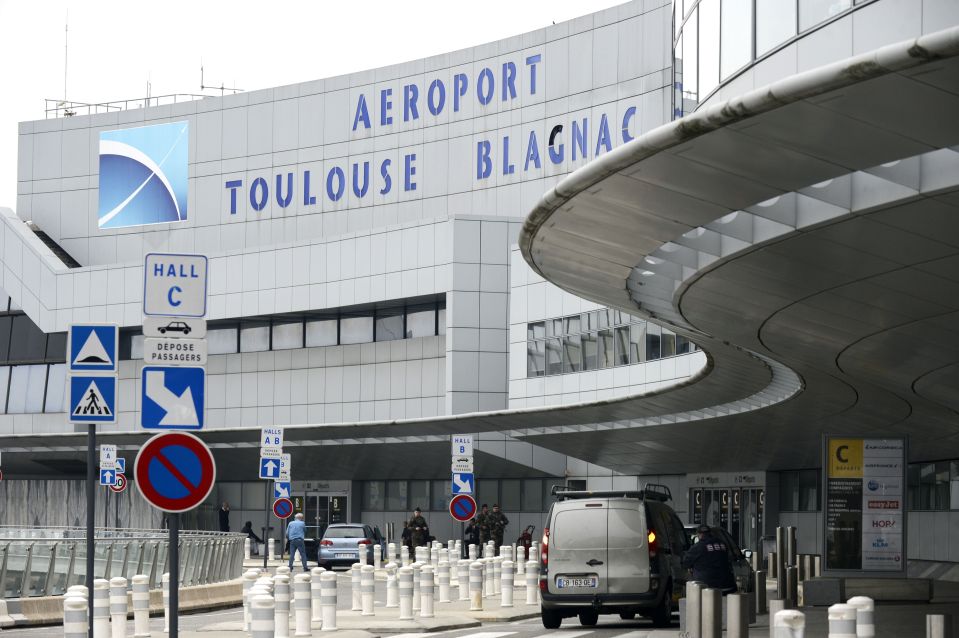
The passengers at Toulouse-Blagnac Airport in France missed their Ryanair flight last week due to lengthy queues at border control caused by staff shortages.
Sign up for the Travel newsletter
Thank you!
Around 150 Ryanair passengers were left stranded at a French airport last week due to border control queuesCredit: AFP or Licensors
The flight to London Stansted left without some of its passengers as queues at border control meant they couldn’t reach their gate in time for the flight.
One passenger told The Connexion that it was “pure chaos” adding that “there was no structure at the airport” and “people pushing at all times”.
The woman’s flight wasn’t the only one to be impacted either – in total four flights were boarding at the same with destinations including Marrakech in Morocco, Tunisia and two to London.
Reportedly, around 500 people were in the border control area including passengers with babies.
The woman also revealed that despite just managing to get onboard her flight, the pilot announced shortly after that 150 passengers had not made it.
On its website, the UK Civil Aviation Authority states: “Airports will try to do their best to ensure a smooth operation and provide passengers with a comfortable journey. However, sometimes problems do occur.
“If you miss a flight due to a long queue at security, even though you arrived at the airport on time, it is unlikely that an airline would pay compensation or consider itself obliged to offer you a free alternative flight.
“We are pleased to see that some airlines are helping their passengers find alternative flights voluntarily.
“We would recommend that you contact your travel agent or airline to help book you onto an alternative flight, but you may need to pay extra to do this.
“If you have taken out travel insurance, contact your insurance provider to see if your expenses are covered and make sure you keep receipts for these.”
A Ryanair spokesperson told Sun Travel: “Due to delays caused by border control staff shortages at Toulouse-Blagnac Airport on 30 May, a number of passengers booked to travel from Toulouse to London Stansted were not in the boarding gate area when boarding for their flight closed and missed their flight from Toulouse to London Stansted.
“All passengers that were at the boarding gate when this flight from Toulouse to London Stansted boarded were accommodated and travelled without incident.”
Sun Travel has contacted Toulouse-Blagnac Airport for comment.
Jennifer Cohen has heard her peers this spring lament the precarious state of college football, with the College Football Playoff format in flux, the College Sports Commission under fire and the current model of college athletics hanging by a proverbial thread. As athletic director at USC, Cohen understands the reasons for their doom and gloom.
There’s little clarity about where things stand in college athletics right now, let alone where they’re going. Plus, it has never cost more to run an athletic department — or a football program, with the price tag of rosters exceeding $40 million this season — in part because of name, image and likeness rights.
“There’s no doubt that this last year’s been frustrating, and that’s because we tried to fly a plane and build a plane at the same time,” Cohen told The Times last week. “So it’s certainly not going swimmingly, right?”
Before discussing all that’s wrong with the current college sports landscape, Cohen wants to remind everyone that it hasn’t all been bad.
“It’s important to talk about what are the positives that came from what’s happened,” Cohen said.” And from my perspective, student athletes have benefited now more than ever, you know?”
At USC, Cohen has managed to steer the athletic department through the chaos. As costs have risen exponentially with the advent of revenue sharing, Cohen says department revenue at USC is up almost 60% over a three-year span, sponsorship values have doubled and USC donors have poured money into the Trojan Athletic Fund, which is up 707% since she started.
Jennifer Cohen, left, and university president Carol Folt, right, flash the “V for Victory” hand sign during a news conference in 2023 introducing Cohen as USC’s new athletic director.
(Ringo Chiu / For The Times)
And later this summer, USC will open a $200-million football facility — a rarity in an age when such spending has more often taken a backseat.
None of that is to say USC is immune to the coming financial crunch in college sports.
“We also have to manage expenses, and we’re trying to do that and still support what we think is part of our DNA, which is [keeping all] 23 programs,” Cohen said. “As you look at the financial benefits that football brings to this place, the more you’re gonna take those revenues from football and put it back into football and to football student athletes versus other programs, you’re gonna feel the pinch. And so we’ve tried to mitigate that with new strategies on revenue generation.”
But what about when football rosters costs balloon to $50 million … or $60 million? What about $100 million?
“Hopefully not,” Cohen said. “We’ve gotta match roster spends with revenues and, and, and, and how we run a business.”
“I don’t think there’s one simple answer to this, and I do think that we are at a point where we’ve got to figure out as an industry, how do we do this in a smart way and not just let our competitiveness get the best of us? But that’s hard when football winning is the only way that you pay your bills.”
The Times sat down with Cohen last week to discuss the state of affairs in college football and USC’s athletic department. The following conversation has been edited for length and clarity.
With college football in such an uncertain place, do you feel like there needs to be some form of outside intervention? Or some major governance change that would help solve these problems?
“I think at some point in time we’re gonna have to find something. I mean, obviously we’re a year in. So I think first we all need to look in the mirror — myself included, as a leader — and say, ‘What did we do in this new system that worked? And what have we done in this new system that doesn’t work? And the question becomes, ‘Can you get everybody across the Power Four [conferences] to do that exercise and be honest enough to find some sort of solutions together? Or do you need to start looking at other solutions? I, for one, fully believe in federal support. I understand why it’s needed. I’m somebody that spent a lot of time on that earlier in my career, and, you know, the patchwork situation of laws is not fair from a competitive standpoint. It’s also very confusing to student athletes and to their families and to our coaches. But I am absolutely not holding my breath for that.
Eric Musselman and athletic director Jennifer Cohen hold a jersey with Musselman’s name during his introductory news conference as the Trojans’ basketball coach in 2024.
(Myung J. Chun / Los Angeles Times)
“The most important place where I’m spending my energy is figuring out how we are going to win in whatever environment that we’re dealt. Because I don’t have as much control in my current role to solve for all of those national issues. I am 24/7 thinking about how USC is going to compete in whatever environment we’re in. And I feel really confident that we will. But as somebody that loves college sports, I also think that we are gonna have to find a different alternative than how we’re operating right now to have a sustainable and durable model.”
USC seems to be in a really strong place with NIL, stronger certainly than when you were hired. How would you say that USC has gotten to that point?
“ When we got here, my mantra was if you’re not ahead, you’re gonna get behind. And so there were a lot of areas that we focused on to just try to improve and get ahead, and NIL was one of them. There’s a natural ability here to be really competitive in NIL — especially in the third-party space with brands. You know, we were just looking at some data the other day just in this new CSC-NIL Go model. Our brand deals are valued 2 1/2 times more than the national average, and I think that really speaks to both USC, the city of L.A., and obviously the quality of the student athletes that we have. And I think it’s just been a strategy of embracing the new era, recognizing that it’s really cool to be able to have student athletes benefit in that new era, and it’s important, and that you have to be competitive in that space.
“And so I think it was just a matter of having intentionality in a plan and getting all of our stakeholders aligned around that plan, and it was an urgent matter to keep trying to get ahead in that space. Because if we weren’t, other people were. That’s how we’ve been tackling it, and so we’re really proud of how robust the program is now. But we’re gonna have to keep getting better at it. We’re gonna have to keep evolving.”
The Big Ten has come out in favor of expanding the College Football Playoff to 24 teams. What are your thoughts on that?
“We’re unified as a league around 24, there’s no doubt about that. And obviously that’s gaining traction in some of the other conferences as well. And so where we’re unified, USC’s gonna support that. I think that there’s merits in the 24 model. I also think there’s plenty of fair questions around that. It has to make sense for everybody. So that’s kind of where we stand on it.
USC athletic direct Jennifer Cohen wears a headset with microphone as she’s interviewed before a football game in 2023.
(Icon Sportswire via Getty Images)
“I think personally speaking, I would have absolutely no problem staying at 12. I think we’ve experienced a lot of change in college sports and in college football. I think we need to understand how that change is impacting not just us, but our fans and others. And so if we end up at 12, I’m confident that we’re gonna find our way in that 12 every single year. And again, uh, that’s where my focus is. I mean, I am nonstop thinking about how USC athletics can compete in whatever model that we’re in, and I feel really good about the plans that we are developing and will continue to develop because we’re gonna have to keep changing to, to make sure that we’re competitive.
Being that it’s now Year 5, is it fair to say that the expectation is that Lincoln [Riley] needs to take USC to the Playoff this year?
“The expectation has always been the same. That’s the thing, that’s the reason why I came here, is that the standard is high. We do expect to make the playoff. We do expect to have a championship run. We do expect to be competing for championships every single year. I think that’s what’s awesome about USC, is that that’s what we all expect of it. And I know that I’m not the only one that expects that. I know our fans expect that. I know that he expects that. And so I really like this team. I really like the kids that we brought in. I love the returners. I love the leadership of this team.
“We’ve got some really outstanding older young men in this program that get it, that have been through a lot and really care about this place and this program. The young guys are awesome. They’re really challenging the older guys. So I feel really good about the talent level of this team, and I feel really good about what Lincoln’s done. I think with this staff, I think we have a highly competitive staff. I think we have a really experienced staff. And then you can’t dismiss what Chad’s accomplished. You know? I think that that’s been the benefit of bringing in not just Chad, but an entire front office staff, taking the pressure off of Lincoln, taking the pressure off of the other coaches so that they can be at their best. I mean, he’s been really energized about that and really focused on taking the strengths that he has. So yeah, the expectation, I mean, we haven’t been shy about that. We expect to win, and I, I feel confident that we’re going to.”