
champagne

‘The champagne of pale ales’: my search for the perfect kölsch beer in Cologne | Travel

There’s a saying in Cologne, repeated with the mild smugness of people who know they’re right: kölsch is the only culture you can drink. It sounds like a line lifted straight from the tourist board’s brochure. Then you spend a day working your way around the city’s traditional brewhouses and realise it’s a statement of fact.

Since 1997, kölsch has held a protected geographical indication within the EU, guaranteeing that any beer bearing the name is brewed within 50km of the city and made strictly to the Kölsch-Konvention. That agreement, signed in 1986, defined the style as “a light, highly attenuated, hop-accentuated, clear, top-fermenting ‘vollbier’ [full-beer]”, restricting production exclusively to the local area. It is, in effect, the champagne of pale ales: locally adored and tied to a city that has always insisted on doing things its own way.

The delivery is as ritualised as the brewing itself. You sit. A köbes – the traditionally deadpan, blue-aproned brewhouse waiter – arrives carrying a kranz (a circular tray) holding a ring of stangen, narrow 200ml glasses designed to keep the beer cold and effervescent long enough for you to drain one before the next takes its place. You drink. He marks a tally on your beer mat with a stub of pencil. You never order a second; you never need to. The conveyor belt only stops when you place your beer mat on top of your glass.

Ten hours, seven brewhouses and an inadvisable number of tally marks later, I had formed some very firm opinions about Cologne’s legendary liquid culture.

Photograph: Scott Antcliffe

The twin spires of Cologne cathedral are visible from the doorway of this brewhouse. So, unfortunately, is the gift shop and a tour group from Ohio. Früh am Dom, arguably the most internationally recognisable kölsch brand, is housed in a sprawling warren of vaulted dining rooms, cellars and long oak bars. It is enormous and boisterous, yet the kölsch, poured at speed to a rotating cast of daytrippers, lacks the crisp clarity found elsewhere. Being on the cathedral’s doorstep makes this prime real estate, but the footfall turns the room into something closer to a transit lounge, where most visitors drop in for a quick photo with their stange before rushing off.
4.5/10, €2.50

Photograph: Scott Antcliffe

Founded in 1912 and heavily renovated since, Sion merges a contemporary interior with old-world charm. The result is the slickest room on this list: warm mood lighting, clean lines and a menu that reaches beyond the usual brewhouse staples of fried pork and potatoes. The kölsch itself is technically flawless and refreshing, though it lacks the rustic bite of the city’s smaller producers. It’s a fine spot for a proper sit-down dinner rather than a session – and even the köbes here shows genuine warmth, a demeanour that feels either refreshing or faintly suspicious depending on how strictly you hold to Rhenish brusqueness.
6/10, €2.60

Photograph: Mauritius Images /Alamy

Beyond the tourist centre, in the lively and historic Friesenviertel district, is the hallowed Päffgen. Operating on Friesenstraße since 1883, this is one of the last hausbrauereien (brew pubs) that refuses to bottle for supermarket shelves; if you want Päffgen, you come here or haul a wooden keg home yourself. The beer is tapped straight from wooden barrels on the counter, giving a pour with a floral, grassy hop aroma, a hint of stone fruit and a crisp bitter finish. The room feels untouched by time – look out for the old wooden beichtstuhl (“confessional”), the elevated booth where the innkeeper once oversaw the floor and counted the day’s takings. One of the köbesse, sliding a fresh stange across the counter without breaking stride, put it more bluntly than any brochure could: “Kölsch is not a drink, it is a religion. And this is the church.” With its gruff, lightning-fast staff and a leafy beer garden out the back, Päffgen is the gold standard of kölsch culture.
9.5/10, €2.60

Photograph: Alan Kolnik/Alamy

Tucked into the historic old town, Peters is what the cathedral-adjacent halls wish they were. It strikes the finest balance in central Cologne, fiercely popular with local people while remaining welcoming to passing travellers. The interior is gorgeous – stained-glass skylights throwing amber light across scrubbed, decades-old wooden tables, dark wainscoting framing the chatter of the room. The kölsch is beautifully balanced: smooth, clean and poured properly cold. We might have come at a bad time, though, as it wasn’t particularly busy and lacked atmosphere.
7/10, €2.50

skip past newsletter promotion


Photograph: Scott Antcliffe

Sitting on the edge of the historic Heumarkt, Malzmühle is the second-oldest brewery in Cologne, operating on this spot since 1858. Destroyed almost entirely in the second world war, only the stone portal survived; you now pass through that same archway into a sprawling hall of rustic brickwork and heavy oak benches. Malzmühle brews Mühlen Kölsch, a pour favoured by the former US president Bill Clinton, who declared “Ich bin ein Kölsch” on a visit in 1999. It is slightly darker and maltier than its peers, with a gentle honey note against a solid bitter backbone. The atmosphere is unapologetically noisy and authentic – a meeting ground where workers in hi-vis vests share benches with executives in suits. We spoke to one of the köbesse, Carl, who told us he’d worked here for 38 years: “This is the place to be. These walls have seen so much and heard so many conversations. I wouldn’t work anywhere else.”
8.5/10, €2.50

Photograph: Scott Antcliffe

Gaffel is a heavy hitter among local people, distributed widely across the city’s bars and football stadiums. Its flagship hall, opposite the central station, is handsome and impeccably run, with high ceilings and sweeping arches giving it real metropolitan energy. The kölsch is consistently good – bright, sharply carbonated and noticeably hop-forward, exactly as the Konvention prescribes. Knowing this same beer is sold at the gate in Cologne Bonn airport slightly undercuts the local romance, though; it’s reliable in a high-volume, commercial way. The kitchen redeems it somewhat with a stellar himmel un ääd – crispy black pudding with smooth mash and stewed apples – comfort food good enough to justify the visit alone.
6.5/10, €2.50

Photograph: Scott Antcliffe

Down a cobbled alley in the old town, Sünner im Walfisch is pure historical theatre. Housed in a striking 17th-century step-gabled building, dismantled and rebuilt brick by brick on its current site, it serves as the old town outpost for Sünner, Cologne’s oldest operating kölsch brewery. Inside, narrow timber-framed rooms and low ceilings transport you back to medieval Rhineland. The beer is fantastic – crisp and dry with a peppery hop finish that makes it dangerously easy to drink – and it’s quieter and more intimate than the echoing halls near the station, its köbesse still delivering drinks with a wink of humour. A favourite for decor and character, if not quite for atmosphere.
8/10, €2.50

Scott Antcliffe’s travel to Cologne was provided by Viking as part of its 8-day Rhine Getaway, from £1,695
Source link

Kent is having a champagne moment: ‘English wine has gone from a joke to world-class’ | Wine holidays

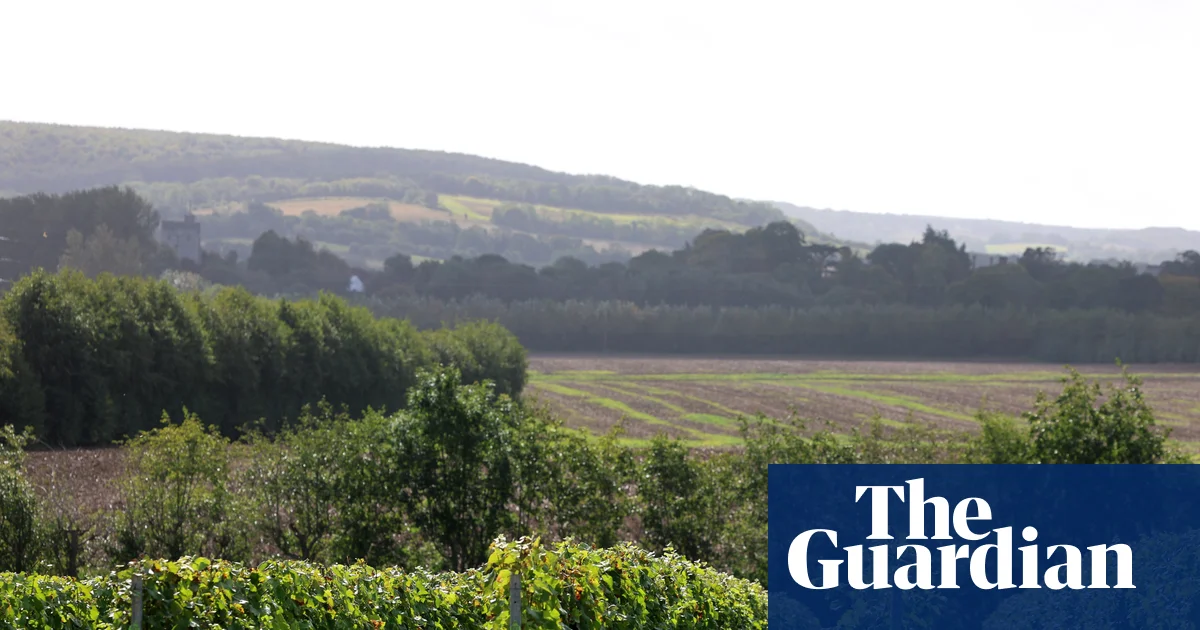
The grapes are turning purple on tall green vines, which stretch down towards the distant flint-and-limestone tower of Chilham church. These rows of Pinot Meunier, destined for English sparkling wine, are 51% owned by French champagne house Taittinger. “England is now the most exciting wine region,” says host and sales executive Hilary Sharp as she leads me around Domaine Evremond vineyard, which opened its visitor centre last year to coincide with the launch of its first wine.

In his 2023 book Vines in a Cold Climate, drinks writer Henry Jeffreys charts the rise of English wine “from a joke to world-class in 30 years”. The book opens with an alcohol-fuelled scene of vine-planting at Domaine Evremond in May 2017: unseasonably cold, rainy, muddy, with rambling anecdotes from anglophile Pierre-Emmanuel Taittinger about “English women encountered in his misspent youth”. The vineyard is named for the exiled French aristocrat Charles de Saint-Évremond, a symbol of hedonistic Anglo-French cooperation. The bon vivant introduced champagne to England and party-loving Charles II made him governor of Duck Island in St James’s Park.

Illustration: Guardian Graphics

We stroll past a Land Rover, parked up by a windbreak of crab apple trees. Harriet opens the back to reveal a tray of glasses with a chilled bottle of Domaine Evremond’s Edition I, and we’re soon sipping creamy, citrussy fizz with a view of vines. It tastes great to me, but I’m no expert.

Wine critic Jancis Robinson gave it a “distinguished” 16/20 and Jeffreys, in his Substack, Drinking Culture, describes “bright green apple fruit with a reassuring bass note of croissant and Marmite”. King Charles III toasted French president Emmanuel Macron with this wine at a state banquet last summer.

Taittinger’s vineyard director, Christelle Rinville, supervises the vines at Domaine Evremond, regularly taking Le Shuttle from Champagne and enthusing about flinty Kentish subsoils. One of the companies that dug through chalk to make the Channel tunnel excavated Evremond’s 25-metre-deep cellars, where 1.5 million bottles can stay cool around the UK’s first subterranean winery.

Domaine Evremond’s new winery building

An elegant umbrella-shaded terrace outside the chalk-cliff walls of the winery has long rustic tables with vases of wildflowers. Visitors can sample the wine (£12.50 a glass, £55 a bottle) from Wednesday to Sunday and there are year-round tours and tastings. Sitting here under blue skies, among banks of yarrow, knapweed, vetch and wild carrot scorched by the relentless sun, it doesn’t feel very English.

Europe is the world’s fastest-warming continent. The unirrigated vines (unlike many other crops) seem to be thriving, and the harvest will be up to three weeks early. Jeffreys writes: “Currently the climate in south-east England is similar to that of Champagne in the 1970s.” Optimal latitudes for wine are supposed to be 30 to 50 degrees, with Champagne at the northerly end of the range. Chilham sits at 51 degrees north.

The vineyard is a half-hour walk through fields from the village, with its cafes, pubs and railway station, where only the front four carriages fit next to the short platform. Bearded butter-yellow cobs of sweetcorn are bursting out of pale green husks beside the path. I loop back to Chilham through Perry Wood. Just beyond the vines, I can see an old oasthouse through branches laden with rosy gala apples. The land was bought in 2015 from the fruit-growing Gaskain family, whose managing director, Mark Gaskain, oversees day-to-day operations in the vineyards as well as producing about 70 million apples a year.

Further on, an orchard of plums is drooping under the weight of purple fruit and crates are stacked up ready for harvest. In the hedges, sprawling hops and honey-scented wild clematis tangle with reddening rosehips and sweet, wine-dark blackberries. Sparrows snack on early-ripened hawthorn under arching beech and sweet chestnut trees, ancient ivy-wreathed hedge maples and squirrel-haunted hazels. Huge clumps of mistletoe hang from towering poplars.

Chilham Castle’s gardens were landscaped by Capability Brown and now include a vineyard. Photograph: Goddard New Era/Alamy

Cottage gardens are heady with late summer roses, scented lavender, aromatic catnip. I wander past wisteria-clad walls and a row of mud-built house martin nests with late fledglings still cheeping under half-timbered eaves while gathering swallows twitter on the wires.

Deputy church warden Lynda Twaite shows me round the flint-walled St Mary’s, pointing out memorials and a battered old school table, graffitied by 18th-century kids. The pilgrim route to Canterbury runs through the lime- and yew-shadowed churchyard. Across the square, I peer through the gates at creeper-covered Jacobean Chilham Castle. Its gardens, landscaped by Capability Brown, now include a new vineyard.

Before heading to the Woolpack Inn for the night, I take an evening stroll by the River Stour, with a view of weatherboarded Chilham Mill framed by willowherb and ripe elderberries. The river sparkles in the sun and turquoise damselflies hover among loosestrife and waterlilies.

The Woolpack’s garden has a Mediterranean feel, with pink hydrangeas, agapanthus and a 600-year-old olive tree. The brick-walled bar has a curving window seat, weathered oak beams and is stuffed with prints and plants and quirky lighting. After a multimillion-pound renovation a couple of years ago, suites and bedrooms upstairs are named after Kentish vineyards, while the big rooms in Rose Cottage, across the lane, come with their own private gardens.

The Woolpack Inn’s ‘Woolly cheeseboard ’is served on a slice of tree trunk. Photograph: Phoebe Taplin/The Guardian

I sit in the leafy shade with a “Woolly cheeseboard” on a slice of tree trunk. As much cheese-based installation as meal, its applewood-smoked and creamy goat are artfully arranged among crackers, olives, nuts, dried fruit, chutneys and tangy homemade pickles. To go with it, there are pints of Shepherd Neame’s toffee-appley Master Brew from down the road in Faversham, or glasses of the local cuvée at cellar door prices.

Domaine Evremond helped found the Wine Garden of England, a collaboration of Kent vineyards. August 2026 also saw the launch of a new tourism initiative, the Kentish Wine Way, encouraging people to visit “England’s largest and most awarded wine region”. The county has 120 commercially active vineyards and more than 25% of Britain’s vines by area, with last year’s harvest producing more than five million bottles. From the train window next day, after hours of walking through wooded hills and burdened orchards, several vineyards roll past, glowing in the evening sunlight.

Accommodation was provided by the Woolpack Inn (doubles from £140 B&B) and some transport by Southeastern (advance tickets from London St Pancras from £16 each way)


Five more Kent vineyards to visit

Balfour Winery

Balfour produced the first English wine to win a gold medal and a trophy at the International Wine Challenge for its 2004 Brut Rosé. Most days, you can pick up a map at the Cellar Door and wander free around the vineyards, orchards, wildflower meadows and ancient oakwoods – or book a range of experiences (from £15pp for a self-tutored tasting). There’s a free shuttle bus to Balfour from Marden train station Friday to Sunday (45 mins from London or Canterbury), and car-free visitors get 20% off the year-round tours and tastings.

Biddenden Vineyards

Five miles from Sissinghurst Castle Garden, the vineyard at Biddenden is the oldest in Kent. Drinks journalist Henry Jeffreys writes that the Barnes family are “apple growers who moved into grapes in 1969 when Joyce Barnes … heard a segment about English viticulture on Radio 4’s Woman’s Hour and decided to plant some vines”. You can still buy all kinds of fancy apple juice and cider here, as well as a range of experiences. Most run from May to September (from £15 for a self-guided tour and tasting flight) with a new behind-the-scenes production tour and tasting added this year for the colder months (£30).

Chapel Down

Photograph: Tim Winter

Chapel Down, near Tenterden, is England’s largest wine producer, with bottles in numerous supermarkets, made using fruit from more than 700 acres of vineyards across south-east England. A half-hour taxi ride from Ashford International, it offers various tours and tastings, including a cheese and wine pairing (£70).

Simpsons’ Wine Estate

Ruth and Charles Simpson started making wine in Languedoc in 2002 and, since 2012, in Kent, which they call “one of the most dynamic wine-producing regions of the world”. Bookable sessions include tastings (from £25) on a glass-walled mezzanine floor in the winery with velvet sofas and an optional helter-skelter slide to get back down after sampling their still and sparkling wines.

Westwell

On the edge of the Kent Downs, Westwell is close to Charing station and a short walk from the Pilgrims’ Way. The vineyard is known for its experimental approaches, including wild yeasts, small-scale production and cloudy, naturally sparkling Pet Nats. Alongside regular tours, there are Friday pizza nights and seasonal supper clubs. Tour and tasting £28.

Source link