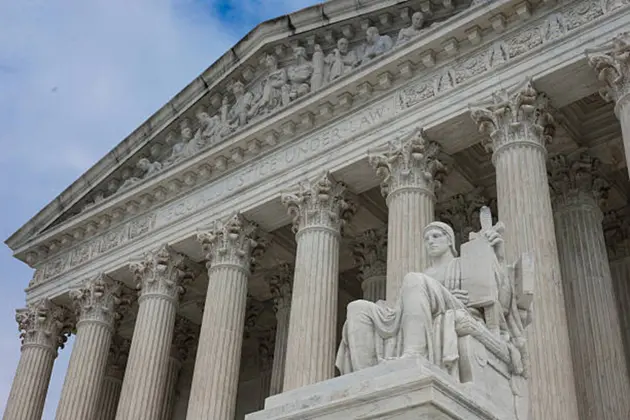
Supreme Court takes up Exxon, Suncor challenge to climate lawsuits
Supreme Court takes up Exxon, Suncor challenge to climate lawsuits
Source link
Supreme Court takes up Exxon, Suncor challenge to climate lawsuits
Source link

Pro-Palestine protests have spread across several Moroccan cities, with demonstrators demanding an end to diplomatic normalisation with Israel as Rabat deepens ties with Tel Aviv.
The latest mobilisation took place on September 27, at the end of three days of action called by the Moroccan Front for Supporting Palestine and Against Normalisation.
They followed a September 16 announcement that Morocco and Israel would elevate their diplomatic missions to full embassies and appoint ambassadors.
On September 25, the Moroccan Committee for Supporting the Nation’s Causes said it had organised 76 events in 45 cities under the slogan “Friday for Al-Aqsa and against normalisation”.
Moroccan media reported gatherings in cities including Rabat, Casablanca, Marrakesh, Tangier, Fez, Agadir, Oujda, Tetouan, Kenitra and Sale. The 76-event figure was the committee’s own count, with no independent national tally of participants.
In Rabat, protesters gathered outside Parliament, while a demonstration in Marrakesh developed into a march through several main streets, according to Lakome. Moroccan media also reported restrictions and arrests in some cities.
The mobilisation faced restrictions in some cities.
In Tangier, local authorities issued a decision banning a planned demonstration on September 27. Achkayen later reported that security forces dispersed hundreds of participants and that more than 12 people were detained, citing its own sources.
Lakome reported that authorities also prevented demonstrations in M’diq, while security forces surrounded a gathering in Agadir to prevent it from becoming a march.

The Moroccan Committee for Supporting the Nation’s Causes subsequently condemned what it described as bans, restrictions and arrests.
The response underscored another dimension of the dispute: Opposition to the relationship with Israel has remained visible on the streets, even as the government has continued to develop official ties.
Morocco restored diplomatic relations with Israel in December 2020 as part of the US-brokered Abraham Accords framework, alongside Washington’s recognition of Moroccan sovereignty over Western Sahara.
On September 16, Moroccan Foreign Minister Nasser Bourita and Israeli Foreign Minister Gideon Saar met in New York at a trilateral summit hosted by US Ambassador to the United Nations Mike Waltz.
The three countries confirmed plans to elevate the Moroccan and Israeli diplomatic missions to full embassies and exchange ambassadors.
Morocco and Israel also agreed to conclude agreements on investment protection and avoiding double taxation, expand direct flights and organise high-level reciprocal visits.
The move therefore goes beyond maintaining diplomatic relations established in 2020. It sets out a broader programme of institutional, economic and transport links between the two countries.
For opponents of the relationship, the embassy agreement represents another step in a policy they have rejected since 2020.
Morocco has maintained diplomatic relations with Israel while continuing to publicly support the Palestinian cause and the establishment of a Palestinian state.
For opponents of normalisation, however, the two positions are incompatible, particularly amid Israel’s genocidal war on Gaza.
“What has changed is the political context: Normalisation is being consolidated at a time when the war in Gaza has generated unprecedented public anger and intense images of Palestinian suffering,” Kathya K Berrada, senior programmes manager at the Arab Center for Research, told Al Jazeera.
“What we are seeing in Morocco is a growing disconnect between official diplomacy and public sentiment,” Moroccan activist Mouna Rahiani said, citing the latest Arab Opinion Index, which found that 89 percent of Moroccans surveyed opposed their country recognising Israel, while six percent supported it.
“While the state is moving towards deeper and more formal relations with Israel, Moroccans are still taking to the streets to say that Palestine cannot be treated as separate from our political and moral responsibilities,” she said.
The September agreement has brought an existing tension into sharper focus: public mobilisation against normalisation continues while the state pursues closer institutional ties with Israel.
Berrada said there was an important distinction between official policy and popular opinion, arguing that there is not enough reliable public data to establish how many Moroccans support or oppose normalisation.
The timing also matters for Morocco’s Western Sahara policy. The United Nations Security Council is due to consider the mandate of the UN Mission for the Referendum in Western Sahara (MINURSO) in October. Its current mandate runs until October 31, 2026.
The September 16 trilateral statement came against the backdrop of US recognition of Moroccan sovereignty over Western Sahara and Israel’s support for Morocco’s position on the territory.
For Rabat, the relationship with Israel sits within a wider foreign-policy framework in which ties with Washington and international support for its position on Western Sahara remain important.
For opponents of normalisation, however, that strategic calculation does not resolve their objection to closer ties with Israel, particularly while the Palestinian issue remains highly salient.
Ahmed, a Moroccan sociologist who asked to be identified by one name, said the September 16 move was “a continuation of the trilateral agreement of December 10, 2020”, but that Morocco should make the relationship “comprehensive, not selective or partial”.
The protests came days after Morocco held parliamentary elections on September 23.
The final results gave the Authenticity and Modernity Party 97 of the 395 seats, followed by the National Rally of Independents with 66, the Istiqlal Party with 65 and the Party of Justice and Development (PJD) with 54.
The PJD had won 13 seats in 2021. Turnout was 38.08 percent, compared with 50.86 percent in 2021 and 42.27 percent in 2016, according to Morocco’s Ministry of Interior.
It was the PJD in power when Morocco restored relations with Israel in 2020. Then-Prime Minister Saadeddine el-Othmani signed the Morocco-US-Israel joint declaration that December.
The PJD has maintained that opposition to normalisation was a longstanding party position. The party subsequently reaffirmed its rejection of normalisation and relations with Israel, while el-Othmani defended the 2020 decision as a state-level decision.
On September 17, following the announcement of the planned diplomatic upgrade, the PJD’s general secretariat reiterated its opposition to normalisation and to relations and agreements with Israel.
After the election, the PJD’s national council unanimously decided to remain in parliamentary opposition and not participate in the next government.
![Pro-Palestine protesters demonstrate against normalisation with Israel, as Morocco moves to deepen diplomatic ties with Tel Aviv [Mosa'ab Elshamy/AP]](https://i0.wp.com/occasionaldigest.com/wp-content/uploads/2026/09/AP24280440675597-1728311115.jpg?w=640&ssl=1)
The PJD’s position has illustrated the limits of using party politics to measure the effect of opposition to normalisation. The party opposed the policy while in government, yet its prime minister signed the 2020 declaration.
Its larger parliamentary presence in 2026 gives the issue a stronger political platform, but does not by itself alter Morocco’s foreign policy.
It has not been established that the Palestine issue or opposition to normalisation was a decisive factor in voting, and neither do the PJD’s gains demonstrate that its position on Israel directly drove its increased representation.
The September demonstrations show that organisations opposed to normalisation retain the ability to mobilise across a wide geographic area. But their effect on government policy is less clear.
“There is an important distinction between state policy and popular opinion. Normalisation is an official state decision, but there is limited reliable public data allowing us to measure the level of popular support for it,” Berrada said.
![Moroccan protesters display signs supporting Palestinians during a mobilisation against diplomatic ties with Israel [Abdel Majid BZIOUAT / AFP]](https://i0.wp.com/occasionaldigest.com/wp-content/uploads/2026/09/000_A8BU6GK-1776617989.jpg?w=640&ssl=1)
“It would therefore be difficult to claim that either a majority or a minority of Moroccans endorse the policy.”
That distinction is important when assessing the significance of the protests. Demonstrations can show the strength and persistence of organised opposition, but they do not by themselves establish the views of the wider population or show that government policy will change.
The PJD now has a larger parliamentary presence than it did after the 2021 election, but it remains in opposition. It will be able to voice its opposition to normalisation in Parliament, but will not have a place in government.
At the same time, the September 16 agreement remains part of a broader Moroccan foreign-policy framework involving the United States, Israel and Western Sahara. The Security Council’s consideration of MINURSO in October will provide another diplomatic setting in which Morocco’s position on the territory is under discussion.
For now, the protests demonstrate that opposition to normalisation remains capable of sustained mobilisation, while the government continues to deepen the relationship. Whether that public opposition translates into sustained political pressure remains less clear.

In a statement on Saturday afternoon Archbishop Eamon Martin called for “prayers and support for a peaceful resolution to complex Garvaghy Road situation”.
The Catholic primate said he shared the “sense of shock and disappointment of so many people at recent developments”.
“I also appeal for support for the patient use of solely lawful and democratic processes to resolve this deeply complex and emotive situation.”
Fr Peter Clarke, from St John the Baptist in Portadown, said he was concerned the march would “clash” with parishioners coming and going from the church.
He said he had emailed the commission to express his concerns and stated he “doesn’t know how they came to” their conclusion.
Parishioners at St Patrick’s Church on William Street are also likely to be affected ahead of the 10:00 service, according to the priest.
He added “tensions are high” in the community, and said he will be addressing the situation during Sunday’s service.
The decision to give the go-ahead for the parade came after the five-person Parades Commission, led by Prof Evelyn Collins, held face-to-face talks with the Orange Order earlier this week, and a separate meeting with the residents’ coalition.
Senior police officers were also consulted about the planned parade.
Within the 31-paragraph determination by the Parades Commission, details were revealed of conversations held with the PSNI.
The document stated: “The police made both written and oral submissions, indicating that they, at the time of making them, had no information indicating that the parade would result in disorder or violence.”
The Police Service of Northern Ireland (PSNI) said it had activated “mutual aid arrangements to support contingency planning for a policing operation” in Portadown on Sunday.
It is understood about 200 officers are coming from Scotland.

WASHINGTON — President Trump’s trade war with Canada could intensify the headwinds Republicans are navigating ahead of the November midterms, with its effects poised to reverberate in northern battleground states with crucial Senate races.
With the election less than six weeks away, Republicans are facing an increasingly bleak outlook, as new polls this week showed voters favoring Democrats by as much as 12 points amid widespread cost-of-living anxiety and low approval for Trump.
The escalating beef with Canada — Trump attacked the country anew on social media Wednesday — stands to heighten voters’ economic worries and add to the GOP’s political challenge in dead-heat races, analysts said.
“It doesn’t make things easier. It’s not helping,” said Rusty Hills, a University of Michigan public policy professor and onetime chair of the Michigan Republican Party.
The president’s unpopular policies on the war in Iran, the economy and data centers have already handed Republican candidates the tough task of appearing responsive to Americans’ frustration with cost-of-living issues without alienating Trump and his voter base.
The trade war, said Lance Dutson, a Maine Republican media strategist, puts “another log on the fire” of the affordability issue.
The tariffs have appeared unpopular in recent polling, including among a majority of independent voters. Though they are not expected to dramatically increase consumer prices, they could affect voters’ perception of the economy — and even small economic impacts on certain industries, such as auto manufacturing in Michigan, could have an effect in very close midterm races, experts said.
Trump’s new import bans on some Canadian goods are set to begin next week, a response to retaliatory tariffs Canada levied earlier this month. Trump argues that Canada has “been ripping off” the United States and that tariffs will help domestic manufacturers.
On Wednesday, the president inaccurately claimed on Truth Social that Canada is allowing “millions and millions” of immigrants into its country.
“It is a Liberal takeover that will end very badly. Already showing up in their numbers. Big unemployment. ‘Oh Canada!” the president wrote on social media Wednesday morning.
Five of the nine states most likely to decide Senate control border Canada — Alaska, Ohio, Michigan, New Hampshire and Maine. Two more, Texas and Iowa, also do substantial trade with Canada.
Democrats must retain their Senate seats including New Hampshire and Michigan and flip four of the other states to win a majority, a tall task. As the landscape worsens for Republicans, however, some are testing how much they can distance themselves from Trump.
“It’s a tightrope, there’s no question,” Hills said. “[Candidates] are looking for some wiggle room on some of these issues like the war and prices and Canada tariffs, because they need every independent and swing voter they can get.”
A majority of Americans oppose raising tariffs on Canadian goods, including 64% of independents, an Economist/YouGov poll found. Only 14% of independents said they supported additional U.S. tariffs on Canada in a late August Ipsos poll.
And in Michigan, 68% of independent voters disapprove of the tariffs, a poll this month from the Washington Post and Schar School found.
“The more we put tariffs on stuff, the more they put tariffs on stuff … prices are just ultimately going to go up for all of us,” said one Michigan swing voter in a Sept. 9 focus group conducted by the firm Engagious, in which 11 of 13 participants said the trade war was bad for the state.
The highest costs of the tariffs will be concentrated within a few industries, including auto and other manufacturing, dairy, and alcohol and spirits, said Alex Durante, a senior economist at the Tax Foundation. The tariffs likely won’t create a major change for consumers, but the general impression that tariffs can contribute to higher prices might turn off voters who are already worried about inflation, he said.
Counter-tariffs imposed by Canada in response to U.S tariffs last year resulted in a 6% increase in the prices of affected goods, researchers found in paper published by the Journal of Monetary Economics.

Canadian lumber products at Gutherie Lumber in Livonia, Mich., in August.
(Paul Sancya / Associated Press)
“This trade war is certainly not helping the president and his party in the midterms,” Durante said. “What’s weighing on the top of people’s minds is this general affordability crisis … and they realize that tariffs are another factor that is impacting affordability.”
The latest escalation of the trade dispute began in July, when Trump threatened new 50% tariffs on some Canadian goods, reinvigorating a conflict that began with tariffs the president imposed in 2025.
The two countries began trade talks, but the negotiations fell apart in late August, and Trump imposed tariffs on about $20-billion worth of Canadian goods. Canada retaliated with tariffs on about $20-billion worth of American goods that took effect Sept. 8. Trump then announced import bans on some Canadian goods, including certain alcohol and dairy products, which go into effect next week.
Construction and farm equipment in Illinois, aluminum and pipe products in New York, and iron and steel products in Ohio are among the goods targeted by Canada’s counter-tariffs, the Canadian Broadcasting Corp. reported. In California, about 10.5% of the state’s Canadian imports are exposed to the counter-tariffs imposed by Canada.
Democrats have seized on the issue as another way to tie Republican candidates to Trump’s policies, something that analysts said may have varying degrees of success in different swing states.

Maine Republican Sen. Susan Collins campaigns in August in Kittery, Maine.
(CJ Gunther / Getty Images)
In Maine and New Hampshire, where the Republican Senate nominees have criticized Trump’s move, the tariff issue may be less likely to stick. Efforts to tie Republicans to Trump have historically been less successful in the region because of its independent streak, said Jim Merrill, a veteran Republican strategist in New Hampshire.
Maine Republican Sen. Susan Collins warned the White House against imposing tariffs and successfully pushed for the administration to exempt road salt and cement this month. She told Politico that the Trump administration had “very much underestimated” the effect of the tariffs on Maine residents.
Republican John Sununu, a former senator who is running to retake the seat in New Hampshire, has also criticized the tariffs, saying a trade war with Canada “doesn’t make any sense.” He indicated he would support legislation in Congress to restrain the president’s tariff powers.
Elsewhere, Senate nominees have walked a careful line on tariffs. In Alaska, Sen. Dan Sullivan has largely avoided the issue, even as Democrats there have used it to ramp up attacks on his record in recent days. In Ohio, former Sen. Jon Husted told the National Review in August that the public “would like to understand the strategy behind what the president’s trying to do.”
Former Rep. Mike Rogers of Michigan, the Republican Senate nominee, told reporters over the weekend that he was in favor of “good” tariffs that would help Michigan and opposed to “bad” tariffs that would hurt the state.
Focusing on issues other than tariffs may be the right strategy on the campaign trail, Hills said.
“He’d much rather be talking about the Republican plan for affordability,” Hills suggested. “There’s interesting things we need to be talking about in order to win this election, and this isn’t one of them.”
Two days after seven Ethiopian armed groups announced the formation of the Ethiopian Peoples’ Forces Alliance for Survival and pledged to remove Prime Minister Abiy Ahmed, a senior official of the Tigray People’s Liberation Front (TPLF) was asked whether the statement amounted to a declaration of war.
He hesitated, then answered with a question of his own.
“We are at war now, aren’t we?”
He was speaking to Kjetil Tronvoll, professor of peace and conflict studies at Oslo New University College, who told Al Jazeera that the answer captured what the new rebel alliance had changed.
It has not created a single, coherent military force capable of marching on Addis Ababa. It has brought several of Ethiopia’s separate conflicts into the same political framework and, potentially, into the same military calculation.
The question now is how much further that can spread and whether seven movements with different enemies, territorial claims and histories can actually fight as one.
On Tuesday, drones struck two schools in Alamata, in southern Tigray, and the town’s mayor said 14 civilians were killed and 22 wounded. The account could not be independently verified, and the federal government did not immediately comment.
By Wednesday, Tigrayan forces had seized Alula Aba Nega International Airport in Mekelle, AFP reported, citing an airport employee and a Western embassy security source. The airport employee said staff had been told there were no flights.
The alliance, whose founding statement Fano commander Zemene Kassie read on Tigrai TV on Sunday, brings together the Amhara Fano National Movement, the TPLF and the Oromo Liberation Army (OLA), along with the Ogaden National Liberation Front (ONLF), the Afar Revolutionary Democratic Unity Front, the Benishangul Peoples’ Liberation Movement and the Gumuz Peoples’ Democratic Movement.
It promises a transitional administration once Abiy is gone.
Abiy’s spokesperson, Billene Seyoum, told Reuters that the members had been collaborating for some time with Eritrean financial backing, an accusation Asmara has repeatedly denied.
The TPLF dominated Ethiopia for 27 years, until Abiy took power in 2018 and pushed it to the margins.
In November 2020, the federal army, backed by Eritrean troops and Amhara forces, went to war with it. The conflict became one of the deadliest in Ethiopia’s modern history. African Union mediator Olusegun Obasanjo believes that about 600,000 people died, though estimates of the toll have varied.
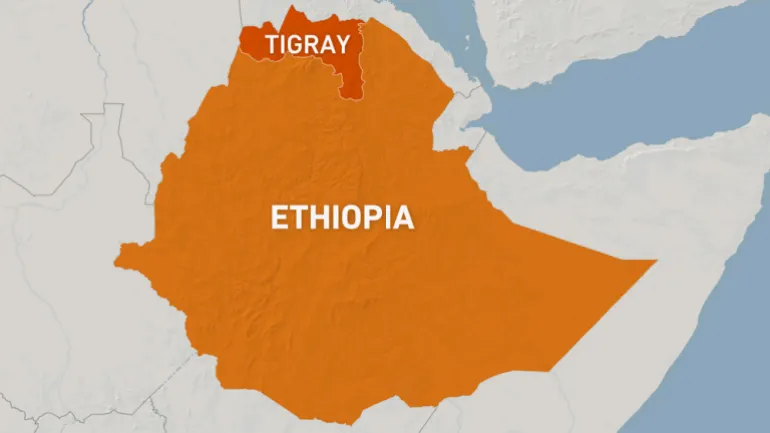
![Map showing Ethiopia’s Tigray region, where tensions between the federal government and the Tigray People’s Liberation Front (TPLF) have escalated [Graphic: Al Jazeera]](https://i0.wp.com/occasionaldigest.com/wp-content/uploads/2026/09/WEB-1000x562-ETHIOPIA-TIGRAY-1785610774.jpg?w=640&ssl=1)
That war ended in November 2022 with an agreement signed in Pretoria, South Africa.
It was a permanent cessation of hostilities. It silenced the guns and set terms for Tigray’s disarmament, but left critical questions for later, above all Western Tigray, the fertile territory claimed by both sides and administered by Amhara forces since the war.
Only Addis Ababa and the TPLF signed. Neither Eritrea nor the Amhara forces had a seat.
Jawar Mohammed, the Oromo politician who was once an ally of Abiy and later spent time in prison, told Al Jazeera that shutting them out gave them every reason to wreck the deal.
The new alliance brings together forces that were excluded from the Pretoria negotiations with one of the agreement’s signatories.
The quiet it created ended in May, when the TPLF restored the legislative council that existed before the war and installed its chairman, Debretsion Gebremichael, as regional president, effectively setting up a rival political authority to the interim administration established under the Pretoria agreement. The TPLF accused the federal government of failing to honour its side of the deal.
Federal and Tigrayan forces then clashed at Shererina, near the Sudanese border, on August 1. Heavy artillery and drones were used in the fighting, and hundreds of Tigrayans, including wounded fighters, fled into Sudan.
Then came the drones.
On August 20, two drones struck homes in Mekelle, wounding 13 people, according to the TPLF. Al Jazeera could not independently verify the account.
On September 20, a drone destroyed a truck carrying 41 tonnes of food aid near Adi Daero, according to the TPLF. Addis Ababa has acknowledged none of the reported strikes.
“We signed the Pretoria Agreement, but the regime used the agreement to kill the people of Tigray systematically,” the TPLF’s spokesperson, Michael Asgedom, told Al Jazeera.
Asgedom tells it two ways.
The alliance “was created to bring peace and democracy to Ethiopia”, he said.
He also said it would build a new order “over the ruins of Abiy Ahmed’s system” and that this was “the right time to eradicate the regime”.
If war comes, he said, “it will be for survival.”
One script is for diplomats, the other for fighters.
Tronvoll calls it constructive ambiguity, a phrase that fits the alliance.
![Ethiopian Prime Minister Abiy Ahmed Ali faces a new armed alliance that includes the Tigray People’s Liberation Front (TPLF) and six other groups [File: Sergei Bulkin, Sputnik, Kremlin Pool Photo via AP]](https://i0.wp.com/occasionaldigest.com/wp-content/uploads/2026/09/AP26264469792656-1790168591.jpg?w=640&ssl=1)
That the alliance claims to speak for seven peoples can delegitimise Abiy abroad and raise the price of any settlement, whether or not it fires a shot.
The first test is Eritrea, the neighbour whose name appears nowhere in the founding statement.
Over the past two years, Eritrea has reconciled with the TPLF, the enemy its troops helped to crush in 2020, as Abiy began demanding access to the Red Sea, which Asmara interpreted as a claim on its coast.
Jawar argues that Eritrea’s minimum aim is to keep any conflict on the Ethiopian side of the border.
The International Crisis Group has similarly assessed that Eritrea wants to establish a buffer zone on its southern border.
Asgedom has denied any Eritrean military presence in Tigray, but left the door ajar.
“If Eritrea can take action because of a potential danger to its survival, it is the Eritreans who should answer that question.”
Tronvoll says Eritrean troops are in Tigray now, a claim Al Jazeera could not independently verify. Magnus Taylor, deputy director of the International Crisis Group’s Horn of Africa project, told Al Jazeera that he was more cautious.
“This is substantially a domestic Ethiopian phenomenon,” he said.
The second test is whether seven commands can fight as one.
Zemene chairs the alliance, but the founding statement names no commander for a joint campaign.
If the line ever advances on Addis Ababa, Tronvoll asks, whose soldiers go first?
“If it is a Tigrayan general commanding Amharas to be sacrificed first to save the Tigrayan soldiers, that will split it immediately.”
Western Tigray is not mentioned in the statement either.
Taylor says the Fano are themselves divided over it: Commanders in Gojjam and Wollo can contemplate an alliance with Tigray, while those nearer the disputed land cannot.
“All these groups have their own different beef with the federal government,” Taylor said, and much of it dates from Abiy’s first year.
In 2018, Abiy invited exiled rebels home, and the OLA and the ONLF returned from Asmara.
But the OLA broke away to keep fighting, and talks with it in Tanzania collapsed in 2023.
The ONLF then split in 2025 after its then-chairman called for a return to armed struggle amid a dispute over a Chinese natural-gas concession in the Somali region.
The Amharan Fano rebelled against the government in 2023 after Abiy ordered the regional special forces to be folded into the federal army, a move many Amhara believed was tantamount to disarmament.
In June, Abiy’s Prosperity Party won 438 of 486 contested parliamentary seats. Voting did not take place in Tigray and was disrupted by insecurity in parts of Amhara and Oromia.
But their grievances are not only with Abiy’s government.
Referring to the news of the alliance, Jawar said he had “not seen anything as unpopular among the Oromos”, after years of accusations that Fano fighters have killed Oromo civilians in Wollega.
The OLA calls its participation a “procedural consensus” and has demanded that Fano disown a faction in Wollega that it says the government armed.
“There is no shared political objective,” Jawar said. “They don’t even have a shared tactical objective.”
And Tronvoll goes further: “If the members ever reached the palace, immediately a new war will start between them.”
Then, there are the people being asked to fight.
Tigrayans are being mobilised alongside forces they remember from four years ago, when, in Tronvoll’s characterisation, “both the Eritreans and the Fano Amharas were perpetrating genocide on them.”
![The charred remains of a tank lie on a road near Gereb Agew, southern Tigray, after clashes between the Ethiopian National Defence Force (ENDF) and the Tigray People’s Liberation Front (TPLF), on March 3, 2026 [File: Abel Gerezgiher/AFP]](https://i0.wp.com/occasionaldigest.com/wp-content/uploads/2026/09/AFP__20260923__C93W39E__v1__HighRes__FilesEthiopiaTigrayConflict-1790167123.jpg?w=640&ssl=1)
Friends in Tigray have told Tronvoll of coercive recruitment. He estimates that tens of thousands have left the region in advance of a possible war and the draft.
“People are voting with their feet,” he said. “They are on their knees already. So what are the alternatives for them than to fight?”
Abiy, for now, appears unmoved.
“As long as they don’t threaten the palace at Arat Kilo, he can live with that,” Tronvoll said. “I don’t think he skips lunch because of this.”
Taylor struggles for a word.
“Is it a headache? Is it an irritant? Is it a blow? It’s a combination of those things.”
In his assessment, the TPLF, which lost most of its heavy weapons in 2022, has come off worse in recent clashes against federal air power. The likelier course, he says, is a slow deterioration, with southern Tigray the flashpoint.
Jawar views Abiy’s approach as containment: Keep flights into Tigray running so that those who want to leave can do so, and let a war that few want sour public opinion.
With Tigrayan forces having seized Mekelle’s airport, that exit has closed.
Tom Gardner, author of The Abiy Project, said, “For months Abiy’s strategy has been to maintain a low-level conflict largely conducted via drones, proxies, and siege tactics. This could be the moment that strategy breaks down and a full-scale war erupts.”
The regional dimension is becoming harder to separate from the conflict inside Ethiopia.
The International Crisis Group says several thousand Tigrayans, mostly from Western Tigray/Welkait, have fought alongside the Sudanese army against the Rapid Support Forces.
Khartoum has also accused Addis Ababa of allowing drones to strike Sudan from Ethiopian soil, which Ethiopia denies.
Eritrea has aligned itself with Sudan’s army and established ties with Egypt, an opponent of Addis Ababa in the dispute surrounding Nile water resources.
The International Crisis Group has described Egypt as a close wartime ally of the Sudanese army.
Those alignments do not necessarily make the new Ethiopian alliance a regional military bloc. But they make it harder to treat Ethiopia’s conflicts as entirely domestic.
In Mekelle, the calculation is narrower.
“It is better to live than to die,” Asgedom said, “and the regime doesn’t allow us to live.”
A journalist in Mekelle, who spoke to Al Jazeera on condition of anonymity, said people had lived for months in a state of no-war-no-peace, and many now wanted it decided either way.
The alliance offers a path to war without making clear what that war would cost.
“We need peace,” residents told the journalist in Mekelle, after months without salaries or medicine.
In the city, there is an old belief that an unexpectedly windy and sunny day foretells fighting. Tuesday was both.

CNN, MS NOW and Politico are headed to court to challenge the constitutionality of President Trump’s order to ban the three news organizations from the White House.
The three outlets announced Monday they are jointly filing a lawsuit in U.S. Federal Court in Washington, D.C. asking for a temporary restraining order that restores their access immediately while the case is heard.
“This morning we notified the government that we are filing a lawsuit today to protect our First Amendment rights and defend the principle that the government does not decide what the press reports and publishes,” CNN, MS NOW and Politico said in a statement. “Without notice or due process, the White House revoked our journalists’ credentials because it objected to our reporting. Left unchallenged this threatens press freedom and the public’s right to indpendent journalism free from government interference.”
The lawsuit against the Trump Administration will allege that the ban violates the 1st Amendment by retaliating against protected newsgathering as punishment for unfavorable coverage, as well as blocking reporters from a “nonpublic forum” for unlawful reasons.
The suit notes precedent is a case from 1977 that ruled the White House cannot arbitrarily restrict press credentials for reporters on grounds that there’s retaliation for viewpoint discrimination.
Trump announced the ban Friday in a Truth Social post, describing CNN, MS NOW and Politico as “fake news.” He did not cite any specific story that prompted the action, claiming the outlets have long been unfair to him and never provide any positive coverage.
Trump was asked Friday how his ban will hold up in court.
“I don’t think a court should allow fake news to be written day after day after day,” he said. “I think that somebody has a right to keep them away if they’re going to write false stories all the time.”
Trump’s asserts that the ban is the result of unhappiness with the coverage he receives from the three outlets. Trump’s statements are likely to be used against him in court.
The ban has already raised questions on how the public will be able to monitor the president’s activities. CNN was scheduled to provide the video feed of Trump’s Monday trip to New York for the United Nations General Assembly. The pool feed, as it’s called, provides video to all other press outlets.
CNN’s assignment does not appear on the press schedule issued Sunday by the White House.
On Saturday, journalists from CNN, MS NOW and Politico were barred from entering White House grounds as they learned their press credentials were no longer valid. Some were asked to hand them over to Secret Service.
Trump has tried twice to deny news organizations White House access. In 2018 during his first term, the White House tried to ban journalist Jim Acosta, then working for CNN, but a court ordered that his press credential be resinstated.
Last year, the Trump White House issued a ban on the Associated Press when the news organization refused to recognize the president’s renaming of the Gulf of Mexico by executive order. A federal judge ordered that the AP’s access to the White House be restored on the grounds that the government cannot punish a journalistic outlet over the content of its speech.
A divided appeals court panel later paused that ruling for the Oval Office, Air Force One and other restricted spaces, allowing the White House to keep the AP out of them while the case proceeds.
Trump has railed against outlets that he considers unfriendly to his administration, calling for the Federal Communications Commission to pull the TV station licenses of the broadcast networks. He has also asked the FCC to take action against individual journalists who irk him, the last being “Meet the Press” moderator Kristen Welker.
FCC Chairman Brendan Carr has tried to act on Trump’s behalf by calling for a review of ABC’s TV licenses, which the Walt Disney Co.-owned network is challenging in court.
“This is about more than the rights of journalists. It is about the right of the American people to receive a full and independent account of the activities, policies and decisions of whoever occupies the nation’s highest office,” Heinrich said in a statement.
Trump has also lashed out at individual reporters in person or over social media, sometimes in strikingly personal terms — insulting them in briefings, or in his recent speech at the White House Correspondents’ Assn. dinner.
Trump’s press attacks have spread to other parts of his administration. The Department of Defense tried to restrict journalist access to the Pentagon.
The department also recently fired three journalists at the military’s newspaper Stars and Stripes for insubordination after they appeared in a CBS News report on how the Trump administration has tried to restrict their reporting.
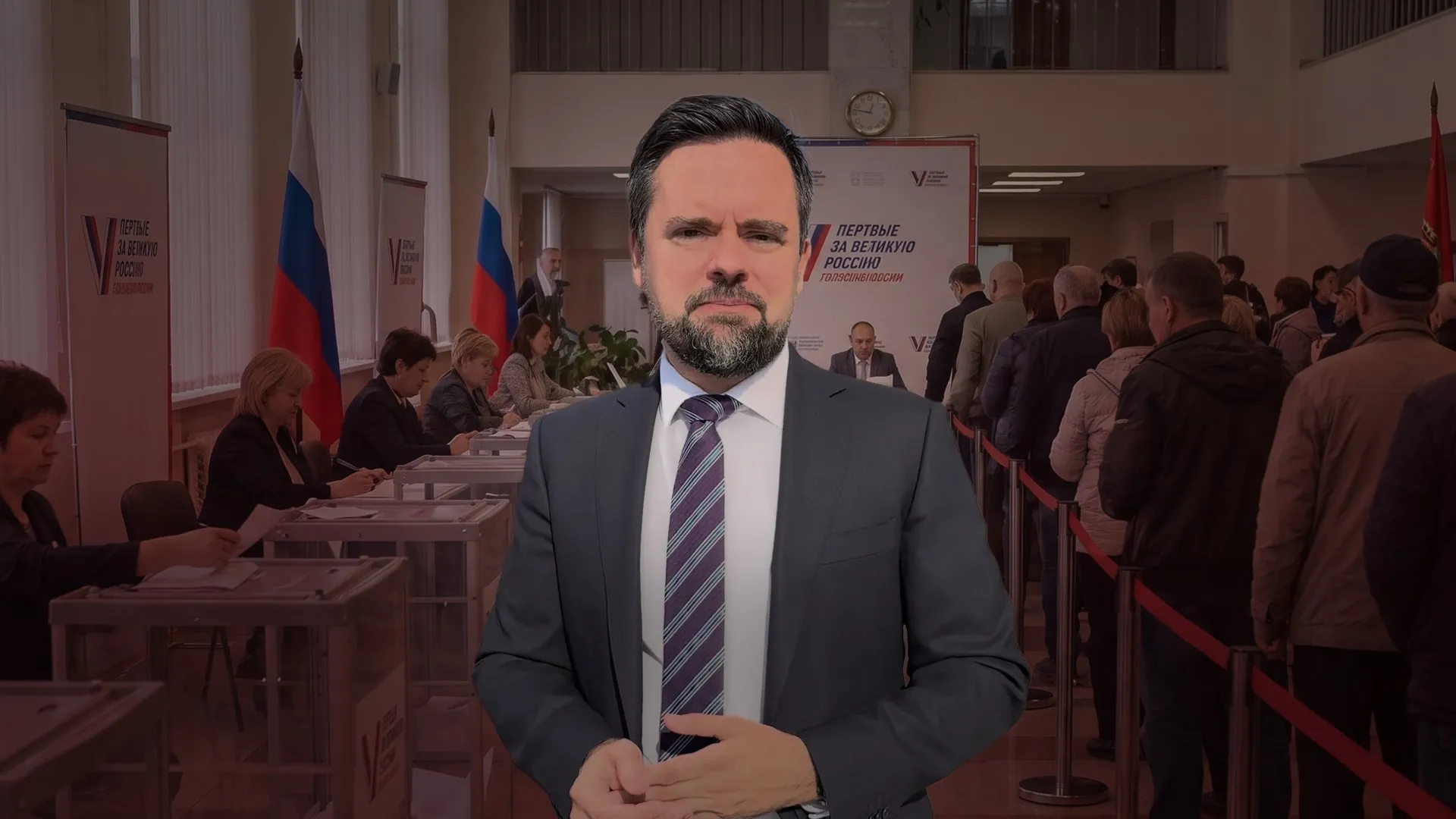
Russians head to the polls for the first time since the Russia-Ukraine war began in 2022. United Russia has been the governing party for over two decades, backed by President Vladimir Putin. Do other parties pose a challenge? Al Jazeera’s Dmitry Medvedenko reports from Moscow.
Published On 17 Sep 202617 Sep 2026
Share


Survival Journey is an interactive experience in which participants explore how to transform nature’s challenges into useful resources. It runs until Nov. 24 at Ithra Center. Check the Ithra app for more details.
Source link


SILVERSTONE, England: Max Verstappen needed about 35 minutes to overcome 100 karting drivers in a Red Bull event at Silverstone on Wednesday.
Verstappen started 101st at the Silverstone karting circuit, and overtook 64 drivers on the first lap alone, with many of his opponents crashing among themselves.
Many got blocked on the track after a pile-up that prompted a full-course yellow flag. Verstappen went off track but was able to return.
“That was simply lovely,” Verstappen said. “It was a lot of fun.”
Verstappen, who finished second in Formula 1’s Spanish Grand Prix on Sunday, was up to 37th after the first lap, and up to sixth place by the sixth lap.
He went off track again but stayed comfortably faster than most drivers, none of them with any significant professional driving experience.
He said jokingly that the victory ranked as “the best one yet” in his career.
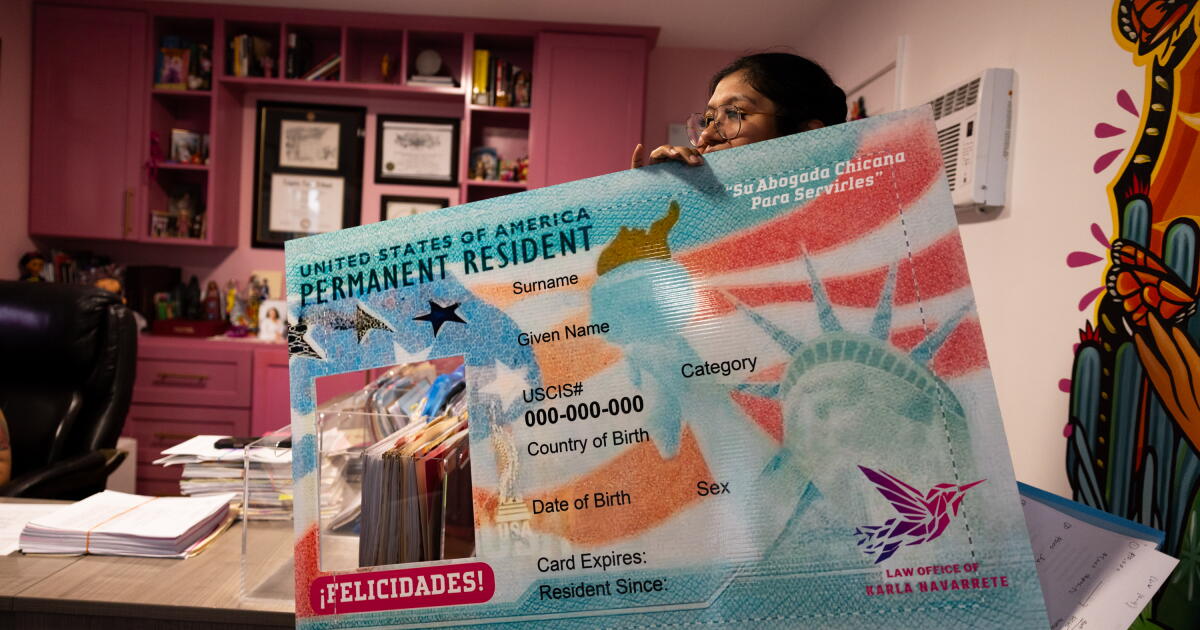
California and other Democratic-led states and localities filed a pair of lawsuits Monday challenging new Trump administration rules giving immigration officials more power to deny green cards to applicants whose families have relied on public assistance programs in the past.
The challenge mirrors another by a similar coalition that successfully halted such changes during the first Trump administration.
California Atty. Gen. Rob Bonta, whose office is helping lead the states’ challenge, said the rule changes seek to “rewrite more than 100 years of law” by making even brief use of public benefits in years past grounds for the federal government to deny a person’s application for legal permanent residency in the future — which he said was clearly illegal and would push tremendous costs onto states, counties and cities.
“No family should have to choose between accessing healthcare and nutrition assistance today — or protecting their pathway to a green card tomorrow,” Bonta said. “We’re going to court on behalf of the millions of immigrants who call this state home — and we will fight to get this unlawful rule undone.”
San Francisco City Atty. David Chiu, whose office is helping lead a separate challenge from Democratic-led cities and counties, said in a statement that the new Trump administration policies are “a blatant attempt to sow fear and confusion in our immigrant communities and coerce people into withdrawing from critical government services” — which he also said would shift millions in costs to local governments.
A spokesperson for the Department of Homeland Security, which promulgated the new rules, said the lawsuits were proof that immigrants are unlawfully tapping into benefits programs intended for U.S. citizens.
“Sanctuary states are terrified they will lose federal funds because hundreds of thousands of illegals and noncitizens might remove themselves from American welfare programs,” the spokesperson said. “This is the ideological contortion required by left-wing leaders to justify their defrauding of the American taxpayer at the hands of illegal criminals.”
The White House did not respond to a request for comment.
President Trump won office on a promise to rein in illegal immigration. Since taking office, his administration has launched a mass crackdown that has targeted both undocumented and documented immigrants. It has done so in part by targeting federal and state programs that offer immigrant assistance — which Trump has derided as diverting resources away from U.S. citizens.
In their lawsuit, the states acknowledge that federal law enacted by Congress in 1882 allows the U.S. to deny noncitizens entry to the country if they would be a “public charge,” or someone who is unable to support themselves and must rely on the government for assistance.
However, the states argue that Congress, the courts and federal government agencies have for “over 140 years” understood the term “public charge” to mean a person “who has become, or is likely to become, primarily dependent on the government for long-term subsistence” — not someone who has ever taken public assistance of any kind in the past, even in the short term.
And yet, the new policy promulgated by Homeland Security and U.S. Citizenship and Immigration Services gives immigration officers “unprecedented, sweeping new discretion to deny admission” to families that have tapped any number of public assistance programs for which both Congress and individual states have chosen to make them eligible, the states wrote.
The lawsuit, joined by Bonta, the attorneys general of 19 other states and the District of Columbia, and the governor of Pennsylvania, was filed in federal court in New York.
A separate lawsuit was filed in the same court by San Francisco and Santa Clara County in California, as well as New York City, Chicago, and Seattle and surrounding King County, Wash.
In a morning news conference, Bonta said the Trump administration’s new rules target families in unprecedented ways.
As one example, he said the new rules would potentially allow immigration officials to deny permanent residency to immigrant parents based on their U.S. citizen children accessing public benefits that they are clearly entitled to under the law.
As another, he said the new rules could penalize immigrant families for accessing basic, preventative healthcare that actually helps control the broader public cost of illness to localities and states.
Chiu said federal limits on residency for those who would be a “public charge” have in the past been applied in a “narrow and consistent way,” focusing on certain cash assistance and long-term medical needs. The new rules, he said, make “almost any” kind of government assistance grounds for residency denial.
The states’ lawsuit — California’s 92nd against the current Trump administration — revises a policy battle that began during Trump’s first administration, when it attempted in 2019 to implement similar policies, was sued by California, San Francisco and Santa Clara County, and lost.
The Biden administration later dropped the plans to change the rules.
Tony LoPresti, county counsel for Santa Clara County — which has per capita one of the largest foreign-born populations in the country — said that it was “déjà vu all over again.” and that the Trump administration will lose again because the new “public charge” policy is “outright illegal.”
It “bullies our community members into dropping health insurance, bypassing food assistance and turning their back on critical services out of fear” and constitutes “a wealth test for residents who are lawfully seeking status,” LoPresti said.

THE Office star Lucy Davis has tackled a terrifying zip-wire challenge amid her terminal cancer fight.
The 53-year-old announced last month that she’s been diagnosed with incurable stage four breast cancer.
She admitted “I don’t know how long I have left” as she revealed the tragic news with her followers in a video on social media.
However, Lucy said she was determined to have as much fun as she can during the time she has left and she’s doing exactly that.
The daredevil shared her pride on Wednesday after completing a gruelling hike followed by a scary zip line through a California canyon.
She took to Instagram to share pictures of herself on the hike as well as video of the moment she bravely took on the zip line.
Lucy penned: “I loved this #zipline and I was a bit proud of myself for doing it because they said to be prepared for a 25 minute walk, so I took my pain meds an hour before in preparation.
“In previous zip lines, I’ve always been driven up to the first line, and the walking is in between the lines.
“But no. This was a legit hike up to the first zip. It took me one hour and 15 minutes.
“I was so grateful for the support of the guides and my friend @jharris1231 who helped me up, and the other people on the hike that never judged me or made me feel stupid. Thank you.”
Her fans flocked to the comments section as one expressed: “Still living to the fullest and experiencing life. Good on you!”
Another person commented: “Oh wow, you’re fabulous Lucy. Still chokes me up though.”
Somebody else gushed: “You are such an inspiration. Also, whenever I see you I remember Aunt Hilda, she was so comforting as a character.
“You really played her so well, you’re truly amazing. So talented and inspiring.”
Yet another added: “My gosh Lucy, so much courage! You are such an inspiration.”
Lucy took to Instagram last month to share her heartbreaking news.
She wrote: “Hi friends:) I wanted to share something with you all that I’ve kept to myself for a while but for various reasons would like to share now.
“A year and a half ago I was diagnosed with Stage 4 Breast Cancer, which has metastasized to my bones. Specifically to my spine, right hip, and my ribs. The cancer is incurable, and too late for chemo.
“The initial lump that I felt, wasn’t a ‘lump’ as such; rather a kind of hard spot. Really tiny.
“I almost didn’t bother getting it checked. So I guess I’m saying don’t ignore anything – get everything checked out.”
Lucy told her fans that she’s at peace with “whatever comes next,” as she shared the clip of her ringing the cancer treatment bell.
While she rang the bell, Lucy confessed she has been told by doctors it’s “too late” for her to receive Chemotherapy.
Lucy is best known for playing Dawn Tinsley in Ricky Gervais’ comedy The Office.
Dawn was a receptionist at Wernham Hogg’s Slough branch in the original UK version of The Office.
Her character battled an unfulfilling engagement, failed dreams of becoming an artist and a will-they-won’t they relationship with her colleague Tim.
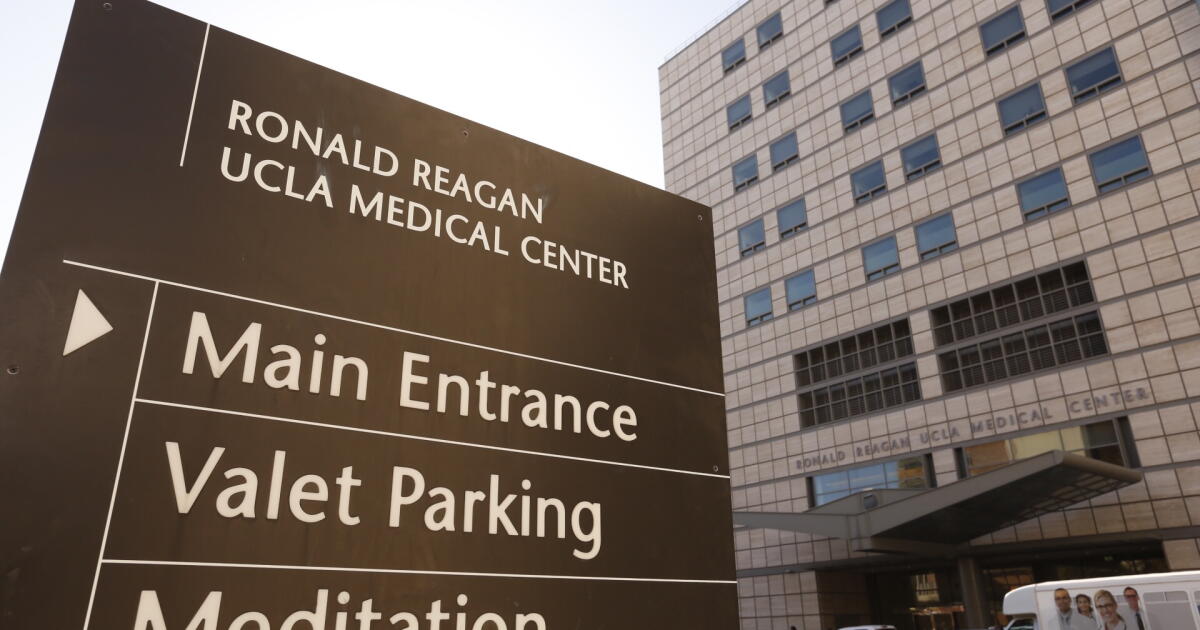
Thousands of low-income patients, some seriously ill, are scrambling to find new doctors as they lose access to UCLA Health physicians after a longtime Medi-Cal contract was not renewed.
Under the contract that expired June 30, UCLA had been providing specialty care to 9,000 medically frail patients from Health Care LA, an association of nonprofit clinics that serve patients covered by Medi-Cal, the state program for the poor.
“Many of these patients have been waiting for months to be seen by UCLA specialty medicine providers and are now being told they cannot receive the care they desperately need,” Health Care LA said in a Thursday news release.
The patients had gone to UCLA for cancer and infectious-disease treatments, high-risk women’s services, major organ transplants and other specialty medicine care, the association said.
A Friday news conference that Health Care LA had scheduled to detail the problems patients faced in getting care was abruptly canceled when the two sides said they had reached a tentative agreement on how to transition the patients to other doctors over the next year.
“To help ensure a smooth transition for patients, both organizations have agreed that established UCLA Health patients, individuals with existing appointments, and patients requiring other agreed-upon services will continue to be cared for at UCLA Health facilities,” Phil Hampton, a university spokesman, said in a statement.
Although some patients will continue to be seen by UCLA doctors, he said, “accepting an unlimited number of new referrals presents challenges given existing capacity constraints and the need to preserve timely access for existing patients.”
Sabra Matovsky, chief executive of Health Care LA, said in an interview on Thursday that UCLA had declined to renegotiate the contract.
“They never even asked us for a raise,” she said, “They just want us out.”
She said that university officials had pointed to “capacity issues” at Ronald Reagan UCLA Medical Center in Westwood, including in the emergency room and dozens of specialty clinics.
“To solve this by pushing out Medi-Cal patients while you continue to expand and market and take on other patients is not a solution,” Matovsky said.
Hampton said UCLA had offered to extend the contract, but Health Care LA rejected the offer.
The end of the Medi-Cal contract disappointed some UCLA medical professionals who have been urging the public university to provide care to more of L.A. County’s low-income residents.
“It feels like this is profits over patients,” said Dr. Patrick Samones, a fellow at UCLA Health, who trained at the university in family medicine.
“UCLA is one of L.A.’s most important healthcare institutions,” said Samones, who represents members of the Committee of Interns and Residents, which is part of Service Employees International Union. “We feel it has a duty to serve all Californians.”
In recent years, UCLA Health has been expanding fast and now has almost 300 locations throughout Southern California, including in wealthier places such as Montecito, Malibu and Westlake Village.
At the same time, it provides less care to Medi-Cal patients than its sister university health systems: UC Irvine, UC San Diego, UC San Francisco and UC Davis, according to university statistics.
Last year, about 15% of UCLA Health’s net patient service revenue came from Medi-Cal, according to the university health systems’ annual report. The four other UC health systems each received about 22% of that revenue from Medi-Cal.
About 40% of L.A. County residents are insured by Medi-Cal, according to a recent report by the California Health Care Foundation.
Hampton said the net patient service revenue data from the annual report doesn’t capture UCLA’s “extensive contributions to caring for Medi-Cal patients” and isn’t “a fair basis for comparing academic health systems.”
He added that with the university’s expansion of clinics, “we are providing substantial specialty care to Medi-Cal and Medicare patients” throughout L.A. County.
“Unlike county-owned hospitals, UCLA Health relies almost exclusively on patient care revenue to fund operations, expand access, recruit clinicians and invest in facilities and technology,” he said.
Hampton said UCLA has other contracts to serve Medi-Cal patients, which will continue. The health system also provides more than $270 million in unreimbursed care for low-income patients each year, he said, as well as primary and urgent care for people experiencing homelessness.
In addition, UCLA is spending $500 million to create a new neuropsychiatric hospital in Los Angeles’ Mid-Wilshire neighborhood, he said.
“We continue to fortify our region’s safety net despite growing access demands and challenges,” Hampton said.
In the most recent fiscal year, he said, Medi-Cal patients comprised 26% of 336,600 inpatient days and 34% of 156,000 emergency department visits.
“UCLA Health’s long-standing commitment to serving vulnerable populations in Southern California is well-established,” he said.
Hampton said the net patient service revenue data doesn’t reflect the complexity of care delivered by UCLA and is affected by Medi-Cal reimbursement rates and payment policies, which vary by region and health plan.
“Over time, Medi-Cal reimbursement has not kept pace with the cost of providing care, and UCLA Health has experienced increasing payment denials and delays,” he said.
UCLA specialists had been caring for Health Care LA’s seriously ill patients under the contract since 2009.
“They were the provider that did all the complicated care,” Matovsky said. “UCLA was our go-to.”

