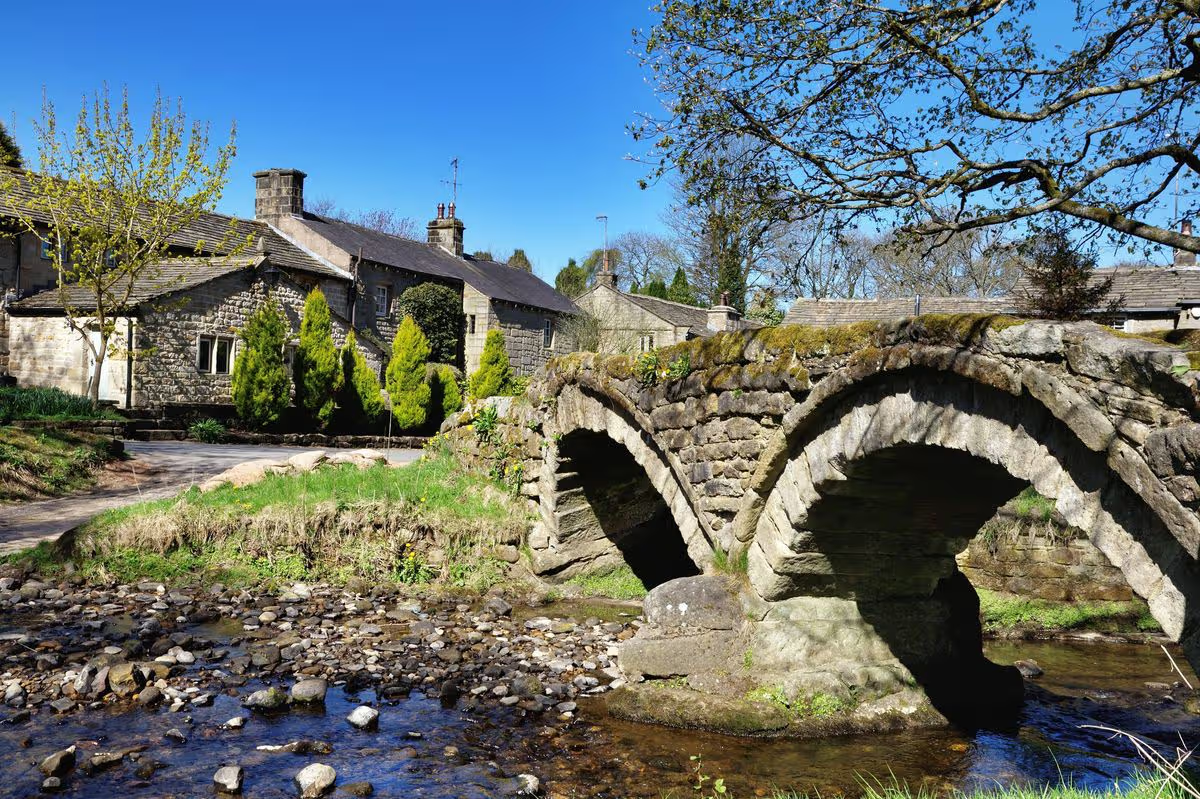
The historic abandoned village is steeped in history and is said to have inspired an iconic novel Jane Eyre

There is a 13th century packhorse bridge(Image: Khrizmo via Getty Images)
Just four miles from Colne sits the historic village of Wycoller, providing a remarkable glimpse into a long-forgotten era, boasting ancient ruins and a compelling literary heritage.
This abandoned village is particularly celebrated for its ties to the legendary Brontë sisters, who made their home in nearby Haworth.
In her seminal novel Jane Eyre, English author Charlotte Brontë created a fictional setting, Ferndean Manor, widely believed to have been inspired by the present-day ruins of Wycoller Hall.
From the 16th through to the 18th century, the hall stood as the village’s centrepiece, dominating the surrounding landscape and almost certainly catching the eye of the author during her travels through the region.
The novelist was known to visit Gawthorpe Hall as a guest of the Kay-Shuttleworth family, and it is widely thought that on these journeys, this striking structure fired her imagination.
The telling clue lies in her depiction within the novel of the approach to the Manor along the old coach road, which bears a striking resemblance to Wycoller Hall. Sadly, today only rubble and remnants remain of what was once a vibrant and picturesque community, reports Lancs Live.
After years of abandonment, local volunteers stepped in to save the village during the 1940s, with Lancashire County Council later taking ownership of the site. Now forming part of Wycoller Country Park, the site is open to all those who wish to explore and wander amongst its historic remains.
Among the heritage highlights, visitors can discover several bridges spanning the peaceful beck that winds through its heart.
Clam Bridge stands proudly amongst these ancient structures, regularly crossed by park visitors, with origins stretching far beyond the 19th century and the era of the Brontës. This bridge is believed to be an ancient monument, over 1,000 years old – and it’s not the only testament to the area’s deeply-rooted history.
Another equally impressive bridge in Wycoller is Sally’s Bridge, which earned its fame by featuring in the film The Railway Children. It has stood the test of time, with origins traced back to the 13th-15th century.
Clapper Bridge likewise comprises substantial gritstone slabs resting on piers, thought to date from as early as the 16th century.
Artefacts unearthed amongst the remnants of this deserted village reveal evidence of human settlement stretching back to the Stone Age.
The site continues to draw visitors today, who come to explore the ruins and uncover the stories of those who once called it home.
Preservation measures are firmly in place to protect its unspoilt charm, keeping modern intrusions well away. This includes a car-free zone, meaning no accessible roads reach the village, which can only be approached on foot, unless you are a resident holding a permit.
One visitor documented their trip on TripAdvisor, writing: “Wycoller is such a cute, picturesque little place. It has a lovely stream for sitting by or paddling in. There’s plenty of shade in summer, from the huge trees.
“There was also a small exhibition, some ruins and well preserved stone bridges. It’s not a long walk but it’s perfect for a picnic and/or for the kids to paddle in the stream.”
Another added: “Beautiful place to go with amazing sights and a lovely shop for snacks and a warm drink. There are also different little trails and bridges to go over and plenty of ducks to feed. I recommend this to anyone who fancies going out for the day to be in touch with nature.”