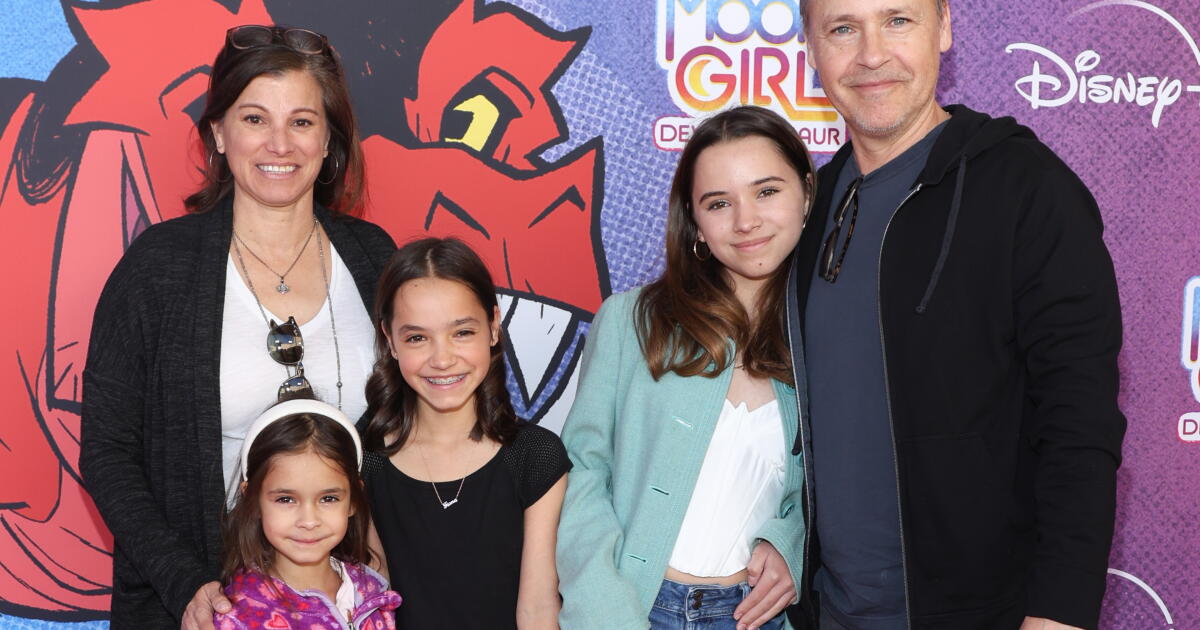
Indiana officials have disclosed the official cause of death for “Buffy the Vampire Slayer” star Nicholas Brendon, who died in March.
The Putnam County Coroner confirmed in a report shared with The Times on Tuesday that the actor, best known for portraying the loyal and wisecracking Xander Harris, died of atherosclerotic and hypertensive cardiovascular disease. Acute pneumonia and a previous myocardial infarction — a heart attack — were listed as contributing factors in his death.
Brendon died March 20, his family announced in a statement on his social media pages. The family said he died of natural causes, which was also confirmed by the coroner’s report. The report also noted that Brendon had “90% blockage” in his right coronary artery. He was 54.
“He was passionate, sensitive, and endlessly driven to create,” his family said on Instagram in March. “Those who truly knew him understood that his art was one of the purest reflections of who he was.”
Prior to his death, Brendon experienced multiple health issues. He was hospitalized in 2022 after he was diagnosed with a congenital heart defect and after suffering a cardiac incident. The “Criminal Minds” star also underwent multiple spinal surgeries to manage cauda equina syndrome, a rare condition in which nerve bundle in the lumbar or sacral spine are compressed or not functioning properly. His serious spinal injury was triggered by a fall in 2021 that required emergency surgery to prevent paralysis, his manager Theresa Fortier said in a statement at the time.
The coroner’s report described the scene of Brendon’s death, noting that because of the actor’s “declining health” Fortier had spent more time with him and notified authorities of his passing. The report confirmed there were no “obvious signs” of foul play and that “nothing seemed out of place or disturbed” in Brendon’s home, which appeared to be under renovation. Fortier told officials that the actor — a longtime smoker — was dealing with a “persistent” cough, complaining about chest pain and “self-medicating” with over-the-counter drugs prior to his death, according to the report. Brendon also declined further medical treatment.
According to the report, Brendon also had a “markedly enlarged heart,” “moderate” blockage in some of his left arteries and small bowel inflammation.
In addition to “Buffy” and “Criminal Minds,” Brendon was known for roles in the TV series “Without a Trace,” “Private Practice” and “Kitchen Confidential.”
Times staff writer Clara Harter contributed to this report.
ST. LOUIS — Dodgers right-hander Emmet Sheehan first met MLB.com researcher extraordinaire Sarah Langs during the World Series last year. But he’d known of her before that.
Langs, who turned 33 on Saturday, made her mark on the industry early in her career. Even as a young writer, her talent for digging up interesting stats, along with her contagious positivity and love for the game, set her apart in a crowded media landscape.
Langs was aware of Sheehan too, not only for his blossoming major league career, but also the message stitched into his glove: “K ALS.”
Oh my goodness 😭😭😭😭 this is so incredibly meaningful 🥺🥺🥺🥺
Langs was diagnosed in 2021 with Amyotrophic Lateral Sclerosis, a progressive neurodegenerative disease, also known as Lou Geherig’s disease after the Hall of Fame New York Yankees first baseman. Langs advocates for ALS research, partnering with Project ALS, and frequently highlights others who are raising awareness and funds for the cause.
“Just getting the chance to meet her was awesome,” Sheehan said in a conversation with The Times. “She’s a great advocate and a really smart mind in the world of baseball. So it’s awesome to have her.”
When Sheehan pitches, Langs posts pictures of the message on his glove. For his start Friday, Langs’ post included the caption: “May is ALS Awareness Month. Fitting that Emmet Sheehan is on the mound tonight. His gloves all say ‘K ALS.’ How lucky are we to have that sentiment represented on an MLB mound?!”
The next day, MLB posted a video of Sheehan wishing Langs a happy birthday and letting her know he was gifting her a glove as a token of his appreciation.
“I’m happy I get to be a part of the league where [ALS research and awareness] is kind of a main focus,” Sheehan said Saturday, also highlighting Chicago Cubs broadcaster Jon “Boog” Sciambi’s work through Project Main Street. “It’s been really cool.”
Sheehan has displayed “K ALS” on his gloves since college, when he joined a Boston College program that embraced the cause.
Pete Frates, who popularized the ALS Ice Bucket Challenge in 2014, was a former B.C. baseball standout. And he returned to serve as the director of baseball operations in 2012, the year he was diagnosed with ALS.
During Sheehan’s first year at Boston College, he got to spend time with Frates and his family before Frates died in December 2019.
“We talked about it a ton,” Sheehan said. “It was a huge part of our program. So it was a good opportunity to learn about it and just how terrible the disease is and how it can affect people.”
The lesson stuck with him. And now, as a major league player, he’s passing it on.
After last year’s disastrous Eaton fire, Southern California Edison executives vowed to be transparent about what caused the inferno that killed at least 19 people and left thousands of families homeless in Altadena.
“As we better understand exactly what happened on Jan. 7, we do so with a commitment to remain transparent,” Pedro Pizarro, chief executive of Edison International, the utility’s parent company, said in a published statement after the fire.
In court, however, Edison is keeping crucial documents of the cause of the Eaton fire secret, a legal strategy it has used to shield what happened in at least seven earlier wildfires it was blamed for igniting, according to a Times review.
Edison’s stance has caused mounting frustration with attorneys representing fire victims who are seeking compensation for their losses.
“The Eaton Fire cases should be decided on their merits, not on what information that SCE has been able to withhold,” lawyers for the victims wrote in a recent court filing.
State regulators have repeatedly criticized Edison for its secrecy in previous fires, saying it violated safety regulations and stopped officials from learning the root cause so that similar disasters could be prevented.
For more than a year, Edison employees have been gathering detailed information about what ignited the fire in an investigation the company is required to perform under state utility regulations.
But most of that information is being withheld by Edison’s claim of attorney-client privilege, as well as a protective order that it asked a judge to approve soon after the fire.
Protective orders are commonly used in civil lawsuits, but most cases do not have the broad ramifications to the public as the Eaton fire.
Pedro Pizarro, chief executive of Edison International, at the Semafor World Economy Summit in Washington on April 14.
(Aaron Schwartz / Bloomberg)
Because of the secrecy, it’s not possible to know just what Edison has found, attorneys for Eaton fire victims said in a filing.
In past fires, regulators have requested from the company — and been denied — photographs, notes, text messages and other records generated by the Edison crew that was first to arrive at the site where the blaze ignited. The company has argued its attorney directed the crew, making the evidence privileged.
The victims’ lawyers say Edison shouldn’t be able to withhold from them most evidence from its investigation into the blaze by claiming that the findings and related documents are covered by attorney-client privilege and therefore confidential.
Sealed Eaton fire documents
Lawyers for victims say that documents sealed by a protective order show evidence of where Southern California Edison’s safety measures fell short before the deadly fire.
Poor inspection and repair of the idle transmission line suspected of igniting the fire
Tower holding the idle line was “virtually unattended for decades”
Dried vegetation removed under electrified wires but not beneath the idle line
Problems with contractors inspecting the line
In a recent interview with The Times, Pizarro disagreed that the company was keeping information on the cause of the Eaton fire secret.
“We believe we’ve been transparent,” Pizarro said. “Facts are not privileged, and so we provided facts as we have known them.”
He said the company’s investigation was continuing. “We still, to this day, don’t fully understand what happened,” he said.
Pizarro said the protective order was needed to keep many things confidential, including some not related to the fire’s cause. For example, he said, it protects maps of the electrical system, which can’t be revealed because of terrorism concerns.
Signs blaming Southern California Edison for the Eaton fire are seen near cleared lots in the Altadena area of Los Angeles County on Jan. 5.
(Josh Edelson / AFP via Getty Images)
He pointed to several company disclosures, including two letters it sent to regulators soon after the Eaton fire that said it was evaluating whether a century-old transmission line, which hadn’t carried power since 1971, “could have become energized” and helped lead to the fire.
Pizarro said last year that the possible reenergization of that old line is a leading theory of the fire’s cause.
The company has said little else about the fire’s cause, other than it safely maintained and inspected the idle line, just like it did its energized lines.
Edison faces thousands of lawsuits from victims of the fire, which burned 14,021 acres and leveled a wide swath of Altadena. The lawsuits allege, in part, that the company was negligent for failing to safely maintain its transmission lines and for leaving the idle line in place when it knew it could become energized. Edison denies the claims of the lawsuits, which have been consolidated in L.A. County Superior Court.
Some documents that Edison says are not privileged and agreed to provide to the victims’ lawyers are sealed by a protective order that the company and the plaintiffs’ lawyers requested.
Plaintiffs’ attorneys often agree to such protective orders on the theory that doing so would allow the utility to more freely share information that could help their case.
Power lines hang from towers carrying power from the Southern California Edison Gould Station.
(Carlin Stiehl / For The Times)
Two months after the fire, Los Angeles County Superior Court Judge Laura Seigle signed the protective order — which covers documents that both sides provide in discovery — including business information deemed proprietary and personal customer data.
According to the protective order, if the case is settled, the lawyers will decide whether the sealed documents should be returned to Edison or destroyed.
If the case proceeds to trial, some of the evidence could become public.
Yet even with the protective order in place, plantiffs’ attorneys say Edison has refused to provide them with evidence from its investigation into the fire, saying it’s protected by attorney-client privilege.
The state-required investigations “are not private inquiries undertaken for SCE’s benefit and legal protection,” the plaintiffs’ lawyers wrote in a filing last year. “Those investigations are regulated activities that exist to protect the public and enhance public safety by preventing future fires.”
To begin those investigations, Edison’s crews often get to the ignition site before government officials. In the 2019 Saddleridge fire in Sylmar, an investigator from the Los Angeles Fire Department found the yellow police tape at the road leading to where the blaze started on the ground and an Edison truck leaving the site, according to his report.
California utility regulators have said the earliest observations at the scene are critical in determining what happened.
L.A. Fire Justice attorney Mikal Watts presents findings on the cause of the Eaton fire at transmission tower 3 at a January 2025 news conference in Pasadena.
(Robert Gauthier / Los Angeles Times)
Loretta Lynch, former president of the California Public Utilities Commission, which regulates the electric companies, said she believed Edison was wrongly using attorney-client privilege and protective orders “as a sword to prevent justice.”
Lynch said the confidentiality could keep evidence of Edison’s possible negligence from being used at a future state hearing that will look at whether the company acted safely and prudently before the Eaton fire.
In that hearing, if the commission finds the company acted prudently, all damage costs will be covered by a state wildfire fund and Edison customers. The company and its shareholders would pay nothing.
“It’s time to stop this game of allowing utilities to be negligent and then walk away with their customers paying for it,” Lynch said.
Kathleen Dunleavy, an Edison spokeswoman, said the company’s “assertions of privilege in civil court have nothing to do” with the future state hearing on whether the company acted prudently.
Dunleavy added that the company has been cooperating with government fire investigators and the plaintiff lawyers, responding to their requests for data.
The government’s investigation into the cause of the fire has not yet been released.
Asked about the company’s withholding of documents in court, Pizarro pointed to a 2024 California Appeals Court decision that found that Edison’s assertion of attorney-client privilege to keep evidence sealed in litigation over the 2017 Creek fire was appropriate under the law. The court said that protecting the documents generated in the internal investigation from public disclosure allowed the company’s attorneys “to investigate not only the favorable but the unfavorable aspects” of their client’s situation.
Lawyers for victims of the Creek fire, which destroyed more than 100 homes and structures near Sylmar, say Edison failed to provide evidence that showed its line was a likely cause of the blaze, leading government investigators to initially wrongly blame electrical equipment owned by the L.A. Department of Water and Power. Edison continues to deny it caused the fire.
A fire truck makes its way past a portion of the Creek fire along Wheatland Avenue in Sylmar on Dec. 5, 2017.
(Genaro Molina / Los Angeles Times)
In the Eaton fire case, a few details of what’s in the confidential documents have been revealed in court, showing they could be significant when the first trial begins next year.
In February, plaintiff lawyers filed 13 sealed exhibits for only the judge to review, saying they showed how Edison had neglected inspections, maintenance and repair of the idle line. The records are subject to the protective order, shielding them from public view.
“There is ample evidence in this case that SCE performed more frequent and higher quality inspections and maintenance on its live equipment than it did on its inactive facilities,” they wrote.
“From all indications, SCE left Tower 208 virtually unattended for decades,” they added, referring to the pylon that held the idle line and was found to be the location of the fire’s first flames.
The plaintiff lawyers also said the protective order prevents them from disclosing photos to the public that show Edison left vegetation growing under the idle line while removing it from beneath the live wires running parallel to it, according to the court filing. Utility regulations require vegetation to be removed from under and around electric lines to reduce the risk of fire.
The lawyers added that the sealed documents showed that Edison was having problems with an outside contractor it had hired to inspect its transmission lines.
Asked about the filing, Pizarro said the claims were assertions by the plaintiff attorneys that would be debated in court.
Some legal experts have criticized the use of protective orders for keeping the public in the dark about dangerous corporate actions or products.
Lynch said protective orders and confidential settlements in wildfire litigation are preventing the public from learning information that could stop future deadly fires. She said California should consider legislation to ban the use of the secrecy tactics in wildfire lawsuits.
Firefighters work to contain the Saddleridge fire on Oct. 10, 2019, in the Sylmar neighborhood of Los Angeles.
(Patrick T. Fallon / For The Times)
The Times found protective orders in lawsuits against Edison for the 2017 Thomas fire and mudslides, which killed 23; the 2018 Woolsey fire, which killed three; the 2019 Saddleridge fire, which killed one; and the 2022 Fairview fire, which killed two. Those fires together caused billions of dollars in damages and destroyed thousands of homes.
Lawyers for the Eaton fire victims told the judge in February that the protective order, as well as similar secrecy orders in lawsuits over other fires, had kept them from speaking publicly about certain subjects in the courtroom, including what they knew about Edison’s line inspections.
“This is a significant case, against one of the world’s largest providers of electricity, which has, through the use of Confidentiality Protective Orders in other cases, impaired the Plaintiffs’ ability to fully inform the Court,” they wrote.
Late last month, Judge Seigle ordered Edison to give the victims’ lawyers more of the documents they had requested. The protective order limits the public’s access to them.
WASHINGTON — Amid growing national security concerns, the FBI said Tuesday that it has launched a broad investigation in the deaths or disappearances of at least 10 scientists and staff connected to highly sensitive research, including four from the Los Angeles area.
“The FBI is spearheading the effort to look for connections into the missing and deceased scientists. We are working with the Department of Energy, Department of War, and with our state and state and local law enforcement partners to find answers,” the agency said in a statement.
The FBI’s announcement comes after the House Oversight Committee announced that it would investigate reports of the disappearance and deaths of the scientists, sending letters seeking information from the agencies involved in the federal inquiry as well as NASA, which owns the Jet Propulsion Laboratory in La Cañada Flintridge, where three of the missing or dead scientists worked.
“If the reports are accurate, these deaths and disappearances may represent a grave threat to U.S. national security and to U.S. personnel with access to scientific secrets,” Reps. James Comer (R-Ky.), chairman of the committee, and Eric Burlison (R-Mo.) wrote in the letters.
President Trump told reporters last week that he had been briefed on the missing and dead scientists, which he described as “pretty serious stuff.” He said at the time that he expected answers on whether the deaths were connected “in the next week and a half.”
Michael David Hicks, who studied comets and asteroids at JPL, was the first of the scientists who disappeared or died. He died on July 30, 2023, at the age of 59. No cause of death was disclosed.
A year later, JPL physicist Frank Maiwald died at 61, with no cause of death disclosed.
Two other Los Angeles scientists are part of the string of deaths and disappearances.
On June 22, 2025, Monica Jacinto Reza, a materials scientist at JPL, disappeared while on a hike near Mt. Waterman in the San Gabriel Mountains.
On Feb. 16, Caltech astrophysicist Carl Grillmair was fatally shot on the porch of his Llano home. The Los Angeles County Sheriff’s department arrested Freddy Snyder, 29, in connection with the shooting. Snyder had been arrested in December on suspicion of trespassing on Grillmair’s property.
There is no evidence at this point that the deaths and disappearances, which occurred over a span of four years, are connected.
A spokesperson for NASA, which owns JPL, said in a statement on X that the agency is “coordinating and cooperating with the relevant agencies in relation to the missing scientists.
“At this time, nothing related to NASA indicates a national security threat,” agency spokesperson Bethany Stevens wrote. “The agency is committed to transparency and will provide more information as able.”
Representatives from Caltech did not immediately respond to a request for comment.
Todd Meadows, a deckhand on one of the fishing vessels featured on the Emmy-winning reality series “Deadliest Catch,” died after he fell overboard into the Bering Sea.
The official cause of death listed on the crew member’s death certificate, which was obtained by TMZ, states that Meadows died from drowning with probable hypothermia and submersion of his body in cold water. The death has been ruled an accident by the Alaska Department of Health.
Meadows, a rookie deckhand who joined the production in May 2025, had not yet been featured on the long-running reality series at the time of his death. “Deadliest Catch” was reportedly wrapping production on Season 22 when the incident occurred, and cameras were rolling.
Meadows’ mother, Angela Meadows, has since asked that the show not air footage of her son’s death. “No parent would want the world to watch their child die,” Meadows told Alaska News Source.
Rick Shelford, the captain of the Aleutian Lady, announced in a social media post that Meadows died Feb. 25. He called it “the most tragic day in the history of the Aleutian Lady on the Bering Sea.”
“We lost our brother,” Shelford wrote in his lengthy tribute. “Todd was the newest member of our crew, he quickly became family. His love for fishing and his strong work ethic earned everyone’s respect right away. His smile was contagious, and the sound of his laughter coming up the wheelhouse stairs or over the deck hailer is something we will carry with us always.
“He worked hard, loved deeply, and brought joy to those around him,” he added. “Todd will forever be part of this boat, this crew, and this brotherhood. Though we lost him far too soon, his legacy will live on through his children and in every memory we carry of him.”
A GoFundMe set up in Meadows’ name described the deckhand from Montesano, Wash., as a father to “three amazing little boys” who died “while doing what he loved — crabbing out on Alaskan waters.”
The fundraiser has since raised more than $59,000.
According to the Associated Press, Meadows was reported to have fallen overboard around 170 miles north of Dutch Harbor, Alaska.
“He was recovered unresponsive by the crew approximately 10 minutes later,” Chief Petty Officer Travis Magee, a spokesperson with the Coast Guard’s Arctic District, told the AP.
The incident is still being investigated by the Coast Guard.
Times staff writer Tracy Brown contributed to this report.