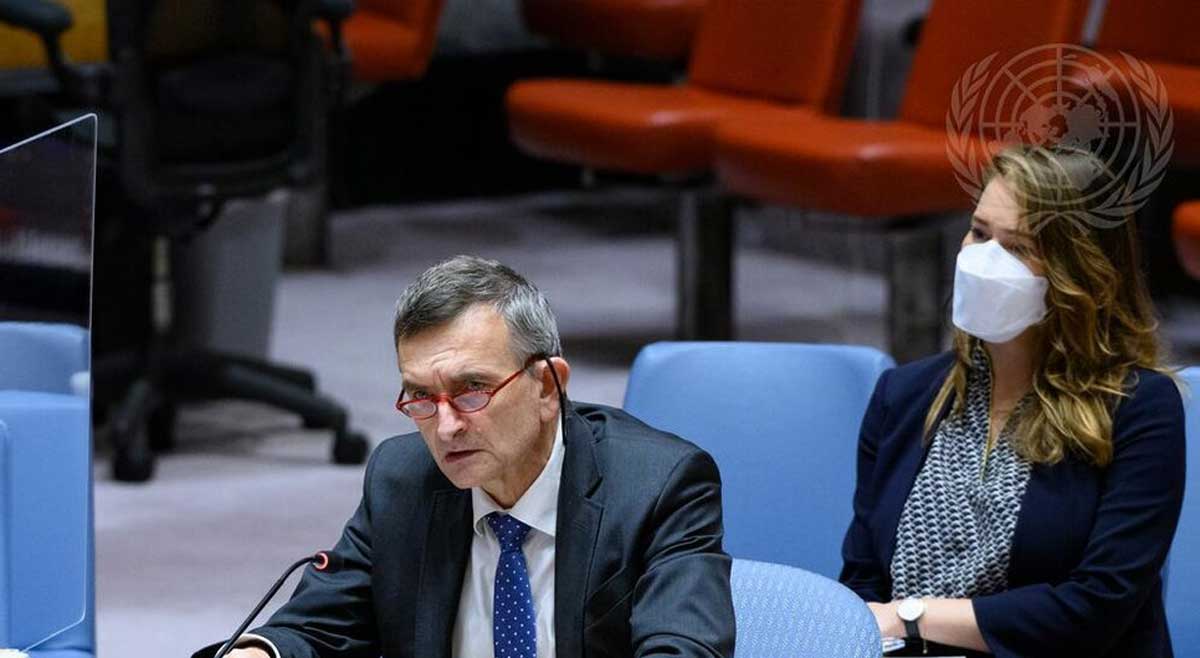
UN Warns of Human Rights Catastrophe Unfolding in Sudan’s Al-Obeid
Sudan has been engulfed in a devastating civil war since April 2023, when fighting erupted between the Sudanese Armed Forces (SAF), led by Abdel Fattah al-Burhan, and the Rapid Support Forces (RSF), commanded by Mohamed Hamdan Dagalo. The conflict has evolved into one of the world’s worst humanitarian crises, displacing millions, collapsing healthcare and public services, and triggering repeated warnings of famine and ethnic violence.
The latest concern centres on Al-Obeid, the capital of North Kordofan. The city is strategically important because it links central Sudan with the western Darfur region and serves as a major logistical and commercial hub. Control of Al-Obeid would provide whichever side captures it with a crucial military corridor for moving troops and supplies across Sudan.
According to the Office of the United Nations High Commissioner for Human Rights, civilians in the city have endured siege-like conditions for around 18 months, with dwindling food, water and medical supplies, while drone strikes and shelling have intensified.
Stay ahead of the geopolitical week.
MD Briefing delivers expert analysis across five global fronts — the Indo-Pacific, energy, geoeconomics, European security, and the Middle East — every Monday morning. Free.
Why it matters
The warning from UN High Commissioner Volker Türk suggests international concern that Al-Obeid could become another major atrocity site similar to previous battles in Darfur.
Several factors make the situation particularly alarming:
- Strategic military battle: Both the SAF and RSF view Al-Obeid as critical to controlling supply routes between central and western Sudan.
- Civilian catastrophe: Thousands of civilians remain trapped as fighting intensifies, with limited humanitarian access and worsening shortages of clean water, food and healthcare.
- Risk of mass atrocities: Britain requested the emergency UN debate amid fears that an RSF offensive could result in large-scale civilian killings similar to previous episodes documented elsewhere in Sudan.
- Humanitarian spillover: Further escalation would increase refugee flows into neighbouring countries already struggling to absorb displaced Sudanese populations.
Key stakeholders
Sudanese Armed Forces (SAF)
- Controls parts of central and eastern Sudan.
- Seeks to prevent RSF advances into North Kordofan and maintain control over key transport routes.
Rapid Support Forces (RSF)
- Attempting to expand territorial control after major campaigns elsewhere.
- Surrounding Al-Obeid could strengthen its position in western and central Sudan.
United Nations
- The OHCHR is documenting civilian casualties and warning of possible mass atrocities.
- UN agencies are pushing for humanitarian access before conditions deteriorate further.
United Kingdom
- Requested the urgent debate at the United Nations Human Rights Council, highlighting growing Western concern over another possible humanitarian disaster.
Humanitarian organisations
- Aid agencies face increasing difficulties reaching civilians due to insecurity and siege conditions.
Regional countries
- Neighbours including Chad, South Sudan and Egypt remain vulnerable to additional refugee inflows and regional instability.
Future outlook
The immediate outlook depends on whether the RSF launches a full-scale assault on Al-Obeid or negotiations produce humanitarian access.
Possible scenarios include:
- Escalation: A major offensive could trigger another urban battle marked by heavy civilian casualties, infrastructure destruction and further displacement.
- Prolonged siege: Even without a direct assault, continued encirclement could deepen shortages of water, food and medicine, increasing disease and starvation risks.
- International pressure: The UN and Western governments may increase diplomatic pressure for humanitarian corridors, though previous efforts have had limited success.
- Limited accountability: Despite mounting documentation of alleged abuses by both sides, meaningful international enforcement remains difficult given the fragmented nature of the conflict.
Volker Türk’s warning reflects growing concern that Sudan’s conflict is entering another dangerous phase rather than improving. Al-Obeid represents more than a humanitarian hotspot—it is a strategic military objective whose capture could reshape the balance of power between the SAF and RSF.
The battle also illustrates a recurring pattern throughout the war: military gains are increasingly achieved through sieges, attacks on civilian infrastructure and restrictions on humanitarian access. These tactics magnify civilian suffering even before major ground offensives begin.
For the international community, the warning underscores a familiar challenge. The UN can document abuses and raise alarms, but translating those warnings into protection for civilians has repeatedly proven difficult. Without stronger diplomatic leverage or sustained international engagement, there is a significant risk that Al-Obeid could become the latest symbol of Sudan’s worsening humanitarian crisis rather than the point at which the conflict’s trajectory changes.
With information from Reuters.