TAMWORTH may not be top of many tourists’ to-do lists, but it boasts the best boozer, a kids-go-free castle and even a chance to ski on real snow, all within staggering distance of each other.
I’m lucky that this Midlands marvel is only half an hour from me, so I headed over to check out all the things that make the town a perfect day trip destination this year.
Sign up for the Travel newsletter
Thank you!
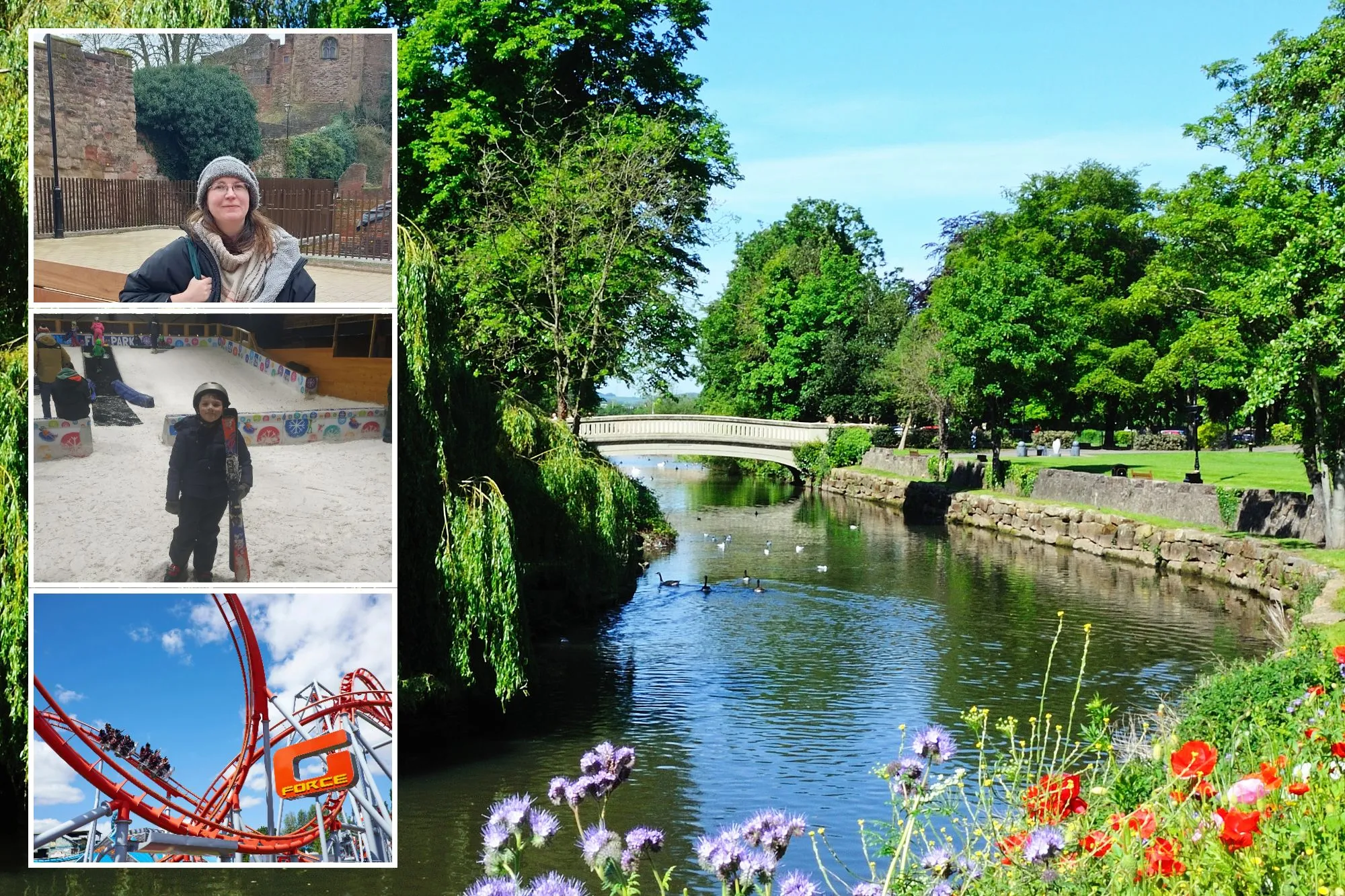
Travel writer Catherine Lofthouse Tamwork, which features Britain’s best boozer, a kids-go-free castle and even a chance to ski on real snow, all within staggering distance of each otherCredit: Catherine LofthousePoppies and thistles on the River Anker riverbank in Tamworth, StaffordshireCredit: Getty
It’s been ages since I last visited Tamworth Castle, a landmark feature in the centre of town, still standing tall on its original motte.
It’s just announced that it’s the latest visitor attraction to join the Blue Peter scheme, which means that kids who’ve earned a badge from the beloved TV show can get in free.
We were absolutely amazed by all the different eras of history showcased at the castle, a fascinating snapshot of its own journey through time.
What I really loved though was the recreated Saxon mead hall with fount-of-knowledge volunteer guide Ralph on hand to bring history to life and chat to us about the Staffordshire Hoard, a huge stash of Saxon riches discovered by a metal detectorist on a farmer’s field in 2009.
The hoard was split between three Midlands museums and Tamworth makes the most of the sparkling specimens it received in its Battle and Tribute exhibition.
We love a castle and have visited many of the biggest and best, like Warwick and Windsor, but Tamworth gives them a run for their money in terms of immersive experiences for children and offering up history in easy-to-understand bite-size chunks.
One thing that Tamworth really has going for it is the greenery of the Castle Grounds right in its centre.
This open-to-all public space has a fab castle-themed playground, a skate park, tennis courts and a cafe.
It is bordered by indoor attractions like Namco Funscape, which includes bowling, softplay and adventure golf, and the SnowDome, where visitors can ski, skate, climb and swim.
My boys love taking to the slopes and a firm family favourite here is the snow fun park, where you can play in the white stuff all year round.
The pool offers flumes and floats sessions for families.
A summer view of Tamworth castle and gardensCredit: AlamyThe Tamworth Tap in Staffordshire, run by George Greenaway, which was voted one of the best pubs in BritainCredit: Paul Tonge
If you have a Blue Light Card, you can often get money off and it’s always worth checking out the deals section of the SnowDome website, as you can bag a bargain at quieter times of the year.
We rounded up our visit with a trip to the Tamworth Tap, which has just been named pub of the year by the Campaign for Real Ale (CAMRA) for the third time.
It’s the first pub to win this award three times, so it was no surprise to find it already bustling with barely a table to spare within half an hour of its opening on a Friday afternoon.
You won’t be able to bring the kids in here, as it’s over-18s only, but if you’re visiting with older kids who are happy to enjoy the skate park, which is only a two-minute walk away, you can sneak in for a cheeky pint and a portion of £4 frickles – pickles fried in breadcrumbs.
If you’re here in the warmer months, the pub’s beer garden certainly has one of the best views in the town, overlooked by its castle neighbour.
April is a great time to visit the town, with a dragon egg hunt around the castle over the school holidays and then a free medieval festival to mark St George’s Day in the park on April 18, with jousting, archery, games and fairground rides.
Just outside Tamworth, there’s plenty of family-friendly visitor attractions a short drive away where you can easily while away a day if you’re making a weekend of it.
As well as visiting the animals, Twycross also has the Gruffalo Discovery Land, which is great for little ones, while both Drayton Manor and Statfold are perfect for train fans and anyone who loves fairground and theme park rides.
Drayton, which hosts Thomas Land, has just celebrated its 75th anniversary by installing a lake lights show, while Statfold recently opened the National Fairground Museum, so visitors can now enjoy vintage fairground rides as well as steam and diesel trains.
With a hoard of hidden gems of its own, this Staffordshire treasure has a wealth of wonders just waiting to be discovered.
Catherine’s son at Tamworth SnowDome, where visitors can ski, skate, climb and swimCredit: Catherine LofthouseEThe G Force Rollercoaster within Drayton Manor Theme Park near TamworthCredit: Alamy
A woman was left laughing at herself after visiting a Spanish castle for just €3 (£2.61) – only to discover the surprising reason behind the tourist attraction’s low entrance fee
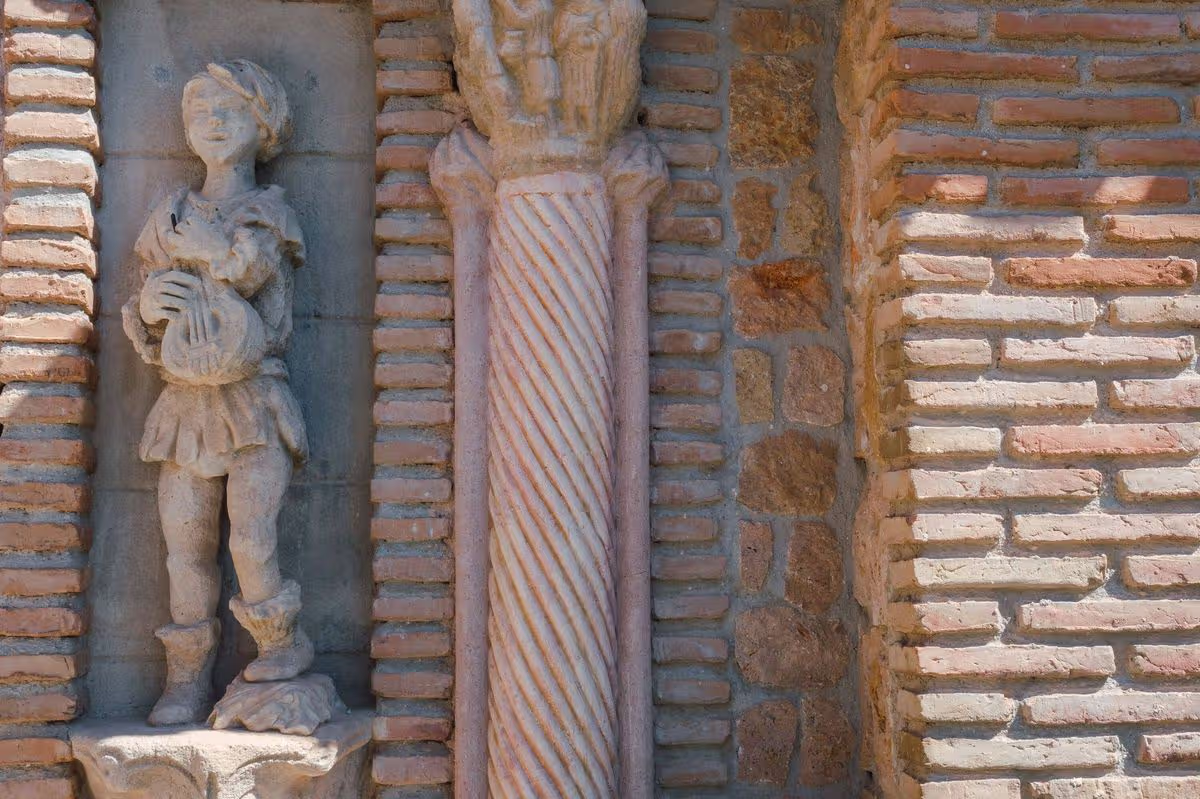
Content creator Alisatata, known as @iam_alisatata on social media, revealed how she paid just €3 (approximately £2.69) to visit Castillo de Colomares following her move to Spain. She was instantly struck by the elaborate design of the structure, located in the coastal town of Benalmádena – but her wonder soon turned to astonishment when she uncovered the reality behind it.
Despite its impressive, historic look, the building was in fact constructed between 1987 and 1994, meaning it’s nowhere near as ancient as she’d believed.
Posting the moment on TikTok, she said: “Admiring this ancient castle and wondering how the ticket was so cheap… then realising it was actually built in 1994.”
The striking structure isn’t a castle in the conventional sense, but rather a monument dedicated to Christopher Columbus and his expeditions.
Covering roughly 1,500 square metres, it’s thought to be the world’s largest monument honouring the explorer – and it even houses what is claimed to be the smallest church on Earth.
Content cannot be displayed without consent
Her video rapidly grabbed viewers’ attention, with many highlighting the mix-up.
One person said: “Most ancient castles have no decorations or details; they were built for defence in times of war, not to be beautiful.”
Another added: “That’s still pretty cool,” while a third wrote: “It’s not actually a medieval castle – it’s a monument dedicated to Christopher Columbus.”
Despite the confusion, visitors reckon the attraction is still well worth checking out.
Reviewing Castillo de Colomares online, one person described it as an “absolutely beautiful monument” with “amazing carving work,” adding the views alone justify the modest entrance fee.
Another visitor said it provided a “lovely break from the beach,” noting that while the site is fairly compact, there’s loads to absorb as you wander around.
A third reviewer called it an “architectural curiosity” overlooking the Costa del Sol, praising its blend of styles – from Gothic to Mudejar – and its scenic location.
While it might not be the ancient fortress she originally envisaged, it appears the distinctive landmark still made a memorable impact.
This historic Shropshire market town is bursting with history and has more than 500 listed buildings to explore, plus a vibrant food scene and festivals
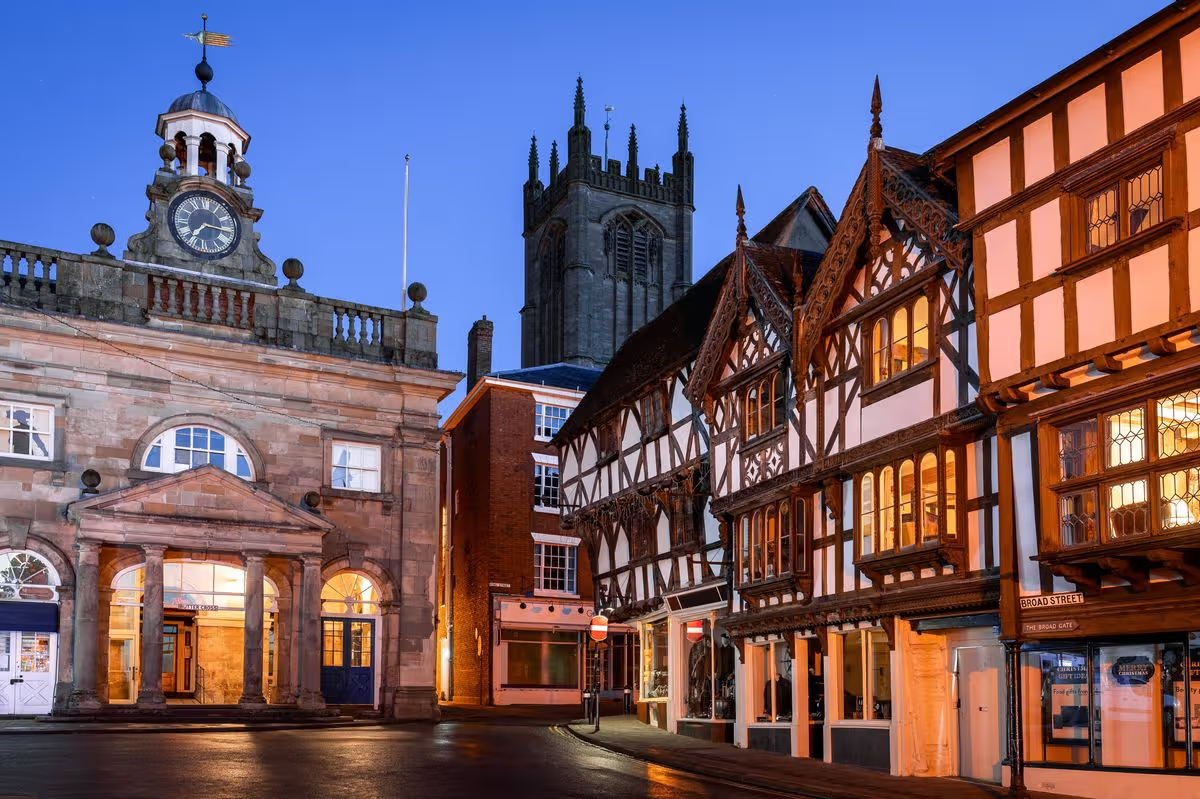
The town has over 500 listed buildings(Image: joe daniel price via Getty Images)
Brimming with heritage, this charming market town makes for the perfect weekend escape, boasting over 500 listed buildings to discover and its renowned culinary scene.
Numerous visitors flock to Ludlow for its closeness to excellent hiking and cycling spots, while history enthusiasts adore it for its ancient churches, castles and mediaeval landmarks.
As the town has developed through the years, it now provides a lively atmosphere with its own market, independent retailers and regular festivals showcasing local talent.
Ludlow is situated along the River Teme, with its most ancient area being the mediaeval walled town, tracing as far back as the 11th century.
This section of the market town lies on the eastern bank of the river, whilst the castle perches on a hill and the remaining streets slope downwards towards the water.
Best holiday cottage deals in Wales
This article contains affiliate links, we will receive a commission on any sales we generate from it. Learn more
Wales is renowned for its stunning mountains, picturesque coastline and rich Celtic history. Sykes has a wide and varied collection of holiday cottages, houses and apartments across the country. Prices start from £35 per night with current deals.
Ludlow Castle
As one of the primary tourist draws in the region, Ludlow Castle stands as an uninhabited, partly ruined medieval fortification. Its origins are traced as far back as 1066 – subsequently, it became the residence of Prince Edward from 1473 to 1483, and for centuries it remained under the care of the crown.
By 1760, the government had contemplated demolishing the structure but, owing to substantial costs, opted instead to lease it, and thus the Earl of Powis started his residency in 1711.
From that point onwards, the magnificent castle started to draw tourists, with their appreciation for the picturesque style, and walking routes were established exploring the grounds and neighbouring areas.
Following the success of this venture, the Earl acquired the castle in 1811, and it has remained under the guardianship of the Trustees of the Powis Castle Estate ever since, who hold ownership on behalf of the family.
One visitor commented on TripAdvisor: “Lovely morning exploring the castle; so much to wander around even though it was very cold. The views were amazing from the top of the towers. You could feel the history come alive whilst walking around.”
Another said: “The main attraction in Ludlow – a site of enormous historical significance. The castle covers a very extensive area with amazing views from the top. In the castle shop do go upstairs to the gallery; it has some very interesting information.”
The fortress, perched proudly atop that very same hill, continues to welcome the public to discover and understand its significance to the town. Opening hours may fluctuate, though the castle can generally be expected to be accessible from 10am until 4pm daily.
Admission tickets can be purchased upon arrival – though advance booking online is usually recommended. Adult admission costs £10, whilst a child ticket is £5 and family tickets are £28.
Stokesay Castle
The remarkable buildings don’t end there, as Stokesay’s magnificent manor house continues to captivate passers-by with its timber-framed features.
Constructed like a fortress, though in reality it is a mansion, completed in 1291, and with minimal signs of alteration or modernisation ever since.
Owned by English Heritage, the protected structure has been meticulously maintained to reflect its original state and provides guided tours for those eager to discover more.
The property was originally established by Laurence of Ludlow, a celebrated wool merchant, actually one of the finest in the nation, and it stayed within his family until the 16th century.
The building’s architecture and design offer valuable insights into the period and continue to serve as a portal to the past. It welcomes visitors from Thursday to Sunday, 10am to 4pm, with adult admission priced at £9 and children’s tickets at £5.40.
One guest commented: “The castle that is not a castle! Thoroughly enjoyed our visit. The audio guide provided us with an amazing amount of useful information. A must-visit whilst in the area.”
Dining options
Ludlow boasts a strong reputation as a haven for food lovers, frequently dubbed the culinary capital of Shropshire. It’s earned this accolade through its excellent range of local produce, with countless independent suppliers and premium artisan food, all highlighted at the yearly food festival.
Taking place over one weekend in September, this year on 11-13, the festival features a vibrant programme of live events, including culinary demonstrations, workshops, talks and, naturally, showcases produce you can purchase to take away.
Naturally, the area also boasts numerous pubs and restaurants that garner considerable acclaim in their own right. Topping the rankings on TripAdvisor is The Blue Boar, a beautifully restored Grade II listed pub located on Mill Street.
A recent visitor commented: “Wonderful cosy, homely, friendly pub. Called twice on our little getaway, food was excellent, service was professional and friendly, and we would definitely recommend it to all our friends and family. Can’t wait for our next trip to Ludlow just to visit here again.”
Additional dining establishments include The French Pantry, Old Downton Lodge, The Queens, and the Michelin restaurant, known as The Charlton Arms Restaurant.
Take a trip to the “most fairytale castle in the UK” which is a short trip away from London on train. It offers breathtaking views and a Bridgerton-meets-fairytale vibe
Christine Younan Deputy Editor Social Newsdesk
04:02, 22 Mar 2026Updated 08:14, 22 Mar 2026
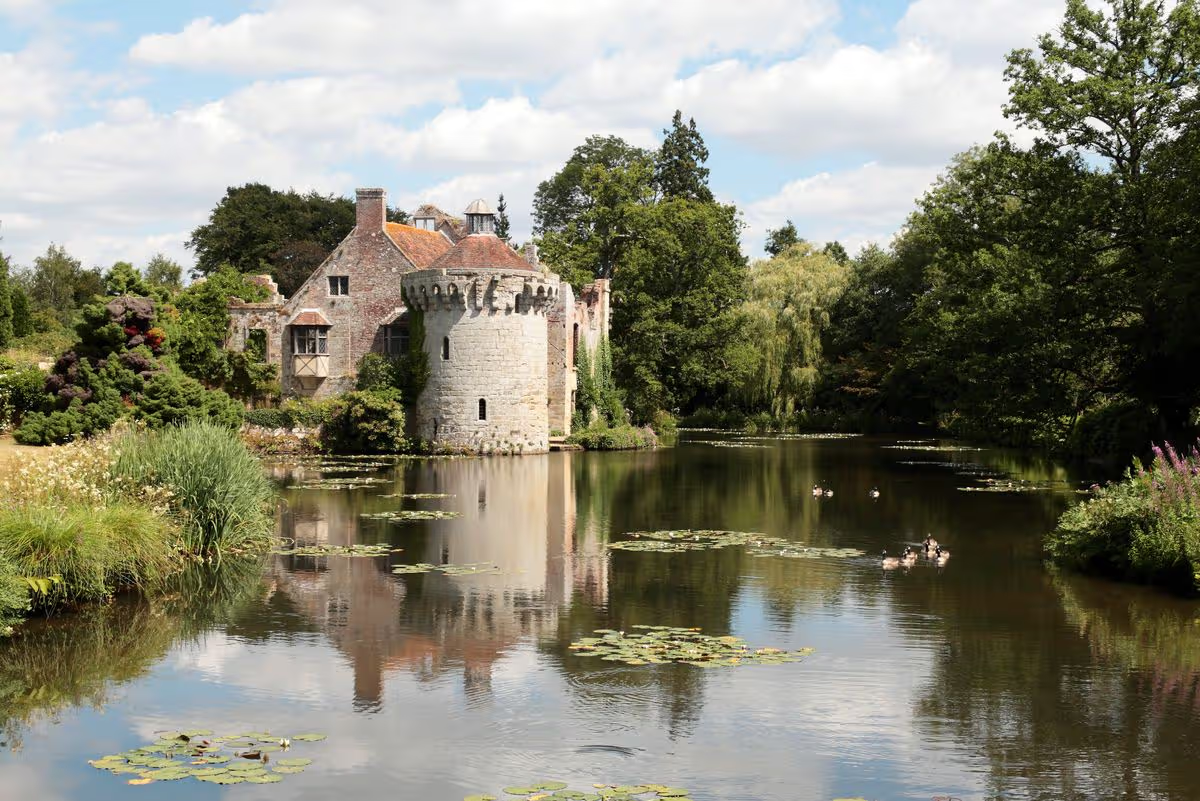
The castle looks like it’s out of a fairytale(Image: Getty Images/iStockphoto)
Embark on the most magical adventure of your life by visiting this fairytale castle – just 45 minutes away from London. If you fancy a trip outside of the city today, this location is a must for your bucket list.
It boasts breathtaking views, hidden pathways and is perfect for Bridgerton fans as it gives you that feel once you’re there. Whether you fancy a peaceful walk or a romantic picnic, why don’t you add Scotney Castle, in Tunbridge Wells, Kent, to your list now? It’s open daily from 10am all the way through to 5pm, which is ideal now that we’re blessed with more sunshine in the day.
One woman, who shares travel and lifestyle content on TikTok, recently paid a visit to the castle which has been dubbed the “most fairytale in the UK”.
In the video, she said: “The most fairytale castle in the UK – 45 minutes train from London Bridge, Scotney Castle – Royal Tunbridge Wells.”
Sharing her trip, the content creator took a 45-minute train journey from London Bridge to Tunbridge Wells then a 20-minute taxi ride to the entrance as there were no buses on Sunday.
She gushed: “Once there, you’ll be rewarded with breathtaking views, hidden pathways and a true Bridgerton-meets-fairytale vibe. Perfect for a peaceful photo walk or romantic picnic.”
Content cannot be displayed without consent
How to get to Scotney Castle:
If you’re travelling from London will have to drive for about 1 hour and a half, around 52.7miles, depending on where you are.
Otherwise some parts of the capital could take you about an hour. You will have to book as it’s likely the car park might be full which means you won’t be able to leave your vehicle on site.
As for trains, they frequently run from London Bridge to Tunbridge Wells which could cost around £20.
Alternatively, you can take a 50-55 minute train journey to Wadhurst, then a 15-minute taxi journey to Scotney Castle.
Wadhurst is the nearest station to the attraction, where it’s 7 miles, although Tunbridge Wells is also nearby (9 miles).
What to do at Scotney Castle:
The National Trust property offers a 14th-century moated castle ruin, a Victorian country mansion, and 770 acres of woodland and parkland.
You can explore the romantic gardens, check out the 1950s-style mansion, walk the estate trails, and visit the tea room.
There are also family activities available, like a “Summer of Play” area in the meadow with various activity zones which typically run through August.
The best time to visit is spring for blooming flowers, alternatively there are vibrant colours in autumn.
Tickets are approximately £22 per adult, £11 per child with gift aid and £4.50 for parking.
National Trust members can enjoy free entry and parking.
ANGRY locals must wait to have a say on Alan Carr’s new castle renovation reality show after a meeting was delayed by “unprecedented” interest.
Producers behind the project planned to hold the gathering at a 120-capacity bowling club — but 600 people wanted to attend so it was held over.
Sign up for the Showbiz newsletter
Thank you!
Alan Carr paid around £3.25million for 19th century A-listed Ayton Castle in the Scottish BordersCredit: AlamyComic Carr bought the castle after winning the first Celebrity TraitorsCredit: Splash
Expectation TV are now looking for a larger venue to allow locals a chance to voice their concerns on the revamp and restrictions to their access to 19th century A-listed Ayton Castle in the Scottish Borders.
The 13th-century National Trust castle features the UK’s largest private collection of South and East Asian artefacts and Britain’s best baroque terraced gardens
It looks Italian, and inside is a vast Indian collection and yet it’s here in the UK(Image: Tornadoflight via Getty Images)
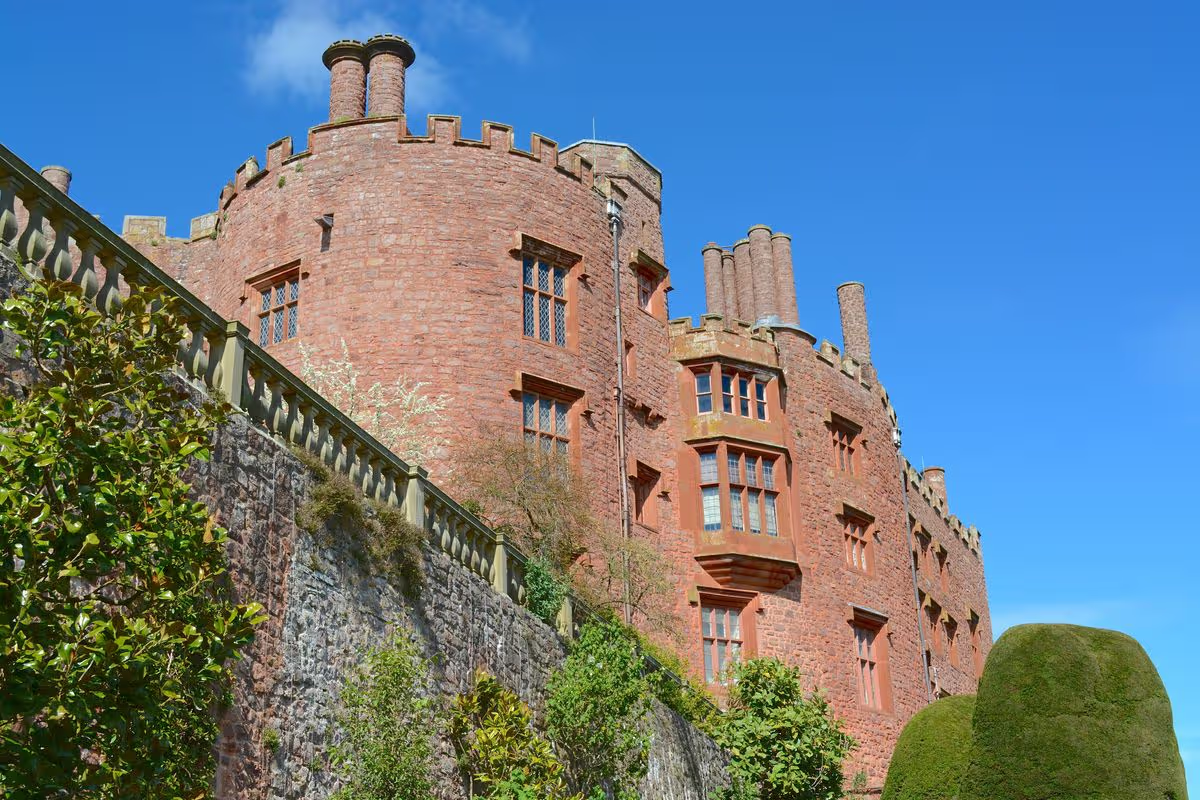
Nestled close to the English-Welsh border, in the town of Welshpool, stands a genuine fairy-tale fortress which appears straight out of a storybook and provides a vibrant splash of colour against its sprawling green backdrop.
Built in the 13th century, this mediaeval stronghold is brimming with stories and continues to evolve, much to the delight of those who visit.
For the perfect day spent appreciating historic architecture, discovering a different heritage and exploring the most spectacular of gardens, Powis Castle is the destination to seek out.
Its most recent ownership belonged to the same family, who resided in the castle from as early as the 1570s – the Herbert family. This continued until the castle and its grounds were handed over to the National Trust in 1952 by the 4th Earl of Powis.
Best holiday cottage deals in Wales
This article contains affiliate links, we will receive a commission on any sales we generate from it. Learn more
Wales is renowned for its stunning mountains, picturesque coastline and rich Celtic history. Sykes has a wide and varied collection of holiday cottages, houses and apartments across the country. Prices start from £35 per night with current deals.
One TripAdvisor reviewer said: “This site is stunning. I was blown away by how picturesque the place is.”
Another wrote: “This place really exceeded my expectations. The interior is super detailed and interesting, with some spectacular pieces of furniture.
“The gardens are truly beautiful on a lovely warm hillside and some stupendous giant yew trees. Has to be seen.”
History
The heritage of this fortress stretches back hundreds of years, encompassing numerous owners, as the property expanded and transformed, whilst preserving its original character throughout.
However, it all started in the 13th century when a Welsh prince, Gruffudd ap Gwenwynwyn, established some independence. When he and the remainder of his direct lineage died in 1309, leaving no male heir, the castle passed to an heiress called Hawise. She then married Sir John Charlton from Shropshire.
The fortress came under attack during this period from Hawise’s uncle, who was trying to claim the lordship he believed he was entitled to instead of her, but was unsuccessful.
In response, they chose to repair the damage and constructed two imposing drum towers on either side of the castle’s west entrance. Charlton’s descendants remarkably remained lords of Powis for more than 100 years, until no male heir could be found.
Consequently, in 1421, the castle was split between two daughters, after which the fortress entered a sharp decline, desperately needing restoration following years of abandonment. Before long, it was taken over and lovingly rebuilt before being leased to the Herbert family.
Most significantly since that time, one of the most substantial changes occurred when the Clive family introduced what is now recognised as the Clive collection. A collection teeming with South and East Asian artefacts exhibited in the castle, and the largest private collection of its kind in Britain.
Clive Collection
What makes this fortress particularly unique is its fascinating array of artefacts housed within it. Originally assembled by two generations of the Clive family, comprising Robert and his son Edward, who had wed Henrietta Herbert, the daughter of the 1st Earl of Powis.
The collection was assembled during Britain’s colonial rule of India, when these artefacts were removed from their country of origin and brought to the castle, starting in the 1800s. Today it houses more than 1,000 pieces originating from South and East Asia.
According to its website, visitors can expect to discover an extensive array of ivories, textiles, statues of Hindu deities, decorative silver and gold, weapons and ceremonial armour.
Naturally, this remarkable collection carries with it a troubling past, one which connects the castle to a proprietor who played a role in the invasion of India. Robert Clive was directly employed by the East India Company, which sent armies to both invade and subjugate India.
In doing so, they exploited the nation financially and profited from the natural resources it possessed. This contributed to establishing the British Empire’s presence within India and, consequently, secured a lifetime of riches and prosperity for Clive, which is evident in the castle’s magnificence.
Gardens
Beyond the striking castle itself, the true highlight of the estate lies in its grounds and immaculately-maintained gardens. Part of its impressive display of flowers, plants and trees is attributed to the captivating hedging that encircles the castle.
It covers up to 8,500 square metres of the estate, with the yett, tumps and top terrace contributing an extra 7,000 square metres to that figure. And with this comes some extreme-gardening methods adopted by the National Trust to guarantee it stays in impeccable condition.
To put that into perspective, it states that one skilled gardener can spend up to 10 weeks annually working at height, using a hydraulic cherry picker to trim and sculpt the towering hedges. That represents just one element of these magnificent gardens.
What makes them particularly remarkable is their Italian-influenced design dating back to 1680. The gardens at Powis Castle are regarded as the finest surviving example of a baroque terraced garden in the entire country – blending both Italian and French influences.
Without a National Trust membership, it costs £18 for entry to the castle and gardens for an adult, excluding gift aid. Meanwhile, children will be charged £9, while families can choose a family ticket for a reduced price.
It’s worth noting that ticket prices are reduced during off-peak periods of the year.
Located an hour from London, this National Trust village features half-timbered Tudor buildings and a grand castle with world treasures
06:00, 11 Mar 2026Updated 08:26, 11 Mar 2026
You’ll feel like a time traveller strolling its cobbled streets(Image: Tim Graham/Getty Images)
Venture just an hour from London to discover this fairytale village, transporting you backwards through time as its period buildings recreate a world from centuries past that has largely vanished today.
Chiddingstone stands as one of Britain’s finest preserved Tudor villages, making it an exceptional discovery for heritage enthusiasts and anyone seeking respite from life’s relentless pace.
The settlement is largely owned and maintained by the National Trust, helping safeguard its centuries-old structures and character which consistently attract inquisitive travellers.
This Kent village is cherished for its unmistakably English charm and period architecture, featuring half-timbered properties with stone-hung gables and red-tiled roofs. What’s more, it boasts an impressive castle and a bustling high street, perfect for leisurely wandering.
Best UK holiday cottage deals
This article contains affiliate links, we will receive a commission on any sales we generate from it. Learn more
Sykes Cottages offers a wide range of handpicked holiday homes across the UK and Ireland, from cosy countryside retreats to stunning coastal escapes. Prices start from £27 per night
The castle
Whilst the castle’s exterior presents stunning architecture, typical of what you’d anticipate seeing across England, its interior offers quite the juxtaposition.
What renders the structure so distinctive is its museum, which houses collections from across the globe spanning different eras and civilisations – Japanese, Egyptian, Stuart and Jacobite and Buddhist. Everything is accessible to visitors between March and October, allowing them to experience an entire world under one roof.
Beyond its impressive collections, the venue itself is steeped in history and magnificence, as guests explore the corridors of a 16th-century residence. Within, they can admire the Great Hall, discover a Victorian kitchen, library, and servant’s hall, and delve into its fascinating past in the Streatfeild room.
Henry Streatfeild was the figure who dramatically transformed the property during the 1800s, moving away from its Tudor design to mirror that of a mediaeval fortress.
Though, it was collector Denys Eyre Bower whose stewardship of the castle witnessed it evolve into a cultural landmark, sharing his passion with visitors worldwide.
One guest commented on TripAdvisor: “What a lovely property, from the massive holdings on display throughout the home to the acres of relaxing grounds. The reception gal was quite informative upon our arrival as to the layout for our self-guided tour as well as answering our questions post-tour. Don’t miss this gem.”
This year, guests can purchase a day ticket and enjoy complimentary returns for an entire year. Current door prices are £15.25 for an adult and £10.50 for a child, with reduced rates available for those who book online beforehand.
High street and village
With its genuine half-timber Tudor structures and cobbled walkways, wandering along the high street of Chiddingstone Road feels like stepping back through the centuries. Notable highlights include a café, shop and the 15th-century pub.
The historic Chiddingstone Stores and post office, which dates back to 1453, is situated within a traditional Tudor building and continues to function as such today.
Similarly unchanged is the village pub, known as the Castle Inn, boasting a welcoming atmosphere and superb beer garden.
It retains its Grade II*-listed status with numerous original features intact, including delightful fireplaces, tiled floors, oak panelling and bars. One visitor described their experience at the Castle Inn as ‘atmospheric’.
They commented: “If you’re looking for a traditional, friendly, country pub, this is it. Clean and friendly, with everything you need on your doorstep that goes with a village pub. Highly recommend.”
The village name, Chiddingstone, is believed to originate from the enormous sandstone located outside the settlement. Whilst unconfirmed, the ‘Chidding Stone’ is thought to mark where it all started, with several folklore tales surrounding its origins.