NS&I has just improved the prize draw odds but the personal finance expert has warned over the best place for money

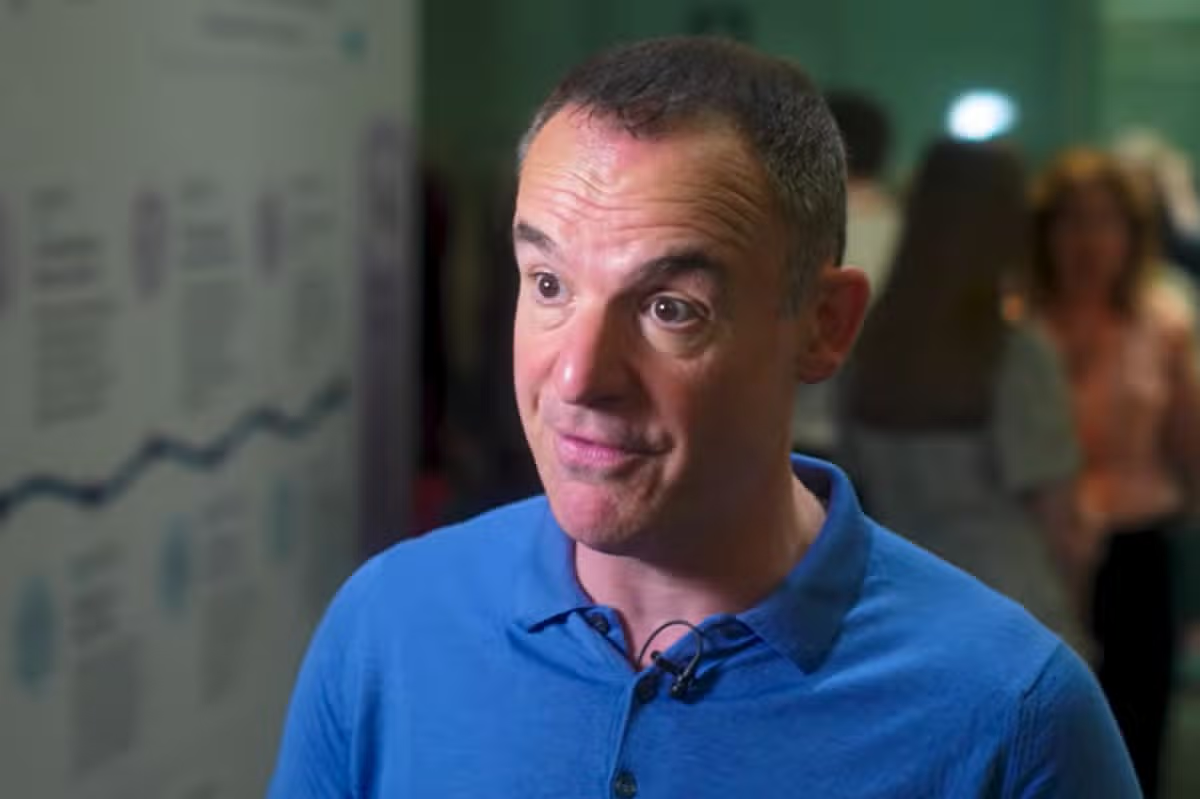
Martin Lewis has given advice for anyone with Premium Bonds on the chances of winning(Image: ITV)
Personal finance expert Martin Lewis has told anyone with Premium Bonds about the ‘£5,000 rule’ and warned about the chances of actually winning anything. The ITV and BBC star has said that unless people have at least £5,000 in there, the statistics suggest they might be wasting their time.
Premium Bonds are a government-backed UK savings product issued by NS&I (National Savings and Investments). Instead of earning regular interest, a person’s money buys unique £1 bond numbers that are entered into a monthly prize draw to win tax-free cash prizes ranging from £25 to £1 million.
Mr Lewis has spoken out about the bonds, and last week, in a new update, NS&I said that there will be an increase to the Premium Bonds prize fund rate and improved odds from the September 2026 draw. There will be an estimated £63 million of extra tax-free prizes in September, compared to August 2026, NS&I said. There is also an immediate interest rate increase for around 428,000 Direct Saver and 222,000 Income Bonds customers.
More than 22 million Premium Bonds holders will see a boost to the prize fund rate to 4.35%, up from 3.80%, for the September 2026 draw. At the same time, holders will have even more chances to win, with the odds shortening to 21,000 to 1 from 22,000 to 1. The Premium Bonds prize fund rate and odds were last improved in July 2026.
However, Mr Lewis has said that people would have a much better return with normal savings – if they don’t put enough money in – because of the odds. He explained that premium bonds are only worth getting if you have a certain amount of money. In particular, he advised that many grandparents would be better off giving grandchildren cash via normal savings accounts.
He said: “For years, many people, especially grandparents, have gifted their children premium bonds. And frankly, in my view, for many they would’ve done better sticking with normal savings. Premium bonds are government-backed savings, where the interest is based on a prize draw. The current prize fund rate is just 3.6 per cent, yet even that overestimates what most people will actually win with typical luck.”
Martin said that premium bonds are typically only worth buying if you have more than £5,000, to give you a chance of winning the prizes. He noted that premium bonds are “best for”: Those with larger savings, say over £5,000, as then you’ve a better chance of earning closer to the published prize fund rate. “With less, the odds are you will win little or nothing”, he said
Those who pay tax on their savings interest, who have used up their ISA allowances, as premium bond winnings are always tax-free
He added: “As most children have small amounts of savings and aren’t taxpayers, premium bonds are particularly unsuitable. Of course, there’s the ludicrously small chance your child will win a million, but they could also toss a coin and it land on its edge.”
“So if you’re thinking of putting £1,000 or less into premium bonds for a child, it’s worth noting that with average luck our premium bonds probability calculator shows they are likely to win nothing over a year (give it a try based on your scenario).”
He has also delivered his assessment of Premium Bonds in general: “Premium Bond prizes aren’t taxed, which means that if you’ve larger savings in cash, and have maxed out your £20,000 a year ISA allowance and earn enough interest to exceed your PSA, Premium Bonds are probably a decent choice… if you can accept the random nature of the ‘interest’.
“For everyone else, cash ISAs – savings accounts you never pay tax on – are still likely to be the better choice. The top easy-access cash ISA rate is currently 4.4% – slightly lower than the standard non-ISA rate, but tax-free and offering a guaranteed return that’s higher than the current Premium Bond prize rate of 3.6% (which you need to be lucky to get).”
He also said the prize rate – 4.35 per cent from September up from 3.80 per cent is the average return. He said: “The smallest prize is £25. So what happens on £100 is a lot of people get nothing and a few get £25.” He said the mena average, which is 4.35 per cent from Sept, but more important: “Is the median average which is zero on £100 in Premium Bonds over a year.
“Median is if you lined everybody up who had £100 in Premium Bonds from those who win the most to those who win the least what would the person exactly halfway along win.
“The first thing to say is someone with typical luck will always win less than the mean average. What affects the amount you win, generally, is the amount you’ve got in. The more you have in the closer you will get to the mean average on typical luck.”
However, the ‘tax-free’ nature of Premium Bonds could offer a benefit, he suggested: “Most people do not pay tax on savings. That’s because, as well as your normal personal allowance up to £12,570 a year you can earn from any source, most people are getting either a £1,000 personal savings allowance – so that’s £1,000 of interest they can earn a year without paying tax on it – or £500 personal savings allowance if you are a higher rate taxpayer.”
If someone has a lot of savings, it could mean they’re paying tax on the interest, and if that’s the case, he said people should consider making sure their ISA allowance is full.
He said: “If you’ve got a cash ISA allowance available, I’d be putting it there. Then, if you’re paying tax on your savings and you’ve filled up your cash ISA allowance, and especially if you’re higher rate taxpayers which means you’re going to be losing 40 per cent off your savings interest on any that you pay tax on, at that point, Premium Bonds even on typical luck at around 3.2 3.3 per cent after tax start to look good value.”
Mr Lewis also urged people to place their savings in high-yield accounts. For those who relish the excitement of potentially winning big, he proposed purchasing a small Lotto ticket: “To all those people who say ‘what about the thrill of winning’, yes there’s the thrill of winning but, you know what, if you put savings account, you’re going to win interest each month and you’ll know exactly how much you’ll be getting and it’ll probably be bigger.
“There is a chance of winning a million, but if you really want to talk about the thrill of winning, then it’s probably far more sensible and more effective for those people who don’t pay tax on savings and who aren’t higher rate taxpayers, to go and put their money in top savings and then take a couple of quid out and put it in the National Lottery and then you get your thrill of winning anyway but you get more return on the underlying savings.”
NS&I responded at the time: “Premium Bonds remain one of the nation’s favourite savings products and are a flexible and fun way to save. They offer the excitement of potentially winning tax-free prizes every month, the safety and security of the 100% government guarantee, and easy access to withdrawals.
“Every Premium Bond has a separate and equal chance of winning a prize each month, however the more Bonds you buy, the better your chances of winning.
“Each month we pay out millions of prizes ranging from £25 to £1 million. In our most recent draw, there were more than 6.1 million prizes worth over £403 million.”