Ahead of G7, Carney softens tone toward Trump
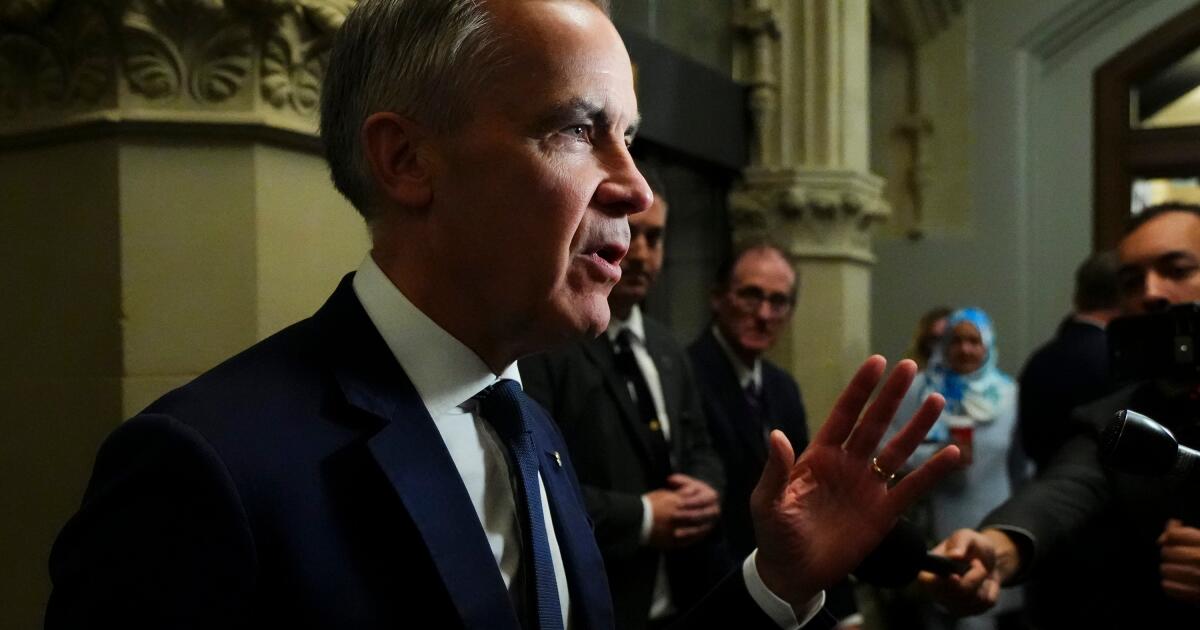
PARIS — Canadian Prime Minister Mark Carney became a symbol of middle power resistance after a celebrated speech earlier this year, but he is expected to be more muted in his criticism of President Trump at an upcoming summit in Europe.
Carney’s speech at the World Economic Forum in Davos, Switzerland, helped make him an international political star in January, when he declared the global rules-based order over and condemned coercion by great powers on smaller countries. The prime minister received widespread praise and attention for his remarks and upstaged Trump at the gathering.
But the G7 summit of industrialized democracies that begins Monday in France comes ahead of the scheduled July 1 review of the United States-Mexico-Canada Agreement, or USMCA, the latest iteration of the North American free-trade pact that has intertwined the economies of the United States, Mexico and Canada since the early 1990s. It is a crucial moment in trade talks, and Trump said this week that he may not renew the deal.
More than 70% of Canada’s exports go to the U.S., so preserving the accord is critical for Canada.
Canadian historian Robert Bothwell said Trump is more of a problem for Carney “than anybody else because we are more exposed to the United States than anybody else.”
Trump leaves for the G7 summit right after he hosts UFC fights at the White House on Sunday for his 80th birthday.
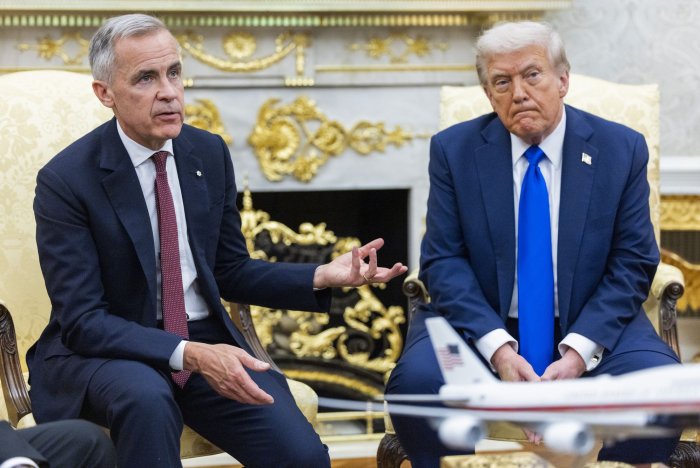
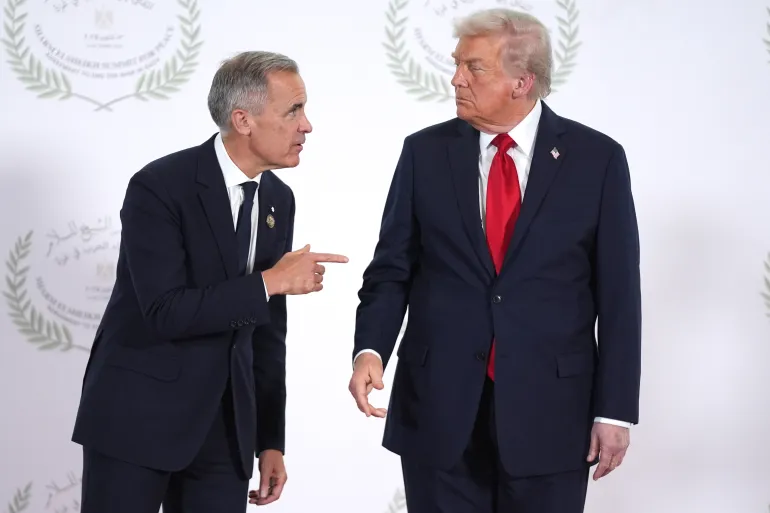
The summit will unfold as tensions are ramping up between Trump and Canada. One of the world’s most durable and amicable alliances — born of geography, heritage and centuries of common interests — is broken, as seen in several recent examples of tension between leaders.
Ontario Premier Doug Ford, the leader of Canada’s most populous province, had a reception with the U.S. Chamber of Commerce in Washington canceled Monday at the last minute. Vic Fedeli, one of Ford’s ministers, said if Trump forced the chamber to cancel, “Ford should be wearing that as a badge of honor.”
Trump said again this week that the U.S. doesn’t need anything that Canada has. Carney has set a goal for Canada to double its non-U.S. exports in the next decade, saying Trump’s trade war is causing a chill in investment.
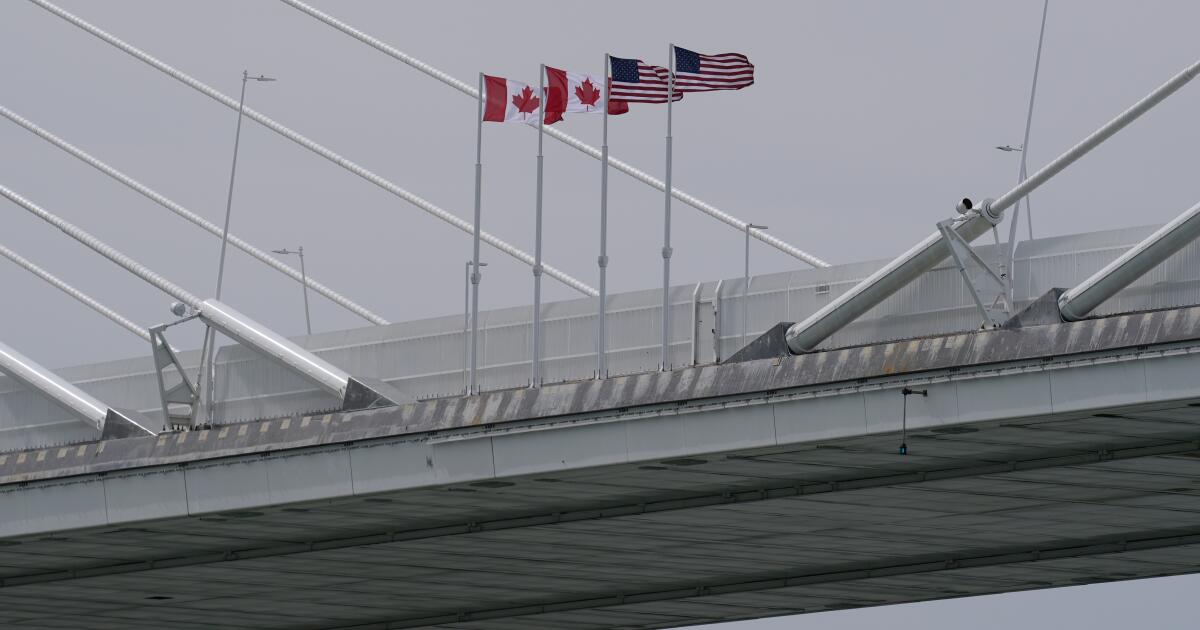
In other developments, the opening of a major Canadian bridge across the Detroit River that Trump previously threatened to block was delayed Thursday due to unresolved issues.
Trump’s actions, including launching a trade war and suggesting Canada become the 51st U.S. state, have infuriated Canadians and created the political environment for Carney to win the job of prime minister after promising to confront Trump.
Trump administration officials keep noting that only two countries, China and Canada, retaliated against America in the trade war. U.S. Trade Representative Jamieson Greer says Canada’s retaliatory measures are a major issue in talks.
Daniel Béland, a political science professor at McGill University in Montreal, said Carney seems to have moderated his tone toward the Trump administration to avoid worsening relations.
“There is a clear tension between what Prime Minister Carney said in his Davos speech about middle powers standing up to hegemons and his attempt to nudge the U.S. administration ‘in the right direction’ with regard to the USMCA review and trade policy more generally,” Béland said.
Carney has downplayed Trump’s most recent comments about Canada becoming the 51st state.
Canada and Mexico want the USMCA to be renewed for another 16 years. Trump has mused about withdrawing from it. More likely it will be subject to annual reviews for the next 10 years.
Carney arrived in Paris on Friday morning and will meet with French President Emmanuel Macron in the evening, a few days before the summit in Évian-les-Bains, France.
The prime minister will also travel to Ireland this weekend to meet with the Irish prime minister in a bid to diversify trade away from the U.S.
This is Carney’s ninth trip to Europe in the 15 months since he became prime minister in March 2025.
The U.S. “will clearly remain Canada’s largest trading partner for the predictable future,” Béland said, calling it an inescapable reality that Carney “must keep front of mind even as he seeks to make Canada somewhat less dependent on trade with the U.S.”
Gillies writes for the Associated Press.