At Tigers he has taken his place among a stable of international wingers, including Wales’ Gabriel Hamer-Webb and England pair Adam Radwan and Ollie Hassell-Collins.
Crowley has so far featured 10 times for Tigers, with all those appearances coming in the Prem Cup.
And while he was named in a matchday squad for a European Champions Cup match last season, he never made it off the bench.
“It’s been challenging, but I wouldn’t say challenging in a negative way,” Crowley said.
“Having the likes of Radas, Hass and Gabe in front of me, I never really came into this thinking I’m competing against them. And while I actually am, I’m competing against myself to see how far I can get.
“I’m learning from them because they’ve been in the system and this environment for so long.
“There is a lot of healthy competition in the team but we are all extremely close – with lots of group chats and good banter as we wind each other up.
“When we step on to that pitch we do drive each other, the switch gets flicked and we are on it, but as soon as we are off it we are back to the jokes.”
And how does being a corporal in the RAF, who has turned into a Tigers winger, fare when it comes to the mickey-taking of team-mates?
It turns out that while he has managed to fly under the radar by avoiding any military-style nicknames, his team-mates have instead chosen to lean into his 5ft 7in (1.7m) stature instead.
“I do get the banter about my height, but I’m an easy target for that one,” he said.
“I just kind of live it and wear it as a badge to be fair because being probably one of the smallest people in the Prem, to be at this level, I think, is an achievement.”
Yet another shape-shifting convicted felon is starring in a new documentary, but unlike Elizabeth Holmes in “You Can See Everything,” Russell Brand did not invite director Olivia Isaacs into his home to engage in a cinematic staring contest.
Not that he wouldn’t have done it if given the opportunity (and a very different filmmaker). As Isaacs’ traditional and deeply layered documentary “Russell Brand: Open Secret” makes clear, Brand is, in addition to being a sexual predator, a canny media manipulator who openly reinvented himself to exploit an ever-evolving zeitgeist and provide cover for his crimes. A navel-gazing doc would be right up his alley.
Urwin and Wace (who joined the four-year reporting process about midway through), provide the narrative spine of “Open Secret,” chronicling the decades of rumors (which, as with Bill Cosby, gained attention when stand-ups began directly calling Brand a rapist) and the difficulty of finding women who would speak of their experiences on the record.
Several did and do here. None of them were part of the recent trial, though at least one is part of the new investigation, and all women were, at various times, in a relationship with Brand. Only two do not describe being sexually assaulted, including Amanda Alguero Alejos, who recounts meeting Brand when he was her English teacher in a foreign language school and watching as he changed dramatically when his career took off, abusing drugs and becoming so openly sexual with other women that she left him.
But this is not a story of how success, complete with rock-star-type female adoration, somehow corrupted an ordinary guy who finds himself in extraordinary circumstances. Neither, aside from a brief segment scanning his troubled relationship with his father, is it much interested in why Brand did what he did.
Instead, both the reporters and the filmmakers examine how Brand has brazenly leveraged cultural trends, beginning with the sexually free and outrageous mood of the late 1990s and early 2000s (or “noughties”) that celebrated his “bad boy” persona, to provide cover for his predatory habits.
Deftly using clips from Brand’s stage shows and interviews as well as passages from his books, “Open Secret” proves its titular point over and over again. On multiple occasions, Brand admitted to terrible behavior and even called himself a rapist, before brushing it off as a satirical joke aimed at those too prudish to understand unbridled sexuality.
It worked spectacularly well, earning him TV jobs, film roles and A-list status (including a friendship with fellow convicted felon Sean “Diddy” Combs) and the inevitable phalanx of managers, lawyers and powerful allies.
This combination of celebrity and power is one reason many of the women Urwin and Wace interviewed over the course of four years were reluctant to speak publicly; two of those who allege rape in “Open Secret” did so anonymously.
Even so, rumors of Brand’s behavior began early and continued to grow. Particularly after 2011, when he moved to U.S. during the apex of his film career and his brief marriage to Katy Perry. (Perry is mentioned briefly in the film, which highlights a portion of her 2013 interview with Vogue in which she discussed their divorce, saying: “Then I found out the real truth, which I can’t necessarily disclose because I keep it locked in my safe for a rainy day.”)
After Brand returned to the U.K., the film implies, he realized that his grinning-satyr reputation wasn’t playing so well anymore. In 2014, he made a huge career adjustment, leaping from unapologetic sexual player to politically progressive firebrand. Energetic and superficially erudite, his “working-class,” antiestablishment stance was immediately embraced by the progressive left. “Brand was wild,” journalist and political activist George Monbiot says in the film. “Exactly what left-wing politics was lacking at the time.”
That too worked, for a while. But during and after the #MeToo movement, many people were attempting to “out” Brand and his career began to suffer. Soon he reinvented himself again. Modeling himself on Tucker Carlson, he became a right-wing conspiracy theorist, railing against the usual suspects of science, liberals and legacy media.
By 2023, Urwin and Wace had found multiple women willing to speak on the record. When, in the final phase of reporting, they reached out to Brand, his lawyer responded that his client believed the piece to be “a concerted campaign” with “a deeply concerning agenda to all this, namely the fact that he is an alternative media broadcaster competing with mainstream media.” Brand then took to YouTube to denounce the article, claiming that “all of his relationships were consensual” and that the Sunday Times had a political agenda.
That did not work. Additional allegations poured into the journalists and Scotland Yard, and an investigation was opened. Brand once again shape-shifted, publicly embracing Christianity (down to being baptized in the River Thames in 2024 by Bear Grylls) and proselytizing about the powerful love of Christ.
Whether or not his newly found religious beliefs were sincere, they did not prevent him from being arrested, charged and convicted.
The film ends on an earnest rather than victorious note, with various participants voicing their hope that women will be more empowered to speak up about rape and sexual assault, and that the culture will stop celebrating and shielding the men who perpetrate it.
These sentiments have, regrettably, become a bit boilerplate, words many people say even as attempts to shame and silence sexual assault victims continue. The unsettling power of “Russell Brand: Open Secret” has little to do with Brand himself. Instead, this painstaking chronicle of how two dogged reporters and a few very brave women finally helped bring him to justice is an indictment of us. The people who heard the rumors and continued to support him, through ticket sales, clicks, likes and applause. The people who continued to find him audacious, funny and “authentic,” even as he was telling us exactly who he was and what he was doing.
An open secret is not a secret; it is a fact we have chosen not to confront. Brand got away with smirking about his life as a sexual predator under a thin disguise of mischievous comedy because we let him. And that’s what needs to stop.
SACRAMENTO — Gov. Gavin Newsom announced Thursday that he will induct former House Speaker Nancy Pelosi, retired San Francisco Giants outfielder Barry Bonds, the musician Joni Mitchell, the band Metallica and actors Edward Asner and Robin Williams to the California Hall of Fame next month.
The list includes a total of 18 Californians selected by the governor and his wife, First Partner Jennifer Siebel Newsom, for their contributions to film, viticulture, sports, dining, art, literature, music, education, politics and business.
“This historic class reflects the very best of California and what’s possible when people have the courage to think big and make a difference,” Newsom said in a statement. “Their legacy will inspire the next generation to keep pushing boundaries and showing the world what Californians can do.”
The California Hall of Fame began in 2006 under former Gov. Arnold Schwarzenegger. Over 180 inductees, who are required to live in California for at least five years, have been recognized over the last 20 years.
This year’s inductees include:
The late Edward Asner, the first actor to win Emmys for playing the same role, Lou Grant, in both a comedy and a drama and a former president of the Screen Actors Guild.
Andy Beckstoffer, a vineyard owner and leader in American viticulture, whom the governor is honoring for “pioneering precision farming technologies and advancing farm worker equity, he helped reshape vineyard stewardship and the industry’s economics.”
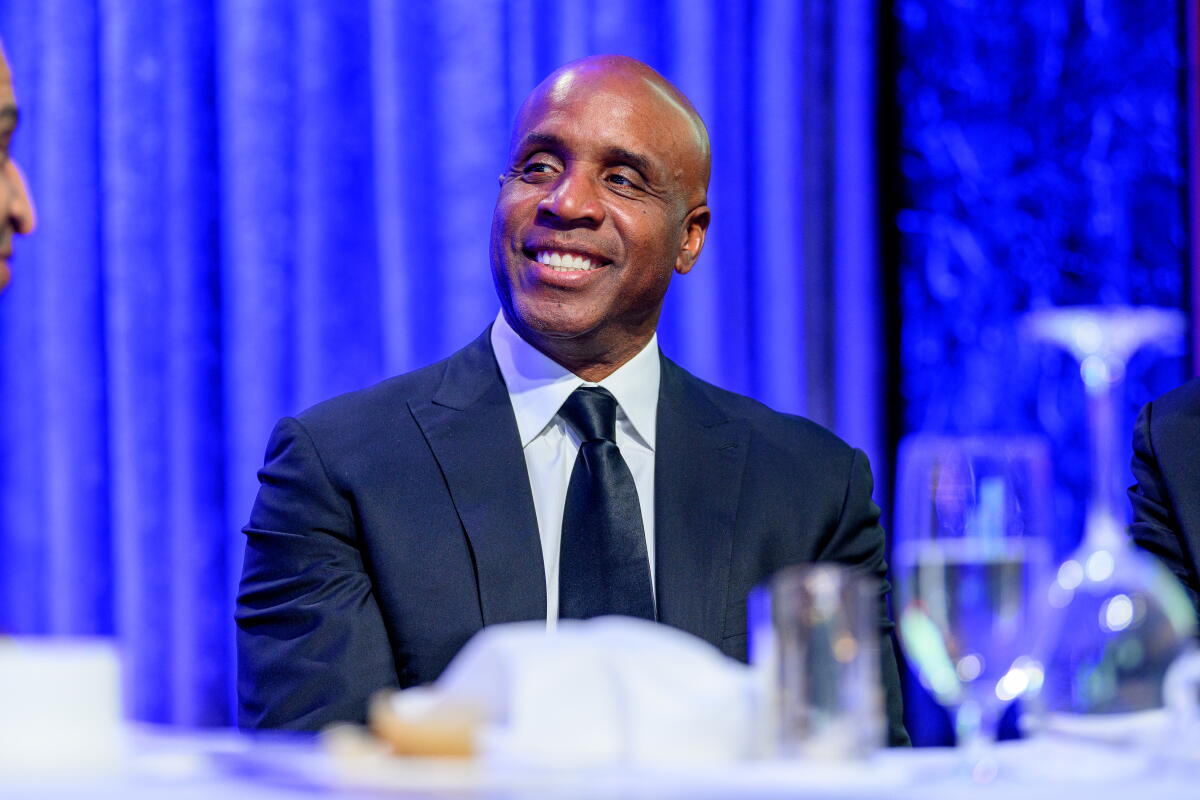
Barry Bonds attends the 2025 BBWAA Dinner at New York Hilton Midtown.
(Roy Rochlin / Getty Images)
Barry Bonds, the left fielder who played 15 seasons with the San Francisco Giants. Bonds holds MLB records for career and single season home runs, and the most National League MVP Awards, among other baseball accolades.
The late Betty Charbonnet Reid Soskin, the oldest full-time National Park Service ranger who retired at age 100 and “inspired generations by bringing history to life through her own experiences of segregation and resilience.”
Dominique Crenn, the celebrated chef and co-owner of Atelier Crenn in San Francisco and the first woman chef in the United States to earn three Michelin stars.
Guillermo del Toro, the Oscar-winning filmmaker.
Shepard Fairey, the street and graphic artist best known for his 2008 portrait of then-presidential candidate Barack Obama.
Maxine Hong Kingston, an author and the recipient of the National Book Critics Circle Award for General Nonfiction, the National Book Award, National Humanities Medal and the National Medal of Arts.
The late Diane Ladd, a three-time Academy Award nominated actress, the mother of actor Laura Dern and a 30-year member of the SAG-AFTRA National Board.
Rock star Huey Lewis.
(Luis Sinco / Los Angeles Times)
Huey Lewis, the musican and frontman of the Grammy Award-winning band Huey Lewis and the News.
The late Felicitas Méndez, an advocate for public education who challenged Mexican American student segregation.
Metallica, the San Francisco rock band that has sold 125 million albums worldwide and is a member of the Rock & Roll Hall of Fame.
Joni Mitchell, the acclaimed singer and songwriter and member of the Rock & Roll Hall of Fame.
Rep. Nancy Pelosi speaks to the media Tuesday in Washington.
(Aaron Schwartz / Getty Images)
Nancy Pelosi, the Bay Area politician who served nearly four decades in Congress and became the first woman elected speaker of the House.
Bonnie Raitt, the 13-time Grammy Award winner and member of the Rock & Roll Hall of Fame.
The late Rob and Michele Reiner, who the governor’s office said “built careers in entertainment while collaborating on public education and civil rights initiatives in California.”
Susie Tompkins Buell, the co-founder of the brands Esprit and the North Face, who is being recognized for her work that “challenged the notion that business success and social responsibility were separate pursuits, pairing extraordinary growth with progressive workplace practices and socially conscious marketing.”
Robin Williams, the late actor, comedian, Academy Award, Emmy and Grammy winner.
BERKELEY — Alijah Arenas had 19 points and seven rebounds, Rodney Rice added 18 points and five rebounds, and No. 21 USC beat California 77-65 on Wednesday night in a nonconference matchup between the former Pac-12 foes.
Jacob Cofie contributed 13 points, matched his career high with rebounds and dished out six assists and KJ Lewis scored 16 for USC (3-0), which dominated on the boards 53-36.
Sammie Yeanay scored 14 points and Nojus Indrusaitis 13 to lead the Golden Bears (2-2) on a night 5,087 fans turned out for the 8 p.m. tipoff.
And their attendance paid off: Arenas missed two free throws midway through the second half, earning everybody at Haas Pavilion a free burger at the Berkeley Shake Shack.
It was a homecoming of sorts for USC and third-year coach Eric Musselman, who coached the Golden State Warriors and Sacramento Kings. Arenas is the son of former Warriors guard Gilbert Arenas and the star sophomore had a large contingent of friends and family in the stands.
The Trojans topped Wichita State 93-86 on Sunday with Rice and Arenas each scoring career highs — 32 points for Rice and 30 for Arenas — and again relied on their depth to pull away in the second half.
USC has won nine of the last 11 matchups in the series but hadn’t won on Cal’s home floor since Nov. 30, 2022.
Cal, which won 22 games last season for its most victories since 2016, faced a Top 25 opponent for the second straight game and hasn’t beaten a ranked team since an 84-78 victory over 14th-ranked North Carolina on Jan. 17. The Golden Bears lost to then-No. 10 Houston 86-68 on Sunday night in the inaugural Caesars Lake Tahoe Classic.
The Bears jumped out to a 9-2 lead as USC was slow getting going offensively and committed three quick turnovers. Then Lewis connected from deep at the 11:39 mark.
Since the Pac-12 dismantled, USC went to the Big Ten while Cal is now in the Atlantic Coast Conference.
Harold Greene, a beloved Los Angeles news anchor, has died. He was 82.
His daughter, Courtney Greene, shared news of his passing on Wednesday via Facebook, adding that she was by his side, alongside his wife, Charlene Greene, when he “signed off for the last time.”
His cause of death has not yet been announced by the family, but his daughter shared that “there was an extraordinary amount of love in the room” when he passed.
“We have a feeling he’s already settling into the great newsroom in the sky, no doubt with a few suggestions on how things should be run,” Courtney wrote in the Facebook post.
Harold Greene began his career as a reporter and producer for KABC (ABC7) Los Angeles in 1970. Throughout the decade, he shared his talent across other newsrooms in California, including San Diego, where he helped launch KCST-TV (now KNSD) and a short stint in the Bay Area at the CBS affiliate KPIX-TV, where he co-anchored alongside Dave McElhatton, who died in 2010.
Greene later returned to ABC7 for multiple stints, according to the news outlet, including their top-rated “Eyewitness News” team. His final return to the flagship station was in 1982, when he was hired as a reporter and weekend anchor. He served as host/celebrity interviewer of locally produced programs such as “Hollywood Close-Up” and “A.M. Los Angeles” for the station.
In 1986, he earned one of 10 Golden Mike Awards for his coverage of the Cerritos air disaster. He left ABC7 in 2000, but continued his work as a dynamic anchor at KCBS-TV and KCAL-TV until his retirement in 2008.
His on-air image was reportedly the inspiration behind the mustachioed protagonist portrayed by Will Ferrell in the 2004 comedy “Anchorman: The Legend of Ron Burgundy.”
Over his career, Greene earned multiple Emmys and three Edward R. Murrow awards, and he received a star on the Hollywood Walk of Fame in 1999.
Film student Angela Henderson was collecting her thoughts, resting on the patio of USC’s School of Cinematic Arts on a recent sunny afternoon while listening to music on her headphones as she stared into the sky. Henderson was taking a short break after applying for dozens of Hollywood jobs.
The 22-year-old cinema and media studies student graduates in December, and she’s admittedly “a little freaked out” by what awaits her.
“What if one day, I am one of those people that ends up losing a job?” Henderson said.
She isn’t wrong to wonder.
Partly fueled by media consolidation, waves of layoffs have swept across the industry, bringing job cuts to Netflix, Walt Disney and Warner Bros., recently acquired by Paramount-Skydance.
Productions keep leaving the state and artificial intelligence and vertical video are reshaping what gets made and who makes it.
Yet aspiring actors, screenwriters and directors, many of them film school students like Henderson, are still making the pilgrimage to Los Angeles. The Times spoke with some of these students about how they plan to navigate today’s Hollywood. Most are clear-eyed about the odds, and none of them are planning to quit.
“Some of us can see a lot of doom and gloom,” said Miranda Banks, a professor of film, television and media studies at Loyola Marymount University. “But this generation has their eye on the power of human creativity in a way that I’m not sure any of us in other generations have been so attuned to.”
She thinks many of her students have a good chance at making it if they are “savvy and strategic” about where the industry is headed.
“We’ve had a lot of unprecedented years, a lot of years with strange things that have impacted the industry and made things particularly challenging,” Banks added. “That has happened before. It will continue to happen.”
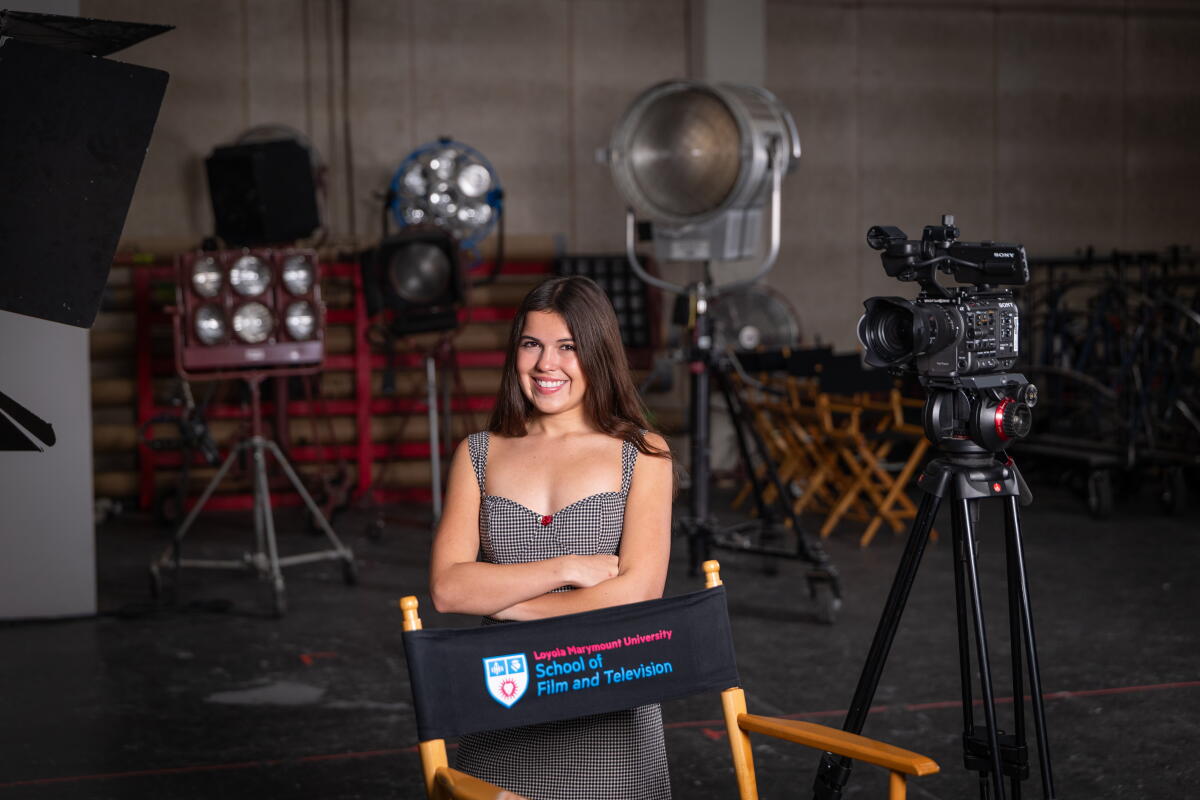
Gianna Jordano, a freshman film and television production major at Loyola Marymount University, is photographed on a film stage inside the Wil and Mary Jane Von der Ahe Communication Arts Building, which houses LMU’s School of Film and Television.
(Allen J. Schaben / Los Angeles Times)
Gianna Jordano, Loyola Marymount University, 19
When Gianna Jordano first applied to film schools, she said she knew the industry was in a bit of a “slump stage.” With fewer movies being made, the impact of AI and an overall lack of jobs, the Huntington Beach native said she was nervous about pursuing a career in the film business.
But after seeing movies like “Primetime,” “The Odyssey” and “Spider-Man: Brand New Day” in theaters this year, Jordano is more inspired than ever.
“My friends and I’ve all been watching all of these new movies, and we’re saying, ‘This is what we want to do. This is what I want to pursue in the future and be able to achieve,’” said the film and TV production major. “I feel less nervous now.”
After graduation, she plans to work her way up to directing — even if that means taking other jobs such as teaching and working in a restaurant to achieve her dream.
“The more open-minded you are, and the more willing you are to work, the easier it is to find a job, even if you’re maybe not always on the best set or doing the job that you want to do,” Jordano said.
Teddy Abularach, left, and Mitch Linebaugh, both 18, visit the Herbert E. Farmer Motion Picture Technology Collection at the USC School of Cinematic Arts.
(Genaro Molina / Los Angeles Times)
Teddy Abularach and Mitch Linebaugh,USC, 18
Freshman screenwriting majors Teddy Abularach and Mitch Linebaugh had recently moved to L.A. from New York City and Des Moines, respectively, to pursue careers in screenwriting.
Despite shared concerns about landing jobs after graduation, both are determined to succeed in the business. .
“We’re just gonna have to work that much harder to get a job. I’m already preparing myself for a brutal postgrad life,” Abularach said. “I wouldn’t be happy if I were in another job. … Even if there’s a small chance for me to succeed and be able to pay the bills and do something that I love, it’s worth it.”
They aren’t blind to the challenges of being a screenwriter.
But Linebaugh said he worries that “everything is just going to become so uniform,” as the industry seems to lean too heavily on algorithms and audiences’ preferences.
“I don’t think people in this industry will let that happen — everyone from the writers to even the executives,” Linebaugh said. “I know the stereotype is that they like to keep their jobs, but I remain hopeful that they want to make good movies too.”
The two 18-year-olds moved to the city with every intention of staying, even as the industry’s local footprint hollows out.
Linebaugh said he’s going to give screenwriting his all, and if it doesn’t work out, he will consider graduate school or entertainment law.
Abularach said there’s no “plan B outside of entertainment.”
He’s already preparing for the life.
“I still can’t get the stereotype out of my head of the L.A. writer who does all the things in L.A., like taking pitch meetings, getting coffee and being in writers’ rooms,” added Abularach.
UCLA film student Tomas Carrasco, center, has makeup applied by UCLA student Song Diqiong, right, before performing in his short film, “D-Facer, Reality Break,” on the set inside Melnitz Hall on the UCLA campus. He wrote, produced, starred in and directed his short film.
(Genaro Molina / Los Angeles Times)
Tomas Carrasco, UCLA, 25
In a hallway lined with movie posters in UCLA’s School of Theater, Film and Television, Tomas Carrasco was in the middle of preparing to shoot his senior capstone film: a surreal horror comedy. The senior, who’s on the director’s track of UCLA’s film and television program, said he isn’t “afraid necessarily about where the industry’s heading because there’s always going to be space for artists.”
Growing up in the San Fernando Valley, Carrasco was always fascinated by moviemaking. His father worked as a soap opera editor and would sometimes bring him to set, where he learned to love the “feeling of being around people making stuff.”
He started his film education at Santa Monica College, where he took every film class offered. Now, he has his sights set on production design.
For all his artistic leanings, he said he’s well aware that movies are products that need to make money. Because of that, he sees more of the industry turning toward technology instead of taking art-centered risks.
“I see the mergers that are happening and all the AI stuff sucks. I don’t like it,” Carrasco said. “But I still have to come into class every day and do my homework. I’m thinking about where the industry is heading, but it takes up as much space as a movie idea.”
As he prepares for an uncertain future, Carrasco plans to keep working at his family’s Northridge cafe, Mate Conmigo, where he can pursue his creative ambitions while maintaining a stable job.
“I do want it as a career path, and I don’t want to be naive,” he said. “But you have to kind of be naive. You have to be delusional about wanting to have a career in the arts.”
USC film student Angela Henderson, 22, stands next to a photo of director Orson Welles at the Herbert E. Farmer Motion Picture Technology Collection at the USC School of Cinematic Arts.
(Genaro Molina / Los Angeles Times)
Angela Henderson, USC, 22
For Henderson, part of the job-induced anxiety is simple math.
“Unfortunately, it’s so hard to be able to separate myself from it,” she said. “There are hundreds of people in film programs here who all want to have the same jobs and careers.”
Raised in Eagle Rock by two musician parents, Henderson always had the world of entertainment within reach. At 10, she took up acting and started doing theater and commercials. She began college at UC Berkeley, where she realized she didn’t want to be only in front of the camera, but also to study the medium from behind it. She transferred to USC with dreams of following filmmakers like Greta Gerwig, who got their start in writing and directing their own projects.
If it takes a while for Henderson to break into the industry, so be it. She said she’s open to any kind of job, including assistant work and food service.
But Henderson said her generation of filmmakers doesn’t feel discouraged, so much as eager to incite change. They’re largely tired, she said, of watching Hollywood “recycle the same material over and over again,” and want to bring new stories to the table.
“It does feel like we’re on the verge of something new. There’s a breakthrough that’s about to happen,” Henderson said. “With all the verticals happening, and the AI slop stuff happening on social media, there’s also like this huge renaissance in indie movies … there’s still this hope that there’s something new that’s going to come.”
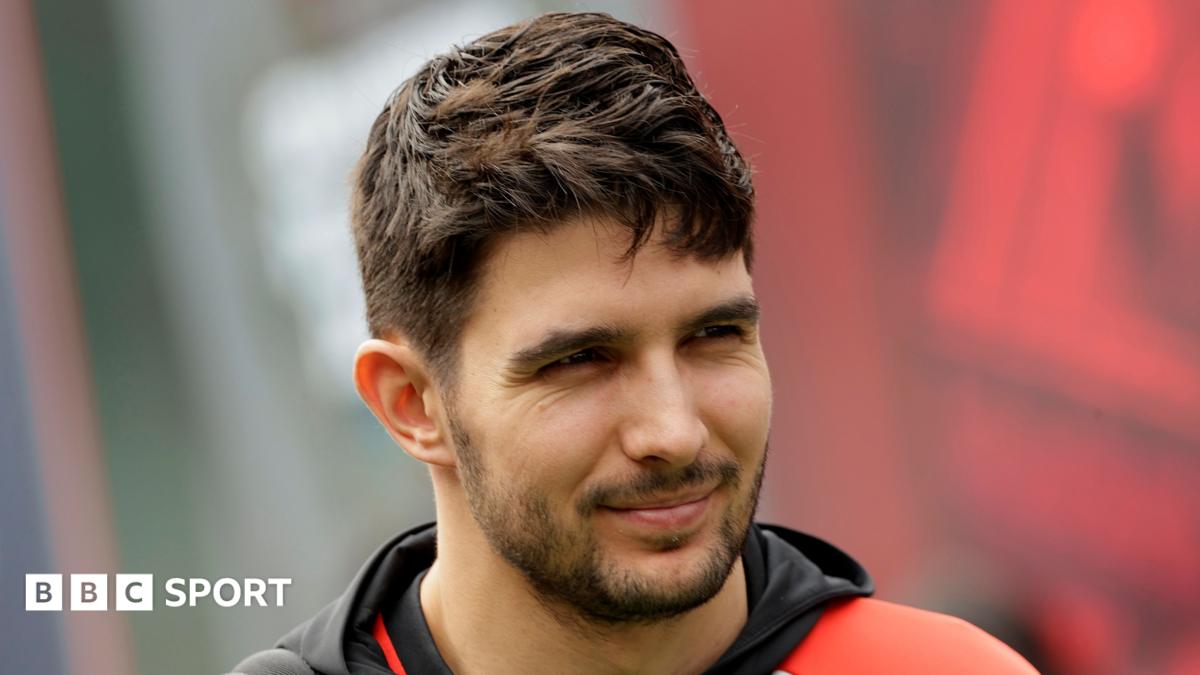
Ocon is managed by Mercedes and came through their young driver programme.
When he lost his Force India seat, it was Mercedes that took him on as reserve driver in 2019.
At one point, team principal Toto Wolff was considering putting Ocon in the race team alongside Hamilton. One of the reasons he did not was he thought their characters would clash, that the relationship would be too combustible. Valtteri Bottas was retained for 2020 after all.
At the same time, George Russell, the next Mercedes protege, was excelling for Williams, and Mercedes concluded from the data they had on both that Russell was their guy for the future, not Ocon.
That was effectively the end of Ocon’s career as a potential candidate for a top team but Mercedes helped him back on to the grid with a drive at Renault in 2020, before the team was rebranded Alpine in 2021.
It was for them that Ocon took his sole victory, at the 2021 Hungarian Grand Prix. He drove well but the win owed a substantial amount to fortune.
The start was wet and there was a multi-car pile-up that took out Bottas and both Red Bulls.
Ocon came out of that pile-up running second to Hamilton. The race was red-flagged. By the time it was restarted, the track was drying.
At the end of the formation lap, every single car pitted for dry-weather slick tyres bar Hamilton, who took to the grid on his own.
He had to stop on the next lap, falling to the back. That put Ocon into the lead from Sebastian Vettel’s Aston Martin, a car of similar performance on a track where overtaking is difficult. Ocon and Alpine managed the race well to stay in front of the four-time champion throughout.
Hamilton spent the rest of the race fighting back and his pace was so superior it appeared he might win.
Until he caught Alonso, that is. The Spaniard, who had been delayed by rather than benefitting from the first-lap crash, was running fourth, close behind Ocon, Vettel and Carlos Sainz’s Ferrari.
Alonso knew what was at stake, that if Hamilton passed him quickly, the Briton would almost certainly win the race. And he knew what a win would mean for Alpine.
The team’s last victory had been in 2013 but that was when they were known as Lotus and were under different owners. Renault’s most recent win had been secured by Alonso – at the 2008 Japanese Grand Prix.
Alonso won his two world titles for Renault. He had been brought back to F1 after a two-year break by Renault. And so he fought as hard as he knew to keep Hamilton at bay for as long as possible.
The Mercedes was so much faster that at times it looked as if Hamilton might drive through or over Alonso. Instead, using all his skill and guile, he held Hamilton back for 10 laps.
When Hamilton finally passed Alonso, there were only five laps to go. Within two, he was past Sainz but he did not have time to make any further progress before the chequered flag.
Ocon and Alonso celebrated together with the team after the win.
Yet little more than a year later, relations had deteriorated to the point that, after a clash between the pair at the Brazilian Grand Prix at the end of 2022, shortly before Alonso was leaving the team to move to Aston Martin, the two-time champion sarcastically referred to Ocon as “our friend” over the radio.
Out of the car, asked whether he would speak to Ocon about the incident, he said: “I don’t need to. One more race. Then it’s over, finally.”
For Ocon, it’s now over at Haas, too. Finding a way back on to the grid won’t be easy.
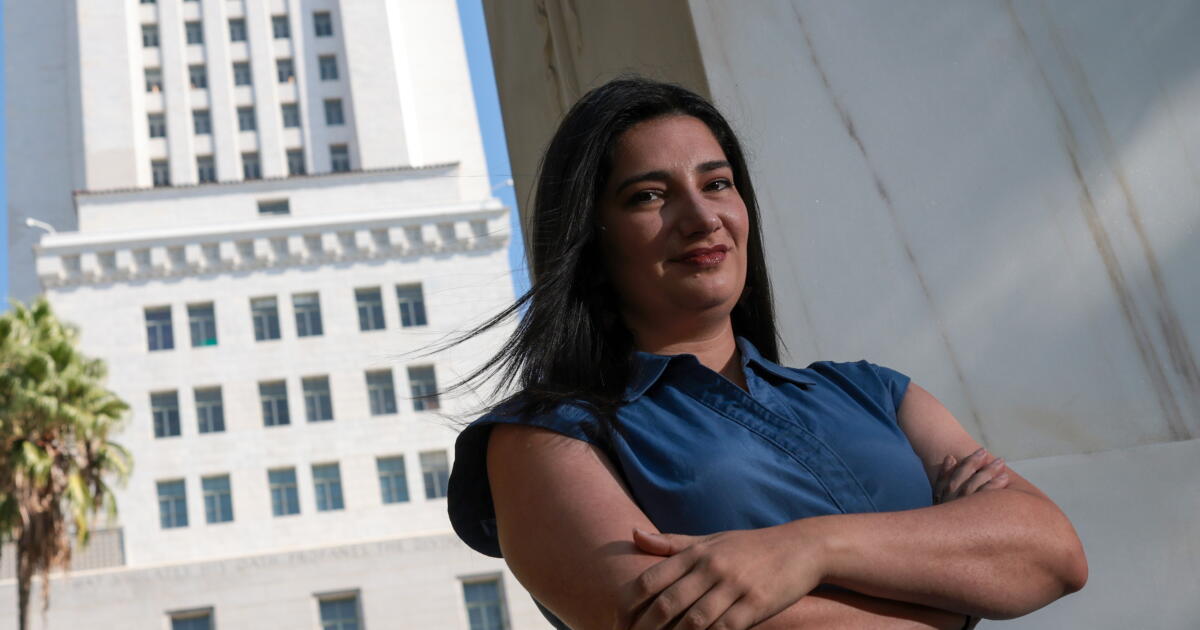
Marissa Roy is on track to become Los Angeles’ next city attorney after jumping out to a significant lead over L.A. County prosecutor John McKinney based on early returns.
Roy, 34, a deputy state attorney general, campaigned on a promise to convert the city attorney’s office into a massive “public interest law firm,” vowing to champion renters and defend Angelenos from an increasingly hostile White House.
Roy, a coalition-builder, had long been the favorite in the race, leading McKinney by double digits in polls leading up to Tuesday. She won the June primary with more than 40% of the vote.
Roy and McKinney’s head-to-head race came after voters and powerful city unions turned on the incumbent, Hydee Feldstein Soto, whose June primary defeat marked the first time a sitting L.A. elected official failed to advance to a general election in nearly a century.
Supporters at Roy’s watch party at the downtown Audio Graph brewery erupted in cheers when the first batch of results dropped, showing Roy doubling up McKinney’s early vote total. The mood was ebullient as the first batch of returns trickled in, buoyed by dramatic wins for Democrats across the country and a better than expected early lead for their candidate.
Roy arrived around 9 p.m. in a plum-colored dress, her arms stacked with bangles that rang as she embraced supporters and took the stage.
“I was planning on hedging and saying, ‘It looks like we’re winning,’ but I think we won!” Roy told the crowd to whoops and cheers.
Roy ran to the left of her opponent and tried to paint him as the preferred choice of Republicans in L.A. County. McKinney is a lifelong Democrat and has been critical of President Trump.
At Hill Street bar, close to the downtown criminal courthouse where McKinney has built his career, supporters swayed to smooth jazz and Top 40 radio hits, nursing cocktails and betraying no reaction to the dismal early returns.
In a brief interview outside the bar, McKinney remained positive and said he always knew he faced an uphill battle. He announced his candidacy long after Roy and Feldstein Soto began their campaigns, yet still surged to a surprise second-place finish in June. He said he was proud he was able to inject discussion of public safety issues and real strategies for solving homelessness into the race.
“I got into this race nine months ago because the people of Los Angeles deserve better,” he said.
Although he said he had “no bitterness” toward Roy and wished her the best of luck, he did express disappointment at the efforts her campaign and some of her supporters took to incorrectly paint him as a conservative.
“I just felt that it was very misleading … it’s not a political position. It’s not a partisan position,” he said.
The candidates were a study in contrasts: Roy is a stylish progressive with savvy social media campaign videos, while McKinney is a stoic law-and-order-type. They also offered voters starkly different plans for leading the city attorney’s office.
A core part of the California Department of Justice legal team that won a historic $17-billion settlement from Meta this summer, Roy ran as a champion of the average Angeleno, promising to hold corporations and landlords accountable for misconduct. A Yale-educated lawyer, she positioned herself as the only candidate who would stand up to Trump administration policies that have harmed Los Angeles.
McKinney, who often noted he has been a lawyer nearly as long as Roy has been alive, leaned on his nearly unblemished record prosecuting some of the region’s most notorious and violent crimes and his compelling personal history. Orphaned at 5, he was raised by an older sister in a household where money was extremely tight and found himself painting houses just to afford college classes. In a 28-year career as an L.A. County prosecutor, McKinney won convictions in a number of high-profile cases, including the murder of rapper Nipsey Hussle.
The veteran prosecutor promised to focus his energy on reducing homelessness and improving public safety through misdemeanors he believed the prior administration under-enforced, including street racing and animal abuse on Skid Row. He also vowed to conduct more aggressive reviews of the way nonprofits that do business with the city spend funds meant to aid unhoused citizens.
Although they aligned in few places, both Roy and McKinney said they would work to bring down the city’s out-of-control legal costs. That figure exploded to nearly $300 million in city payouts last year.
Roy was supported by the L.A. County Democratic Party, the local chapter of the Democratic Socialists of America, Atty. Gen. Rob Bonta and U.S. Sen. Bernie Sanders (I-Vt.). McKinney was backed by a coalition of law enforcement unions, four former city attorneys and L.A. County Dist. Atty. Nathan Hochman.
Unless you’re writing for a major national magazine or shooting video for Architectural Digest, it’s rare for a reporter to be invited into a celebrity subject’s home. More likely, it’ll be some neutral space like a publicist’s office, or coffee shop, or hotel room; even more likely, over the phone or Zoom. But Patrick Stewart, when I interviewed him in 2023 at the end of “Star Trek: Picard,” the “The Next Generation” sequel series in which he starred, asked to meet at his house.
Stewart, who died Wednesday at 86, was 82 then, friendly and dapper and emanating a youthful sense of wonder and readiness. He spoke of wanting to learn to play the piano and speak French — ironic for an actor perhaps best known as Jean-Luc Picard. He had written a memoir, “Make It So,” titled for a Picard catchphrase. And he was excited about the house, located on a leafy, McMansion-free, comparatively modest street in what real estate agents would call Hancock Park, where he’d been living with his wife, Sunny Ozell, since just before the COVID-19 pandemic shutdown.
“We were safe,” Stewart said of the COVID days. “We felt protected here. It was just a walk that way or a walk that way to some shops. I walk to a little post office and my pharmacy is on 3rd Street, and I always take the backstreets. It’s a fabulous neighborhood, it really is. No two houses are the same. I mean, I never thought I’d live in a house that had just got archways everywhere — no doors! Sitting here, you see one, two, three, four, five, six archways.”
From sheer weight of screen time and franchise muscle, “Star Trek: TNG” — which ran for seven seasons (on first-run syndication, a dynamic format that no longer exists), plus four films — and the “X-Men” movies have dominated coverage of Stewart’s death. (Confession: I have possibly seen one “X-Men” movie, though long before there were “X-Men” movies, I read the comics — so I am familiar with Professor Charles Xavier, a part for which Stewart did not need to shave his head, as well as his nemesis Magneto, played by Stewart’s good pal Ian McKellen.) But there’s more to the story.
Patrick Stewart’s Picard comes face-to-face with Alice Krige’s Borg Queen in the 1996 film “Star Trek: First Contact.”
(Elliott Marks / Paramount Pictures)
Stewart’s 70-year career does neatly divide into BST and AST — before and after “Star Trek,” which arrived in 1987 at its chronological midpoint. The first half is dominated by theater. He joined the Royal Shakespeare Company in 1968, after a decade on regional stages, and was a core member until 1982. “So that was my daily experience,” he told me. “Shakespeare and his contemporaries and other great 19th century, 20th century playwrights. It was home to me.” In 1982, he took part alongside fellow RSC members, including David Suchet, Ben Kingsley, Judi Dench and McKellen, in director John Barton’s illuminating series “Playing Shakespeare,” demonstrating the relation of text and performance. You can find it all on YouTube from the Shakespeare Network and really should.
American audiences might have gotten a look at him in David Lynch’s “Dune” or PBS-imported British TV productions like “I, Claudius” and “Tinker Tailor Soldier Spy,” or as Claudius opposite Derek Jacobi in BBC’s “Hamlet” — but for many Stewart appeared new and fully formed in September 1987 on the bridge of the USS Enterprise. (This paper, reporting on his casting, apparently called him “an unknown British Shakespearean actor,” a fact you will see printed many times over in the wake of his death, and which Stewart liked to repeat.) With a handsome, sculpted head unencumbered by hair and a rich musical baritone, he exuded compassionate authority. You felt you could trust him, not just because it was in the script. With his classical training, he could make the most mundane line sing as if it were written in iambic pentameter, and do it without sounding hammy. He was a fit 47 when the show premiered. And he rocked his body-hugging Starfleet uniform.
After “Star Trek” made him Hollywood-famous, making way for his “X-Men” role — which he reprised for his final film, “Avengers: Doomsday,” coming in December — other projects followed. As an established personality there were opportunities for self-mockery and oddball choices. In Ricky Gervais’ “Extras,” playing himself, he describes a screenplay he’s writing in which his character has the power to make women’s clothes fall off (“and I’ve seen everything”). In Riz Ahmed’s “Bait,” which premiered earlier this year, he was the hallucinated voice of “Pigtrick,” a decapitated pig’s head that is somehow also Patrick Stewart. He donned a bad wig to portray John Oliver on “The Daily Show” and was a regular voice on “American Dad!” More traditionally, he played Captain Ahab, Ebenezer Scrooge and Captain Nemo.
Patrick Stewart as Macbeth and Kate Fleetwood as Lady Macbeth in “Macbeth,” the film version of Rupert Goold’s production.
(Manuel Harlan / Illuminations TV)
Did success on the screen boost his stage career? Or was it just a different route to the same place? With McKellen he starred in Samuel Beckett’s “Waiting for Godot” and Harold Pinter’s “No Man’s Land” in repertory. He adapted Charles Dickens’ “A Christmas Carol” into a one-man show and played George in “Who’s Afraid of Virginia Woolf?” But it always came back to Shakespeare. Returning to the RSC, he played the Ghost and Claudius to David Tennant’s “Hamlet” and the lead in “Macbeth” (both were filmed and broadcast) as well as Prospero in “The Tempest.” He stayed busy as he aged, if not always as busy as he would have liked — the actor’s lot — and when the pandemic killed regular work, he went onto social media and spoke directly to the people in the language he loved so well, reading and commenting on all of Shakespeare’s 154 sonnets — “A Sonnet a Day” — from March to October 2020 (they’re available on CD).
“We play this game often,” he told me. “I played it when I was a kid: If you could go back in time, where would you go? And I’ve worked on my answer to that question — I want to be in the audience at the very first performance of ‘Hamlet, Prince of Denmark,’ that’s all, because I know Shakespeare would be there.”
Simon Harmer picked a career-best 6-16 as South Africa beat Australia by 176 runs to clinch Test series 2-1.
Published On 31 Oct 202631 Oct 2026
Australia captain Pat Cummins said it was fair to ask questions about his side after they slipped to two heavy defeats in a row against hosts South Africa to lose the three-match series 2-1 at Newlands on Saturday.
Set 288 for victory, Australia were rocked early on and could manage only 111 to lose the third Test by 176 runs, following their defeat by an innings and 31 runs in the second match in the series.
Recommended Stories
list of 4 itemsend of list
Australia next host New Zealand, and Cummins said the series loss meant questions were inevitable as South Africa took over from them as the number one side in the Test world rankings.
“We lost two games in a row. I think it’s fair to be asking questions and we’ll be asking them internally as well,” Cummins told reporters. “We are a very good side, but I think we need to get a little bit better if we want to get back to number one [in the world].
“Maybe that’s a change of style, maybe it’s a change of personnel in some instances. We’ll work it out.”
Cummins made the surprise decision to bowl first after winning the toss on the first morning, something that had been done only 11 times before in Tests at Newlands since 1889.
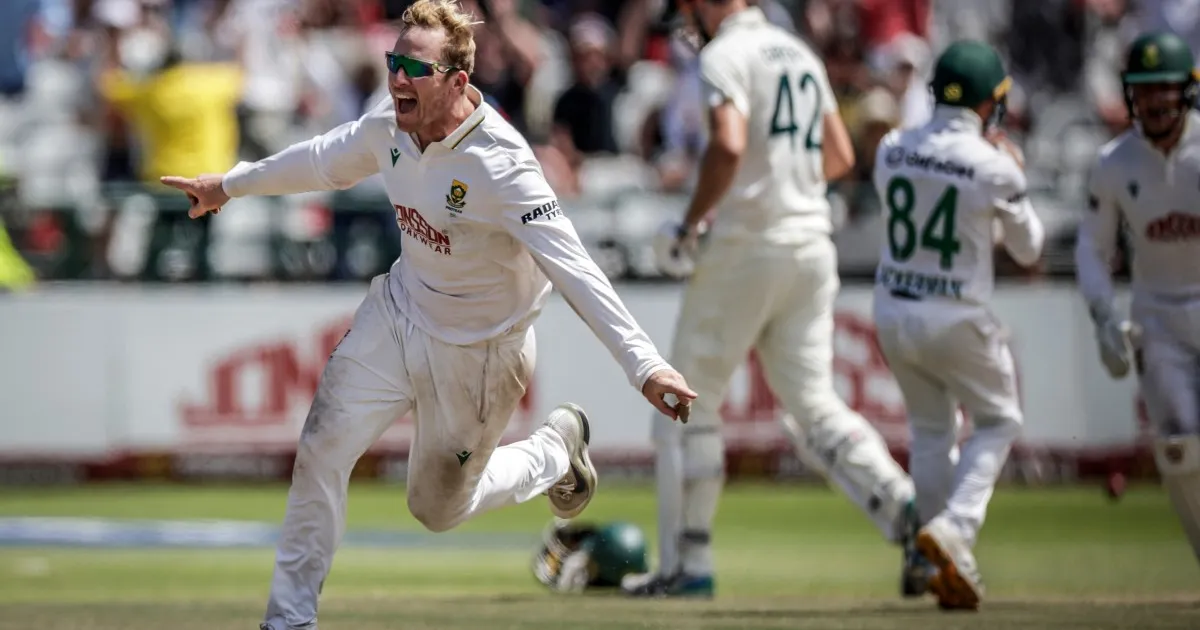
As it proved, batting last was difficult on a wearing surface, and Australia fell to the spin of Simon Harmer, who took career-best figures of 10-120 in the match.
“We knew it was going to be a high-scoring game,” Cummins said. “We probably thought it was going to do a little bit more on day one than it did.
“You don’t win the toss and think you’re going to bowl the opposition out for 100 or 200, but we thought we could get 10 wickets on day one and that would put us right ahead of the game.”
Cummins said poor decisions cost his batters and that their chase was as good as over in the first half-hour of the day.
“Chasing 280-odd was never going to be easy, but we all turned up today and saw a pretty clear path forward. I thought it was achievable, but we never really gave ourselves a chance,” he said.
“There were a few really poor decisions. I know it’s a day-five wicket, but I don’t think it was drastic. There were runs to be scored out there; there were lots of balls to face.
“I think there are a few decisions the boys would like back. We have to get better. It’s happened a few times now.”
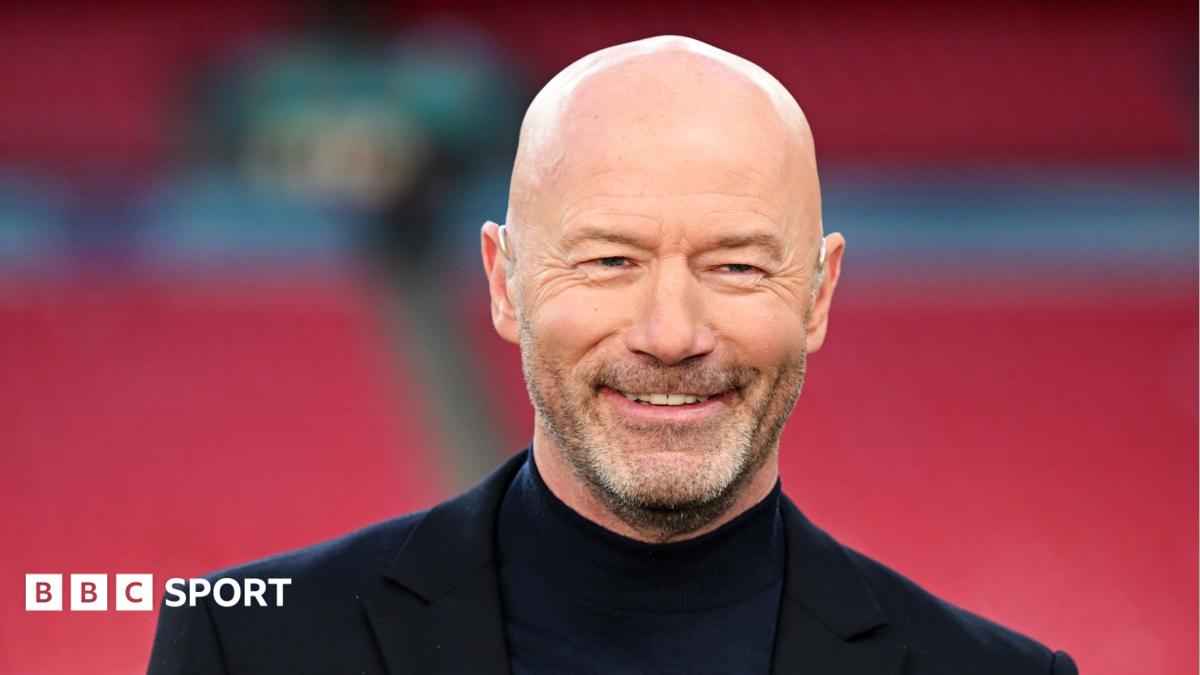
Despite calling time on his playing career two decades ago, it is still rare for Shearer to find himself with a weekend off.
Now a regular pundit on Match of the Day, as well as co-commentating on England games and sitting alongside Gary Lineker and Micah Richards on The Rest Is Football podcast, he has become one of the most respected pundits in the game.
But that was not always going to be the case.
Unsure of whether he would enter the world of management or media post-retirement, Shearer served as interim Newcastle manager in 2009 for the remaining eight games of the season.
It ended badly, with the Magpies relegated and Shearer never returning to the dugout.
“Newcastle were were in desperate trouble and I could never say no – we were bottom of the league, fighting for our lives,” he said.
“I should have known that when I signed the contract on April Fool’s Day that it wasn’t going to work out!
“I always felt that I was going to go into it again and I wanted to. I had a couple of interviews and got offered the job at Cardiff. And then things changed … and I thought, ‘what am I doing here?'”
That ended Shearer’s brief brush with management and he returned to punditry, spending his weekends travelling between Newcastle and Salford for Match of the Day.
“It is such a long day. For me travelling from Newcastle, it’s a probably 19-20 hour day,” he said.
“What people don’t realise is that you’re meant to be at your brightest and your liveliest when you go on live at 10:30, whereas if you’re watching football all day on the settee, you’re ready to nod off at that time.”
Watching so much Premier League football, at least Shearer is able to monitor that goal-scoring record of his.
PRINCESS Andre has been given another major career boost after landing a FOURTH series of her hit show in less than two years.
The TV star is quickly becoming an ITV fan-favourite thanks to her reality TV show, The Princess Diaries.
Princess Andre has landed a fourth series of her ITV reality showCredit: GettyThe Princess Diaries has been a major success for ITVCredit: ITV
Now, The Sun can exclusively reveal that the programme is coming back for a fourth series.
Our insiders revealed that filming for the next edition is already underway with Princess and everyone around her delighted that the show will be coming back again.
Sign up for the Showbiz newsletter
Thank you!
A source told us: “Everyone’s thrilled Princess is doing another series, it’s been so successful for ITV.”
With filming already underway, it is expected that new episodes could land early next year.
The star’s parents have appeared alongside her on the programmeCredit: Shutterstock EditorialPeter has appeared a number of times on the programmeCredit: Getty
So far, three series of The Princess Diaries have aired since the programme launched in summer 2025.
It originally followed Princess as she turned 18 and entered into adulthood and stepped outside of the shadows of her parents, Peter Andre and Katie Price.
Mum Katie was originally banned from appearing in the show in series one but dad Peter made several appearances.
Both her parents were then absent for the second series before Katie’s ban was overturned for the third series where she began filming for the first time.
Peter also made a return to the series around this time as well.
Her own show isn’t the only TV appearance the young influencer has going on with the star currently appearing in Celebrity Race Across The World with her brother Junior.
LOUIS Walsh claims former pop protege Ronan Keating’s music career is over and believes the Irish singer will never have another hit.
The former X Factor judge was instrumental in launching Ronan‘s career through his management of Boyzone – to date, the second most commercially successful boyband in the United Kingdom behind Take That.
Louis Walsh told Irish show The Big Interview that he believes Ronan Keating’s music career is overCredit: Virgin Media NewsThe former X Factor judge managed Ronan for almost two decades before he was sacked in 2009Credit: Handout
He would continue managing the singer, now 49, through the successful early years of his solo career, during which hit singles Life Is A Rollercoaster and When You Say Nothing At All rocketed up the charts.
But a sharp decline in popularity and ongoing disputes over Ronan’s musical direction led to a bitter parting of the ways – and persistent claims by Walsh, 74, that the singer had ‘started believing his own publicity.’
Sign up for the Showbiz newsletter
Thank you!
Appearing on the latest instalment of The Big Interview, Walsh reignited his feud with Ronan by claiming he will never have another hit single.
“I did all the work on Boyzone, everybody knows that,” he told host Collette Fitzpatrick on Sunday evening. “They were the puppets for Westlife, and I picked all the songs.”
Walsh told The Big Interview that the singer had ‘started believing his own publicity’ and ‘no longer wanted to be a karaoke singer’Credit: SkyRonan with his Boyzone bandmates Stephen Gately, Mikey Graham, Keith Duffy and Shane Lynch in 1995. The band was formed by Walsh two years earlierCredit: Getty
Ronan became a household name with Boyzone – earning three number one albums and a string of hit singles alongside bandmates Stephen Gately, Mikey Graham, Keith Duffy and Shane Lynch.
But he would leave the band at the height of their success in 1999, with Louis staying on as his manager during the hugely successful first decade of his solo career – before creative differences led to his sacking.
Ronan enjoyed enormous early success as a solo artist with the release of hit singles When You Say Nothing At All and Life Is A RollercoasterCredit: GettyCreative differences led to Louis being sacked by Ronan – and effectively ended their working relationship for goodCredit: Getty Images – Getty
“Ronan started believing his own publicity then,” Louis recalled. “He said to me one day in the Four Seasons, ‘I don’t want to be a karaoke artist anymore.’ But that’s what he is!
“I was picking all the songs – he hasn’t had a hit since. He hasn’t! He’s singing all the old songs now, he doesn’t have a record deal. He was great to work with at the start, but then he believed it.”
He added: “He wanted to be George Michael… he was chasing around George Michael in London.
“What he didn’t know is that George Michael fancied Stephen [Gately], and George Michael was only being friendly with him to get to know Stephen. That’s the real story.”
Ronan has since returned to Boyzone, now a four-piece following the death of Stephen to an undiagnosed heart defect in 2009.
But Louis remains adamant that the singer’s music career is finished.
“It’s over – he’s never going to be a pop star now,” he said. “He’s never going to have another hit. I’m happy.
“We had great times together, we had great fun, but it was a bad divorce, and it’s fine – I’m over it. I’d say he’s happy enough in his life, because he’s always gonna be working.
“He’ll either be a DJ, or he’ll act, or he’ll dance. He can do anything.”
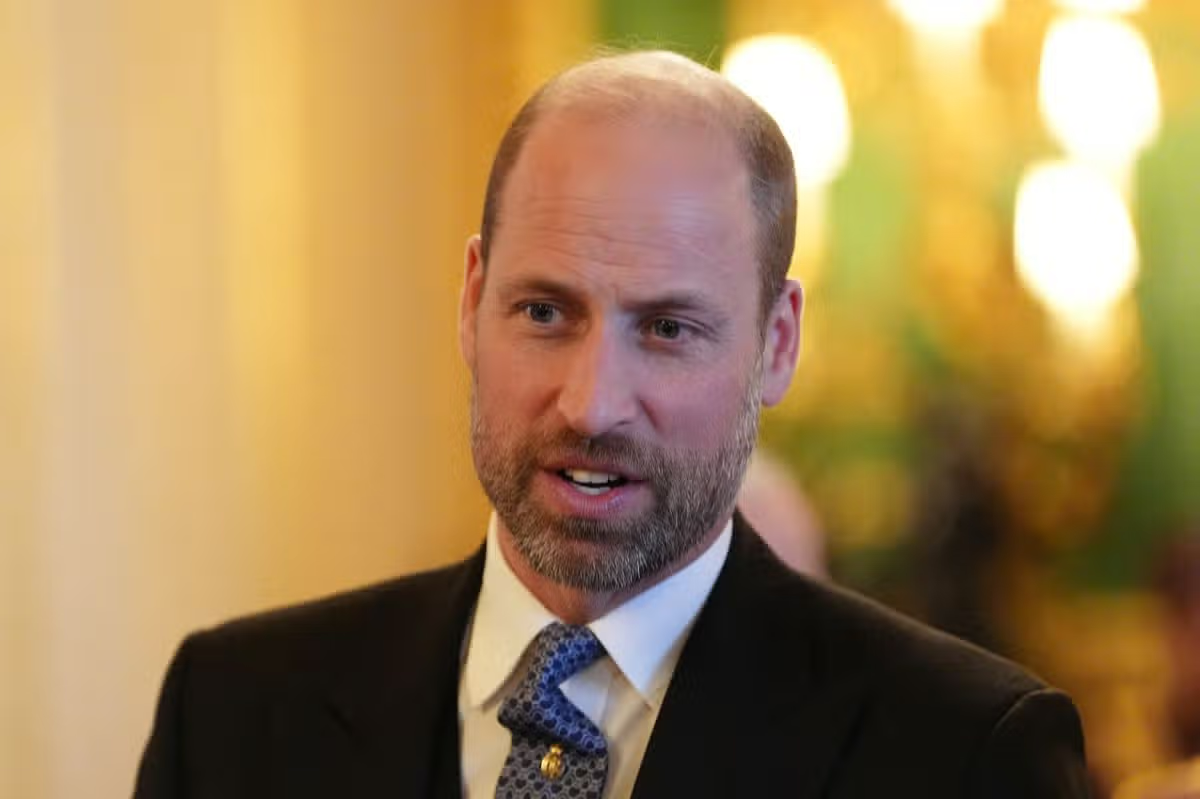
Prince WIlliam once dreamed about being a policeman before he turned his hand to DJing – but The Prince of Wales has been brutally honest about his talents during a surprise TV interview
Prince WIlliam grew up with hopes and dreams just like every little boy(Image: POOL/AFP via Getty Images)
Prince WIlliam has revealed his childhood dreams of becoming a DJ live on TV.
He joined Cate Blanchett, Robert Irwin and Hannah Waddingham on The Graham Norton Show last night. During the episode William was asked whether he had wanted a different career growing up, other than becoming the future King, to which he surprised the audience by saying he had.
His dream role was once to be a policeman, and he even said he wanted to be a DJ. He said: “I did want to be a policeman when I was younger; I thought I could make a good policeman.” Graham interjected saying: “Well, you’re tall.” Then Robert chipped in: “There’s a bit more to it than that mate.”
Graham continued: “Well, you’d look good in the uniform and the hat.” Prince WIlliam added: “I wasn’t on the catwalk. Yeah, being a policeman I thought was quite cool and then I went through a phase of wanting to be a DJ – which didn’t go very well and I came up with a name, I was called DJ Xara with an ‘X’, it wasn’t good.”
Graham asked: “Did you DJ at school parties?” To which Prince William said: “No, I didn’t, I never got that good.”
To see more of the stories you love from The Mirror and to find them easily in Google, then make us your preferred source. Free and easy to do, just click on the link here to find more from The Mirror at the top of your feed.
The audience is heard laughing along, prompting many royal fans to take to X to comment on the prince’s sense of humour, with many referring to William as “funny”.
One fan commented: “Prince William is articulate, funny and an intelligent decent man,” another added: “Prince William is pretty funny and bet he would look good in a police uniform.”
Another added: “I [red-heart emoji] seeing people realise just how charismatic and funny Prince William is, and that he has absolutely no problem laughing at himself. This clip of him on The Graham Norton Show is the perfect example of that. The poor man was absolutely red in the face from laughing so much.”
Ron Duguay, a longtime New York Rangers star who finished his NHL career with the Kings, has died of cancer. He was 69.
The Rangers announced the loss of “one of the most popular players in franchise history” on Thursday morning after being informed by Duguay’s family.
“Ron’s signature skating style — with his hair flowing as he moved down the ice — captivated The Garden Faithful, and his skill, tenacity, and charisma earned him the admiration of all New Yorkers,” the team said in a statement. “We join the hockey community in sending our condolences to Ron’s friends, family, and loved ones during this difficult time.”
Former Alaska governor and 2008 Republican U.S. vice presidential nominee Sarah Palin, who dated Duguay over the last several years, posted on social media that the one-time NHL All-Star “passed away peacefully” Thursday “after a hard-fought battle with cancer.”
“It’s with a shattered heart, but also deep peace knowing Ron is with Jesus now,” Palin wrote. “He fought so hard. Love never ends.”
On Sunday, Palin posted photos that appeared to show her holding Duguay’s hand while he was in a hospital bed. “Prayers for Ron Duguay are felt & appreciated,” she wrote.
Born in Sudbury, Ontario, Duguay was selected by the Rangers at No. 13 overall in the 1977 draft. Known for his long, curly hair and flashy lifestyle — “why, he even danced with Cher at one of Manhattan’s best-known discos,” the New York Times wrote in 1983 — Duguay became a star during the six seasons of his initial stint in New York. He helped the Rangers make the 1979 Stanley Cup Final and earned his only All-Star nod in 1982.
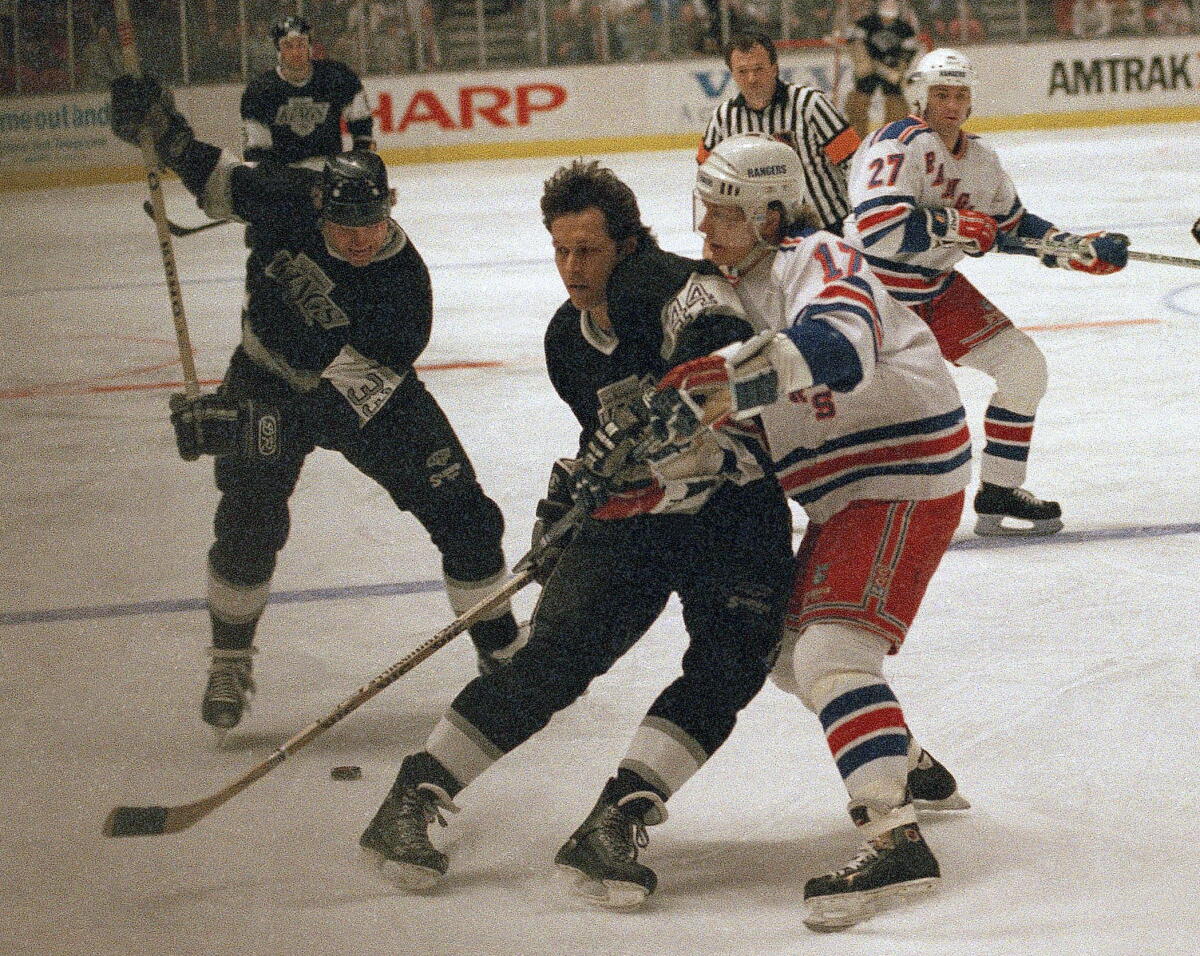
Ron Duguay, front left, blocks out New York Rangers’ Carey Wilson as Kings teammate Marty McSorley winds up to shoot Feb. 27, 1989, at Madison Square Garden.
(Ron Frehm / Associated Press)
Duguay was traded to the Detroit Red Wings in the summer of 1983 and had the two best seasons of his career, including career highs of 89 points on 38 goals and 51 assists during the 1984-1985 season. He also played for the Pittsburgh Penguins and a second time for the Rangers before wrapping up his career with the Kings from 1988 to 1989.
Overall, Duguay had 673 points (305 goals, 368 assists) in the NHL regular season and playoffs. He went on to play in the minor leagues, including two seasons with the IHL’s San Diego Gulls, and spent 12 years calling Rangers games as an MSG Network analyst.
“Ron greeted each day with the biggest smile, an incredible zest for life, and a positive outlook that shone through everything he saw, everything he did, and every life he touched,” the NHL Alumni Assn. wrote on X. “He will be remembered not only for the player he was, but for the extraordinary person he was. His warmth, his laughter, his kindness, and his beautiful spirit will forever remain in the hearts of his family, friends, teammates, and the entire NHL Alumni community.”
The Kings reposted the alumni association’s statement and added: “Our hearts are with Ron’s family & loved ones and we join them in mourning his passing.”
In 2024, Duguay was diagnosed with Stage 4 cancer, which had started in his colon before spreading to his liver and other parts of his body, according to a post on the GoFundMe page set up by his three adult children to help pay for his medical and travel costs. He lived in Florida but had to make regular trips to Orange County for treatment.
“Early this morning, our beloved father took his final breath after fighting a long and courageous battle. He fought with everything he had, right until the very end,” daughter Shay Thomas wrote on Thursday in a separate GoFundMe post. “Our hearts are shattered, and the world feels a little less bright without him in it. He will be missed by so many, but we find peace in knowing that he is finally free from pain and suffering.
“He fought the good fight until his very last breath, and today, Heaven gained a truly special angel.”
Richard Riehle, a prolific character actor who portrayed Tom Smykowski, the product manager with “people skills” in Mike Judge’s cult classic, “Office Space,” has died. He was 78.
Riehle died Thursday of natural causes in Los Angeles, his representatives from Artists & Representatives and Wright Entertainment Inc. confirmed Monday to The Times. No additional details were provided.
“A remarkable actor whose career in theater, film, and television spanned nearly five decades and more than 400 projects, Richard leaves behind an extraordinary legacy,” read the joint statement from his talent agency and management company. “Beyond his immense talent, he will be remembered for his genuine goodness, boundless kindness, and unwavering generosity, particularly toward emerging actors and filmmakers, whom he encouraged and supported at every opportunity.
“Our industry has lost an exceptional talent, and our community has lost a truly wonderful man,” it continued.
In the 1999 corporate comedy “Office Space,” Riehle portrayed Tom, a middle manager who is laid off by the company before being seriously injured in a hit-and-run accident and winning a large settlement.
“We didn’t have a regular effects person to put me into a body cast for my scene after the character’s accident, so we hired an EMT guy to put me in a real cast,” Riehle said in an interview with Notre Dame Magazine. “I couldn’t get out of it for 8 hours — and when the EMT had to go to work he left a cast-cutter for the PA [production assistant]. That was fun.”
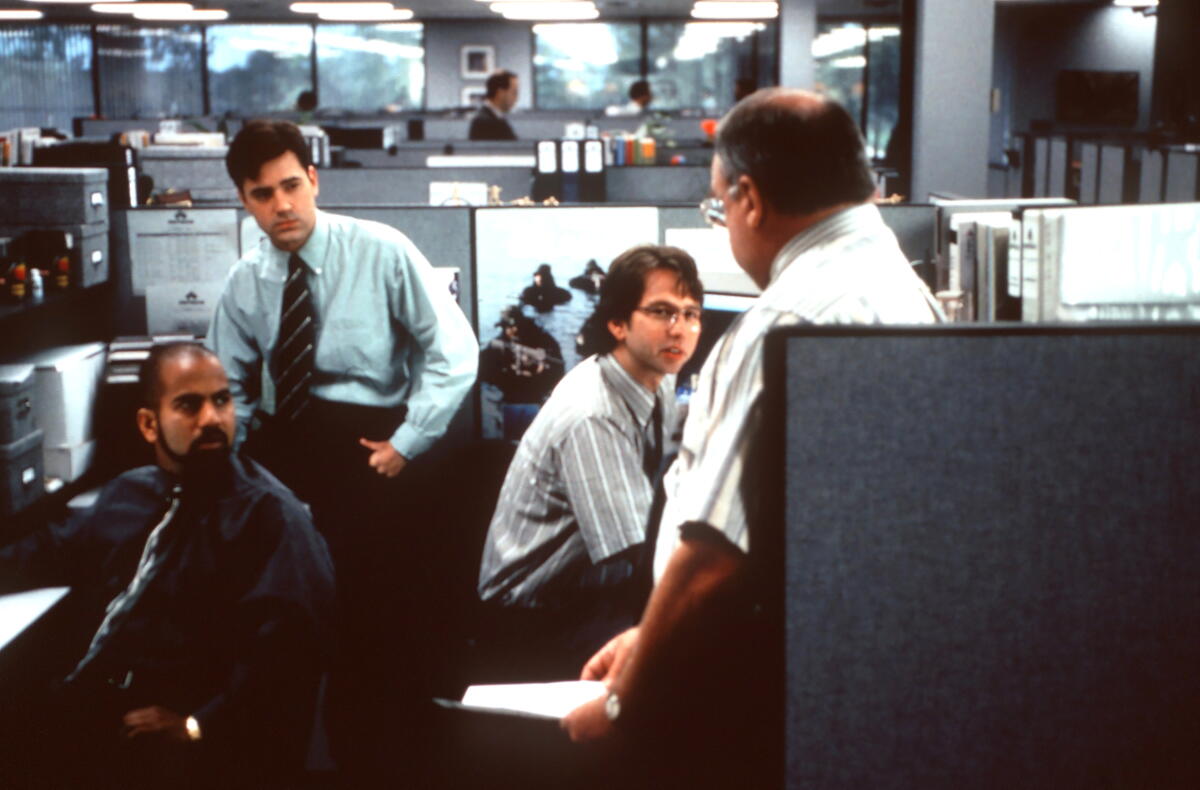
Richard Riehle, right, portrays a co-worker of Ajay Naidu, left, Ron Livingston and David Herman in the 1999 classic “Office Space.”
(20th Century Fox)
Riehle’s other credits include portraying the guard who lets Harrison Ford’s character escape custody in “The Fugitive” (1993); the mechanic with a punny name, Bill Cozbi, in “Bridesmaids” (2011); and the proprietor of a local diner in “Pee-wee’s Big Holiday” (2016).
His wide-ranging resume also includes TV roles in episodes of “Star Trek: The Next Generation,” “Star Trek: Voyager” and “Star Trek: Enterprise,” as well as multiple stints in shows including “Quantum Leap,” “Murder She Wrote,” “L.A. Law” and “Drunk History.” He was also a voice actor on animated projects such as “The Legend of Korra” and “Home on the Range.”
For five seasons, Riehle portrayed Walt Finnerty, the father of Donal Logue’s Sean Finnerty, in the sitcom “Grounded for Life,” which aired from 2001 to 2005.
“Richard Riehle was an amazing human being,” Logue wrote in a tribute shared Monday on Instagram. “A consummate professional, he was an actor’s actor — humble, kind, and incredible at his craft.”
Logue said that he “loved every minute” he spent with Riehle and recalled how the late actor made him laugh so hard during his final audition for the show that he fell to the floor.
“I’ll always remember small details — how he always had a novel (never pulp stuff — always Hugo or Dostoevsky or another classic) stuffed into the back pocket of his old-school slacks,” Logue added. “He loved the House of Pies on the corner of Franklin and Vermont (I did, too).”
Richard Mathias Riehle was born May 12, 1948, in Menomonee Falls, Wis. He graduated from Notre Dame with a degree in speech and drama in 1970 before pursuing a master’s in fine arts at the University of Minnesota.
He started his acting career in local theater. His first uncredited onscreen role was in the 1975 western “Rooster Cogburn,” though he mentioned that he couldn’t find himself in it in a 2017 interview with the A.V. Club. His first screen role “with lines” came a couple of years later, in the 1977 movie “Joyride.” One of his earliest breakout roles was in the 1989 Civil War film “Glory.”
“I always wanted the role that would bring something out of me, force me to find something extra,” he said in the Notre Dame Magazine feature. “As I get older, the roles may not be there as much on high-profile projects, but I’m always going to look for ways I can work and maybe even be a part of ways to change the business. When I work, I feel great. That doesn’t ever have to stop.”