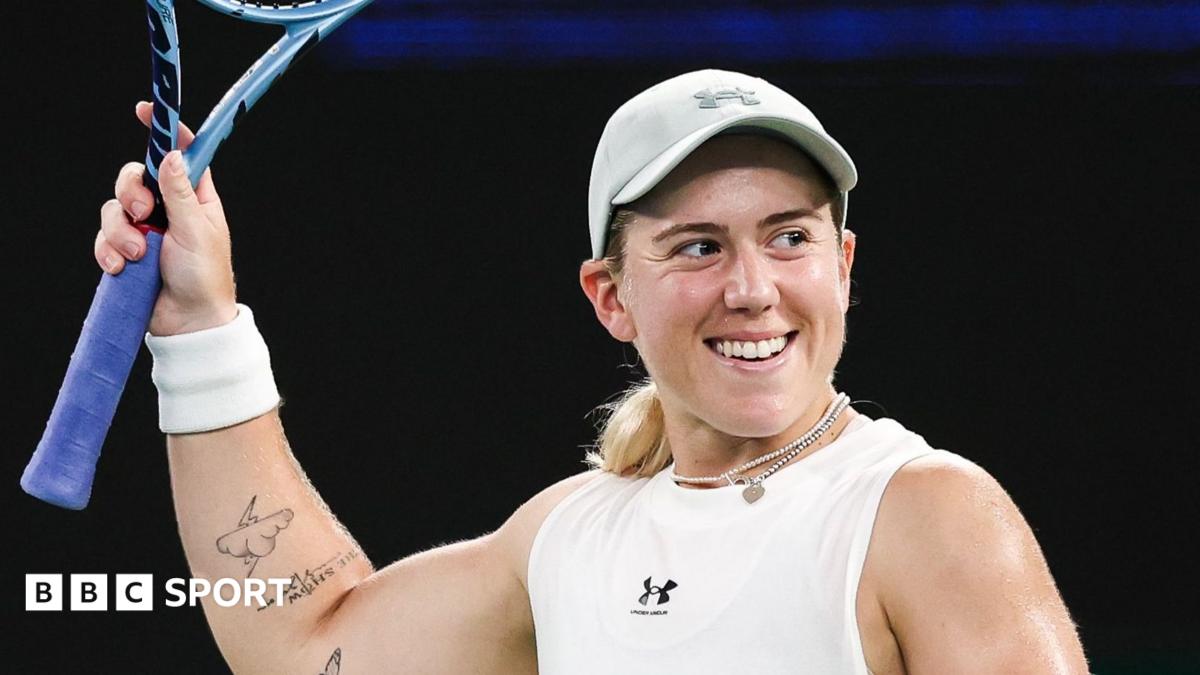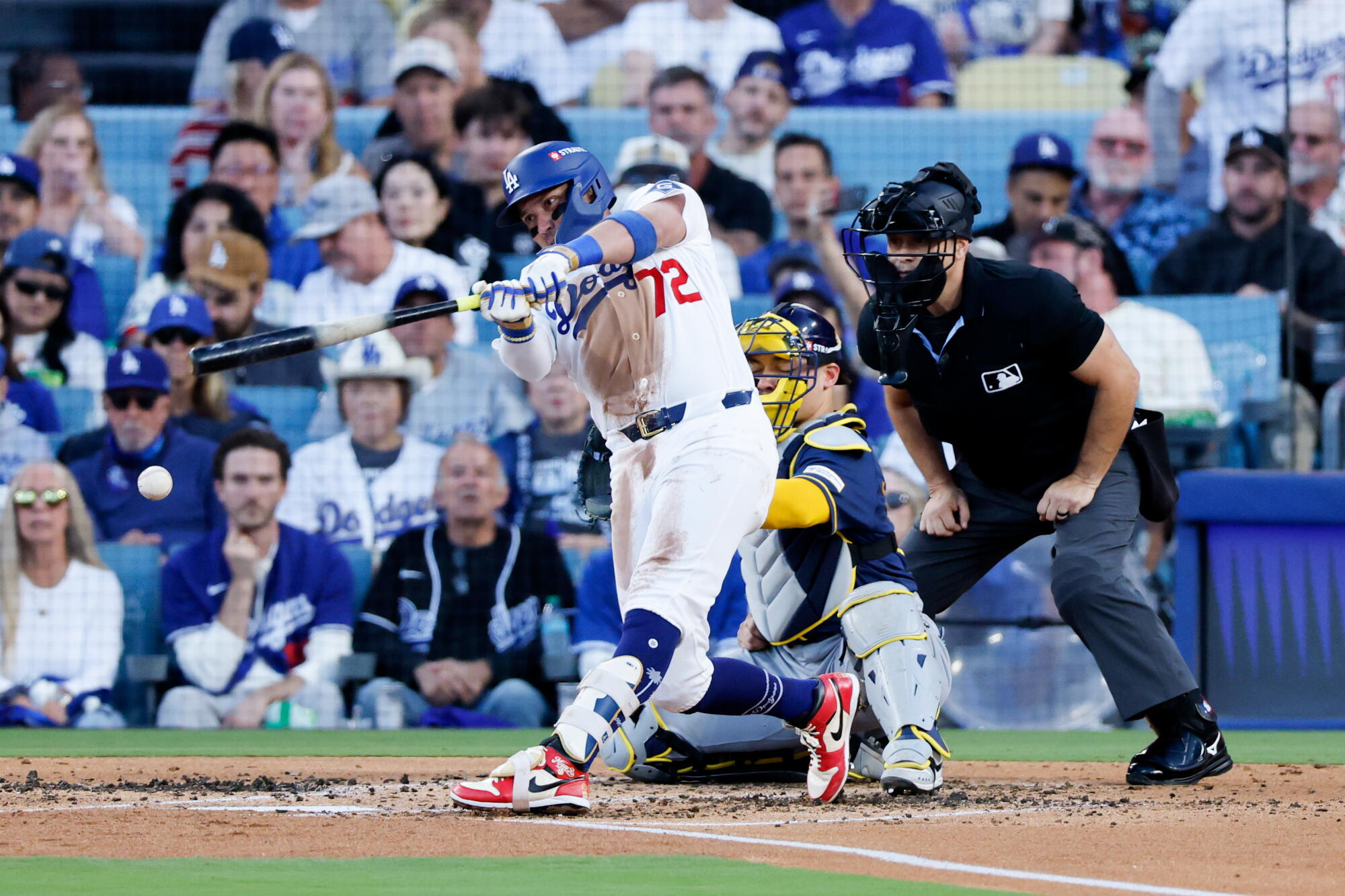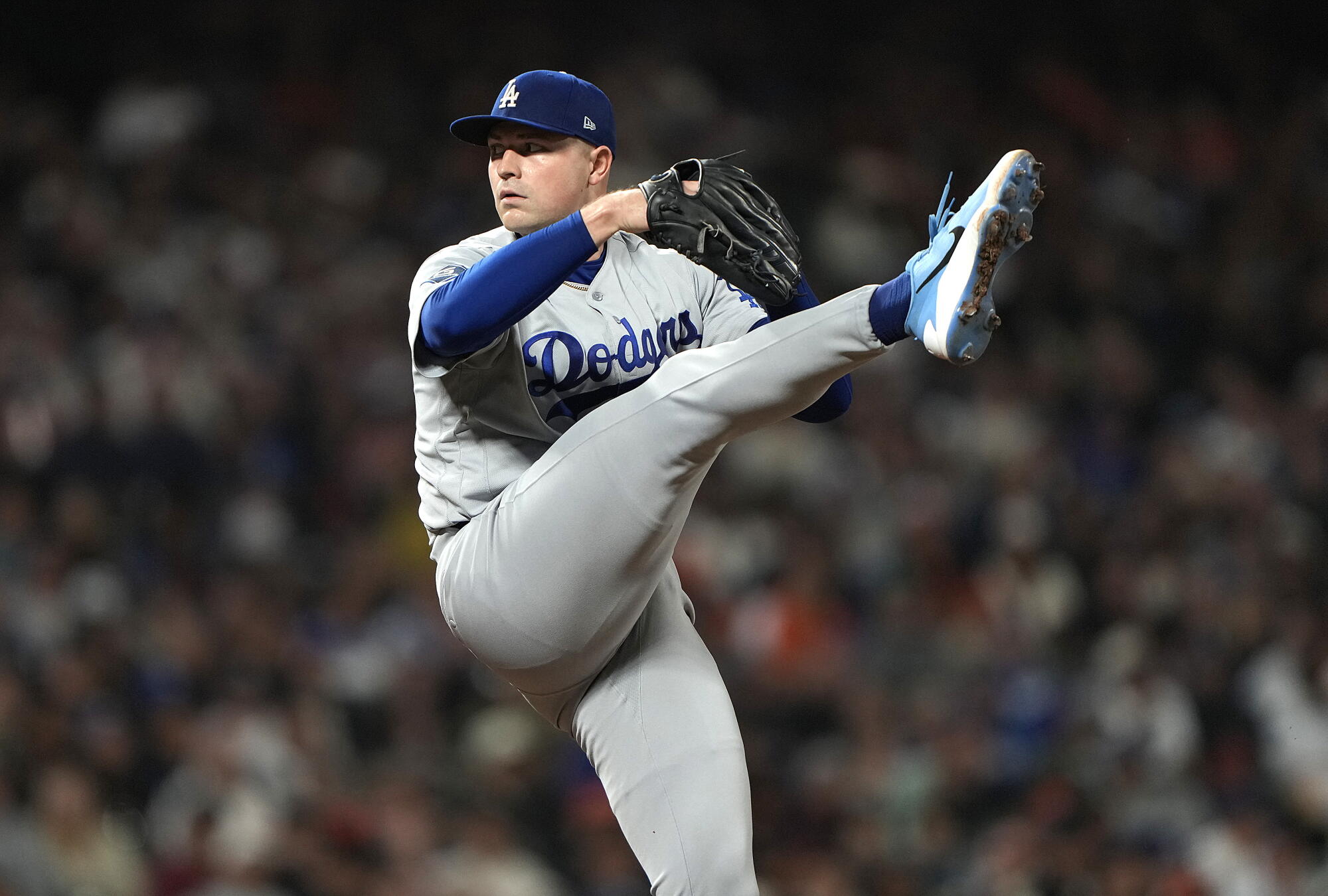

Sabalenka’s pace and power was too much for world number 160 Iatcenko, who managed just three winners compared to the 24 put away by the top seed.
Iatcenko looked a bundle of nerves in the biggest match of her career, but composed herself to get on the scoreboard for 5-1 and immediately broke out into a relieved smile.
It was merely respite as Sabalenka held to love in less than 90 seconds to clinch the opening set.
Despite only being on court for 24 minutes, Iatchenko decided she wanted a bathroom break to change her kit – but more likely for a mental reset than anything else.
Sabalenka kept loose while she waited by practising her serves and maintained her rhythm as she surged a double break ahead for 3-0 in the second set.
It was not all plain-sailing for Sabalenka as she lost serve in a sloppy fourth game, but reasserted her authority with two more breaks as Iatchenko was taught a harsh lesson.
The Russian can console herself with the knowledge she has gained valuable experience against the world number one on the biggest court on the planet – and a bumper paycheck.
Coming into the US Open, she had earned $300,000 (£220,000) in her career but takes another $190,000 (£140,000) home from New York to reinvest into her future.
Earlier on Wednesday, third seed Pegula continued her quest for a maiden Grand Slam singles title with a comfortable victory over fellow American Sofia Kenin.
Pegula also has a shot of replacing Sabalenka as world number one if she wins the title, as does fourth seed Coco Gauff, and kept her dream alive with a 6-3 6-1 win.
There were also straight-set wins for Wimbledon runner-up Karolina Muchova, two-time major semi-finalist Marta Kostyuk and teenage American sensation Iva Jovic as the patten of few shocks in the women’s draw over the opening two rounds continued.
ARIANA GRANDE broke down in tears on stage at what could be her final-ever concert.
The superstar, 33, sobbed as she opened up about her decision to step back from public life.
Ariana Grande has performed for the final time ahead of taking a step back from public lifeCredit: The Mega AgencyAriana was left tearful during the arena gigCredit: Supplied
Halting her final gig at London’s O2 Arena, Ariana said: “I just wanted to say thank you so much.
“This has been such an extraordinary experience.
Sign up for the Showbiz newsletter
Thank you!
“Thank you for ten beautiful London shows and 41 incredible Eternal Sunshine shows.”
Breaking down in tears, Ariana continued: “This has been one of the most beautiful extraordinary experiences of my life and I just wanted to express my gratitude without sobbing.
“It has been so special and I will cherish this experience always.
“I have loved every minute of this with you all and I just wanted to make sure I express how grateful I am.”
Signing off, she continued: “Thank you for being by my side all the way from Honeymoon Avenue to Hampsted.”
The star is stepping back from public life following the conclusion of the tourCredit: GettyThe star spoke out to the crowd ahead of her time-out from the spotlightCredit: SuppliedShe gave a poignant final message to the audienceCredit: SuppliedAriana has performed a run of 10 sold-out shows in LondonCredit: Getty
Ariana broke down in tears for a second time before performing Hate That I Made You Love Me.
The singer struggled to get her words out as she thanked everyone who has worked on the tour from hair and make up to the security.
For the final show of the tour Ariana added four songs from her new album Petal.
The singer belted out Oh Well, Like I Do and the record’s lead single Hate That I Made You Love Me.
Ari also performed Nowhere, Nobody for the first time.
During her performance of hit single Thank U, Next the star continued her recent trend of changing the words to reflect her rekindling things with dancer Ricky Alvarez.
Rather than singing “wrote some songs about Ricky, now I listen and laugh” the superstar sang: “Wrote some songs about Ricky, I’m trying to make him my last.”
Ariana’s Wicked co-star Cynthia Erivo watched her final show from the sound decks.
However, unlike on night two of the 10 London shows when she joined Ariana on stage, she opted to take a back seat and simply watch the show as a fan.
It was previously revealed that Ariana would be retreating from the public eye following the end of tonight’s run of 10 O2 Arena shows of the Eternal Sunshine Tour.
In a statement released last month, a rep for the 7 Rings singer said: “Ariana will be taking a step back from visibility after she completes the Eternal Sunshine Tour.
“She looks forward to finishing the tour and ending it on a high note, both healthily and happily, and then taking a much-deserved break from public-facing work and appearances, which have led to endless, ongoing public scrutiny.
“This tour has been a beautiful experience for her.
“She loves her fans and has loved every minute of this tour so much.”
Ariana herself later clarified that the decision had been months in the planning and was not in response to widespread concern for her health after visible weight loss over the past year.
The singer said: “It was not a reactive or impulsive thing. It is something that I have decided, a plan that I had quietly made a long time ago and it’s a decision that was made from a thoughtful and empowered place.
“And I want you to know that many things can be true at the same time.”
She added: “I heard that my fans were worried that negativity was ruining things for me, but I just have to say that could not be more the f*** opposite.
“This is not what that is. I just want to be very, very clear. Multiple things can be true at the same time.
“Boundaries need to be set.
“Human beings need a break sometimes. And also, this can be, and will continue to be, the greatest experience of my professional and creative life. So, I just wanted to make that quite plain.”
It comes a month after Ariana pulled out of making her West End debut in Sunday in the Park with George slated for next year at the Barbican.
ATLANTA — Tiger Woods was going for his seventh straight PGA Tour victory when he tied for second at Torrey Pines. He earned $264,000 that day to move to No. 1 in career tour earnings.
That was Feb. 13, 2000, and Woods stayed there ever since — until Sunday.
Scottie Scheffler won the Tour Championship to capture his second FedEx Cup title and the $10 million prize — now considered official money — to raise his career total to $130,390,661.
Woods had been at $120,999,166 since he made his last cut on the PGA Tour at the 2024 Masters.
This is an entirely different era of golf, and Scheffler finally topping Woods in career earnings was inevitable. That it happened so quickly is a testament to Scheffler’s dominance. He has been No. 1 in the world since May 2023.
The popularity and momentum Woods brought to the sport 30 years ago generated enormous spikes in prize money. And then with the arrival of Saudi-funded LIV Golf in 2022, the PGA Tour responded with even greater increases to keep more players from defecting.
There were 15 prize funds of $20 million or more this season on the PGA Tour schedule. Woods never played for a $10 million purse during his peak years from 1997 through 2009.
Woods won the FedEx Cup twice when it was worth $10 million, all in bonus money. Scheffler earned $23 million in bonus money last week by leading the FedEx Cup in points. The FedEx Cup finale has counted as official the last two years.
Most telling about the rapid increase in money was the 2024 Masters. Woods, at age 48 and trying to recover from multiple back surgeries and a 2023 car crash that shattered his right leg and ankle, finished in last place and made $44,000.
Scheffler won the Masters that year and moved to No. 12 on the career earnings list at $57,658,464. He has earned just over $72.7 million in his last 50 tournaments over two years and four months.
It was a matter of time, and it really doesn’t matter to Scheffler.
“The reason our purses are so large today is because of the influence and impact that Tiger had on the game,” Scheffler said before the Tour Championship started. “I wouldn’t really consider that a Tiger record being broken. I think it just shows one of the many effects he had on the game of golf in a positive way.”
Scheffler indicated last week in St. Louis the Tiger number he cares about his victories. Scheffler won for the 22nd time Sunday at East Lake. Woods shares the PGA Tour record at 82 victories.
Gladys Knight has announced she’s gearing up to embrace the next phase of her life and career at 82.
The announcement comes after recent performances raised alarm with fans and staff worried about the storied singer’s health.
“After much soul searching I’ve decided that I will be easing into fewer performances while focusing on transitioning into the next stage of my career and life moving forward,” Knight said via Instagram on Thursday.
Knight said she’ll be spending more time on projects with her husband and manager; William McDowell, 68; and visiting with her grandchildren.
“I’d like to take a moment, in advance, to thank all my fans over this last three quarters of a century for making a little girl’s dream come true and supporting her every step of the way,” she continued. “I am immensely grateful to all of you and send my eternal love back to you. … I hope to see your smiling faces out and about and on the road.”
Her publicity team declined further comment Friday.
During her Aug. 18 show in Detroit, Knight took several breaks. And back in July at the Hollywood Bowl, the Grammy-winner seemed to lose her place while belting, “Midnight Train to Georgia,” one of her signature songs.
Backup singers appeared to come to the rescue more than once, guiding the singer back toward the stage as she wandered off and filling in when the lyrics to her classic soul hits seemed to escape her.
In an interview with the Shade Room last year, Knight’s son, Shanga Hankerson, claimed McDowell pushed the singer into performing and manipulates her.
Hankerson said that he drove to North Carolina to see his mom and was kept from being alone with her. He subsequently filed a complaint with the state Department of Health and Human Services.
“I noticed that William would always chime in, make sure that I didn’t get to speak with her by myself or by herself,” he said.
During a performance, Hankerson said he was concerned watching as his mom, who’s been performing for 75 years, fumbled through the set.
“The band played two or three extra bars, and she zoned out. The background singer started singing, and that brought her back. They’re having to rewind the teleprompters because my mom is forgetting to even look at them,” he said.
Still, Robinson had some positive takeaways from that portion of his career to share during a video he posted to Instagram on Monday announcing his retirement from the NFL after 11 seasons.
“I learned a lot about football from Coach [Sean] McVay and Cooper Kupp and the guys I was around to be able to then use for the rest of my career,” Robinson said.
The video, titled “No More Sundays,” was posted on Robinson’s 33rd birthday. It shows Robinson watching film from every stop during his football career — from his days as “a kid in Detroit trying to be like Randy Moss” to his final NFL season with his hometown Lions in 2024. It and ends with him turning off the projector and literally hanging up his cleats.
Robinson played three seasons at Penn State and led the Big Ten Conference in receptions and receiving yards in 2012 and 2013 and receiving touchdowns in 2012. The 6-foot-3 player was selected by the Jacksonville Jaguars in the second round of the 2014 draft and made the Pro Bowl in his second season.
During the first game of his fourth year with Jacksonville, Robinson tore the anterior cruciate ligament in his left knee and missed the rest of the season. He signed with the Chicago Bears before the 2018 season and had four productive years there, which led to his contract with the Rams.
Robinson was expected to be an upgrade over veteran receiver Robert Woods, who was subsequently traded to the Tennessee Titans soon after the Robinson deal, but wasn’t able to achieve his previous levels of success. He wasn’t able to establish a rapport with veteran quarterback Matthew Stafford, who did not throw passes during offseason workouts or part of training camp because of a right elbow condition.
A foot injury caused Robinson to miss the final seven games of the season. He finished the year with 33 catches for 339 yards and three touchdowns. During the offseason, the Rams traded Robinson and a seventh-round draft pick (No. 251 overall) to the Pittsburgh Steelers for that team’s seventh-round pick (No. 234 overall). The Rams were on the hook for about $10 million of Robinson’s salary.
“I did get injured, so I didn’t have a full season in L.A.,” Robinson said. “But I think I learned a lot about myself, being able to just kind of persevere, go through adversity and being able to mentally grow up. I can say that my career wouldn’t be what it was if I didn’t have a lot of those learning moments.”
Robinson finishes his career with 565 receptions for 7,058 yards and 43 touchdowns. He and former NFL cornerback Prince Amukamara started the “Press Release” football podcast last year. In addition, Robinson has hosted several youth football programs over the years.
“Football gave me more than I ever could’ve imagined,” Robinson wrote on Instagram. “It challenged me, shaped me, humbled me, and rewarded me in ways I’ll carry for the rest of my life. I came, I saw, I conquered and I leave with nothing but gratitude.
“The memories, the relationships, the victories, the lessons, they’ll stay with me forever! Thank you for every moment, every cheer, every lesson, and every opportunity.”
Amanda Serrano retained her WBA and WBO featherweight belts with a narrow majority decision over Argentina’s Lucrecia Manzur in the first world title fight to be streamed live on TikTok.
The Puerto Rican was made to work for her 50th career win, edging a majority decision but missing the 33rd knockout she needed to break the women’s record, remaining on 32.
Serrano’s fight, held over 12 two-minute rounds, may not have delivered a record‑breaking knockout, but it drew 3.4 million total views on TikTok.
The 37-year-old continues to be one of the most watched female fighters in the world, with her third fight against Ireland’s Katie Taylor last year drawing an audience of six million on Netflix and their rematch in 2024 getting over 50 million on the same platform.
Friday’s fight in Temeculam, California was scored 114-114, 116-112 and 116-112 in favour of Serrano.
Manzur troubled the champion early with repeated right hands, but the Argentine tired as Serrano seized momentum from round nine and finished the fight in control.
Speaking after the bout, Serrano said: “I am so happy and honoured. That was the first championship main event fight on TikTok guys, super excited, super honoured.”
On Manzur, Serrano added: “I knew this girl was tough. She’s young. She’s 27. She’s 10 years younger than me. These girls are getting younger and stronger.
“She was hungry, and I knew that coming into training. I trained very hard because I knew it was an opportunity for her, so I had to come on my A game.”
The unified champion will now be hoping to eclipse Christy Martin with a 33rd stoppage in her farewell fight, which she plans to stage in Puerto Rico later this year or in early 2027.
Not because of his five-star, blue-chip status, leaving Warren High as the second-ranked prospect in the 2023 class and top-ranked recruit out of California.
Not for leading Tennessee to its first-ever College Football Playoff appearance and a 10-3 record — tying for the Volunteers’ second-best finish since 2001.
Instead, Iamaleava is remembered for his tumultuous exit from Knoxville, a parting characterized by head coach Josh Heupel that the program would move on without its starting signal-caller, leading the Long Beach product to UCLA.
More than one year removed after his departure, Iamaleava reflected at preseason media day on his time with the Volunteers, the effect last season had on his mental health and his mindset heading into 2026.
“In Tennessee, I was in a rough mental state as far as being far from home, but that’s what came with me growing and maturing,” Iamaleava said Wednesday. “So coming back home has been a great transition, and I can’t wait to play this year.”
Get the latest on L.A.’s teams in the daily Sports Report newsletter.
By continuing, you agree to our Terms of Service, which include arbitration and a class action waiver. You agree that we and our third-party vendors may collect and use your information, including through cookies, pixels and similar technologies, for the purposes set forth in our Privacy Policy such as personalizing your experience and ads.
Can Mark Walter keep the Dodgers?
When the news broke last week that Mark Walter was selling the Lakers just one year after buying the storied basketball franchise, executives working for another crown jewel in his sports empire — the Dodgers — were quick to say the billionaire had no plans to sell the team.
The Dodgers have won three of the last six World Series and 12 division titles since an ownership group led by Walter bought the then-bankrupt team in 2012, and the Dodgers now are considered the most successful — and lucrative — franchise in Major League Baseball.
Yet, amid Walter’s financial difficulties, including a federal inquiry into his insurance empire regarding $16 billion to $21 billion in undisclosed loans to his own companies, questions remain over whether the blowback will hit the Dodgers.
Walter has denied wrongdoing, and sports business experts say it’s far too soon to know whether the Dodgers will be in play. No charges have been filed against Walter or anyone associated with his businesses.
“If you’re judging on that — winning and revenue created — he’s been at the helm of all of that. … He does truly look like a white knight as it relates to his ownership of the Dodgers,” said Patrick Rishe, executive director of the Sports Business Program at Washington University in St. Louis. Still, “we don’t know what the issues are, and we don’t know the severity and the magnitude.”
On Thursday, coach Sean McVay was asked if Donald, a three-tine NFL defensive player of the year, would do more workouts before deciding whether or not he will come out of retirement to join the Super Bowl-favorite Rams.
Donald worked out at Loyola Marymount when the Rams were in training camp, and last week at the Rams facility in Woodland Hills.
“We’ll see,” McVay said. “I would love to be able to have all this stuff figured out but … I know he’s feeling good, and I think he will continue to work out, and I’m hopeful that we’ll have some answers on that sooner than later.”
Zach Neto was five for six with his 21st homer and a career-high seven RBIs and the Angels scored their most runs in three years to rout the Houston Astros 18-3 on Thursday night.
The Angels (51-77) had a season-high 18 hits and scored their most runs since a 25-1 victory over Colorado on June 24, 2023.
Angels starter Grayson Rodriguez (4-5) gave up just two unearned runs across seven innings while striking out six.
From Sam Farmer: Jake Slaughter could be the first Chargers player to touch the ball on every offensive snap. He has never done so in an NFL game that counts.
Slaughter, the rookie second-round pick from the University of Florida, is the leading candidate to start at center after Tyler Biadasz went down with a knee injury at practice this week. There is no timetable for the return of Biadasz, who signed a three-year, $30-million contract in March.
Although Slaughter played some guard in college, center is his natural position. He played just nine snaps Thursday in a 41-17 preseason loss to the San Francisco 49ers at SoFi Stadium.
It’s understandable that the Chargers (1-1) only wanted light duty from him, considering they slogged through a brutal 2025 season when they lost their two outstanding tackles and endured a revolving door along the offensive line throughout the season.
As is common throughout the NFL, lots of Chargers starters were merely spectators for the second of three preseason games.
Here are some more observations from the Chargers’ preseason loss to the 49ers:
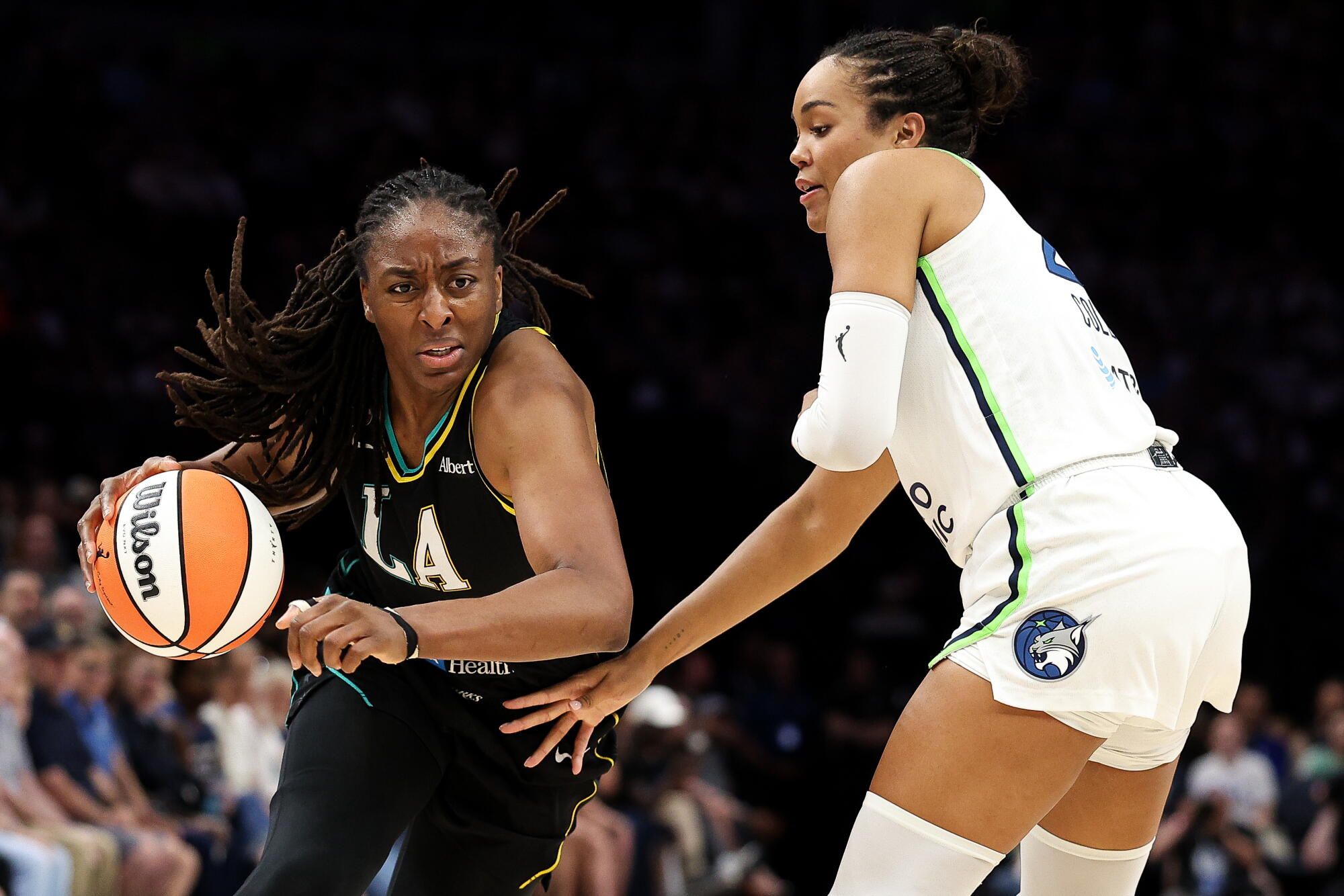
From Jordan Puente: After 15 years in the WNBA, the Sparks’ Nneka Ogwumike is content with her decision to call this her final season.
“I think that ended up being a blessing in disguise,” Ogwumike said of returning to the Sparks during the offseason. “Once training camp hit, I realized, you know what? I think what I have left is one more season, and I was OK with that.”
Sparks coach Lynne Roberts said before tipoff she wanted her team to get off to a better start, but the team could not deliver Thursday and extended its losing streak to six games. The defeat officially eliminated the spiraling Sparks (12-24) from playoff contention.
1901 — William Larned wins the first of seven men’s singles titles in the U.S. Lawn Tennis Assn. championship.
1914 — Walter Hagen captures the U.S. Open golf title by edging Chick Evans.
1920 — Jock Hutchinson wins the PGA golf tournament with a 1-up victory over J. Douglass Edgar.
1932 — Helen Hull Jacobs beats Carolyn Babcock to win the women’s singles title in the U.S. Lawn Tennis Assn.
1982 — Mystic Park becomes the first 3-year-old trotter to win the American Trotting Championship.
1985 — Mary Decker sets the world record in the mile run with a time of 4:16.71 in Zurich.
2003 — Paul Hamm puts together a near-perfect routine on the high bar to become the first American man to win the all-around gold medal at World Gymnastics Championships. Needing a 9.712 or better to beat China’s Yang Wei, Hamm strings together four straight release moves during his 60-second routine — one of the toughest feats in gymnastics — for a 9.975 and the gold.
2004 — American super-swimmer Michael Phelps wins his sixth gold medal of the Athens Olympics even though he doesn’t swim the final of men’s 4 x 100m medley relay; US wins in world record 3:30.68.
2008 — At the Summer Olympics in Beijing, Yukiko Ueno pitches 28 innings in two days, including seven to shut down the U.S. softball team, 3-1, and give Japan the gold medal. It was the first loss for the Americans since Sept. 21, 2000 — 22 straight games. LaShawn Merritt upsets defending champion Jeremy Wariner to lead a U.S. sweep of the 400 meters track event. David Neville gets the bronze. The U.S. men and women both drop the baton in the Olympic 400-meter relays and fail to advance out of the first round. Jamaica’s Veronica Campbell-Brown easily wins the 200 meters to cap the first sweep of all four men’s and women’s Olympic sprints in 20 years.
2010 — Kyle Busch makes NASCAR history with an unprecedented sweep of three national races in one week, completing the trifecta with a victory in the Sprint Cup race at Bristol Motor Speedway. Busch, winner of the Nationwide race a day earlier and the Trucks race on Aug. 18, becomes the first driver to complete the sweep since NASCAR expanded to three national series in 1995.
2011 — The Sparks run off 16 straight points to overcome a 15-point, second-half deficit and hand the Tulsa Shock their WNBA-record 18th consecutive loss with a 73-67 victory. The Atlanta Dream lost 17 in a row in their inaugural season of 2008.
2016 — Kevin Durant scores 30 points and helps the Americans rout Serbia 96-66 for their third straight gold medal. That caps an Olympics in which the U.S. dominated the medal tables, both the gold (46) and overall totals (121). The 51-total-medal margin over second-place China is the largest in a non-boycotted Olympics in nearly a century.
2018 — Liu Xiang of China sets a world record time of 26.98 seconds to win the women’s 50-meter backstroke gold medal at the Asian Games. Liu becomes the first woman to swim under 27 seconds in the event, breaking the mark of 27.06 set by fellow Chinese swimmer Zhao Jing at the 2009 world championships in Rome.
Compiled by the Associated Press
This day in baseball history
1926 — Ted Lyons of the Chicago White Sox pitched a no-hitter over the Boston Red Sox at Fenway Park. The 6-0 victory was achieved in 1 hour, 7 minutes.
1930 — Chick Hafey of the St. Louis Cardinals hit for the cycle and drove in five runs in a 16-6 rout of the Philadelphia Phillies.
1931 — Babe Ruth hit his 600th home run as the Yankees beat the St. Louis Browns 11-7.
1947 — The first Little League World Series was at Williamsport, Pa.
1972 — Steve Carlton of Philadelphia had his 15-game winning streak snapped when Phil Niekro and the Atlanta Braves beat the Phillies 2-1 in 11 innings.
1975 — Pitching brothers Rick and Paul Reuschel of the Chicago Cubs combined to throw a 7-0 shutout against the Dodgers. Rick went 6 1-3 innings and Paul finished the shutout for the first ever by two brothers.
1982 — Milwaukee pitcher Rollie Fingers became the first player to achieve 300 saves as the Brewers beat the Seattle Mariners 3-2.
1986 — Spike Owen had four hits and became the first major league player in 40 years to score six runs in a game as the Boston Red Sox routed the Cleveland Indians 24-5 with a 24-hit attack.
2007 — Garret Anderson of the Angels drove in a team-record 10 runs in an 18-9 rout of the New York Yankees. Anderson hit a grand slam, a three-run homer, a two-run double and an RBI double to become the 12th player in major league history to have 10 RBIs in a game.
2007 — Arizona’s Mark Reynolds tied the major league record for consecutive strikeouts by a non-pitcher when he fanned in his ninth straight plate appearance in a 7-4 loss to Milwaukee. Reynolds struck out in his first two at-bats against Dave Bush to match the record. Bush hit Reynolds with a pitch in the sixth, ending the streak.
2011 — Johnny Damon lost a grand slam to a video review in the seventh inning, then hit a game-ending home run in the ninth that lifted the Tampa Bay Rays over the Seattle Mariners 8-7. Damon connected for a leadoff shot in the ninth on the first pitch from Dan Cortes. The Rays trailed 5-4 in the seventh when Damon launched a drive to right-center field. First ruled a home run, the umpires changed the call to a three-run double after a video review.
2015 — Mike Fiers pitched the second no-hitter in the major leagues in nine days, leading the Houston Astros to a 3-0 victory over the Dodgers. Having never thrown a complete game in his five-year career, Fiers was dominant. He struck out 10 and walked three, retiring the final 21 batters. Fiers struck out Justin Turner on his 134th pitch to end it.
Compiled by the Associated Press
Until next time…
That concludes today’s newsletter. If you have any feedback, ideas for improvement or things you’d like to see, email me at houston.mitchell@latimes.com. To get this newsletter in your inbox, click here.
HE gave up a promising career to become part of one of Britain’s biggest boybands – now JJ Hamblett is heading back to where it all started at 16.
The Union J star, 38, exclusively tells The Sun how he’s making a remarkable return to his first love, 15 years after he made it in the pop business – and reveals he will soon be back on stage with his former bandmates too in a hugely anticipated reunion.
Union J shot to fame on The X Factor in 2012, with JJ Hamblett, Jaymi Hensley, Josh Cuthbert and George Shelley going on to become one of the UK’s biggest boybandsCredit: AlamyJJ was a serious apprentice jockey before finding fame with Union J, clocking up more than 250 competitive rides before swapping the saddle for the stageCredit: Instagram
JJ, who shot to fame with Union J after appearing on The X Factor in 2012, is returning to his roots as a champion jockey and has signed up for the Legends Race at Doncaster next month, where he’s set to go head-to-head with racing royalty, including Frankie Dettori.
And in the same breath, he’s revealed Union J are planning to mark their 15th anniversary next year with either a one-off show or a full tour – teasing a previously unreleased song that could finally see the group back in the studio.
Union J – completed by Jaymi HensleyJosh Cuthbert and George Shelley – went on to become one of the best-known bands to emerge from The X Factor, scoring hits including Carry You and Beautiful Life before eventually going their separate ways. JJ insists the four remain close.
He said: “We’re all kind of doing our separate things at the moment, but we always keep in touch.
“They’re going to be brothers for life, and I know that sounds really corny, but without each other, and the success of Union J, we might not have had the opportunities we’ve had outside of the band.”
And fans may not have to wait much longer to see the boys back together. JJ revealed the group are already discussing plans for their 15th anniversary, with a tour his preferred option.
He said: “We did the London Palladium on the 10-year anniversary, which was such a pinch-me moment.
“Next year we’re planning to do a tour or a one-off show. We haven’t decided yet, but I’m hoping it’s a tour, so it gives fans around the country the opportunity to get there. And hopefully festivals next year as well.”
And there’s even more exciting news for Union J fans – JJ teased that the group already have the perfect comeback song sitting in the vault, coming perilously close to giving away the title before catching himself.
He revealed: “There is one song. I can’t say what it is, but we were thinking about releasing it on the second album, and we didn’t. It fits lyrically so perfectly for us wanting to still do the band and missing being on stage together.”
He then began, “Will we [the band] ever…” before stopping himself and saying, “I can’t say the next two words, because if I say the next two words, sh**, it tells you the song. But it’s just a song that really fits us as a band, and us getting back together. I’m hoping we’re going to release that single.”
Before becoming a household name, JJ was a serious apprentice jockey in Newmarket, riding more than 250 times and even counting the late Queen among the famous names he rode for. Now, after around 15 years away from competitive riding, he’s caught the bug all over again.
He explained: “About seven or eight years ago, they asked me to do it, and obviously with the band, we were quite busy, and I just knew it wasn’t the right time.
“But then recently, in January, I moved back to Newmarket, which is the centre of racing. I thought about it, and I was like, ‘You know what? I’d love to give it another go, just race one final time.’”
His body, however, is not quite as enthusiastic about the comeback as he is. JJ has been riding out for top trainers John and Thady Gosden, and admits his first few days back in the saddle left him feeling every one of the years since his last race.
He said: “The first day, I thought they’ll put me on a trotter. And then they were like, ‘You’re going to canter up Warren Hill,’ which is a steep hill. And the next day, I was like an OAP. I couldn’t move.”
His partner, former champion jockey Hayley Turner, has been helping him prepare, while he’s been riding several days a week and hitting the gym.
He admitted: “I was put through a fitness test with Billy Loughnane, who’s had an incredible season so far. And I was sick. I literally couldn’t do it. I was really, really struggling.”
JJ will find out whether the training has paid off at Doncaster on September 11, for the charity showpiece of the St Leger Festival, riding in aid of the Injured Jockeys Fund alongside his friend Frankie Dettori.
He said: “It’ll just be phenomenal. All the jockeys riding in it are great. And just to be able to be beside them and racing against them is something I never thought I’d be able to do again.”
The significance isn’t lost on JJ either – Doncaster is where his racing story began, when he was just 16.
He recalled: “Doncaster was the very first racecourse I rode at as a jockey. That was 23 years ago. I remember going up there with my dad, listening to Enigma blasting out, trying to get myself motivated for the ride. I felt fit, I was young, and I couldn’t feel my legs after. I literally fell off the horse. Now I’m 38, and they’re gonna be a lot worse.”
JJ never regretted leaving racing behind, though. He’d been struggling with the demands of keeping his weight down as a jockey and had always dreamed of singing and acting.
In an exclusive chat JJ has revealed Union J are planning to mark their 15th anniversary next year with either a reunion tour or one-off showCredit: Getty Images – GettyThe singer is now back in the racing world as he prepares for his sensational return to competitive riding after more than 15 years away from the sportCredit: Instagram
He explained: “I got to the point where I was struggling with my weight, and it became quite difficult for me. I’ve always loved singing and acting, and then just before the X Factor, I was riding out there in the mornings and I thought to myself, right, I want to give that a go. And we were very fortunate to have the success we did.”
Returning to racing has also reminded JJ how closely his two worlds have always been connected. Newmarket is a small community, and he remembers the Gosden yard watching Union J on The X Factor while he was still part of their world.
He added: “It’s so lovely that people are still asking me about the band, bringing up memories of watching us and following our journey.”
And JJ believes one thing links his two careers perfectly – the adrenaline.
He explained: “When jockeys stop race riding, they search for adrenaline. I was very fortunate to have that, you know – when we had a single out, or getting on stage at Wembley Stadium, it was just that adrenaline feel.”
His choice of pre-race music, though, has moved on rather a lot from his boyband days.
He said: “I’m really loving Sam Fender. And Fleetwood Mac, my favourite band – I’ll be listening to probably a Fleetwood Mac album on the way up there. And I’ll be, in the final furlong, singing Union J, going past the winning post first.”
And JJ is under no illusion he’ll be there simply to make up the numbers – the competitive instinct, he says, never really leaves a jockey.
He said: “Everyone in it is competitive – that’s the reason jockeys do what they do. The outcome you want is to be able to win it.”
But the race is ultimately about far more than JJ’s own comeback. The Legends meeting raises money for the Injured Jockeys Fund, a cause close to his heart after training at its facilities.
He said: “The main reason I’m taking part is to really push what they do out there. It’s an incredible charity for jockeys, retired and current, and I’ve looked at the setup they have and it’s amazing.”
With his racing comeback and Union J reunion both now on the horizon, JJ says he feels lucky to get a second shot at both passions that shaped his life.
The former jockey will return to the saddle at Doncaster on September 11, where he’ll race alongside his friend and racing legend Frankie Dettori in aid of the Injured Jockeys FundCredit: SuppliedJJ found fame as part of Union J after appearing on The X Factor, but now he’s swapping the stage for the racecourse as he prepares for his competitive comebackCredit: Alamy
He said: “I’ve always missed horse racing, and I’m just very, very happy and fortunate and lucky to have that chance again, to do it one final time.
“Thank you to the Union J fans – we wouldn’t be able to even think about doing the 15th anniversary without that continuous support over 15 years, and we’re gonna be putting on the biggest, best show or tour for you next year. So watch out.”
The Leger Legends Race will be available to stream on ITV on September 11th.
It’s right there in the medical books, along with Belsey fundoplication, Heineke-Mikulicz pyloroplasty and Keller’s excision arthroplasty: Tommy John surgery.
Purists might refer to it as ulnar collateral ligament reconstruction, but the rest of the world knows it as the career-saving surgery named for a sore-armed left-handed Dodgers pitcher.
Tommy John was facing the bleak reality that his career was likely over when he ruptured a ligament in his left elbow on a summer night in 1974, an injury that had sent so many pitchers into an early retirement. But a then-radical surgery not only saved but revived his career, as well as the careers of hundreds of baseball players ranging from Tom Candiotti to John Smoltz to Shohei Ohtani in the 50 years since.
Always more famous for the surgical procedure than his career stats, John died Saturday, the Dodgers announced. He was 83.
“We are saddened to hear the news of Tommy John’s passing,” Dodgers president and CEO Stan Kasten said in a statement. “… Tommy was an exceptional pitcher throughout his career in Major League Baseball and his courageous role in becoming the first to have surgery that would go on to bear his name can’t be overstated. His impact both on and off the field has been felt by ballplayers of all ages and will be for generations to come.”
A good pitcher before the surgery with 124 wins in 12 seasons with three teams, he won 164 more afterward — only one fewer than Sandy Koufax during his entire career, he liked to point out — in 14 more seasons with four teams, finally retiring at 46 with a 288-231 record and a 3.34 earned-run average.
“Dr. Jobe made it so I could throw a baseball again,” John told The Times’ Sam Farmer in 2023 from his home in Sarasota, Fla. “After surgery, I never missed a start, and I even pitched out of the bullpen every once in a while.”
He pitched for the Dodgers and the Angels and had two successful stints with the New York Yankees but it was with the Dodgers that he had his greatest success, an 87-42 record and a 2.97 ERA, helping them to consecutive World Series appearances.
It was also as a Dodger that he had his history-making operation.
He came to the Dodgers in a trade from the Chicago White Sox in December 1971 with an 84-91 record, a good curveball and a less than intimidating fastball. Pitching coach Red Adams convinced him that precision location and ball movement were more effective than raw speed and John went 11-5 the following season. He also became well acquainted with orthopedist Frank Jobe, the team physician.
Late in the season, he jammed his left elbow sliding into home plate, jarring loose some bone chips. Jobe cleaned things up for John during the offseason.
Dodgers manager Tommy Lasorda congratulates Tommy John after John shut out the Phillies during 1978 National League Championship Series.
(Associated Press)
Then in July 1974, by which time John had become a mainstay in the pitching rotation, he threw a pitch to Hal Breeden of the Montreal Expos that changed his life, and ultimately the lives of many others.
“Right at the point where I put force on the pitch, the point where my arm is back and bent, something happened,” he told Sports Illustrated. “It felt as if I had left my arm somewhere else. It was as if my body continued to go forward and my left arm had just flown out to right field, independent of the rest of me.
“I heard this thudding sound in my elbow, then I felt a sharp pain.”
John had ruptured the medial ulnar collateral ligament in his left elbow, although he didn’t know that then. The pitch, of course, was nowhere near the strike zone and, despite the pain and in an effort to see if that was a fluke, he tried to throw another. It bounced off the plate, ending his outing and, for all anyone knew, his pitching career.
Jobe recommended total rest but after a month, with no sign of healing, he came up with an outside-the-box suggestion. Earlier, Jobe had grafted a tendon to a recovered polio patient’s ankle to provide stabilization. He thought maybe a tendon could be grafted to a pitcher’s elbow as well.
He gave John a grim choice: Do nothing and never pitch again, or try the surgery at 100-1 odds against success.
“I told Dr. [Frank] Jobe if you do your job I will do more than mine,” John told The Times last year. I just happened to be in the right place at the right time with the right doctor and team.”
So, on Sept. 25, 1974, Jobe took a tendon from John’s right arm, threaded it through holes he had drilled in John’s left elbow and hoped it all would work.
Nerve damage necessitated a second surgery several months later and the prospects were not promising. John’s left arm had atrophied, his hand now basically a claw, and two of his fingers were numb.
Even so, he began rehab, knowing he would miss the entire 1975 season. He taped the unfeeling fingers to the functioning ones so that he could grip a baseball, then, resembling “a little boy throwing against the steps of his back porch,” threw against a wall. He squeezed Silly Putty and strictly adhered to a physical therapy regimen.
By June 1975 he had regained the use of his entire hand and in late September pitched three innings in an exhibition game. He continued his routine through the offseason and into spring training, once joking, “When they operated on my arm, I asked them to put in a Koufax fastball. They did but it turned out to be Mrs. Koufax.”
Surprising many, who considered it at least a minor miracle, he was back in the rotation at the start of the 1976 season and went five innings in his first start, giving up five hits and three runs in a loss to the Braves in Atlanta. He finished the season at 10-10 with a 3.09 ERA, and if anyone was still wondering about his comeback, he put doubts to rest in 1977.
In one of his best seasons, he won 20 games, had a 2.78 ERA and finished second in National League Cy Young award voting for the pennant-winning Dodgers. In a 4-1 win over the Philadelphia Phillies in the clinching Game 4 of the NL Championship Series — then a best-of-five format — John pitched a complete game, striking out eight in a 130-pitch effort.
Dodgers pitcher Tommy John celebrates after the final out in a 4-1 victory over the Phillies in Game 4 of the 1977 NLCS that clinched the pennant for the Dodgers.
(Associated Press)
He came back with a 17-victory season in ’78 and the Dodgers won the pennant again but again lost to the Yankees in the World Series, with John winning a game in both the NLCS and World Series. After the season, he signed with New York as a free agent.
He was an immediate hit with the Yankees, winning 21 games in 1979 and finishing second in the American League Cy Young voting, then won 22 in ’80. In 1981, the Yankees reached the World Series, once again facing the Dodgers — and John was at the center of the most controversial decision in the series that ultimately sealed New York’s fate.
John was the starter in Game 6 at Yankee Stadium with the Dodgers leading the series, 3-2. The left-hander had won Game 2, giving up three hits over seven innings in a 3-0 victory, and had completed four innings of one-run ball when Yankees manager Bob Lemon elected to pinch-hit for John with two runners on in a 1-1 game. ABC, which broadcast the World Series that year, showed John looking visibly upset and surprised as he paced the dugout.
Bobby Murcer flied out to right to end the inning, and the Dodgers would score eight runs over the next four innings against an ineffective Yankees bullpen to secure a 9-2 victory and win the franchise’s first World Series since 1965.
“At the time my reaction was, ‘why is he doing this?’ I was pitching fine and you don’t pull someone out in the fourth inning just because you need a hit at the time,” John said last year. “I was not happy, but that was so long ago in retrospect could we have won? I think so. Does it matter now? No.”
In John’s two stints with the Yankees — he had four seasons with the Angels in between — he was 91-60 with a 3.59 ERA.
And it was with the Yankees that he made the record book, in a way no player would ever want. He committed three errors in an inning, all on the same play during a game July 27, 1988.
With the Yankees leading the Milwaukee Brewers 4-0 and Jim Gantner on first for the Brewers, John charged a slow roller by Jeffrey Leonard to the first-base side of the mound. First, he bobbled the ball. Then, he sailed it past first baseman Don Mattingly, bouncing it off the right-field ballboy. Dave Winfield made a nice play on the ball and fired a strong throw home. It was on line and probably would have nailed the hustling Gantner but John cut it off, then threw wildly past catcher Don Slaught and into the Brewers’ dugout as Gantner scored.
John’s summation, according to Newsday? “I must have had a metal cup on. It glitched the ions in the air.”
After his playing days, John did some broadcasting, some minor league managing and became a strong advocate for suicide prevention after one of his sons took his own life. And after seeing many young pitchers, some still in their teens, undergo the surgery named for him, he spoke out against arm overuse, recommending less than year-round pitching by young arms.
But regardless of the context, John is forever linked to the operation that continues to be performed by orthopedic surgeons such as Dr. Neal ElAttrache, who began learning how to perform the procedure when he was a fellow at the Kerlan-Jobe Orthopedic Clinic in 1990 from Jobe himself. The two would operate together twice a week throughout the 1990s and were close friends until Jobe’s death in 2014.
“It should have been called the Frank Jobe operation,” ElAttrache told The Times in 2023. “But with Frank being the man he was, it was all about the person he was treating. It wasn’t about him.”
By ElAttrache’s estimation, he has performed the operation between 50 and 75 times per year over his career — including the two he has done on Ohtani, one in 2018 and one in 2023. And although ElAttrache has put his own signatures on the surgery — including a second graft to further fortify Ohtani’s elbow — the operation has remained largely the same since Jobe first performed it in 1974.
John is survived by his wife, Cheryl, and his children, Tommy, Travis and Tamara. A private celebration of his life will be held in Florida.
Former NFL quarterback Derek Carr has joined UCLA’s coaching staff as a special advisor to coach Bob Chesney.
The Bruins announced the hiring Monday of the 35-year-old Carr, who is volunteering in his first major coaching role.
The longtime Raiders starter will help Chesney and the Bruins’ offensive staff with game planning and strategy, and he will work with UCLA‘s quarterbacks.
“His experience, leadership and football knowledge will be an incredible resource for our coaching staff and student-athletes,” Chesney said in a statement. “What stands out most is his passion for the game and his commitment to developing young people. Derek will have a tremendous impact on our players and is a great addition to our program.”
Chesney and his staff are in their first season in Westwood after he was hired away from James Madison last December. Carr’s connection to the job was through Bruins general manager Darrick Yray, an offensive assistant and an assistant director of football operations at Fresno State during Carr’s prolific career with the Bulldogs.
“I’ve known Darrick for a long time and have great respect for the work he’s done throughout his career,” Carr said in a statement. “The opportunity to help coach Chesney, the staff and the quarterbacks at UCLA was one that really excited me. I’m looking forward to sharing my experiences and helping support the program in any way I can.”
Carr is 22nd in NFL history after passing for 41,245 yards during his 11-season career with the Raiders and the New Orleans Saints. He is the Raiders’ career leader in yards passing, completions and passing touchdowns.
Carr was a four-time Pro Bowl selection in Oakland and Las Vegas. After two subsequent seasons as the Saints’ starter, Carr retired from the NFL in May 2025 because of a serious right shoulder injury.
Carr’s No. 4 is retired at Fresno State after he passed for 12,842 yards and 113 touchdowns, leading the nation in both categories in 2013 while winning the Sammy Baugh Trophy.
At UCLA, Carr will work with presumptive starter Nico Iamaleava, the Tennessee transfer and Long Beach native who passed for 1,928 yards and 13 touchdowns last season for the Bruins. Iamaleava’s younger brother, Madden, is expected to be their backup quarterback in his second season in the program.
Even before this high-profile addition to his staff, Chesney was already building early momentum in his significant rebuilding project at a program that has foundered over the past decade.
Chip Kelly produced six mediocre seasons before he bolted from Westwood in February 2024, leaving the Bruins in the lurch after that winter’s coaching cycle had largely ended. Former UCLA star DeShaun Foster took over on short notice, but was fired three games into his second season last fall before the Bruins finished 3-9.
Years ago, at the height of his success, Anthony Jeselnik couldn’t sleep. It was making him crazy. Hoping to find relief, the comedian sought help from a therapist he assumed would guide him back to a healthy sleep schedule. Instead, he encountered an apathy that stunned him.
“So what?” he recalls her saying. “So what if you don’t sleep? If you wake up, read a book. Find ways to be productive in your loneliness.”
Anthony Jeselnik grows earnest when he talks about his love for books.
(Ariana Drehsler / For The Times)
The advice resonated. Today, the comedian is still reading alone, only now he has a dog — and an audience. A lifelong reader, Jeselnik has transformed his literary habit into a popular online book club, Jeselnik Book Club, where he recommends novels and invites discussion on his YouTube channel. His first video, posted in January and reviewing Jim Thompson’s “The Getaway,” garnered over 31,000 views. Each month, he chooses a novel and offers it up for discussion.
“My goal was to curate and give people their best shot at enjoying reading,” he says. It’s a valiant effort, considering that reading has been in a steady decline. Last year, it was reported that the number of American readers had declined by 40% over the previous two decades.
“People will say, ‘Oh, I don’t like reading books.’ You’re choosing the wrong books,” says Jeselnik, his voice likely ringing with his signature snark because he, for the most part, knows otherwise. In 2022, bestselling writer Isaac Fitzgerald, who recently released the anticipated “American Rambler: Walking the Trail of Johnny Appleseed,” witnessed the power of a Jeselnik recommendation.
“It helps with the masculinity crisis in that reading is masculine. It is a masculine thing to do,” Anthony Jeselnik argues, advocating that young men trade online conspiracy forums for literature.
(Ariana Drehsler / For The Times)
“A friend texted me that Anthony Jeselnik, a comedian whom I loved — but had never met nor interacted with — shouted out his love of my memoir, ‘Dirtbag, Massachusetts,’ on his podcast. I was thrilled,” Fitzgerald says. “At my events, both in Chicago and throughout the rest of that year, more and more people in my signing lines told me they’d heard of the book from Jeselnik’s podcast. I was also buoyed by how many of the people in the signing lines were young men.”
Since then, despite Jeselnik’s self-proclaimed loner status, Fitzgerald and Jeselnik have struck up a friendship. “The man is a real lover of books, with excellent taste and, unsurprisingly, confidence in his convictions,” Fitzgerald says. Earlier this year, the author held a book launch event for “American Rambler” at Skylight Books in Los Feliz. Jeselnik hosted. “I think he may have single-handedly invented a new way to do literary events. I don’t know what to call it … a literary roast?” Fitzgerald says. “Everyone laughed for an hour straight.”
In a sun-drenched luxury apartment above Hollywood Boulevard, Jeselnik explains that he mostly avoids the press — because he says he’s become weary of cancel culture and identity politics, conversations that have mired comedy.
Still, he welcomes the chance to discuss books, his voice swelling with excitement at the mention of authors Emily St. John Mandel and Ottessa Moshfegh — both personal favorites. Almost an hour into the conversation, the comedian reveals that he has Joan Didion’s author photo tattooed on his chest. His hand rests on his heart as he evangelizes her writing — a surprisingly tender moment of sentimentality from a comedian who has made a career out of stinging misanthropy.
“She has the cleanest prose. I think she’s the best writer of all time,” Jeselnik says. “I’ve read all of her novels, a lot of her essays. Her book about her husband dying is one of the most heartbreaking books.”
In fact, Didion is a natural match for the comedian. He is renowned for his precise and restrained use of language, delivering provocative truths about people’s ugliest impulses and asking the audience to laugh at them.
In the comedy world, Jeselnik has become legendary for his razor-edged one-liners, each joke ending with a dark reversal. He’s gained a reputation as the provocative bad boy of comedy with irresistible charm. Over the course of his career, he has enjoyed toying with this stage persona, which he jokes is that of a “borderline psychopath.” His roast of Donald Trump catapulted him to stardom, and he has released five hourlong comedy specials, the most recent of which, “Bones and All,” debuted in 2024. On Instagram, he has over 1 million followers.
“I was trying to be the devil onstage and somehow ended up as likable anyway,” he says of his storied career. This interests him in literature too — transcending reputation through good art. “Edgar Allan Poe wrote these books about psychopaths and killers. Authors do not equal their persona.”
“I’m trying to make reading cool again,” Anthony Jeselnik says. “Reading is a solitary act in the way that stand-up comedy is a solitary art form.”
(Ariana Drehsler / For The Times)
Jeselnik’s book club recommendations are eclectic and literary — the kind of titles name-dropped in MFA writing workshops and met with impressed nods at dinner parties. Most recently, he recommended “Stoner” by John Williams, “Dept. of Speculation” by Jenny Offill, and “Paradais” by Fernanda Melchor. He curates his recommendations painstakingly, choosing brisk reads of around 250 pages that he hopes will hook new readers.
“I’m trying to make reading cool again,” Jeselnik notes. “Reading is a solitary act in the way that stand-up comedy is a solitary art form.”
He hopes his fan base embraces a life of reading. Similarly, in 2025, comedian John Mulaney also began recommending books on social media. “There are so few books for guys that are literary. There’s a lot of John Grisham and Jack Reacher, but there’s not something literary that a guy can sink his teeth into,” Jeselnik says. “If it’s well written, and the writer is great, then I’ll go on any kind of journey they take me on. I don’t always understand everything that I read, either. But reading a great writer, it’s like listening to classical music.”
With anti-intellectualism in comedy on the rise, he says his book club stands as an antidote to the manosphere. Young men passing time on conspiracy theory-infested corners of Reddit should instead pick up a novel, the comedian argues. “It helps with the masculinity crisis in that reading is masculine. It is a masculine thing to do,” he says. “The Hemingways of the world were out there. It used to be a badass thing to be a writer, and a brave thing to put your thoughts onto the page and publish them.”
The comedian has been a voracious reader since childhood. When he was in a Montessori school, the teachers discovered that reading would soothe Jeselnik. “I could go sit in a corner, and you can be a juvenile delinquent reading juvenile delinquent books.” Reading gave him a sense of accomplishment and satisfaction that followed him into early adulthood — a penchant he would like to stoke in his fans.
Early on, when Jeselnik discovered Bret Easton Ellis’ work, it felt revelatory. “Once you got outside of the curriculum, it was revolutionary to me to read Bret Easton Ellis; to read about sex, gay sex, to read about drugs, and people, young people, doing this was fascinating.”
Starting a book club felt like a natural progression for Jeselnik’s decadelong career, he explains. “In terms of how I do things and my approach to stand-up, instead of doing a podcast, having a book club seems like a natural extension of that.” There’s an earnestness in his appreciation of great literature that translates to his videos. “You can tell that I like the book and want people to enjoy it at the same level.”
Jeselnik, 47, imagines his comedy career is winding down. Thankfully for his fans, he has other creative ambitions. “I’d love to take a crack at either short stories or writing a novel.”
He reflects on the trend of comedians who, later in their careers, seek new legitimacy. “You see a guy like Jim Carrey: the last thing he wants to do is make anyone laugh anymore. He wants to be taken so seriously,” he says. Jeselnik believes his stage persona spared him from that particular crisis of self. “People are afraid of me. Fans who approach me are careful because my stage persona is borderline psychopath,” he says. “I don’t feel that same need to be taken seriously. I think I am taken seriously.”
His comedic sensibility explores cruelty, shock, transgressions and antiheroes — and it’s also what continues to draw him to literature. “I love bank robbers. I love the idea of the villain winning. That is revolutionary to me. You’re raised on TV, and things have to be wrapped up in half an hour, and the moral has to hold,” Jeselnik says. “I love that books don’t have to play by those rules.”
Connors is a culture journalist in L.A. She covers books, food, entertainment and offbeat Los Angeles. She’s currently at work on a book of essays about tourism in all its forms.
In this week’s episode of The Envelope podcast, “The Pitt’s” Noah Wyle reflects on 25 Emmy nominations for the series, responds to criticism of casting decisions, and previews Season 3 of the HBO Max medical drama, now in production.
Kelvin Washington: Hello, and welcome back to The Envelope. It’s been a little while. Kelvin Washington alongside Yvonne Villarreal. We also have Mark Olsen. Good to see you. This is one of my favorite things, because I learn so much from you two. And by the way, I got a big shout-out from somebody at the other job that I do —
Yvonne Villarreal: You have another job?
Washington: Which one do you want to talk about? I have 17 of them. But she was saying how she was listening to something and then she said, “I want to hear more about it.” So she Googled, we came up and she was blown away to see it, and we did such great jobs. So she’s a big fan of you two. Shout out to Larissa if she watches again. But let’s get into, of course, Emmy nominations. You have surprises, you have ones you kind of expected, snubs, the whole nine. Let’s start with you, Yvonne. Anything jump out?
Villarreal: Leading the pack was “The Pitt,” which I think everyone expected, and coming in close second was “Hacks.” But I think the third most-nominated show that was thrilling to see have a big showing was “Widow’s Bay.” It was this latecomer to the race, and it’s just this show that has taken people by storm. The word of mouth has really grown. And I know, Mark, you got Matthew [Rhys] in an upcoming episode here. It’s just nice to see how that show’s performed.
I was a little bummed that we didn’t get a [big] showing of “The Comeback,” the third season. That was maybe my snub mark.
Mark Olsen: Not that it’s a causal thing, but I was excited to see a guest from the [podcast], Riz Ahmed, was nominated for the show “Bait,” [which is] kind of like a meta-psycho-emotional biography of an actor caught in conflict between his community and his career. And then also, I have to say, Meg Stalter from “Hacks,” I thought was exciting. For no other reason than to have her on that red carpet, to maybe get a little time on the telecast and the chaos that that just promises.
Villarreal: I want to know who she’s going to come dressed as. She always stuns on the red carpet with who she is sort of making fun of.
Washington: You need a little bit of that, a little chaos. That’s what makes those things interesting. For me, I was just thinking about, again, how we’ve had so many folks who were known for films now all of a sudden becoming television stars. Seems a little weird to say it, but Jason Bateman being one of them, nominated for a couple of shows. So it’s just been incredible to see some people’s transition into that, where 15, 20 years ago, it‘d almost be the downfall of your career to do so much TV. Now it’s a cool addition to your career. Let’s get into it. You mentioned “The Pitt,” Yvonne. And Noah Wyle, you had a chance to have a chat with him. Tell me a little bit more about it.
Villarreal: They got the big news about their 25 nominations while on set. They’re in production on Season 3. And when we caught up with Noah, he had just wrapped filming the episode that he wrote and directed this season, Episode 3. And it was really fun to catch up with him, especially considering how much he’s shouldered in portraying Dr. Michael Rabinovitch, a.k.a. Dr. Robby. You know, this is a character that’s had a really deep mental health journey the past two seasons. Season 2 picked up with him on the eve of a three-month sabbatical, and we think he’s finally going to get this break that he needs to deal with some of the things he’s been going through. But as the season progresses, we see him really confronting just how much of a mental breakdown he’s at right now. And we talked about that. He shared a lot about what’s coming up in Season 3. And we also get into some of the advocacy efforts he’s been involved with.
Washington: You know what I find interesting about that is, when you look at the folks from “Law & Order: SVU” and some other shows, [they’re] just a character, but all of a sudden folks really look at you as this advocate and they’ve turned around and become very passionate about those things, and I can see how that would be the case [here] as well. All right, let’s get into it. Yvonne and Noah, here’s their conversation.
Wyle on the Warner Bros. lot in Burbank in June.
(Christina House / Los Angeles Times)
Yvonne Villarreal: Noah, thanks so much for taking the time. We’re on the Warner Bros. lot inside an office space because you are deep in the throes of production on Season 3 while navigating the awards circuit. Tell me what that’s like. What is your headspace right now? Have you learned anything from last year?
Noah Wyle: It feels like we’ve just come back, even though today we started shooting Episode 4 already, which is amazing that we’re almost a third of the way through the season. It feels really good to be back. It’s odd that this is Season 3. It still feels like a new show. Everybody’s still energetic and excited to be there. The awards stuff hasn’t really kicked into overdrive yet, so it hasn’t been too much of a distraction. It’s just been really exciting, especially for our cast and crew who are so well represented in the nominations.
Villarreal: It was really staggering. Is there a moment from the last award season that stands out? An interaction or an experience going through that?
Wyle: The first one that comes to mind was an impromptu meeting I had with Stephen Graham after the Emmys where we bumped into each other on the street and he said some lovely things to me, and I said some lovely things to him. It was the first time I’d ever met him, then Keith David walked by, who was an old friend. It was a very collegiate moment. That was the time I actually took a breath that night and was like, “Hey, look at this — oh, my God, look at all of this.”
Villarreal: Where are the trophies?
Wyle: They’re on the mantle at the moment, at home.
Villarreal: Next to the Golden Globe made by your daughter?
Wyle: Yep, it’s right there in the center.
Villarreal: I want to review the show’s chart. “The Pitt” leads this year’s Emmy nominees with 25 nominations overall. You are nominated in the lead actor category, as well as directing. Do you feel like you’re better equipped or prepared to deal with the spotlight and attention that the show’s receiving now versus when you were doing “ER” at the height of its moment?
Wyle: Oh, I thought you were going to compare it to last year. Comparing it to 30 years ago, yes, I’m way better equipped.
Villarreal: Tell me.
Wyle: Just older, wiser. You’ve been to the dance before, know it for what it is. There’s nothing that’s going to be shocking about the process. Also, I have enough life perspective to just be extremely grateful and present for it and just be really excited about it.
Villarreal: How aware are you that the spotlight is on you? What does that feel like?
Wyle: I’m not that aware of it because I feel mostly cloistered once we start production on Soundstages 21 and 22. Occasionally the tours go by and I see [people] get all excited. But for the most part, I live a pretty hermetic life when we’re working. So except for when I Instagram scroll or one of my kids brings me news from out there, I don’t really get out much.
Villarreal: Your mom is a nurse. What does she think of this moment? Does it feel any different than during your “ER” days?
Wyle: Yes. I think back then it was just a novelty that she was working in a hospital and her son was on this extraordinarily popular medical drama at the same time. Now we’ve had an opportunity, especially the last couple years, through the [medical apparel] company Figs, to go to Washington and do some lobbying together, which allows her career, my career, to sort of work hand in hand. And for me to have a different perspective on who she was as a woman while she was a nurse working, because I only really saw her as Mom through those years. To answer your question, how was her perspective different? I think she’s, dare I say it, maybe a little more proud of me than she used to be. She’s said as much. I think in the old days she was proud of me being successful in having my dream of becoming an actor come true. Now she’s proud of me because she feels that I’ve used that platform to do some humanitarian good works outside of personal aggrandizement.
Villarreal: How many times is she visiting the set?
Wyle: Oh, I don’t let anybody visit this. By design, we keep a very closed set. In fact, if you come as a visitor, you have to put on scrubs so you fit in — and you feel really uncomfortable and you can’t wait to leave. That’s how we roll.
Villarreal: I want to dig into Season 2. When we pick up with Robby, it’s the eve of his three-month sabbatical, and we think maybe it’s this much-needed break. But as hour by hour goes by, it becomes clear that he’s maybe viewing this as a death sentence. What intrigued you, what worried you, about what he was facing in Season 2?
Wyle: Once we decided that we wanted to put, at the center of this medical drama that was an exposé and sharp look at the medical world, in 2026, a mental health journey of one particular person and have as part of that mental health journey be suicidal ideation, which speaks to a lot of the prevalence of that in this profession, once we committed to that idea, it was really exciting to walk it through. And to play the first half of the season as a guy going on vacation to get his head clear and play the second half of a season as a man buttoning up every aspect of his life in the event that this was a one-way trip. And leaving that almost to the Fates to decide as the day unfolded, looking for signs and signals to determine which way that should go. And increasingly as the day goes on, to be met with both the increasing desire to make it a one-way trip and the community that desperately don’t want him to, and ultimately keep him on this side of that edge.
Villarreal: You wrote two episodes in Season 2, and in “8 p.m.” we really see Robby’s mental health journey come to a head. What was that like, to put dialogue to what he was feeling internally, for you as the actor playing him?
Wyle: That particular dialogue was gifted to me by a doctor who shared with me that that was exactly what he said to his wife one morning when he was going through something very similar. And the way that it resonated with me when he said it, the way it went straight to my heart, I knew if I spoke it as simply, it would speak to other people. And rather profoundly, I got a letter by a young man who said that exact dialogue was so reminiscent of what was going inside his own head that it kept him from harming himself and was the catalyst for having him reach out to get help. Because it was so truthful, because it came from such a truthful place, it had a multiplier effect when we put it on TV. So to get to voice it to the world, that was extremely significant to me. It was the masks just really starting to fall to the point where you can no longer keep it in. And the Duke character [played by guest actor nominee Jeff Kober] is the only person who he felt he could share it with, because it’s enough objectivity, away from the hospital, without any kind of preconceived history. And it’s obviously somebody who’s been down a very bumpy road himself and won’t judge the decision one way or the other. He’ll just sit there, almost Buddha-like, and absorb it.
Villarreal: I know during the pandemic — this was sort of what was the impetus for the show — you were getting a lot of messages during that time, people messaging you about “ER” and what that did for them. How do you shoulder those types of interactions?
Wyle: That one made me cry. My hands started shaking. … You always want your work to have impact, you want it to have meaning, you want people to glean something from it that’s relevant to their own lives. And I’ve been very fortunate in my career. I remember back in the “ER” days, when Carter got sober, people would write me and say, “You helped me deal with my drug addiction.” When I was on “Falling Skies” and played the grievous loss of a spouse, people reached out to me. I’ve been a lightning rod for pain a couple of times in my career. And you asked me, how do I shoulder it? I think I sort of see it as a gift. When you have that connection to somebody, when they respond that way, it’s the ultimate compliment. And you’ve built a bridge where there didn’t exist one before. It’s even better if you build them between two strangers that don’t know each other, that now have commonality that has nothing to do with you.
Villarreal: Not to compare the two professions, but does it make you see the work you do as an actor a form of public service? We see how, when people are at their lowest moments in the hospital, they’re watching TV, they’re connecting with characters, with their family members, in these rooms. And then also what you just described, the interactions that you’ve had with these people [who were] inspired to become healthcare workers, shows you how they connect with the characters.
Wyle: As you’re saying that, that’s what birthed “The Pitt.” I was getting letters from people telling me that my work had meaning to them at the very moment when I didn’t feel like my work had meaning at all, because it had no relevance, because we were in the middle of a pandemic. Who wants to see a guy jump around in a costume while people are out there really being sick? And suddenly, I felt like I didn’t have a skill that actually could hurt or help anybody. It was only sort of a frivolous skill. Then those letters turned into the DNA that the show became.
Villarreal: Seeing what Robby is facing, how do you establish boundaries for yourself in terms of taking it in — dealing with the burnout, and overwhelming emotion of it?
Wyle: It’s a process. I am engaged in several modes of therapy to offload this and be able to surf it from both an artistic curiosity perspective and a need for balance. It’s interesting work, this work, and I do it with the full support of a loving wife and family who understand that this is different than what most people do for a living.
Villarreal: You seem to be giving yourself a lot of work these days in addition to acting in this hit show. As the No. 1, you’re writing and your directing. Do you like stress, Noah?
Wyle: I know it sounds odd, but my brain works really fast and it works nonstop. I don’t know what to do with myself most of the time. But when I’m engaged in [creative work], especially directing, it is a full-course meal for me. I feel totally alive and in my happy place. This last week, getting to direct a piece that I wrote, was even more fun because I’d pictured it already in my mind when I was writing it, which is a form of prep. But then you get to give it to everybody else to see what they want to do with it and what you’re creating communally suddenly becomes the third version of it, which I think is really great.
Villarreal: We like a tease here. Is there a note from this recent episode that you wrote and directed that was interesting to give that won’t make sense to us until we watch it?
Wyle: A directorial note? More glitter!
Villarreal: The episode you directed in Season 2, you had the interesting job of dealing with vomit.
Wyle: Yes. Vomit is hard. We’ve been making movies for a long time and we still haven’t come up with a decent vomit rig. I’m not selling Rob Nary, our special effects supervisor, down the drain here with this comment, but it is really hard to come up with a piece that doesn’t look like it’s on the side of a guy’s mouth when he’s throwing up. And you can put stuff in a guy’s mouth and have him spit it out, but to really get a good projectile vomit, you need to have some sort of cannon apparatus. And it has to come from a place that looks localized to the mouth, and it has to be the same diameter of the actor’s mouth. We went through, I don’t know, five designs on that thing and still ended up with something I thought was passable but not impressive — not “Pitt”- level impressive.
Villarreal: Interesting. Do you feel like you’ve upped the ante —
Wyle: I feel like I’ve put a challenge out there to somebody to come up with a decent vomit [effect]. It’s not as easy as it sounds.
Villarreal: It was also the episode where we get the passing of Louie [guest actor nominee Ernest Harden Jr.], and it was such a heartfelt moment and a reminder of the people that are there day-to-day or frequently, and the humanity that you still want to show them.
Wyle: Valerie Chu wrote a hell of a script. Valerie is a wonderful writer, and that episode just dramaturgically was a little different than the other ones because it did put more of an emphasis on the nursing staff than it did the doctors. Usually, we walk into a room and walk out of a room with a doctor. This time, we walked into rooms and out of rooms with the nurses, and we really tried to highlight the whole range of services that nurses give — pushing medications, double-checking doctor’s orders, holding hands, bringing blankets, wiping asses; all of the dirty work that goes into palliative care and treatment. That was the thesis. How do we exemplify those actions? Then, of course, at the center of it was Louie’s passing and the conferring of dignity to somebody after they’ve died was the theme I wanted to focus on. In the beginning, he’s a bloody mess, almost unrecognizable, and certainly not dignified. Then, through the cleaning and the preparation and then eventually the service — that’s on a clock because we’ve got other Louies to treat — we confer him his dignity. We fill in the backstory of his narrative. We give context to his life and honor the man. That was the lens progression we were going for and heart progression we were looking for.
Villarreal: What did it say to you that Robby committed those life details to memory from those interactions?
Wyle: To me, that is what you carry with you. It’s odd, the things you remember about somebody. It’s odd, the things that land with you. Usually, they resonate with something that you’re vulnerable to or have experienced. But with Robby, who never had a family and always seemingly wanted one but never allowed himself, the idea of somebody who had one and lost one is particularly profound. And as we get into subsequent episodes that we’re dealing with now, we see that Robby’s sense of loss predates Louie and his mentor, Adamson, and it goes back to almost an original sin.
Villarreal: A lot of people wanted you to take home Baby Jane Doe to heal and deal with some of your stuff.
Wyle: I don’t think you should throw a drowning man a baby. It doesn’t seem like a good, logical thing to do for either one of them. I think Robby went home and wished that he had the capacity to be someone who could have taken that baby home for a little while. And that was probably one of the things that nagged at him along that trip. If you wish you were better, then why wouldn’t you come back and try? And as we watch him begin to try to evolve and work through some of the things that have been stumbling blocks for him in becoming a fully evolved human, that’ll be one of them, hopefully.
Villarreal: I want to return to an earlier point, which is, you’ve done a lot of advocacy work. Even before “The Pitt,” you were arrested in 2012 in Washington, D.C., alongside 100 activists from the disability rights group ADAPT during a demonstration urging Congress not to cut Medicaid. Recently, you joined healthcare workers along with your mom at a rally on Capitol Hill. You also spoke at a congressional hearing focused on declining entertainment jobs in L.A. and the push for federal production tax incentives. How has using this spotlight and your voice for causes that are important to you deepened your experience with “The Pitt”?
Wyle: Well, that’s a very apropos question because I wrote into Episode 3 [of Season 3] a character based on a guy I was with when I was arrested with back then. A really wonderful guy, sort of a self-advocate and kind of a grump, total badass activist who has muscular dystrophy and has a tracheotomy. And so I thought, why don’t we put that character on the show and put him as a patient? And then I thought, “Well, who the hell is going to play that guy?” I called this guy and said, “Hey, I got a part for you, man. I need you to do it for me.” And we flew him out with his aide. And he came in, shot two days last week. He was phenomenal. The representation that we are going to give people in that community is going to be unprecedented, but it comes from a 30-year friendship I’ve had with this guy from some of the wars we fought together through the years, so it all dovetails together. I’m using one to feed the other at the moment and seeing where it’s applicable and where I think it could do the most good.
It’s just an amazing confluence of events. I’m an Angeleno who thinks there should be work here. I have an opportunity to bring a show here and employ 300 people nine months a year and be an advocate for other shows to follow a similar economic model to try and take full advantage of the generational talent that’s here. That’s just an alignment of my values and opportunities that seems almost blessed at the moment, but it’s not effortful. When you read it like that, it makes it sound like Mr. Smith.
Villarreal: Well, so many choose not to put their voice out there in those ways, but you’ve decided to do it
Wyle: I’ll speak up for my city.
Villarreal: What’s so great about a show like “The Pitt” is we get to watch regular, decent people doing competent work. Some call it competency porn. What do you think is our attraction to that?
Wyle: I think it’s twofold. I think on one hand, it’s wish fulfillment. You want to believe that there’s really competent, smart people in those jobs, so that, God forbid, if anything happens to you, that’s what you’re gonna encounter. And then I just read an article, I forget who wrote it, I wish I could cite it, that talked about this other aspect of watching people do work that has meaning, that actually makes a difference, touches a vacuum that we feel we don’t have in our lives and it’s a different kind of wish fulfillment. It’s almost like, “I want to be doing something more with my life that has absolute physical and tangible connection to another human being that makes a difference, that has a net positive.” And I think that’s interesting.
Villarreal: Sort of what you were feeling during the pandemic.
Wyle: It’s exactly what I was feeling during the pandemic: “How can I make more of this time on Earth and serve more than myself?”
Villarreal: I want to talk about “The Pitt” fandom because they are passionate and vocal. Has anything surprised you about their response to the show?
Wyle: Only everything. The embracement, the passion, the creativity, the advocacy, the identification, the continued support. It’s really been incredibly gratifying. It’s exactly what you hope, you know, that your work will do, spark a conversation and maybe a bit of change. But you certainly, you never anticipate reaching the levels that this one has where people are just gaga for it.
Villarreal: Recent cast departures have obviously drawn some criticism. As the No. 1 on the show and an executive producer, how do you navigate fan response when it’s negative? What are you learning about how to take that in?
Wyle: It’s nuanced. It’s new for me, new for all of us in a way. You try to put it in perspective, and it’s relatively small in relation to the overall [response], in terms of the more vocal critics. But at the same time, this is who’s watching. This is why you’re telling a story. If it’s touching a nerve that’s unintended, address it. Figure out a way to do it more sensitively, to come at it from a different point of view. We’re certainly doing the best that we can in there, but it’s impossible to anticipate what’s going to resonate and why. And I can’t tell you how many times I was surprised at what people thought was funny or what people thought was horrific or offensive. And it’s an interesting barometer of where we are as a country. It’s an interesting cross section of where the population’s at. But in terms of how it affects the creative work, it becomes a slippery slope if that’s the tail that wags the dog. So every year, we come in and we sort of have to gut-check ourselves and do a postmortem on the season. What worked well, what didn’t work well. And what is going to be part of this narrative as we go forward? Cast changes are gonna be part of that. That’s inevitable.
Villarreal: How about in relation to your character? Some of the discussion about what’s playing out onscreen, it’s been interesting to see how people look at Robby and maybe some of his flaws that come out. What do you see as his blind spot?
Wyle: Well, can we start with [we’re] watching a guy who’s going to kill himself? The guy is going to kill himself today, most likely. He’s going to leave and not come back. And as that reality gets increasingly clear to him, he acts continually beneath his grace. He doesn’t necessarily want people to miss him. He doesn’t necessarily want [them] to overidealize him because he doesn’t want them to mythologize him. So some people he was really tender with, and some people he was really harsh with, and some he will carry regret with, and some he probably wishes he had gone further. But all of that pathology was on display as a cry for help for anybody that was really looking to see it, more than I felt it was indicative of how he felt in a normal frame of mind in those relationships. I think he pushed Abbot [Shawn Hatosy] so far away. He pushed Dana [Katherine LaNasa] so far away. He was overly harsh with Mohan [Supriya Ganesh]. He was almost paternal with Javadi [Shabana Azeez]. He had a different vibe and energy with everybody. But ultimately, it was to sort of say goodbye in a way that he felt would be most appropriate. And I’m glad people felt that it wasn’t appropriate, because it was a man setting fire.
I did say in casting, I was like, “Can we cast some guys that are like my size that I could yell at that so people feel like it’s a good, fair fight?”
Villarreal: And you were vetoed?
Wyle: No, no, we’re going to sort of figure that out because it’s nice to show volatility in character, but if it’s a character that’s surrounded by women, it’s very difficult thing to depict without it seeming disproportionate in power. So it’s something I was conscious of when I came back this year. I was like, “It‘s difficult to show this character’s rage when it would be super inappropriate to express it with every single person in this room.” So, bring somebody in that can handle it and match it a little bit. And for my money, that’s what Al-Hashimi [Sepideh Moafi] was. She gave as good as she got, and those scenes between us were terrific.
Villarreal: Season 3 will be taking place on Nov.r 12, 2026, right? A lot of that had to do with the anticipation of and preparation for the ramifications of the Big Beautiful Bill on people’s lives. Tell me about that.
Wyle: It’s Thursday, November 12th, which means that tomorrow is Friday the 13th. And there was something fun about playing with the eve of a day that is usually fraught with peril. But this day is fraught with peril for all sorts of reasons. And it isn’t Friday the 13th. It also is coming into the holidays and it’s getting colder. A lot of the social issues that Pittsburgh and a lot [of places] with colder climates deal with are going to come up. People are turning on their heaters for the first time, if they can afford to turn on their heaters; people that don’t have access to housing are gonna be feeling the pinch even more than that. All of that goes into our narrative. And then, as I think you were alluding to, this is in preparation for what’s gonna take place in January [2027] with [provisions of] the Big Beautiful Bill [going into effect], which is gonna throw a lot of people off the rolls in a lot of states and cause a whole ripple effect through the healthcare industry. In anticipation of that happening, people are gonna have to make some very hard choices. They’re going to probably want to hoard medication if they can. They’re gonna try and load up on as many treatments as possible, put as many things into place as they can for that eventuality. And we wanted to highlight what some of those struggles are gonna be because I don’t know that they’re gonna be reported in January.
Villarreal: How fast, when that decision came through, were you getting outreach from healthcare professionals wanting to meet with you, with the writers room, about how can they can help you think about what’s going to happen?
Wyle: We have a great organization that’s an adjunct to the Norman Lear Foundation called Hollywood Health. And they broker all sorts of meetings for us in the writers room with experts from every aspect of the healthcare spectrum you can imagine. And so we really were curious to find out from those experts what the statistics were going to be. And they run models on best-case scenario to worst-case scenario and tell us pretty much with a high degree of certainty what the bandwidth is gonna be. And then we take that data and try to figure out the storyline that would be most effective to tell it. But it starts with trying to get it as accurate as possible in our crystal ball, looking forward to where we’re gonna be.
Villarreal: If you could give one word to Dr. Robby’s mental state in Season 3, what would that word be? Or what would the song he’d be listening to at that moment, walking back into work?
Wyle: I don’t want to tip the bit on a song that we might use and the ones that are in my head are so corny and cheesy that I don’t want anybody to suddenly start cutting memes to it. [Looks at camera.] Because you know you will.
Villarreal: Come on, Noah. Give us a ’90s throwback.
Wyle: “Scar Tissue” [by the Red Hot Chili Peppers].
Villarreal: Oh, that’s a good one. OK, before I let you go, is there any PSA you want to give folks right now about whether they should be consuming lettuce? Is Dr. Robby consuming lettuce?
Wyle: Oh, my God, don’t ask me. My wife and I have huge fights about produce every night. I don’t know what the hell’s going on.
Villarreal: I’m always like: What would Dr. Robby do?
Wyle: I don’t know that Dr. Robby eats a lot of vegetables. I think all of your canned vegetables are safe, says Dr. Robby.
MONTEVIDEO, Uruguay — Jorge Messi, the father of soccer star and Argentina captain Lionel Messi, died Saturday at a hospital in the central Argentina city of Rosario. He was 68.
The Rosario-based Club Atlético Newell’s Old Boys announced his death in a social media post that said he had undergone treatment in recent months for an unspecified illness. The post described him as “the pillar and the person who, with vision, rigor and affection, supported the career of the best player of all time, alongside his wife, Celia Cuccittini.”
The South American Football Confederation, CONMEBOL, in a statement also offered its condolences “with respect and affection for Lionel.”
Lionel Messi led Argentina to a runner-up finish in this year’s World Cup. In the team’s first match, against Algeria, he was visibly emotional after scoring the first of his three goals. He said later that he wept for “a reason unrelated to sports.”
Inter Miami star Lionel Messi hugs his father, Jorge Messi, while his mother, Celia Cuccittini, looks on after a playoff match against Nashville SC in November 2025.
(Leonardo Fernandez / Getty Images)
“I went through some difficult, complicated days,” he said. “I am grateful to the delegation, to all my teammates, because they were always by my side wishing me strength so that I would be OK.”
Media reports at the time outraged the Messi family, which days later released a statement confirming that “Jorge is experiencing a health issue,” without specifying the nature of his condition.
“A person’s health and the peace of mind of their loved ones should not be the subject of speculation or irresponsible media interest,” according to the statement, which also expressed “discomfort at the lack of sensitivity, respect and scruples with which some people have treated a strictly private and family matter.”
Jorge Messi was a chemical technician and worked as a steelworker. He played soccer as a midfielder and reached the youth ranks of Newell’s Old Boys but had to abandon the sport to complete his mandatory military service in Argentina.
Argentina’s Lionel Messi sits on the pitch after losing to Spain in the World Cup final in East Rutherford, N.J., on July 19.
(Ashley Landis / Associated Press)
He played a fundamental role in his third son’s career, serving as his agent and managing his business affairs. He was the one who traveled with a young Messi to Barcelona in the early 2000s for the trial that would open the doors to La Masia, the Catalan club’s youth academy. Lionel Messi made his professional debut in 2005 and went on to win eight Ballon d’Or awards. He led Argentina to the 2022 World Cup title.
“My dad was always by my side,” Lionel Messi said in a 2007 interview with Radio del Plata. “Sometimes I would lock myself in my room to cry when we arrived in Barcelona, or my dad would do the same without me seeing him, or thinking I didn’t see him. We pretended we were both OK, but we weren’t. My dad even asked me what I wanted to do when we were feeling down, if I wanted to stay or go back, and I wanted to stay, and he stayed with me.”
His father negotiated the contracts with Barça and later his transfers to Paris Saint-Germain and Inter Miami, while also managing the use of his famous son’s image rights and his numerous investments in real estate, hotels, and restaurants.
In 2016, father and son were convicted in the Spanish courts on tax evasion charges, but avoided prison because the sentence was less than two years.
Peter Katsis, a music manager who helped shepherd the careers of Smashing Pumpkins, Jane’s Addiction, Morrissey and Backstreet Boys, has died. He was 69.
Representatives for Katsis confirmed his death on Thursday in Los Angeles, from complications of congestive heart failure, in a statement to the Hollywood Reporter and Billboard. “To the music world, Peter was one of the most influential managers of his generation. His vision, instincts and fierce belief in his artists helped shape some of the most important careers in music for more than four decades. He saw possibilities others didn’t, inspired those around him to dream bigger, and fought relentlessly for the people and artists he believed in,” his family said.
“Peter was simply larger than life. He loved fiercely, laughed loudly and lived with extraordinary courage and conviction. Above everything else, he loved his family. He was our strength, our fiercest advocate, and the person we could always count on to believe anything was possible. The void he leaves in our lives and our hearts is immeasurable.”
Katsis’ career began in Chicago, where he managed the groundbreaking industrial rock group Ministry. He also worked with emerging regional house music acts, helming A&R for the essential label Trax Records and booked acts like Marshall Jefferson and Adonis at globally prominent nightclubs.
After moving to Los Angeles in the early ’90s, he worked with the Cramps and other experimental rock acts before joining Jeff Kwatinetz at the Firm. There he managed hard rock acts including Korn and Limp Bizkit, helping make them superstars of the “TRL” era. He also worked with 30 Seconds to Mars, rapper Snoop Dogg, and played a major role in building Audioslave, the supergroup of Soundgarden’s Chris Cornell and members of Rage Against the Machine.
Katsis took on diverse pop acts like Enrique Iglesias as well, and helped turn the Backstreet Boys into a stadium act, breaking Ticketmaster records for its 1999 Into the Millennium tour.
In 2008, Katsis co-founded a new management firm, Prospect Park, with Kwatinetz and Rich Frank, building a roster that included Smashing Pumpkins, Jane’s Addiction and Morrissey. Katsis also repped Liz Phair, 311, Bush, Fever 333, and pop groups Pentatonix, One Republic and 5 Seconds of Summer.
Smashing Pumpkins’ Billy Corgan wrote on Instagram that he was “Heartbroken that Pete is gone. He meant a lot to Chloe and I as a dear friend and extended member of our family. He will be missed and I’ll always cherish his intense candor and deep love of great music; which was infectious. And he deserves immense credit for helping to usher in the alternative revolution of the ’80s and ’90s and beyond. He was truly one of a kind. One of a us. And Chicago royalty through and through.”
Katsis is survived by his sister Anastasia and his son Ian.
A tempting life as a full-time family man nearly pulled Khalil Mack away from football.
“I was leaning towards coming back the whole time,” Mack said of mulling retirement before signing a one-year, $18-million contract in March to remain with the Chargers. “But it’s just considering the stage of life my kids are at, that balance of being a dad and a husband but still trying to follow the dream. I feel like I’m still in a position to do both.”
The future Hall of Famer decided the show must go on.
And now, with championship aspirations entering his 13th season, and fifth in Los Angeles, Mack is basking in his role as the Chargers’ elder statesman.
“Priceless,” defensive coordinator Chris O’Leary said of the 35-year-old outside linebacker’s presence. “He’s the flag bearer of our culture on defense. He leads the way with his actions. … When it’s time for him to say something, he’s going to say something.
“You’ve got a group of young edges in that room that all they’re doing is watching everything he does [and] listening to everything he says. It’s more valuable than anything I can say or do.”
IChargers linebacker Khalil Mack embraces one of his son on the sideline before a game against the Raiders at SoFi Stadium last season.
(Robert Gauthier / Los Angeles Times)
He’s the 2016 defensive player of the year. He has nine Pro Bowl selections and three All-Pro nods under his belt. And 113 sacks to his name.
Mack, despite coming off an injury-riddled down year, has never needed an introduction.
“He’s one of the best players of our generation,” offensive coordinator Mike McDaniel said.
Yet, perhaps even more invaluable than Mack’s on-the-field impact is his leadership.
“Oh, man, I try,” Mack said. “I try to motivate.”
He’s pretty good at it.
Whether by sharing pointers with rookies or helping rising stars such as teammate Tuli Tuipulotu navigate fuzzy contract negotiations, Mack makes himself available to help those in the Chargers organization become their best selves.
“It is unique,” Mack said of being a resource. “When you’re in that room, you want to be the guy you wanted to see early on … have those conversations that you wanted to have early on in your career, whether it was financial [or] different conversations you wanted to have and guys pouring into you.”
Mack learned the importance of passing down knowledge as a youngster in Oakland under the tutelage of seasoned veterans Charles Woodson and Justin Tuck.
“I feel like it [was] the catalyst for my career. I had them to lean on and those examples to lean on,” Mack said.
Nowadays, the Buffalo product stands on the other side of the street, paving the way for the next generation as one of the league’s older stars.
“I got friends that don’t play anymore,” Mack jested. “They’re like, ‘Aye, Mack, it’s lonely on this side.’ They’re always talking about the locker room and camaraderie. It’s just knowing how special being in the locker room is and being around your guys and enjoying it while you can.”
On that note, Mack has made it a point to savor every moment of training camp.
ISteelers quarterback Aaron Rodgers fumbles the ball as he’s sacked by Chargers linebacker Khalil Mack in the end zone during a game last season at SoFi Stadium.
(Robert Gauthier / Los Angeles Times)
Beyond looking the part, he has already spent time helping teammates better their technique, jumping at the opportunity to teach.
“He walked up and asked me three things that he can work on,” Mack said of helping rookie offensive tackle Travis Burke after practice. “I talked him through that stuff … kind of reminds me of Joe [Alt] his first year. Whatever I can share, I’m going to share, because I want them to be the best version of themselves.”
No one has anything bad to say about the man who wears No. 52.
Instead, everyone in the Chargers organization knows how integral Mack is to the day-to-day operations.
“Right now, [the rookies] don’t know any other way to do it than the way Derwin [James] does it, the way Justin [Herbert] does it, the way K-Mack does it,” coach Jim Harbaugh said. “They don’t know any other way to do it than the way those best players go about their business. …”
Mack is the epitome of a pro’s pro.
Since being the No. 5 overall pick in the 2014 draft, he has been one of the most dominant pass rushers of his generation, one of the richest players off it, and in between, the ultimate captain.
“I had a lot of coaches that were in my ear about being a professional early,” Mack said. “I feel like that’s helped prolong my career. … You can take what you want and take what works for you … that’s kind of the advice I give.”
Mack returned to the Chargers to compete for the Vince Lombardi Trophy. But playing big brother to his teammates, has been a joyous subplot.
For the second time in as many weeks, a leading California-based thoroughbred has been retired.
Nysos, who would have been favored in the $1-million Pacific Classic later this month at Del Mar and was a top early contender for the $5-million Breeders’ Cup Classic this fall, won’t race again, Coolmore America announced Monday.
The 5-year-old son of Nyquist is headed to stallion duty next year at Coolmore’s Ashford Stud in Versailles, Ky., the same farm where Journalism, another horse who was being pointed for those two races, was sent last month after his retirement because of injury.
In a statement, Coolmore said Nysos is sound and uninjured but “the decision was made following a routine diagnostic evaluation that revealed subtle imaging changes on a scan.” Trainer Bob Baffert and Nysos’ owners, Baoma Corp. and Coolmore, “unanimously agreed to take a strict precautionary approach, prioritizing the horse’s long-term health and safety above all else.”
Said Baffert: “Nysos is not hurt or injured, but taking a precautionary approach is strictly about doing what is right for the horse. With the minor changes shown on the evaluation, we simply don’t have the time needed to prepare him for the Breeders’ Cup the way we would want to. He has given us everything and retiring him completely sound and at the top of his game is the proper decision.”
Nysos retires after eight wins and two seconds in 10 lifetime races, with earnings of nearly $5.3 million. He was considered a top prospect for the 2024 Kentucky Derby but was injured that winter and didn’t race again for 15 months.
He returned in May 2025 and won four of five starts last year, including the Breeders’ Cup Dirt Mile at Del Mar. This year Nysos finished second to Forever Young in the Saudi Cup before defeating Journalism in the Met Mile in June at Saratoga, which turned out to be his last race.
Madison Square Garden. Decades before the July 3 wedding of Taylor Swift and Travis Kelce catapulted the venue into a new category of global prominence, the Manhattan arena loomed large as a symbol of success.
For the select list of comedians who have sold out the place, filling the arena is considered a pinnacle of achievement. It’s a triumph so encompassing that it inspired the central plot of the final season of “Hacks,” as Jean Smart’s veteran stand-up Deborah Vance demonstrates she’ll do just about anything to sell out the Garden — including putting herself in a glass cube above the Las Vegas Strip and almost perishing up there. “She needs a legacy-defining win, something that’s going to be the inarguable lead to her obituary,” says Paul W. Downs during a Zoom call with his “Hacks” co-creators Lucia Aniello and Jen Statsky.
“With Deborah, she likes to go big and Madison Square Garden is big,” adds Statsky. “It’s a testament to what an iconic place it is because we were like, ‘There’s one option here and it’s MSG.’”
So what does it really take to sell out MSG? Back in the day, a comedian could go on “The Tonight Show Starring Johnny Carson” and become nationally known. Now, YouTube subscribers and TikTok followers are part of the equation, along with specials on Netflix, HBO and Hulu. The road to MSG is a long one, with few shortcuts. It usually begins with years of playing club dates, then theaters and larger arenas, creating demand. But the payoff is substantial: With 15,000 to 20,000 seats depending on the configuration, a single night can gross up to $3 million in ticket sales. Then, a streaming platform might fork over $5 million to $20 million for exclusive taped performance rights. Plus, there’s the unquantifiable: “Venues often come and go,” says Aniello, “but Madison Square Garden feels like forever. The name itself has remained protected as this kind of sacred thing.”
Only about 20 comedians have ever achieved the milestone, including the likes of Eddie Murphy, Steve Martin, Chris Rock and Amy Schumer — the only woman in this elite group. The Envelope spoke to six of them to understand what it takes and how it feels to reach comedy’s Promised Land.
Max Amini
(Frazer Harrison / Getty Images)
Number of sellouts: 1 Date: Feb. 15, 2026 Max Amini Tour
“No one sells out Madison Square Garden alone. Behind every artist is an audience that believed before the rest of the world caught on, a family that sacrificed, a team that worked tirelessly. I’m incredibly proud of my team because they believed in this vision long before Madison Square Garden was even a conversation. One of the greatest lessons I’ve learned is that success is never built by one person. It’s built by people who trust one another, challenge one another, and refuse to let each other settle for less than excellence.”
Nate Bargatze
(Jason Kempin / Getty Images)
Number of sellouts: 3 Dates: Sept. 26 and 27 (two shows), 2025 Big Dumb Eyes World Tour
“I believed I could make a career out of stand-up comedy when I was in my 20s, even when it sounded like a crazy thing to do. I was just hoping somebody would come to the show. You spend so many years doing clubs it’s hard to picture anything bigger than that, until it happens. … Selling out Madison Square Garden, let alone selling it out three times, wasn’t something I ever expected, but it was the result of believing in stand-up, believing people still want to get out of the house and laugh together, and believing in hard work each and every day.”
Dane Cook
(Jesse Grant / Getty Images)
Number of sellouts: 3 Dates: Nov. 12, 2006 (two shows) and Nov. 9, 2009 Rough Around the Edges Tour,Isolated Incident Tour
“When I think of history and legendary artists selling out, it’s the greatest honor of my career. To get to experience that even once, it’s an achievement that forever changes how your career is viewed. I’m standing backstage in the hallway looking at all the photos, it’s like getting an energy massage, realizing the history of this incredible edifice. In my quiet moment pre-show, realizing I’m in rare air, I wanted to enjoy it as much as possible. It is a privilege. When I let the crowd know we got there together, I can still feel the energy in my chest.”
Jim Gaffigan
(Jamie McCarthy / Getty Images for Bob Woodruff Foundation)
Number of sellouts: 1 Date: Dec. 12, 2015 Contagious Tour
“I never thought selling out MSG was a possibility. When I started stand-up it was an unrealistic goal for any comedian. Having lived in NYC for three decades, MSG had exceeded its legendary status for me. MSG is where I brought my kids to see the Knicks and Rangers play. It’s where I saw Bruce Springsteen. Pulling off a sellout seemed like a gamble but worth it. There is something special about an audience seeing you at MSG. I think people coming to the show understand there is a special-event status to a show at MSG.”
Matt Rife
(Ethan Miller / Getty Images)
Number of sellouts: 2 Dates: July 18 and 19, 2025 Stay Golden World Tour
“MSG is the top of the mountain. It symbolizes the pinnacle of ticket-selling success as a comedian. If you can sell out the world’s most famous arena, in the toughest city in America … you’ve made it. For me it was beyond a dream come true. Growing up I always thought selling out comedy clubs was the ceiling for success for stand-up comedians. I never thought I’d be one of them. To not only sell it out twice, but to be the youngest comedian to ever sell it out … it’s still hard to comprehend. It feels like a literal dream, that I can’t remember if it actually happened or not.”
Andrew Schulz
(Bryan Bedder / Getty Images for Food Bank for NYC)
Number of sellouts: 2 Dates: May 3 and 4, 2024 The Life Tour
“I am born and raised in NYC. My dad had so much respect for MSG he would make me wear a collared shirt whenever we stepped in that building. This place had holy significance to me before I knew I wanted to be a comic. Once I decided to make comedy my life I had one goal. It was to sell out MSG … wearing a collared shirt of course. I thought about walking onto that stage every single day for 17 years straight. And then it happened. Dreams do come true.”
Ezola Foster, Pat Buchanan’s running mate on the Reform Party ticket, collected workers’ compensation payments for nearly a year for a mental disorder she now says she did not have.
The disability claim, which was contested by her employer, the Los Angeles Unified School District, capped a checkered career in which Foster struggled financially as a result of bad business deals and twice resigned as a teacher after becoming embroiled in controversy, according to court records and interviews.
Foster applied for workers’ compensation in 1996, shortly after refusing to return to her job as a typing teacher at Bell High School.
“I have two choices to survive,” Foster said in a telephone interview Tuesday. “Since it wasn’t physical, they make it mental, don’t they? If I don’t have a broken leg or they don’t see blood, or I’m not dead, they said I have to be crazy. And I would have been to go back there.”
The real reason she could not return to work, she said, was that her outspoken opposition to illegal immigration had made her a target of what she claimed was hatemongering and physical threats at an overwhelmingly Latino school.
The diagnosis of a mental disorder–which she declined to specify–was worked out “between my doctor and my attorney. . . . It’s whatever the doctor said that, after working with my attorney, was best to help me,” she said.
But although she claimed a mental disorder to receive the benefits, she strongly asserted that she has no mental problems and never did.
“I am perfectly sane,” Foster said.
Queried further about the matter, Foster asked whether a story was being done about her. She then told a reporter that it was his decision “if you want to put down there I pretended to be crazy when I’m not.” Shortly afterward, she hung up.
In a statement, Bay Buchanan, the candidate’s sister and executive co-chairwoman of the campaign, said: “Ezola Foster is an outstanding individual. Pat could not be more proud of his choice for vice president. As for her personal life from many years ago, we have no comment or concern.”
Buchanan, a conservative commentator and former speech writer for Richard Nixon, is battling a rival Reform Party faction for $12.6 million in federal campaign financing that goes to the party’s nominee. The party was founded in 1992 by billionaire industrialist Ross Perot.
When Buchanan picked Foster, his aides hailed her as a proponent of family values. Commentators saw the choice of Foster, an outspoken black conservative, as a smart political stroke that gave Buchanan an ideological soul mate and a buffer against charges that his rhetoric is racially inflammatory.
Records obtained from the state Workers’ Compensation Appeals Board show that Foster applied for benefits based on a mental condition. The precise claim, however, was blacked out of the public records, and attorneys for Foster have opposed a request by The Times to obtain the complete file. The appeals board has scheduled a hearing for Monday. She collected benefits until becoming eligible for retirement at age 60.
The disability claim was the final act in a long-running saga of Foster’s difficulties with the Los Angeles school district. District records show that in 1984 she resigned her teaching job at Jordan High School in South-Central Los Angeles. Her record there included one incident in which she filed a complaint with the teachers union charging a colleague with spreading rumors about her.
“It was so bizarre,” said Don Baer, a retired teachers union official who investigated the complaint, which he found merited no action. “I tried to drop it out of my memory bank.”
As Foster tells it, she fell out of favor because she stuck up for students who were being failed based solely on absences, a practice she contends violates state law.
After fighting off a forced transfer, Foster said, she faced so much hostility that she had to demand a transfer. It was denied.
“The only way I could get a transfer was to leave the district,” she said.
She returned to teaching in less than a year when she got the job at Bell.
After about a decade at that school, she filed suit against the district. According to the suit, two teachers inflamed the school against her after she appeared on the nationally televised “McNeil/Lehrer News Hour” in 1996 to argue for legislation that would have allowed states to prohibit schools from enrolling illegal immigrants.
On the show, Foster said she believed that illegal immigration was the primary cause of overcrowding in the Los Angeles school system.
“They called me a racist, a liar,” Foster said. “They called me a Nazi.”
Foster also charged that students under the supervision of a teacher threatened her with death and threw frozen soda cans in her direction when she spoke at an anti-immigration rally sponsored by Voice of Citizens Together. The group contends that Mexican political leaders and agitators in the U.S. are conspiring to reclaim Mexican sovereignty over the Southwest.
Despite her entreaties, Foster said, school officials took no action to investigate the threats or protect her.
Her suit sought damages for “serious physical ailments, emotional distress, fear, anxiety, depression and loss of self-esteem.” A Superior Court judge dismissed the suit without a trial.
Court records and other documents show that other aspects of Foster’s life have been complicated.
For example, court records show that Foster filed for divorce from her husband, Charles, in 1983, shortly after he had completed the adoption of her son by a previous marriage. The petition indicated the couple were separated for about a year and cited irreconcilable differences.
But in the interview, Foster laughed off the notion that she had wanted to divorce.
“We’ve never had that kind of problem,” she said.
“I have had some bad advice given to me legally in the past,” she said. “Maybe that was part of it.”
Real estate records trace two transactions in which the Fosters fared badly.
In 1986, the Fosters ran into trouble with a small house in South-Central they owned as an investment. The couple eventually sold out, receiving only the value of their debts.
A second real estate investment turned out worse. The Fosters bought a Long Beach duplex in 1993, intending to live in one unit and rent the other. Three years later, they defaulted on their mortgage.
“We didn’t realize that it was in a gang-infested area,” Foster said. “When we were taken there, you couldn’t tell. We went in the day, not at night when all the activity and the shooting went on.”
Foster said the gangs targeted her because of her prominence in the media. “With my speaking out against gang activity it was very unsafe for us,” she said. “We had to get out of there quickly.”
(BEGIN TEXT OF INFOBOX / INFOGRAPHIC)
Profile:
Ezola Foster
* Age: 62; born Aug. 9, 1938, in Texas.
* Education: Bachelor’s degree in business education, Texas Southern University, 1960; master’s degree in school management and administration, Pepperdine University, 1973.
* Career highlights: Founder and president of Black-Americans for Family Values, 1987 to present; teacher in Los Angeles school system, 1963-1996; ran unsuccessfully for California Assembly, 1984 and 1986.
* Religion: Member of a Congregationalist church.
* Family: Married to Chuck Foster; three children.
* Quote: “We all know the American nation is the most compassionate on Earth, but we have opened up our homes to immigrants and we have welcomed more immigrants than all other countries combined. How much more compassionate can we be? We want to be compassionate, but we want to cease being stupid.”
As a special tribute celebrates the extraordinary 50-year career of Bonnie Tyler, the Mirror takes a look at the Total Eclipse of the Heart icon’s wild life behind the scenes, including the accident that changed everything
Bonnie Tyler died earlier this month(Image: Corbis via Getty Images)
With her unmistakable husky voice and theatrical music videos, there was nobody quite like Bonnie Tyler.
Her unexpected death earlier this month at the age of 75 came as a great sadness to those who’ve followed her distinctive work over the decades.
A legend of ’80s power ballads, many a fan has attempted a karaoke version of Holding Out for a Hero or Total Eclipse of the Heart. But few could hope to hold a candle to Bonnie’s signature rasp and melodramatic stage presence.
The Welsh singer’s extraordinary 50-year career will be celebrated this weekend in a special tribute compilation aired on BBC Two. And it will perhaps surprise no one that magnetic Bonnie’s personal life was every bit as explosive as her musical output.
Little-known real name
While the name Bonnie Tyler may adorn her Platinum-status records, it wasn’t actually the singer’s real name, and it took some time for her to find one that fit.
Britain’s First Lady of Rock was originally christened Gaynor Hopkins, a name she never much cared for as a budding star growing up in the sleepy village of Skewen, near Swansea.
In the early days of her career, young Bonnie began trying out the name Sherene Davies as a stage name, hoping to distinguish herself from the celebrated Welsh folk singer-songwriter, Mary Hopkin, who was just one year her senior.
Speaking with the Leicestershire Press in 2023, Bonnie revealed: “I never really liked my name, so it was a lovely opportunity to change it. My sister had a little girl called Sherene, and I loved that name – it was my name for seven years.”
It wasn’t to stick, however, and after being signed by RCA Records – Elvis Presley’s old label – Bonnie was told that Sherene just wouldn’t do, as it sounded, to their ears, “like a belly dancer”. A search began for a third moniker, with Bonnie taking a creative approach.
She remembered: “I bought two broadsheet newspapers, and I made a list of all the Christian names in one list and all the surnames in another list, and I matched them up until I came up with Bonnie Tyler. It’s been a great name for me, I reckon Steven Tyler must’ve been in the paper that day.”
Scream injury
She is often referred to as ‘the female Rod Stewart’, but the vocal similarities only became apparent after a grim post-surgery accident.
Speaking with the Mirror in 2023, the It’s a Heartache songstress shared how, as her star began to rise in the glitzy ’70s era, belting out ballads began to take a strain. And in 1977, she had to undergo surgery.
Bonnie said: “I started to get a sore throat because all the singing was taking its toll. A doctor discovered that I had nodules on my vocal cords. The only option was for them to be surgically removed. After the procedure, I was told by my surgeons not to talk, let alone sing, for six weeks.”
Unfortunately, after realising she’d forgotten to take strawberries to her brother, Lynn, who was hospitalised with a leg injury, Bonnie momentarily forgot about the doctor’s warning and let out a scream of frustration.
Detailing the incident in her 2023 memoir Straight from the Heart, Bonnie recalled: “I was so frustrated that I’d have to drive all the way back home, I let out an ‘Oh no!’ scream. When I went for a check-up with the specialist, he looked at me and said, ‘You could have done permanent damage’.”
While medics weren’t best pleased, Bonnie’s producer, David Mackay, was impressed by the gravelly sound her vocals produced, once healed. Bonnie said: “I’d always had quite a husky tone to my voice anyway, but as David joked, I now sounded like a female Rod Stewart!”
Marriage to Olympic athlete
Bonnie may have sung about doomed love affairs, but her marriage to a former Olympic judo athlete Robert Sullivan was a long and happy one. The couple first locked eyes back when Bonnie was still singing in Swansea nightclubs, and Robert was a nightclub manager. They tied the knot on July 4, 1973, with Bonnie officially becoming Mrs Gaynor Sullivan – her fourth name.
In a 2012 interview with The Guardian, Bonnie spoke fondly of those early days together, and it appeared the pair were just as smitten as they were as twentysomething newlyweds just starting out. She shared: “I married Robert, my first serious boyfriend, in 1973, when I was 22. I am still very much in love with him and he with me. We never fall out. He is very easy on the eye, which helps.”
And speaking to the Times about Robert, who went into property development after hanging up his judo belt, she said, “I think the secret to our success is that we met before I was famous.
“We don’t have children because we left it too late to stop taking precautions, and then I had a miscarriage when I was 40. I was unlucky, but I love all my nieces and nephews. Our house in Mumbles is like Paddington Station because everyone wants to come and visit Auntie Gaynor.”
Bonnie and Robert owned at least 25 properties together, including 22 homes across Berkshire and London, plus a sizeable farm in New Zealand. However, their seaside home in Mumbles and their villa in Albufeira proved to be their favourites, and it was between these two much-loved residences that they split their time.
Bonnie Tyler at the BBC airs July 25 at 8:30 pm on BBC Two.
Do you have a story to share? Email me at julia.banim@reachplc.com.
The 41-year-old, who played in six FIFA World Cups, announces he will retire from both club and country.
Published On 22 Jul 202622 Jul 2026
Guillermo Ochoa, widely considered among the greatest Mexican goalkeepers in history, has announced his retirement from professional football, bringing an end to a distinguished 22-year professional career.
Ochoa, who turned 41 last week, had previously stated that the 2026 FIFA World Cup would be his last tournament although speculation had swirled about whether he might sign with a new club to extend his playing days.
Recommended Stories
list of 3 itemsend of list
He put those rumours to rest on Tuesday.
“I gave it my all; I left everything on the field for my clubs and the national team, and today I hang up my gloves,” Ochoa posted on social media. “Being a goalkeeper means knowing you might wait 90 minutes for a single moment when everything depends on you. And when that moment arrives, you cannot hesitate.”
Ochoa was on Mexico’s roster for six World Cups – a number shared only by icons Cristiano Ronaldo and Lionel Messi. He served as Mexico’s starting goalkeeper in three of them: Brazil 2014, Russia 2018 and Qatar 2022.
Ochoa made his top-flight debut with Mexico City’s Club America in February 2004. He spent his first seven seasons there before transferring to French club Ajaccio in 2011, becoming the first Mexico-born goalkeeper to play in Europe. His European career also included stints with Malaga, Granada, Standard Liege, Salernitana, AVS Futebol and AEL Limassol, punctuated by a three-year return to Club America from 2019 to 2022.
“I never imagined how far a dream could take me. Today, I can only look back with pride and say: Thank you,” Ochoa wrote. “I take with me the affection of millions and the peace of mind that comes with knowing I gave everything for Mexico.”
Although he served primarily as a backup to Raul Rangel in the recent World Cup in North America, manager Javier Aguirre brought Ochoa on for the final 13 minutes against Czechia in Mexico’s last group-stage match. After the final whistle, an emotional Ochoa kissed the goalposts at Azteca Stadium – the venue where his career began – before kneeling to accept an embrace from his teammates. Long after the stands had cleared, Ochoa walked out to the centre circle one last time to take in his final farewell.
At the club level, Ochoa captured a league title with Club America during the 2005 Clausura tournament and won the Belgian Cup with Standard Liege. On the international stage, he led Mexico to six CONCACAF Gold Cup titles and earned a bronze medal at the Tokyo 2020 Olympics.
Ochoa began his top-flight goalkeeping career in 2004 for the Mexico City side Club America [File: Andrew Winning/Reuters]
Ever ambitious and eager to test new horizons, Keegan announced midway through the 1976-77 season that he would leave Liverpool at the end of the campaign.
It brought some criticism from supporters, but was another example of deception never being part of Keegan’s character, allowing Liverpool time to line up Kenny Dalglish as his replacement.
He went out on the highest high in his final game, running the great German defender Berti Vogts ragged as Liverpool won the European Cup for the first time, beating Borussia Monchengladbach 3-1 in Rome.
Keegan left having scored 100 goals in 323 appearances.
There was talk of a move to Real Madrid, but in the end his destination was Hamburg, where he was a major success as they won the Bundesliga in 1978-79, though disappointment followed when they lost the European Cup final to Nottingham Forest the following season.
Keegan confirmed his world-class credentials at Hamburg, winning the Ballon d’Or in 1978 and 1979.
Hamburg was a surprise choice when Keegan left Liverpool, but after early struggles to win over team-mates, he became hugely popular, not just with his club but in the country, where they appreciated the Englishman’s down to earth approach and his willingness to integrate.
It all added to Keegan’s status as a global superstar, one of the most marketable sportsmen around, not just seen on the pitch but in adverts and advertising hoardings worldwide.
He famously did an advert for Brut aftershave with British boxer Henry Cooper, as well as the “Green Cross Code” road safety campaign.
While in West Germany, Keegan had another crack at music with the track Head Over Heels In Love. It peaked at number 31 in the UK, but climbed to number 10 in the German charts.
Keegan returned to England in 1980 with a shock move to Southampton, showing his enduring quality by winning the Professional Footballers’ Association player of the year award in 1982.
He did not win trophies at The Dell, but was still a player of the highest class in Lawrie McMenemy’s team, built around experienced stars such as Keegan, Alan Ball and Saints’ great Mike Channon.
NEW YORK — If LeBron James knows where he will play this coming season, he’s still not saying.
The NBA’s career scoring king and current free agent spoke publicly for the first time in weeks Thursday afternoon, though stopped short of revealing which team he’ll choose to play for this fall — despite at least one cry from someone in a jampacked room shouting for him to “pick a team.”
“It’s going to be fun wherever I land,” James said.
The four-time NBA champion was recording an episode of his “Mind the Game” podcast alongside guest co-host Tyrese Haliburton of the Indiana Pacers in New York on the opening day of Fanatics Fest, a four-day event featuring dozens of athletes, celebrities and sports legends. Single-day general admission tickets were sold out, organizers said, and it’s likely that many of those patrons — there were at least several hundred there, phones out to capture the moment — were hoping to hear James’ next decision.
Not yet, he said.
“There’s no decision,” James said.
Thursday’s appearance has been planned for months; it was announced publicly in May. James playfully chided Haliburton for asking him about his future — “didn’t we talk about this in the back?” James asked, and Haliburton said he’d ”leave it alone.”
Of course, they didn’t leave it alone. James made reference to a slew of teams such as Cleveland, Miami, Philadelphia and Golden State, though didn’t appear to give much in the way of hints. He did sip from a bottle of red wine that he opened and shared with Haliburton, calling it one of his podcast traditions.
And when fans shouted out suggestions for James’ next team — one even asked him to play for the New York Yankees — no clues were forthcoming.
“We’ll see,” he said.
If former Lakers forward LeBron James knows where he plans to play next season, he wasn’t sharing that news with fans on Thursday.
(Robert Gauthier/Los Angeles Times)
James is the NBA’s oldest active player at 41 and the only player in league history to have a career spanning 23 seasons; this coming season will be his 24th. Speculation has been rampant for more than two months about his future, officially starting in May when the Lakers were eliminated from the NBA playoffs.
At that time, James said he didn’t know what he would be doing.
And the only developments that he’s revealed since came on June 30, when he said he would play this coming season and that he was leaving the Lakers after an eight-season run highlighted by the 2020 NBA title.
For more than two weeks, the NBA has been waiting to hear what comes next. James, as he did in a social media post at the time, lauded his time with the Lakers, who also offered him well wishes as he moves forward.
“I spent eight great years with the Los Angeles Lakers,” James said.
James’ resume is beyond compare in NBA history. He’s a 22-time All-Star, a 21-time All-NBA selection, a four-time Most Valuable Player, a four-time NBA Finals MVP, a three-time All-Star Game MVP, and was a member of the NBA’s 75th anniversary team.
He’s also coming off a season where he averaged 20.9 points, 6.1 rebounds, and 7.2 assists per game. For his career, he’s averaged 26.8 points, 7.5 rebounds, and 7.4 assists in more than 1,600 games.
The podcast was the first of two known speaking engagements for James in New York on Thursday.
He also has an appearance at the Game Plan Summit, an invitation-only event presented by CNBC and Boardroom. James is slated to have a conversation with Boardroom co-founder Rich Kleiman — Kevin Durant’s longtime business partner — about “how he’s built an empire beyond basketball, what’s ahead for him in business, and why the next generation of athletes is poised to wield more influence than ever before.”
James started his career in Cleveland in 2003 and spent seven seasons with the Cavaliers before heading to Miami for four seasons — where he won his first two titles. He then returned to Cleveland for four more seasons, leaving in 2018 to start an eight-season run with the Lakers.
Cleveland and Miami are believed to be on James’ radar again as he weighs this decision, as are several other teams including Philadelphia, Minnesota and Golden State.
“I’m looking forward to what comes next as I wind down my journey,” James said.
Whyno and Reynolds write for the Associated Press. Reynolds reported from Miami.