John Carlson scored three goals for the first hat trick of his 17-year NHL career, and the Ducks ended their six-game losing streak with an emphatic 6-1 victory over the San José Sharks on Thursday night at Honda Center.
Leo Carlsson, Alex Killorn and Frank Vatrano also scored and Beckett Sennecke had two assists for the Ducks, who jumped to a 4-0 lead and dominated their Pacific Division rivals for their first win since March 26.
Carlson scored two power-play goals in the third period, connecting with 5:57 left to secure the first hat trick of his 1,156-game career. The veteran defenseman has been exactly what the Ducks needed when they acquired him at the trade deadline, scoring 12 points in 13 games while steadying the back end for one of the NHL’s worst defensive teams.
Lukas Dostal made 16 saves, but the Ducks fell 7:20 short of their first shutout in 160 games since last season’s opener on Oct. 12, 2024 — also against San José.
Shakir Mukhamadullin scored and Yaroslav Askarov stopped 27 shots for the Sharks, who had won five of seven to surge into playoff contention.
Carlsson put the Ducks ahead less than three minutes after the opening faceoff, driving the net and finishing for his 28th goal.
Carlson scored only his second goal in a Ducks uniform later in the first, blasting it home around Sennecke’s screen. San Jose didn’t get its first shot on goal until 13 minutes into the period.
Killorn tapped in a pass from Sennecke off a two-on-one rush for his 14th goal in the second.
Neither team was called for a penalty until San José’s Collin Graf was binned for hooking with 10:20 to play, and Carlson fired home his second goal on the ensuing power play.
Vatrano scored only his second goal since Dec. 7 in the waning minutes.
Up next for the Ducks: vs. Vancouver at Honda Center on Sunday.
SABRINA Carpenter has reached the dye point of her career with her biggest show so far.
The Espresso singer, 26, ditched her trademark blonde locks to go brunette for a retro photoshoot.
Sign up for the Showbiz newsletter
Thank you!
US star Sabrina Carpenter in a red checked shirt and tiny white tasselled skirtCredit: Bryce AndersonSabrina went brunette for a new retro shootCredit: Bryce AndersonSabrina stuns in a yellow Sixties-style outfitCredit: Unknown
In one snap the US star wears a red checked shirt and tiny white tasselled skirt while another sees her in a yellow Sixties-style outfit.
When Beyonce headlined in 2018 she had more than 100 dancers.
Sabrina revealed planning started seven months ago and said: “It’s the most ambitious show I’ve ever done.
“It’s probably the most time I’ve ever had to actually just sit down and talk about a show as I’m building it.”
Sabrina played there in 2024, in the 5.30pm slot, on the day Espresso came out.
She recalled: “I got to play that for the first time at Coachella.
“And now, two years later, we’re back.”
Sabrina in the shoot for Perfect magazineCredit: UnknownThe Espresso singer is preparing to headline Coachella Festival later this monthCredit: Bryce AndersonSabrina with her trademark blonde locksCredit: Getty Images
BBC star Dilly Carter has been part of Sort Your Life Out since it began back in 2021.
16:03, 06 Apr 2026Updated 16:04, 06 Apr 2026
Dilly Carter with her Sort Your Life Out co-stars
There’s good news for fans of BBC’s Sort Your Life Out as organising expert Dilly Carter has shared an exciting career update.
Sort Your Life Out Unpacked is a podcast based on the show and launches Tuesday, April 7. It will see Dilly speak to a celebrity guest as they bring along three mystery objects from their home.
At the end of each episode, BBC fans will discover if the person wants to keep, donate or recycle their item in true Sort Your Life Out Style.
With promises of tears, laughs and surprises along the way, Dilly teased what people can expect to see and hear in a behind-the-scenes preview.
On Sort Your Life Out’s official Instagram, the BBC star can be seen posing in a studio as she says: “Finally, I can reveal what I’ve been up to!
“I am going to be the host of a brand new podcast called Sort Your Life Out Unpacked. Look at my beautiful set.
Showing a tour of the studio, it had a miniature Sort Your Life Out house, which is often seen in the warehouse of the regular show, alongside a photo of the other team members, including Stacey Solomon, Robert Bent and Iwan Carrington.
Explaining a bit more about the concept of the podcast, she told people that when the celebrity brings in the items, she’ll have no idea what they are beforehand.
Dilly added: “This is going to be the celebrity podcast that teaches you all about celebrities’ homes. It’s the one you don’t want to miss.”
They captioned the post: “We can’t wait for you to listen to the brand new Sort Your Life Out Unpacked podcast with our very own Dilly Carter! Coming tomorrow on @bbciPlayer and tune in on @BBCSounds #SYLO #Podcast #SortYourLifeOut #DillyCarter.”
It wasn’t long before people commented on the clip, with many sharing their excitement at the announcement.
One person said, “Congratulations, lovely lady. Exciting, can’t wait!” Someone else wrote: “OMG I NEEDED THIS!!!!!!!!!!! Dilly, I will be listening to it on repeat.”
Sharing the news on the BBC social media account last week, another person commented: “We can’t wait to listen!” As someone else shared: “So proud of you xx”
A synopsis for the new podcast series reads: “Amongst funny anecdotes and personal revelations, we learn how to organise and sort our own lives out.
“Celebrity guests include Elizabeth Day, Lorraine Kelly, Fatiha El-Ghorri, Kerry Katona, Eddie Kadi, Dr Alex George, Sophie Ellis-Bextor, Sort Your Life Out’s own Stacey Solomon and many more.”
Sort Your Life Out Unpacked launches on BBC Sounds and BBC iPlayer on April 7.
PHOENIX — Candace Parker, Elena Delle Donne, Chamique Holdsclaw and the 1996 U.S. Olympic women’s basketball team will be enshrined in the Naismith Memorial Basketball Hall of Fame later this year.
Parker, Holdsclaw and members of the 1996 Olympic team were all in attendance Friday at halftime of the UConn-South Carolina game during the women’s NCAA Final Four, where the selections were announced, as was Amar’e Stoudemire and Mike D’Antoni.
They will be joined by longtime NBA official Joey Crawford, NBA coach Doc Rivers and Gonzaga coach Mark Few in the Hall of Fame.
Parker won three titles in the WNBA with three different teams: Los Angeles, Chicago and Las Vegas. She is the only player in league history to win both the MVP and Rookie of the Year in the same season.
She also won two titles while playing in college for Tennessee under Hall of Fame coach Pat Summitt, plus two Olympic gold medals and two WNBA MVP awards.
Delle Donne won two league MVP awards in 2015 and 2019, the second of which came when she led the Washington Mystics to their lone WNBA championship. Delle Donne became the first player in league history to shoot more than 50% from the field, 40% from three-point range and 90% from the free-throw line.
Holdsclaw won three straight titles at Tennessee from 1996-98, the first team to accomplish that. The 1998 championship was Tennessee’s first undefeated season at 39–0 and the Vols also set an NCAA record for the most wins in a season. Holdsclaw went on to have an 11-year WNBA career.
Stoudemire, who was the only NBA player in this year’s class, was Rookie of the Year in 2003 and became six-time All-Star. He spent the first eight years of his career with the Phoenix Suns, where he teamed with D’Antoni.
Rivers has nearly 1,200 victories on his resume, which puts him eighth on the all-time wins list. He led the Boston Celtics to the NBA championship in 2008 and also was in charge of the Los Angeles Clippers during their Lob City era.
Few has won more than 770 games at Gonzaga in his career at the school. He set the NCAA Division I men’s coaching record by winning 81 games in his first three years at the school.
Crawford officiated 2,561 regular-season NBA games and 50 Finals games over his 39-year career. He retired in 2016.
The enshrinement ceremony will take place in August at the Hall of Fame in Springfield, Mass.
HE IS the working class boy from Wales who conquered Hollywood as Sir Elton John in Rocketman.
She’s the Louisiana-born Baywatch actress whose reality TV family want to be the nextKardashians.
Taron Egerton and Brooks Nader have become showbusiness’s hottest coupleCredit: BackGridBut Taron’s inner circle is sounding the alarm on the pair’s relatonshipCredit: SplashThe chaotic circus of Brooks’s life could derail Taron’s acting career, it is fearedCredit: Getty
But behind the steamy snogs, Taron’s inner circle is sounding the alarm.
For I can reveal, that the 36-year-old Kingsman heartthrob’s prestige acting career could be spectacularly derailed by the chaotic circus of Brooks’s life, and her ferociously protective, camera-hungry family.
As my insider warned: “This could all end in disaster. He doesn’t know what he has gotten himself into. She will eat him alive.”
But it is not just one Nader Taron has to contend with.
She also has a brood of high-flying sisters who all live together in Manhattan and keep a watchful eye on their big sis.
Dubbed the “Wannabe Kardashians”, Brooks and her photogenic sisters – Sarah Jane, Grace Ann, and Mary Holland – became smash hit reality stars when their show launched last year on Disney+.
If his relationship with Brooks hits a speedbump, Taron won’t just be dealing with a private heartbreak – he’ll be dealing with the wrath of the sisters and a Hulu camera crew capturing every excruciating detail.
As one insider summarised the situation: “Who knows if this is happily ever after. But it could spectacularly backfire for Taron if things get messy. The Nader sisters are brutal and unafraid to play dirty to protect their own.”
The Louisiana-raised siblings swapped the country for the bright lights of New York and Los Angeles, and they absolutely do not take prisoners.
In the first season of their show, which quickly became a guilty pleasure for millions of viewers, the sisters famously tore shreds into Brooks’s exes.
This could all end in disaster. He doesn’t know what he has gotten himself into. She will eat him alive
Insider
They had choice, cutting words for her former husband, advertising executive Billy Haire, whom she divorced in 2024, with Brook herself saying she married him “for rent purposes”.
When she was asked on a chat show what she thought about her ex remarrying, Brooks remarked: “Which ex?”
But the sisters saved their unfiltered venom for her Dancing With the Stars partner and ex-boyfriend, Gleb Savchenko.
The pair met when they were partnered on the dance show, and sister Grace Ann revealed they hit it right from the off.
Brooks and her protective, camera-hungry sisters have been dubbed the ‘Wannabe Kardashians’Credit: Instagram/BrooksNaderThe Kingsman heartthrob could be dealing with the wrath of her sisters and a camera crew capturing every detail if his relationship to Brooks hits a speedbumpCredit: Alamy
‘Highly dangerous tightrope’
She explained in eye-watering detail: “I can tell you firsthand, every time I visited Brooks’ trailer, the trailer was shaking — every single time.”
But Brooks’s whirlwind fling with the Russian dancer imploded months later, but made great reality television.
The sisters discovered he had left his phone in their flat and quickly went about searching the device while being filmed for the series.
Brooks said they were “shocked” by what they found. She said on the episode: “All these screenshots of my boobs. What the f— is this? There’s like a million girls in here. This is a week ago.”
She then found a contact labeled “Threesome girl, Joshua Tree,” and broke down in tears.
Gleb vehemently denied the allegations, but the truth hardly mattered once the Nader sisters went to war.
They cornered him both on-screen and off, acting as Brooks’s personal attack dogs.
Brooks later admitted that watching herself “crying on the bathroom floor” over the split was the hardest part of filming the show,
But she also issued a chilling warning to anyone who might doubt her family’s investigative skills, proudly claiming: “My sisters are my sources.”
With these glamorous private investigators, any misstep Taron makes is guaranteed to end up in the next season.
Reality television thrives on conflict, and the Nader sisters know exactly how to deliver it
Insider
This is exactly why Hollywood insiders are so nervous for the Welsh actor. A-list directors and prestige studios often shy away from actors embroiled in reality TV circus acts.
My insider added: “By aligning himself with a star whose life, heartbreak, and family drama are filmed for public consumption, Taron is stepping onto a highly dangerous tightrope. Reality television thrives on conflict, and the Nader sisters know exactly how to deliver it.”
But he does not seem deterred. The pair have been painting California red over the last week, looking thoroughly besotted with one another.
Since The Sun revealed earlier this week that they were dating, they’ve been spotted holding hands outside luxury steakhouses and grabbing intimate drinks at Shutters on the Beach.
Yet, as the romance heats up, there are dark whispers in Hollywood, with some questioning the authenticity of the sudden pairing.
A more cynical insider even suggested that the highly photographed romance might be a well-orchestrated PR stunt designed to mutually boost their profiles.
‘Extremely ambitious’
Taron, despite his undeniable talent, has slipped off the radar slightly since his meteoric run with Rocketman and the Apple TV+ prison drama Black Bird.
Meanwhile, Brooks is “extremely ambitious” and “desperate” to cement her burgeoning reality TV empire.
Still a source told The Sun, Taron is “very keen” on the swimwear model, but this highly public romance is a stark departure from his roots.
Born in Birkenhead but raised in the quiet seaside town of Aberystwyth, small-town boy Taron has until now kept his private life discreet.
Taron, above with Elton John, had his meteoric run with Rocketman and is said to be ‘very keen’ on the swimwear modelCredit: Instagram
When he burst onto the scene as a council estate rebel turned superspy in Kingsman: The Secret Service, he was praised for his grounded nature.
He dated assistant director Emily Thomas for six years, keeping the romance strictly low-key and away from red carpets before they quietly parted ways.
However, the famously cheeky star hasn’t been entirely mute about his romantic preferences or his prowess as a boyfriend in past interviews.
Speaking to Andy Cohen, Taron confessed he wasn’t looking for a specific body type, laughing as he admitted his actual preference.
He joked “I’m probably more of an a** man… I’ve got a big butt. Quite a big round butt. When we’re walking away hand-in-hand as a couple, it’s not going to look right [if she doesn’t]. It won’t work.”
He even doubled down while reading thirsty fan tweets online during a promotional tour, cheekily declaring to the camera, “I’m quite proud of my a**, actually.”
And when he does fall for someone, he falls incredibly hard.
Recalling a romantic gesture for his ex, Emily, he once revealed, “When my girlfriend and I first got together, I took her to Claridge’s hotel in London, and I had them deliver a necklace to the room.”
He has confidently described himself in the past as an “attentive, thorough, enthusiastic” lover.
But all the attentive enthusiasm in the world might not be enough to shield him from the Nader family.
Brooks is ‘desperate’ to cement her burgeoning reality TV empireCredit: Getty
“After decades of flights supporting the Air Force in various roles, the NT-43A Radar Test Bed is being transitioned to start the next phase of its career,” an Air Force spokesperson has told TWZ. “Beginning with data collection during the upcoming launch of Artemis II, the NT-43A Radar Test Bed will continue its legacy of excellence in supporting some of our nation’s most important and technologically advanced capabilities.”
The video below shows RAT55 making a very rare public appearance at Rick Husband International Airport in Amarillo, Texas, last year.
When asked, the Air Force spokesperson said they could not provide any additional information about how this unique aircraft might be utilized in the future. TWZ has also reached out to NASA to ask whether it has any further plans for this jet.
To be clear, getting a statement about RAT55 like the one above is already highly unusual. The aircraft is often referred to as the most secretive Boeing 737 in the world. It is understood to be based at the Tonopah Test Range Airport (TTR) in Nevada, a remote and highly secure facility long used to conceal shadowy aircraft programs. When the NT-43A has been seen, it has usually been from afar, as it has flown around the U.S. military’s flight testing hubs at Area 51, also in Nevada, and Edwards Air Force Base in neighboring California. The jet has only very rarely appeared anywhere else.
A RAT55 patch. Ebay.com
Still, it has become instantly recognizable from its heavily modified nose and huge radome protruding from the rear of the fuselage behind the tail. RAT55 is festooned with other bits and bumps to support its primary mission of signature measurement in support of stealthy aircraft programs. The two huge radar arrays at the front and back of the aircraft allow it to precisely measure the radar signatures of stealthy aircraft flying nearby. This information is used to validate low-observable (stealthy) coatings and other design elements. Electro-optical and infrared sensors are also fitted above the two main radomes. Being able to collect signature data mid-air offers advantages over doing so on the ground, since the subject can be continually observed from all angles, including overhead. You can read more about what is known of the NT-43A’s capabilities and role here.
A picture of RAT55 taken at Edwards Air Force Base in 2014. Phodocu
TWZhas been talking for years about the prospect that RAT55, which is now more than five decades old, could just be getting closer to being retired entirely. The jet is a heavily modified conversion of a T-43A trainer aircraft, which is itself a militarized version of the Boeing 737-200 airliner. The Air Force retired the last of its standard T-43As in 2010. Usage of first-generation 737s in any configuration is dwindling globally, and the remaining examples will only become ever-more challenging to support.
The last T-43A seen at the time of the type’s retirement in 2010. USAF
With all this in mind, TWZ has also been watching closely for a replacement for RAT55 to appear. However, to date, no explicit successor to the NT-43A has definitely emerged.
In the meantime, NT-43A could now end up being a key aircraft for support space launches and recoveries. It could also perform other testing and development duties unrelated to space launches and low-observable capabilities. If it becomes available to more customers, its unique services could be in high demand, especially with a new stealth boom on the horizon with new fleets of Collaborative Combat Aircraft drones.
If RAT55 does now come more into the light after decades of largely being a ‘ghost’ within the U.S. military flight test community, we may start to learn more about the aircraft, in general, as well as what the future holds for it and any potential successors.
The former EastEnders star has been cast in the reboot of The X Files, which has been greenlit by American streaming powerhouse Hulu
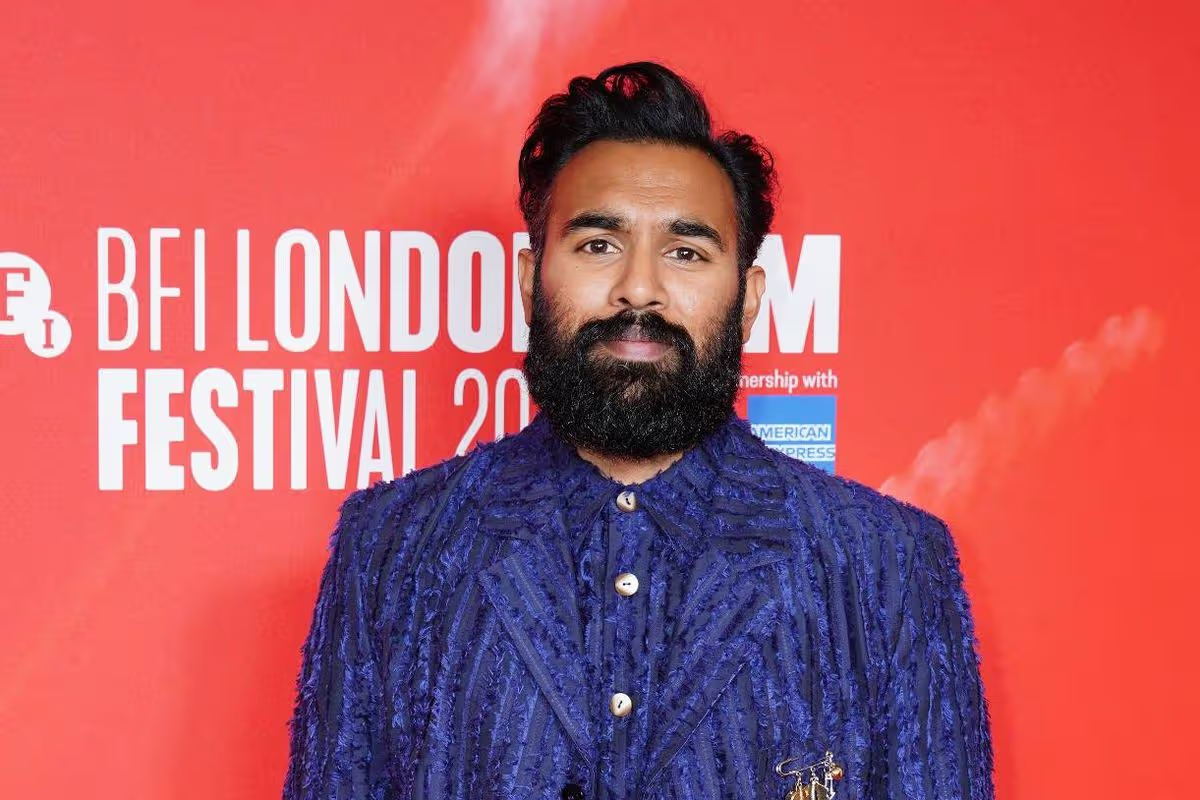
Himesh Patel has landed a major new TV role(Image: PA)
Former EastEnders star Himesh Patel has landed a significant role in the highly anticipated reboot of The X Files.
The 35-year-old, who first captured the nation’s hearts as a youngster on the popular BBC soap portraying Tamwar Masood in Albert Square, is now setting off on a completely different adventure.
He has been cast in Ryan Coogler’s reboot pilot of The X Files, which American streaming giant Hulu gave the go-ahead to last month. Himesh will appear alongside BAFTA-nominated actress Danielle Deadwyler, playing two ‘vastly different’ FBI agents.
Danielle, 43, boasts an impressive array of accolades, particularly for her compelling portrayal of Mamie Till-Mobley in Till. She was nominated for the Best Actress in a Leading Role award at the 2023 BAFTA Film and TV awards, reports OK!.
According to a logline by Variety, the reboot focuses on: “Two highly decorated but vastly different FBI agents (Deadwyler, Patel) form an unlikely bond when they are assigned to a long-shuttered division devoted to cases involving unexplained phenomena.”
The publication also confirms that both stars will portray entirely new characters, rather than reimagined versions of Fox Mulder and Dr. Dana Scully, according to the Daily Mail. David Duchovny and Gillian Anderson brought those iconic roles to life across 11 series.
Original creator Chris Carter is returning as executive producer, while Jennifer Yale (The Copenhagen Test) has been appointed as showrunner. Meanwhile, Coogler is scheduled to write, direct and produce, drawing inspiration from his mother’s fondness for the original series.
This marks another collaboration between Himesh and Danielle, having previously worked together on the 2021 miniseries Station Eleven.
Himesh left EastEnders in 2016 after his character ran away with then-girlfriend Nancy Carter. Two years later, he shot to international fame by securing the lead role in Yesterday, which became his breakthrough film.
In 2024, Himesh disclosed that struggling with acne while working on EastEnders as a teenager ‘felt like the worst thing in the world‘.
Speaking openly to British GQ Hype, the actor looked back on his remarkable career journey, including his early years on the legendary soap.
He told the publication: “I’ve been doing this since I was 16, When you’re a teenager and you have acne, it’s the worst thing in the world.
“But then when you’ve got acne in front of millions of people every week in EastEnders, it’s a whole other thing. ‘It was rough. You just kind of feel defective because you’re surrounded by actors. Everyone gets spots, but I just felt the pressure.”
BACK to the Future and Top Gun actor James Tolkan has sadly died aged 94.
The Hollywood star passed away peacefully at his New York state home on Thursday after a celebrated TV and stage career spanning 55 years.
Sign up for the Showbiz newsletter
Thank you!
Hollywood actor James Tolkan has passed away aged 94Credit: GettyTolkan as tough teacher Mr. Strickland in Back to the FutureCredit: AlamyThe actor was also known for his role as Commander “Stinger” Jardian in Top GunCredit: Getty
His death was announced on the Back to the Future website as well as by writer-producer Bob Gale, but a cause was not provided.
Tolkan played the slacker-hating teacher Mr. Strickland in the first two films of the iconic 80s franchise, returning as the grandfather of his character in the third.
He was also known for his performance as air group commanding officer “Stinger” Jardian in the 1986 blockbuster Top Gun, alongside stars Tom Cruise, Val Kilmer and Meg Ryan.
Tolkan’s five-decade-long career started in the 1960s series Naked City and called it a day after the 2015 film Bone Tomahawk.
He was born on June 20, 1931 in Calumet, Michigan and served in the brutal Korean War as part of the United States Navy.
The young sailor was discharged due to a heart condition and set his sights on becoming an actor, earning a BA in drama from the University of Iowa.
An obituary on the Back to the Future website says that he then “got on a bus for New York City with $75 in his pocket, went to work on the docks and enrolled with both Stella Adler and Lee Strasburg to learn the art of acting.
“He spent 25 years in New York theater, from off off Broadway to the great White Way.
Most read in Entertainment
“Notably, he was a member of the original ensemble cast of the ‘Glengarry Glen Ross’.”
Tolkan moved his career from New York to California and Canada in 1983 when he was cast in War Games.
After his roles in Back to the Future and Top Gun, Tolkan had a dual role in Woody Allen’s Love and Death.
Tolkan is survived by his wife of 54 years, Parmelee – whom he met in the off-Broadway play Pinkville in 1971 – and his three nieces in Des Moines, Iowa.
The late actor adored animals and the obituary asked for donations in his memory to your local animal shelter, animal rescue organisation or Humane Society chapter.
ANASTACIA Kingsnorth has been a queen of social media since starting her YouTube Channel aged 11 – but now a fierce backlash is threatening her empire.
The Brit content creator, 25, has ventured into podcast hosting, has written her own book and been the face of many ad campaigns.
Sign up for the Showbiz newsletter
Thank you!
Anastacia Kingsnorth has faced huge backlash following her latest ad collaborationCredit: tiktok/@anastasiakingsnorthShe used AI to create a short clip promoting German brand Air UpCredit: tiktok/@anastasiakingsnorthFans have called out the fact she seemingly used AI – which is not environmentally friendlyCredit: tiktok/@anastasiakingsnorthThe 25-year-old rocketed to fame on YouTube aged 11Credit: Getty
Her height meant she could scoop up a pink water bottle branded with the Air Up logo before she took a sip.
The slurp appeared to transport her into both a new location – the roof of Buckingham Palace – and a new denim pinstripe outfit.
She wrapped the clip by visiting locations including St Paul’s Cathedral and Big Ben.
Yet on TikTok, her followers have alleged she has used AI to create the scenes – and claimed the technology goes against Air Up’s environmentally friendly credentials.
Criticisms came from two angles – the nature of content creation as a creative process, and also for AI using huge volumes of water, seemingly going against green principles.
The Sun has gone to Anastacia’s rep for comment.
Fans have claimed Anastacia, whose content focusses on lifestyle, leisure and beauty, has abandoned the “creative process” with her latest venture.
One TikTok user, who works in marketing, ranted: “Honestly, I am not happy about it.
“And I don’t think a lot of people are, judging by the comments on the video”.
The Influencer Insider – Get all the gossip on all your favourite online stars
Want to know more about the influencer who faked cancer? Read all about Brittany Miller and her sham career here.
We have all the inside gossip about Ladbaby mum’s incredible weight loss here.
And talking of weight loss, we know all about what is going on with B&M queen Becki Jones, which you can read up on here.
If health influencers are your thing, then read this on the man behind Tonic Health and his dubious claims here.
She added: “It really cuts down on what content creation really is.
“If you work in marketing like myself you will know that this is totally wrong.
“The whole point of content creation is creative process”.
Fans of Anastacia, who has previously collaborated with ITV bosses for a Love Island promotion, continued to take to the comments in fury.
One simply posted: “Who’s idea was this?? Omg”.
A second mused: “I do like some of their content, but Ana and her family don’t seem hugely aware or maybe even that bothered by environmental issues unfortunately. (a LOT of consumption etc!)”.
A third added: “The funny part about it is , the ad is for a refillable water bottle (to try and tackle plastic waste etc) but then it the ad is literally AI!! you couldn’t write it honestly”.
A fourth mused: “The hypocrisy of these ‘influencers’ is gross tbh”.
“I’m surprised the brand approved it to be honest…says a lot about them too! I think being aware of the environmental impact AI has is important too”.
And another user surmised: “For me its the context of the ad being for a refillable water bottle while using AI which uses tons of water. It is a little ironic”.
Campaigners have previously flagged the significant carbon, energy and water use that AI requires.
Previously, Sasha Luccioni, climate lead at AI company Hugging Face told The Guardian: “What I’m worried about is that we’re deploying AI in such a way that we don’t have a good idea of the energy use.
“We’re essentially operating on the hypothesis that it’s not a problem – or that if it is a problem it will somehow be solved – instead of getting ahead of it.”
While Anastacia has posted the video to her Instagram grid, the brand is yet to feature it on their page.
Others have called out the fact AI could take away from her ‘creative’ process as a content creatorCredit: tiktok/@anastasiakingsnorthShe is rumoured to have a net worth of more than £1millionCredit: Getty
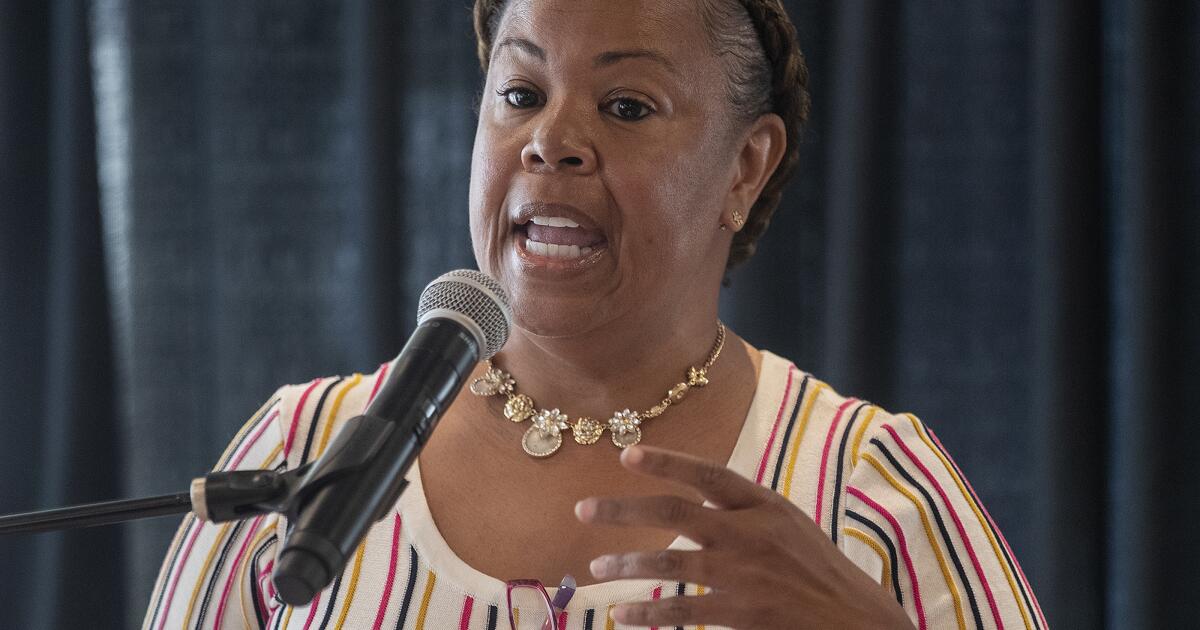
Los Angeles County’s chief executive officer Fesia Davenport, who has been on medical leave since October, has announced that she will resign next month.
In a LinkedIn post, Davenport said she was leaving county service to “focus on my health and wellness.”
A notice to the Board of Supervisors provided to The Times Saturday said she had decided to step down April 16 “based primarily on hereditary and ongoing health issues initially uncovered late last year, the risks of which have become clearer based on more recent medical testing and consultation with my doctors.”
She said the “extraordinary amount of time and energy” required of the chief executive played into her decision.
“Although I originally assumed that I would be able to return to my post, I now know that I would be unable to do the job as it deserves to be done while also prioritizing my health,” she told the supervisors.
Supervisor Kathryn Barger issued a statement Saturday saying, “I’m disappointed by Fesia Davenport’s decision to step down. Her dedication and accomplishments over nearly three decades have left a lasting impact on Los Angeles County.”
Davenport, who was appointed to the county’s top job in 2021, received an undisclosed $2-million settlement last summer to compensate for damage to her “professional reputation” from Measure G, a voter-approved ballot measure that will soon eliminate her position.
In a July 8 letter, released by the county counsel in October through a public record request, Davenport said she sought $2 million in damages for “reputational harm, embarrassment, and physical, emotional and mental distress caused by the Measure G.”
Under Measure G, which voters approved in 2024, the county chief executive, who manages the county government and oversees its budget, will be elected by voters instead of appointed by the board. The elected county executive will be in place by 2028.
Measure G “has had, and will continue to have, an unprecedented impact on my professional reputation, health, career, income, and retirement,” Davenport wrote to county counsel Dawyn Harrison. She said it had “irrevocably changed my life, my professional career, economic outlook, and plans for the future.”
At the time the payout was disclosed, Davenport had begun a medical leave, saying at the time she expected to be back to work early this year.
A lengthy email to her staff, posted on LAist, which first disclosed her resignation, said the unspecified “health crisis” has affected three of her siblings and posed risks to her that “have become clearer based on more recent medical testing and consultation with my doctors.”
Her brother Raymond died in 2018 after “experiencing a sudden health crisis,” she said. Last year, two more of her sisters survived the same health crisis, but one will now require 24-hour care for the rest of her life, she said.
“Although I am not out of the woods yet, I am thankful to the Board for granting me the space to focus on my health and to arm myself with the knowledge I needed to make informed decisions,” she wrote.
The office of chief executive issued a statement Saturday saying chief operating officer Joe Nicchitta will continue serving as acting chief executive officer while Davenport remains on medical leave.
“We appreciate Fesia’s nearly three decades of service to Los Angeles County and all that she has accomplished on behalf of its residents and communities,” the statement said.
Davenport listed a number of accomplishments in her letter to the board, including setting up five new departments maintaining the county’s credit rating when other jurisdictions were being downgraded and “balancing the budget while developing a financing plan to compensate sexual assault victims — the largest settlement of its kind in American history.”
That payout has now come under scrutiny after a Times investigation found that some plaintiffs had been paid to join the class-action lawsuit.
“In that darkness, I found myself,” says Mexican pop star Kenia Os, who collaborated with indie icon Carla Morrison and transmuted online hate into her fiercest album yet
Mexico’s reigning pop princess is entering her femme fatale era.
Kenia Os played up her cute and cuddly side in her previous album, 2024’s “Pink Aura” — but with her upcoming album “K de Karma,” out Friday, Os is putting that era to bed.
Os, born Kenia Guadalupe Flores Osuna in Mazatlán, Sinaloa, has made an incredible leap from social media influencer to Latin Grammy-nominated pop star in under a decade. Yet at 26, she has weathered countless storms — whether facing incessant body-shaming online, or defending her pop music pivot from cynics in the comments.
In an interview with the L.A. Times, the Mexican superstar explains how she transmuted that energy into her most fierce and sexy musical offering yet.
“In that darkness, I found myself,” the 26-year-old says over Zoom from her hotel room in Los Angeles — where she’s traded her signature blood red dress for a black tank top and jeans as she prepares for her upcoming tour.
“This album is totally about empowerment. There’s an energy behind it of divine justice… What’s for you belongs to you.”
Os had plenty of examples of powerful pop divas to draw inspiration from. Though she fondly recalls her mother playing the music of the late Selena Quintanilla and Jenni Rivera, Os was tapped into American talents like Miley Cyrus — namely her “Hannah Montana” alter ego — as well as Demi Lovato, Ariana Grande and Selena Gomez.
“I’ve always been inspired by a lot of female artists,” she recalls. “The power that women wield has always been at the core of who I am an artist.”
As Os looks back on being a teen girl who shared her life gratuitously on YouTube, and later social media platforms like Instagram and TikTok, she still feels the sting of body-shaming comments. Os reveals during that time, her weight would fluctuate from dealing with hormonal issues such as PCOS (polycystic ovary syndrome) and endometriosis.
“It’s very difficult how people judge you for your body, if you gain weight, have a tummy, or whatever,” she says. “It was very complicated to grow from a young girl into a woman [in a world] where you are how you look. Currently, I feel at ease because thanks to the universe, I’ve had the opportunity to take care of my body, understand it, and heal from within. It’s made me a stronger woman.”
Another hurdle that Os had to overcome in her career is an ongoing stigma placed on influencers-turned-pop stars. Although artists like Addison Rae, Tate McRae, and Charli D’Amelio successfully forged their careers as performers on social media before taking center stage, Os sees Mexico as being less receptive to that kind of career transition as the U.S. or Canada.
“In Mexico, it hasn’t been that easy for people to understand that I am a singer,” she says. “I’m not the best, but I’m here, I have my fandom that I love and we’re doing incredible things together.” (Os is referring to her massive following online, which includes 26.3 million fans on TikTok and 18.2 million fans on Instagram.)
When Os first launched as a singer in 2018, some immediately took aim at her dance moves and the digitally augmented sound of her voice. Os admits that she’s come a long way since that first iteration with rigorous singing and choreography lessons; three years later, she signed a record deal with her current label Sony Music Mexico, and released her glossy debut album, “Cambios De Luna,” in 2022.
Since then, Os has come to rule the Latin pop scene in Mexico, boasting multiple sold-out tours of the country.
“It’s been difficult for people to understand that I started out making content — which I still love to do — and suddenly, I’m [also] a singer,” she says. “They try to devalue my work and what I do as an artist. At the end of the day, I’m still as hard-working as I [was] on day one. I’m on the charts with a lot of artists. I’ve put myself in a position where I can say that I’m fully dedicated to music. For me, it’s been a beautiful journey where I’ve learned a lot about myself and I’ve grown so much.”
Os achieved an international breakthrough with her visual album, 2022’s “K23.” The following year she scored a viral hit on TikTok with the flirty “Malas Decisiones,” which has over 340 million streams on Spotify. Os would soon tour the U.S. for the first time, and at the 2023 Latin Grammy Awards, “K23” was nominated in the category of long form music video.
“I loved that experience, and I believe it would be beautiful to win a Grammy, but now I’m more dedicated to my fans, my music and what I like without expecting an award,” she says.
Last year, Os also pulled a page from Taylor Swift’s playbook by releasing the concert film “Kenia Os: La OG” in theaters in both the U.S. and Mexico.
Now with “K De Karma” out, Os is finding strength in further harnessing a sexier and more defiant alter ego — which she introduced in her cinematic music video for “Belladona.” Directed by Daniel Eguren, the visuals emphasize the fatality of her femininity with a car explosion and suited-up businessmen bending to her will.
“It doesn’t feel like that I have to act or pretend to be sexy or sensual,” Os admits. “Now, this feels very natural. It feels very me. This is who I am at this moment as a woman.”
She adds that her album was also inspired by a marginalized group that stuck by her side through her ups and downs: the LGBTQ+ community. As a show of gratitude to the girls and the gays, Os transforms from “Belladona” to Primadonna in vogue-ready house bangers like “Slay,” “Problemática,” and “Boom In Your Face.”
“I wanted to do something fun and different for the LGBTQ+ community,” she says. “I’m very happy and grateful for the love they’ve given me. I believe they’re my most passionate fans — they’re the kind of fans that are there for you the most. To put on concerts where you know most of the crowd belongs to that community, it’s an incredible experience.”
A surprising collaborator on “K De Karma” is Mexican singer-songwriterCarla Morrison. She co-wrote the tender love song “Tú y Yo X Siempre” with Os; the two also collaborated on “Días Tristes,” which is reminiscent of the moody ‘80s pop anthem by Jeanette, “El Muchacho De Los Ojos Tristes.”
Os reveals that she and Morrison worked on a third song that they’re still putting the finishing touches on. “It was very magical to work with her,” she adds. “She’s an exceptional and incredible human being with a big heart. She told me very beautiful words that motivated me all of last year. Those were words that I needed to hear.”
On the personal side, Os is also relishing her relationship withPeso Pluma. After collaborating on the reggaeton track “Tommy & Pamela” in 2024, the two Mexican artists went public as an item last year. Os has even accompanied Pluma on a few stops of his recent Dinastía Tour.
“It’s very beautiful to know that you have a partner that knows what you go through and that can give you advice from his experiences as well,” Os says. “I love that I can count on someone that understands me completely and supports me.”
As for now, she is raring for the Mexican leg of her “K de Karma Tour” that kicks off on April 25 in her hometown. She is hoping to eventually add some dates in the States.
“I want to grow more internationally with this album,” says Os. “As long as my fans love and enjoy this album, that’s all that matters to me.”
On a night when my family watched Austin Reaves pull off the miraculous intentional missed free throw put-back basket on the way to a thrilling Laker overtime win against the Denver Nuggets, we talked more about the newest Lakers super fan on the way home. Kudos to Bill Plaschke for recognizing and capturing the power of 6-year-old Jackson Tuyay’s passionate cheering that helped ignite the laid-back crowd and inspire the Lakers to a huge comeback win. As a lifelong Laker fan since the same age as Jackson it was so awesome to see such innocent and authentic passion for the Lakers. In an arena full of stars in the stands and on the court it was the voice of a 6-year-old that reminded us how awesome it is to be a Lakers fan for life!
Paul Stapleton Los Angeles
To quote Jackson Tuyay, “Yeaaaaah!” It looks like the Lakers can play some defense and beat the better teams after all.
Vaughn Hardenberg Westwood
The Los Angeles Times welcomes expressions of all views. Letters should be brief and become the property of The Times. They may be edited and republished in any format. Each must include a valid mailing address and telephone number. Pseudonyms will not be used.
OTTAWA — Linus Ullmark made 23 saves for his second shutout of the season and the Ottawa Senators blanked the Ducks 2-0 on Saturday.
Michael Amadio and Thomas Chabot scored for Ottawa. Shane Pinto had two assists. It was the 14th shutout of Ullmark’s career. The Senators have won four of five.
Nick Cousins won a battle along the boards, which sprung Pinto down the ice. Pinto fed Amadio on a 2-on-1 and he made no mistake, beating Husso short-side 3:54 into the second period.
At the 9:21 mark of the second period, the Senators capitalized on a turnover. Pinto intercepted a pass and found Chabot in the high slot for his seventh goal of the season and second career short-handed score.
Anaheim challenged for goaltender interference but was unsuccessful.
Warren Foegele had a couple of chances from close range in the opening period, but just couldn’t settle a bouncing puck.
Husso then stopped Amadio on a short-handed 2-on-1 breakaway.
Amadio later drew a penalty, but Husso made a big glove save on Tim Stutzle on the Senators’ power play.
Up next: Ducks: at Montreal on Sunday; Senators: host San Jose Sharks on Sunday.