Caracas

Caracas and Washington Agree to ‘Reopen’ Venezuelan Airspace, American Airlines to Resume Flights

Passengers at Simon Bolivar International Airport in Maiquetia, La Guaira State, Venezuela. (AFP)

Caracas, January 30, 2026 (venezuelanalysis.com) – Venezuelan Acting President, Delcy Rodríguez, welcomed the “lifting of restrictions on the country’s commercial airspace”, which had been in place since last November, following talks with the US government.

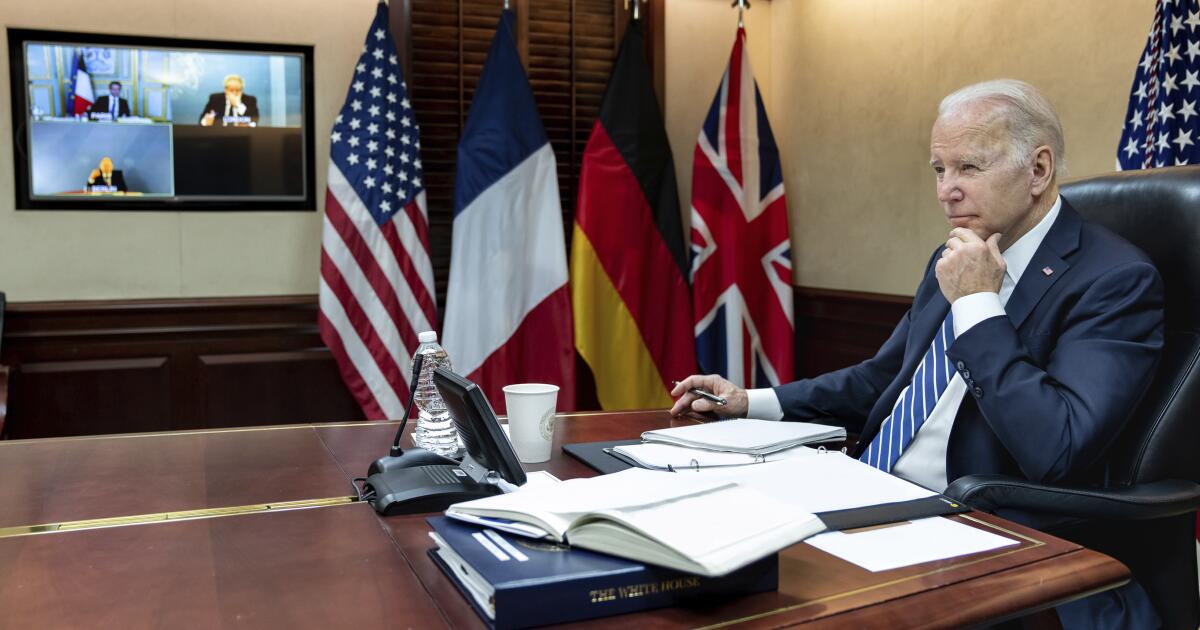
Speaking at a rally on Thursday, Rodríguez said she received a phone call from US President Donald Trump and Secretary of State Marco Rubio to address the issue as part of a “working agenda” between the two countries that includes the resumption of diplomatic relations.

“Let all the airlines that need to come, come. Let all the investors that need to come, come”, Rodríguez said. She assumed office following the kidnapping of President Nicolás Maduro and his wife, Cilia Flores, amid the January 3 US attacks.

Earlier in the day, Trump ordered the reopening of “all Venezuelan airspace” to commercial flights, stating that US citizens would be able to travel safely and that Venezuelans wishing to return—either permanently or temporarily—would also be able to do so.

Trump ordered Secretary of Transportation Sean Duffy and other officials, including military commanders, to ensure the reopening was “immediate.”

Trump went on to describe the exchange with his Venezuelan counterpart as “highly positive,” emphasizing that “relations have been very solid and very good.” He further sought to reassure international travelers by stressing that they would be safe while in Venezuelan territory.

Following the announcements, the US Federal Aviation Administration confirmed that it had removed four Notices to Airmen (NOTAM) in the Caribbean region, including one related to Venezuela. “They were issued as a precautionary measure and are no longer necessary”, the agency argued.

Likewise on Thursday, American Airlines announced its intention to resume daily direct flights between the United States and Venezuela, becoming the first US airline to take such a step.

The company, which began operations in Venezuela in 1987, stated that the resumption of the route would be subject to approval by both US and Venezuelan authorities, as well as the corresponding security assessments.

American Airlines Chief Commercial Officer Nat Pieper said the company was eager to offer its customers the opportunity to reunite with family members and to generate new business and trade opportunities with the United States.

Direct flights between the two countries were suspended in 2019, the same year diplomatic relations between Washington and Caracas were severed after the US recognized Juan Guaidó as Venezuela’s interim president.

Last November, Trump declared that Venezuela’s airspace should be considered “completely closed.” A flurry of NOTAM warnings led international airlines to suspend their connections to the Caribbean country. Caracas withdrew licenses from several companies, including TAP, Iberia and Turkish Airlines.

On January 13, Panama’s Copa Airlines announced the resumption of flights to and from Caracas.

Embassy reopening in the works

Secretary of State Marco Rubio said on Wednesday during a Senate hearing that he expects the United States to reestablish a diplomatic presence in Venezuela in the near future. “We have a team there evaluating it, and I think we’ll be able to open a diplomatic presence soon,” he said.

Rubio argued that such a presence would allow Washington to “have real-time information and interact not only with government officials but also with members of civil society and the opposition.”

Laura Dogu has so far been appointed to lead the diplomatic mission from the Venezuela Affairs Unit in Bogotá, Colombia. According to CNN, the CIA is looking to establish a “foothold” in the South American country that may preced the formal arrival of US diplomats.

For her part, Rodríguez has defended her administration’s diplomatic engagement with the United States, while also urging Venezuelan political sectors to resolve their differences and internal conflicts without “orders from Washington.”

Edited by Ricardo Vaz in Caracas.


Source link

Delcy’s Quagmire | Caracas Chronicles

Not even a month in since the Trump administration captured Nicolás Maduro and the left-wing, Bolivarian regime led by Delcy Rodríguez has been “extremely cooperative.” “Thus far,” the White House said, she has “met all of the demands and requests of the United States”— around favoring American oil companies and investment, stopping narco-trafficking, and severing subordinance to extra-hemispheric rivals.

“Thus far” being the operative word. While in the immediate aftermath she appears to have stabilized the regime while cooperating with Trump, over the medium to long-term, Rodríguez’s attempt to satisfy US demands will likely require her to modify the very structures and processes—i.e., the mechanisms—that have underpinned the regime’s internal cohesion and stability for over two decades. 

Delcy, indeed, is in a quagmire.

Alas, that Delcy’s regime has remained stable is unsurprising. The Venezuelan regime has historically turned threatening crises—from mass protests, an unprecedented humanitarian crisis, and economic sanctions to a parallel government recognized by over 50 nations—into recurrent opportunities for consolidation. These survival mechanisms rely on loyalty coerced from civilians and engineered among military and political elites by weaponizing access to dwindling economic rents—from oil, as well as agriculture and minerals, illicit networks, and dependence on China, Russia, and Iran. The scale of this systemic pillaging is vast: since the Chávez era only, at least $300 billion have been diverted to fuel these survival mechanisms.

On the other hand, these are the mechanisms that the Trump administration expects to be overhauled or abolished. While these structures and processes were originally established by the regime, for the regime, the post-Maduro reality is that Rodríguez must now modify them with the US, for the US.

Rodríguez must also redirect scarce resources from pillaging into investments in ruined public infrastructure (especially roads, highways, freeways) and even in basic services like water or domestic gas.

Hence, Delcy’s quagmire. Reforming these mechanisms enough to satisfy the economic and security interests of a forceful (and eager) US administration risks, for regime elites, severing their access to rents that engineer their loyalty. Yet, mere superficial reforms risk Delcy’s fate with her new patron. Trump himself made it clear: “All political and military figures in Venezuela should understand what happened to Maduro can happen to them, and it will happen to them if they aren’t just, fair, even to their people.” 

Take for instance Trump’s demand that Venezuela grants privileged access to US oil companies and allows the US to have control over allocation from the financial proceedings. For Rodríguez to fully meet this, it will likely require much more than a mere reform of the Hydrocarbons Law. It necessitates the regulation, hiring, mobilization, and investment of resources to rebuild a decades-neglected, decimated national electricity grid, with 75% of Venezuelans suffering daily outages. Furthermore, Rodríguez must also redirect scarce resources from pillaging into investments in ruined public infrastructure (especially roads, highways, freeways) and even in basic services like water—to which only 36% of Venezuelans have daily access—or domestic gas, where over 70% receive it once every three months! And, on top of this, there is a Frankenstein-type financial system that has also presented opportunities for graft and provides all but predictability.

Washington’s expectation that scarce resources be directed toward restoring infrastructure and basic services while overhauling structural financial distortions to ensure US firms operate safely and profitably will strongly constrain Rodríguez’s ability to allow her inner circle to siphon these limited rents. Rodríguez will likely have to interfere with the very mechanisms of survival that have kept the elite unified: to satisfy Trump jeopardizes internal unity; to preserve internal unity risks facing the fate of Maduro.

During a recent visit to Caracas, CIA Director John Ratcliffe demanded Rodríguez to ensure Venezuela is no longer a “safe haven for America’s adversaries, especially narco-traffickers.” But this requires eliminating the shadow economies that have largely sustained the regime. As oil output collapsed by about 90%, it has been demonstrated that the regime has pivoted to illicit enterprises—along with the regime’s acquiescence to criminal groups in their territory. Illegal mining and drug trafficking, for instance, have reportedly accounted for over a quarter of Venezuela’s economy.

The Trump administration’s eagerness (or impatience) over reforms in Venezuela, plus its immense leverage and willingness to exercise it, may eventually make it realize the need for a swift and credible timeline for re-institutionalization and electoral reform.

Furthermore, China has become the regime’s primary economic patron, absorbing sanctioned crude. With the US interdicting shadow-fleet vessels in the Caribbean and demanding a severance of ties with Beijing, regime insiders—particularly the military, which controls critical pillars of domestic oil production and gasoline distribution—now face unprecedented structural strain. The security apparatus is similarly entangled with Russia, a partner that occupied key strategic voids left by the US and provided the military with hardware and gray market financial networks. These networks will not disappear overnight. Trump’s demand for a strong severance from illicit and foreign ties will likely be a turbulent process.

Complying too strongly with Trump will likely require Rodríguez to cut off many of the elites—and their related structures—that, by enriching the regime, have averted threatening crises for over 20 years. Complying too little with Trump to avoid overhauling internal-regime mechanisms, however, risks the ire of a Trump administration that has staked significant political capital on Venezuela’s transformation, especially in a critical election year.

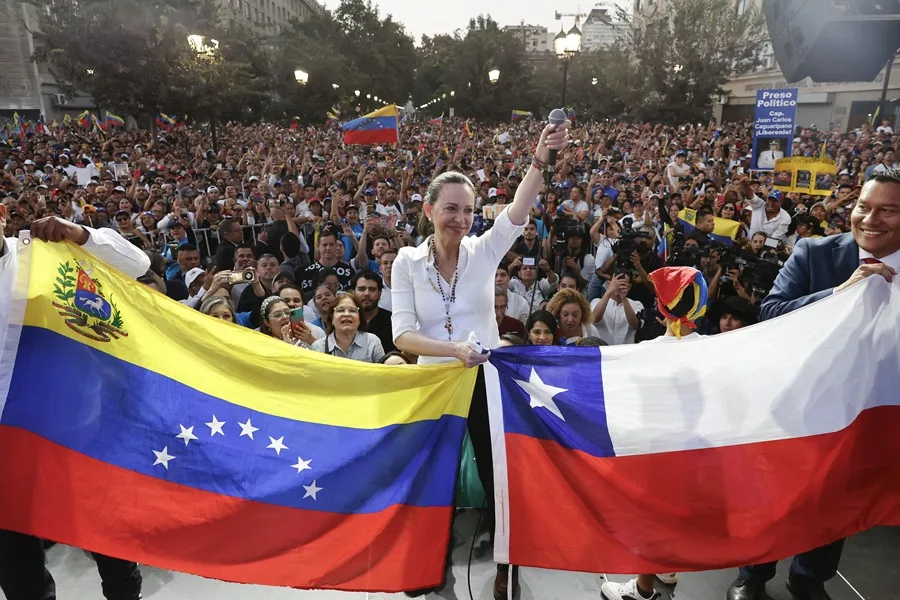
Will the regime, as María Corina Machado suggested, “be forced to dismantle itself”? While not ensuring democratization, altering survival mechanisms to avoid the fate of Maduro could open junctures towards political liberalization. Conversely, prioritizing elite loyalty and existing mechanisms of enrichment over US expectations of reform and improvement risks unilateral dislodgment. While neither path guarantees democracy in the short term, the Trump administration’s eagerness (or impatience) over reforms in Venezuela, plus its immense leverage and willingness to exercise it, may eventually make it realize the need for a swifter and credible timeline for re-institutionalization and electoral reform.

Amidst this uncertainty, rather than a narrative of Delcy’s uncontested longevity, the politics of post-Maduro Venezuela suggests that the possibility of critical junctures favoring a transition toward democracy remains, today, more resonant than ever.

Source link