Car parks

Nature reserve leading to secluded beach ‘looks like something out of a smuggler’s novel’

This walk near Bridlington boasts a stunning 3km woodland trail leading to a secluded pebble beach with towering white cliffs, creating a tranquil bay perfect for peaceful coastal walks

Stretching across 184 acres, this woodland trail guides you to a stunning beach whilst offering abundant wildlife sightings throughout your journey.

Danes Dyke nature reserve in Bridlington boasts the Headland’s most extensive woodland area, with a pathway leading directly to the coastline.

This distinctive sea and cliff habitat has earned protection as a Site of Special Scientific Interest, whilst the woodland itself gained official Nature Reserve designation in 2002.

Nature Reserve Walk

Visitors can start by using the spacious Pay and Display car park, which accommodates up to 80 vehicles. Located off Flamborough Road in Bridlington, simply follow the brown tourist signs pointing towards Danes Dyke.

Keen ramblers often favour the 3km circular route starting from the car park, though numerous alternative paths and distances are available to suit your preferences.

Save on the best holiday cottages in Yorkshire

This article contains affiliate links, we will receive a commission on any sales we generate from it. Learn more
Sykes cottages

From £31 per night

Sykes Cottages

See the deals

Famous for its dramatic landscapes, historic cities, hearty food, and rich cultural heritage Yorkshire is just waiting to be explored. Sykes Cottages has a large number of properties to choose from with prices from £31 per night.

After meandering through approximately 1km of woodland, you’ll emerge at the beach, where sweeping vistas of the bay unfold before you.

One visitor shared on TripAdvisor: “You must visit Danes Dyke if you are visiting the area. Even the drive to it is eerie but magical, and the huge dyke itself is spectacular and steeped in history.”

They added: “You can just imagine how the Vikings tried to etch out the area to make it a land of their own. The beach is great too.”

Nestled within the woodland reserve lies a remarkable prehistoric earthwork, comprising a substantial bank and ditch that cuts through the landscape.

While unconfirmed, it’s thought to date back to the Iron Age, serving as a defensive structure that severed the Flamborough Headland.

Beach

Yet the true highlight of this excursion is undoubtedly the final stop, Danes Dyke Beach. The sand is reached via a tarmacked path that’s rather steep and has suffered damage from water and debris, requiring extra care when navigating.

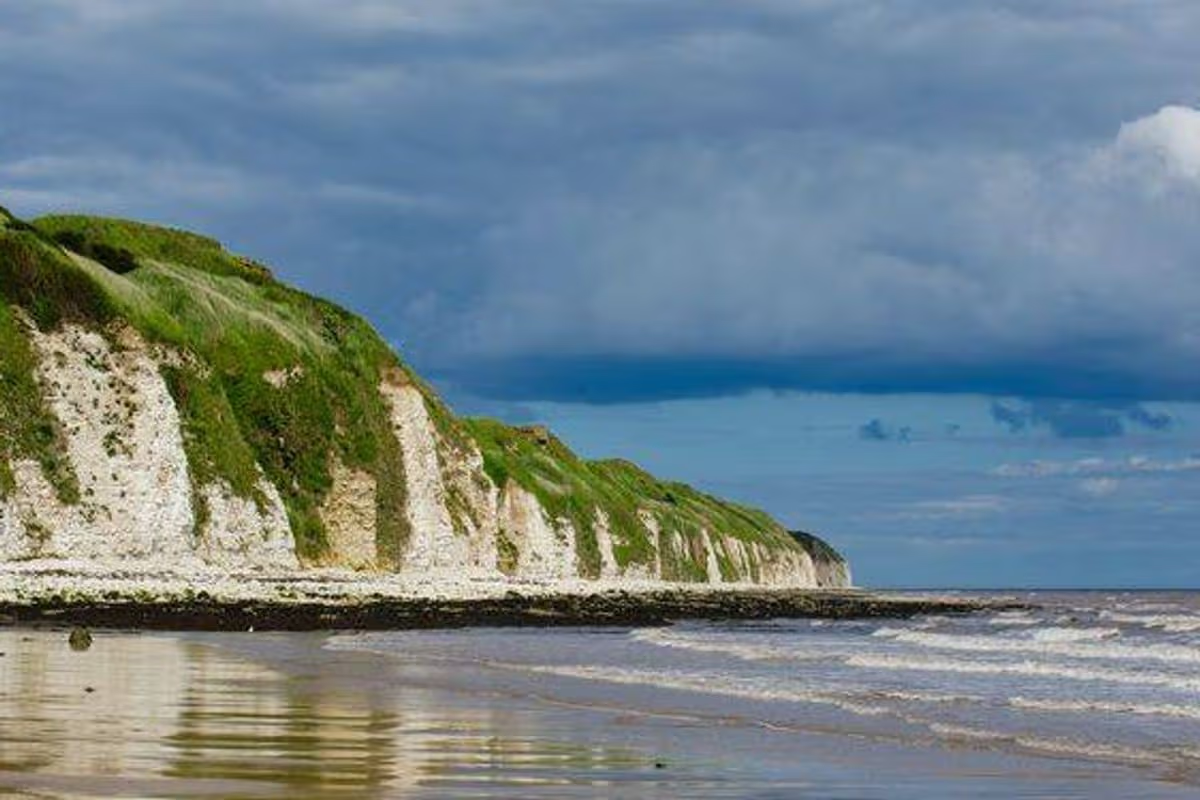
The undisputed showstopper here is the towering white cliffs that dominate the predominantly shingle beach. They enclose the shoreline, confining it to its own sheltered bay, which explains its popularity amongst adventurers seeking solitude and peace.

Its secluded bay is reminiscent of the type of area once used for smuggling contraband, ferried in by vessels from the ocean. The surrounding Flamborough Head area does indeed boast a smuggling heritage, with its famous ‘smuggler’s caves’ situated at neighbouring Thornwick Bay.

One rambler said: “The day that my wife and I visited Danes Dyke, there was not another person in sight, just the two of us, with the waves crashing in and the sea salt from the spray in the air – pure magic.”

Another commented: “Lovely clean beach with a picturesque cliff line and white pebbles. A short walk from the car park. Great place for the dog to run. Hardly anyone about.”

Place to rest

The closest village to Danes Dyke is picturesque Sewerby, which boasts several traditional and welcoming pubs. Following a peaceful and leisurely stroll, you can tuck into hearty pub fare or pause for refreshments at The Ship Inn or The Old Forge, or even treat yourself to highly-rated fish and chips from Blu Savannah along the seafront.

The Ship Inn features a spacious beer garden perfect for summer months, which stretches towards the cliff edges. It’s built quite a name for itself with its range of cask ales and is renowned locally for staging various live music performances and beer festivals, making it an ideal spot to visit following a weekend ramble.

Ensure our latest headlines always appear at the top of your Google Search by making us a Preferred Source. Click here to activate or add us as your Preferred Source in your Google search settings.
Source link

Eerie green attraction hidden in woodlands is huge underground labyrinth

The Hoffman Kiln near Settle in the Yorkshire Dales is a moss-covered derelict kiln hidden in woodlands, though the site is currently undergoing development with limited access

For those looking for an extraordinary walking adventure, this trail delivers something truly unique and proves ideal for youngsters who relish uncovering secret treasures along the way.

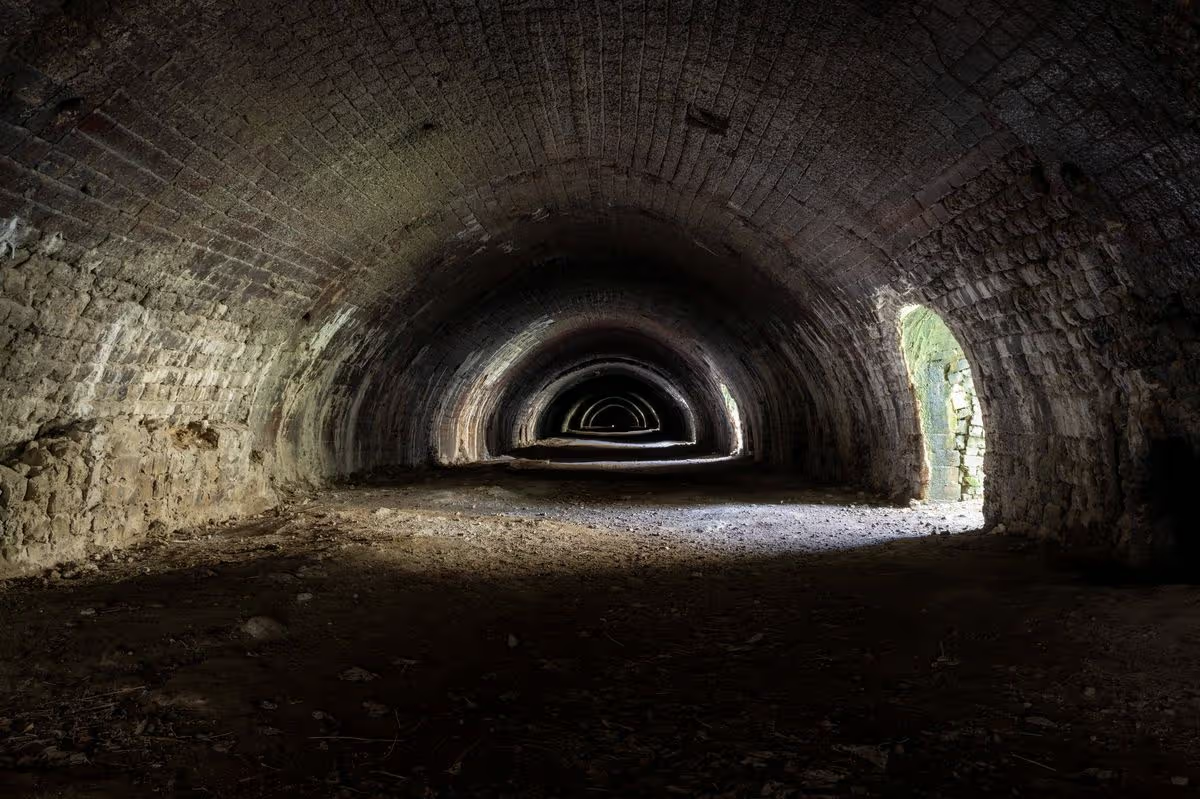
Nestled within the forests on the outskirts of Settle in Yorkshire lies Hoffman Kiln, an abandoned kiln that once served as an insulated furnace for burning raw materials.

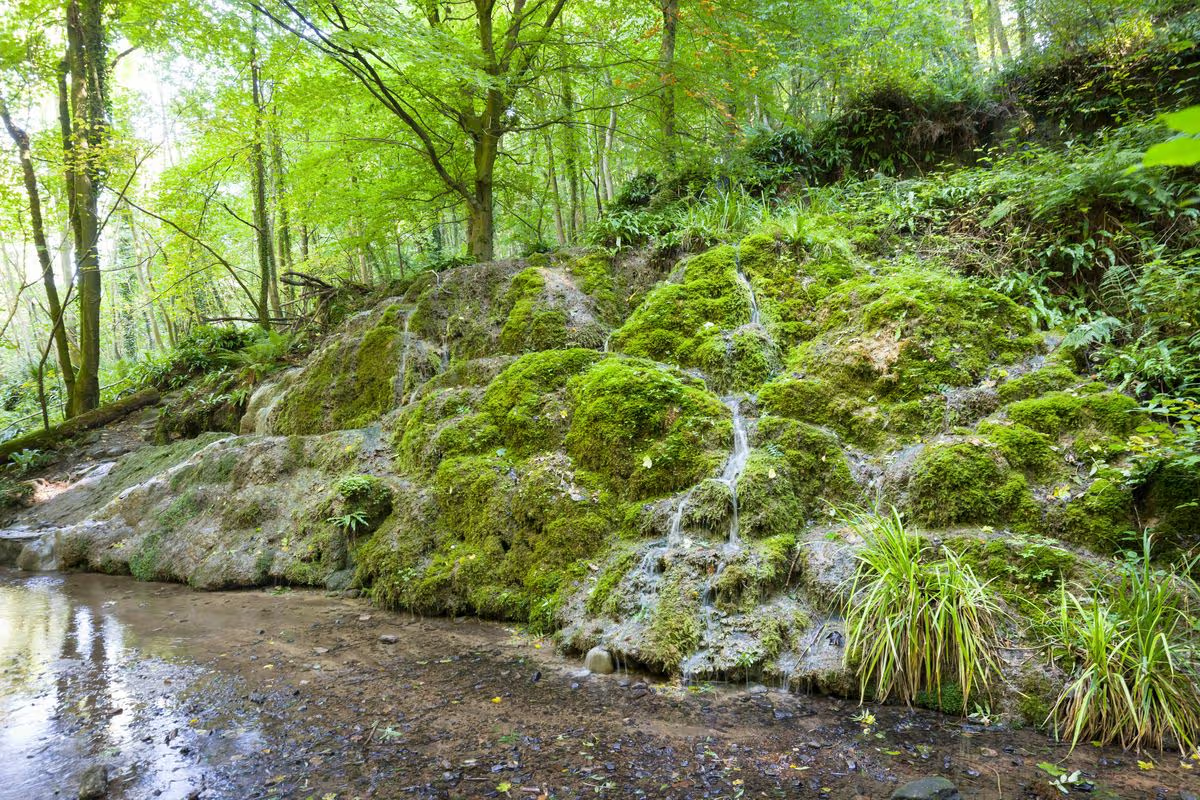
Today, it resembles an subterranean grotto constructed from brickwork and blanketed in moss, lending the location an unsettling verdant atmosphere.

Its past remains somewhat enigmatic to locals, though additional points of interest dot the vicinity, designated as part of the ‘Craven Limeworks trail’.

The kiln formed part of what was previously an industrial complex, where Yorkshire workers toiled in appalling conditions before nature eventually reclaimed the site, leaving it abandoned.

Save on the best holiday cottages in Yorkshire

This article contains affiliate links, we will receive a commission on any sales we generate from it. Learn more
Sykes cottages

From £31 per night

Sykes Cottages

See the deals

Famous for its dramatic landscapes, historic cities, hearty food, and rich cultural heritage Yorkshire is just waiting to be explored. Sykes Cottages has a large number of properties to choose from with prices from £31 per night.

Historical background

The nineteenth century witnessed the establishment of the railway route connecting Settle to Carlisle, which subsequently generated fresh industrial prospects for the region.

The railway regularly transported coal inbound to process the limestone extracted from the scar, then carried away the completed product.

Enormous quantities of stone were once processed here, yet now it lies concealed. The kiln was previously operated by labourers whose responsibility involved shovelling burnt lime onto wagons positioned mere feet away in the sidings.

Describing the harsh working conditions, Senior Historic Environment Officer Miles Johnson explained: “It’s quite pleasant space to be in now but whilst it was in use it was probably absolutely grim. Lime is really nasty, caustic stuff to work with.

“The lime burners who worked in here had to cover every inch of their body with rags and clothing to try to keep the lime dust out. When lime dust meets moisture or water it reacts and generates a lot of heat.

“So if you’ve got lime dust on your body, and you’re shovelling and starting to sweat, then you’d start to blister and burn quite quickly.”

Exploration today

Proposals to develop the land housing the kiln have been under consideration for some time. Back in 2021, it emerged that Craven District Council’s planning application had received approval, with the site now earmarked for commercial development.

Prior to construction commencing, one visitor wrote on TripAdvisor: “Really loved my visit. I was amazed by how big the site is, considering it isn’t promoted very well. There is lots to explore, and the information boards are very helpful.

“The car park for the site is also quite large, so there is plenty of room. It felt quite exciting to be exploring the vast Hoffmann kiln by torchlight, and I was very pleased to see that it hadn’t been littered or abused.”

Yet more recently, visitors have suggested that the feeling of discovering a secret, unspoilt location has vanished, with construction work now progressing at full pace. A later review states: “These unusual kilns are well worth a visit.

“However, as other reviewers have mentioned, at the moment the area is a building site. There is access to the Hoffman kiln, but you need to cross the building site and walk along beside the railway.”

To find the kiln, you can use the postcode BD24 9NU, where you’ll find it just off the main road between Langcliffe and Stainforth.

Source link

UK hidden valley home to wild ponies and Iron Age hillforts

Nestled in the Cheviot Hills, College Valley in Northumberland is home to wild ponies, roe deer and ancient ruins including Iron Age stone circles, hillforts and a well-preserved Romano-British settlement

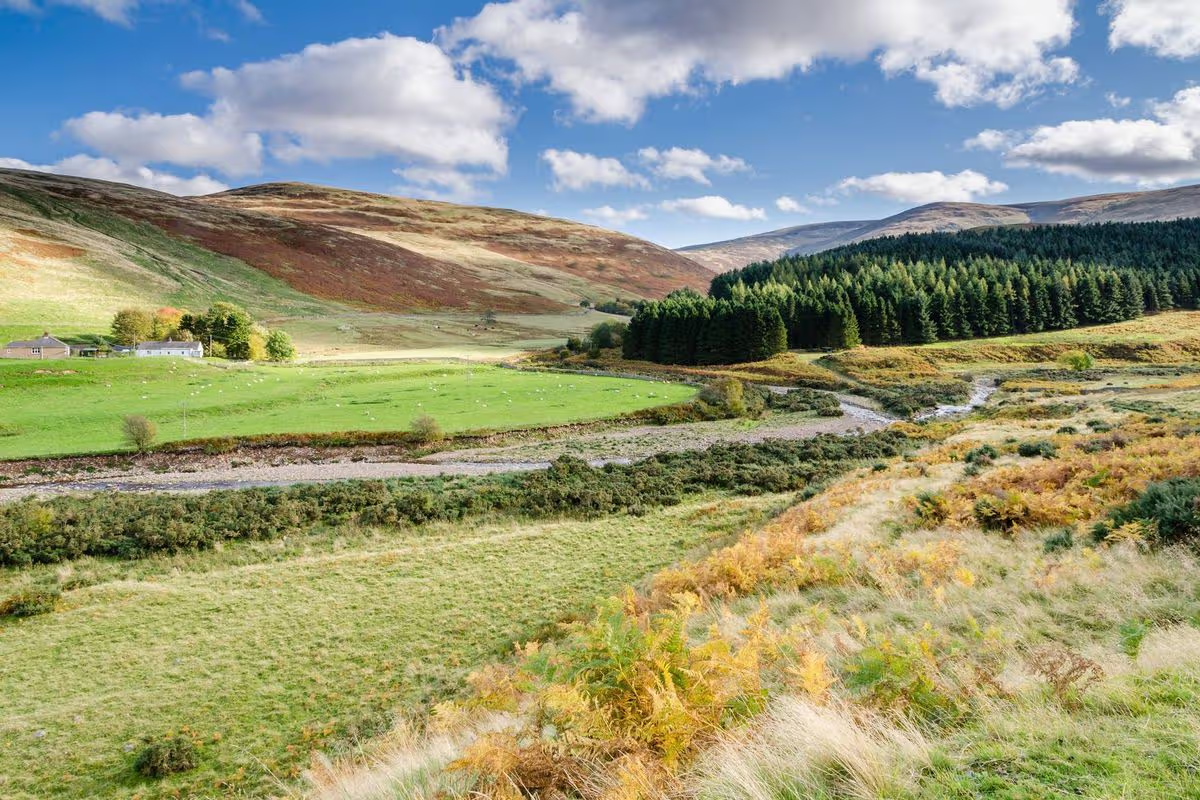
Tucked away in the Northumberland hills lies the lush College Valley, teeming with stunning wildlife and ancient ruins.

Maintained by the College Valley Estate, this expanse of countryside is immaculately kept and readily accessible for both walkers and cyclists.

Wandering through the meadows, you’ll encounter wild ponies, roe deer, hares and wild goats, according to Northumberland National Park.

Hethpool

Leaving your vehicle at the Hethpool car park, you can discover remnants of an Iron Age stone circle. The area offers picnic spots along Great Hetha, with ancient fortifications perched above the Hethpool Linn Pools, where you can take a refreshing dip during summer, reports Chronicle Live.

Best Northumberland holiday cottage deals

Sykes Cottages

From £38 per night

Sykes Cottages

See the deals

Northumberland is famed for its rugged coastline, ancient castles and unspoiled natural beauty. Sykes Cottages has a range of places to stay starting from £38 per night

Come autumn, you can witness sea trout and salmon jumping upstream towards their spawning grounds.

Approximately 2,800 years ago, during the Iron Age, communities built timber roundhouses surrounded by substantial wooden palisades. Opposite Hethpool House sits a well-preserved Romano-British settlement.

History

People have lived in this area at least 7,000 years, with traces of late Stone Age farmers.

During the early Bronze Age, when temperatures were warmer than today, farming reached higher altitudes. Various terraced fields and numerous burial cairns survive from this era.

Given its closeness to Scotland, the valley suffered significant devastation during battles between English and Scottish armies throughout the 14th to 16th centuries. Border Reiver raids resulted in the land being plundered.

Hillforts

Northumberland claims Britain’s highest concentration of hillforts, and College Valley is no different. Scattered across the Cheviot Hills, these ancient Iron Age fortifications provide a glimpse into prehistoric settlements.

As an added benefit, they also offer spectacular vantage points overlooking the undulating hills.

Wildlife

Covering more than 12,000 acres, College Valley hosts an abundance of wildlife including flora, trees, birds and even Exmoor ponies to admire.

Bear in mind – mobile phone signal is virtually non-existent and only 12 vehicles are permitted entry daily. If you fancy a longer break surrounded by nature, you can reserve one of the numerous holiday cottages on offer.

Visitors can see everything from the extinct volcano Cheviot Massif to the enchanting Collingwood Oaks.

Tucked away at the valley’s head, just a mile from the Pennine Way, lies Mounthooly Bunkhouse.

Housing 24 guests across three rooms, this charming bunkhouse offers walkers, cyclists and all visitors unique accommodation in a beautifully remote part of the valley.

With beds starting from £17 per night, you may be inclined to prolong your visit and discover more of what the valley has to offer, safe in the knowledge you can return to hot showers and a log burner.

One TripAdvisor review stated: “What a wonderful valley to visit, either walk or to drive through, they only allow 12 cars a day to drive through and you need a permit £10 you can book online.

“It was so peaceful and in May the colour of the gorse it just beautiful. The memorial to the pilots that crashed during WW2 over the Cheviot Hills is so moving.”

Source link

Ancient woodland filled with waterfalls, grottos and hidden ruins

The 120-acre National Trust site near Masham features 18th-century grottos, waterfalls and ruins hidden within ancient woodland on the edge of the Yorkshire Dales

In North Yorkshire, near the market town of Masham, lies an expansive woodland haven brimming with hidden gems that stretch back to the 18th century.

Hackfall Woods stands as a magnificent 120-acre expanse of ancient forest, attracting visitors with its enchanting atmosphere and stunning views. The Woodland Trust-owned site holds grade 1 listed status, owing to its 18th-century remnants and historic garden features.

Perched on the fringe of the picturesque Yorkshire Dales, Hackfall nestles within a dramatic and rugged gorge carved by the River Ure.

Following years of neglect and deterioration, the woodland has been carefully restored to its original splendour, now welcoming keen walkers and explorers across Yorkshire.

History

Whilst today Hackfall appears as an untouched wilderness, it was actually carefully crafted to achieve this wild aesthetic by a renowned landscaper in 1731.

John Aislabie bought the estate and, working with his son, reimagined it as a seemingly natural landscape dotted with decorative features for visitors to admire.

Save on the best holiday cottages in Yorkshire

This article contains affiliate links, we will receive a commission on any sales we generate from it. Learn more
Sykes cottages

From £31 per night

Sykes Cottages

See the deals

Famous for its dramatic landscapes, historic cities, hearty food, and rich cultural heritage Yorkshire is just waiting to be explored. Sykes Cottages has a large number of properties to choose from with prices from £31 per night.

The design was cleverly conceived to showcase the pre-existing panoramas and natural characteristics, amplifying the area’s inherent beauty.

Yet following their considerable efforts, Hackfall endured decades of abandonment and disrepair, before being purchased in 1932 by an owner who stripped the site of its trees. The structures had fallen into disrepair, and flooding had worn away the once-stunning water features.

In 1989, the Woodland Trust stepped in to save the site, securing it on a lease of nearly 1,000 years, with support from organisations including the Hackfall Trust and English Heritage.

Since that time, this magnificent woodland has been formally designated as a Site of Special Scientific Interest, alongside recognition as ancient semi-natural woodland.

It continues to attract visitors from throughout the country, eager to witness the waterfalls, sculptures and historic ruins.

One visitor recounted their experience on TripAdvisor, writing: “Hackfall is a beautiful and peaceful woodland brimming with nature, trees, plants, birds, wildlife, streams, ponds, castle ruins, great views on a hillside alongside the River Ure. It’s a super place for peace and quiet, for individuals, for families, suitable for all ages to explore and get away from it all.”

Wildlife

Nature enthusiasts are guaranteed a memorable experience at Hackfall, renowned for the remarkable diversity of species that inhabit the area.

From bird life to flora and insects, the woodland is bursting with biodiversity, and countless sightings have been documented here, particularly by dedicated birdwatchers.

The website showcases an extensive array of creatures visitors might encounter, from kingfishers to dippers, grey wagtails and woodpeckers. Guests can also anticipate spotting stoats, foxes, badgers, butterflies and little lemon slugs.

Access

Given the challenging landscape, featuring numerous steep footpaths, Hackfall is only suitable for those confident navigating steps and inclines, as wheelchair access isn’t available.

The woodland offers up to four entry points, with the two most frequented located at the top of the site and featuring the steepest routes.

To access these, you’ll need to start from the minor road linking Grewelthorpe to Masham. The entrance has no barriers, and as you follow the trail, you’ll quickly discover it’s a gentle gradient with a handful of steps.

Free parking is available nearby at the Woodland Trust car park, situated roughly half a mile before Grewelthorpe Village. Some walkers alternatively opt to park in the village of Masham.

Bear in mind there are no toilet facilities within the woodlands themselves, with the closest public toilets located back in Masham. While this is typical for most woodland rambles, visitors will be delighted to learn that not only are they welcome, but their dogs are too.

Source link

Ancient ‘supernatural’ stone fort with stunning views across five counties

The site is an ancient ring fort perched on a hilltop in County Donegal, offering panoramic views and steeped in Irish legends dating back centuries

The Inishowen peninsula isn’t merely the location of Ireland’s most northerly point, but also hosts one of the country’s most captivating monuments, perched atop a hill in Donegal.

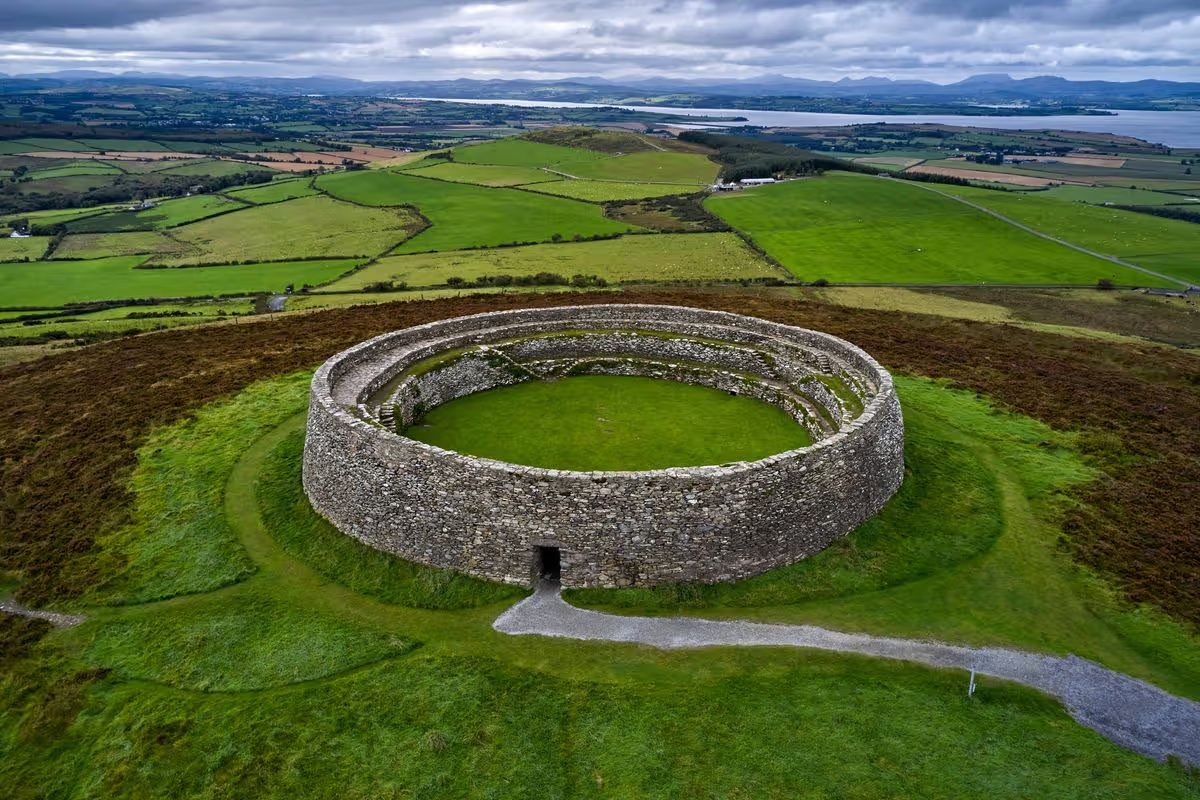
The Grianán of Aileach attracts numerous visitors to Ireland, shrouded in mystery as the 6th or 7th century ring fort is steeped in folklore and legend.

Standing majestically on an 800-foot hilltop, the monument historically served as the Royal residence of the Northern Uí Néill, a dynasty descended from a legendary Irish monarch.

Constructed from robust, thick dry-stone walls, it provides breathtaking panoramic views. While much of the structure underwent restoration in 1870, it’s believed to have been initially built during the 6th-7th century, with the earthworks themselves tracing back to 1700 BC.

Legends

Research indicates the fort may have been originally built before AD 800 by an ancient Irish king, Áed Oirdnide, king of Cenél nÉogain. He governed what would have been a modest kingdom situated within the Inishowen peninsula.

From this imposing hilltop, he would have commanded views across his own lands whilst simultaneously surveying the new Donegal territories now under his control. Essentially, the structure functioned as a political declaration and a means to assert additional authority.

Best UK holiday cottage deals

This article contains affiliate links, we will receive a commission on any sales we generate from it. Learn more

Sykes Cottages offers a wide range of handpicked holiday homes across the UK and Ireland, from cosy countryside retreats to stunning coastal escapes. Prices start from £27 per night

Another tale traces the fort’s origins back to the era of the Tuatha de Danann, a mythical race said to possess supernatural powers, also referred to as the Fae Folk. The Dagda, one of the revered and divine chieftains of the Tuatha, shares a particular link with this ancient location.

Legend has it that following the death of his son Aodh, the Dagda built a stone fortress to serve as both burial place and memorial. The Metrical Dindshenchas, an ancient Irish manuscript, is thought to explain the site’s name, lending credence to this tale.

The Setting

From the fort, there are sweeping views across both Lough Foyle and Lough Swilly, and locals claim that on particularly clear days, you can glimpse up to five of Ulster’s nine counties.

One impressed guest said: “This ring fort was the most impressive one I’ve ever seen. The views from here highlight why it would have been constructed in this location. They are beautiful. The structure is in very good condition. I stood in the middle and just turned around to appreciate this site.”

Whilst the panoramas from the modest peak are stunning, perched at 250 metres above sea level, there’s virtually nothing surrounding it apart from unspoilt countryside. The only nearby facility is the visitors’ car park, making for a straightforward stroll to the main attraction.

Another visitor said: “This is a beautiful landmark and well worth a visit. Thankfully, the monument is now open, and we were able to go early in the evening. They also have a wishing well that our kids were able to throw money into. Well worth a visit.”

Local attractions

If you fancy a pit stop during or after your journey, the liveliest spot in the vicinity is Londonderry. Located just a 15-minute drive from The Grianán of Aileach, it boasts numerous restaurants, pubs and cafes where you can grab some food.

Alternatively, if you’re enjoying the countryside and prefer somewhere more off the beaten track for refreshments, venture towards Newtown Cunningham. Here you’ll discover several eateries, including Scarpello and Co, Coyles Bar and Restaurant and Kate’s Kitchen.

Should you wish to continue your adventure, just an eight-minute drive from the monument will take you to Inch Wildfowl Reserve along the coast. This stunning location features a magnificent 8 km wilderness walk and hosts an impressive array of wildfowl and geese.

Source link

UK’s cheapest city for pints at £3.60 is nestled in beautiful countryside

Tbut there are still some places where you can get a drink for less than £5.

The cost of a pint continues to creep upwards. Tracking down a boozer flogging pints for under a fiver has become nearly impossible, yet certain spots still won’t leave your wallet crying.

A report from takepayments has uncovered which UK cities offer the most wallet-friendly drinking experience. The research examined 34 major UK cities against 16 affordability measures, encompassing housing, transport, wages, and discretionary spending (such as the cost of a pint).

Each location received a score out of 10 for overall affordability, identifying where Brits can enjoy the cheapest tipple.

Derby emerged as the nation’s most affordable city for a beverage, with pints priced at a mere £3.60. That’s a bargain when you fancy unwinding after a day discovering what the city has to offer – and there’s loads to see.

Situated in the East Midlands within Derbyshire and hugging the River Derwent, Derby serves as an ideal starting point for venturing into the picturesque British countryside, boasting numerous walking routes and cycling trails, reports the Express.

Among the finest is the Vicar Wood & Mackworth loop accessible from Markeaton Park. This 6.1km ramble takes roughly 90 minutes, beginning at the Mundy Playcentre car park.

Winding through farmland and parks, it’s ideal for families. There’s also Calke Abbey – a dilapidated stately home boasting sprawling gardens and a remarkable natural history collection.

Originally an Augustinian Priory, the property was acquired by Sir Henry Harpur in 1622. The estate remained in the family for generations, and from 1924 onwards, Calke was left largely untouched, though it underwent gradual modernisation.

Today, the National Trust has preserved the house much as it was, offering a fascinating glimpse into life from a bygone era.

After exploring the residence and grounds, visitors can stop by the on-site cafe and gift shop – ideal for picking up mementos.

Source link

UK seaside lido that was turned into a car park could be about to become a lido again

The historic venue was paved over to provide beach parking, but a bold plan could see the lido revitalised for year-round swimming could “bring new life to the town” according to a local organisation

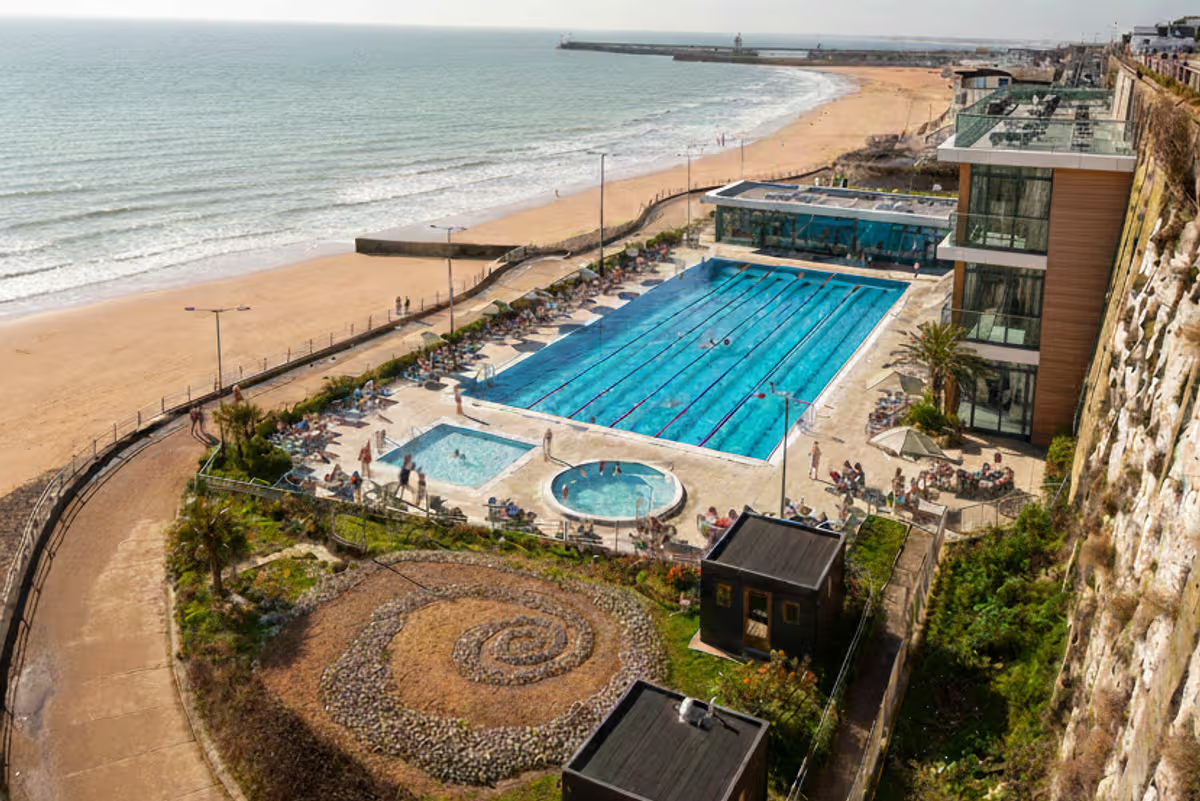
In 1935, the Marina Bathing Pool opened in a stunning seafront location, offering locals and tourists the chance to take a dip in fresh seawater. Over the years, it brought in huge crowds, especially at weekends when families would flock to the area to cool off, take a dive, or even learn to sail in the boating pool. Its was part of a complex that even had a space for dancing and a roller rink.

But despite its beautiful Art Deco architecture, the lido, like so many others eventually closed down and the site was abandoned. In the 1970s, it was paved over to create a car park, in a twist worthy of a Joni Mitchell song.

However, the council owned car park is now being considered by Thanet District Council for disposal, and an enthusiastic non-profit organisation is hoping to take it over, potentially bringing back the lido for year-round outdoor swimming.

Non-profit organisation Heritage Lab Ramsgate said its in “early discussions” with a developer to create an outdoor swimming complex at the site, which it hopes would “help re-establish Ramsgate as a distinctive coastal destination”.

A spokesperson for Heritage Lab Ramsgate said: “Thanet has a thriving sea and open-water swimming culture, with people of all ages swimming year-round for wellbeing, connection and community. Outdoor swimming is no longer niche – it’s part of a wider shift in how people travel and spend time at the coast.

“When combined with elements such as saunas, cafés and social spaces, an outdoor pool can become something more than a place to swim — it can be a year-round destination that locals and visitors return to again and again.

“The former Marina Bathing Pool site offers a rare opportunity to reinstate a high-quality outdoor swimming facility in a location that has been associated with leisure and seaside holidays since the mid-1930s.”

A Facebook post showing potential plans for the site received a number of positive comments, with one saying: “Brilliant idea- kudos to the person/persons who conceived this project. It makes perfect sense to restore what once was a vital part of the town.” Others shared fond memories of the original lido, and one commenter said: “Used to spend all day in the old marina pool when it was there. Mum never saw us from 0900 until about 1730.”

However, one comment questioned the feasibility of the project, asking: “But would people use it? Did it originally close for lack of use? Like when people try to reopen village pubs and it struggles and struggles, many different landlords come and go eventually they close again. Not all but most. Personally I’d like to see this happen but I doubt I’d actually use it. Good luck I say.”

A report is due to be submitted to Thanet District Council ahead of a February 26 meeting recommending a marketing exercise which will invite proposals from a range of parties who may be interested in the site. The council previously explored transforming the site for leisure use.

READ MORE: Disney Wish cruise ship to sail from UK in 2027 – I’ve been onboard and it’s unrealREAD MORE: I stayed at the UK’s lowest-rated budget hotel – one paid-for feature stunned me

A spokesperson for Heritage Lab Ramsgate added: “If a scheme were to progress, it would need to be developed responsibly and in close consultation with local residents, with careful attention paid to affordability, accessibility and ensuring the benefits are widely shared.”

The non-profit has also nominated the site to be designated an Asset of Community Value (ACV), which prevents the asset owner from selling it for up to five years, unless the nominating group has a chance to bid for it. Giving the car park ACV status will also give locals more of an opportunity to formally have their say over what happens to the site.

Have a story you want to share? Email us at webtravel@reachplc.com

Source link

UK’s smallest station is shorter than a train carriage — only 1 door can open

You’ll have to hurry

The UK’s tiniest railway station measures just 15 metres in length and can only accommodate one train door opening at a time. Among the hundreds of stations dotted across Britain linking villages, towns and cities, one holds the record for being the smallest.

Beauly Station in the Scottish Highlands claims this unique distinction. Its platform is considerably shorter than a single train carriage, meaning passengers must be given advance notice if they wish to alight there.

An announcement alerts travellers to plan accordingly if Beauly is their destination.

The station boasts a rich heritage, having first opened its doors in 1862. But by 1960, fierce competition from local bus services forced its closure.

Content cannot be displayed without consent

More than four decades later, following determined campaigns by local residents, it reopened. Since 2002, Beauly Station has featured a modest 10-space car park, bicycle storage and shelter facilities, reports the Express.

Whilst there’s no ticket office, the diminutive station remarkably handles approximately 35,000 passenger journeys annually, according to figures from the Carno Station Action Group. Located roughly 10 miles west of Inverness, it serves ScotRail services.

Trains calling at Beauly travel onwards to Wick, Kyle of Lochalsh, Dingwall, Invergordon, Ardgay and Inverness.

The station wasn’t always this compact, having previously boasted two platforms. Originally constructed for the Inverness to Invergordon line in the 1800s, it featured twin platforms, a passing loop and a goods shed.

During the 1960s, Beauly was amongst numerous stations axed. All stations between Inverness and Dingwall were shut down.

The solitary platform at Beauly standing today was constructed in 2002 when the station reopened. The reinstatement scheme came with a £250,000 price tag.

Class 158 trains normally operate on this line, which extend beyond Beauly’s platform length.

Usually, only the front door of the train opens to allow passengers to board and alight.

Source link