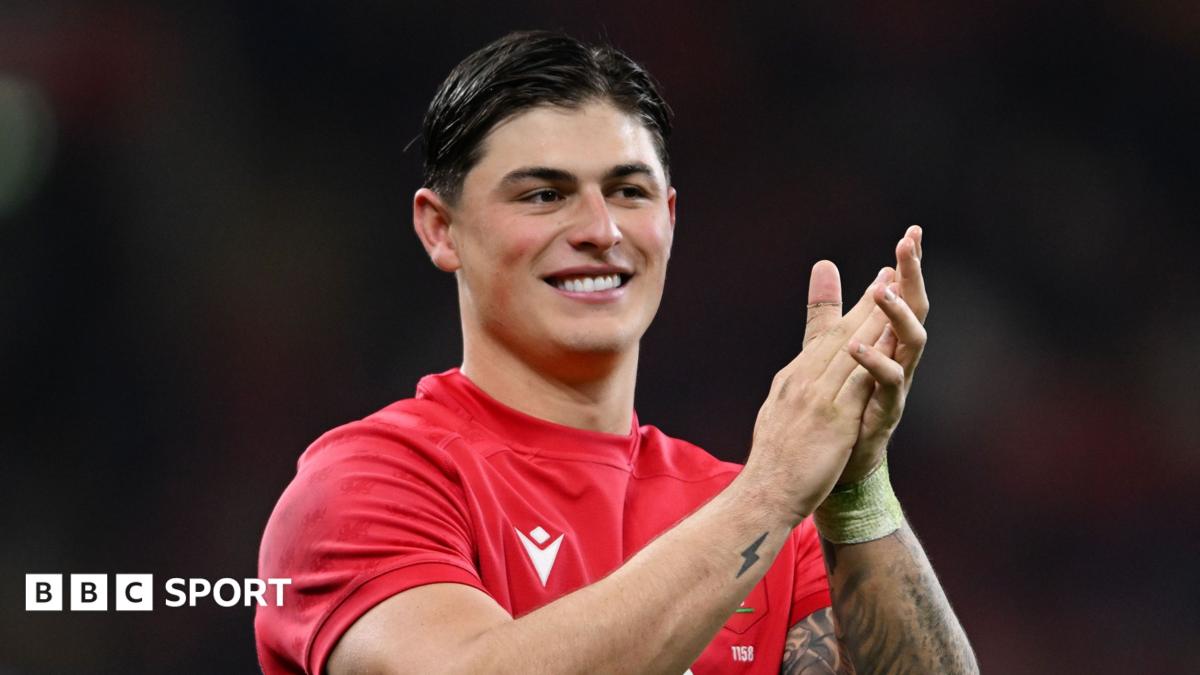
It seems hard to believe that someone of Rees-Zammit’s profile would get starstruck, but such is the humility of the player.
His return to form, and to the wing, has been a breath of fresh air to Welsh rugby, who sorely missed their poster boy when he left to pursue a career in American football in 2024.
“Whenever I get an opportunity to put on the red shirt it’s always a dream come true,” said the Bristol player.
“Those two years [in the NFL] made me realise how much I missed playing rugby and representing my country and obviously moments like Saturday are there to celebrate, with family, friends and the nation.
“That was the best atmosphere I have ever been a part of. The fans were unbelievable.
“They play a massive part in the way we play and how much momentum we can build in the game. The 55,000 that were there made such a noise.
“Every turnover, every hold up over the line, they really cheered us on to keep doing it over and over again.”
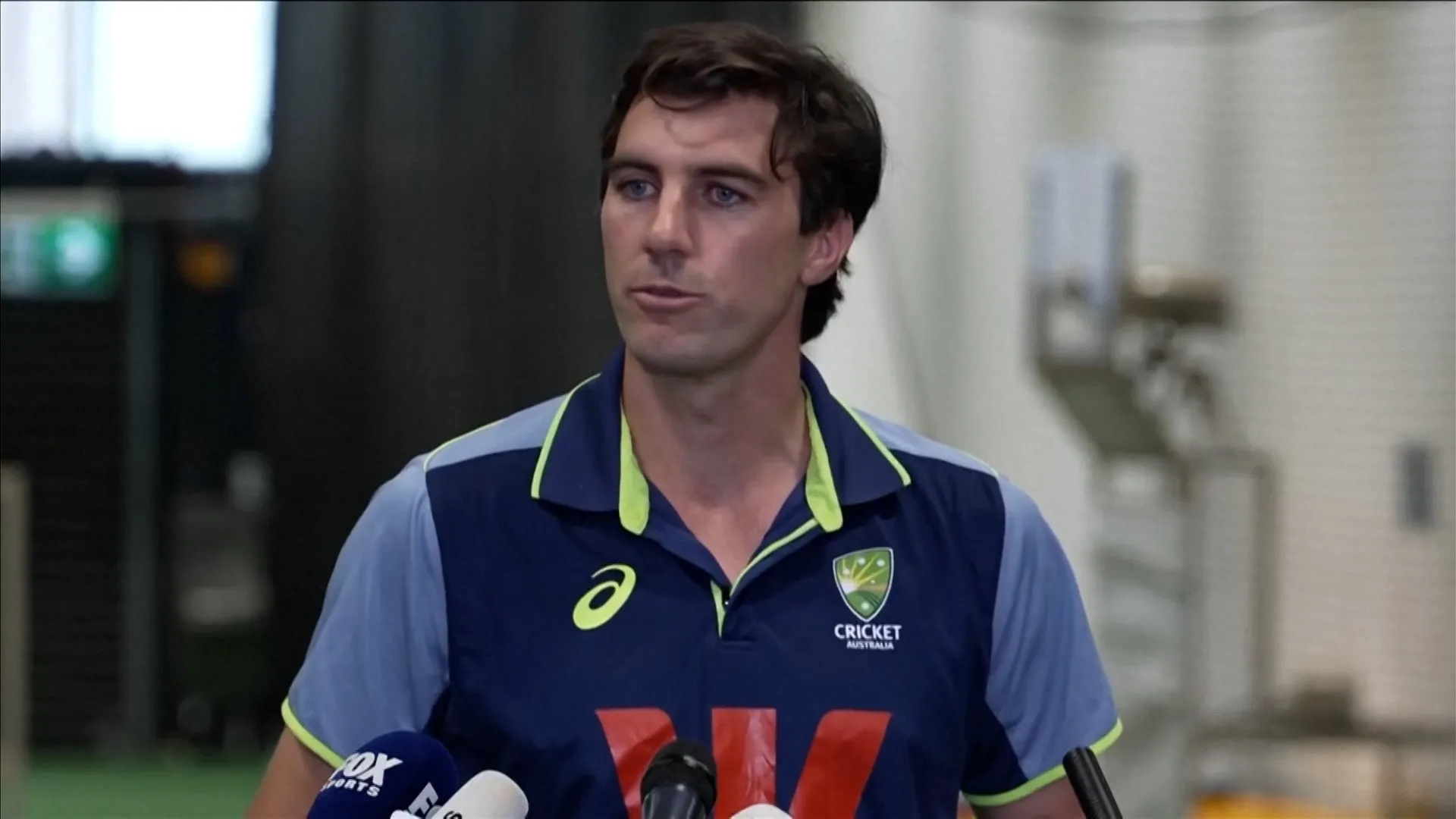
Australia cricket captain Pat Cummins has rejected claims by ex-teammate Usman Khawaja linking him to the 2018 ball-tampering scandal, denying any involvement in the use of sandpaper. Cummins said he feels betrayed after Khawaja made the allegations in a new book.
Australia captain Pat Cummins has again denied any involvement in the plot to use sandpaper on the ball in a Test against South Africa in 2018, describing the allegations in Usman Khawaja’s autobiography as “utter nonsense”.
Former Australia batsman Khawaja, whose autobiography was published on Tuesday, said last weekend that all the players in the team knew about the plot to rough up the ball with sandpaper to make it swing. His latest comments triggered calls for a new investigation into the incident.
Recommended Stories
list of 3 itemsend of list
The scandal centred around the third Test in Cape Town, but Khawaja also claimed the tactic was used in the second Test at Port Elizabeth.
“When he says we all knew, if by that he means that we knew sandpaper was going out in the field, he’s 100 percent wrong. I’ve said that consistently for the last eight years,” Cummins told a news conference in Sydney on Friday.
“I did not know that was happening, but I think Usman actually says things that are actually far more serious than that.
“He says that I and others were architects of a scheme to ball tamper with sandpaper. That’s complete and utter nonsense.
“There was no master plan around using illegal methods,” he added. “There’s no grand plan. There’s no team meeting. There’s no bowlers saying ‘this is what must happen’.”
Cummins and fellow bowlers Mitchell Starc, Josh Hazlewood and Nathan Lyon all denied publicly in a 2021 statement that they were aware of the plan.
Darren Lehmann, who was the Australian head coach at the time, has also denied any knowledge, as has former batting coach Graeme Hick, who called Khawaja’s allegations “absolutely false”.
Cummins spoke for 68 minutes on Friday, taking every question from the media and saying he would never discuss the ball-tampering incident again.
The Australia skipper also took exception to Pakistan-born Khawaja’s contention in the book that the colour of his skin and background had prevented him from becoming Australia captain.
“I think of all the things that I’ve read this week, I think that’s actually the most serious,” he said.
“Him saying that if you’re Australian captain, you have to be a certain skin colour, I couldn’t disagree with that statement any more.”
Steve Smith and David Warner, the then-Australia captain and vice-captain, were banned by Cricket Australia from elite cricket for a year for their roles in the ball-tampering.
Opening batter Cameron Bancroft, who brought a piece of sandpaper onto the field, received a nine-month suspension for his part in the ball-tampering.
“I was genuinely shocked this week when I found out that Usman admitted that he told Cam to be careful when using sandpaper. That’s not the Usman that I know,” Cummins said.
“It’s not the Usman that has helped rebuild the Australian cricket culture over the last eight years.”
Later on Friday, Warner said the trio had paid a heavy price for the incident and revealed that his wife Candice had lost a baby in the aftermath of what became known as “Sandpapergate“.
“I still stick by Uzzie and what he has written in that book. It is the truth,” the former Test opener said in TV commentary ahead of a one-day international between Australia and England.
“I actually feel for [Khawaja] at the moment. I actually feel that the captain today threw Uzzie under the bus and I’m very disappointed by that.”
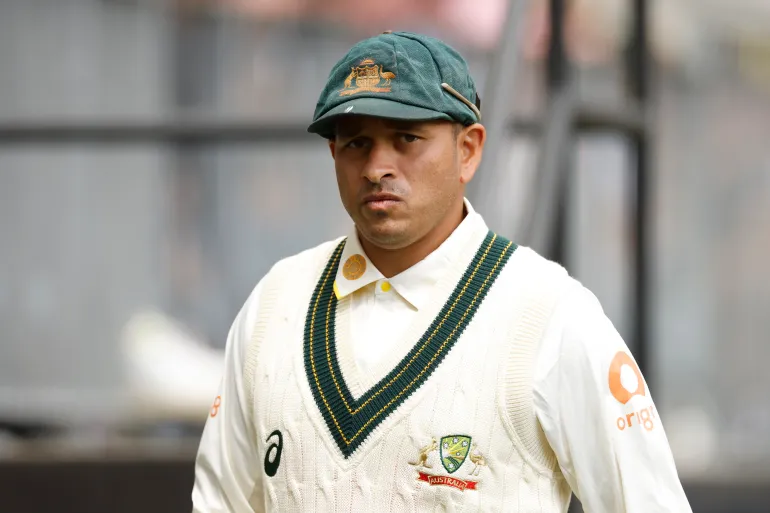
Retired Usman Khawaja reopened old wounds with the release of his autobiography this week and a chapter dealing with the 2018 ball-tampering scandal in South Africa that rocked world cricket [File: Darrian Traynor/Getty Images]
‘Casual with lives and reputations’
Cummins was asked about Khawaja’s recollection that two players had rejected the batsman’s call for the team to take collective responsibility for the ball-tampering.
“I don’t remember any conversation around collective responsibility,” he said.
“So then, I’ve got no idea who those two people would be because I don’t remember ever being asked or having a conversation about it.”
Khawaja and Warner have also been critical of the Cricket Australia investigation in 2018 that found the three punished players solely responsible for the plot.
“I got asked to be part of that review,” Cummins said. “I was totally truthful. I’ve been very consistent since then at that event till now. Nothing’s changed.”
Cummins said he respected the right of Khawaja to tell his story in the autobiography but felt some of the allegations were very serious and had to be addressed.
“Usman’s a friend, but friends aren’t casual with each other’s lives and reputations,” he said.
“In his book, Uzzie has been casual with my life and the lives of many others, and I think Australian cricket.”
Cummins added, though, that he would not be taking legal action against Khawaja over the allegations in the book.
“I did get advised this week that some of the things that’ve been said are probably defamatory, but I won’t be doing that,” Cummins said.
“You’ve got to move on. It’s been eight years. We’re moving on. So, you got to draw a line at some point.”
Patrick Stewart, the acclaimed British actor who played Captain Jean-Luc Picard in “Star Trek” and Professor Charles Xavier in the “X-Men” films, has died. He was 86.
Stewart died on Wednesday in Los Angeles following “a brief and poignant journey” with Alzheimer’s disease and Lewy body dementia, spokesperson Kelly Bush Novak said in a statement on Thursday.
Although best known for his film and television roles, Stewart spent much of his career onstage, performing Shakespeare and other classics.
His career included performances as Claudius and Macbeth, a one-man adaptation of “A Christmas Carol”, and West End and Broadway productions of Harold Pinter’s “No Man’s Land” and Samuel Beckett’s “Waiting for Godot” alongside longtime friend Ian McKellen.
Stewart earned some of the best reviews of his career for his 2007 portrayal of Macbeth, including his only Tony Award nomination. The Times of London described his Macbeth performance as “an enthralling creation of frailty, appetite, egotism and grim humour”.
“Nearly 50 years I’ve waited,” Stewart told the Associated Press news agency in 2008. “I learned it when I was 14. I memorized all the soliloquies just because I thought they were great. And they stuck, so I didn’t have to learn those bits of the play, which is a blessing, because learning lines has now become the one curse of this job.”
From working-class Yorkshire to Shakespeare
Raised in Mirfield, West Yorkshire, a working-class corner of northern England, the future 24th-century commander of a starship grew up without a bathroom in his house.
He joined an amateur drama group at 12 and, as a teenager, memorised Shakespeare for fun. A scholarship to the Bristol Old Vic Theatre School helped launch his acting career.
Stewart, who developed alopecia at a young age, had been bald since he was 19.
His childhood was also marked by domestic violence. His father, a former regimental sergeant major in the British Army, was prone to outbursts of “repeated violence against my mother,” as Stewart wrote in a newspaper piece. “Violence is always a choice a man makes and he alone is responsible for it.”
Stewart later became a patron of Refuge, a charity supporting survivors of domestic abuse.
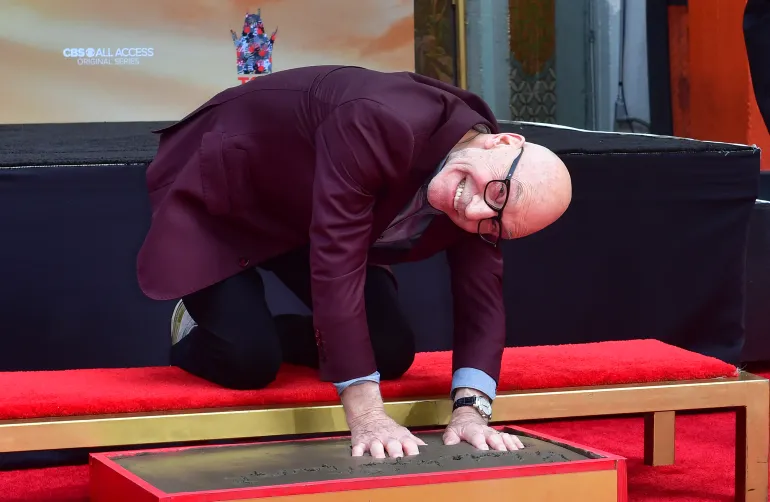
British actor Patrick Stewart places his hands in cement during his hand and footprints ceremony at the TCL Chinese Theatre in Hollywood, California, on January 13, 2020 [File: AFP]
From Shakespeare to Captain Picard
Stewart spent 14 years with the Royal Shakespeare Company, playing everyone from Mark Antony and Henry IV to Shylock and Oberon.
“People who were not in the company would say to me, ‘Give it a break. Why don’t you go somewhere else?’ And I would say, ‘To do what?’” he told the AP. “Telly?”
He eventually left and appeared in the 1981 film “Excalibur”. In 1987, shortly after performing in “Who’s Afraid of Virginia Woolf?”, he was offered a role in a science fiction series.
“I found myself in Hollywood shooting a syndicated science fiction series, which I was assured would fail,” he said.
But “Star Trek: The Next Generation” ran for seven seasons and 178 episodes. Stewart became known worldwide as Captain Jean-Luc Picard, whose command, “Make it so”, became one of the show’s best-known lines.
Stewart also played Professor Charles Xavier, the leader of the X-Men, beginning with the 2000 film “X-Men”. He returned to the role in several sequels, including 2017’s “Logan”, alongside Hugh Jackman as Wolverine.
Stewart died just days after Walter Koenig, who played Ensign Pavel Chekov in the original “Star Trek” series, which aired from 1966 to 1969.
Queen Elizabeth II knighted Stewart in June 2010. He also served as an ambassador for the International Rescue Committee.
Patrick Stewart, who played Professor X in the X-Men films, poses during a press conference for the film “Logan” in Taipei, Taiwan, on February 28, 2017 [File: AFP]
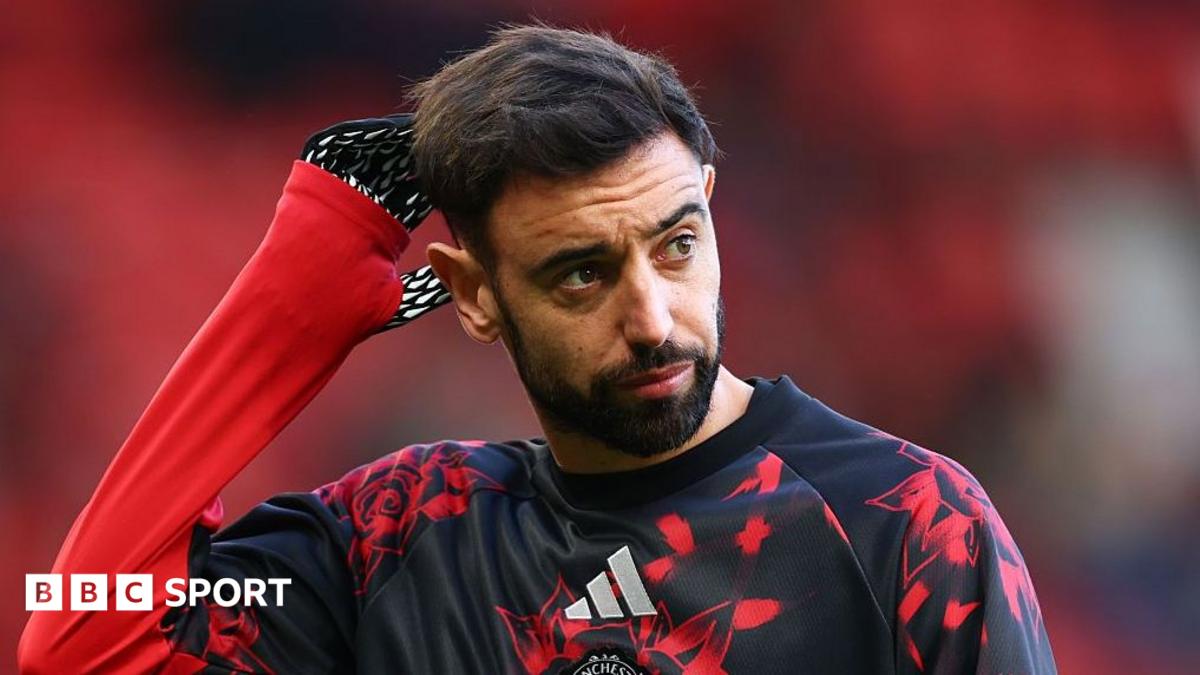
United have gone eight games without a win as they head to Chelsea – their worst run of results since 2015-16.
Not since the 1988-89 campaign have they had a sequence of nine matches without a win.
Nearly 40 hours passed between United losing against Bournemouth on Sunday and the club providing clarification on Carrick’s future, with the Englishman being given a chance to turn things around at Old Trafford.
Talks involving the Glazer family, minority owner Sir Jim Ratcliffe, chief executive Omar Berrada and director of football Jason Wilcox took place before Carrick’s immediate future was confirmed.
It seems likely he will remain in post for next Tuesday’s Champions League match against Roma, and the Premier League encounter with Aston Villa at Old Trafford on 8 November, after which there is a two-week international break.
Carrick, though, says he does not need guarantees over his position.
“I don’t need any assurances from anyone,” he said.
“I totally get the position. I understand the job. I understand the responsibilities. I understand what comes with that. So, I really don’t need any assurances from anyone in that regard.”
Asked if he was surprised to still be in a job, Carrick said: “No. I’m here to do my job. I’m here to do the best for the team, and I’m desperate to make us better and improve things. So, I’m not surprised, no.”