July 17 (Asia Today) — The U.S. Department of Homeland Security announced a final rule Thursday limiting stays by international students and exchange visitors to no more than four years and requiring them to undergo federal review when seeking extensions.
The rule replaces the open-ended “duration of status” system for holders of F student visas and J exchange visitor visas with fixed admission periods tied to their programs and capped at four years.
About 1.5 million current F- and J-visa holders will automatically be transferred to the new system.
The change, combined with a shorter post-graduation grace period and mandatory extension reviews for students seeking Optional Practical Training, could disrupt the fall semester and reduce demand for study in the United States.
Exchange visitors will also be limited to four-year stays. Foreign journalists holding I visas will generally have to renew their status every 240 days.
Federal review required for extensions
F- and J-visa holders who need to remain in the United States beyond their authorized period will have to apply to U.S. Citizenship and Immigration Services for an extension of stay.
Applicants will be required to submit biometric information and undergo security, identity and fraud screening. They must also demonstrate satisfactory academic progress and financial stability, The Wall Street Journal reported.
The change ends a system in place since 1978 that allowed students to remain in the country as long as they maintained the required course load and complied with the conditions of their immigration status.
Homeland Security officials said more than 2,100 F-1 students who entered the United States between 2000 and 2010 were still maintaining F-1 status in 2025.
The department said the rule was intended to prevent people from repeatedly enrolling in classes to avoid leaving the country, a practice officials described as creating “forever students.”
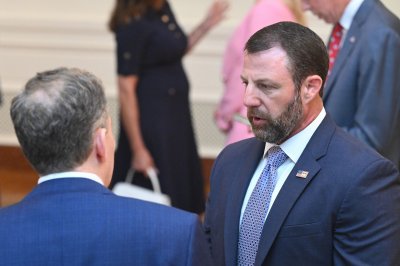
“For nearly half a century, the outdated duration-of-status system has undermined national security and created an environment where immigration fraud could flourish,” Homeland Security Secretary Markwayne Mullin said.
“By enforcing clear and finite periods, the United States is restoring its ability to properly screen and manage those who remain in our country,” he said.
Nearly 24,400 Koreans and family members affected
The roughly 1.5 million F- and J-visa holders currently staying in the United States under the duration-of-status system will receive fixed admission periods of up to four years beginning on the rule’s effective date, Bloomberg reported.
Foreign journalists entering on I visas will generally be admitted for 240 days and must apply for additional 240-day periods. Chinese journalists will be limited to 90-day extensions.
More than 1.8 million entries were recorded on student visas in 2024, an increase of more than 11% from the previous year, according to the Department of Homeland Security.
The United States also hosted about 500,000 J-visa exchange visitors and 37,000 foreign journalists holding I visas.
Students from India, China and South Korea are expected to be among those most affected by the rule, Bloomberg reported.
According to the South Korean Embassy in Washington, 11,861 South Korean students held F-1 visas in 2025 and 1,347 family members held F-2 visas.
Another 7,985 South Koreans held J-1 exchange visitor visas and 3,180 family members held J-2 visas, bringing the total number of South Korean F- and J-visa holders and their dependents to 24,373.
An additional 349 South Koreans held I visas.
The rule is scheduled to be published in the Federal Register on Friday and take effect 60 days later, in mid-September.
Its implementation during the fall semester could create confusion involving visa extensions and student enrollment records, Bloomberg reported.
Shorter grace period could disrupt employment pathway
The rule cuts the grace period after graduation from 60 days to 30 days for students preparing to leave the United States, transfer schools or change immigration status.
It also bars graduate students from changing their educational objectives and requires government approval before they transfer to another institution, Reuters reported.
Doctoral students, whose programs commonly take about six years, may have to apply for extensions before completing their studies and face the possibility of denial, The Wall Street Journal reported.
Doctors participating in long-term training programs will also have to seek extensions after four years, according to Bloomberg.
Nearly all students using Optional Practical Training, which permits eligible graduates to work in the United States for up to three years, will effectively be required to apply to U.S. Citizenship and Immigration Services for extensions for the first time.
Visa holders who remain beyond their authorized periods could face three- or 10-year bans on re-entering the United States, depending on the length of the overstay.
Technology and financial companies frequently hire international graduates through Optional Practical Training before sponsoring them for H-1B specialty occupation visas.
More restrictive access to practical training could narrow that employment pathway, The Wall Street Journal reported.
David Bier, director of immigration studies at the Cato Institute, said the restrictions on changing educational objectives and transferring schools lacked a legal basis.
He said graduates who fail to find an employer sponsor within 30 days could “immediately become unlawfully present.”
Education groups consider challenge
Fanta Aw, president and chief executive officer of the Association of International Educators, called the rule a misguided and unnecessary policy change.
She said it would inject “uncertainty, bureaucracy and fear” into a system that had operated effectively for decades and said the association was considering all available options to challenge it.
Todd Lyons, a former acting director of U.S. Immigration and Customs Enforcement, said in May that the agency had launched an investigation into fraud involving Optional Practical Training.
Lyons said investigators had identified 10,000 international students employed by companies suspected of fraud and described the program as a “magnet for fraud,” Bloomberg reported.
The number of international students in the United States fell 1.4% during the previous fall semester, while new international student enrollment declined 17%.
Student visa issuance fell 36% during the previous summer, and the new rule could accelerate the decline as it takes effect during the fall semester, Bloomberg reported.
The regulation will also be subject to congressional review before its implementation, Reuters reported.
Doug Rand, a former Homeland Security official, said most Americans understand both the value of welcoming international students and the need to eliminate unnecessary regulation.
“This rule will achieve precisely the opposite result,” he said.
International education expert Rajika Bhandari said students would consider not only whether they could obtain visas and enter the United States but also whether they had viable long-term options after completing their studies.
She said Asian students and graduate students in science, technology, engineering and mathematics fields would be particularly affected.
“The implications of this change are not yet fully understood by students, but they will be profound,” Bhandari said.
— Reported by Asia Today; translated by UPI
© Asia Today. Unauthorized reproduction or redistribution prohibited.
Original Korean report: https://www.asiatoday.co.kr/kn/view.php?key=20260717010006341