candidates

Tight California governor’s race between five leading candidates

The race to replace termed-out California Gov. Gavin Newsom is a tight contest between five candidates, according to a new poll released Wednesday.

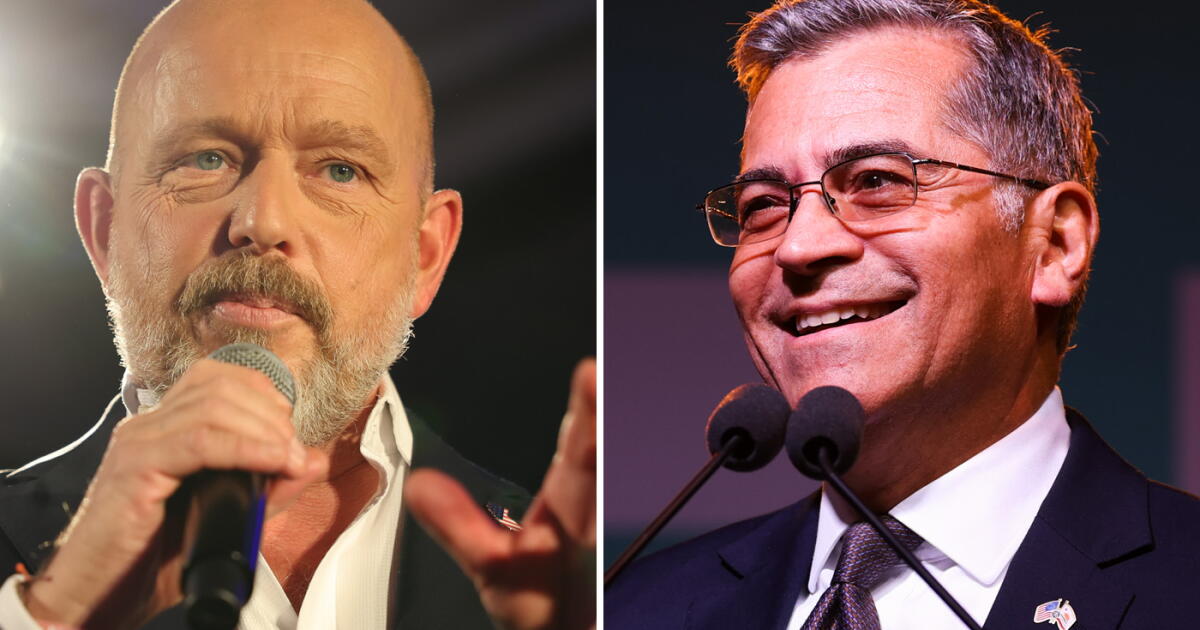
Three Democrats — former Rep. Katie Porter, Rep. Eric Swalwell and hedge fund founder Tom Steyer — and two Republicans — conservative commentator Steve Hilton and Riverside County Sheriff Chad Bianco — are within 4 percentage points of one another, according to the nonpartisan Public Policy Institute of California survey.

“Three months out from the June primary, the top two slots in the gubernatorial race are up for grabs,” Mark Baldassare, PPIC’s survey director, said in a statement. “Voters feel hammered by cost-of-living realities, so affordability will be a defining issue for them.”

In a crowded field of a dozen prominent candidates, Hilton had the support of 14% of likely voters, Porter 13%, Bianco 12%, Swalwell 11% and Steyer 10%, according to the poll. No other candidate received the support of more than 5% of respondents. One in 10 likely voters were undecided.

The two candidates who receive the most votes in the June primary will move on to the general election regardless of party identification. With nine prominent Democrats in the field, this has led to concerns among party leaders that the Democratic candidates may splinter the vote and the two Republicans could advance to the November ballot. No Republican has been elected to statewide office in California since 2006.

While support for Hilton and Bianco held steady since PPIC’s December poll, backing for Porter and former U.S. Health and Human Services Secretary Xavier Becerra significantly declined as more Democrats entered the contest and Porter dealt with the fallout from videos of her cursing at an aide and scolding a reporter. Porter expressed remorse for her behavior.

Several other races will appear on the November ballot, notably congressional contests that could determine which party controls the U.S. House of Representatives. The state’s 52 congressional districts were redrawn in a rare mid-decade redistricting after voters approved Proposition 50 last year in an effort to counter President Trump’s calls on Republican leaders in Texas and other GOP-led states to reshape their congressional lines.

Likely voters in California overwhelmingly prefer a Democratic congressional candidate over a Republican, 62% to 36%, according to the poll. A proposed 5% tax on the assets of billionaires that largely would be used to fund healthcare services in the state also was supported by 6 in 10 likely voters.

The PPIC poll surveyed 1,657 California adults online in English and Spanish from Feb. 3 to 11. The results are estimated to have a margin of error of 3.1 percentage points in either direction in the overall sample, and larger numbers for subgroups.

Source link

Democratic insurance commissioner candidates fail to win party backing

None of the Democratic candidates running for California insurance commissioner won the party’s endorsement at its convention over the weekend, but two surged far ahead of the field in votes.

Sen. Benjamin Allen (D-Santa Monica), won a plurality of votes with 1,056, or 41.7%, of the ballots cast by delegates at the Moscone Center in San Francisco on Saturday.

Trailing closely behind was former San Francisco Supervisor Jane Kim, who received 1,018, or 40.2%, of the ballots. To win an endorsement a candidate needed to reach a 60% threshold.

Splitting up the remainder of the ballots was former state Sen. Steven Bradford, who represented South Los Angeles County and the South Bay in the Legislature. He won 221, or 8.7%, of the votes, while San Francisco businessman Patrick Wolff, a political newcomer, got 153, or 6%, of the votes cast.

Candidates who win an endorsement benefit from the party’s voter outreach through media such as mailers, door hangers and other advertising.

The GOP field includes businessman Robert Howell, who lost by 20 points in the 2022 general election to current Insurance Commissioner Ricardo Lara. Also running are insurance agent Stacy Korsgaden from Grover Beach, and attorney Merritt Farren, whose Pacific Palisades home burned down. The Republic Party convention is April 10-12 in San Diego.

The candidates will now gear up for the June 2 primary election, with the general election set for Nov. 3.

The race for insurance commissioner typically draws little attention, but that changed after the Jan. 7, 2025, wildfires that swept through Los Angeles County, damaging or destroying more than 18,000 homes and killing 31 people.

Some insurers have been accused of delaying, denying and underpaying claims, while Insurance Commissioner Ricardo Lara has been subject to calls for his resignation over how he has handled the insurers’ response to the fires.

Allen, whose district includes the Palisades fire zone, has a platform that calls stabilization of the insurance market, which has seen carriers drop policyholders in fire-prone neighborhoods, while cracking down on insurer wrongdoing.

Despite his narrow margin over Kim, Allen released a statement saying, “Today, California Democratic Party delegates and activists sent a clear message: proven leadership and real results matter.”

Kim, who announced her candidacy in January, has garnered attention with an endorsement from U.S. Sen. Bernie Sanders of Vermont, and a proposal to cover disasters such as wildfires through a state-run program, rather than the private market.

“Despite Kim entering the race just a few weeks ago she virtually tied Allen for the most delegate votes. Everyone at the convention could see that Kim was the clear grassroots candidate,” said Kim spokesperson Catie Stewart.

Source link

Column: Some Democratic candidates for California governor need to drop out

Every farmer knows there comes a time to thin the crop to allow the most promising plants to grow bigger and reach their potential.

The same is true in politics. And it‘s now time to cull some Democrats from the dense field of candidates for governor.

Put another way, it’s time for some lagging Democrats to step aside and provide more running room for swifter teammates in the race to replace Gov. Gavin Newsom.

You’re reading the L.A. Times Politics newsletter

George Skelton and Michael Wilner cover the insights, legislation, players and politics you need to know in 2024. In your inbox Monday and Thursday mornings.

By continuing, you agree to our Terms of Service and our Privacy Policy.

Sure, they’ve all got a constitutional right to run. But too many Democrats on the June 2 primary ballot could flip the California governor’s office to a Republican.

You’d think that Democratic candidates now plodding behind in the race — with little realistic hope of catching up — would want to avoid having that on their conscience. Party leaders, too.

Until recently, this nightmarish scenario for Democrats seemed inconceivable. After all, California hasn’t elected a Republican to statewide office for 20 years. Roughly 45% of registered voters are Democrats. Only 25% are Republicans. About 23% are independents who lean left.

But do the math. There are nine Democrats running for governor with various degrees of seriousness. There are only two major Republican contenders, plus a third lagging practically out of sight.

Remember, California has a “top two” open primary. The top two vote-getters, regardless of their party, advance to the November election. And only the top two. Write-in candidates aren’t allowed.

It’s a matter of arithmetic.

In the primary, about 60% of voters will choose a Democrat, political data expert Paul Mitchell figures. That number of voters split among nine Democratic candidates could result in all sharing smaller pieces of the pie than what the top two Republicans receive. Mitchell estimates nearly 40% of voters will side with a Republican, with just two candidates splitting most of the smaller GOP pie.

Recent polls have shown three candidates — two Republicans and one Democrat — bunched closely near the top. They’re Republican former Fox News commentator Steve Hilton, Democratic U.S. Rep. Eric Swalwell from the San Francisco Bay Area, and Republican Sheriff Chad Bianco of Riverside County.

Another Democrat, former Rep. Katie Porter of Orange County, has been running close to the top three, followed by Democrat Tom Steyer, a billionaire former hedge fund investor.

It’s not likely that two Republicans will survive the primary and block a Democrat from reaching the general election. But it’s a legitimate possibility — and not worth the risk for the Democratic Party.

“How unlikely does it have to be for Democrats not to be worried?” asks Mitchell, who works primarily for Democrats. “Even if the chances are very small, the consequences could be catastrophic.”

He is constantly running primary election simulations. And last week he calculated the chances of two Republicans gaining the top slots at 18%. Most of his calculations have come out at around 10% to 12%, he says.

“I’m not trying to yell fire in a crowded theater,” Mitchell says. “But I’m trying to install a thermostat.”

He adds: “If there was ever a perfect storm when this could happen, we’re experiencing it now.”

The absence of a gubernatorial candidate heading the Democratic ticket in November, Mitchell says, would result in party damage far beyond the governor’s office.

It would lower Democratic voter turnout and probably cost the party congressional and legislative seats, and also affect ballot measures, Mitchell says.

In fact, it could jeopardize the Democrats’ chances of ousting Republicans and capturing control of the U.S. House.

So which candidates should drop out, not only to avoid embarrassment on election night but to save the party from possible disaster?

Four clearly should stay.

Swalwell has some momentum and is the leading Democrat in most polls, although his numbers are only in the teens. He’s relatively young at 45 and many voters are looking for generational change.

Porter is the leading female — with a chance to become the first woman elected California governor — and has been holding up in the polls despite showing a bad temper in a damaging TV interview last year.

Steyer has loads of his own money to spend on TV ads. But he needs a more coherent, simple message in the spots.

San Jose Mayor Matt Mahan just entered the race, but shows some promise. He’s a moderate with strong Silicon Valley tech support. And he also has youth at 43.

Five others should consider bowing out.

Xavier Becerra has a great resume: Former U.S. health secretary, former California attorney general and longtime congressman. But he hasn’t shown much fire. And his message is muted.

Antonio Villaraigosa also has an impressive resume: Former Los Angeles mayor and state Assembly speaker. He’s running with a strong centrist message. But at 73, voters seem to feel his time is past.

Former state Controller Betty Yee knows every inch of state government, but lacks voter appeal.

State Supt. of Public Instruction Tony Thurmond hasn’t shined in his current job and has no traction in the governor’s race.

Former legislator Ian Calderon isn’t even a blip.

What causes some candidates to stay in a race against long, even impossible odds?

“Hope springs eternal,” says longtime Democratic strategist Darry Sragow. “History is replete with races that turned around on a dime.”

And many feel obligated to their donors and endorsers, he adds.

Also, consultants often “have a vested interest” financially in keeping their clients in the game, he acknowledges.

But currently, Sragow adds, “it’s time for the Democratic Party to get its act together and weed out the field.”

“Party leaders should start cracking the whip. There’s something to be said for decisions being made behind closed doors in a ‘smoke filled room.’ The difference today is that it’s in a smoke-free room.”

The filing deadline for officially becoming a candidate is March 6. After that, a name cannot be removed from the ballot. It’s stuck there — possibly drawing just enough votes to rob another Democrat of the chance to be elected governor in November.

What else you should be reading

The must-read: Bernie Sanders kicks off billionaires tax campaign with choice words for the ‘oligarchs’
What the … : Bondi claims win in ICE mask ban fight — but court ruled on different California case
The L.A. Times Special: Billionaires Spielberg, Zuckerberg eyeing East Coast, stirring concerns about California’s wealth-tax proposal

Until next week,
George Skelton


Was this newsletter forwarded to you? Sign up here to get it in your inbox.

Source link

California governor candidates pitch Democrats at convention

It was speed dating: Eight suitors with less than four minutes each, pitching the woo to thousands of Democratic Party faithful.

The race for California governor has been a low-boil, late-developing affair, noteworthy mostly for its lack of a whole lot that has been noteworthy.

That changed a bit on a sunny Saturday in San Francisco, the contest assuming a smidgen of campaign heat — chanting crowds, sign-waving supporters, call-and-response from the audience — as the state party held its annual convention in this bluest of cities.

Delegates had the chance to officially endorse a party favorite, providing a major lift in a contest with the distinct lack of any obvious front-runner. But with an overstuffed field of nine major Democratic contenders — San José Mayor Matt Mahan was said to have entered the contest too late for consideration — the vote proved to be a mere formality.

No candidate came remotely close to winning the required 60% support.

That left the contestants, sans Mahan, to offer their best distillation of the whys and wherefore of their campaigns, before one of the most important and influential audiences they will face between now and the June 2 primary.

There was, unsurprisingly, a great deal of Trump-bashing and much talk of affordability, or rather, the excruciating lack of it in this priciest of states.

The candidates vied to establish their relatability, that most valuable of campaign currencies, by describing their own hardscrabble experiences.

Former Los Angeles Mayor Antonio Villaraigosa — the first speaker, as drawn by lot — spoke of his upbringing in a home riven by alcoholism and domestic violence. State Supt. of Public Instruction Tony Thurmond described his childhood subsistence on food stamps, free school lunches and surplus government cheese.

Former state Controller Betty Yee told how she shared a bedroom with four siblings. Katie Porter, the single mom of three kids, said she knows what it’s like to push a grocery cart and fuel her minivan and watch helplessly as prices “go up and up” while dollars don’t stretch far enough.

A woman enthusiastically cheers at state Democratic Party convention

Michele Reed of Los Angeles cheers at the state Democratic Party convention.

(Christina House/Los Angeles Times)

When it came to lambasting Trump, the competition was equally fierce.

“His attacks on our schools, our healthcare and his politics of fear and bullying has to stop now,” Villaraigosa said.

Rep. Eric Swalwell (D-Dublin) called him “the worst president ever” and boasted of the anti-Trump battles he’s fought in Congress and the courts. Xavier Becerra, a former California attorney general, spoke of his success suing the Trump administration.

Porter may have outdone them all, at least in the use of profanity and props, by holding up one of her famous whiteboards and urging the crowd to join her in a chant of its inscription: “F—- Trump.”

“Together,” the former Orange County congresswoman declared, “we’re going to kick Trump’s ass in November.”

Porter was also the most extravagant in her promises, pledging to deliver universal healthcare to California — a years-old Democratic ambition — free childcare, zero tuition at the state’s public universities and elimination of the state income tax for those earning less than $100,000.

Unstated was how, precisely, the cash-strapped state would pay for such a bounty.

Former Assemblyman Ian Calderon offered a more modest promise to provide free child care to families earning less than $100,000 annually and to break up PG&E, California’s largest utility, “and literally take California’s power back.” (Another improbability.)

Becerra, in short order, said he was “not running on inflated promises” but rather his record as a congressman, former attorney general and health secretary in President Biden’s cabinet.

Two women wear pins supporting Democratic causes

Rachel Pickering, right, vice chair of the San Luis Obispo County Democratic Party, stands with others wearing pins supporting Democratic causes at the party’s state convention.

(Christina House/Los Angeles Times)

It was one of several jabs that could be heard if one listened closely enough. (No candidate called out any other by name.) “You’re not going to vote for a Democrat who voted for the border wall, are you?” Thurmond demanded, a jab at Porter who supported a major funding bill that included money for Trump’s pet project.

“You’re not going to vote for a Democrat who praises ICE, are you?” Thurmond asked, a poke at Swalwell, who thanked the department for its work last year in a case of domestic terrorism.

“You’re not going to vote for a Democrat who made money off ICE detention centers,” Thurmond went on, targeting Tom Steyer and his former investment firm, which had holdings in the private prison industry.

Yee seemed to take aim at Mahan and his rich Silicon Valley backers, suggesting grassroots Democrats “will not be pushed aside by the billionaire boys club that wants to rule California.”

The barb was part of a full-on assault on the state’s monied class, which includes Steyer, who made his fortune as a hedge fund manager.

In a bit of billionaire jujitsu, he sought to turn the attack around by saying his vast wealth — which has allowed him to richly fund his political endeavors — made him immune to the blandishments of plutocrats and corporate interests.

“Here’s the thing about big donors,” Steyer said. “If you take their money, you have to take their calls. And I don’t owe them a thing. In a world where politicians serve special interests, I can’t be bought.”

There were no breakout moments Saturday. Nothing was said or done in the roughly 35 minutes the candidates devoted to themselves that seemed likely to change the dynamic or trajectory of a race that remains stubbornly ill-defined and, to an unprecedented degree in modern times, wide open.

And there was certainly no sign any of the gubernatorial candidates plan to give up, bowing to concerns their large number could divide the Democratic vote and allow a pair of Republicans to slip through and emerge from California’s top-two primary.

But for at least a little while, within the confines of San Francisco’s Moscone Center, there was a glimmer of a life in a contest that has seemed largely inert. That seemed a portent of more to come as the June primary inches ever closer.

Source link

Democrats’ fear rising that too many candidates in governor’s race could lead to a Republican victory

Leaders of the California Democratic Party, along with liberal activists and loyal power brokers, are openly expressing fear that their crowded field of candidates running for governor may splinter the vote and open the door to a surprise Republican victory in November.

Because of those concerns, the Democrats lagging at the bottom of the pack are being urged to drop out of the race to ensure the party’s political dominance in statewide elections survives the 2026 election.

“California Democrats are prepared to do what’s required,” state party chairman Rusty Hicks told reporters at the California Democratic Party’s annual convention on Friday. “We are ready and willing and able to do what’s required … to ensure we have a strong candidate coming out of the primary to do what’s required in November.”

Nine prominent Democrats are running to replace termed-out Gov. Gavin Newsom, compared to two top GOP candidates, and could divide the Democratic electorate enough that the two Republicans could receive the most votes in the June primary and advance to the November election. Under California’s “jungle primary” system, the top two vote-getters advance to the general election, regardless of their party affiliation.

Hicks was deferential to the Democratic candidates who have long-served in public office, and have compelling personal tales and the experience to take the helm of the state. But he said there is the harsh political reality that a viable candidate needs to raise an enormous amount of money to have a winning campaign in a state of 23.1 million registered voters and some of the most expensive media markets in the nation.

The party, its allies and the candidates themselves have a “collective commitment to ensuring we do not see a Republican elected [for governor],” Hicks said.

While Hicks and other party leaders did not publicly name the candidates who ought to leave the race, among the candidates lagging in the polls are state Supt. of Public Instruction Tony Thurmond, former state Controller Betty Yee, former Los Angeles Mayor Antonio Villaraigosa and former Assembly Majority Leader Ian Calderon.

Democratic voters vastly outnumber the number of registered Republicans in the state, and no Republican has been elected to statewide office since 2006.

But given the sprawling field of gubernatorial candidates, the lack of a clear front-runner and the state’s unique primary system, the race appears up for grabs. According to an average of the most recent opinion polls, conservative commentator Steve Hilton and Riverside County Sheriff Chad Bianco — both Republicans — are tied for first place, according to Real Clear Politics. Each received the support of 15.5% of voters. The top Democrat, Rep. Eric Swalwell of Dublin, Calif., was backed by 12.5%.

In 2012, Republicans finished in first and second place in the race for a San Bernardino County congressional district — despite Democrats having a solid edge in voter registration. The four Democrats running for the seat split the vote, opening the door for a victory by GOP Rep. Gary Miller. Pete Aguilar, one of the Democrats who lost in the primary, went on to win that seat in 2014 and has served in Congress ever since.

Former House Speaker Nancy Pelosi (D-San Francisco) on Friday pushed back at the fears that two Republicans will win the top two gubernatorial spots in June.

“That’s not going to happen,” she said in an interview after speaking at a young Democrats’ reception. “And everything that you should know about the Democrats this year is we are unified. As I say, our diversity is our strength, our unity is our power. And everybody knows that there’s too much at stake.”

However, the scenario has prompted a cross section of the typically fractious party to unite behind the belief the field must shrink, whether by candidates’ choice or through pressure.

Jodi Hicks, the leader of Planned Parenthood’s California operations, said that the organization is laser-focused on congressional races, but having two Republican gubernatorial candidates “would be nothing short of devastating.”

“We have not weighed in on the governor’s race but we are paying close attention to whether this comes to play, and whether or not we do decide to weigh in and make sure that doesn’t happen,” she said.

Newsom and legislative Democrats have tried to buffer the massive federal funding cuts to reproductive care. A November election with two Republicans on the gubernatorial ballot would eliminate a key partner in Sacramento, and could impact turnout in down-ballot congressional and legislative races.

“A top-two Republican [race] would certainly have dire consequences for the midterm battle and to the governor’s office,” Jodi Hicks said.

Lorena Gonzalez, the leader of California Federation of Labor Unions, noted that her organization’s endorsement process begins on Tuesday.

“I think we are going to have some pretty honest discussions with candidates about their individual paths and where they are,” she said. “They’re all great candidates, so many of them are really good folks. But it’s starting to get to be that time.”

She expects the field to begin to thin in the coming days and weeks.

The conversation went beyond party leaders, taking place among delegates such as Gregory Hutchins, an academic labor researcher from Riverside.

“My goal at the convention, it’s not necessarily that the party coalesces around one particular candidate, but more, this is a test to see what candidates have a level of support that they can mount a successful campaign,” said the 29-year-old, who said he hopes to see some candidates drop out after the weekend.

“Am I concerned long term that [a top-two Republican runoff] could be a thing? Yes and no,” he said “I’m not concerned that we’re not going to solve this problem before the primary, but I do think we need to start getting serious about, ‘We need to solve this problem soon.’”

Not everyone agreed.

Tim Paulson, a San Francisco Democrat who supports Yee, called efforts to push people out of the race “preemptive disqualification.”

“This is nothing but scare tactics to get people out of the race,” he said. “This is still a vibrant primary. Nobody knows who the front-runner is yet.”

Bob Galemmo, 71, countered that many people did not believe Donald Trump would be elected president in 2016 and fears two Republicans could advance to the general election.

“You should never say never,” he said. “If we could get down to like four or five [candidates], that would be helpful.”

The efforts had already began.

RL Miller, the chair of the state Democratic Party’s environmental caucus, said Yee ought to drop out.

Yee, “who is at the bottom of the polls, needs to be taking a good long look at whether she is serving the party or being selfish by staying in the race,” Miller said.

Yee, a former state party vice chair, pushed back forcefully, saying pressure to drop out of the race “would just be undemocratic.”

“First of all, I’ve served this party for a long time. I don’t do it out of selfishness, by any means,” she said at a Saturday gathering where she provided breakfast burritos to delegates. “But I’ll just say this — the race is wide open.”

Yee‘s campaign manager noted that 40% of voters are undecided, and the candidate said no one has asked her directly to exit the race, but that someone started a rumor a month or two ago that she was going to drop out and run for insurance commissioner instead.

“I’m not dropping out, and I don’t think any candidate should go out,” Yee said.

Calderon said Swalwell had urged him to get out of the race.

Calderon noted the largest group of voters is still undecided and defended staying in the race to try to reach those voters after speaking at a gubernatorial forum at the Commonwealth Club on Friday

“I stay very consistent in that 1 to 3% range,” he joked. “But my challenge is access to resources and visibility, which is something that could change within a day with the right backing and support.”

Swalwell and his campaign did not respond to a request for comment.

Source link

BBC The Apprentice star ‘isolated’ from candidates after concern

The Apprentice star has explained his absence from last week’s episode that left him isolated from the other contestants.

Levi Hague, a contestant on The Apprentice, has shed light on his conspicuous absence from the latest episode of the show.

The BBC’s business competition, helmed by Lord Sugar, is in full swing, with a surprise double elimination in the opening episode and two more hopefuls shown the door since. The remaining contestants are vying for a hefty £250,000 investment into their business ventures.

This year’s line-up includes a star from Geordie Shore and an actress, but viewers noticed that former RAF Gunner Levi was missing from the recent episode.

Taking to social media, Levi clarified his absence, attributing it to a bout of severe food poisoning that led him to “lose more weight than an Ozempic user”.

He admitted he missed parts of the second episode and was still feeling under the weather during the third task, leaving him feeling “gutted”, reports Wales Online.

In a TikTok video, he recounted: “The night before the task, we got in pretty late, about 10 o’clock at night, couldn’t be bothered to cook, I was being lazy, and I had some spaghetti Bolognese, either that or some chicken, whatever.

“I got food poisoning, really bad. Diarrhoea and vomiting. The place where we went to do the boardroom, you have a little chill out room before, and I spewed up getting out the car.

“More or less spewed up when we got into the chill out room, so they isolated me straight away, so I wouldn’t spread it to any other contestants. So, yeah, that’s reason why I were down, it was diarrhoea and sickness.”

The contestant revealed he was taken out of the house and placed in hotel accommodation to recover separately from his fellow housemates, with production staff regularly monitoring his condition.

He continued: “I went down for about four or five days. Had to go on some hardcore antibiotics. Put it this way…. I lost more weight than an Ozempic user, and after I went toilet after 21 times in a day, I stopped counting after that.”

In an accompanying caption, he explained: “Right… let’s clear this up before the conspiracy theories start If you’re wondering why I wasn’t there for Task 3 – I was still man down with food poisoning.

“Given it was a food task, it probably wasn’t the best idea to have me anywhere near the public or a kitchen or away from a toilet So that’s the reason! Not to worry though… these extremely rosy cheeks and this northern accent will be back on your screens next week. P.S. Thank you for all the messages of support and concern genuinely appreciated.”

Levi has faced controversy over his inclusion in the programme, after his historic offensive social media posts were uncovered.

It was claimed he made discriminatory remarks towards Muslims and sexist comments about women. He later apologised for the posts, which have been deleted.

Production company Naked also admitted social media checks had “failed to flag the offensive posts” and that the process would be reviewed, adding: “Levi’s historical posts contain language which is unacceptable and Levi has been spoken to about this behaviour. He has apologised and insists that these posts do not reflect the man he is now.”

A BBC spokesperson said the views presented in the posts were “totally unacceptable” and the organisation was taking it “extremely seriously”.

“We were completely unaware that this contestant had made such abhorrent comments,” the BBC spokesperson said.

“We have asked the independent production company to fully review the social media checks undertaken given the process has clearly failed in this instance.”

The Apprentice continues on Thursday at 9pm on BBC One and iPlayer.

Source link

Tech titans pour $50 million into super PAC to elect AI-friendly candidates to Congress

Some of the biggest names behind the artificial intelligence boom are looking to stack Congress with allies who support lighter regulation of the emerging technology by drawing on the crypto industry’s 2024 election success.

Marc Andreessen, Ben Horowitz and OpenAI co-founder Greg Brockman are among tech leaders who’ve poured $50 million into a new super political action committee to help AI-friendly candidates prevail in November’s congressional races. Known as Leading the Future, the super PAC has taken center stage as voters grow increasingly concerned that AI risks driving up energy costs and taking away jobs.

As it launches operations, Leading the Future is deploying a strategy that worked two years ago for crypto advocates: talk about what’s likely to resonate with voters, not the industry or its interests and controversies. For AI, that means its ads won’t tout the technology but instead discuss core issues including economic opportunity and immigration — even if that means not mentioning AI at all.

“They’re trying to be helpful in a campaign rather than talking about their own issue all the time,” said Craig Murphy, a Republican political consultant in Texas, where Leading the Future has backed Chris Gober, an ally of President Trump, in the state’s hotly contested 10th congressional district.

This year, the group plans to spend up to $125 million on candidates who favor a single, national approach to AI regulation, regardless of party affiliation. The election comes at a crucial moment for the industry as it invests hundreds of billions of dollars in AI infrastructure that will put fresh strains on resources, with new data centers already blamed for driving up utility bills.

Leading the Future faces a growing challenge from AI safety advocates, who’ve started their own super PAC called Public First with a goal of raising $50 million for candidates who favor stricter oversight. On Thursday, Public First landed a $20-million pledge from Anthropic PBC, a rival to OpenAI that has set itself apart from other AI companies by supporting tougher rules.

Polls show deepening public concern over AI’s impact on everything from jobs to education to the environment. Sixty-two percent of US adults say they interact with AI at least several times a week, and 58% are concerned the government will not go far enough in regulating it, according to the Pew Research Center.

Jesse Hunt, a Leading the Future spokesman, said the group is “committed to supporting policymakers who want a smart national regulatory framework for AI,” one that boosts US employment while winning the race against China. Hunt said the super PAC backs ways to protect consumers “without ceding America’s technological future to extreme ideological gatekeepers.”

The political and economic stakes are enormous for OpenAI and others behind Leading the Future, including venture capitalists Andreessen and Horowitz. Their firm, a16z, is the richest in Silicon Valley with billions of dollars invested in AI upstarts including coding startup Cursor and AI leaderboard platform LM Arena.

For now, their super PAC is doing most of the talking for the AI industry in the midterm races. Meta Platforms Inc. has announced plans for AI-related political spending on state-level contests, with $20 million for its California-based super PAC and $45 million for its American Technology Excellence Project, according to Politico.

Other companies with massive AI investment plans — Amazon.com Inc., Alphabet Inc. and Microsoft Corp. — have their own corporate PACs to dole out bipartisan federal campaign donations. Nvidia Corp., the chip giant driving AI policy in Washington, doesn’t have its own PAC.

Bipartisan push

To ensure consistent messaging across party lines, Leading the Future has created two affiliated super PACs — one spending on Republicans and another on Democrats. The aim is to build a bipartisan coalition that can be effective in Washington regardless of which party is in power.

Texas, home of OpenAI’s massive Stargate project, is one of the states where Leading the Future has already jumped in. Its Republican arm, American Mission, has spent nearly $750,000 on ads touting Gober, a political lawyer who’s previously worked for Elon Musk’s super PAC and is in a crowded GOP primary field for an open House seat.

The ads hail Gober as a “MAGA warrior” who “will fight for Texas families, lowering everyday costs.” Gober’s campaign website lists “ensuring America’s AI dominance” as one of his top campaign priorities. Gober’s campaign didn’t respond to requests for comment.

In New York, Leading the Future’s Democratic arm, Think Big, has spent $1.1 million on television ads and messages attacking Alex Bores, a New York state assemblyman who has called for tougher AI safety protocols and is now running for an open congressional seat encompassing much of central Manhattan.

The ads seize on Democrats’ revulsion over Trump’s immigration crackdown and target Bores for his work at Palantir Technologies Inc., which contracts with Immigration and Customs Enforcement. Think Big has circulated mailings and text messages citing Bores’ work with Palantir, urging voters to “Reject Bores’ hypocrisy on ICE.”

In an interview, Bores called the claims in the ads false, explaining that he left Palantir because of its work with ICE. He pointed out the irony that Joe Lonsdale, a Palantir co-founder who’s backed the administration’s border crackdown, is a donor to Leading the Future.

“They’re not being ideologically consistent,” Bores said. “The fact that they have been so transparent and said, ‘Hey, we’re the AI industry and Alex Bores will regulate AI and that scares us,’ has been nothing but a benefit so far.”

Leading the Future’s Democratic arm also plans to spend seven figures to support Democrats in two Illinois congressional races: former Illinois Representatives Jesse Jackson Jr. and Melissa Bean.

Following crypto’s path

Leading the Future is following the path carved by Fairshake, a pro-cryptocurrency super PAC that joined affiliates in putting $133 million into congressional races in 2024. Fairshake made an early mark by spending $10 million to attack progressive Katie Porter in the California Democratic Senate primary, helping knock her out of the race in favor of Adam Schiff, the eventual winner who’s seen as more friendly to digital currency.

The group also backed successful primary challengers against House incumbents, including Democrats Cori Bush in Missouri and Jamaal Bowman in New York. Both were rated among the harshest critics of digital assets by the Stand With Crypto Alliance, an industry group.

In its highest-profile 2024 win, Fairshake spent $40 million to help Republican Bernie Moreno defeat incumbent Democratic Senator Sherrod Brown, a crypto skeptic who led the Senate Banking Committee. Overall, it backed winners in 52 of the 61 races where it spent at least $100,000, including victories in three Senate and nine House battlegrounds.

Fairshake and Leading the Future share more than a strategy. Josh Vlasto, one of Leading the Future’s political strategists, does communications work for Fairshake. Andreessen and Horowitz are also among Fairshake’s biggest donors, combining to give $23.8 million last year.

But Leading the Future occasionally conflicts with Fairshake’s past spending. The AI group said Wednesday it plans to spend half a million dollars on an ad campaign for Laurie Buckhout, a former Pentagon official who’s seeking a congressional seat in North Carolina with calls to slash rules “strangling American innovation.” In 2024, during Buckhout’s unsuccessful run for the post, Fairshake spent $2.3 million supporting her opponent and eventual winner, Democratic Rep. Donald Davis.

Regulation proponents

“The fact that they tried to replay the crypto battle means that we have to engage,” said Brad Carson, a former Democratic congressman from Texas who helped launch Public First. “I’d say Leading the Future was the forcing function.”

Unlike crypto, proponents of stricter AI regulations have backers within the industry. Even before its contribution to Public First, Anthropic had pressed for “responsible AI” with sturdier regulations for the fast-moving technology and opposed efforts to preempt state laws.

Anthropic employees have also contributed to candidates targeted by Leading the Future, including a total of $168,500 for Bores, Federal Election Commission records show. A super PAC Dream NYC, whose only donor in 2025 was an Anthropic machine learning researcher who gave $50,000, is backing Bores as well.

Carson, who’s co-leading the super PAC with former Republican Rep. Chris Stewart of Utah, cites public polling that more than 80% of US adults believe the government should maintain rules for AI safety and data security, and says voter sentiment is on Public First’s side.

Public First didn’t disclose receiving any donations last year, according to FEC filings. But one of the group’s affiliated super PACs, Defend our Values PAC, reported receiving $50,000 from Public First Action Inc., the group’s advocacy arm. The PAC hasn’t yet spent any of that money on candidates.

Crypto’s clout looms large in lawmakers’ memory, casting a shadow over any effort to regulate the big tech companies, said Doug Calidas, head of government affairs for AI safety group Americans for Responsible Innovation.

“Fairshake was just so effective,” said Calidas, whose group has called for tougher AI regulations. “Democrats and Republicans are scared they’re going to replicate that model.”

Allison and Birnbaum write for Bloomberg.

Source link

Key candidates cast their ballots in Bangladesh elections | Bangladesh Election 2026

NewsFeed

Bangladesh’s leading political candidates have voted in a closely contested general election in Dhaka, pitting the Bangladesh Nationalist Party against a Jamaat-e-Islami-led coalition. It’s the country’s first election since the 2024 ousting of long‑time premier Sheikh Hasina in a Gen Z-led uprising.

Source link