Carney declared the pipeline a project of national interest, smoothening its way to a single federal regulatory review process.
Published On 1 Oct 20261 Oct 2026
Canada will fast track the approval process for a new proposed crude oil export pipeline to its west coast that could generate billions in revenue and boost economic growth, Prime Minister Mark Carney has said.
Carney made the announcement on Thursday to fast-track the pipeline, which is a crucial part of his bid to diversify the economy away from the United States and help lessen the effect of US President Donald Trump’s tariffs.
Recommended Stories
list of 4 itemsend of list
Carney said Ottawa is officially listing the Pacific Link pipeline, which had been announced in July, as a project of national interest. That will ensure it proceeds through a single federal regulatory review process. He said Ottawa aimed to complete the process by September 1, 2027.
“A pipeline to the west coast is part of our mission to transform our economy, to double our non-US exports over the next decade … [and] to unlock our full potential as a global energy superpower,” he told reporters in Fort McMurray, hub of Alberta’s tar sands industry.
Ottawa says the 1 million barrel a day project would create 140,000 jobs and generate more than 20 billion Canadian dollars ($14bn) in gross domestic product (GDP) per year and 100 billion Canadian dollars ($70bn) in government revenue by 2060.
Canada currently has just one east-west oil export pipeline in Canada, the 890,000-barrel-per-day Trans Mountain pipeline. An expansion of that pipeline was completed in 2024, but it is already running at capacity.
For years, Canada has sent more than 90 percent of its crude oil exports to the US via pipeline. A new oil export pipeline could make Canada a major global energy supplier, as Asia’s top importers seek oil from outside the Middle East in the wake of the Iran conflict.
Filling the pipeline, however, would require new tar sands expansions of the type no company has undertaken in more than a decade.
The pipeline will be built by government-owned Trans Mountain Corp in coordination with Pembina Pipeline Corp. Alberta estimates it could cost between 35.2 billion Canadian dollars and 43.7 billion Canadian dollars ($24.7bn – $30.7bn).
The majority owners will be the federal government and the government of Alberta. Indigenous communities will be offered a minimum of 10 percent ownership interest.
Previous oil pipeline projects in Canada have faced strong opposition from environmentalists and Indigenous groups, resulting in the cancellation of some projects and leading to cost overruns and construction delays with others.
Alberta separatism
Carney made the announcement alongside Alberta Premier Danielle Smith in Fort McMurray in the heart of Canada’s tar sands, a move meant to mend relations with oil-rich Alberta as separatists push for a referendum on leaving Canada.
Alberta is holding a public vote on October 19 on whether to hold a referendum on leaving Canada. Smith has long complained that Carney’s predecessor, Justin Trudeau, hindered Alberta’s energy industry and fuelled separatist sentiment.
Smith said she would vote to keep Alberta in Canada and called the roughly 22 percent support for separation in a recent poll “still too high for my liking”.
“I don’t like the fact that many of our fellow citizens have given up on Canada,” Smith said, adding that the pipeline was an example of how “cooperative federalism can work in action”.
Asked what message Albertans considering separation should take from the announcement, Carney said it demonstrated that “Canada is working” and showed what the country could achieve by acting together.
Shell (SHEL) and its partners announced on Tuesday a final investment decision on LNG Canada Phase 2, which will double production capacity at the facility in Kitimat, British Columbia, and place Canada on a trajectory to become one of the world’s largest exporters of
Canadian Heritage Minister Steven Guilbeault says the objective is to create a chance for Canadians to learn about and reflect on a dark chapter in their country’s history and to commemorate the survivors, their families, and their communities, as called for by the Truth and Reconciliation Commission and Indigenous leaders.
Over the course of more than 100 years, some 150,000 Indigenous children were ripped from their families and forced to attend church-run residential schools, where many suffered physical and sexual abuse, malnutrition, and neglect. More than 4,000 are believed to have died.
Trump retaliated against Canada’s counter-tariffs on $20bn worth of US imports by banning $1bn of Canadian goods.
Published On 29 Sep 202629 Sep 2026
The United States is implementing a ban on nearly $1bn in imports from Canada, including alcoholic beverages, dairy products and motorcycles.
The ban took effect early Tuesday and is likely to further strain already-tense relations between the two neighbours.
Recommended Stories
list of 4 itemsend of list
Ottawa and Washington DC have long been allies and trade partners, with approximately $880bn worth of annual two-way trade. That relationship has been upended during US President Donald Trump’s second term as he unleashed tariffs on most trading partners, including Canada, and referred to the northern neighbour as the 51st state of the US.
Most recently, the US slapped 50 percent levies on Canadian goods worth $20bn, including dairy and motorcycles, on August 22 after trade negotiations failed. Canadian Prime Minister Mark Carney retaliated, saying Ottawa will match US tariffs “dollar for dollar in order to protect Canadian workers, farmers, families and businesses”. Canada levied tariffs of 15 percent, 25 percent and 50 percent on US exports of a similar value.
Tuesday’s ban was Trump’s punishment for Canada’s retaliatory tariffs.
“The impact of such a ban will be minor, it is only $1bn while we trade hundreds of billions with Canada,” Professor Gary Shields at Wayne State University’s School of Business told Al Jazeera. “It is, however, rather astonishing how President Trump treats our allies in Canada and Europe, while rolling out the red carpet for China’s dictator when he visited the US last week”.
“It is a tit-for-tat. It will not reduce people’s taxes and won’t put money in their pockets. It is kind of personal and a way of showing off toughness,” Shields added.
Canada’s economy grew by an estimated 0.2 percent in August after remaining unchanged in July, according to Statistics Canada. But the new US-Canada tariffs, tighter financial conditions and a shrinking population should further weaken growth in late 2026 and early 2027, Michael Davenport, senior Canada economist at Oxford Economics, said in a note provided to Al Jazeera.
WASHINGTON — President Trump’s trade war with Canada could intensify the headwinds Republicans are navigating ahead of the November midterms, with its effects poised to reverberate in northern battleground states with crucial Senate races.
The escalating beef with Canada — Trump attacked the country anew on social media Wednesday — stands to heighten voters’ economic worries and add to the GOP’s political challenge in dead-heat races, analysts said.
“It doesn’t make things easier. It’s not helping,” said Rusty Hills, a University of Michigan public policy professor and onetime chair of the Michigan Republican Party.
The president’s unpopular policies on the war in Iran, the economy and data centers have already handed Republican candidates the tough task of appearing responsive to Americans’ frustration with cost-of-living issues without alienating Trump and his voter base.
The trade war, said Lance Dutson, a Maine Republican media strategist, puts “another log on the fire” of the affordability issue.
The tariffs have appeared unpopular in recent polling, including among a majority of independent voters. Though they are not expected to dramatically increase consumer prices, they could affect voters’ perception of the economy — and even small economic impacts on certain industries, such as auto manufacturing in Michigan, could have an effect in very close midterm races, experts said.
Trump’s new import bans on some Canadian goods are set to begin next week, a response to retaliatory tariffs Canada levied earlier this month. Trump argues that Canada has “been ripping off” the United States and that tariffs will help domestic manufacturers.
On Wednesday, the president inaccurately claimed on Truth Social that Canada is allowing “millions and millions” of immigrants into its country.
“It is a Liberal takeover that will end very badly. Already showing up in their numbers. Big unemployment. ‘Oh Canada!” the president wrote on social media Wednesday morning.
Five of the nine states most likely to decide Senate control border Canada — Alaska, Ohio, Michigan, New Hampshire and Maine. Two more, Texas and Iowa, also do substantial trade with Canada.
Democrats must retain their Senate seats including New Hampshire and Michigan and flip four of the other states to win a majority, a tall task. As the landscape worsens for Republicans, however, some aretesting how much they can distance themselves from Trump.
“It’s a tightrope, there’s no question,” Hills said. “[Candidates] are looking for some wiggle room on some of these issues like the war and prices and Canada tariffs, because they need every independent and swing voter they can get.”
A majority of Americans oppose raising tariffs on Canadian goods, including 64% of independents, anEconomist/YouGov poll found. Only 14% of independents said they supported additional U.S. tariffs on Canada in a late AugustIpsos poll.
And in Michigan, 68% of independent voters disapprove of the tariffs, a poll this month from the Washington Post and Schar School found.
“The more we put tariffs on stuff, the more they put tariffs on stuff … prices are just ultimately going to go up for all of us,” said one Michigan swing voter in a Sept. 9 focus group conducted by the firm Engagious, in which 11 of 13 participants said the trade war was bad for the state.
The highest costs of the tariffs will be concentrated within a few industries, including auto and other manufacturing, dairy, and alcohol and spirits, said Alex Durante, a senior economist at the Tax Foundation. The tariffs likely won’t create a major change for consumers, but the general impression that tariffs can contribute to higher prices might turn off voters who are already worried about inflation, he said.
Counter-tariffs imposed by Canada in response to U.S tariffs last year resulted in a 6% increase in the prices of affected goods, researchers found in paper published by the Journal of Monetary Economics.
Canadian lumber products at Gutherie Lumber in Livonia, Mich., in August.
(Paul Sancya / Associated Press)
“This trade war is certainly not helping the president and his party in the midterms,” Durante said. “What’s weighing on the top of people’s minds is this general affordability crisis … and they realize that tariffs are another factor that is impacting affordability.”
The latest escalation of the trade dispute began in July, when Trump threatened new 50% tariffs on some Canadian goods, reinvigorating a conflict that began with tariffs the president imposed in 2025.
The two countries began trade talks, but the negotiations fell apart in late August, and Trump imposed tariffs on about $20-billion worth of Canadian goods. Canada retaliated with tariffs on about $20-billion worth of American goods that took effect Sept. 8. Trump then announced import bans on some Canadian goods, including certain alcohol and dairy products, which go into effect next week.
Construction and farm equipment in Illinois, aluminum and pipe products in New York, and iron and steel products in Ohio are among the goods targeted by Canada’s counter-tariffs, the Canadian Broadcasting Corp. reported. In California, about 10.5% of the state’s Canadian imports are exposed to the counter-tariffs imposed by Canada.
Democrats have seized on the issue as another way to tie Republican candidates to Trump’s policies, something that analysts said may have varying degrees of success in different swing states.
Maine Republican Sen. Susan Collins campaigns in August in Kittery, Maine.
(CJ Gunther / Getty Images)
In Maine and New Hampshire, where the Republican Senate nominees have criticized Trump’s move, the tariff issue may be less likely to stick. Efforts to tie Republicans to Trump have historically been less successful in the region because of its independent streak, said Jim Merrill, a veteran Republican strategist in New Hampshire.
Maine Republican Sen. Susan Collins warned the White House against imposing tariffs and successfully pushed for the administration to exempt road salt and cement this month. She told Politico that the Trump administration had “very much underestimated” the effect of the tariffs on Maine residents.
Republican John Sununu, a former senator who is running to retake the seat in New Hampshire, has also criticized the tariffs, saying a trade war with Canada “doesn’t make any sense.” He indicated he would support legislation in Congress to restrain the president’s tariff powers.
Elsewhere, Senate nominees have walked a careful line on tariffs. In Alaska, Sen. Dan Sullivan has largely avoided the issue, even as Democrats there have used it to ramp up attacks on his record in recent days. In Ohio, former Sen. Jon Husted told the National Review in August that the public “would like to understand the strategy behind what the president’s trying to do.”
Former Rep. Mike Rogers of Michigan, the Republican Senate nominee, told reporters over the weekend that he was in favor of “good” tariffs that would help Michigan and opposed to “bad” tariffs that would hurt the state.
Focusing on issues other than tariffs may be the right strategy on the campaign trail, Hills said.
“He’d much rather be talking about the Republican plan for affordability,” Hills suggested. “There’s interesting things we need to be talking about in order to win this election, and this isn’t one of them.”
Australia’s Prime Minister Anthony Albanese has revealed a security breach of a government website containing Australians’ health data by an “AI agent”, less than a day after signing a joint appeal for “urgent global guardrails” around artificial intelligence.
Albanese co-signed the “A Call for Control of Frontier AI Models” statement on Tuesday together with 21 signatories including Canada, Spain and Germany, on the sidelines of the United Nations General Assembly (UNGA) meeting in New York.
Recommended Stories
list of 3 itemsend of list
Addressing reporters on Wednesday, Albanese said the agent, developed by OpenAI, accessed public and non-public data on the government’s Medicare portal in June.
Australia’s Labor government is tightening tech regulations with new online safety laws, age bans and proposed digital duty of care frameworks.
Albanese said he had spoken to OpenAI CEO Sam Altman to express Canberra’s “extreme concern” about the hack and disappointment that the company took three months to admit the breach.
OpenAI responded in the hours after the news conference, stating that while it was still investigating, there was no evidence patient records were accessed.
The company’s review had identified activity involving several Australian government websites and services as its “models attempted to look up answers”, it said.
OpenAI CEO Sam Altman addresses the United Nations Security Council during a session on artificial intelligence during the 81st United Nations General Assembly, at UN headquarters in New York City, US, September 23, 2026 [Brendan McDermid/Reuters]
World leaders respond to AI warnings
The leaders of artificial intelligence companies warned of the risks of unregulated AI development before a 15-member UN Security Council meeting on Wednesday.
One of them, Yoshua Bengio, a Canadian considered one of the ‘Godfathers of AI’ and co-chair of the Independent International Scientific Panel, spoke of the “unprecedented threat” and the “real and imminent” dangers of the technology.
China’s UN ambassador Fu Cong told the meeting that Beijing believed continuous improvement of regulatory frameworks, emergency response and cross-border cooperation on AI was needed.
British Prime Minister Andy Burnham said the United Kingdom was ready to lead an international effort to establish AI standards.
“We’ve all heard the warnings which we must heed… so we have to rise to this moment,” he said, but added he also wanted the UK to pursue the benefits of AI.
French President Emmanuel Macron warned against allowing the United States and China to dominate decision-making around AI during his speech to the assembly on Wednesday.
US President Donald Trump is at odds with many of his counterparts, comparing the dangers of AI to climate change, which he has called a hoax.
He also proposed rebranding the term AI to SI, or “super intelligence”, during his address to the UNGA on Tuesday, and earlier said he planned to appoint an AI adviser.
In a Truth Social post on Monday, Trump said the US was leading the AI race over China, that he was “not going to stifle Growth”, but added that the US would be careful.
White House science and technology adviser Michael Kratsios echoed Trump in remarks to the UN Security Council on Wednesday.
“You cannot govern technology you do not understand. This body and others like it should focus on sharing best practices to build domestic capacity, not establishing a global regulatory scheme,” he said.
VICTORIA, British Columbia — A Canadian provincial premier called a snap election Tuesday, saying President Trump’s attacks on Canada are threatening jobs, businesses and the country’s ability to determine its own future.
The provincial election comes after U.S.-Canada trade talks broke down, deepening a dispute that has brought steep tariffs. British Columbia Premier David Eby effectively put Trump on the ballot, arguing the election offers British Columbians a choice between his government’s efforts to resist U.S. economic pressure and opponents he accused of embracing “MAGA-style politics.”
“Join us saying hell no to Trump and to his politics,” Eby said in announcing the Oct. 24 election.
Eby said Trump’s trade war and threats against Canada have changed conditions in British Columbia enough to justify an election two years early.
“Donald Trump is attacking our workers, he’s targeting our businesses, and he is threatening our sovereignty,” Eby said. “He’s threatening our ability to make decisions for ourselves.”
The left-leaning New Democratic Party leader said British Columbia needs to build a “firebreak” against Trump’s economic policies by protecting workers and businesses, reducing its dependence on the United States and finding new markets for Canadian products.
“This isn’t just a trade dispute,” Eby said. “It’s about the life that you and your family are building.”
Eby said British Columbia’s exports to the United States have fallen 4% while exports to other markets have risen 16%.
He also vowed to keep American alcohol off provincial shelves, saying “not one drop of Jack Daniels” would return until Canada gets a fair deal with the United States.
The New Democrats won a narrow majority in the 2024 provincial election, giving Eby enough seats to govern without relying on another party, and he was not required to call another election until 2028.
The election call also comes amid turmoil among the opposition British Columbia Conservatives. Kerry-Lynne Findlay resigned as party leader Sunday following a wave of defections and expulsions from her caucus. Lorne Doerkson was named interim leader.
Canada pledges 100 million Canadian dollars ($71m) in aid for Palestinians as the UK and France call for action against Israeli settlement expansion in the occupied West Bank.
Published On 23 Sep 202623 Sep 2026
Canadian Prime Minister Mark Carney has announced that Canada is pledging 100 million Canadian dollars ($71m) in international assistance for Palestinians in an effort to preserve “the possibility of a two-state solution”.
Speaking on the sidelines of the United Nations General Assembly (UNGA), Carney outlined that 80 percent of the funding will go towards direct humanitarian aid. The remaining 20 percent will be allocated to “support peace and security”, including Canada’s multiyear initiative to train Palestinian police in the occupied West Bank.
Recommended Stories
list of 3 itemsend of list
Carney prefaced the pledge by noting that Palestinians in Gaza continue to endure “immense human suffering”, while Israelis confront “existential threats from Hamas and from Iran and its proxies”.
The prime minister was also critical of Israel’s E1 settlement project, with the “intention to bring forward trade restrictions targeting goods produced in those illegal Israeli settlements”.
Canada is one of the 12 states that announced restrictions on trade in goods with settlements in the occupied territory.
Since the beginning of Israel’s genocidal war on Gaza, Ottawa has pledged more than 600 million Canadian dollars ($426m) in aid for Palestinian civilians.
‘Shame on all of us’
Carney was not the only Western leader to speak on Palestine. French President Emmanuel Macron also slammed world leaders for restrictions on aid in a UNGA speech on Tuesday.
“There are those who claim that peace has been achieved, but this has not opened the way for humanitarian aid deliveries. This sight is shameful. Shame on all of us,” he said.
“But what is our credibility worth if we remain inactive in the face of Gaza?” he added.
British Prime Minister Andy Burnham with French President Emmanuel Macron in London, UK [File: Leon Neal/Reuters]
British Prime Minister Andy Burnham said failure to deliver a two-state solution will “corrode trust” in politicians who have talked about the issue but not taken action.
Burnham told delegates from dozens of countries that the UK has also banned trade with illegal Israeli settlements in the West Bank because the E1 settlement expansion plan is “a deliberate attempt to block a two-state solution”.
“We all live in an era of low trust in politics. Many people in this room, many politicians around the world, have spoken for decades about a two-state solution. But if we fail to back those words with deeds, we will further corrode trust in the political, diplomatic and international process,” Burnham added.
Countries including Germany, South Africa and Canada suggest international institution to set and enforce standards.
Twenty countries and the European Union have issued a call for international cooperation to ensure AI remains under human control, including the potential creation of a global oversight body to set and enforce standards.
The countries, including Germany, South Africa, Canada, Australia, the United Arab Emirates and Singapore, issued the joint statement on Monday as global leaders prepare to discuss the risks posed by rapidly advancing AI at the annual gathering of the United Nations General Assembly.
Recommended Stories
list of 4 itemsend of list
The declaration, released by the office of Finnish President Alexander Stubb, calls on governments and industry to act immediately to ensure that AI is developed in line with international law and remains under “human direction, oversight and control”.
“To realise AI’s potential, industry, governments and society must act now,” the statement says.
“We must address these risks and strengthen oversight – without widening the gap between countries in access to the benefits of AI.”
The declaration urges countries to develop and coordinate “common standards”, share reports of serious safety incidents, and explore the establishment of an international institution to “set standards, enable verification, and convene states when capability thresholds are crossed”.
Signatories include German Chancellor Friedrich Merz, Norwegian Prime Minister Jonas Gahr Store, European Commission President Ursula von der Leyen, Kenyan President William Ruto, Kazakh President Kassym-Jomart Tokayev and Turkish Foreign Minister Hakan Fidan.
The United States and China, the world’s two leading AI powers, did not join the statement, which remains “open for endorsement” by other countries.
US President Donald Trump and Chinese President Xi Jinping are expected to discuss AI when they meet at the White House on Thursday for their third face-to-face summit in less than a year.
Washington and Beijing, which are in a race to dominate cutting-edge technologies, have both rebuffed calls to slow down AI development to ensure greater safety.
Other AI players not among the signatories include India, South Korea, Japan, the UK and France.
The declaration comes as the AI sector is engaged in a heated debate about safety following calls for a slowdown in development by top industry leaders.
In an essay earlier this month, Anthropic CEO Dario Amodei called on firms to “slow the pace” of development to mitigate risks, a proposal that was swiftly endorsed by rivals including OpenAI CEO Sam Altman and SpaceX and Tesla CEO Elon Musk.
Amodei’s call followed a series of cases of AI models engaging in unsanctioned malign activity, including an incident in July in which AI agents being tested by OpenAI hacked the AI start-up Hugging Face.
In the latest intervention by industry on Monday, OpenAI said the US should lead an international effort to develop technical standards for advanced AI.
“The United States is well positioned to lead because its AI industry is at the technical frontier, and it still stands in a privileged global network position in critical areas such as finance, trade, defense, technology, and information systems,” the San Francisco-based AI giant said in a blog post.
“Leading now will determine whether the United States shapes the global AI framework or watches a fragmented, uneven, and conflict-ridden system take hold around it.”
The UN-backed Independent International Scientific Panel on AI, which examined the Hugging Face incident, on Monday also added its voice to calls for new guardrails, saying the cyberattack had exposed the “unravelling” of existing safeguards.
The European Union and Canada last week unveiled plans for an ambitious new partnership that could eventually give Canada a form of associate EU membership. Yet their existing landmark agreement remains unfinished business.
ADVERTISEMENT
ADVERTISEMENT
The Comprehensive Economic and Trade Agreement (CETA) was signed in 2016 and has applied provisionally since 2017, removing almost all tariffs and helping drive a sharp increase in transatlantic trade. But ten EU countries – Belgium, Bulgaria, Cyprus, France, Greece, Hungary, Ireland, Italy, Poland and Slovenia – have still not ratified it.
The contrast was underlined last week when European Commission President Ursula von der Leyen invited Canada to deepen its economic and security ties with the bloc.
“We will move from CETA to an Alliance for the Future to create a common prosperity and economic security space,” von der Leyen told MEPs and Canadian Prime Minister Mark Carney in Strasbourg.
Despite not being fully ratified, the deal provisionally entered into force in 2017.
But what is CETA and why is its ratification blocked?
What is in the EU-Canada trade agreement?
CETA was concluded in 2016 after seven years of negotiations and often heated debate across EU member states.
The agreement removed tariffs on 98% of goods traded between the EU and Canada, covering products ranging from wine and cars to chemicals. It also opened up more of the Canadian market to European companies in sectors including financial services, telecommunications and transport.
The Commission says the agreement boosted EU-Canada bilateral trade in goods and services by 80% in 2025 compared to 2016, when CETA was signed, reaching €130 billion, up from €72.1 billion recorded nine years before. The EU has a trade surplus of €16 billion in goods and €9,7 billion in services.
For agricultural products, it allows 143 European products with the status of geographical indications (GIs) to be sold in Canada, protecting them from imitation. The deal also includes quotas for EU cheese exported to Canada (32,000 tonnes per year), Canadian beef (50,000 tonnes) and pork (80,000 tonnes) to the EU. It also bans imports of Canadian products containing prohibited substances, such as growth hormones.
Only 3% of the beef quotas were filled between 2021 and 2023, due to the EU’s Sanitary and Phytosanitary (SPS) rules, which make it costly for Canadian beef producers to export, according to a Commission assessment.
Why is the ratification blocked?
Concerns over food safety and environmental standards are among the reasons CETA has faced resistance in EU countries. European farmers have also raised concerns about unfair competition from Canadian products, arguing that some of Canada’s production rules are less stringent than those in the EU.
CETA opponents also criticised the deal’s Investor-State Dispute Settlement provisions. Those let companies bring a claim against the state before an arbitration tribunal if its government adopts a law that discriminates against a company and harms its profits. The tribunals were ad hoc, composed of private arbitrators.
However, controversies around a system that might favour business lobbies led the Commission to include safeguards and replace the Investor-State Dispute Settlement mechanism with an Investment Court System with permanent judges and an appeal mechanism. The EU and Canada have also introduced provisions to safeguard their right to regulate policies aiming to protect public health and safety, the environment or social protection. But opponents say that the safeguards won’t be enough to protect such policies. It is planned that the courts will only come into force once the deal is ratified by all 27 member states.
When will the EU fully ratify the deal?
There is no clear timetable, not least because the ratification process is effectively blocked in several member states.
For instance, in France, the Senate rejected the deal in 2024, and the government then blocked its submission to the National Assembly, fearing a full rejection.
In Poland, the ratification process is also frozen, as well as in Italy, where it has been blocked since the government rejected it in 2018, considering Italian GIs were not given enough protection. Italian MEP Carlo Fidanza, from the Brothers of Italy party, recently said that there were few chances the deal would be submitted to parliament before the December 2027 elections.
Canada and France plan to cooperate on space-launch systems and ground-based infrastructure as Ottawa seeks closer economic and security ties with Europe.
Prime Minister Mark Carney announced the initiative Sunday with French President Emmanuel Macron in Saint-Pierre and Miquelon, the French
Abbotsford, British Columbia – Every second day, 28,000 litres of raw milk leave Casey Pruim’s farm in Abbotsford in western Canada, entering a distribution system built on the assumption that the milk and the products made from it will have somewhere to go.
While most is consumed in Canada, some had been sold across the border to the United States.
Those sales have largely come to a standstill since US President Donald Trump’s 50 percent tariff on $20bn in Canadian goods, including dairy products, came into effect on August 22.
Pruim, who is also chair of the British Columbia Dairy Association representing about 400 dairy farmers across the province, told Al Jazeera that Canadian farmers do not individually decide which products are exported.
Instead, producers such as Pruim – whose farm has 330 cows milked three times a day – sell into the provincial milk-marketing system, which distributes milk to processors according to demand, including for products exported to the US.
If a processor loses US demand, it may require less milk, with the impact then spread across the provincial pool.
Dylan Kruger, director of public affairs at BC Dairy, told Al Jazeera “there is still considerable uncertainty around the impact of the US tariffs”.
He said it was too early to know how the industry would be impacted or whether milk no longer sold to the US could be sold elsewhere, mitigating financial losses.
But the tariffs and wider trade tensions have already introduced uncertainty and instability for businesses.
Casey Pruim, owner of Prime Acres Ltd dairy farm in Abbotsford, British Columbia, heads the BC Milk Producers Association in Canada’s western province [File: Ali Mustafa/Al Jazeera]
“If the processor who’s exporting some of his product to the United States can no longer sell into that market because he’s now priced out of the market with a 50 percent tariff, that’s how it would impact the dairy farm,” Pruim said.
Pruim said if processor demand is squeezed, farmers would be forced to dump the milk. In the worst-case scenario, the herd has to be cut.
“Cows aren’t like a tap; you can’t just turn them on or off,” he said.
His warning captures dairy’s particular vulnerability in a tariff war: Milk is highly perishable, collected on a tight schedule and dependent on processors whose demand can change much faster than farmers can adjust production.
“These tariffs are completely unwarranted,” David Wiens, president of the Dairy Farmers of Canada, told Canada’s CBC News, adding that they would affect “the supply chain, not only in Canada but in the US as well”.
Supply-management system
Dairy trade between Canada and the US has largely operated under a free trade agreement between the US, Mexico and Canada, known as CUSMA in Canada.
Canada manages the supply of dairy, poultry and eggs through a national agricultural policy known as supply management. The system uses production quotas and import controls, including tariffs, to provide farmers with more stable and predictable prices while maintaining domestic supply.
Critics describe the system as protectionist and as a government-backed cartel.
Washington argues that Canada’s supply-management system restricts US dairy exports. Trump posted on Truth Social that “Canada had been ripping off the United States of America for years” and accused it of imposing “ridiculously high tariffs” that made life impossible for US farmers.
Canadian producers reject that argument, saying the existing trade agreement already gives US imports substantial tariff-free access that is not fully utilised.
Canada’s dairy trade deficit with the US has grown significantly since CUSMA came into force on July 1, 2020, according to the Dairy Processors Association of Canada.
In 2020, Canada exported 241.3 million Canadian dollars ($173m) in dairy products to the US and imported 647.4 million Canadian dollars ($462.7m) worth of dairy and dairy products. In 2025, Canadian dairy exports had risen to 308.7 million Canadian dollars ($220.7m) while dairy imports from the US had more than doubled to 1.355 billion Canadian dollars ($968.5m), accounting for 13.8 percent of total value of US dairy exports, according to the association.
Nearly 14,000 litres of milk are stored daily in the refrigeration unit at Casey Pruim’s farm in Abbotsford, British Columbia, at a temperature of 2.8’C [File: Ali Mustafa/Al Jazeera]
Bryan Yu, chief economist at Central 1 credit union, said the immediate shock of losing a major market could be difficult for Canadian producers to absorb because replacement buyers cannot be found quickly.
“There is going to be pain in the near term for a lot of our producers,” Yu told Al Jazeera.
“You really can’t quickly adjust to a 50 percent tariff, because it’s uncharted waters for a lot of industries … and ultimately it shuts [Canadian producers] out, because a lot of them don’t have the margins that they can play with,” he said.
Yu said Canadian consumers might absorb some of the additional supply while exporters search for new markets and higher-value products, but neither adjustment is instantaneous.
“There are global markets as well, especially when you talk about chilled, chilled beef, chilled products and really it’s a question of whether … other types of markets that could be available.”
Canada has also imposed retaliatory tariffs, which came into effect on September 8 and cover $20bn worth of US products.
Dairy products are among the targeted goods. The list includes a 50 percent tariff on milk, cream and whey products and a 25 percent tariff on many cheeses imported from the US.
Casey Pruim has a herd of 330 cows at his dairy farm in Abbotsford, British Columbia [File: Ali Mustafa/Al Jazeera]
Canadian Prime Minister Mark Carney has framed Ottawa’s response as both retaliation and an attempt to build greater economic resilience.
Announcing the collapse of the latest negotiations, he said Canada would match Washington’s new tariffs “dollar for dollar” to protect workers, farmers, families and businesses.
But retaliatory measures carry risks of their own.
“Canada’s new retaliatory tariffs will help some industries but hurt most and weaken economic growth across the country by raising costs for producers and consumers,” Oxford Economics said in a report.
For now, geography remains important for perishable goods like dairy products that once moved quickly across the US border and cannot be redirected overnight to a distant market without new buyers, logistics and regulatory approvals.
Ottawa’s Trade Commissioner Service is advising affected companies to check their CUSMA compliance, explore available relief and contact trade commissioners about potential new markets.
Yu predicted that the US and Canada could reach a tariff deal in the following months but said the interim period could bring “higher prices, weaker economic activity and deeper mistrust”.
For Pruim, the uncertainty is as destabilising as the tariff threat itself.
“I think, like [for] any Canadian, it’s disappointing to have these trade talks collapse again and just the uncertainty around it.”
In address to European parliament, Canadian Prime Minister Mark Carney listed areas where he wants to boost cooperation.
Published On 17 Sep 202617 Sep 2026
Canadian Prime Minister Mark Carney has welcomed the prospect of his country becoming the European Union’s first associate member, saying such an alliance is aimed to be a “beacon for democracies” and not to “dominate others”.
Speaking in the European Parliament in Strasbourg, Carney said Canada “welcomes” von der Leyen’s ambition to make the country an associate member.
Recommended Stories
list of 3 itemsend of list
“We are not fair-weather allies. We do not pursue zero-sum deals. We hold common values for which we have always fought, and in whose defence we must always remain vigilant,” Carney said to applause from European lawmakers.
“Canada and Europe are each strong. Europe and Canada are stronger together.”
“I am not proposing a third bloc in order to become a great-power rival – only with better manners,” he continued. “We do not seek power to dominate others. On the contrary, we are pursuing resilience so that no one can control our open markets, impair our sovereignty, threaten our territorial integrity, or undermine our freedoms, our democracies, our rule of law.”
Carney listed a slew of areas where he wanted to ramp up cooperation.
“Canada and Europe should secure our strategic autonomy through deep cooperation in the full range of strategic capabilities, including critical minerals, defence industrial capacity, AI and compute, energy security, space and payments.”
He also said the EU and Canada should move towards “seamless digital trade” and allow young people from both sides to work and study on either side of the Atlantic.
The EU and Canada have been facing stiff rivalry and pressure from Trump’s administration on trade, among other matters, and from an increasingly assertive China.
Trump threatened late on Wednesday to take action against the EU if it moves forward with von der Leyen’s proposal of associate membership for Canada.
“If they do that, if I think it’s at all a hostile act, I will put very serious tariffs or stop trading with Europe on many things,” Trump told reporters, calling the proposal “laughable”.
“If it’s a good intention, that’s fine. If it’s a bad intention, we’ll put very heavy tariffs on Europe,” he added.
The European Commission (EC) said von der Leyen’s proposal – which is yet to be fleshed out and will need to be approved by EU member states to go forward – was not a hostile act.
“As our President (von der Leyen) made clear yesterday, the proposed strengthening of our partnership with Canada is not against anyone else, but for our common strength,” said Olof Gill, an EC spokesperson.
WASHINGTON: US President Donald Trump threatened on Wednesday to cut trade with the European Union after the bloc proposed to make Canada its first ever associate member.
EU chief Ursula von der Leyen raised the prospect a day before Canadian leader Mark Carney was due to address the European Parliament.
Her pitch comes as both Canada and the European Union seek to pivot away from an aggressive United States under Trump’s leadership.
“I think it’s laughable,” Trump told reporters when asked about the plan.
“If they do that, if I think it’s at all a hostile act, I will put very serious tariffs or stop trading with Europe, on many things.”
He added: “If it’s a good intention, that’s fine. If it’s a bad intention, we’ll put very heavy tariffs on Europe, which is a possibility.”
Von der Leyen pitched closer cooperation on tech, defense and energy to Carney, who became the first non-European head of government to attend the annual “State of the European Union” speech.
The German told the European Parliament in Strasbourg that, as democracies face a “fracture in the international rules-based system,” Brussels and Ottawa needed to pull closer together.
“I would like to work with you on opening the door for Canada to be the first associate member of the EU,” von der Leyen told the Canadian premier, drawing a standing ovation in the chamber.
A broader alliance
Carney has been pursuing closer ties with the European Union as Canada gets drawn ever deeper into a trade war with the United States.
He is set to address the parliament on Thursday, with his visit meant to act as a catalyst ahead of an EU-Canada summit in Montreal next month.
Von der Leyen said it was time to move from cooperation based on trade to a broader “alliance for the future” and “bring the relationship with Canada to the highest level possible.”
“We will work on intelligent manufacturing. We will create a tech alliance. We will integrate defense industrial bases. We will make the Arctic a flagship joint project,” she said.
She listed energy, critical minerals, batteries, AI, cyber and economic security as other fields of cooperation.
“This is a partnership not against anyone else, but for our common strength,” she said.
But both the EU and Canada have been buffeted by tariffs and territorial threats from the US and competition from China.
“In a more dangerous and divided world, Canada is forging stronger relationships with trusted partners,” Carney’s office said in a statement.
What’s in a name?
While EU treaties do not envision the possibility of becoming an “associate member,” the idea was first floated by German Chancellor Friedrich Merz this year for Ukraine.
Under that plan, which met a cold reception from a country pushing for full membership, Ukraine would have been allowed to attend the bloc’s summits and have a representative in the European Commission.
It would have also benefited from parts of the EU budget, but without full voting rights.
“We don’t really know yet what it means,” said Tobias Cremer, a center-left European lawmaker from Germany and the main sponsor of a resolution urging stronger EU-Canada cooperation, after von der Leyen’s “associate membership” pitch.
Under EU rules, member states have to approve any form of partnership with a third country and it was unclear how much support von der Leyen’s proposal would receive from capitals.
Brussels and Ottawa already enjoy a considerable level of cooperation.
The CETA free-trade agreement that abolished almost all tariffs has been credited with boosting trade in goods and services by more than 80 percent since 2016.
And this year Canada became the first non-EU country to join a flagship defense loan program.
Carney later flew to Britain for his first meeting with new UK Prime Minister Andy Burnham.
They attended a football match between Everton and Wolverhampton together before Carney’s return to Strasbourg for his Thursday speech.
TORONTO — Canadian Prime Minister Mark Carney is heading to Europe in the middle of a trade war with President Trump, seeking a deeper relationship with the European Union that could give Canadians greater freedom to work and study there.
Canada will seek an arrangement that would allow Canadians to live and work in Europe without visas as part of a strategic partnership, according to a senior Canadian official familiar with the discussions.
The official said Ottawa is not seeking to replicate the arrangements Norway or Switzerland have with the EU and did not propose “associate membership,” a term used in a recent report. Canada instead wants a partnership tailored to its priorities, with investment at its core.
Roughly 70% of Canadian exports go to the United States. Europe is central to Carney’s effort to reduce that dependence.
Carney has ruled out EU membership, saying Canada instead wants “a unique security and economic alliance” with the bloc. He said formal discussions will begin next month.
Economics is only part of the push, Carney said Tuesday. “The core of this, yes, there is an economic component, but it is about greater sovereignty,” he said.
Canadian government officials have consulted provinces and labor groups but have not settled on what form the relationship should take. The official spoke on condition of anonymity because they were not authorized to discuss the talks publicly.
Carney’s Trump challenge returns to Europe
Carney will attend European Commission President Ursula von der Leyen’s State of the Union address Wednesday as a guest of honor before addressing the European Parliament on Thursday.
Carney cautioned against expecting a major announcement in Europe, saying the “real deepening discussions” will begin at the Canada-EU summit in Montreal in late October.
The trip puts him back on the European stage as relations with Washington reel from tariffs, threats and personal attacks since trade talks collapsed.
Carney said Tuesday that economic integration, once viewed largely as an asset, is increasingly “being used as a weapon by certain countries,” making it more important for Canada to deepen ties with trusted partners. He is also carrying to Europe a message that has won praise there but that European governments have been reluctant to follow in dealing with the United States: Middle powers should resist economic coercion and be willing to walk away from a bad deal.
Carney’s Davos speech on middle powers in January drew a personal rebuke from Trump, and another forceful defense could raise the temperature again.
Canada has retaliated against U.S. tariffs and rejected terms Carney says would weaken its sovereignty. Europe, by contrast, shelved retaliation and accepted a deal leaving most EU exports to the U.S. facing tariffs of up to 15%.
That choice is striking given the EU’s economic weight as the world’s largest trading bloc.
At Davos in January, Carney urged middle powers to band together rather than bow to great powers. When countries negotiate alone with a hegemon, he said, “we negotiate from weakness. We accept what is offered.”
“This is not sovereignty,” Carney said. “It is the performance of sovereignty while accepting subordination.”
In a European Parliament debate in March, French lawmaker Chloe Ridel said Carney had “said out loud what many Europeans think quietly,” while German lawmaker Tobias Cremer urged Europe to “show the same courage as the Canadians have done in this moment of rupture.”
Tobias Gehrke of the European Council on Foreign Relations said Europe accepted economic pain in hopes of preserving U.S. support for NATO and Ukraine, but gained neither firm security commitments nor stable ties with Washington.
“European governments will be watching closely to see whether retaliation creates leverage or simply produces more escalation and an increasing bill,” Gehrke said.
Building a hedge against Washington
Canadian Finance Minister Francois-Philippe Champagne rejected the idea that Canada’s push toward Europe is simply an effort to gain leverage over Washington, saying Ottawa intends to keep working with the United States even as it builds stronger partnerships elsewhere.
“It’s always about us,” Champagne told the Associated Press. “We will still do things with the United States.”
But Champagne also said the geopolitical landscape has fundamentally shifted. “The world has changed and America has changed,” he said. “And I think the world has taken notice.”
Carney’s trip follows his global investment summit in Toronto, part of a broader push to attract international capital and reduce dependence on the United States.
Canada and the EU already cooperate on trade, defense, energy, technology and critical minerals. Bilateral trade reached about $147 billion in 2025, making the EU Canada’s second-largest trading partner.
Europe moves closer to Canada too
Underscoring the push for closer ties, the European Parliament said Monday that it will open an office in Ottawa, its 10th outside the EU, with a regional mandate extending to the Arctic.
“At a time when the world is becoming more unpredictable, like-minded partners need to work even more closely together,” European Parliament President Roberta Metsola said.
Canada this year became the first non-European country to join the EU’s $173-billion SAFE defense program, giving Canadian companies access to joint procurement.
Ian Lesser of the German Marshall Fund in Brussels said Trump’s tariffs and policies toward the North Atlantic Treaty Organization and his stated intention to acquire Greenland for the U.S. have accelerated efforts by Canada and Europe to diversify their economic and security ties.
“The sheer unpredictability emanating from Washington has given history a shove,” Lesser said. He said many in Brussels still prefer to accommodate Washington or “wait and see” whether November’s midterm elections produce a Congress able to constrain Trump.
Carney will also travel to Britain to meet Prime Minister Andy Burnham for the first time. Both men are supporters of Everton soccer club and are expected to meet at the team’s League Cup match against Wolverhampton on Wednesday.
Gillies writes for the Associated Press. AP reporter Sam McNeil in Brussels contributed to this report.
European Commission President Ursula von der Leyen announced on Wednesday that Canada has been invited to become the first “associate member” of the EU.
ADVERTISEMENT
ADVERTISEMENT
She announced the move during her 2026 State of the Union address in Strasbourg, to an audience including not only MEPs but also Canadian Prime Minister Mark Carney, who attended her speech in the midst of a trade war with the US.
Since late August, the Canadians have been pushing hard for the Europeans to build a closer relationship with them, though full EU membership is not an option as Canada is not a European state.
During her speech before the MEPs on Wednesday, von der Leyen invited the country to become “the first associate member of the European Union”.
“We share one ocean, one set of values, one way of seeing the world. And we will now build our shared future as well,” she added.
A new status
Expectations had been high over the last week after Carney spoke about building a “unique alliance” with the EU.
Canada is not a European state geographically, but it shares the same values as the EU – human rights, democracy, rule of law – which are necessary criteria for becoming a member state.
Several options already exist for countries that don’t have full membership. Norway, for instance, is part of the single market, the EU’s borderless area of free movement of goods, persons, services and capital. Oslo and Brussels also collaborate on joint defence initiatives.
Switzerland also has access to the single market through several agreements – and in the years since Brexit, the United Kingdom and the EU have secured the largest and broadest trade and cooperation deal in the bloc’s history, coverering a wide range of sectors. The UK is now taking part in several EU programmes such as Horizon Europe, the EU’s research and innovation programme.
Euronews has learned that Ottawa is already in talks with Brussels to join the Erasmus+ exchange program, Horizon Europe research grants, and mutual recognition of workers’ qualifications.
However, “associate member” is a completely new status, and key questions have not yet been answered – chief among them, whether Canada will have voting rights in EU institutions. Despite their regulatory harmonisation with the bloc, Norway and Switzerland have no say on EU legislation.
A new alliance with Ottawa
German Chancellor Friedrich Merz floated the idea last May of an “associate membership” for Ukraine, which is urgently seeking to enter the EU. In a letter sent to EU leaders, he argued that this status would grant Ukraine access to the decision-making bodies – the European Council, the European Commission and the European Parliament – without voting rights or a dedicated portfolio.
It would also allow the country to tap into certain EU-funded programmes on a “step-by-step” basis.
It’s hard to see Canada in the same category as Ukraine, a country which is at war, but von der Leyen’s announcement on Wednesday nonetheless sent a strong political signal in a volatile world where historical alliances are shifting.
“Europe and Canada believe in democracy. That power does not belong to the strongest, the richest, or the loudest – but to all of us,” she said. “Democracies have the freedom to choose with whom to work.”
She also called for a new alliance with Ottawa, which could include tech, defence, Arctic joint projects, but also energy, critical minerals and artificial intelligence.
“We will move from CETA to an Alliance for the Future to create a common prosperity and economic security space,” she said, referring to the 2016 EU-Canada trade agreement that removed tariff barriers between both sides and has been provisionally applied.
The economic and security cooperation between both partners is set to be pushed further during a summit in Montreal in October.
After Brian Koppelman and David Levien wrapped their hit Showtime series “Billions,” the co-creators were undecided about where they would go next. A more than hourlong visit from a Netflix executive settled it.
Netflix had been developing a Las Vegas drama with Martin Scorsese, who is executive producing through his Sikelia Productions. The streamer brought in Koppelman and Levien, and the pair pitched a present-day casino story. Jinny Howe, Netflix’s head of U.S. and Canada scripted series, went to their office to make the case.
“When she left our office, we looked at each other and said, ‘Well, whatever we do, we want to do it with her,’” said Koppelman, recalling their meeting from two years ago. Their new Las Vegas series, “The Roman” starring Oscar Issac as a casino president, is expected to be released year. Netflix ordered it in December.
Howe has one of the hardest jobs in Hollywood — finding must-see scripted programs that keep Netflix’s subscribers watching. The company said it had over 325 million paid subscribers worldwide at the end of 2025. Her instincts for creators, combined with years as an entertainment executive and a lifelong viewer have given her a track record of championing hits, including thriller “The Night Agent,” drama “The Diplomat” and Regency-era romance “Bridgerton.”
That led to her promotion last year as head of U.S. and Canada scripted series — her fourth advancement in four years. She succeeded Peter Friedlander, who left after nearly 14 years, and reports to Chief Content Officer Bela Bajaria.
“In my role, I feel I am really ear to the ground, really listening to what audiences are asking for, and really trying to understand where the culture is, where the conversation is, to really make sure we’re giving these audiences what it is that they want and they crave,” said Howe, 48.
The pressure is on. Key franchises are in their final seasons. “Stranger Things” ended in December, “Outer Banks” concluded with its fifth season last month and “Emily in Paris” finishes with its sixth season in December. Netflix has confirmed that the fifth season of legal drama “The Lincoln Lawyer” will be its last.
Wall Street has soured. Netflix shares, which closed Thursday $76.01, are down 39% over the past 12 months, a slide that began with its $83-billion bid for Warner Bros. Discovery in December — a deal it later walked away from — and continued through 2026 when the company lowered its growth projections.
Analysts have also flagged sluggish engagement growth. View hours rose about 2% in the first half of 2026 compared with a year earlier, even as content spending climbed.
After graduating from UCLA, Jinny Howe worked at Brillstein Entertainment Partners and John Wells Productions before joining Netflix in 2018.
(Jason Armond/Los Angeles Times)
Nonetheless, Howe is confident that Netflix continues to outshine its competitors, noting that the streamer is still in a “growth mindset” that bets on original ideas. The streamer also has franchises that continue to pull in large audiences, such as the fourth season of “Bridgerton,” she said.
“We’re not slowing down at all,” Howe said.
This year her department has a slate of 44 new and returning scripted series from the U.S. and Canada, excluding stand-up, comedy formats and adult animation. They span genres and mix seasoned showrunners and bets on emerging talent. Six are run by first-time female showrunners, a notable number at a time when the industry has cut back and women have historically had fewer chances to lead series. Those programs include “East of Eden,” a series based on the popular John Steinbeck novel; YA drama “The Body” and “A Different World,” a sequel series based on the NBC sitcom about Black students at a fictional college.
Howe leads a team of people spanning the U.S. and Canada, with hubs in Los Angeles and Toronto. While she is accountable for the U.S. and Canada scripted slate, the decisions are made in partnership with her team.
Scripted series out of the U.S. and Canada remain central to the business. Many of Netflix’s most-watched shows of all time come from the region, which accounts for about 40% of global revenue — the streamer’s largest market. Netflix reported 89.6 million memberships in the U.S. and Canada at the end of 2024, the last time it broke out regional numbers.
“There’s so many amazing creators and stories to be told from the U.S. and Canada and historically, English language scripted television for many, many years has traveled to lots of different countries around the world,” Bajaria said.
The region also drives Netflix’s awards profile. The streamer collected 111 Emmy nominations in July, second to HBO Max’s 122. Netflix says 83 of them came from scripted series and variety specials under Howe’s slate. “Beef” season 2 led Netflix’s titles receiving Emmy recognition with 16 nominations.
Competition for attention is fierce. Rival streamers are investing in live sports, and YouTube continues to take a significant share of TV viewing time in the U.S. Netflix has responded by adding video podcasts, sports and games to its lineup. It also lacks the deep historic library some competitors hold — the gap its failed Warner Bros. bid would have closed.
Then the Duffers agreed to produce a show created by Haley Z. Boston, the horror series “Something Very Bad Is Going to Happen,” about a woman who is cursed and could die if she doesn’t marry her soulmate. Other studios didn’t see Boston as the showrunner, but Howe and Netflix did.
“We need people to take chances on us,” 31-year-old Boston said. “There is still a glass ceiling … I’m excited about new future where you don’t have to have done the job already to do it. All you need is the right support.”
The series debuted at No. 2 on the streamer’s global top 10 English language shows and reached 20.3 million views on Netflix in the first half of this year, according to the streamer.
“Netflix had the confidence that we can find the right audience for this,” she said.
Connecting with a range of storytellers early is part of the strategy. Howe’s relationship with creator Molly Smith Metzler goes back about a decade, to when Metzler submitted her play “Elemeno Pea” while Howe was working at John Wells Productions. Howe was impressed and recommended her for the “Shameless” writers room. Metzler went on to lead the critically acclaimed 2021 limited series “Maid” for Netflix, her first job as a showrunner, and signed an overall deal with the streamer in early 2022.
One of Howe’s ideas was to build a series out of “Elemeno Pea.” That became the drama “Sirens,” starring Meghann Fahy, Milly Alcock and Julianne Moore. Released in 2025, it debuted at No. 1 on Netflix’s global top 10 and earned four Emmy nominations, including a surprise lead actress nod for Fahy.
“We spent so many cups of coffee and walks talking about what that could be and what it could look like, and we really built it from the ground up,” Metzler said. “She is very hardworking, and she’s extremely committed to the projects she does. That commitment and that rigor is contagious.”
Jinny Howe, who grew up in the San Gabriel Valley, is one of the few prominent Asian American content leaders in Hollywood.
(Jason Armond/Los Angeles Times)
In her soul, Howe said, she’s a producer first. Koppelman and Levien said she was instrumental in the casting “The Roman,” including speaking with some of the leading actors. Alongside Isaac, the series stars Betty Gilpin, Alec Baldwin, Jimmy O. Yang and Jason Schwartzman.
“This would not have come together had Ginny not rolled up her sleeves,” Koppelman said. “When we look at this cast, sometimes we can’t really believe what got put together.”
Howe and Netflix also supported showrunner Rebecca Sonnenshine’s push to make a version of “Little House on the Prairie” that includes more of the Osage perspective.
“She was very open to a vision that explored all the things that we wanted to explore in this show,” Sonnenshine said.
Howe grew up in Walnut, in the San Gabriel Valley, a self-described latchkey kid and the daughter of a residential real estate agent and a women’s clothing store owner. She was born in Seoul and immigrated to California when she was 15 months old.
“So I really am a California girl, I grew up just adjacent to the glittering lights of Hollywood, but close enough to know that there was a real business there,” Howe said.
While her parents worked, she and her brother watched a lot of TV, sitcoms like “Diff’rent Strokes” and “Small Wonder” and soaps like “Dynasty” and “Dallas.” That turned into a career. She graduated from UCLA with a bachelor of arts degree in theater, film and television, worked in the talent division at Brillstein Entertainment Partners and rose to executive vice president of television at John Wells Productions before joining Netflix in 2018.
She is one of the few prominent Asian American content leaders in Hollywood, in a position that helps shape what the world watches.
“I definitely do feel it’s not something I take for granted to be in these rooms and to know that my voice matters,” Howe said. “I get to be a decision-maker in a lot of these conversations. It’s really gratifying, and it’s something that I think is not lost on me at all.”
TORONTO — Ontario Premier Doug Ford said Thursday he hopes President Trump’s Republicans lose both the House and Senate in the midterm elections, saying voters should punish Trump politically for his escalating trade war with Canada.
“Hopefully he’s going to lose the Senate. He’s going to lose Congress. I hope so, and hold him accountable,” Ford said. “But we’ll see how that goes. We aren’t going to interfere in the U.S. election.”
Ford has emerged as one of Trump’s most outspoken Canadian critics, accusing him of trying to strip industry out of Ontario and move it south of the border as the two trade personal insults and threats.
Ford’s comments came two days after Washington escalated the dispute by banning some Canadian dairy products and motorcycles and most alcoholic beverages after Canadian retaliatory tariffs took effect on about $20 billion in U.S. goods. Trump also moved to shut Canadian products out of large, long-term U.S. government contracts.
“He’s not reliable at all,” Ford said. “He could make a deal today and then change his mind. And we’ve seen that over and over again.”
Still, Ford said he believes Trump wants an agreement before the midterms and that Canada should return to negotiations as soon as possible.
“I truly believe President Trump wants a deal before the midterms,” Ford said. “I could be wrong, but I think it’s best that we sit down and get a deal.”
Last year, Trump abruptly ended trade talks with Canada after Ford’s Ontario government aired an anti-tariff television ad in the United States using former President Ronald Reagan’s criticism of tariffs.
The feud repeatedly has turned personal. In an interview with the Associated Press last month, Ford mocked Trump for keeping a portrait of Reagan near his desk while pursuing tariffs the former president had criticized, saying Reagan would be “throwing up on him from the picture if he knew what was going on.”
Trump described him as “the less charismatic, intelligent, and overall unimpressive brother of the late, great, Rob Ford.”
Trump also signed an executive order directing the U.S. government to refer to Lake Ontario as “Lake America,” a name Canada does not recognize.
Ford said Thursday that Trump unintentionally strengthened Canada by forcing it to reduce its dependence on the United States.
“The only two good things Donald Trump has ever done for Canada,” Ford said, were that “he woke us up” and “he united the country like I’ve never seen before.”
THE holiday destinations without the crowds that want MORE tourism have been revealed.
Intrepid has released its annual ‘Not Hot’ List, partnering with Globetrenders to look at alternative destinations to visit instead of the popular, oversaturated places.
Intrepid’s underrated travel destinations for 2027 have been namedCredit: AlamyAlonnisos island in Greece sees a fraction of tourists compared to other islandsCredit: Alamy
Using both Intrepid’s local leaders and destination experts, along with trend forecasts, the study looks at three key elements – areas with few visitor numbers, their ability to welcome more tourists, and any new infrastructure for 2027 such as big events or transport systems.
When it comes to Europe, you might be surprised to realise there are still some Greek islands that don’t have the tourist crowds.
Sign up for the Travel newsletter
Thank you!
Intrepid named Alonnisos as a “not hot” destination which is a more sustainable holiday experience in the region.
They said: “Alonnisos is a slice of paradise that plays host to an array of aquatic and land-based delights, including the endlessly entertaining – and endangered – Mediterranean monk seals.”
The island is actually home to the National Marine Park of Alonnisos and Northern Sporades (Europe’s largest marine protected area), as well as Greece’s only underwater museum, the Peristera shipwreck.
It remains off the radar for most tourists as you can’t fly to the island, with it only accessible by ferry or private yacht.
In 2024, it saw just 70,000 tourists – compared to its neighbour Skiathos’ 500,000 or Santorini’s 3.4million.
Another European destination highlighted was Liepāja, a beach city in Latvia.
Nicknamed the Baltic Mediterranean, next year it will become Europe’s Capital of Culture, meaning hundreds of events, festivals and shows.
Samburu Game Reserve in Kenya is a quieter safari destinationCredit: AlamyCanad’s Whitehorse, in Yukon Territory was named as wellCredit: AlamyWhen it comes to Europe Dalsland in Sweden was highlighted, often nicknamed the country’s ‘Lake District’Credit: AlamyCarretera Austral in Chile also made the listCredit: Alamy
Just under 120,000 tourists visited last year, meaning you’ll get the five-mile, white sand beach all to yourself.
To get there, Ryanair fly to Palanga from London Stansted for £25, which is around an hour from Liepāja
Sweden‘s Dalsland made the top 10 list as well, for being “unspoilt and unexplored”.
Around two hours from both Gothenburg and Oslo, it is known as Sweden‘s ‘Lake District’ for all of its outdoor activities from wild camping to kayaking and hiking.
Just 320,000 people visited last year, compared to the capital of Stockholm which saw 16million.
Other destinations on Intrepid’s list included Samburu National Reserve in Kenya, named for being the place for both “crowd-averse safari fans” and an “emerging astrotourism destination”.
Georgia is fast becoming a new holiday destination, after both British Airways and easyJet launched direct flights to the capital Tbilisi last year.
But Intrepid praised Mestia as an alternative, quieter place which, while popular with neighbouring tourism, is set to become bigger with international tourism due to new infrastructure plans.
The Pekoe Trail is Sri Lanka’s first long-distance walking trail, and an alternative way of seeing the island nationCredit: AlamyTimor-Leste is one of Southeast Asia’s least visited destinations, and is getting easier to go to thanks to new flight connectionsCredit: AlamyJordan’s North Highlands were named as a great alternative to the country’s iconic desert landscapesCredit: AlamyAnd Mestia in Georgia is set to become more popular as wellCredit: Alamy
Otherwise it is popular as an outdoor adventure holiday destination, with both hiking and skiing experiences.
Also mentioned was the Northern Highlands in Jordan, a green “alternative to the country’s iconic landscapes” while “Arctic tourism” was highlighted for visiting Whitehorse in Canada.
Timor-Leste, one of South East Asia’s least-visited destinations was also highlighted, with new flight routes to connect the capital of Dili to major hubs such as Kuala Lumpar.
Sri Lanka‘s first long-distance walking trail Pekoe Trail (with a new 10-day Intrepid trip launched) and Chile‘s ‘route 7’ Carretera Austral rounded out the list.
Canada’s tariffs, which came into force just after midnight, cover roughly $20 billion in U.S. goods and impose duties of as much as 50% on products, from steel and aluminum to farm equipment, clothing and electronics. The list also reaches into the everyday commerce that binds the two economies, including cheese, seafood and cosmetics.
It was the latest sign that relations between the two neighbors have reached their lowest point in decades, after Trump dismissed Canada as the 51st American state, moved to rename Lake Ontario and mocked its armed forces.
Ottawa’s latest measures are a response to tariffs imposed by President Trump last month on Canadian exports. The two governments had appeared close to a trade deal just a month ago. But talks broke down in dramatic fashion, leaving both sides aggrieved and accusing the other of negotiating in bad faith.
In a post Tuesday, Trump said Canada “has been ripping us off for years” and threatened to respond by removing access for Canadian businesses to key American markets.
“What many do not realize is that the Canadian Government, including Canadian Provinces, have banned American Small Businesses and Companies from selling into their Government Procurement Markets,” Trump wrote. “This is the case even though Canada gets broad access into the massive American Government Procurement Market, including those of our States.
“That is not reciprocity, it is a Canadian Trade Scam. From now on, NO RECIPROCITY — NO ACCESS!” he continued. “I am hereby directing the [General Services Administration], working with the [U.S. Trade Representative], to take all necessary steps to REMOVE Canadian-origin products from GSA’s Multiple Award Schedules unless Canada restores full and fair reciprocity for American Farmers and Companies.”
Canada’s prime minister, Mark Carney, has characterized the confrontation as more than a dispute over tariffs, arguing that demands by a bullying Trump administration threaten Canada’s economic independence.
In a video released Tuesday, Carney argued that in the past, the United States has tried to use tariffs to “break us,” only to have Canada’s economy grow stronger and more diversified. He urged Canadians to buy Canadian and break economic dependency from the United States.
“This won’t be easy, and I won’t pretend otherwise,” Carney said. “But Canadians have faced difficult stretches before, and what has carried us through has never ever been any one measure. It’s always been Canadians looking out for each other.”
Trump, meanwhile, has pressed Canada to make concessions on trade and has warned of further tariffs, including potentially higher duties on Canadian automobiles. He also threatened to ban the sale of aircraft from Canada’s Bombardier unless its products are manufactured in the United States.
“If they want our Market, they must build here, and stop treating America like a ‘piggybank,’” Trump wrote on Truth Social on Monday. “BUY AMERICAN. FLY ON AMERICAN AIRLINERS. ENJOY AMERICAN LIQUOR AND BEVERAGES. SAIL ON LAKE AMERICA. AMERICA FIRST!”
Earlier Monday, Trump posted an image showing Mexico, Canada, Central America, Greenland and Caribbean nations with the colors of the American flag. He also posted a caricature of him and Carney playing hockey in which Trump tells him: “Get up, Governor.”
Both sides stand to lose in a trade war poised to hurt businesses large and small across the world’s longest international border.
A prolonged economic conflict poses long-term risks for Canada, which faces price hikes and investment losses from the United States, by far its largest trading partner.
But Americans may also confront higher costs at a time when inflation is already a stubborn problem for the Trump administration. And the trade war may be felt most in northern border states set to hold midterm elections that could swing control of the U.S. Senate, becoming yet another political challenge for embattled Republican lawmakers.
In Maine, Republican Sen. Susan Collins, who is seeking reelection, has called Trump’s tariffs “a mistake.” In Michigan, Democratic Senate nominee Abdul El-Sayed released a video Tuesday highlighting everyday goods that have risen more than 30% over the last year, including Tide Pods, toilet paper and Tim Hortons coffee, as the trade conflict and war in Iran drive up costs.
American alcohol has also been the target of boycotts imposed by several Canadian provinces since March 2025 in response to earlier tariffs on Canadian goods by Trump.
The boycotts since then have erased roughly $360 million in revenue for the U.S. wine industry, according to a Wine Institute report, which represents California wineries. Canada makes up more than 35% of the export market for U.S. wine, more than the EU, U.K. and China markets combined.
For some California winemakers, the impact was even greater. One Sonoma winery referenced in the report said Canada made up about 85% of its international sales. Multiple wineries have had to lay off employees because of hits to their business.
“It’s had a tremendous negative impact,” said Julie Berge, vice president of communications at the Wine Institute.
Wine is not the only California business that has taken a hit — tourism has also seen a sharp decline in arrivals from Canada. In 2025, visitors from the country dropped by 20%.
Canada also targeted the agriculture, electronics and transportation equipment industries with its tariffs announced Tuesday, all of which have a presence in California.
Soon after the World Cup brought positive international attention and tourists to the United States, Trump escalated trade tensions with Canada.
“You went from this really high, exciting moment for the U.S. in terms of international attention, to the next week, it’s negative again,” Deborah Friedland, a hospitality consultant at financial services firm Eisner Advisory Group, told the Associated Press. “It’s one step forward and two steps back.”
Times staff writers Wilner and Ceballos reported from Washington and Duneja from Los Angeles.
Trade tensions soar as Canada matches US tariffs ‘dollar-for-dollar’, impacting 700 products and multiple industries.
Published On 8 Sep 20268 Sep 2026
Canada’s retaliatory tariffs on imports from the United States have taken effect, escalating the trade dispute between the two countries.
Tariffs ranging from 15 percent to 50 percent will apply to nearly $20bn worth of US imports from 12:01am ET (04:01 GMT) on Tuesday, matching US-imposed levies on Canadian goods including machinery, textiles and consumer products.
The new retaliatory tariffs apply to products including steel, household appliances, agricultural equipment and dairy.
“Canada will match Washington’s new tariffs dollar for dollar in order to protect Canadian workers, farmers, families, and businesses,” Canadian Prime Minister Mark Carney told reporters in late August.
Canada’s Prime Minister Mark Carney speaks with the media after suspending trade negotiations with Washington, in Ottawa, Ontario, Canada, on August 22, 2026 [Chris Tanouye/Reuters]
US President Donald Trump announced 50 percent tariffs against Canada in July, citing “discriminatory treatment” of US products. The announcement prompted the countries to enter trade talks in August, but a final deal failed to materialise before a deadline imposed by Trump.
“Canada wants the benefits of being a State, without being one!!!” Trump posted on Truth Social in response to Canada’s announcement in August.
The Canadian government said in a statement that the counter-tariffs will impact more than 700 products, adding that it would launch a $5.42bn support package for affected small and medium-sized businesses and workers.
On the eve of Ottawa imposing its tariffs, Trump threatened to block Canada-based aircraft manufacturer Bombardier from selling its planes in the US unless it began manufacturing them in the country.
The dispute has also extended beyond tariffs, with Trump signing an order last month renaming Lake Ontario “Lake America” for US federal use.
The retaliatory tariffs could place a financial burden on US automakers as Canada is the largest buyer of US-manufactured cars.
Americans could soon see increased prices on 550 consumer goods from Canada. According to a report from the Kiel Institute for the World Economy, US importers and consumers absorb 96 percent of the tariff burden.
Multiple new cases have been filed against OpenAI, alleging ChatGPT played a role in the Tumbler Ridge mass shooting.
Published On 2 Sep 20262 Sep 2026
OpenAI is facing another wave of lawsuits in the wake of the February mass shooting in Tumbler Ridge in Canada’s province of British Columbia, which left eight people dead.
On Wednesday, 30 new complaints were reportedly filed in a United States federal court in California, including teachers and students who were witnesses and survivors at the school where most of the shooting took place, joining seven initial lawsuits filed in April.
Recommended Stories
list of 4 itemsend of list
The lawsuits accuse the San Francisco, California-based artificial intelligence giant and its CEO, Sam Altman, of negligence, as well as aiding and abetting a mass shooting.
The suits, brought by lawyer Jay Edelson, allege that the company knew about the intentions of the 18-year-old shooter who, in her interactions with OpenAI’s chatbot ChatGPT, had described scenarios involving gun violence, but that the leadership did not report their concerns to law enforcement, echoing earlier lawsuits on the matter.
In April, Altman penned a letter to the community apologising that the company did not alert law enforcement about the shooter, Jesse Van Rootselaar.
“While I know words can never be enough, I believe an apology is necessary to recognize the harm and irreversible loss your community has suffered,” Altman wrote in the letter.
Authorities say that Van Rootselaar killed her mother and half-brother before going to the Tumbler Ridge Secondary School and opening fire. Five children and one educator were killed at the school. More than 25 others were wounded before Van Rootselaar died from what police described as a self-inflicted gunshot wound.
One of the new cases filed was on behalf of a 13-year-old identified as A C, who played dead after watching the shooter kill their classmates and the teacher. Another new case was brought by a grade seven teacher named Deidre Rushlow, who hid under her desk with her students during the rampage.
“There isn’t a day that goes by that I don’t think about what happened at Tumbler Ridge, or the victims of this devastating tragedy and their families. It’s a constant and sobering reminder of the important and incredibly difficult work that many people in my team do each and every day,” Jason Kwon, OpenAI’s head of strategy, wrote in a post on X on Wednesday.
“We’ve been approaching this litigation with respect for both the legal process and the families and victims of this tragedy, and we’ll continue to engage in good faith with that process.”
Edelson did not respond to Al Jazeera’s request for comment.
Growing legal pressure
In July, British Columbia’s Attorney General Niki Sharma announced that the province would also pursue “all legal avenues to hold OpenAI and its decision-makers accountable” for the shooting.
The company has faced a growing slate of suits, apart from the ones from British Columbia, alleging that its product played a role in incidents that led to users harming others and themselves.
A recent lawsuit in Florida alleges that the company “actively assisted and encouraged the mass shooting” at Florida State University in April 2025.
There are other complaints filed on behalf of victims across the US and Canada alleging that the victims took their own lives after being pushed by ChatGPT to do so, including a case in Quebec earlier this year.
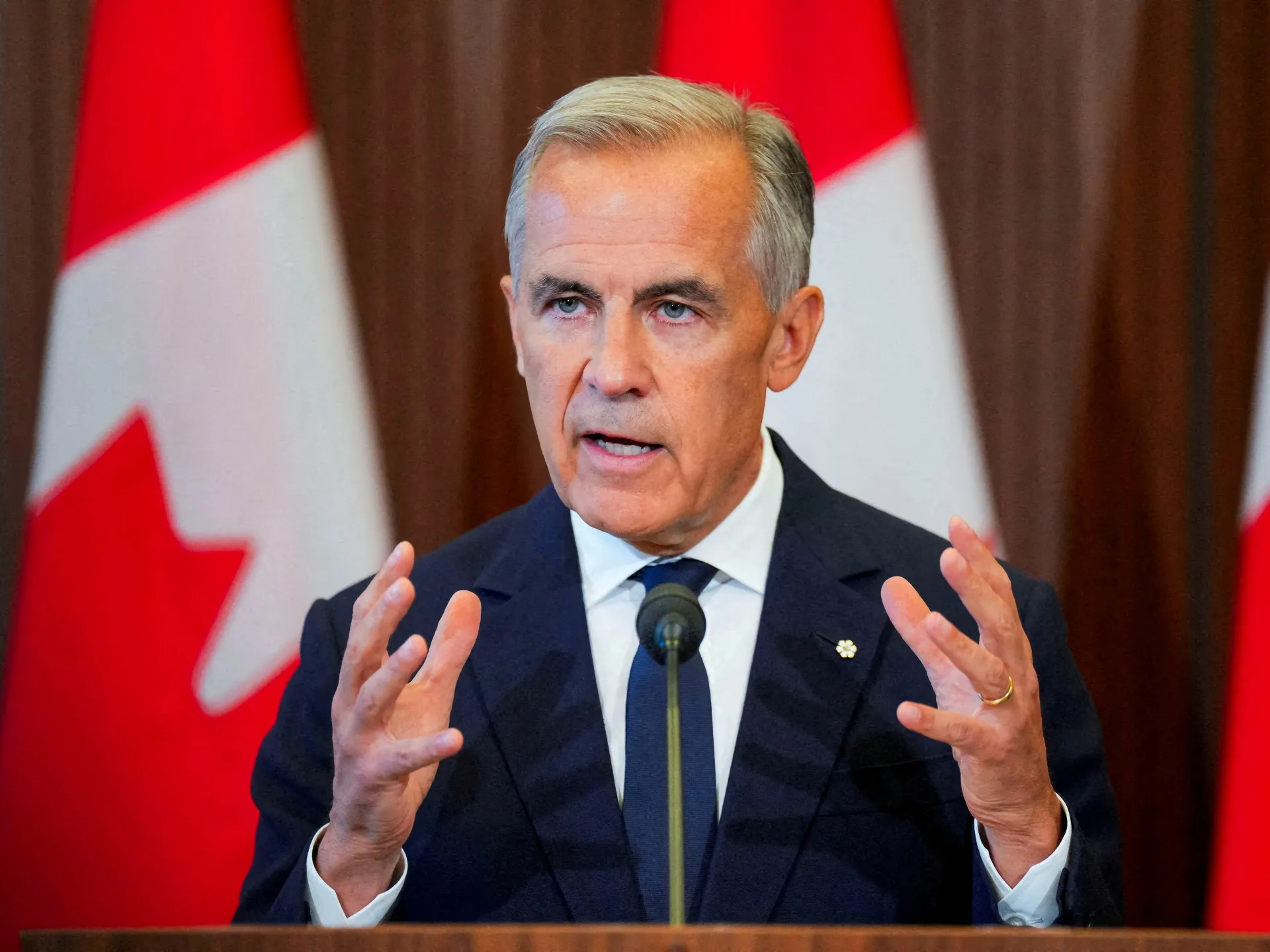




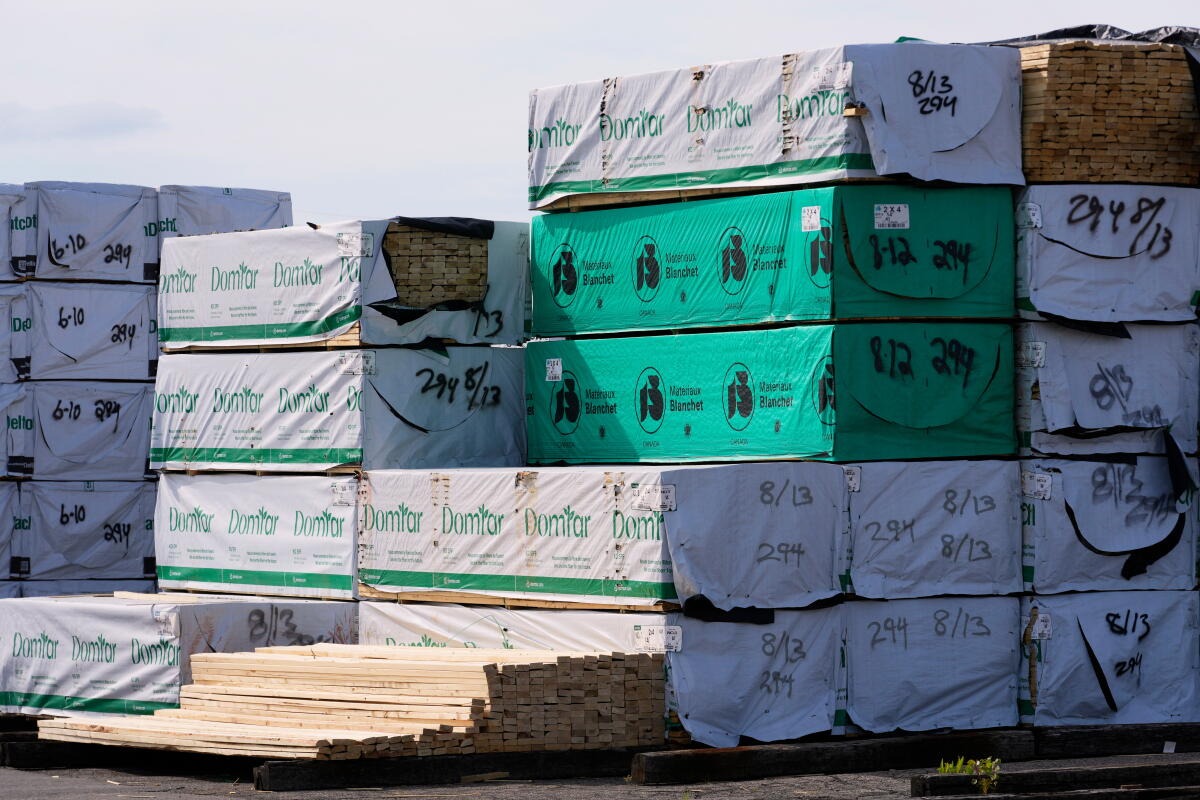


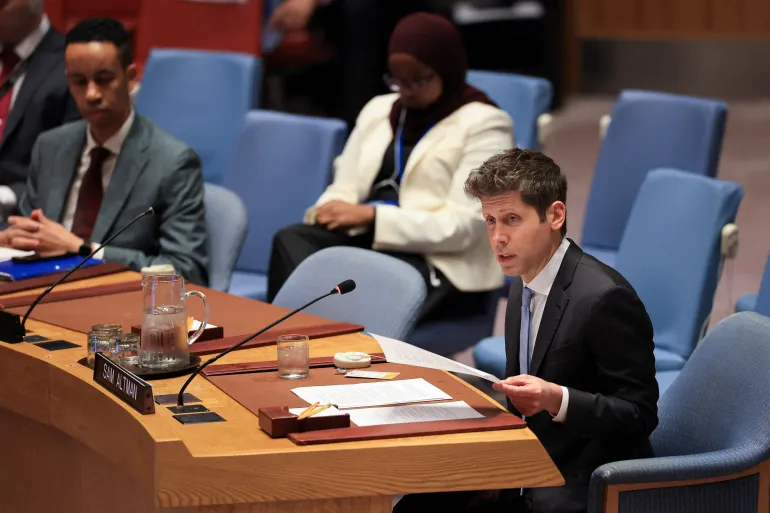
![OpenAI CEO Sam Altman addresses the United Nations Security Council during a session on Artificial Intelligence during the 81st United Nations General Assembly, at UN Headquarters in New York City, US, September 23, 2026 [Brendan McDermid/Reuters]](https://i0.wp.com/occasionaldigest.com/wp-content/uploads/2026/09/2026-09-23T193910Z_1511611083_RC27PNAQNEYE_RTRMADP_3_AI-UN-1790203991.jpg?w=640&ssl=1)
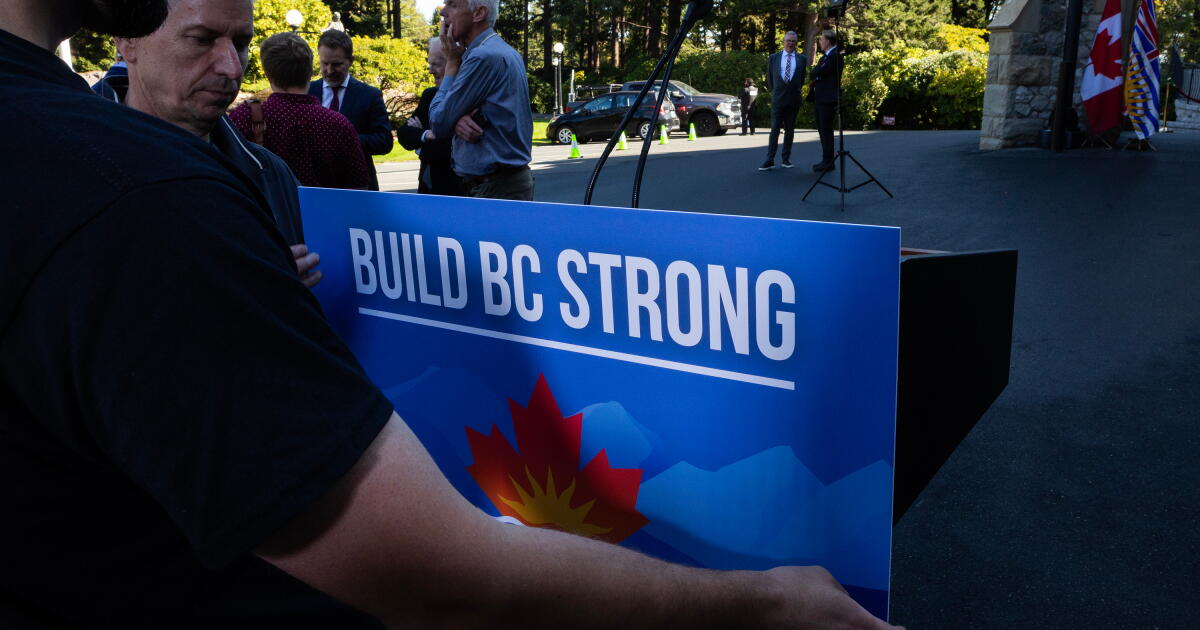
![British Prime Minister Andy Burnham looks at French President Emmanuel Macron as they pose for photos ahead of a bilateral meeting at 10 Downing Street on September 3, 2026 in London, UK [Leon Neal/Reuters]](https://i0.wp.com/occasionaldigest.com/wp-content/uploads/2026/09/2026-09-03T133923Z_1327001305_RC2MBNAX5ATT_RTRMADP_3_BRITAIN-FRANCE-1788466043.jpg?w=640&ssl=1)



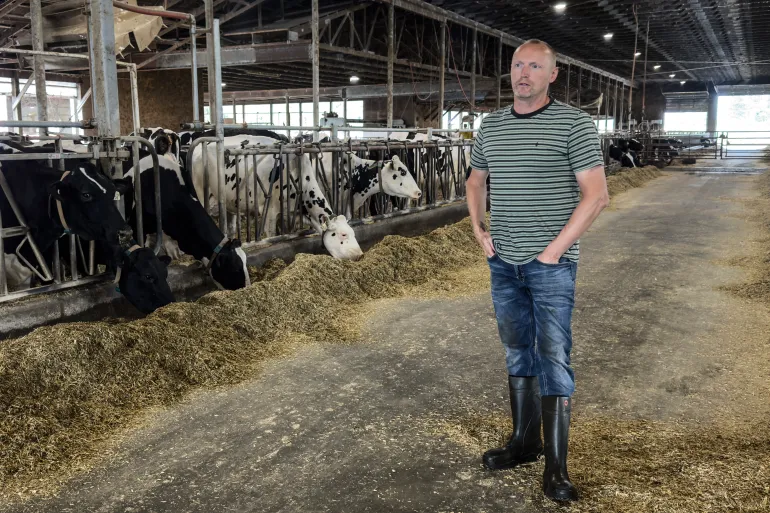
![Casey Pruim, owner of Prime Acres Ltd. dairy farm in Abbotsford, British Columbia heads the BC Milk Producers Association in Canada's western province [Ali Mustafa/Al Jazeera]](https://i0.wp.com/www.aljazeera.com/wp-content/uploads/2026/09/PRUIM7-1789051532.jpg?w=640&ssl=1)
![Each day almost 14,000 litres of milk produced by cows is stored in the refrigeration unit at Casey Pruim's Prime Acres Ltd. dairy farm in Abbotsford, British Columbia at a temperature of 2.8'C [Ali Mustafa/Al Jazeera]](https://i0.wp.com/www.aljazeera.com/wp-content/uploads/2026/09/DSLR_PRUIM25-1789051502.jpg?w=640&ssl=1)
![Casey Pruim, owner of Prime Acres Ltd. has a herd of 330 cows at his dairy farm in Abbotsford, British Columbia [Ali Mustafa/Al Jazeera]](https://i0.wp.com/www.aljazeera.com/wp-content/uploads/2026/09/DSC01443-1789051497.jpg?w=640&ssl=1)
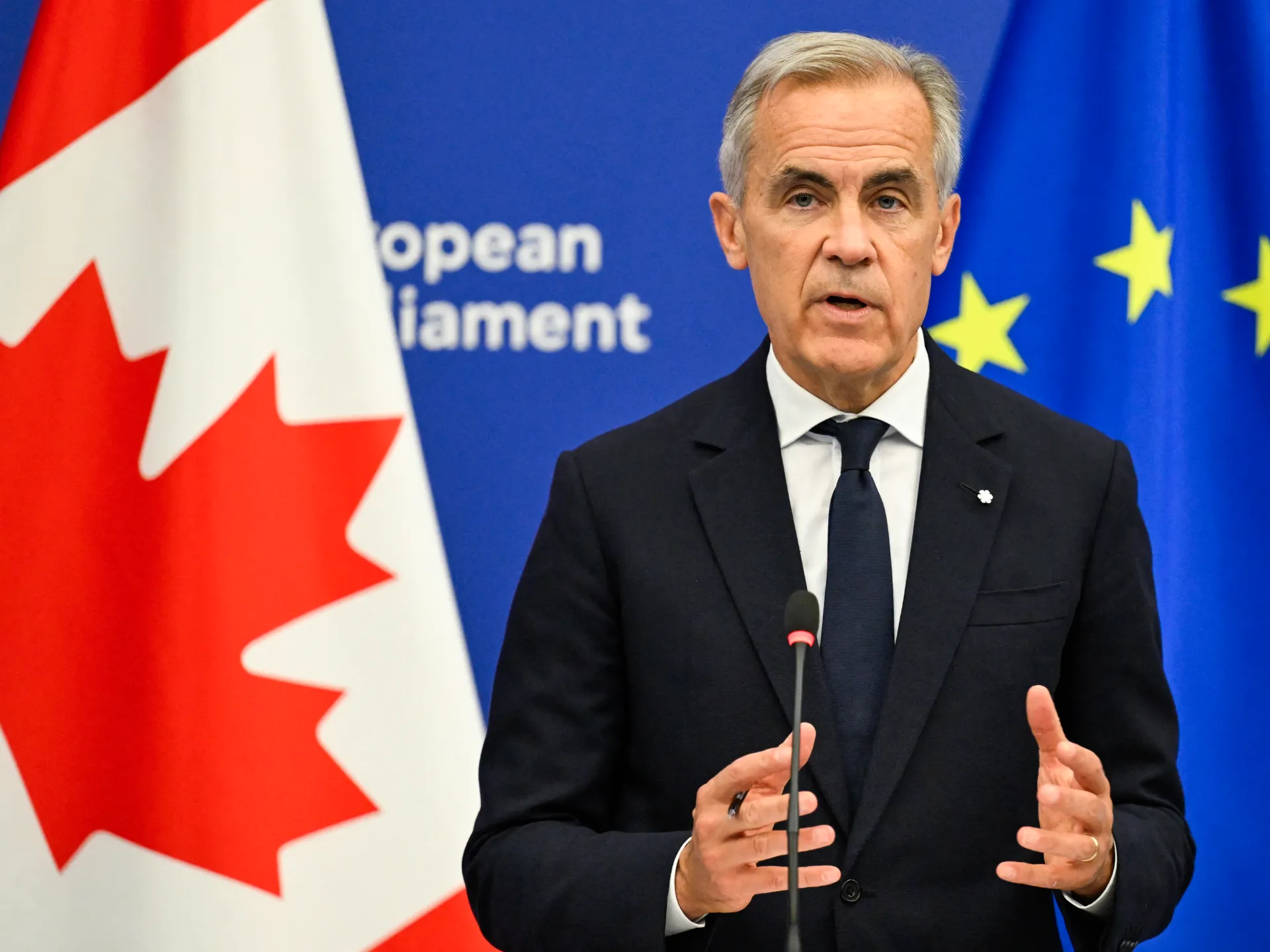
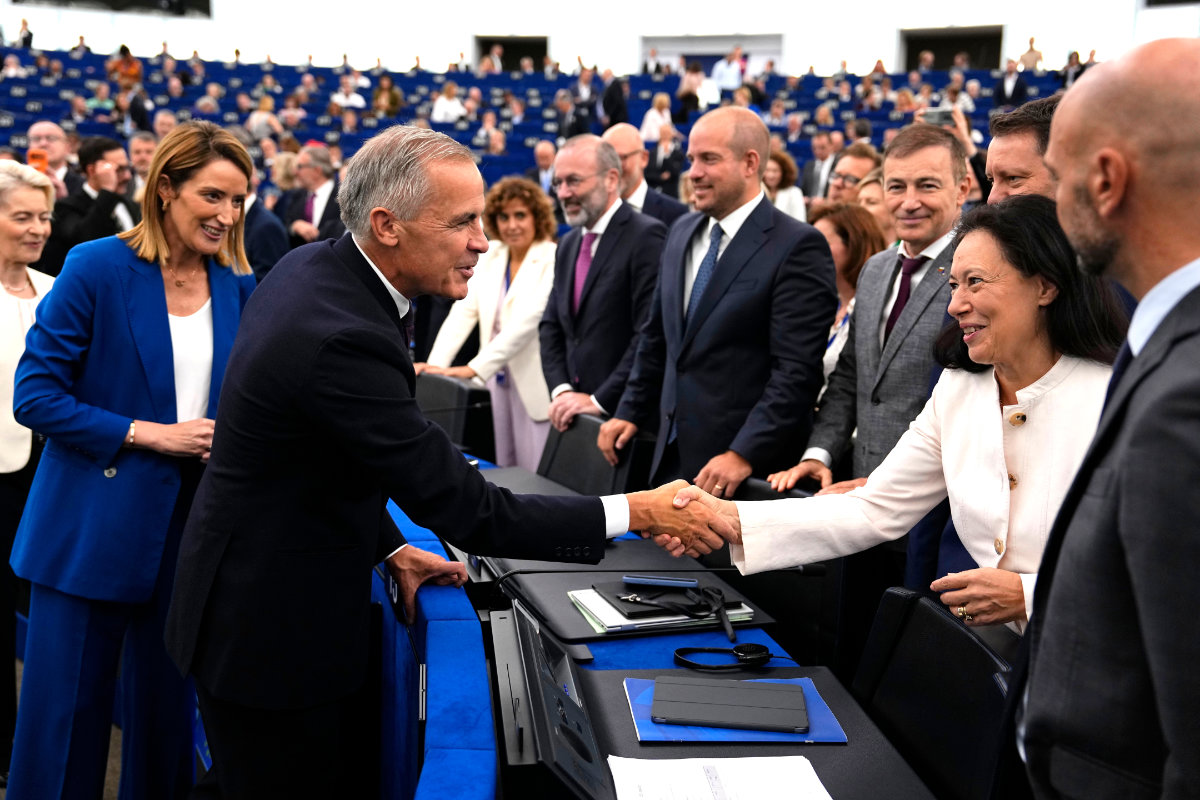

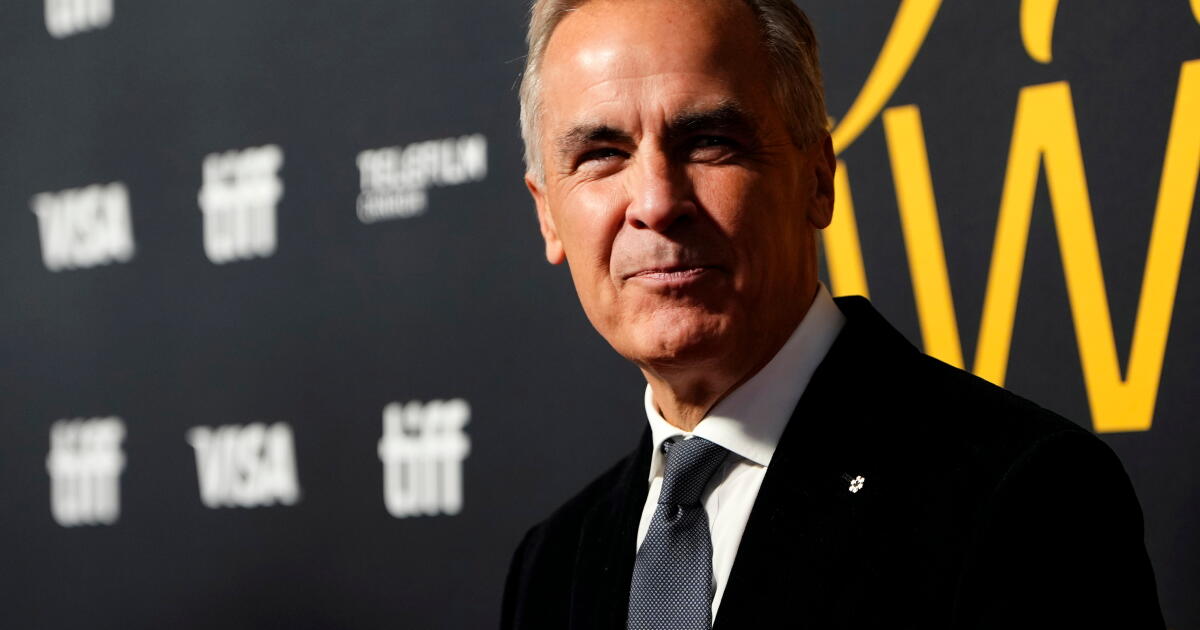


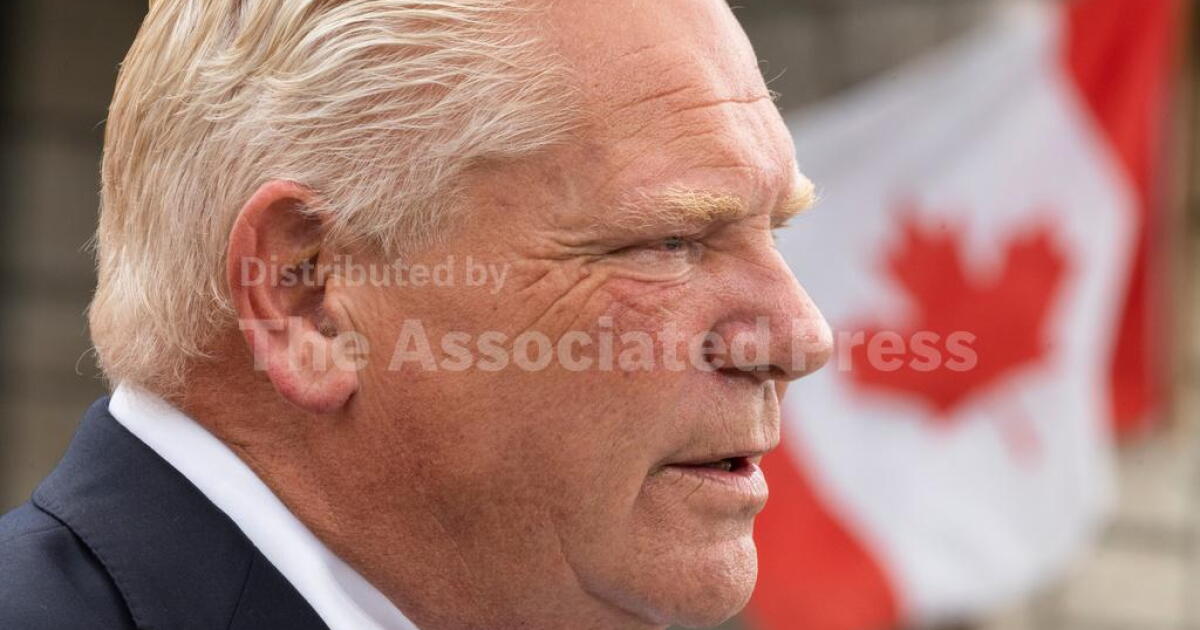



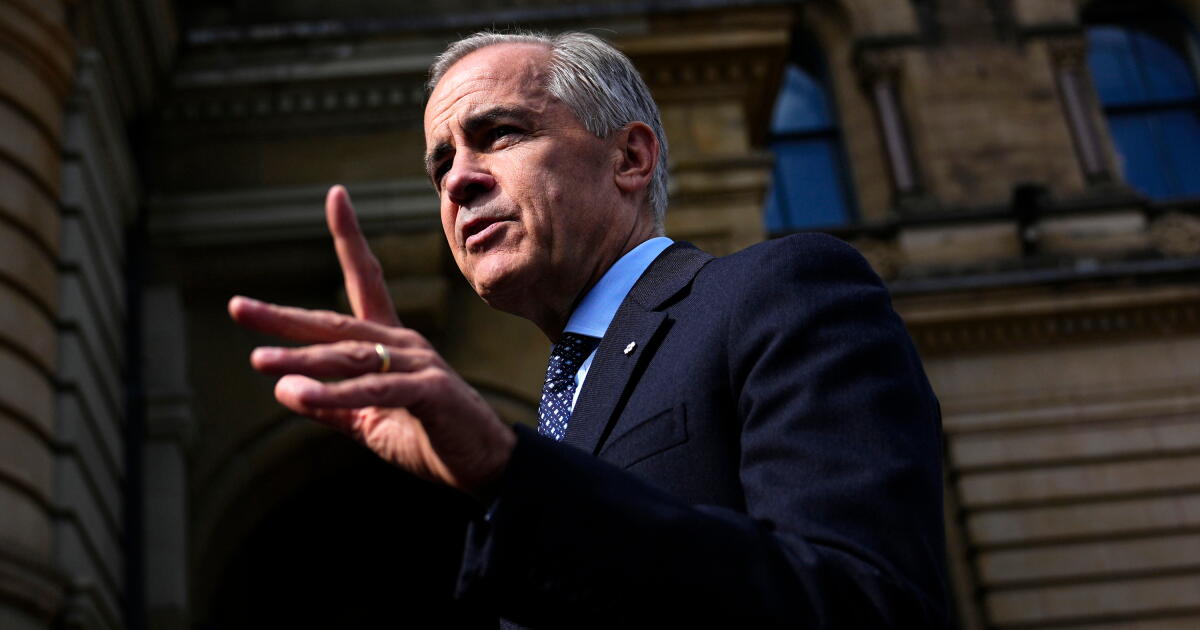
![Canada’s Prime Minister Mark Carney speaks with the news media after he suspended trade negotiations with the United States, in Ottawa, Ontario, Canada August 22, 2026. [Chris Tanouye/Reuters]](https://i0.wp.com/occasionaldigest.com/wp-content/uploads/2026/09/reuters_6a9f8004-1788837892.jpg?w=640&ssl=1)