campaign

Clinton Blames Bush for Loss of Blue-Collar Jobs : Campaign: Democrat says U.S. response has been poor. He describes his own plan to help retrain workers.

Democratic presidential nominee Bill Clinton on Tuesday pressed his charge that President Bush has mishandled the economy, using a manufacturing plant as his stage to lament the loss of blue-collar jobs and to flesh out a plan to resurrect the nation’s manufacturing base.

At the Standard-Knapp corporation here–and later at a rally outside an East Haven, Conn., restaurant–Clinton sought to place the blame squarely on the incumbent for the ebbing away of America’s once-stalwart manufacturing base.

“The percentage of our workers employed in the manufacturing sector has continued to decline,” despite productivity gains posted by many companies, Clinton told the Standard-Knapp workers, who assemble packaging machines.

He said, “Just in the last four years, we’ve lost 1.3 million manufacturing jobs.”

The federal Bureau of Labor Statistics confirmed Tuesday that the number of U.S. manufacturing jobs has fallen by 1,388,000 since Bush took office in January, 1989, to 18,150,000. Total non-farm employment grew slightly over the same period, increasing 188,000 to a total of 108,517,000 as of last month, with most of the growth in government employment.

Clinton decried the lack of a coordinated national response to the manufacturing sector’s job decline.

“Unlike our competitors, this country has no national strategy, no comprehensive partnership between business and workers and education and government to create the kinds of high-wage, high-growth jobs in manufacturing that I think are critical to our future,” he said.

Clinton’s Tuesday campaign message was meant to build upon his Labor Day efforts to depict Bush as a man who has allied himself with the rich and powerful and has forgotten needy and working Americans.

As part of offering himself as an alternative, Clinton announced what he touted as a new manufacturing policy, which largely tied together proposals he has advanced throughout his presidential campaign.

One new element in the plan calls for establishment of 170 high-tech centers that would serve as incubators for new manufacturing ideas, which would then be shared with small- and medium-sized companies. The centers would be modeled after the agricultural extensions common in rural areas of the country.

Clinton said the centers would solve the “technological gaps” that plague smaller companies, as well as retrain the scientists and engineers previously employed in the dwindling defense industry.

“There are 200,000 unemployed defense workers, technicians, scientists and engineers in California alone today,” Clinton said. “And these people have all this incredible potential to add to our national wealth, but we don’t have a system for moving them from the defense sector into the non-defense sector. The extension centers will help to do this.”

Later, however, Clinton said only 25 of the centers would be “almost exclusively” dedicated to defense workers, and another 25 to the manufacturing industry. Also, it was unclear where they would be located.

In describing his plan, Clinton demonstrated the difficulty of trying to mount a campaign as a “new style” Democrat, who is focused on the technologies and jobs of the future, and still satisfy the desires of organized labor, which has come aboard his campaign vigorously and has provided a sizable portion of the crowds at many of his recent rallies.

For instance, Clinton suggested repeatedly Tuesday that the U.S. should mimic the approaches of its chief economic competitors.

“Everybody knows we’ve lost a lot of auto jobs in the last 10 years and we’ve lost a lot of steel jobs in the last 10 years,” Clinton said. “But if you look at the Germans and the Japanese . . . when they moved people out of automobiles, they moved into other manufacturing technologies with a future. When our people moved out of automobiles, they moved into the unemployment lines.”

At the same time, though, Clinton sought to show that he remains concerned about the plight of the more traditional businesses that organized labor is trying to salvage.

To that end, he scored Bush for staging a Labor Day campaign event that he suggested missed the point.

“Just yesterday, President Bush had a great photo (opportunity) walking across the bridge that connects Mackinac Island to the mainland of Michigan–a bridge that was built with steel from a mill that is closed in the last four years,” he said.

Ultimately, Clinton settled on mixing a stew of Republican and Democratic ideas for reviving the economy.

“We’ve got to get rid of regulations that don’t make sense,” said Clinton, echoing a line that has been standard in GOP rhetoric. Then he added a distinctly liberal element: “And we’ve got to permit our companies to join together . . . as long as it doesn’t affect their competitive pricing here at home.”

At the rally in East Haven, Clinton reiterated his belief that a combination of approaches is needed to solve the nation’s economic woes.

“A lot of the problems we face today don’t fall very neatly in categories of left and right and liberal and conservative and Republican and Democratic,” he said. “We are living in a post-Cold War world where we are fighting and competing for every dollar we get.”

In general, Clinton has pledged to use the U.S. tax code to benefit domestic businesses and has promised to transfer money saved in defense cutbacks to job-creating programs.

He argued Tuesday, as he has throughout the campaign, that existing tax codes propel many companies to set up operations outside the United States, stripping the nation of jobs as a consequence.

He won his only applause from the Standard-Knapp workers when he pledged to “copy our competitors” and put the heft of the government behind businesses.

“The tax system in America should work to benefit Americans without being protectionist,” Clinton said.

The Arkansas governor also promised to streamline export laws to help companies compete overseas and said he would bolster the export offices in U.S. embassies worldwide.

Overall, Clinton said, his plan would cost about $2 billion a year over five years, financed with money now spent on military research.

Today on the Trail . . .

Bill Clinton campaigns in Atlanta and Jacksonville, Fla.

President Bush campaigns in Norristown and Collegeville, Pa., and Middletown, N.J.

Vice President Dan Quayle attends a rally in San Diego and addresses a San Diego Rotary Club luncheon.

*

TELEVISION

Clinton is interviewed on WJXT’s “Florida talks to Clinton.” C-SPAN will air it live at 5 p.m. PDT.

Tennessee Sen. Al Gore is interviewed on CNN’s “Larry King Live” at 6 p.m. PDT.

Source link

Former Huntington Beach city attorney, a Newsom critic, to run for state attorney general

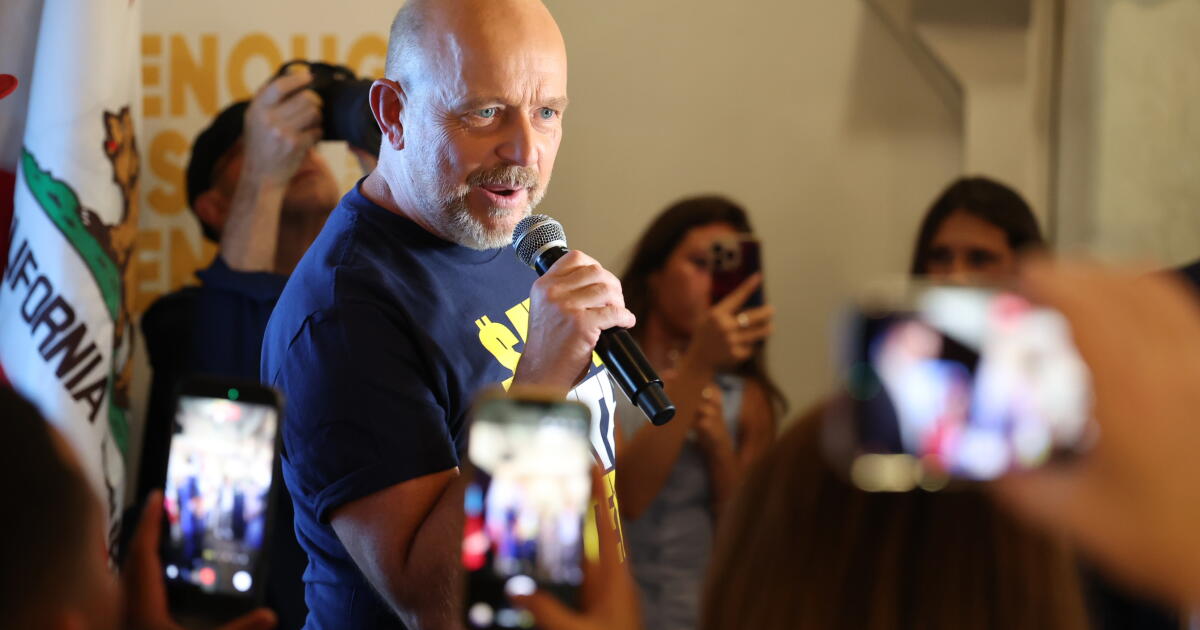
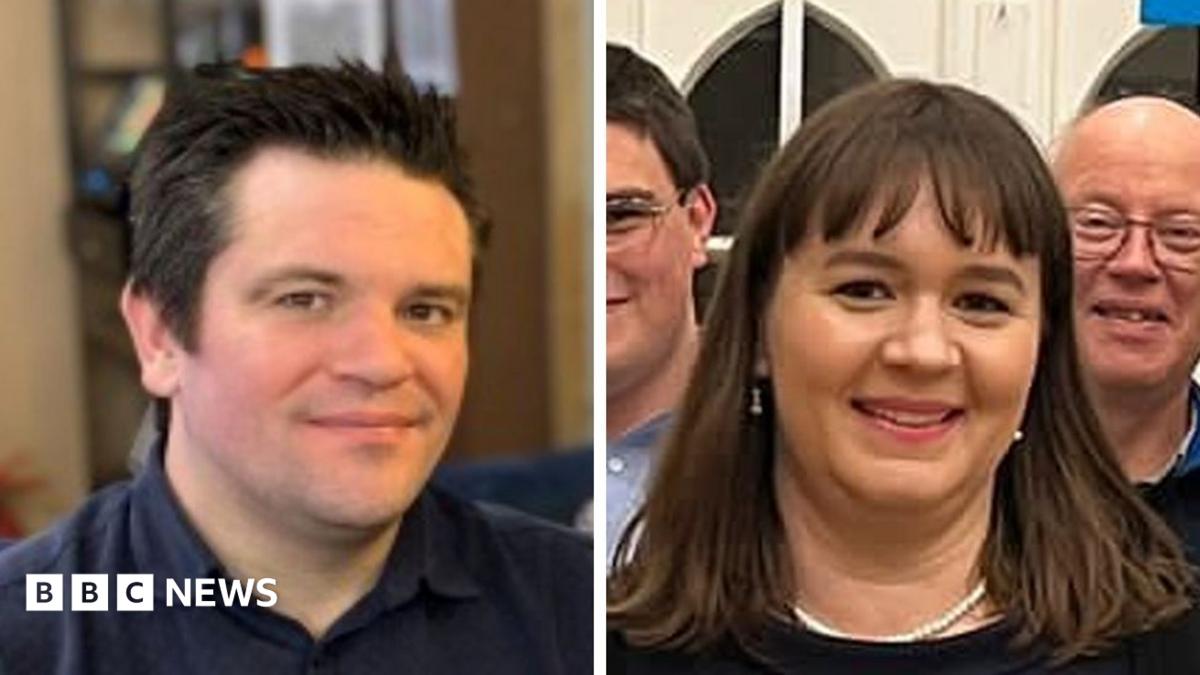
Michael Gates, the former Huntington Beach city attorney who spent his tenure as a staunch antagonist to California’s liberal politics, is running for state attorney general as part of a slate with Republican gubernatorial candidate Steve Hilton.

Gates, 50, announced the launch of his campaign for the state’s top law enforcement job during an event at the Huntington Beach Pier on Wednesday flanked by Hilton, former state Senate Majority Leader Gloria Romero, who is running alongside Hilton for lieutenant governor, and a trove of supporters.

“California has the highest cost of living and the highest taxes, which are crushing families, and Sacramento elites keep scheming for ways to raise our taxes while leaving our streets unsafe for our families and our businesses,” Gates said. “Sacramento has proven that it is completely out of touch with everyday Californians.”

Gates’ speech launching his campaign struck a similar tone to the messaging he employed in his role as Huntington Beach city attorney, where he positioned himself in direct opposition to the state’s Democratic leaders, including Gov. Gavin Newsom and current Atty. Gen. Rob Bonta.

Bonta this week announced he was running for reelection, opting not to run for California governor. As attorney general, Bonta has sued the Trump administration more than 50 times, calling the president’s policies “vicious, inhumane, unlawful” and, in many cases, unconstitutional.

Gates, a lifelong Republican, was first elected as Huntington Beach city attorney in 2014 and was reelected twice. He held the role until last year, when he was appointed as a deputy assistant attorney general in the Department of Justice’s Civil Rights Division. After a 10-month stint with the federal government, Gates announced he had resigned the post so he could spend more time with his family. He was rehired to work as an assistant city attorney in Huntington Beach.

During his tenure with the city, Gates engaged in legal tussles with the state over voter identification, housing mandates, immigration and other issues with mixed results.

In recent years, the city successfully sued the state to recoup millions of dollars in redevelopment agency loan money from a waterfront development and an affordable senior housing project.

But legal fights over voter identification and housing have been less fruitful. Last year, the 4th District Court of Appeal struck down Huntington Beach’s law that would require residents to show an ID to cast their ballot in local elections.

The city’s legal battle over housing requirements was also delivered a blow last year when the state Supreme Court refused to review an appellate court ruling in the state’s favor compelling the city to adhere to state mandates for affordable housing. Huntington Beach had argued its designation as a charter city exempted them from the state’s directives.

“This man, Michael Gates, he is the fighter we need for California,” Hilton said on Wednesday, drawing cheers from the crowd. “You know better than anyone because he led that revolution right here in Huntington Beach.”

Source link

Mood of Discontent Hovers Over South; Presidential Rivals So Far Fail to Tap It : Campaign: Major primaries approach rapidly, but message of competing hopefuls seems not to have reached voters.

After weeks of meandering through snowy fields of the North and Midwest, the campaign for the presidency now turns South, to a vast region that paradoxically mixes relatively low unemployment with high dissatisfaction.

In Blanco County, Tex., for example, the unemployment rate of 3.5%–down one-third over the last three years–compares favorably with the days when local favorite son Lyndon B. Johnson reigned in Washington in the ‘60s. But that fact does not console Ava Johnson Cox, the late President’s 87-year-old cousin.

“At one time, America contained the inspiration and the purifying principles of the world,” Miss Ava told a visiting reporter recently. “But no more.”

Clear across Dixie, in Atlanta, Jackie Rogers, owner of a downtown ladies’ boutique, struck a similar note.

“I’m very upset about this economy,” she said. “This is the first time America is not rewarding their well-educated people.

“They are the ones who went to school and studied so hard to make America No. 1,” she added. Now, “they are the ones on the unemployment lines.”

But while Southerners may agree with citizens of, for example, New Hampshire, about the problems the country faces, they have had much less exposure to politicians’ proposed solutions.

Unlike New Hampshirites, who lived for two months under a steady barrage of campaigning before they voted last week, citizens of the South have only just begun to hear from the candidates. When they vote–March 3 in Georgia and Maryland, March 7 in South Carolina and March 10 in Florida, Texas and several other Southern and border states–they will do so after an intense, but short, campaign.

As a result, for many potential Southern voters, the sense of discontent they share with the rest of the nation remains somewhat separated from the political process, and their feelings about candidates remain largely unformed.

“It’s strange to be so far into the process and not feel more committed to someone,” said Margaret Yoder, a 44-year-old real estate broker in Miami. “I’m feeling confused.”

Southern voters know President Bush, and many in the South still like him despite disapproval of his handling of the economy.

“I’m going to vote Republican,” said Henry Dryer Jr. of Carollton, Ga. “I think, personally, and most of the people in my circle feel, like Bush has done as good a job as any President in his circumstances could have done.

“The poor man can’t do it by himself,” Dryer said. On the other hand, he added: “People in this part of the country are just very disappointed that Bush hasn’t done something to pull us out of the recession.”

On the Democratic side, the name of Arkansas Gov. Bill Clinton registers with many, but primarily for the controversies surrounding him–unsubstantiated allegations of marital infidelity and questions about his Vietnam-era draft status.

And as for former Massachusetts Sen. Paul E. Tsongas, some voters say they like what they have heard of him. Tsongas is “not a showman,” said James Smith, a retiree in Atlanta. But more typically, Southerners interviewed for this story said that despite his victory in New Hampshire, they simply remain unsure who Tsongas is.

“People still have trouble pronouncing his name,” said Beth Carper, a graduate student at the University of Tennessee in Knoxville, who said she supports Tsongas but doubts he can win when her state votes March 10.

In Johnson City, Tex., the Blanco County seat in the hill country west of Austin, Ralph Moss, 48, said he has made only one decision about the election. He voted for Bush once and will not do it again. Beyond that, Moss said, he cannot decide what to do.

“There’s not a real good choice to make,” said Moss, who is the mayor, a nonpartisan position. “I may not vote in the primary.”

DeeDee McKennis, a cashier at Johnson City’s Dixie Fried Chicken and Quick Stop, would like to see the country make a change.

Even though she and her husband have had “the best year we’ve had in years” economically, she remains worried. McKennis, 46, and her husband both hold two jobs, she said, but they cannot afford to send any of their four children to college. Nor can they afford health insurance.

Still, McKennis has not found a candidate she feels confident would bring about the changes she would like to see.

Down the street, Duke Rumpf, 68, the manager of the Charles’ Motel, gave Clinton a tepid endorsement and, in the process, summed up what many Southern voters seem to feel.

Clinton, he said, had “got the state of Arkansas in pretty good shape.” But, he added: “I ain’t seen anybody I’m real enthused about. I know I ain’t enthused about the one (President) we got.”

Special correspondents Edith Stanley in Atlanta, Karen Brandon in Johnson City, Tex., Michael Clary in Miami and Patrick Thomas in Nashville contributed to this story.

Source link

After ‘Marty Supreme’ marketing, what will Oscar campaign be?

Are you wondering, like Alixandra Kupcik, where did all the feel-good movies go?

She must have written that story before “Song Sung Blue” came out. Because Hugh Jackman passionately describing the greatness of Neil Diamond’s “Soolaimon” and then demonstrating that song’s grandeur by performing it in the new film “Song Sung Blue” is the definition of corny, feel-good comfort.

Which leads me to my question to you this day: Have you seen “Marty Supreme”? And what feelings — good, bad, uneasy, elated — did that movie arouse in you?

I’m Glenn Whipp, columnist for the Los Angeles Times and host of The Envelope newsletter. Time to wipe down the ping-pong table?

Sign up for The Envelope

Get exclusive awards season news, in-depth interviews and columnist Glenn Whipp’s must-read analysis straight to your inbox.

By continuing, you agree to our Terms of Service and our Privacy Policy.

Inside the reactions to ‘Marty Supreme’

Timothee Chalamet in "Marty Supreme."

He summited the Sphere, exhorting us to “dream big.” He shot a rap music video to debunk the conspiracy theory that he is a popular British rapper. He has popped up at screenings flanked by bodyguards sporting giant orange ping-pong balls for heads.

Leading up to the Christmas Day premiere of his new movie, “Marty Supreme,” Timothée Chalamet was front and center in a promotional tour that was unhinged, delightful and, judging from the weekend’s box office, quite successful.

“Marty Supreme,” the wildly entertaining, over-caffeinated portrait of a single-minded ping-pong player, took in $27 million over the four-day Christmas weekend, the best opening in distributor A24’s history. The numbers surpassed the opening of “A Complete Unknown,” last year’s Chalamet Christmas release that featured the actor playing Bob Dylan in his formative years.

Not everyone was on board with “Marty.” Moviegoers gave the movie a B+ rating with market research company CinemaScore. That’s good, but not great. (“A Complete Unknown,” by comparison, earned an A.)

Podcaster Claira Curtis’ experience seeing the movie at the Grove feels like an accurate representation of the “Marty Supreme” adventure: “Packed ‘Marty Supreme theater had the full range of reactions. There were people walking out halfway through. There were people clapping. There was someone coming out of it saying, ‘Eh, it was fine’ & then their friend went, ‘Are you insane? It was peak!’”

The disparate responses reflect a couple of things.

One, not everyone embraces the Safdie brand of anxiety-inducing cinema. Josh Safdie directed “Marty.” His brother, Benny, made “The Smashing Machine,” released earlier this year. Together, they made “Uncut Gems” and “Good Time,” movies that, take your pick, were exhilarating or excruciating. Or both! (Exclamation point intended. These are exclamation-point films.)

And two, the title character in “Marty Supreme” is a lot — an undeniably talented, relentless self-promoter careening toward his goals of fame and fortune with little regard to the damage he is inflicting on others. He’s despicable, but also, as played by Chalamet, winningly charming. Unless you find Chalamet annoying. Then you’re probably best-served listening to Hugh Jackman sing Neil Diamond songs.

Chalamet has channeled Marty’s earnest energy in his promotional appearances for the film.

“This is a movie about sacrifice in pursuit of a dream,” he told Jimmy Fallon on “The Tonight Show.” “And it’s something I can relate to deeply. And we live in a bleak time, especially for young people, so this film is an attempted antidote to that.”

Chalamet then pivoted to the camera, the better to look into viewers’ eyes.

“And to continue to believe in yourself and to continue to dream big and to follow your dreams and not take no for an answer. That’s the spirit of ‘Marty Supreme,’ out on Christmas Day.”

Judging from the box office, Chalamet has pushed across the message. Will it work on awards voters, giving Chalamet the first Oscar of his career? As we head into the new year, the next phase of the “Marty” tour promises to be the season’s most interesting storyline. Gas up the blimp!

More coverage of ‘Marty Supreme’

Source link

Venezuela releases more prisoners amid US pressure campaign: Rights groups | News

Second release of prisoners related to 2024 election protests seen as possible conciliatory move from Maduro.

The government of Venezuelan leader Nicolas Maduro has released dozens of prisoners held for protesting his disputed victory in the country’s 2024 election.

The release of at least 87 prisoners comes as the administration of United States President Donald Trump has continued its pressure campaign against Caracas.

Recommended Stories

list of 3 itemsend of list

It was the second release within a week, in what some observers have viewed as an effort by Maduro to strike a more conciliatory tone, even as he has accused Trump of seeking to topple his government and seize Venezuela’s vast oil reserves.

Two rights groups, the Committee for the Freedom of Political Prisoners and the Committee of Mothers in Defense of the Truth, confirmed the release on Thursday.

“On the morning of January 1, mothers and relatives reported new releases of political prisoners from Tocoron prison in Aragua state” in northern Venezuela, the Committee for the Freedom of Political Prisoners wrote on social media.

Venezuela’s government had previously announced the release of 99 prisoners on December 25, calling it “a concrete expression of the State’s commitment to peace, dialogue and justice”.

However, Foro Penal, a leading Venezuelan rights group, said afterwards it was only able to verify the release of 61 prisoners at the time.

Maduro claimed victory in the July 2024 vote, maintaining he had secured a third six-year term. The opposition has alleged widespread fraud, publishing results later verified by independent experts showing that Edmond Gonzalez had won by a landslide.

Gonzalez ran in place of opposition leader Maria Corina Machado after she was banned from standing in the election. Machado recently emerged in Oslo, Norway, after spending months in hiding.

The disputed vote prompted widespread protests across the country, resulting in at least 28 deaths and thousands of arrests.

Official records show that at least 2,000 people have since been released, while more than 700 people are still believed to be held for political reasons.

The disputed election has, in part, undergirded the Trump administration’s pressure against Maduro, whom they have accused of running a drug trafficking operation that aims to destabilise the US.

The Pentagon has surged military assets off the coast of Venezuela since August, with Trump earlier this week revealing the first attack on Venezuelan soil targeting a dock allegedly used to load drug boats earlier this week.

The US has also blockaded sanctioned oil tankers entering and exiting Venezuela, while simultaneously carrying out strikes on alleged drug boats in the Caribbean and eastern Pacific, in what rights groups say amount to extrajudicial killings.

More than 100 people have been killed in the strikes so far.

From exile, Machado has vocally supported the US pressure campaign. She has been more circumspect on strikes on Venezuelan territory, while maintaining that Venezuela has been “invaded” by “terrorist groups” and “drug cartels”.

Venezuela experts have warned that many opposition groups in the country oppose US military action.

Source link

Bill Lockyer creates committee to keep campaign funds in play

SACRAMENTO — California State Treasurer Bill Lockyer recently said he was retiring from public office next year, so how does he explain filing papers this week to form a campaign committee for a possible run for lieutenant governor in 2018?

He probably won’t run for lieutenant governor in 2018, but the filing allows him to keep his large political war chest in play to influence elections of other candidates, a spokesman said.

As many other politicians have done, Lockyer is exploiting a much-criticized loophole in the campaign finance law so he can continue to use more than $2.2 million in surplus campaign funds after he leaves office next year.

Normally, an elected official would have to close his campaign committee no later than nine
months after the date he leaves office or the term of office ends.

But many politicians form new committees for offices they do not intend to seek so they can continue to have use of the money for years to come. That way they can contribute to candidates and causes using political funds rather than personal funds.

“His decision to retire from elective office stands,” spokesman Tom Dresslar said. “He hasn’t changed his mind. But at this point he doesn’t want to completely foreclose any options in 2018.”

“Besides, to make sure he can continue using the money to support select candidates and causes beyond 2014 he was gonna have to transfer his campaign funds to a new committee eventually. He decided the sooner the better,” Dresslar said.

ALSO:

States try to tackle ‘secret money’ in politics

States crack down on campaigning nonprofits

Obama picks California watchdog for FEC

patrick.mcgreevy@latimes.com

¿

Source link

Ugandan police tear gas crowd at Bobi Wine campaign event | Government

NewsFeed

Footage shows security forces dispersing crowds with tear gas at rallies for Ugandan presidential candidate Robert Kyagulanyi, also known as Bobi Wine, in Kampala. The pop star-turned-politician is campaigning ahead of Uganda’s January 2026 elections, as officials warn against interference.

Source link

Trump Bets on the Economy in Pivotal Midterm Campaign Push

NEWS BRIEF President Donald Trump launched his midterm election campaign push in North Carolina on Friday, seeking to reframe the economy as a winning issue despite sagging consumer confidence and low approval ratings. In a sprawling speech, he touted stock market gains, cooling inflation, and a recent pharmaceutical pricing deal while deflecting blame for persistent […]

The post Trump Bets on the Economy in Pivotal Midterm Campaign Push appeared first on Modern Diplomacy.

Source link

Rep. Elise Stefanik ends her campaign for N.Y. governor and won’t seek reelection to House

Rep. Elise Stefanik announced Friday that she is suspending her campaign for New York governor and will not seek reelection to Congress, bowing out of the race in a surprise statement that said “it is not an effective use of our time” to stay in what was expected to be a bruising Republican primary.

Stefanik, a Republican ally of President Trump, said in a post on X that she was confident of her chances in the primary against Bruce Blakeman, a Republican county official in New York City’s suburbs. But she said she wanted to spend more time with her young son and family.

“I have thought deeply about this and I know that as a mother, I will feel profound regret if I don’t further focus on my young son’s safety, growth, and happiness — particularly at his tender age,” she said.

Stefanik has been an intense critic of incumbent Democratic Gov. Kathy Hochul, who is also seeking reelection but faces a primary challenge from her own lieutenant governor, Antonio Delgado.

The announcement marks an abrupt end, at least for now, for a once-promising career for Stefanik. She was the youngest woman ever elected to Congress when she won her first campaign in 2014 at just 30 years old, representing a new generation of Republicans making inroads in Washington. She ultimately rose to her party’s leadership in the House when she became the chair of the House Republican Conference in 2021.

First viewed as a moderate when she came to Washington, Stefanik became far more conservative as Trump began to dominate the party. Once someone who refused to say Trump’s name, she became one of his top defenders during his first impeachment inquiry. She would go on to vote against certifying the 2020 election results, even after a violent mob stormed the Capitol on Jan. 6.

Stefanik was expected to have a bitter Republican primary against Blakeman, who also counts himself as an ally of Trump. The president had so far seemed keen on avoiding picking a side in the race, telling reporters recently: “He’s great, and she’s great. They’re both great people.”

Stefanik’s decision follows a clash with Speaker Mike Johnson, whom she accused of lying before embarking on a series of media interviews criticizing him. In one with the Wall Street Journal, she called Johnson a “political novice” and said he wouldn’t be reelected speaker if the vote were held today.

The tumultuous early December episode appeared to cool when Johnson said he and Stefanik had a “great talk.”

“I called her and I said, ‘Why wouldn’t you just come to me, you know?’” Johnson said. “So we had some intense fellowship about that.”

Still, Stefanik, the chairwoman of the House Republican leadership, has not fully walked back her criticisms. A Dec. 2 social media post remains online in which, after a provision she championed was omitted from a defense authorization bill, Stefanik accused Johnson of falsely claiming he was unaware of it, calling it “more lies from the Speaker.”

State Republican Chairman Ed Cox said the party respected Stefanik’s decision and thanked her for her efforts.

“Bruce Blakeman has my endorsement and I urge our State Committee and party leaders to join me,” Cox said in a prepared statement. “Bruce is a fighter who has proven he knows how to win in difficult political terrain.”

Izaguirre writes for the Associated Press. AP writers Steven Sloan and Joey Cappelletti contributed from Washington.

Source link