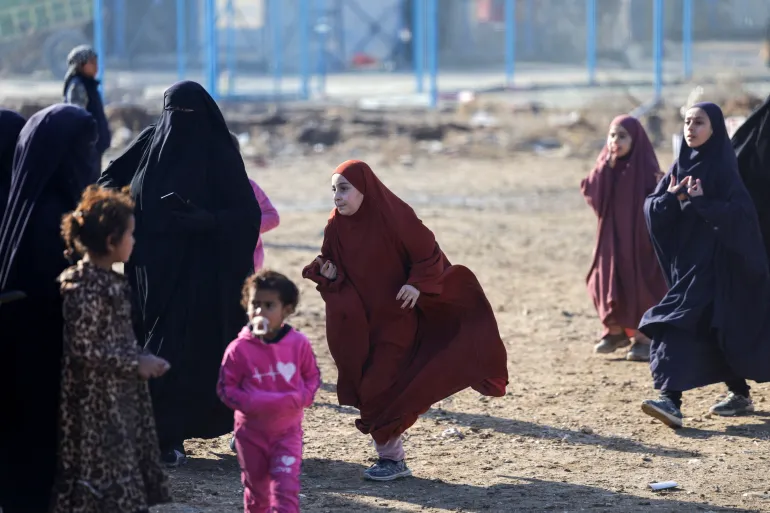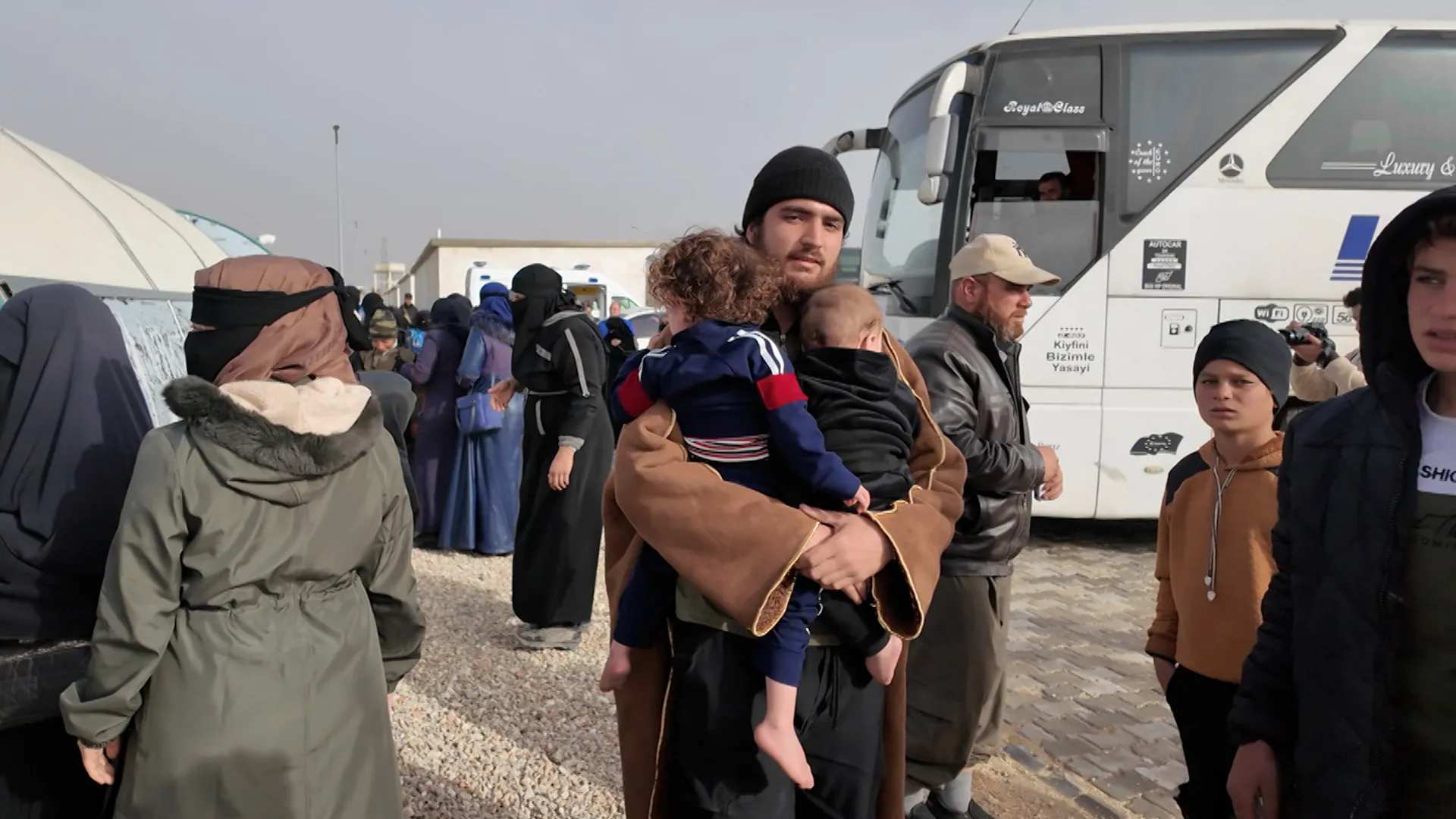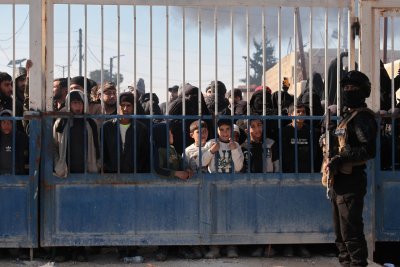
Syria’s government has been relocating families after announcing the closure of the notorious al-Hol camp for people with suspected links to ISIL fighters. Al Jazeera’s Heidi Pett has been seeing families arrive at a new camp, where the government says conditions will be better.
MY idea of American summer camps comes from Nineties movie The Parent Trap, starring a young Lindsay Lohan.
Kids canoeing at dawn, counsellors blowing whistles like drill sergeants, and bunking up in cute, wooden lodges with total strangers who soon become your best pals.
Sign up for the Travel newsletter
Thank you!
Summer Camp USA programme employs hundreds of travellers every yearCredit: SuppliedEmily Downes found herself in the US state of Maine last AugustCredit: Supplied
And let me tell you, it’s just like that.
I found myself in the US state of Maine last August, visiting several real-life camps — including the one where The Parent Trap was filmed.
And even though we are now in 2026, every camp I visited was completely offline with no phones, no TikTok, no Deliveroo.
Instead, days are filled with canoeing, archery, sailing, lake swims, rope courses, arts and crafts, drama and communal singing — the list goes on.
Despite summer camp being a very American tradition, a huge number of the people running the show are British.
At the camps I visited, these were 18 to 25-year-olds, usually fresh out of school or university, who had flown over for the summer on sponsored visas.
BUNAC is one of several companies that offers this kind of working holiday. Its Summer Camp USA programme employs hundreds of travellers every year.
BUNAC was my host for the week, and talked me through the process of applying, and getting matched up with the perfect camp for one’s skill set and interests. The Brits live on site, work long days and are responsible for groups of children who idolise them.
The kids love our accent — and the Brits love the freedom.
One camp director told me British workers are prized because they offer “a unique perspective”, from across the Pond. Over one week, I watched workers fully immerse themselves in this US right of passage — wearing camp merch, scoffing American treats and making new friends who felt more like family than colleagues.
Many told me the same thing: “It’s the hardest I’ve ever worked but also the best summer of my life.
Maine is a popular summer camp destination because of its lakes, pine forests and thriving wildlifeCredit: SuppliedPortland is the largest city in the US state of MaineCredit: GettyEmily’s idea of American summer camps comes from Nineties movie The Parent Trap, starring a young Lindsay LohanCredit: Alamy
“The days are long, but the weeks go by so quickly.”
Maine is a popular summer camp destination because of its lakes, pine forests and thriving wildlife.
During downtime and days off, however, workers will often head to the nearby coastal city of Portland — the one in Maine, not Oregon. It’s little but has a great atmosphere with seafood shacks, craft-beer bars and scenes some may recognise from the Netflix teen comedy-drama series Ginny & Georgia.
It’s the perfect contrast to camp life — and the bug spray, bunk beds and lake water.
For many of the Brits working at summer camps it’s their first time in America, their first proper job with responsibility and their first taste of independence from home with their own cash to spend meaning exploring is inevitable.
Visas often outlast the time spent at camp so many workers still have around three weeks left at the end of summer to venture farther afield to bucket-list destinations such as New York and Florida.
Prank war
Nothing quite compares to the time spent at camp, though. Just like in The Parent Trap, there are emotional goodbyes but friends for life are made.
There is, however, no such thing as an isolation cabin such as the one that twins Hallie and Annie were confined to in the movie, to work out their differences after a prank war.
The camps’ real joy comes in the culture — workers I spoke to told how they loved immersing themselves in rural America.
It’s wholesome, chaotic and exhausting all at once. Plus, it’s a great way to organise a long-haul trip if you’re nervous about venturing so far from home, or can’t wrap your head around an itinerary for gap-year travel.
BUNAC plans nearly everything for you, taking away the hard parts.
And although you probably won’t find your long-lost twin, you’ll likely find a friend who remains a surrogate sibling for life — and that’s as good as.
GO: USA SUMMER CAMP
BUNAC’s Summer Camp USA Programme is available for 18 to 30-year-olds for a nine to 12-week period.
The programme costs from £339pp, not including flights. Travellers need to fly before June 20 and will be provided with $2,300 camp pocket money and the option to travel for 60 days post-programme.
Former Baltimore slugger and cancer survivor Trey Mancini is taking another shot at a major league comeback after agreeing to a minor league contract with the Angels that includes an invitation to big league spring training.
The Angels on Wednesday listed the infielder among their 27 non-roster invitees to camp in Tempe, Ariz.
The 33-year-old Mancini has batted .263 with 129 homers and 400 RBIs over parts of seven seasons, but he hasn’t played in the major leagues since 2023. He began his career by playing parts of six seasons with the Orioles, hitting a career-high 29 homers in 2019.
Mancini then missed the 2020 season after surgery to remove a malignant tumor from his colon. He made a successful return to the Orioles in 2021, and he won a World Series ring in 2022 after Baltimore traded him to the Houston Astros.
He spent part of the 2023 season with the Chicago Cubs. He has since played in the minor-league systems of the Reds, Marlins and Diamondbacks.
Mancini opted out of a minor-league deal with Arizona last July after batting .308 with 16 homers for triple-A Reno.
People who fled attacks by the paramilitary Rapid Support Forces in Sudan are enduring tough conditions at a displacement camp in the north where funding cuts are making life harder for its new residents. Al Jazeera’s Hiba Morgan is there.
While diplomatic circles welcome the recovery of the last Israeli captive’s remains in Gaza and the imminent partial reopening of the enclave’s Rafah border crossing with Egypt, a quieter, darker reality is taking shape on the ground.
According to comments by retired Israeli General Amir Avivi, who still advises the military, Israel has cleared land in Rafah, an area in the southern Gaza Strip that it had already flattened in more than two years of its genocidal war, to construct an enormous facility to entrench its military control and presence in Gaza for the long term.
Speaking to the Reuters news agency on Tuesday, Avivi described the project as a “big, organised camp” capable of holding hundreds of thousands of people, stating it would be equipped with “ID checks, including facial recognition”, to track every Palestinian entering or leaving.
Corroborating Avivi’s claims, exclusive analysis by Al Jazeera’s Digital Investigations Team confirms that ground preparations for this project are already well under way.
Satellite imagery captured from December 2 through Monday reveals extensive clearing operations in western Rafah. The analysis identifies an area of about 1.3sq km (half a square mile) that has undergone systematic levelling.
According to the investigation, the operations went beyond mere debris removal and involved the flattening of land previously devastated by Israeli air strikes.
The cleared zone is located adjacent to two Israeli military posts, suggesting the new camp will be under direct and immediate military supervision. The satellite evidence aligns with reports that the facility is to act as a controlled “holding pen” rather than a humanitarian shelter.
Recent satellite images reveal that Israel has been conducting rubble removal operations in the south of the Gaza Strip, especially in western Rafah. This has occurred between December 2, 2025 and January 26, 2026. [Planet Labs PBC]
The trap of return
To analysts in Gaza, no humanitarian intent is behind this projected high-tech infrastructure, which they say is in fact a trap for Palestinians.
“What they are building is, in reality, a human-sorting mechanism reminiscent of Nazi-era selection points,” Wissam Afifa, a Gaza-based political analyst, told Al Jazeera. “It is a tool for racial filtering and a continuation of the genocide by other means.”
The reopening of the Rafah crossing, tentatively scheduled for Thursday, according to The Jerusalem Post, comes with strict Israeli conditions. Prime Minister Benjamin Netanyahu has insisted on full “security control”.
For Palestinians hoping to return to Gaza, this means submitting to what Afifa describes as “human sorting stations”.
“This mechanism is designed to deter return,” Afifa said. “Palestinians will face interrogation, humiliation and the risk of arrest at these Israeli-run checkpoints just to go home.”
By leveraging facial recognition technology confirmed by Avivi, Israel is creating a high-risk ordeal for returnees, he said. Afifa argued it will force many Palestinians to choose exile over the risk of the “sorting station”, serving Israel’s longstanding goal of depopulating the Strip.
(Al Jazeera)
Permanent occupation within the ‘yellow line’
The Rafah camp is just one piece of a larger puzzle. Israel in effect occupies all of Gaza with a physical military presence in 58 percent of the Gaza Strip. Its forces directly occupy an area within the “yellow line”, a self-proclaimed Israeli military buffer zone established by an October ceasefire.
“We are witnessing the re-engineering of Gaza’s geography and demography,” Afifa said. “About 70 percent of the Strip is now under direct Israeli military management.”
This assessment of a permanent foothold is reinforced by Netanyahu’s own remarks to the Knesset on Monday. By declaring that “the next phase is demilitarisation”, or disarming Hamas, rather than reconstruction, Netanyahu signalled that the military occupation has no end date.
“The talk of ‘reconstruction’ starting in Rafah under Israeli security specifications suggests they are building a permanent security infrastructure, not a sovereign Palestinian state,” Afifa added.
A ‘show’ of peace
For the more than two million Palestinians in Gaza, the hope that the return of the last Israeli captive would bring relief has turned into frustration.
“There is a deep sense of betrayal,” Afifa said. “The world celebrated the release of one Israeli body as a triumph while two million Palestinians remain hostages in their own land.”
Afifa warned that the international silence regarding these “sorting stations” risks normalising them. If the Rafah model succeeds, it would transform Gaza from a besieged territory into a high-tech prison where the simple act of travel becomes a tool of subjugation, he said.
“Israel is behaving as if it is staying forever,” Afifa concluded. “And the world is watching the show of peace while the prison walls are being reinforced.”