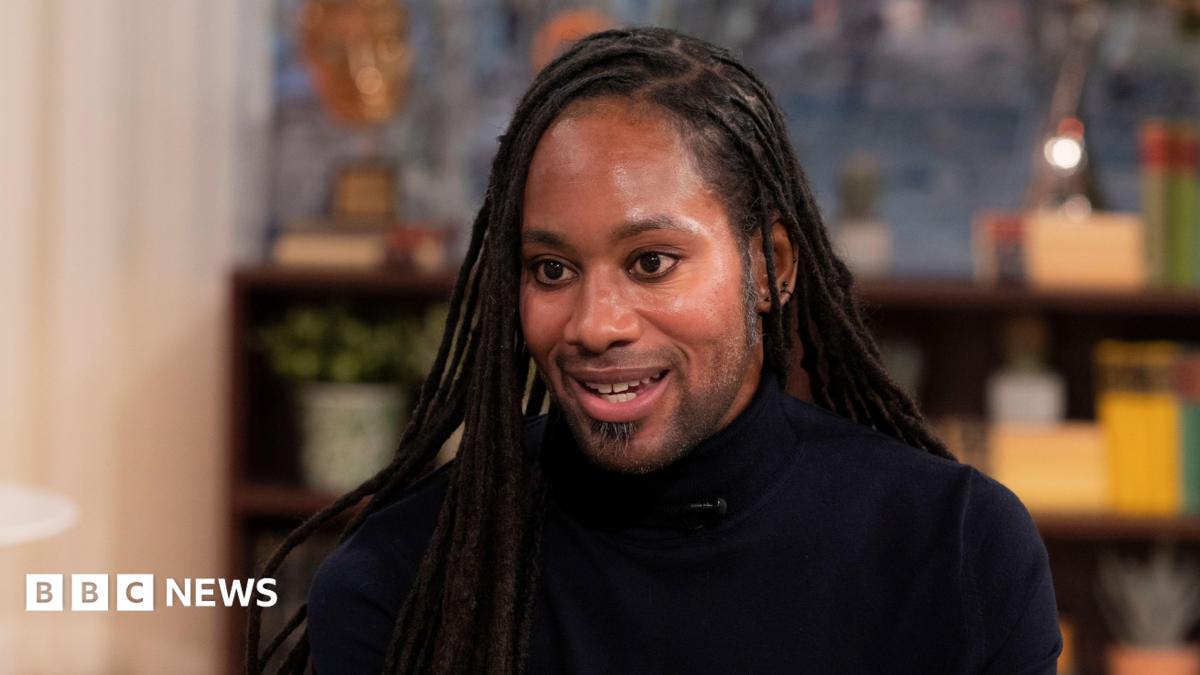
Arday’s appointment as Cambridge’s youngest ever black professor at the age of 37 in 2023 was hailed at the time as a progressive moment.
Announcing his resignation last week, Arday said the “personal cost” of the scrutiny of him had become “too great”.
He said: “While criticism is an inevitable part of academic life, what I have experienced has gone far beyond scholarly disagreement.
“The relentless accusations, speculation and public commentary have taken a profound toll on me and on those I love.”
He stressed that his resignation should not “be mistaken for an acceptance of the narratives that have surrounded me”.
Cambridge initially said claims of plagiarism regarding Arday’s thesis and some journal publications had been investigated by Liverpool John Moores University (LJMU) and the journals in question.
LJMU – which awarded Arday his PhD in 2015 – concluded that he had not plagiarised work.
In a letter to university staff at the time, Prof Prentice said: “I fully understand the concerns being raised across the university and well beyond it, regarding Jason Arday’s appointment and I share them…
“That investigation, as you say, should be thorough and transparent, and will be carried out independently by senior academics from within and beyond Cambridge.”
Cambridge celebrated Arday’s appointment as a young black professor, one of a tiny and visible majority in academia. Only one per cent of professors in UK universities are black, making each appointment hugely significant.
The university will have to answer bigger questions including about its duty of care after it put him into a very prominent position.
It may also find itself the lightning rod for anger from several different quarters, including those who feel Arday was persecuted publicly and those who question whether he should ever have been appointed.
Jolyon Maugham from campaign group Good Law Project said Arday’s death was “a tragedy”.
“I do not understand what the public interest was in continuing to hound him after he resigned as a professor and I do not understand what risk assessments media outlets did,” Maugham added.
Speaking to BBC Newsnight, Professor of Black Studies Kehinde Andrews and friend of Arday described him as “very down” after resigning from Cambridge.
“He was very upset. He felt that there was no way out. He effectively wasn’t leaving the house. He had lost a lost of weight,” Andrews said.
“There should be a wakeup call to just how bad black academics actually have it in academia,” he added.
Labour MP Bell Ribeiro-Addy told the programme “the idea that an academic would be dragged through this amount of media scrutiny is unheard of”.
The scholar announced his resignation amid a new investigation into his qualifications.
Published On 6 Aug 20266 Aug 2026
Jason Arday has resigned from his post as professor of sociology at the University of Cambridge, following the announcement of a new investigation into his academic qualifications and career.
Arday, who became the youngest Black professor in Cambridge’s history when he was appointed in 2023, announced on Wednesday that he had stepped down “with immediate effect” from his post at the university and his fellowship at Jesus College.
Recommended Stories
list of 3 itemsend of list
Arday, who has faced a growing series of questions over his academic writings and credentials, said in a statement posted on the Good Law Project website that the scrutiny had become unsustainable, describing months of “relentless accusations, speculation and public commentary” that had taken a toll on him and his family.
The announcement came hours after the university said it had received “new information” about Arday’s qualifications and honorary appointments and would launch a new investigation, which is separate from an existing academic misconduct review already under way.
His decision to step down comes after a series of media reports alleging he plagiarised his PhD thesis and other research and statements.
Liverpool John Moores University, which awarded the doctorate in 2015, investigated the plagiarism allegations but did not uphold them, attributing the issues instead to “honest and reasonable error”. Arday has consistently denied wrongdoing, pointing to that finding as vindication.
Cambridge University had robustly defended Arday in June, claiming “a vile campaign to undermine his credibility” and insisting plagiarism claims regarding his “thesis and journal publications” had been investigated and dismissed by “the relevant institution” and journals.
It did not specify on Wednesday what new information had prompted its investigation, while Jesus College said separately that it was starting its own inquiry.
US academic and self-defined “race realist” Nathan Cofnas is behind some of the allegations. He was a Cambridge research affiliate, but his tenure ended in 2024 amid racism accusations. He has claimed multiple sections of Arday’s doctoral dissertation were copied from other works.
Some of Arday’s claims about his personal life, including that he ran 30 marathons in 35 days and raised millions for charity, have also come under scrutiny.
In an interview with The Times newspaper on Saturday, Arday admitted making academic “mistakes” but said he was being wrongly “portrayed to be a liar and a fantasist and an academic fraud”.
He also alleged the “campaign to unseat me from my position” was “racially motivated”.
The resignation also raises questions about the release of Arday’s memoir, Great and Unfortunate Things, which Simon & Schuster was planning to publish later this month.
In his statement, Arday framed his resignation as a pause, writing that he needed “time to heal” and that he “will return”.
“When I accepted the extraordinary honour of becoming professor of sociology at Cambridge, it was, without question, the greatest professional privilege of my life.”
He says the scrutiny of his work has made him “conclude that the only way to bring this chapter to an end is to step away”.
There’s more than meets the eye with this picture-perfect market town, jam packed with independent shops and an idyllic river meandering through, as rowing boats pass by
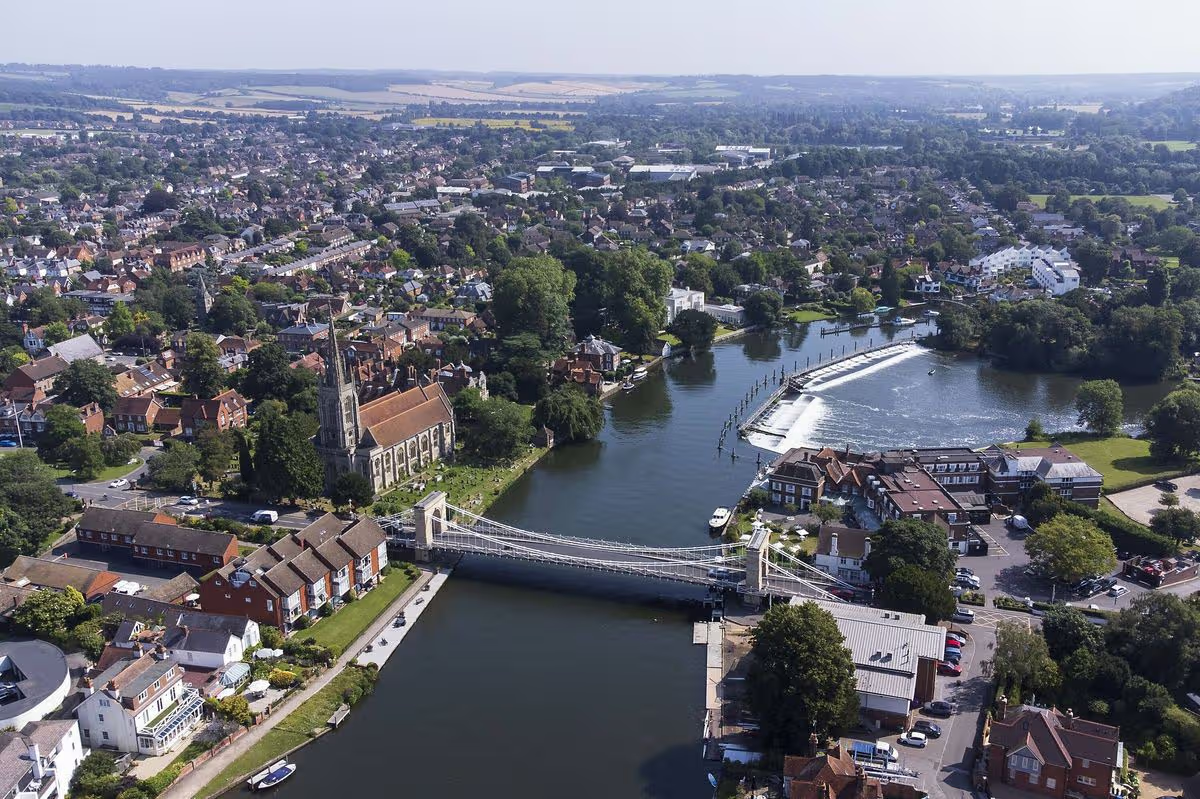
Many are opting to move out of the city to this picture-perfect town (Image: Getty)
Away from the hustle and bustle of London life, just a little further down the Thames, is a much quieter tow where people are flocking for an escape into independent shops and riverside walks.
With a real sense of vibrancy about it, this Buckinghamshire town is being put on the map as it continues to evolve into a cool and quirky hotspot for the capital’s commuters. Not just that, but for people wanting a day trip that feels a lot more wholesome and doesn’t cost quite as much.
Marlow is one to watch, especially for those looking to relocate out of the city. Its location along the River Thames makes for a peaceful spot, which could compare to the likes of Richmond or Cambridge, where people can hire both rowing boats and self-driving boats to explore the town from the water.
What makes it most recognisable to passers-by or those travelling through is its eye-catching suspension bridge which spans the River Thames, joining Buckinghamshire with Berkshire. It first opened in 1832 and has been somewhat of a landmark for the area ever since, as a distinctive feature that helped the town to grow as an inland port.
High Street
The charming town is made up of historic streets with listed buildings and an abundance of independent boutiques, cafes and bistros, adding to the atmosphere of the place. But above all, it’s Marlow’s High Street that has received the most considerable amount of attention. Recently, when it was dubbed the best in the UK.
Estate agent Knight Frank named the UK’s best high streets after the property experts took a look at some of the streets that offer the most charm, and this was their favourite. Their focus was on the areas that home buyers were flocking to, and Marlow came out as a seriously desirable spot that they described as both “charming and lively”.
Matt Davies, partner at Knight Frank, said: “We tend to see a slightly younger buyer base in Marlow, driven in large part by its outstanding educational institutions, including grammar schools such as Sir William Borlase’s.”
There’s an endless amount of unique little shops selling clothing, gifts, homeware, stationery and more. Some of the standout stalls include the gift shop Twenty Three Living, The Marlow Bookshop, URU Home and Saddle Safari, all joined by an array of local pubs, cafes, galleries and salons.
Marlow has also made a name for itself in the realm of food, with high-end chefs operating out of the area and it being home to Michelin-star cuisine. Celeb chef Tom Kerridge runs a pub in the heart of the town named The Hand of Flowers, a short walk off of the high street, which stands as the only UK pub to hold an impressive two Michelin stars.
A customer described their experience at the highly acclaimed pub on TripAdvisor. They said: “Service was excellent from the minute we arrived, and the atmosphere in the restaurant was great. We’d highly recommend!”
And of course, like any higher-end high street, it’s home to The Ivy and other high street chains such as Zizi, as well as having smaller bistros and traditional pubs to choose from.
Flat fields of poppies and ox-eye daisies stretch out to a wide horizon. There are butterflies, vetches, salad burnet. Skylarks sing overhead and a cuckoo calls from the trees near the river. Legend has it that the poet Lord Byron swam here as a Cambridge undergraduate and, 20 years later, Charles Darwin surveyed its beetles. Heading through flowering meadows towards a nature reserve known as Byron’s Pool, I’ve walked a mile from the new £250m Cambridge South station.
Opening to passengers on 28 June, Cambridge South will be the first Great British Railways-branded station. The towering Biomedical Campus next door is Europe’s biggest medical research facility, with about 40,000 visitors a day. The station itself, with its 1,000 cycle-parking spaces, living roof and solar panels, feels like a model for sustainable transport.
The new Cambridge South station, with its living roof. Photograph: Bav Media
Like other scenic medieval cities, Cambridge itself suffers from congestion. Its cobbled alleys are crowded with tourists, its roads gridlocked with cars. But you can reach some wild and peaceful corners without adding to the traffic. There are layers of human and natural history, a newly devised art trail, bat safaris by punt and a peaceful botanic garden near the busy central station.
Cambridge has been my nearest city for the last 15 years. With lots of buses and now three stations, it’s easy to get around without a car. I’ve spent countless days exploring, and published guides to the long-distance Harcamlow Way, a 140-mile (227km) figure-of-eight walking route that loops between Cambridge and Harlow. The best rural bus routes include the busway from Cambridge North station (opened in 2017) to Fen Drayton lakes and bus 1 to Fulbourn for orchid-rich fens and chalk-flowered Saxon Fleam Dyke.
Walking and cycle paths head out in all directions from the new station at Cambridge South, and I am following one of these to Trumpington, stopping for bao buns and peach oolong tea at the Dao cafe. In the village church, I find one of England’s oldest brass monuments. Sir Roger de Trumpington, who died in 1289, is lying in prayer and full chain mail, with a little lion-clawed dog biting his broadsword. Just south of the church, archaeologists unearthed the grave of a young Anglo-Saxon woman, with a delicate gold-and-garnet cross on her chest.
Heading north through Grantchester Meadows, I have a dip in the reedy River Cam, keeping my head above the willow-shaded water. Sun glints off ripples as I swim past waterlilies, moorhens and straggling blue forget-me-nots. Walking on towards the city through Paradise nature reserve, there are birds everywhere: a cetti’s warbler sings loudly from a reedbed and a song thrush from a waterside alder. A mother duck quacks warnings from a nest-topped tree stump as ducklings paddle underneath.
Cambridge University Botanic Garden. Photograph: Travelbild/Alamy
Twenty minutes further on, Cambridge University Botanic Garden (adults from £8.60, children free) is at its fragrant best. Bees are buzzing through sage, lemon balm and lavender in the scented garden; roses sprawl above foxgloves and cranesbill. There are benches in the cow parsley under walnut and cherry trees, where I sit and listen to blackcaps and chiffchaffs. I detour five minutes up the road to buy a slice of apricot tart from Maison Clement bakery and eat it on the train home.
In the last decade or so, several hotels have (re)opened near the central station, from the right-next-door Ibis (doubles from about £80) to the fancy University Arms (from about £175), where Parker’s Tavern brasserie can pack you a gourmet picnic hamper (£45pp) with 24 hours’ notice. Nearby, one of the city’s newest offerings, Hobson by Adina, has studios from about £125.
The next day, I catch bus 13 three stops to the iron age hill fort at Wandlebury, stroll round its wooded ramparts and past flax-blue meadows, sweet with wild marjoram. The grassy track of an old Roman road runs through shady beeches and pink dog roses.
Heading back into the city, I time-travel to Victorian Cambridge, when designers such as William Morris commissioned master painter FR Leach to decorate halls and churches. I thought I’d visited nearly all the city’s 30-odd museums and galleries, but until recently I hadn’t even heard of David Parr House, which is 10 minutes’ stroll from the main station. Parr was a working-class artist, employed by Leach to paint flowers, fruit, foliage and ornate text for Arts and Crafts designers across the country. By 1886, he had saved enough to buy a terrace house on Gwydir Street, which he decorated in the style of the interiors he worked on every day. A visit to the cosy house (from £15) reveals decades of hand-painted decoration and illuminates the city’s social history.
The house is just off Mill Road, now one of Cambridge’s foodie meccas, lined with indie eateries serving noodles, souvlaki, bibimbap, bamya stew or exceptional plant-based tasting menus. Once a rough track to a windmill, Mill Road expanded with the railway into closely packed terraces. Parr’s house stands opposite an old redbrick brewery, now a stylish coffee shop. The house recently produced a new FR Leach walking map, which takes me to All Saints’ church on Jesus Lane, with its red, gold and green decor, and the Michaelhouse Cafe in a converted church, where Leach paintings can even be found in the loo. Down the road, Great St Mary’s has a360-degree view from the tower (adults £7.50).
The hand-painted interior of All Saints’ church. Photograph: Adrian Powter
After a cone of tangy blackcurrant ice-cream at Jack’s Gelato, I wander down the road to the Museum of Archaeology and Anthropology (free) to see the jewelled Trumpington cross of that young Anglo-Saxon woman, alongside a gallery of Cambridge finds, from stone-age axes to eel-catching prongs. Over the road in the Museum of Zoology (also free), I pass through sea stars and rock pythons to find Darwin’s box of neatly labelled beetles.
As the museum closes, it’s time for supper at Jordanian Little Petra: crisp-and-creamy aubergine fatteh, topped with a jewel-like layer of nuts, parsley and pomegranate seeds, and Bedouin tea, brewed with fresh mint and sage. Finally, heading to the river, swifts are whirling and screaming as the sun sinks behind the colleges.
Iain Webb, community conservation officer at the local wildlife trust, dreamed up the bat safari 15 years ago and regularly guides punts full of nature-lovers along the Cam towards Grantchester on summer evenings (£71 for two). “We need nature more than nature needs us,” says Webb. Despite all the pressures on the Cambridgeshire countryside, it’s a rich, idyllic scene.
A kingfisher flashes past, herons fly overhead with huge, slow wingbeats, and the banks are gold with carpets of buttercups. Daubenton’s bats skim low over the water, while pipistrelles swoop between dark willow branches, flickering in and out of visibility, like creatures from some parallel dimension. A few stars are coming out, the darkling air is full of birdsong, and tawny owlets are calling from a nest among the trees.