A report stating that the Trump administration directed funds towards right-wing groups comes ahead of Brazil’s presidential election.
Published On 1 Oct 20261 Oct 2026
Brazil’s attorney general has called on law enforcement to investigate alleged efforts by the United States to interfere in the country’s domestic politics through the diversion of funds to far-right causes.
Attorney General Jorge Messias called for the probe on Thursday, one day after the British newspaper The Guardian published a story suggesting that the administration of United States President Donald Trump planned to award $1m to right-wing civil groups opposing the Brazilian Supreme Court.
Recommended Stories
list of 3 itemsend of list
Messias stated in a social media post that foreign meddling “cannot be tolerated” and that the report represented “an important alert for Brazilian sovereignty”.
“The information is especially serious in light of Brazil’s electoral process and the recent episodes of external pressure on our institutions,” the attorney general added.
The report comes amid a tense presidential election in which leftist President Luiz Inacio Lula da Silva is seeking re-election.
Lula has sought to focus attention on efforts Trump has undertaken to boost the prospects of far-right allies across Latin America, warning of threats to regional sovereignty.
Trump has endorsed multiple right-wing candidates ahead of elections across the region, sometimes hinging the possibility of economic support on the voting results.
He has also cultivated close relations with the family of former Brazilian President Jair Bolsonaro, who lost to Lula in the last presidential election.
Bolsonaro’s eldest son, Senator Flavio Bolsonaro, is a frontrunner in the race to challenge Lula this year. Recent polls have shown Lula and Bolsonaro virtually tied ahead of the first round of voting on October 4.
Flavio Bolsonaro met with Trump at the White House in May. He has promised closer ties with the US, while Lula has positioned himself as a critic of Trump’s interventionist approach to Latin American politics and security.
The Guardian report published on Wednesday states that the Trump administration sought to redirect $175m from the State Department’s human rights fund to various far-right causes around the world.
The recipients allegedly included groups advocating for white Afrikaners in South Africa that the Trump administration has falsely portrayed as victims of a “genocide” and efforts in Brazil to counter what the US called “lawfare and censorship”.
Brazil’s Supreme Court has been a subject of frequent criticism from the political right, both in Brazil and the US.
Much of that criticism stems from the 2025 conviction of Jair Bolsonaro for involvement in an alleged coup plot, designed to subvert his loss to Lula in the 2022 election.
Bolsonaro and his allies, including Trump, have depicted the case as an instance of political persecution.
Citing the trial, Trump last year placed 50-percent tariffs on certain Brazilian goods that he has since removed.
At the time, he announced the tariffs in a letter that denounced Bolsonaro’s prosecution. “The way that Brazil has treated former President Bolsonaro, a Highly Respected Leader throughout the World during his term, including by the United States, is an international disgrace,” Trump wrote.
The Trump administration also revoked the visas of Brazilian judicial officials involved in Bolsonaro’s case in an effort to have it tossed out. It also levied short-lived sanctions against Brazilian Supreme Court Justice Alexandre de Moraes, accusing him of “an unlawful witch hunt” against right-wing voices.
Bolsonaro was ultimately convicted and sentenced to a 27-year prison sentence in September 2025.
In June, one of his sons, Eduardo Bolsonaro, was sentenced to more than four years in prison after a court ruled he had lobbied for US interference in his father’s case.
US president’s comments came after he was asked why North Korea can have nuclear weapons when Iran cannot.
Published On 30 Sep 202630 Sep 2026
United States President Donald Trump has described North Korean leader Kim Jong Un as “a friend” and played down concerns about Pyongyang’s nuclear arsenal, saying, “as long as I’m around, he’s going to be fine”.
Trump made the remarks in Washington, DC, on Tuesday after a reporter asked him why North Korea could have nuclear weapons but Iran could not.
Recommended Stories
list of 3 itemsend of list
“That’s interesting. You know why? Because you had a different president, and they could have stopped him,” he said, referring to previous US administrations.
“He happens to be a friend of mine, Kim Jong Un, he’s a friend of mine. He likes Trump, doesn’t like a lot of other people. I’m about the only person in the entire world that he likes, and I like him,” he said.
He said North Korea’s nuclear capacity was “pretty large” but “not like us”.
“You know what, as long as I’m around, he’s going to be fine,” he added. “You know why? Because he respects me and he likes me.”
South Korea’s Defence Minister Ahn Gyu-back said last week that its northern neighbour possessed between 80 and 120 nuclear warheads. The figure is significantly higher than Trump’s recent assertion that Pyongyang has 57 nuclear weapons.
Trump is seeking to re-engage with Kim and secure a win on the international stage as the US and Israel’s war on Iran enters its eighth month.
The US president launched the war along with Israel on February 28, saying Iran could not have a nuclear weapon. Iran has denied seeking a weapon, noting it had signed an agreement with world powers in 2015 that curbed its nuclear programme in exchange for sanctions relief. But Trump abandoned the agreement during his first term in 2018.
The US-Israel war on Iran has disrupted global energy supplies, raised fuel costs and hurt Trump’s popularity ahead of the November midterm elections.
Trump held summits with North Korea’s Kim in 2018 and 2019, but diplomacy broke down over US demands that Pyongyang give up its nuclear weapons. Since then, Kim has expanded his arsenal of nuclear-capable missiles and strengthened his diplomatic footprint by aligning with Russia over its war in Ukraine and tightening relations with China.
Trump had earlier said he planned to hold in-person talks with Kim before the end of the year.
Smotrich told Ynet News that Israel needs to “go to war in Judea and Samaria, to do there what we did in Gaza’.
Published On 27 Sep 202627 Sep 2026
Far-right Finance Minister Bezalel Smotrich says the Israeli military should “go to war” in the occupied West Bank and repeat what it “did in Gaza”.
Using a biblical term for the occupied West Bank, the minister told Ynet News in an interview published on Sunday that Israel needs to “go to war in Judea and Samaria, to do there what we did in Gaza, to dismantle the Palestinian Authority, which is a terror authority”.
Recommended Stories
list of 3 itemsend of list
Smotrich was responding to a question on how Israel should combat the increasing “security tensions” in the occupied West Bank, where Israeli violence against Palestinians has been steadily growing since the eruption of Israel’s genocidal war on Gaza in October 2023, but the attacks have intensified significantly this year.
“We need to tell” Israeli forces, he said, “Just as you dismantled Hamas in Gaza, there won’t be terror infrastructure in Judea and Samaria”. “No terrorists, no weapons, no tunnels.”
The United Nations Office for the Coordination of Humanitarian Affairs (OCHA) recorded more than 1,330 settler-related attacks on Palestinians in the West Bank from January to late July, averaging six a day, the highest rate in about 20 years.
Various settler groups, often supported or protected by Israeli soldiers, have attacked Palestinians in several ways, including shootings, besieging homes and engaging in other forms of communal violence that experts have described as “pogroms“.
Rights groups warn that settlers are increasingly armed with military-issued weaponry and wear military uniforms during attacks, blurring the line between settler and soldier.
Military closure
The comments come as Israeli authorities announced a comprehensive military closure across the occupied West Bank, citing the Jewish holiday of Sukkot. The heightened restrictions on the movement of Palestinians are set to remain in place until October 3.
Meanwhile, in occupied East Jerusalem, hundreds of Israelis stormed the courtyards of Al-Aqsa Mosque under heavy protection from Israeli police on Sunday.
Palestinian news agency Wafa reported that the Israelis entered the compound through the Moroccan Gate and performed Talmudic rituals, as Israeli forces increased restrictions around the mosque and across Jerusalem’s Old City.
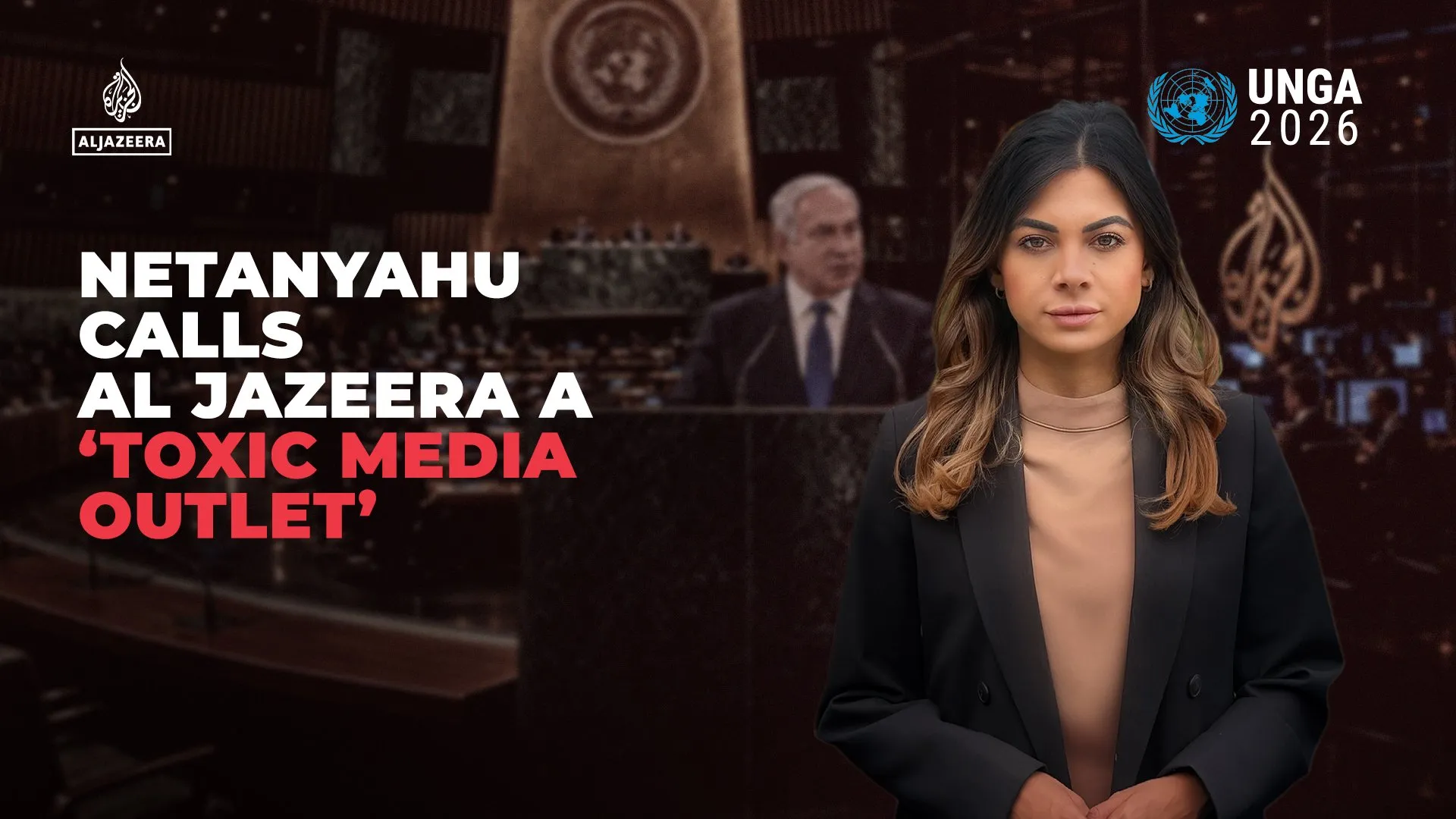
Israeli Prime Minister Benjamin Netanyahu called Al Jazeera a “toxic media outlet” and described the media as an “eighth front” in Israel’s war. But Israel has killed Palestinian journalists, shut down Al Jazeera’s operations and restricted media access to Gaza. Al Jazeera’s Noor Wazwaz explains.
PORTLAND, Maine — Maine Democrats on Wednesday assailed U.S. Sen. Susan Collins over a news report that the FBI investigated how much she knew about illegal campaign contributions that sent one of her donors to prison.
The ProPublica report, published Tuesday, states that the FBI in 2024 planned to launch an investigation into Collins’ dealings with Navatek, a Hawaii defense contractor and donor to her campaign. The investigation, which focused on an alleged pay-to-play scheme, failed to commence after President Trump took office after winning the election, according to ProPublica.
The report arrived six weeks before an election in which Collins is seeking a sixth term against Democrat Troy Jackson. Democrats have targeted the seat, in a state that Trump lost in 2024, as the party tries to win control of the Senate, making it one of the most competitive races on the November ballot.
Collins on Tuesday called the entire story “absolutely outrageous” and said it is frustrating and unfair to have such claims made against her so close to the election. Her campaign manager, Steve Abbott, also said Wednesday that the allegation that “we charge people to have meetings” is categorically false and Collins accepting campaign cash for contracts “did not happen.”
Jackson called the allegation “corruption of the highest order.” He was not present Wednesday when a group of Maine Democrats held a news conference near Collins’ Portland office, calling the allegations a betrayal of trust.
“I cannot stress enough here today the seriousness of these allegations. Maine people deserve clear and real answers from Susan Collins right now,” Maine Democratic Party Executive Director Devon Murphy-Anderson said.
FBI says allegations were already investigated
The ProPublica report stated that the head of a Collins super PAC met with executives from defense contractor Navatek in 2019 and asked them for a $500,000 campaign donation. The company’s chief executive, Martin Kao, sent an initial $150,000 donation using a shell company, the report stated. ProPublica reported that it reviewed an internal company email from Kao in which the CEO later told Navatek executives that Collins committed to getting the company $32 million in Navy contracts.
Kao and two other Navatek executives were later indicted on charges of funneling illegal donations to Collins. Kao sought to reduce his prison sentence by revealing to the FBI the full scope of illegal contributions to Collins, ProPublica reported.
Collins said Kao is “a liar” whose story is untrustworthy.
“He has been twice convicted in separate federal court cases. He’s been convicted of money laundering. He’s been convicted of bank fraud. He has been convicted of false submissions to the FEC. He’s being convicted of a lot of crimes,” she said.
An FBI spokesperson said in a statement that the allegations “had already been investigated by the FBI years ago and ultimately found nothing implicating Senator Collins or Senator Collins’ campaign. Any suggestion otherwise is totally false.”
The ProPublica article also states that Trump’s return to the White House left the Justice Department unable to perform the investigation.
Corruption investigations have decreased in Trump’s second term
The number of FBI agents and Justice Department prosecutors specializing in corruption investigations plummeted in the first months of the Trump administration. The Justice Department, for instance, decimated its elite Public Integrity Section in early 2025 and the FBI disbanded a white-collar fraud and public corruption squad based out of its Washington field office.
The administration has also fired numerous law enforcement officials who participated in investigations into Trump, including over his efforts to undo the 2020 presidential election he lost and his retention of classified records at his Mar-a-Lago estate in Palm Beach, Fla.
An email seeking comment was sent to the Justice Department on Wednesday.
Collins said she first learned of the company through the University of Maine because of the research the Navy found to be valuable, which had to do with 3D printing for production.
She said the Justice Department has already reviewed the matter.
“I’m telling you this is completely false,” Collins said.
Senate Majority Leader John Thune dismissed the idea that Collins would be implicated in a pay-to-play scheme, calling the allegations “a political hit job.”
Whittle and Mascaro write for the Associated Press. Mascaro reported from Washington. AP writers Mary Clare Jalonick and Eric Tucker in Washington and Kimberlee Kruesi in Providence, R.I., contributed to this report.
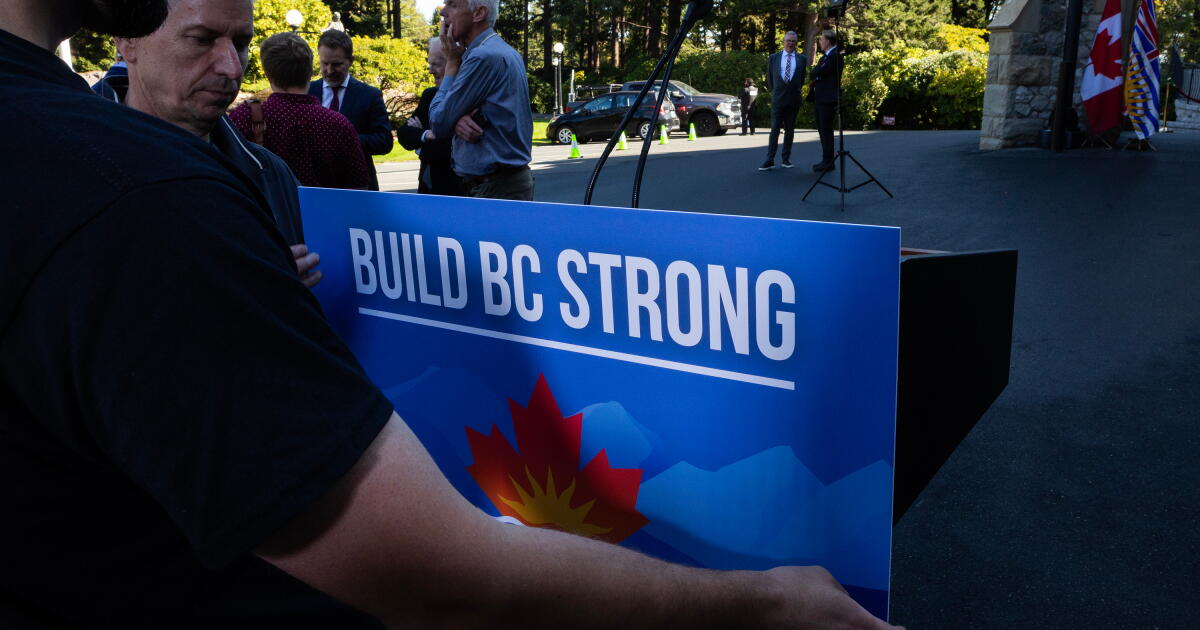
VICTORIA, British Columbia — A Canadian provincial premier called a snap election Tuesday, saying President Trump’s attacks on Canada are threatening jobs, businesses and the country’s ability to determine its own future.
The provincial election comes after U.S.-Canada trade talks broke down, deepening a dispute that has brought steep tariffs. British Columbia Premier David Eby effectively put Trump on the ballot, arguing the election offers British Columbians a choice between his government’s efforts to resist U.S. economic pressure and opponents he accused of embracing “MAGA-style politics.”
“Join us saying hell no to Trump and to his politics,” Eby said in announcing the Oct. 24 election.
Eby said Trump’s trade war and threats against Canada have changed conditions in British Columbia enough to justify an election two years early.
“Donald Trump is attacking our workers, he’s targeting our businesses, and he is threatening our sovereignty,” Eby said. “He’s threatening our ability to make decisions for ourselves.”
The left-leaning New Democratic Party leader said British Columbia needs to build a “firebreak” against Trump’s economic policies by protecting workers and businesses, reducing its dependence on the United States and finding new markets for Canadian products.
“This isn’t just a trade dispute,” Eby said. “It’s about the life that you and your family are building.”
Eby said British Columbia’s exports to the United States have fallen 4% while exports to other markets have risen 16%.
He also vowed to keep American alcohol off provincial shelves, saying “not one drop of Jack Daniels” would return until Canada gets a fair deal with the United States.
The New Democrats won a narrow majority in the 2024 provincial election, giving Eby enough seats to govern without relying on another party, and he was not required to call another election until 2028.
The election call also comes amid turmoil among the opposition British Columbia Conservatives. Kerry-Lynne Findlay resigned as party leader Sunday following a wave of defections and expulsions from her caucus. Lorne Doerkson was named interim leader.
Did Justin Bieber perform at problem-plagued MacArthur Park? Never say never.
An impersonator may have tricked a Las Vegas nightclub last year, but those at the park Tuesday appeared convinced of their brush with Bieber. L.A. County’s district attorney was too.
According to social media posts, the singer and a few band members set up on a grass lawn near a Central American fried chicken shop on 6th Street. He reportedly performed several songs, including the 2025 hit “Yukon.”
L.A. County Dist. Atty. Nathan Hochman on Tuesday night pointed to the “Yukon” clip as proof that park conditions were improving.
L.A. D.A. Nathan Hochman, center left, walks with First Assistant U.S. Atty. Bill Essayli on June 4 as L.A. police and federal agents conduct an operation targeting narcotics use at MacArthur Park.
(Allen J. Schaben/Los Angeles Times)
Bieber’s performance, he said in a post on X, was a “testament to the progress we are achieving to take back the park from drug dealers and enliven it for families.”
“[He’s] definitely on the invite list for next year’s Labor Day weekend picnic!” Hochman said.
The Times reached out to Bieber’s representatives to confirm the pop singer’s appearance but did not immediately hear back.
The pop star has been leaning in to more intimate performances, notably appearing on the Grammys for a stripped-down rendition of “Yukon” (while wearing boxers and black socks).
In April, he made his Coachella headlining debut, playing a nearly 90-minute set. For a large portion of the set, he took Beliebers — as his fans are known — down memory lane, sitting behind a laptop and singing along to his old music videos.
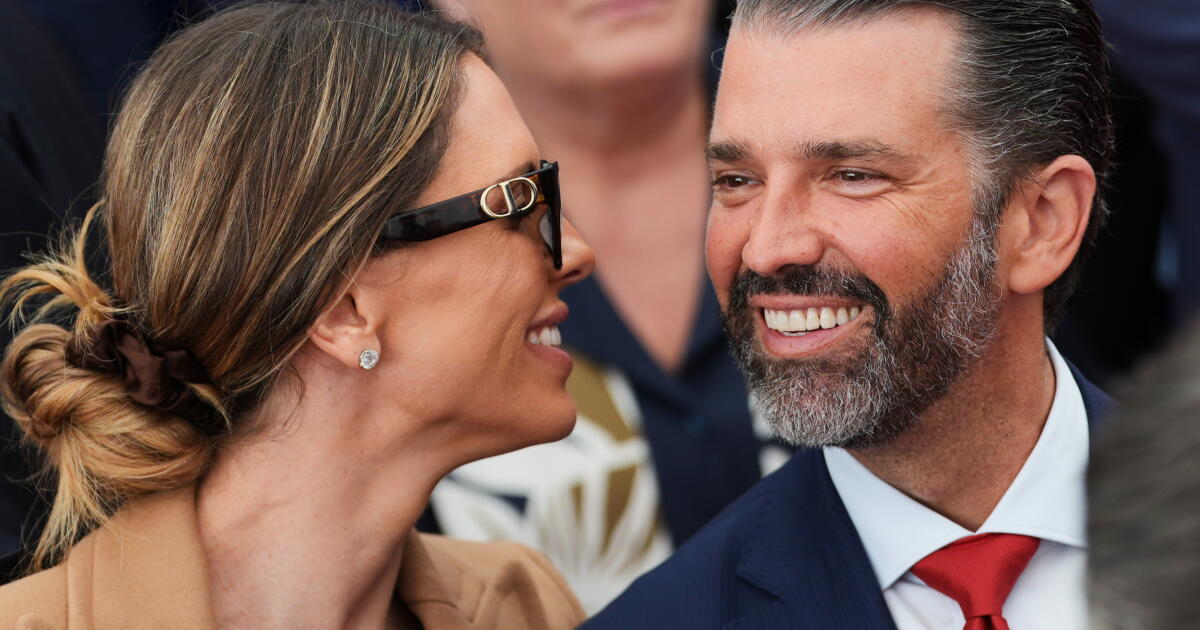
A member of Donald Trump’s political party has issued a rare call for a congressional investigation into the foreign dealings of the United States president’s eldest son.
US Senator John Curtis, a Republican from the state of Utah, on Tuesday said “questions have arisen” about Donald Trump Jr’s relationships with foreign business figures and acceptance of “significant gifts”, alleging he may have personally benefited from his relationship with the president.
Recommended Stories
list of 3 itemsend of list
In a letter to the Republican and Democratic leaders of the US Senate Judiciary Committee, Curtis referenced a ProPublica report that found Trump Jr’s Bahamian wedding party in May was funded by a Russian oligarch.
“These reports raise legitimate questions about foreign access to members of a sitting president’s family and whether such relationships can create actual or perceived expectations of favorable treatment,” Curtis wrote. “They also may create expectations of a returned favor that would not be in the best interests of the American people or our allies, and could even create national security vulnerabilities.”
The letter comes as a small but slowly growing number of Republicans have spoken out against Trump, who has largely avoided criticism from members of his own party. But record-low approval ratings sparked by the war in Iran and concerns over the cost of living in the US have forced some Republicans to reconsider that support as they face growing prospects of major losses in the congressional midterm elections.
If Democrats retake one, or both, chambers of the US Congress in November, investigations into Trump, including his family’s dealings, are likely. But those probes are less likely under Republicans wary of the president’s wrath.
A spokesperson for the Senate Judiciary Committee, which is under Republican control, told the Associated Press that it had received Curtis’s letter but did not say whether there would be an investigation.
Trump vs Biden
Curtis, who isn’t up for re-election until 2030, also called on the chamber’s panel to subpoena Trump Jr, as well as the son of former US President Joe Biden, a Democrat.
“The country should not have to accept one standard for the family of a Republican president and another for the family of a Democratic president,” Curtis wrote, referencing the scrutiny and investigation Biden’s son Hunter faced from Republicans.
Hunter Biden responded to Curtis’s letter in a post on social media, calling for the Senate committee to “bring it on” as he vehemently denied any foreign business dealings while his father was president.
“I’ll sit next to Don Jr. and testify any time, any place,” Biden wrote on X as he called for the president’s youngest son, Eric, and son-in-law, Jared Kushner, who serves as a US envoy, to testify as well. “No need for a subpoena. Let’s all do it tomorrow.”
After the ProPublica report, Trump Jr and his wife, Bettina, released a joint statement on social media saying the Russian oligarch, Umar Kremlev, was a “dear friend” who “very generously hosted two incredible nights of celebrations for us AFTER our wedding”.
The president, who did not attend the wedding, said his son had reimbursed Kremlev.
“It’s totally allowed, and a lot of people give parties and things like that — but it’s totally allowed,” Trump said. “But as I understand it, he paid him back. He didn’t want it.”
US Senator Dick Durbin, the ranking member on the Senate Judiciary Committee, said that while Biden’s son “has already given a sworn deposition to Congress”, Trump Jr “has not”.
“For the committee to ignore this matter is to run the risk of being complicit in a coverup,” Durbin said. “I will join in supporting Senator Curtis’ request of the Senate Judiciary Committee.”
Curtis’s office did not immediately reply when asked by Al Jazeera what prompted the senator’s letter and whether any fellow Republicans have indicated if they would support an investigation into the president’s family.
A day after unveiling Pontes, its system for settling tokenised assets in central bank money, the ECB has set out how it wants Europe’s crypto rulebook rewritten.
ADVERTISEMENT
ADVERTISEMENT
The response, published on Tuesday by the European System of Central Banks, which groups the ECB with the EU’s national central banks, argues for tougher rules on stablecoins, staking and crypto firms.
It feeds into the European Commission’s review of the Markets in Crypto-Assets Regulation, known as MiCA, the EU’s rulebook for cryptocurrencies and the firms that trade them.
MiCA has applied since December 2024, and the last transitional deadline for existing operators expired on 1 July, including Binance, the world’s largest exchange, to stop serving European customers.
The Commission’s consultation will close on 30 September, a month later than planned.
The central banks’ recommendations are not binding, and the Commission will weigh them alongside other responses before deciding whether to reopen the law.
EU diplomats have told Euronews they expect a revision in 2027, which would need the approval of the European Parliament and member states.
No interest and no loopholes
Stablecoins are cryptocurrencies designed to hold a steady value, usually by tracking the US dollar.
MiCA already bars both issuers and crypto exchanges from paying interest on them, and the central banks want it kept that way.
“The payment of stablecoin remuneration should continue to be prohibited,” the ECB response says.
Their targets are the workarounds. Some exchanges, the response notes, offer crypto lending, borrowing and staking, “thereby replicating the economic effect of interest payments through ancillary or unregulated services.”
The central banks want the ban extended to those activities and to indirect rewards, such as certain loyalty-programme benefits, calling it “a clear legislative priority”.
Washington has gone the other way.
The 2025 GENIUS Act banned US stablecoin issuers from paying interest but left exchanges free to offer rewards, and whether to close that gap became one of the most contested fights over the CLARITY Act, the landmark crypto bill that fell ten votes short in the US Senate on 15 September.
A brake on US dollar stablecoins
The central banks want stronger tools against tokens pegged to foreign currencies.
It would be useful, they say, if authorities could impose “a prohibition to issue new tokens, as well as an obligation to redeem existing tokens” on issuers where central banks judge that the tokens pose a threat, including to financial stability.
More broadly, they see limited benefit in stablecoins for everyday payments at home, given instant bank transfers and the planned digital euro. They warn that MiCA provides no legal basis for issuing the same stablecoin both inside and outside the EU.
In a bank run, European reserves could end up paying holders elsewhere, while “EU authorities cannot determine with certainty how many tokens are held within the Union.”
Eurozone central banks also do not currently let stablecoin issuers hold customer funds with them.
A token fully backed by central bank money, the response warns, “would effectively result in a ‘synthetic’ central bank digital currency” that is essentially a private imitation of the digital euro and could, in theory, drain deposits from commercial banks, especially under stress.
Staking and decentralised finance
On staking, where users lock up crypto in exchange for rewards, the response is blunt: “Staking, lending and borrowing of crypto-assets should be regulated at Union level.”
Where a firm takes customers’ crypto and promises to return it, potentially with a premium, the central banks argue that the arrangement can be “comparable to the taking of repayable funds”, in the language of banking.
The same applies to decentralised finance, or DeFi, where lending and trading run on automated software rather than through a company.
MiCA exempts fully decentralised services but never defines the term, and the central banks cite studies showing that full decentralisation is rarely, if ever, achieved, leaving it unclear who is in control.
Who licenses crypto exchanges?
The central banks also back a Commission proposal to move licensing and supervision of crypto firms from national regulators to ESMA, the EU’s markets watchdog.
Currently, one national licence covers the whole bloc, which was the route Binance originally pursued in Greece.
The Wall Street Journal reported last week, citing people familiar with the discussions, that ECB President Christine Lagarde urged Greek Prime Minister Kyriakos Mitsotakis not to approve Binance’s application because of the exchange’s past compliance problems and fears that its scale could deepen the use of US dollar stablecoins in Europe.
A senior Greek regulator, according to the newspaper, told the exchange that Lagarde wanted the decision delayed until ESMA took over, the same shift the central banks endorse in Tuesday’s response. Binance withdrew the application on 24 June.
Neither the ECB nor the Greek regulator has confirmed the account. The ECB, which has no formal role in licensing crypto firms, declined to comment, while Binance said it would “not comment on speculation”.
WASHINGTON — Republican Sen. John Curtis of Utah is calling on the Senate Judiciary Committee to investigate whether Donald Trump Jr. used his proximity to the presidency for financial benefit, after his recent wedding party was partially bankrolled by a Russian oligarch.
In a letter sent Tuesday, Curtis called on the committee to subpoena Trump Jr. over his business dealings, relationships with foreign individuals and entities, gifts or other benefits he has received and any instances in which his relationship to President Trump, a Republican, “was invoked or understood to provide value.” Curtis called for the same scrutiny of Hunter Biden, the son of former President Joe Biden, a Democrat.
“The country should not have to accept one standard for the family of a Republican president and another for the family of a Democratic president,” Curtis wrote in the letter addressed to GOP Sen. Chuck Grassley of Iowa, chairman of the committee, and Sen. Dick Durbin of Illinois, the top Democrat on the committee.
The letter comes as a few Republicans have shown a growing willingness to criticize Trump after largely avoiding public breaks with the president during much of his second term. The unpopular war in Iran, high gas prices and mounting concerns about the GOP’s prospects in November’s midterm elections have brought increased scrutiny of the president from within his own party.
The Trumps say it was a generous gift from a dear friend
ProPublica first reported last week that Umar Kremlev, who has close ties to Russian President Vladimir Putin, helped pay to rent a private island and for a fireworks show when Trump Jr. and socialite Bettina Anderson were married in the Bahamas in May.
In a subsequent post on her Instagram page signed by the couple, Bettina Trump wrote that Kremlev, head of the International Boxing Association, was a “dear friend” who “very generously hosted two incredible nights of celebrations for us AFTER our wedding.”
The president, who did not attend his son’s wedding, defended Kremlev’s involvement but said the money would be paid back.
Curtis calls the funding ‘corruption’
Curtis, first elected to the Senate in 2024, vowed upon taking office not to shy away from disagreeing with Trump. He has publicly broken with the president several times since, including rejecting Trump’s calls to eliminate the Senate filibuster. In a July Wall Street Journal op-ed, Curtis wrote that “under no circumstance” would he support efforts to end or alter the filibuster, which requires 60 votes to advance most legislation in the 100-member chamber.
Curtis’ criticism involving Trump’s son goes beyond those policy disagreements. Curtis last Friday called the gift “corruption” and vowed to say more in the coming days.
“A Russian oligarch paid for a lavish wedding after-party for Donald Trump Jr., which to me just stinks. It’s corruption. I don’t like it,” Curtis said in a video posted on social media.
On Tuesday, Curtis wrote on social media that Republicans “nearly wore out the subpoena machine investigating Hunter Biden’s foreign relationships” and that they “should not unplug it now.”
Any congressional committee can launch an investigation at any time. In 2017, Grassley led a Senate Judiciary Committee investigation of the Trump campaign’s ties to Russia, including a meeting that Trump Jr. held with Russians in 2016. The panel has also conducted multiple investigations of Hunter Biden.
Clare Slattery, a spokesperson for the Senate Judiciary Committee, confirmed that the committee had received Curtis’ letter but indicated that a hearing before the end of the year would be difficult, citing the limited Senate schedule and the amount of time it takes to prepare for an investigative hearing. She did not say whether the committee will investigate.
Republicans investigated the Bidens
Grassley worked alongside House Republicans in 2023 and 2024 to investigate whether Hunter Biden used his father’s name and political position to benefit his business dealings with foreign interests. The Biden family dismissed the investigations as politically motivated and denied any wrongdoing.
The GOP effort culminated in a report accusing Joe Biden of participating in a conspiracy to use his public office to enrich his family. But the House never voted on articles of impeachment against him.
“‘Trust us’ was not enough then, and it is not enough now,” Curtis wrote.
Democrats have foreshadowed plans to investigate Trump and his family if they win control of Congress in November, with particular scrutiny on the family’s financial interests. Rep. Robert Garcia, the top Democrat on the House Oversight Committee, said in a statement that the revelations surrounding Trump Jr.’s wedding “may be the most serious allegation against you to date.”
Cappelletti and Jalonick write for the Associated Press.
FROM Art Deco architecture and superstar football to incredible Cuban sandwiches and sizzling nightlife, Miami packs a serious punch for a short stay.
For Brits, it’s often combined with cruises from the Florida city’s port, making it the perfect start or end to a Caribbean cruise this winter.
Explore Miami’s Cuban influenceCredit: David CameronCuban sandwich stuffed with roasted pork, ham, swiss cheese and pickles at Old’s Havana Cuban Bar & CocinCredit: Supplied
The weather remains gorgeous throughout our colder months, with temperatures still in the mid to high 20s.
For first-timers, a stay on Miami Beach puts you right at the centre of the very best of this captivating city.
Sign up for the Travel newsletter
Thank you!
ARE THESE STREETS MADE FOR WALKING? It’s America — so no, the car remains king. But that’s not to say there aren’t walkable districts.
South Beach and Mid Beach excel with their paved Beachwalk and pedestrianised Lincoln Road is a shoppers’ paradise with all the popular brands and a host of cafes and restaurants offering al fresco dining.
In trendy Wynwood you can easily explore on foot to take in street art, galleries, boutiques and a buzzing nightlife scene.
ANYTHING FOR THE BUCKET LIST? Learn all about the huge Cuban influence on Miami on a food and drink tour of Little Havana with Miami Culinary Tours.
Over two and a half hours, you’ll stroll the streets learning how Cuban exiles transformed the city’s flavours and culture.
Among my favourites were the Cuban sandwich stuffed with roasted pork, ham, swiss cheese and pickles at Old’s Havana Cuban Bar & Cocina, washed down with a perfect mojito and the crispy beef empanadas from El Pub.
Another must is a stroll along South Beach’s Ocean Drive to admire the gorgeous Art Deco buildingsCredit: GettyThe Sun’s Lisa Minot on Miami BeachCredit: Supplied
But the tour also features stops at a traditional Cuban cigar shop and Domino Park to watch the locals play fast-paced games.
Another must is a stroll along South Beach’s Ocean Drive to admire the gorgeous Art Deco buildings — book a guided walk through getyourguide.com to bring the history to life.
WHERE SHOULD I EAT? Award- winning Austin chef Tyson Cole brings his very modern take on Japanese cuisine to Miami with not one but two restaurants, each offering a vast variety of unusual sushi, sashimi and nigiri paired with quirky flavours from citrus to smoke.
Uchi in Wynwood leans into the citrus while sister restaurant Uchiko is all about char and open-flame cooking. The vast menus can be a bit overwhelming but the brilliant staff will guide you and the quality is outstanding. Visit during the daily Happy Hours to enjoy it for a fraction of the price.
I FANCY A DRINK: Of course, for the in-crowd and those with deep pockets, there are plenty of stunning cocktail joints and seriously cool hotel bars on South Beach — including MILA just off Lincoln Road and the Matador Bar at the Miami Beach Edition.
But for those of us with smaller bank balances, taking advantage of happy hours is a great way to save. Sweet Liberty in Collins Park in Mid Beach has a popular happy hour from 4pm to 7pm with cocktails from £7.40 and craft beers from £4.50. Cafe La Trova in Little Havana sees waiters formally serving up Cuban daiquiris and mojitos.
Or head to Veza Sur Brewing Co. & Cerveceria La Tropical in Wynwood for an outdoor beer garden with pints from £5.20.
WHERE SHOULD I STAY? For all the benefits of South Beach without the crowds, stay at gorgeous Art Deco gem, The Palms Hotel and Spa.
Just ten minutes by car from Ocean Drive and Wynwood, the hotel’s lush gardens feature a pool and tiki bar plus plenty of loungers.
You can stroll onto the stunning white sands where even more loungers and shades await.
The hotel has a great focus on sustainability — you can pick up a bucket on the beach to help tidy up and be rewarded with a free gelato.
The light and airy rooms have an understated, tropical vibe and the ocean views are stunning.
Volkswagen (VWAGY) anticipates more than 4,000 additional job cuts at its sports car subsidiary Porsche (POAHY) as part of a massive restructuring drive, German business daily Handelsblatt reported on Saturday.
The German automaker’s turnaround plan calls for a reduction of “about
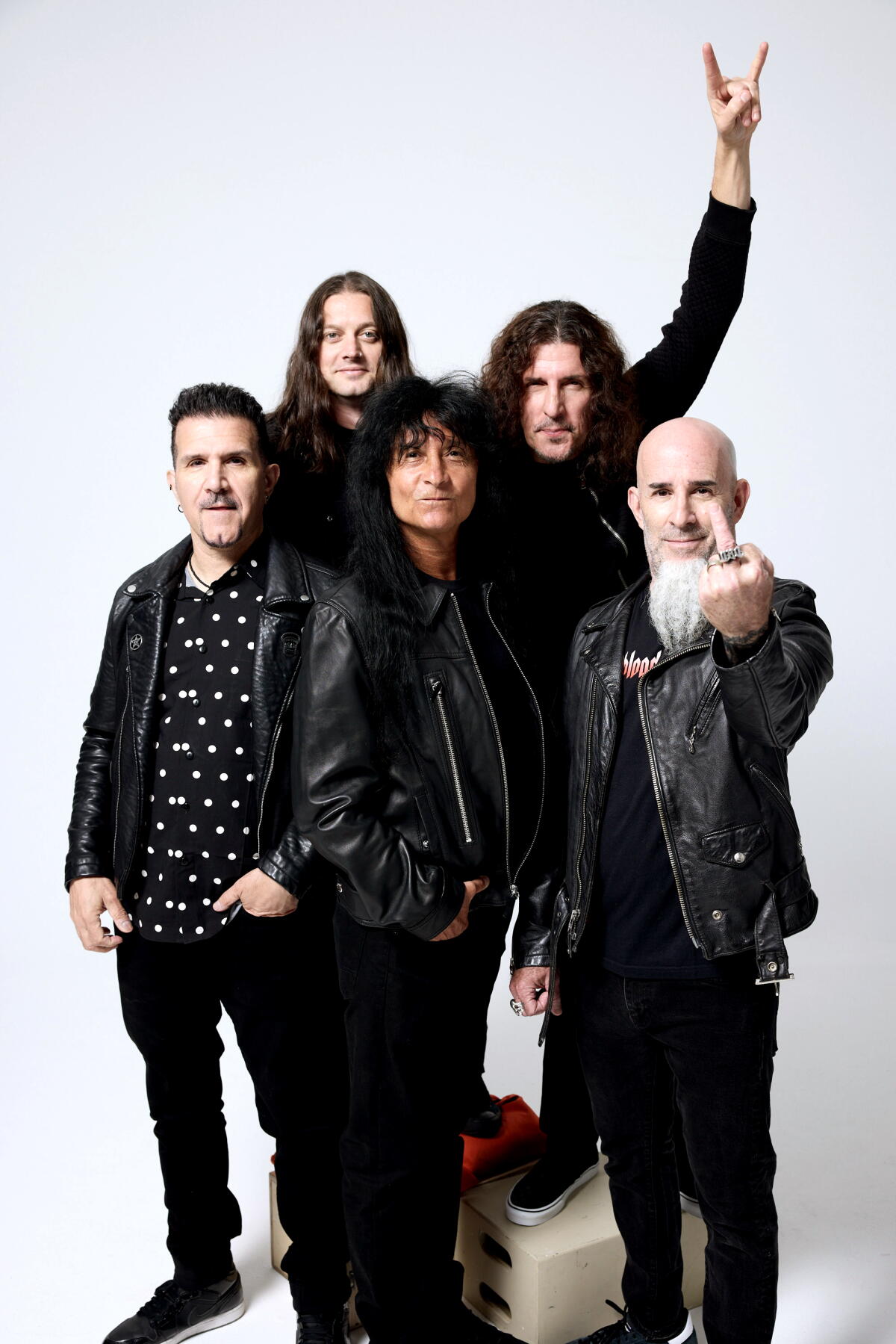
Moments after the final rapid-fire rhythm of Anthrax’s opening number “Caught in a Mosh” fades from the open air of the Sports Illustrated Stadium in Harrison, N.J., shaggy-headed vocalist Joey Belladonna addresses the audience. “I gotta ask everybody out there right now. Who’s never seen Anthrax before?” Around half of the 6,000-or-so crowd members who showed up by 6 p.m. for the three-band bill, headlined by heavy metal legends Iron Maiden, raise their hands. “Ah, yeah! We got a lot of new friends here today. Thank you for being here.”
Some bands with a four-decade career would be disappointed by the turnout, or by the realization that many fans not wearing Maiden shirts are dressed in Megadeth merch. But for Anthrax, preaching to the unconverted is an opportunity to expand their fan base beyond the somewhat insular community of thrash metal, a style of music that took the aggression of bands like Iron Maiden and turbocharged it with the speed and fury of hardcore punk. As much as Anthrax cherish being one of the “Big Four” — Metallica, Megadeth, Slayer and Anthrax — playing a 35-minute set well before dark is a great way to reach new listeners.
“We have a strong base of fans that are deeply into this band, but we know there are also people that have never listened to this type of music before,” says bald-headed, gray-bearded rhythm guitarist and lyricist Scott Ian from his home office outside of L.A. a week before the show. “They’ve heard band names, but maybe they haven’t dipped their toe in the water. So, it would be great to reach them and give them something they didn’t even know they wanted and then they’ll fall in love with it.”
A full 10 years have passed since Anthrax released their last studio album, “For All Kings,” which helps explain why they’re not as well-known as some metal veterans. Instead of rushing out an album after the pandemic, Anthrax took their time writing and fine-tuning new songs before entering Dave Grohl’s Studio 606 in L.A. in 2022. Then, they wrote more songs and massaged those for another two years before finishing the recording and sending the album to be mixed in 2025.
“I nitpicked over every detail of these songs before I even sent the demos to the other guys to put their two cents in,” says drummer and main songwriter Charlie Benante, clad in a black T-shirt and blue jean shorts, and sporting cropped black hair and a slanted mustache. “I wanted them to be as good as they could possibly be. Being good enough wasn’t OK.”
The 11 tracks on “Cursum Perficio” (Latin for “I complete my journey”) encapsulate the finessed brutality, incisive melodies and experimental flourishes from Anthrax’s years with Belladonna (from 1984-1992 and 2005 to the present), during which the band wrote its fastest, most aggressive songs. As much as Anthrax were driven this time by the desire to attract new fans, they were also motivated by many popular new metal albums — and not in a good way.
Anthrax’s meticulously crafted album was recorded at Studio 606, using Iron Maiden support slots to court new listeners beyond the thrash faithful.
(Travis Shinn)
“I hear bands with new records out, and they’re horrible,” Benante says, squinting his eyes and grimacing. “The genre has gotten stagnant to the point where you see a social media post by some band mentioning they have new music coming out, and you can tell exactly how it’s going to sound just by the way they look.”
While “Cursum Perficio” may be a bit heavy for some metal fans, it’s neither dull nor predictable. The album is loaded with Anthrax trademarks — serrated, crunchy riffs, soaring lead vocals, bludgeoning beats, and scorching guitar — but there are also galactic noise effects, angular song structures and atypical chord configurations. The most striking number, “The Edge of Perfection,” starts with chiming ethereal guitars and gently tapped cymbals, then detonates in a conflagration of feral blast beats, minor-key tremolo guitar picking (redolent of black metal), and chanted tribal vocals before climaxing in a slithering riff and ebullient chorus.
“After 30 years as a band, I can honestly say that’s the best song we’ve ever done,” says Ian, the most voluble member. “I feel like it’s genre-defying and can appeal to fans of atmospheric stuff and extreme metal, and anyone who likes aggressive music or even just guitar rock.”
For such a bruising cut, the lyrics of “The Edge of Perfection” are surprisingly optimistic. “It’s about striving for perfection, which, of course, is impossible. But that doesn’t mean you can’t reach for it,” says Ian. “To me, true perfection is happiness and health, and that comes from love, and it isn’t a given. I work hard at being an empathetic person and I only do things out of love and wanting to make everybody around me feel good as well.”
Lest Ian’s Zen-like proclamation color him a romantic, the guitarist stresses that much of the energy and anger of “Cursum Perficio” stems from the political, social and economic turmoil of the last decade. The problems, he stresses, are cutthroat capitalism, rampant partisanship and mankind’s seemingly innate instinct to destroy.
“Humans are really good at one thing and that’s murder, and we’ve excelled at it over the centuries,” Ian says, shattering the good vibes that flowed like a clean mountain spring just a minute ago. “Every year, we get better at treating each other terribly, which I can’t understand. I mean, there are people on this planet who, if they wanted to, could end world hunger. But I guess there’s no money in that. They would rather make the world a s— place by draining the resources. I swear to God, it’s just like [the 1971 Dr. Seuss book] ‘The Lorax.’”
While Ian purposely scrapped any early lyrics he wrote about politics in the age of Trump (“that would have been boring”), on “Everyone’s Got a Plan” he addresses the partisan strategy of “divide and conquer,” and in the first single, “It’s for the Kids,” he writes about the ubiquity of school shootings. Neither song has stopped naysayers from characterizing Anthrax as left-wing.
“I’m not a liberal,” he plainly states. “I’m a centrist. I like skeet shooting and I enjoy going to a range and shooting at targets. But I believe in common sense. And no matter what your political leanings, I think everybody can agree that nobody wants to see an 8-year-old shot in the face, which happens all too often.”
“I love this country,” interjects Benante. “But that doesn’t mean I don’t have some problems with it…. The way we go about things in this country is just wrong, and it makes me frustrated to the point where I’m like, ‘F— it. I’ll just put my head down and write a song.’”
“Cursum Perficio” delivers classic Anthrax crunch with experimental flourishes, anchored by genre-defying centerpiece “The Edge of Perfection.”
(Travis Shinn)
Much of “Cursum Perficio” caters to neither the left nor the right. “NYC 93” is about the celebratory chaos of band life in the early ’90s, “The Long Goodbye” addresses the horrors of dementia, and the title track is about closure, whether positive or problematic. The Latin translation of the phrase, along with Benante’s past comments that he can’t imagine writing another full Anthrax album anytime soon, have led to speculation that the band is nearing the end of the line; the theory is seemingly supported by lines like, “The journey’s over/ The threads that hold it all together.” But while there are no plans now to write any new songs, and four of the members are in their 60s (lead guitarist Jonathan Donais is the baby at 47), growing too old to headbang isn’t even a notion.
“I truly believe that going out and playing shows keeps us young,” concludes Benante. “We get in a zone, and the music takes over and the energy going through our bodies is the same as it was when we were 20. Why would we ever want to give that up?”
Wiederhorn is the co-author of Scott Ian’s 2014 autobiography, “I’m the Man: The Story of That Guy From Anthrax.”
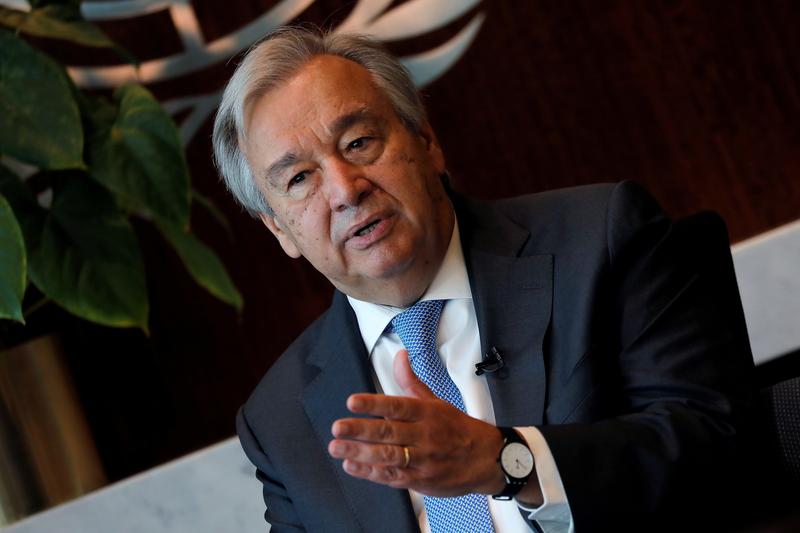
UNITED NATIONS, United States: UN Secretary-General Antonio Guterres on Wednesday called for coordinated international action to address AI risks as fears rise about the dangers of the fast-evolving technology.
“National action is essential. But global coordination is also indispensable,” he told reporters. “AI does not stop at borders and neither do its risks.”
“AI has enormous potential — to accelerate sustainable development, enhance learning, strengthen health systems, boost climate resilience, and so much more,” Guterres said.
“But a growing number of those building it are sounding the alarm — warning that development is racing ahead of our understanding of the risks.”
“The world cannot afford a race to the bottom on AI safety,” he warned.
Concerns about AI safety have escalated in recent weeks, with workers at major AI developers resigning over concerns about the dangers posed by the technology.
President Donald Trump has dismissed warnings against AI risks as a “hoax” and pushed back against calls for tighter oversight.
GENEVA: The United Nations rights chief called Monday for countries and “frontier” artificial intelligence companies to act urgently to rein in a technology he warned posed “unprecedented risks”.
In a letter sent to countries and AI developers and shared with the media, Volker Turk cautioned that the world was “on the cusp of irreversible change, affecting not just us but generations of humanity to come”.
“The current race towards ever more powerful AI is a step change towards greater existential risks to every aspect of our lives.”
He sent the letter at a time when worries over the risks of “superintelligent” computer systems have been on full display, after a researcher publicly resigned from leading AI firm Anthropic over fears that the technology could escape human control.
Another Anthropic employee, who did not resign, stated publicly that “we really do earnestly believe AI could kill all humans”, and that he thought the chances were greater than “10 percent within the next decade”.
Amid the outcry, Anthropic CEO Dario Amodei called Saturday for AI companies to “pace the frontier” — or coordinate a slowdown in the technology’s development, with his chief competitors, xAI’s Elon Musk and OpenAI’s Sam Altman, publicly supporting him.
“In today’s world, we are almost entirely reliant on a small number of powerful companies to make the right choices on Al development for all of humanity,” Turk lamented.
“I call on States and companies to mobilise urgently through multilateral fora to chart a path for action to govern advanced, frontier AI models, grounded in international human rights law.”
Cristiano Ronaldo said on Sunday that fans who appeared to make chants referencing former teammate Diogo Jota at Ruben Neves during a Saudi Pro League match should be banned from football stadiums for life.
The chants occurred on Saturday during a fixture between Al-Taawoun and Neves’ side Al-Hilal in Buraidah, Saudi Arabia.
Jota died on July 3, 2025, in a car crash in Zamora, northwestern Spain, along with his brother Andre Silva. A close friend of Jota, Neves was a pallbearer at his funeral.
Footage filmed from the stands during the match and circulated on social media appeared to show supporters chanting ‘Jota’.
The shouts attracted the attention of Neves, who pointed to his eye and then up to the sky in response.
Passing through the mixed zone after the game, Neves commented, “I hope they don’t go to pray afterwards.”
In response to an Instagram post showing the footage, Ronaldo commented from his personal account.
“The league must take action and punish this kind of fan behavior,” said Ronaldo.
“This is no longer football, and there have to be limits. People who behave like this should never be allowed to enter a stadium again.”
The game finished 6-0 to Al-Hilal, with Neves playing 75 minutes before being substituted.
Al-Hilal Club Company announced in a statement on its website on Sunday that it had filed a complaint with the Saudi Arabian Football Federation relating to the incident. The Saudi Pro League club were “confident” that measures would be taken to “protect the integrity of sporting competition from offensive practices.”
“The Company expressed its absolute rejection of such actions targeting players or their families, or intended to cause personal offense,” said Al-Hilal’s statement.
Later on Sunday, Al-Taawoun also released a statement, which strongly condemned the offensive chants.
“Such conduct is completely unacceptable and does not represent Al-Taawoun, its supporters or the values for which its terraces are known.”
Al-Taawoun added that it would “take all necessary measures in coordination with the relevant authorities to prevent a recurrence and hold offenders accountable.”
The Saudi Arabian Football Federation (SAFF) and the Saudi Pro League (SPL) also condemned the supporters’ behavior on Sunday.
In a joint statement, SAFF and the SPL said the conduct of some fans during the match was “inconsistent with the values of Saudi football and the principles of sportsmanship.”
The governing bodies added that exploiting personal tragedies “for the purpose of abuse or provocation is unacceptable behavior that has no place in Saudi football.”
SAFF said the relevant committees had identified the conduct in question and would take the necessary action in accordance with applicable regulations and procedures, with the outcome to be announced once the process is completed.
India’s Prime Minister Narendra Modi has called for an overhaul of global governance, saying Global South countries are impacted by decisions they are unable to shape. Opening the BRICS summit in New Delhi, he urged leaders to replace the ‘pyramid of privilege’ with a more equal system.
Indiana GOP Senate candidate Richard Mourdock opposes abortion even in the case of rape and incest, he said at a Tuesday night debate, because pregnancy from rape is “something that God intended to happen.”
Mourdock, who is in a tight race with Democratic Rep. Joe Donnelly, was responding to a question about whether abortion should be legal in cases of rape or incest.
“I know there are some who disagree, and I respect their point of view, but I believe that life begins at conception,” the tea party-backed Mourdock said. “The only exception I have, to have an abortion, is in that case of the life of the mother.
“I’ve struggled with it myself for a long time, but I came to realize that life is that gift from God,” Mourdock said, appearing to choke back tears. “And even when life begins in that horrible situation of rape, that it is something that God intended to happen.”
Mourdock’s statement came near the end of the debate. Afterward, according to the Associated Press, Donnelly said he didn’t believe “my God, or any God, would intend that to happen.”
The controversy came as the Mourdock campaign unveiled a new ad featuring Republican presidential candidate Mitt Romney making an on-camera endorsement of him.
In the ad, Romney calls Mourdock “the 51st vote to repeal and replace government-run healthcare,” and says he “will help stop the liberal Reid-Pelosi agenda.”
Casting Mourdock’s comment as “part and parcel of the modern Republican Party’s platform toward women’s health,” Democratic National Committee Chairwoman Debbie Wasserman Schultz called on Romney to get the ad off the air.
“As Mourdock’s most prominent booster and the star of Mourdock’s current campaign ads, Mitt Romney should immediately denounce these comments and request that the ad featuring him speaking directly to the camera on Mourdock’s behalf be taken off the air,” Wasserman Schultz said.
Romney campaign spokeswoman Andrea Saul tried to distance Romney from the comment. “Gov. Romney disagrees with Richard Mourdock’s comments, and they do not reflect his views,” Saul said in a statement.
The flap comes about two months after Missouri’s Republican candidate for Senate, Todd Akin, said a woman is unlikely to become pregnant from “legitimate rape” because “the female body has ways to try to shut that whole thing down.” That comment also came in response to a question on whether victims of rape and incest should be able to obtain an abortion.
Romney and most other prominent Republicans urged Akin to drop out of the race, but he did not. Instead, Akin said he had spoken inartfully, then apologized, but persisted in challenging embattled incumbent Claire McCaskill.
The Akin and Mourdock comments have the potential to undercut Romney’s efforts to reduce the gender gap — the margin by which women have tended to prefer President Obama.
Mourdock, the state treasurer, ousted moderate longtime Sen. Richard G. Lugar in the GOP primary in May. Romney embraced Mourdock’s candidacy and traveled to Indiana in August to campaign for him.
“This is a man that I want to see in Washington to make sure that we cannot just talk about changing things but actually have the votes to get things changed,” Romney said at the time.
After Tuesday’s debate in southern Indiana, Mourdock clarified his position on rape and pregnancy.
“Are you trying to suggest that somehow I think God ordained or pre-ordained rape?” Mourdock said, according to the Evansville Courier & Press. “No, I don’t think that anyone could suggest that. That’s a sick, twisted – no, that’s not even close to what I said.
“It’s a fundamental part of my faith that God gives us life,” he continued. “God determines when life begins. I believe in an almighty God who makes those calls…. There are some things in life that are above my pay grade.”
COMEDIAN Jim Davidson has called off his sixth wedding to his fiancée Natasha after secretly separating – and exclusively revealed to The Sun the reasons behind the split.
The Celebrity Big Brotherstar, 72, was set to wed at Hampton Court Palace last year – and ending it all has come at quite a cost.
Jim Davidson has separated from his fiancée NatashaCredit: NewsquestThe pair, who have a 23-year age-gap, had planned to at wed Hampton Court Palace
The palatial venue, where all six of King Henry VIII’s wives lived during their marriages, was an amusing nod to Jim’s string of failed marriages – but Davidson and Natasha, 49, have now lost their £10k deposit.
Despite plans to marry six times like the former King of England, funnyman Jim confirmed the engagement is off.
He told The Sun: “There’s no bad blood. Natasha is the most caring and dutiful person.
“It’s not like we’re splitting up because we don’t love each other anymore.
“It’s a sort of a grown-up separation. The timing’s not right because she has so much time for everybody and how can you knock that?”
Jim and Natasha pictured with Reform MP Lee Anderson MPCredit: LeeAndersonMP_/xJim, who won Celebrity Big Brother in 2014, is newly singleCredit: Alamy
The smitten comic later introduced her to pals at Reform leader Nigel Farage’s birthday party saying he was going to make her his sixth wife – despite previously admitting his divorces had cost him around £60million.
He even renamed his £350,000 yacht – previously called Princess Mitchie after his ex-wife Michelle Cotton – Lady Natasha in honour of his new love.
However, the former Big Break and Generation Game host says the couple are no longer in a relationship ahead of their third anniversary.
He told us: “We still speak every other day, but whether we’ll ever find room to see one another again, I don’t know.
“She is very dutiful. She puts family first. And of course she has three children and now a grandson as well.
“She is just so busy and so I’m very busy as well. I’ve just finished a tour and my a*** is shaped like my car seat after travelling around the country. I get out of the car and I walk like I’m still in it.
“Our busy lives mean we’ve not been seeing one another. I previously fitted into her life because I’m hardly ever around myself.
“But there’s no bad feelings. I do love her. She’s fantastic.
“She’s the best friend you could ever have. She’s the best mother you could ever have.
“She’s the best daughter you could ever have. And I’m so proud that she was my girlfriend up until now.”
Jim – who was awarded an OBE in the 2001 New Year Honours – launched the Ustreme streaming channel after a successful stint recording short videos during Covid when he was unable to perform live and had no idea how audiences would respond.
The content includes exclusive stand-up shows and in-depth interviews with the aim of “making people laugh like they used to”.
Natasha’s new series is set to air on Jim’s website, where she jokingly refers to herself as the ‘future ex Mrs Davidson’.
Jim continued: “We planned to get married last year and even booked Hampton Court Palace, which we thought was great because Natasha would be the sixth wife and she thought that was hysterical.
The comedian is going on tour in DecemberCredit: PR HandoutJim pictured in 1976 on New FacesCredit: Rex
“But these days we just don’t have the time to see each other and split up every month.
“So going forward, we might end up seeing each other again, or we might draw a line under it because it’s not practical for the pair of us.
“I said to her, ‘Are you going to give me my jewellery back? and she told me, ‘If you want it back, I’ll just get it from someone else’,” Jim laughed.
“She’s a beautiful girl. How she found time for me, I’ve no idea. She does everything for everybody and asks nothing for herself.”
Ruling out there being another potential wife-to-be on the cards, Jim joked: “The only thing that’s in my life now is a Hyundai Santa Fe and a dressing room.”
Natasha’s new eight-part series launches in October, interviewing an array of celebrity guests.
Meanwhile Jim Davidson – The Christmas Cracker Tour – launches on December 2.
Jim’s five wives and a fiancee
JIM married his childhood sweetheart Sue Walpole in 1971 at the age of 17 after she became pregnant with their daughter Sarah.
The marriage only lasted a year, and they divorced in 1972.
Jim wed second wife Julie Gullick in 1981 and had his second child, Cameron, but split five years later.
Jim wed TV presenter Alison Holloway in 1987, but the marriage was hit with rumours of infidelity and was over by 1989.
One of Jim’s most successful relationships was a 10-year marriage to former Page Three girl Tracy Hilton – the mum of his three youngest children – Charlie, Fred, and Elsie.
Jim married his fifth wife Michelle Cotton in 2009 with hopes that she was ‘the one’.
During an interview on Piers Morgan’s Life Stories, the host asked him about his wife, and Jim replied: “She is a very nice person. She’s impatient, she’s fiery like me.
“I hope I’m with Michelle for the rest of my life, there’s no one better I’d want to spend the rest of my life with. Liz Hurley, perhaps?”
However in 2023, the comedian revealed they had split up, with their divorce finalised in 2024.
He said in an interview posted on ustreme.com: “There you go, the divorce came through today, so it’s done. I’m divorced again, my fifth divorce.
“The house has been sold and that will be going through in March, fingers crossed.
Sanctions announced by the British government on Tuesday targeting West Bank settlements have upended the UK’s decades-long balancing act and provoked furious condemnation from the Israeli government that has all but severed relations between the two.
Coming a year on from recognizing Palestinian statehood, the Labour-led UK government confirmed it was tightening restrictions on arms exports to Israel and was placing bans on the import of all goods from settlements and on some services, including construction, financing, infrastructure, real estate, and settlement advertising.
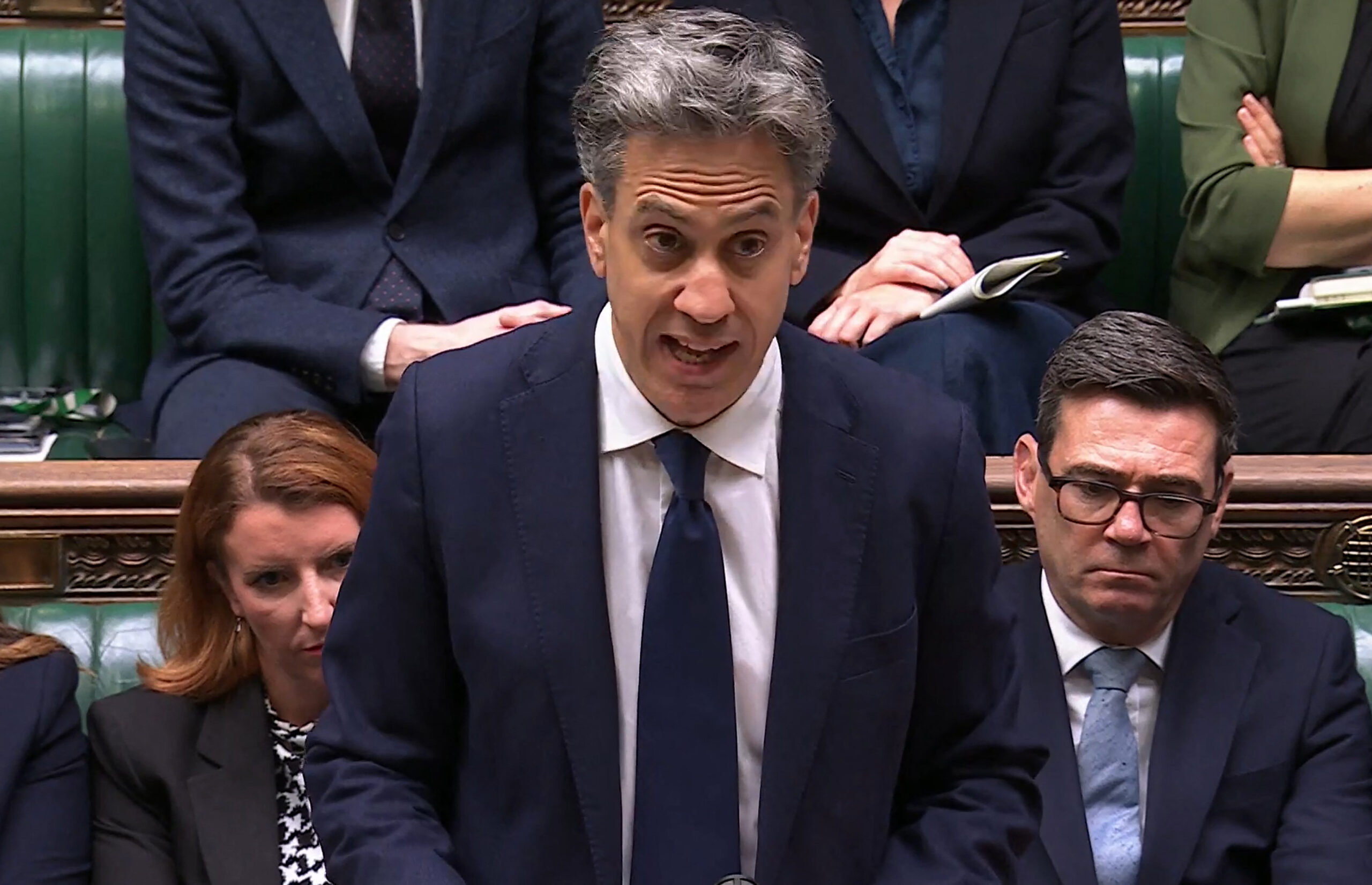
Addressing Parliament, Foreign Secretary Ed Miliband, who is of Jewish heritage and lost multiple members of his family during the Holocaust, labeled the settlers “terrorists” who had received tacit support for their practices by an Israeli government.
UK Foreign Secretary Ed Miliband announces the policy in the British Parliament. (AFP)
“There is ethnic cleansing of Palestinians in areas of the West Bank perpetrated by settler terrorists, and all too often, the Israeli government has turned a blind eye to this, and worse, members of it have made statements and taken actions to support the forced displacement of Palestinians,” Miliband added.
The move marks part of a broader international pushback on settlement activity, with Canada and France also announcing on Tuesday they would join Belgium, Denmark, Finland, Iceland, Ireland, Norway, Poland, Portugal, Spain, Sweden, and the UK in enacting bans.
Against a backdrop of looming Israeli elections, questions are now being asked: Does the news out of London mark a long-term structural shift in its relationship with Israel, or is it part of a coordinated effort to put pressure on the government of Prime Minister Benjamin Netanyahu ahead of elections in late October?
In Israel, early political response was definitive, with National Security Minister Itamar Ben-Gvir leaning into a global call by right-wing governments as he urged the country to “publicly recognize that the Malvinas Islands (Falklands) are Argentine territory under occupation.”
He added: “The British are not content with merely occupying the territory; they also carry out oil drilling there and steal money from the Argentine people.”
Israel’s Finance Minister Bezalel Smotrich, meanwhile, claimed “we will not be a doormat trampled by an antisemitic government, in a country conquered by radical Islam, trying to save itself from economic and social decline.”
Addressing the media shortly after Miliband’s announcement, Israeli Foreign Minister Gideon Saar stated plainly that the UK was engaging in election interference as he warned that the Israeli population “emphatically” rejected Palestinian statehood.
Smotrich speaks during the official inauguration ceremony of a new Israeli settlement in the occupied West Bank. (AFP file)
Announcing countermeasures, Saar said Israel would close the British Consulate in Jerusalem; remove British representatives from the International Gaza Support Center in Kiryat Gat in southern Israel; terminate the UK’s role in training Palestinian Authority forces in the West Bank; and deny 12 elected officials entry to Israel.
These include former Labour leader Jeremy Corbyn, Zarah Sultana, Fahad Ansari, director of Riverway to the Sea, Naz Shah, Diane Abbott MP, Hannah Spencer, Carla Denyer, Sian Berry, Ellie Chowns, John McDonnell, Richard Burgon, and Adrian Ramsay.
Chris Doyle, director of the Council for Arab-British Understanding, said that Ben-Gvir and Smotrich’s history of offensive comments would likely mean these remarks were not “seen as serious” in and of themselves, but warned that they could not be wholly ignored.
“They (Gvir and Smotrich) are viewed with the sort of contempt that is necessary. It’s one of the many reasons that they are sanctioned,” Doyle told Arab News.
“But clearly, the concern will remain that somehow whatever they say could become official Israeli government policy, not least in an election cycle.”
Burcu Ozcelik, senior research fellow at the Royal United Services Institute, told Arab News the real threat from Israel surrounded the potential that it could downgrade aspects of intelligence-sharing and defense cooperation with the UK.
Doing so, Ozcelik said, would prove “significant” and was “exactly why” she expected to see the UK go to great pains in the days and weeks ahead to “telegraph that the settlement trade ban is legally and diplomatically defensible because it is consistent with its recognition policy, but that the UK seeks to preserve substantial security and economic ties with Israel.”
However, according to observers who spoke to Arab News, the UK appears to have reached a point at which it is willing to take that gamble, with Doyle noting that after meeting with Miliband on Monday, he was convinced the ban was indicative of a broader structural shift.
“I’m quite convinced that Ed Miliband is genuine when he says that this will be a reset in relations with Israel,” said Doyle.
“It’s a phrase he’s used in public and repeated. So I think that imposing a ban on trade with settlements is certainly part of that. But I think that there needs to be other measures, and I expect that there will be.”
Concurring, Husam Zomlot, the Palestinian ambassador to the UK, described the decision as “long overdue,” writing on X that the sanctions marked a “turning point in UK-Palestine relations,” with Britain moving “from condemnation to consequences, from words to action.”
Protesters march through central London to oppose the war in Gaza. (AFP file)
Stressing that the development marked neither a “wholesale rupture with Israel” nor a “blanket trade ban” with Israel, Ozcelik said the Labour government was adding consistency to last September’s recognition of Palestine and the country’s “continued commitment to a two-state solution.”
“It is distinguishing between Israel’s legitimate security concerns, which the UK fully recognizes, and the settlement expansion in the West Bank, which the UK considers illegal under international law,” Ozcelik said.
“The UK government’s calculation is that if it recognizes a Palestinian state while taking no action against settlements that undermine the territorial viability of a future state, there is an obvious credibility gap. These measures need to be read as an attempt to give practical meaning to the UK’s support for a two-state solution.”
Ben-Gvir wants Israel to “publicly recognize that the Malvinas Islands (Falklands) are Argentine territory under occupation.” (AFP file)
Public support for a ban has been steadily climbing since a recommendation for one last July from the Foreign Affairs Select Committee, with an August YouGov poll pointing to 50 percent support, with just 16 percent opposed, while Caabu research noted 246 MPs were in favor.
Trustee of the Britain Palestine Project, which seeks equal rights for Israelis and Palestinians, and former UK Consul-General to Jerusalem Sir Vincent Fean said that with “no peace process” and a “genocide in Gaza and apartheid, state-controlled settler violence and ethnic cleansing in East Jerusalem and the rest of the West Bank,” action was necessary.
“This is a necessary reset of UK government policy, wholly consistent with UK recognition of the State of Palestine on Sept. 21, 2025, and respect for international law, which the Labour government came into office committed to uphold,” Fean told Arab News.
“It exerts UK leverage over Israeli illegal settlements for the first time. The UK has joined the international virtual consensus in condemning settlements as illegal, undermining prospects for peace. But nothing was done to stop them.
“With this policy step change, the UK is giving a lead to like-minded partners. The UK is not powerless in this regard.”
Noting that the UK move was “inevitable” amid a “deterioration of the security situation in the West Bank,” which followed the Israeli government overturning a 20-year settlement ban in Jenin, Yossi Mekelberg said he wanted to see words matched with action.
Settler violence has escalated in the West Bank since the Oct. 7, 2023, attack on Israel triggered the war in Gaza. (AFP file)
“Taking measures against the trade with the settlements is one thing, but we also need to see a drive toward a two-state solution,” Mekelberg, a senior consulting fellow on the Middle East and North Africa program at Chatham House, told Arab News.
“Do you support the two-state solution on both sides? Do you support the process? If so, you need to fill it with content, with substance.”
Asked to provide a metric for measuring the ban’s success, Ozcelik said this would ultimately be measured in whether it deters implementation of the contentious E1 plan, which critics say will sever Palestinian territory in such a way that a contiguous state is no longer possible.