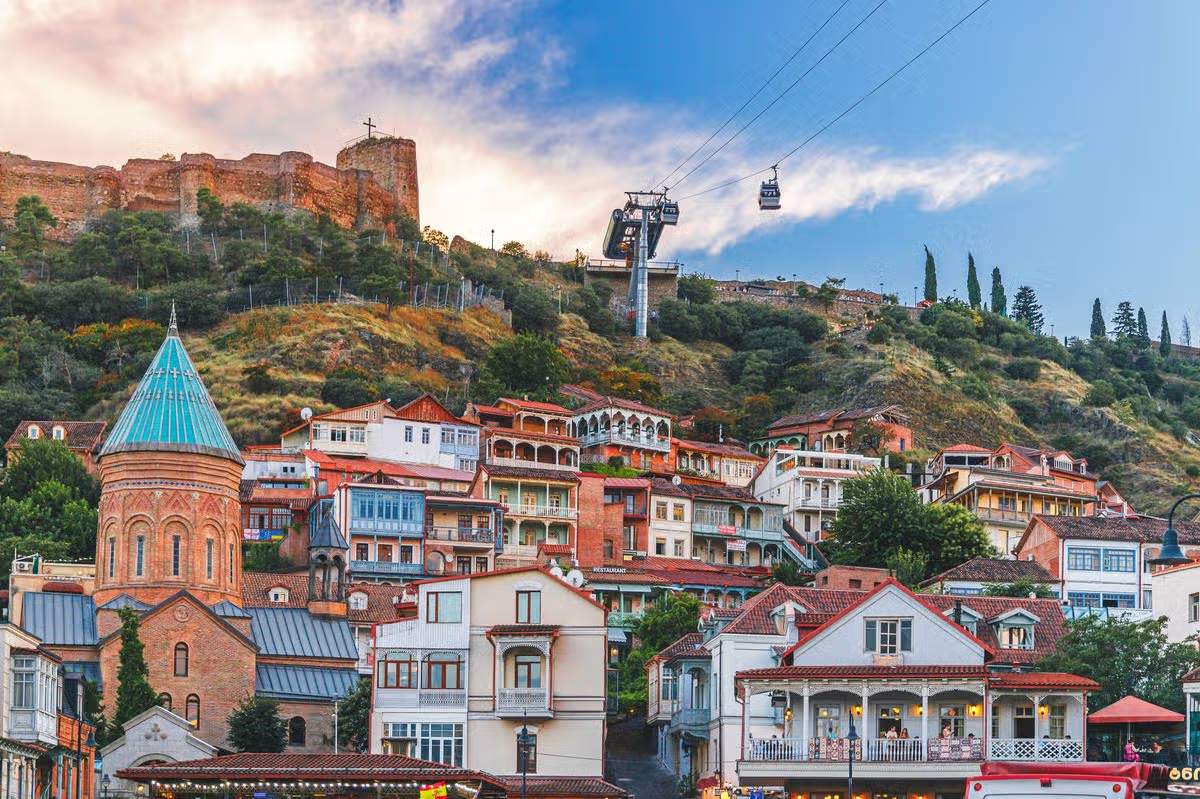
The travel expert highlighted one spot as a stunning and affordable autumn city break destination

Simon called the European spot a “very exciting” destination to visit(Image: kolderal via Getty Images)
For many people mapping out an autumn escape, short-haul European city breaks promising late-season sunshine tend to top the wishlist. But as one of Britain’s most respected travel journalists, Simon Calder, suggests a more affordable and “very exciting” destination.
During an appearance on Holly Rubenstein’s podcast ‘The Travel Diaries,’ Simon shone a spotlight on everything from ancient cities in Algeria to Cape Verde and the Azores. Another unexpected destination on his radar was Tbilisi, the capital of Georgia. Tbilisi, the capital of Georgia, is becoming an increasingly popular choice for a city break, offering a mix of historic sights, delicious food, traditional wine, famous thermal baths and relatively affordable prices.
Why visit Tbilisi?
Tbilisi’s historic centre is packed with colourful wooden balconies, winding streets and beautiful churches, alongside architecture reflecting Georgian, Persian, Russian and European influences.
The city takes its name from its natural hot springs, and the Abanotubani district is home to traditional bathhouses where visitors can enjoy the famous sulphur-rich waters.
One of the must-visits in the city is a ride on the cable car towards Narikala Fortress offers impressive views across Tbilisi and the Mtkvari River. From the fortress, you can also glimpse the iconic “Mother of Georgia” statue.
Simon said: “It used to be the case that you couldn’t fly from Tbilisi in Georgia from the UK. And suddenly, within a couple of days, British Airways and easyJet launched flights to Tbilisi.”
The travel guru continued: “And that’s a very exciting part of the world. Central Asia, Uzbekistan, is very much getting back to being more mainstream as well. So much exciting stuff to do,” reports the Express.
What’s Tbilisi like in autumn?
Autumn can be an attractive time to visit Tbilisi. September is typically warm, while October brings cooler temperatures but can still offer pleasant days for exploring the city. Early autumn can also feel considerably warmer than the UK, making it an appealing option for travellers looking for a break from cooler weather.
Tbilisi comes into its own during autumn for a whole host of reasons. While temperatures back home in the UK begin to plummet, Georgia’s capital basks in a pleasant climate, with average highs of 19.5C in October.
This mild, sunny weather is perfectly suited to exploring on foot, and with very little rainfall to contend with, you can safely leave the waterproofs behind. Tbilisi has earned a reputation as a remarkably budget-friendly travel destination, especially for visitors from the UK and Western Europe.
While prices have risen slightly in recent years owing to increasing popularity, the city still offers exceptional value for money.
In the Georgian capital, a pint of local beer in a bar or pub will set you back around £1.75, while meals out typically cost between £8 and £15.
Tbilisi’s charm lies in its fusion of old and new. The city’s ancient heritage is prominently displayed in the delightful Old Town (Dzveli Tbilisi), where a maze of cobbled streets winds past traditional houses with characteristic wooden balconies.
You can explore this historic quarter and uncover the domed roofs of the renowned Sulfur Baths in the Abanotubani district.
For a modern architectural wonder, walk across the Bridge of Peace, a contemporary pedestrian crossing that illuminates with thousands of LED lights after nightfall.
Georgian cuisine is a standout feature of any visit, and Tbilisi is the ideal spot to sample it. From the warming comfort of khinkali (spiced meat or cheese dumplings) to the cheesy delight of khachapuri (bread with cheese), the local food is a hearty and flavoursome experience.
Wash it all down with a glass of locally produced wine from one of the oldest winemaking regions on the planet.
Travel Local reveals that Georgia is widely regarded as the birthplace of wine. Archaeological findings of winemaking activity stretch back more than 8,000 years, making it the oldest continuous winemaking tradition in the world.
Remarkably, the very word “wine” is thought to have originated from the Georgian term for it, ‘ghvino’.
Tbilisi boasts a fantastic selection of wine bars and tasting rooms throughout the city, but the most celebrated vineyards and wineries can be found in the Kakheti wine region, considered the heart of Georgian winemaking.
It’s a well-loved and straightforward day trip from Tbilisi, typically requiring around a 1.5 to two-hour drive to reach the region’s principal towns such as Sighnaghi or Telavi.
October is also a particularly vibrant time to visit the city, as it plays host to the Tbilisoba festival, a grand celebration of the city’s rich history and harvest season. The streets burst into life with music, folk dancing and food stalls, offering an unforgettable insight into Georgian culture.