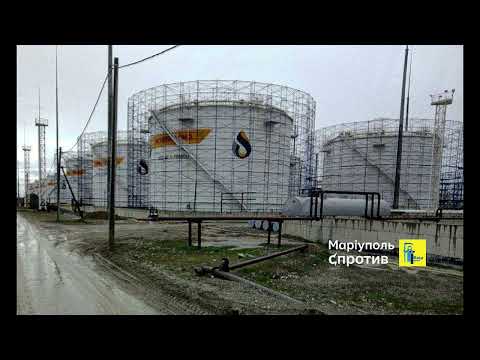
Cages

UAE Building Massive ‘Cope Cages’ To Protect Energy Facilities From Iranian Drone Attacks

Forced to defend against thousands of Iranian drone and missile attacks before and after the ceasefire in the now-paused U.S.-Israel war on Iran, the United Arab Emirates (UAE) appears to have taken a play from Russia and its war with Ukraine in an attempt to secure some of its energy facilities with massive metal ‘cope cages.’

An image posted on X by Israel’s I24 News outlet shows what it claims is caging around oil tanks near Dubai International Airport. In the far-right section of the photo, what appears to be a more complete metal enclosure of some of the fuel tanks can be seen, while in the foreground, construction looks to be taking place on caging for additional tanks.

בדובאי החלו למגן באמצעות רשתות ברזל אתרים אסטרטגיים שקשורים לתעשיית הנפט, סמוך לנמל התעופה pic.twitter.com/mL4n28dBSH

— החדשות – N12 (@N12News) May 13, 2026

This seems to be the first sighting of these structures in the UAE and across the Gulf Arab nations. It is unclear when construction on the structures began or how many of these barriers the UAE is building or plans to build. We have reached out to the UAE Embassy in Washington for more details.

As we have reported in the past, the idea behind these kinds of metal structures is to mitigate the damage caused by incoming munitions by creating a barrier between the point of weapon impact and the target. The caging depicted is not designed to protect against Iranian ballistic missiles, and even cruise missiles could be a challenge. These kinds of structures are made to help defend against one-way attack munitions, such as the Shahed-136, many of which Iran has launched against the UAE. They can also protect from near-field small suicide drone attacks, although these have not been a major issue in the UAE during this conflict.

As noted earlier, while these structures may be new to the UAE, it is not the first time metal caging and even mesh nets have been used to protect critical energy infrastructure. Russia has employed these measures on its oil storage facilities in attempts to protect them from repeated Ukrainian drone attacks for a number of years now.

You can see some of those defensive measures in the following images and videos.

Russia Puts Cope Cages on Oil Storage Tanks thumbnail

Russia Puts Cope Cages on Oil Storage Tanks


It is no surprise that the UAE would resort to such measures. Since the conflict broke out on Feb. 28, the Emirates have been particularly hard hit by Iranian attacks, especially on its energy infrastructure.

The UAE Defense Ministry says its air defenses “have engaged a total of 551 ballistic missiles, 29 cruise missiles, and 2,265 UAVs” fired by Iran.

Two of the UAE’s major energy infrastructure sites – the oil storage facilities at the UAE Port of Fujairah and the Habshan natural gas processing facility – have been damaged by Iranian missiles and drones. You can see video of some of the Iranian attacks on the UAE below.

🇮🇷🇦🇪 UAE Attacked AGAIN

Iran is suspected to have done it in retaliation to yesterday strikes. Waiting for comment from Iran.

There are reports of SMOKE at the airport, unclear if it is related to this event or something else. Pending confirmation.

The UAE Ministry of… https://t.co/m0cIgIKe9D pic.twitter.com/7pxMki1CFo

— Ryan Rozbiani (@RyanRozbiani) May 8, 2026

⚡🇮🇷🇦🇪 Iranian attack drones struck oil storage infrastructure worth around $50 billion in Fujairah, UAE, this morning, causing a large fire.

Notably, Fujairah is the only major oil export terminal in the UAE that bypasses the now closed Strait of Hormuz. Oil could hit $100 this… pic.twitter.com/nyIStj7gak

— Defense Intelligence (@DI313_) March 3, 2026

Habshan, the main natural gas plant supplying the fuel in the United Arab Emirates “will only return to full capacity next year, highlighting the long recovery times for some of the region’s most critical infrastructure that was damaged in the Iran war,” Bloomberg News noted

🚨 The Habshan Gas Facility In 🇦🇪 UAE Will Not Be Restored To Its Complete Operational Capacity Before 2027 Because of 🇮🇷 Iranian Strikes.

– Financial Times pic.twitter.com/2Bz0Y9Cy8m

— Asad Nasir (@asadnasir2000) May 12, 2026

The most recent Iranian attack on the UAE came on May 10, more than a month after the U.S. and Iran agreed to a ceasefire that is barely holding on. The Emirates, however, haven’t just taken defensive measures. As we noted earlier this week, reports emerged that it carried out secret airstrikes on Iranian targets.

The war has once again highlighted the need for hardened structures to protect valuable assets, an issue TWZ has frequently covered. Meanwhile, shortly before the war broke out, the U.S. took a step toward acknowledging the importance of these kinds of defensive systems. The Pentagon issued new guidance for protecting critical infrastructure against drone attacks that calls for increased use of netting, cables, and other kinds of passive physical defenses.

The following video shows War Secretary Pete Hegseth introducing the Pentagon’s new approach to protecting infrastructure from drone attacks.

The new plan represented a notable shift in policy within the department. For years now, U.S. military officials have often pushed back on the utility and cost-effectiveness of investing more in the physical hardening of bases and other critical facilities, especially shelters to shield aircraft from drones and other threats.

Whether the new structures UAE is building to defend its energy infrastructure actually work will only be known should Iran launch a new round of attacks that target these sites. Clearly, the world will be watching and taking notes.

Contact the author: howard@twz.com

Howard is a Senior Staff Writer for The War Zone, and a former Senior Managing Editor for Military Times. Prior to this, he covered military affairs for the Tampa Bay Times as a Senior Writer. Howard’s work has appeared in various publications including Yahoo News, RealClearDefense, and Air Force Times.


Source link

The Cage’s Sheridan Smith mortified after being mistaken for celeb 33 years her senior

The Cage star Sheridan Smith says she was performing in another role when a passer-by mistook her for an iconic celebrity three decades older

Sheridan Smith was left red-faced after being mistaken for a celebrity 33 years her senior. The 44-year-old rose to fame starrning in sitcoms such as The Royle Family and Two Pints of Lager and a Packet of Crisps.

Her two-decade career has also seen her star in a host of TV dramas, such as ITV’s Cilla, following the life of singer and presenter Cilla Black. Sheridan scooped a National Television Award and a TV Choice Award for the role.

She says it also ended up with her becoming “obsessed” with Cilla’s home city of Liverpool. However, it was walking through the city streets that Sheridan found herself mistaken for a 77-year-old Scottish songstress.

Appearing on BBC Radio 2, Sheridan recalled: “I do feel like an adopted Scouser and they do tell me that, which is lovely.

“I just love the city, I’m just obsessed with the people, they’re so friendly, although when I was doing Cilla, I do remember someone going past and they went, ‘Who’s that, Lulu?’

“But they’re just brilliant and fun and I do feel that after Cilla came out they’ve kind of taken me under their wing. So to be back there was great, they were bringing me cups of tea, inviting me around, inviting me out, it was great, I love them.

“I love playing Cilla, because obviously she’s so iconic and well known, I mean the teeth helped, but I did a lot of research on her three months before and training my voice to sound a bit like her. But we recorded the songs live, the history of the Cavern Club, of Liverpool, is amazing.”

Sheridan’s newest drama series, The Cage, kicks off this evening at 9pm on BBC One. The thriller centres on two casino workers who discover each other pilfering from their employer.

Co-starring Michael Socha, the programme tracks the duo as they mutually decide to call off their schemes, only to watch their lives descend into chaos. Their predicament propels them into a perilous collision course involving criminals, authorities, and ultimately one another.

The part required Sheridan, portraying Leanne, to head back to Liverpool for production. Last June, she was seen navigating a mustard yellow Fiat Multipla through the city’s centre while television crews prepared what looked to be a car chase sequence.

Production carried on along Brunswick Street alongside two additional cast members, Barry Sloane and Sophie Mensah, playing Gary and Fen respectively. The Cage comprises five episodes in total.

Sheridan has openly expressed her affection for Liverpool on numerous occasions. She remarked: “I love Liverpool that is my favourite city. I feel like an adopted Scouser. The people were so nice, we were invited over for cups of tea and people were bringing out doughnuts and biscuits. I just love that city from when I did Cilla. It was lovely being there, and seeing all the landmarks.”

The Lincolnshire-born actress has stated she experiences a sense of “coming home” whenever she visits Liverpool. Chatting to the Echo in 2023, she revealed: “I’ve got earrings saying Scouser and I should have worn them tonight. I love this city.”

Source link

‘Communities Not Cages’ anti-ICE protests planned nationwide on Saturday

April 24 (UPI) — Hundreds of rallies are planned nationwide on Saturday as part of a “Communities Not Cages” action aimed at protesting the number of people detained by Immigration and Customs Enforcement.

The protests come amid ICE’s plans to construct eight new detection centers and 16 processing centers, adding at least 116,000 beds to the number the agency has available for detaining people who are allegedly in the country illegally, Axios reported.

At the end of March, No Kings held its third protest — which saw more than 3,000 simultaneous demonstrations across the United States — since President Donald Trump retook office and engaged in a crackdown on immigration.

Detention Watch Network, the organization behind this Saturday’s rallies, called the scouting, purchasing and retrofitting of warehouses to detain between 1,500 and 10,000 people each “particularly horrifying.”

“Shockingly, ICE’s budget now exceeds many militaries around the world,” the organization said on its website.

“In the face of the administration’s unrelenting expansion of immigration detention, communities across the country are demanding to shut down detention centers and halt detention expansion,” it said.

One local group that is coordinating with Detention Watch Network’s “Communities Not Cages National Day of Action” is Shut Down Etowah, a group that previously protested the Biden administration until it stopped detaining people there, AL.com reported.

The Etowah County, Ala., facility is “too broken to be fixed,” the group said this week in a press release, noting that its’ “atrocious” conditions include bed bugs, 23-hour lockdowns and light fixtures that have not been fixed.

ICE earlier this year said it was launching a program under section 287(g) of the Immigration and Nationality Act after lauding its 2025 record of motivating 2.5 million alleged illegal immigrants to leave the country, more than 600,000 of whom were arrested and deported.

Thousands of protesters march in sub-zero temperatures during “ICE Out” day to protest the federal government’s immigration enforcement surge in Minneapolis, Minnesota on Friday. Photo by Craig Lassig/UPI | License Photo


Source link