
cabin

‘I was nervous before my solo stay in a remote Scottish Highlands cabin – but the solitude is glorious’ | Travel

In the gloaming, the trees stand dark and impenetrable on either side of the path. An owl, wide-faced and pale as a spectre, glides out of the pines ahead of me. Heart pounding, I pick up speed and continue uphill, the silence thick around me.

Just a few minutes earlier, I had been scuffing my feet in the sand by the loch shore, watching as the clouds draped themselves across the top of the Grampians. In the absence of other people, Loch Laidon, silvery in the half-light, had been mine to enjoy; in the woods, however, my solitude feels unnerving.

It is not long before I break out of the trees, following rough boards over boggy moorland to reach the top of the nearest hill. Below, past the green viaduct that carries the West Highland Line, stretches the eastern edge of Rannoch Moor, with layer upon layer of Perthshire’s hills beyond that. Out in the open, my fears dissipate – there is no one here, except for me and the fieldfares that fly squeakily away at my approach.

I have come to Rannoch station to spend two nights alone in a place that is, by most people’s standards, remote. A dead-end sign at the western end of Loch Rannoch had marked the last part of my drive here, with the words “No road beyond Rannoch station” below. The station and the very small community around it lie five slow miles further on, with the road running first through the flat strath (valley) of the River Gaur, and then up and over the moors as mountains dip in and out of view.

The small but perfectly formed Star Hut. Photograph: Emma Gibbs

My accommodation, the Star Hut, sits on a small slope just a few hundred yards from the station, its face turned towards Rannoch Moor. It is a small and perfectly formed wooden structure, housing a double bed, two chairs, a fold-up table, microwave and fridge, plus essentials such as OS maps, binoculars, compass, torch and a decanter of Scotch. There is, however, no shower, and the toilet facilities are the ones on the station platform – using the bathroom before bed means walking past a skittish herd of hinds, whose wide eyes glitter in my torch light. It’s no real struggle, though, particularly when I’m woken the next day by a streak of yolk-yellow sun and a view across the empty moor.

There are two main reasons visitors come out to the end of the road here: for the walking and the station tearoom. As the first customer of the day, I have my pick of the tables and choose a window seat, from which I can look out over the tracks and Loch Laidon beyond. Despite it being the tail end of the season, within half an hour the small space is packed with people grabbing breakfast before the next train. When I go to pay, I ask for a slice of the pink cake on the counter and the owner, Sylvia, lowers her voice to tell me about the other cakes out back. “If I put them out now, they’ll all disappear,” she says, conspiratorially.

Corrour, the highest and most remote railway station in the UK. Photograph: Sarah Grigor/Alamy

With a huge, somewhat clandestine, slice of carrot cake tucked into my rucksack, I take the 11.09 train one stop north to Corrour, a spectacular 12-minute journey through the moor. The highest railway station in the UK, Corrour is also the most remote, accessible only by train, bike or on foot – a fact that feels rather at odds with just how busy it is on the platform and in the adjoining restaurant.

It is 11 miles from here back to Rannoch station, on a clear path that cuts across Rannoch Moor. I pass a couple walking their dog at a leisurely pace, and two cyclists going in the opposite direction, but as I climb up above Loch Ossian the track is blissfully empty.

It is a glorious Highland morning, the sun warm on my face and the shadows of the cotton-wool clouds dancing across the slopes of the surrounding hills. Walking alone makes my focus keener: the browns and greens of the moor seem more intense; the cry of a buzzard as it circles overhead more eerie; the crunch of the gravel beneath my feet and the whistle of the wind in the grass louder. It’s just me and the landscape, and the subconscious act of putting one foot in front of another. In my normal, at-home life, my head is always full of the countless things I need to do and remember; out here, that running commentary is silenced. As I climb further up, I turn around and take in the view: Loch Ossian like a sheet of metal below, and in the distance a staggering lineup of mountains that includes Ben Nevis. My “wow” gets swallowed up by the wind.

skip past newsletter promotion


It is around the four-mile mark that I start flagging, all too aware that I still have almost double those miles ahead of me. The hills opposite, flanking Blackwater Reservoir, are shrouded in a mist that makes a hasty approach towards me, and the rain arrives when I am partway through putting on my waterproofs. And then it passes, so quickly it’s almost as if I’ve imagined it, taking my low mood with it. When I reach a ford that is too deep to cross without soaking my boots, I whip them and my socks off to wade through the ice-cold water with the glee of a three-year-old.

Rannoch’s moorland wilderness. Photograph: Adam Burton/Alamy

In the five hours the route takes, I only meet three people: a French couple who are picnicking so quietly by the side of the path that I am taken by complete surprise, and a hiker from Northumberland walking the route in reverse. “I just can’t get enough of the Highlands,” he says, and I agree enthusiastically as we stare out at the undulating moor, littered with jewel-like pools that shine under the constantly changing sky.

When I arrive back at Rannoch station, its little cluster of buildings feels like the height of civilisation after the moor. I bump into Bill, the Star Hut’s owner, who tells me that he and his wife, Jenny, are two of only four permanent residents here. “But our community stretches to Kinloch Rannoch [16 miles east] and beyond,” he says. “Everyone knows everyone.” I think of my own cul-de-sac back home, where I know the names of only about half a dozen people, and think perhaps my perception of remote is entirely wrong.

Back at the hut, I sit on the steps and finally dig into my carrot cake, looking out at the landscape I have just crossed. Last night, so much of it had seemed forbidding and unknown; today, it feels anything but. Being alone out here feels like the ultimate luxury.

The Star Hut can be booked through Airbnb (two nights from £170). Rannoch Station Tea Room is open from late March to late October (Saturday to Wednesday); a 24/7 honesty box is open on the station platform all year, for hot and cold drinks and snacks, as well as the bathroom and shelter. ScotRail services run to Rannoch from Glasgow Queen Street, and the station is also on the Caledonian Sleeper route between London Euston and Fort William

Source link

‘Overlooked only by trees’: a calming autumn cabin stay in north Norfolk | Norfolk holidays

As we walked through the orchard to our cabin at dusk, shadowy figures emerged from the mist. We stood stock-still and held our breath. Most of them saw us and fled, but one held its ground, unwilling to relinquish its stolen goods. Muntjac have clearly developed quite a taste for windfall apples.

My boyfriend and I left the little deer to dinner and walked on to the quince orchard, where our cabin waited in the far corner. This is the sixth Red Cabin to open in the UK. The first was on a sheep farm in Kent; others followed on farms and vineyards in south and east England. Ours was on Drove Orchards on the edge of the village of Thornham, on the north Norfolk coast.

On this chilly late October evening, our first priority was to start three fires: one in the wood-fired stove to heat the cabin, the others for the built-in sauna and the hot tub on the deck. It sounded arduous but was actually easy as the stoves were ready laid with starter logs – guests simply have to light the log, then add more wood when needed.

The interiors of Red Cabins are unfussy and use local materials. Photograph: Beth Squire

The cabin was soon toasty – its recycled plastic insulation keeps it pretty warm anyway – but it would take a couple of hours for the sauna and tub to heat up. We cracked open the rhubarb cider we had bought from the onsite farm shop and settled down to watch for owls. We heard one or two calling, but only geese passed overhead.

The sauna is at one end of the cabin, accessed from the deck. We started stints in it when it reached a pleasant 40C, but kept stoking it until it got to a sweaty 70C. We waited longer for the hot tub, finally easing into it when it was steaming and the sky was filled with stars. Like all the cabins, the one at Drove Orchards is completely private; we were overlooked only by trees.

After such a relaxing evening, we slept soundly in the kingsize bed with superbly squishy pillows, and woke to the view of woodland through the huge picture window. According to the design notes, the cabins are built for “calm rather than cosiness”, with Japanese and Scandinavian influences. The unfussy design allows nature to take centre stage, as it did on this bright autumn morning. Sunlight streamed into the cabin as we made coffee in the tiny kitchen and drank it out on the deck, listening to the birdsong.

The cabins are all identical, built in Britain by a small team using largely British materials (the sauna components are Finnish). They are built on a wheeled chassis, so they don’t need concrete foundations, and made from timber, plywood, cork, wool and hemp. They are off-grid – electricity is generated by solar panels on the roof and stored in batteries, and the “smart” dry toilet uses a system that bags waste (guests just press a button, like regular flushing). Each cabin has water from the mains supply.

skip past newsletter promotion


After hot showers in the compact bathroom, we set off on foot. We had driven to Drove Orchards, but actually you don’t need a car – the nearest train station is King’s Lynn, and the Coastliner bus from there stops right outside the orchard. The other cabins are also in secluded but not wild locations, within walking distance of a pub and various attractions. On Uplees Fruit Farm in Oare, Kent, for example, there is a private swimming lake right outside. At Drove, it is a half-hour walk on footpaths and boardwalks across the marshes to Thornham Beach and Holme Dunes nature reserve.

We fancied a longer walk, so we turned right rather than left at the coast and headed to RSPB Titchwell Marsh, then walked along the vast sandy beach to Brancaster. The tide was way out but we still had to take off our boots, roll up our trousers and wade across some icy channels. We continued to Brancaster Staithe before catching the bus back, so we had time to explore the shops at Drove – as well as the farm shop, there are independent homewares, antiques, vintage clothes and a wine merchant, plus a cafe, pizzeria and chippy.

Rachel on the path heading to the beach. Photograph: Neil Clive Fowler

We decided to head into Thornham for dinner, about 15 minutes’ walk from the cabin. The cosy 16th-century Lifeboat Inn serves Norfolk drinks (Woodforde’s Wherry beer, Flint Vineyard’s sparkling rosé) by an open fire, and has a seasonal menu – I had an excellent pumpkin katsu curry (£22).

The Red Cabin’s founder, Tally Rix, aims to help farmers diversify. She works with individual landowners, and with tenant farmers through the National Trust, to select new sites for the cabins. Two more are opening this month and next: at Wyken Vineyards in Stanton, Suffolk, and Rathfinny Wine Estate in Alfriston, East Sussex.

We visited Drove a little too late for this year’s pick-your-own season, when guests can help themselves to 140 varieties of apples, pears, plums, cherries and quinces. Instead, we toasted the harvest with a glass of newly pressed sparkling apple juice. If the delicious drink was anything to go by, I could see why the local deer are so keen on the fruit.

The trip was provided by The Red Cabin. Cabins from £220 a night, sleeps up to four, theredcabin.co.uk

Source link

U.S. cruise ship suspends a global voyage in Asia due to fuel costs, stranding 200 passengers

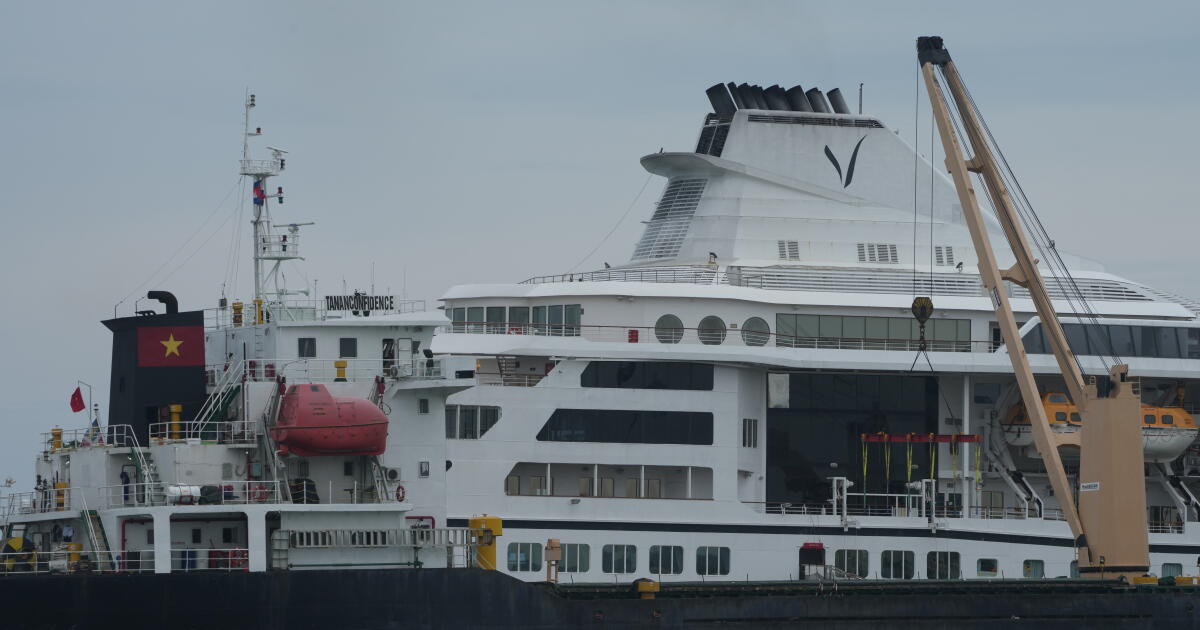
A U.S. cruise ship on an around-the-world voyage that touted its cabins as floating homes suspended its three-year voyage in Cambodia due to fuel costs, forcing hundreds of passengers to disembark.

The MV Odyssey set sail two years ago on a voyage to the seven continents marketed as combining long-term living at sea with global travel. Its operator had offered to “make the Odyssey your permanent home,” with the purchase price of a suite for the lifetime of the vessel starting around $230,000.

For now, it is docked at the Cambodian port of Sihanoukville on the Gulf of Thailand, with no certain departure date.

The ship has been carrying 203 passengers, mostly Americans, along with 156 crew members, according to Cambodian officials. It has a 650-passenger capacity.

Its Florida-based operator, Villa Vie Residences, said monthly fuel expenses per cabin that historically averaged $1,800 have reached an estimated $6,000 to $8,000 in parts of Asia due to the war in Iran. The company said it sought to reduce fuel consumption by slowing the itinerary and spending more time in port, but was unable to offset the surging costs.

Traffic has been curtailed in the Strait of Hormuz since the war in Iran began, squeezing supplies of all kinds of petroleum-based fuels, especially in Southeast Asia, and sharply increasing prices.

“We have been unable to continue carrying the resulting operating losses,” Villa Vie Residences said in a statement issued Tuesday. “Passing the full increase on to residents is not a realistic solution. Our focus now is on supporting residents, crew, and employees” while it tries to restructure.

“The company is working with residents to coordinate disembarkation and identify temporary living arrangements,” it said.

Those on the ship had hoped to sail for years to come

Passengers, however, said they received no support and had to make their own arrangements after being given seven hours notice on Tuesday to disembark. Some were devastated and expressed hope a new company could rescue the venture so life at sea can continue.

Paul and Lynn Montoya, a retired couple from Wyoming, said they bought a window cabin and had expected to sail for years. They boarded the ship 17 months ago in Panama.

Paul praised the concept of residential cruising but said the shipowner lacked the expertise to make the business financially sustainable. While rising fuel costs had been cited publicly as the reason for the suspension, he said the company had already been struggling. Changes to itinerary, unreliable internet access and declining food quality had pushed many residents to leave the ship in recent months, he said.

Lynn said residents were repeatedly asked to contribute additional money for fuel and other expenses, including a fresh call to raise funds for fuel to get out of Cambodia. She said the crew members were also not paid.

“We were tired of every two to four weeks being asked for money for fuel, money for everything,” she said. “We had hopes but they just kept sinking further and further into the hole through mismanagement.”

The company could not immediately be contacted for comment.

For some, the venture was a risk worth taking

Yet for some, even the financial and logistical turmoil couldn’t outweigh the extraordinary experience of traveling the world and living at sea.

Carol Larson, 69, and her sister Crystal Lavering, 72, occupied separate cabins aboard the ship for 18 months. The siblings, from California, described the suspension as heartbreaking, and hoped the cruise would be resuscitated.

“I hope there is a movement for the residents to buy the ship and I am hoping that goes through because it’s a dream to live on the ship and I don’t want it to end,” Larson said.

Lavering said her health improved during her time on the ship, and that she didn’t need to use a cane to walk anymore. “You come to this ship to live … it’s just sad that it’s all over.”

Larson bought her cabin for $120,000, paid in installments, in addition to monthly maintenance fees, under a plan that had promised the possibility of living aboard for up to 15 years. She said she blamed U.S. President Donald Trump for the ship’s woes as fuel costs spiked due to the Iran war, in addition to poor management. But she said she didn’t regret her investment.

“Because it was a startup company, I believe that it was a risk. From the very first day, I said to myself that if it lasts a year, I can walk away and feel like I got my money’s worth … I still feel that way. I feel blessed to have been part of the experiment of residential cruising,” she said.

The cruise began in Northern Ireland in 2024

The ship arrived in Sihanoukville last Friday and was scheduled to depart Wednesday, according to a statement from Long Dimanche, the deputy governor of Preah Sihanouk province. He said it was now expected to refuel and depart Cambodia on Saturday, but the ship’s operator has not yet publicly confirmed any date.

Built in 1993 and operated under different names by several cruise lines over the years before being becalmed by the coronavirus pandemic in 2020, the Odyssey was bought by Villa Vie Residences in 2023.

Its current cruise, originally intended to last 3 1/2 years, began in October 2024 in Belfast, Northern Ireland, where the ship had been refitted. A second cruise had been tentatively scheduled to end in August 2030.

The Odyssey is not the first cruise ship Sihanoukville has hosted in crisis.

In February 2020, the MS Westerdam was allowed to dock in Cambodia after being turned away at five ports in other nations because of fears of COVID-19, which just a month earlier had started to spread from China. It carried 1,455 passengers, more than 600 of them American citizens.

After being stranded at sea for two weeks, Cambodia’s then-Prime Minister Hun Sen allowed it to dock for what he said were humanitarian reasons. Cambodia won plaudits as passengers were welcomed ashore and arrangements were made for them to fly home.

Cheang writes for the Associated Press. AP writers Eileen Ng in Kuala Lumpur, Malaysia, and Grant Peck in Bangkok contributed to this report.

Source link