‘We got our butts kicked’: Republicans reckon with Democratic success ahead of the midterms
MADISON, Wis. — The bluntest assessment of Republican failures during this week’s elections in Wisconsin came from one of their own.
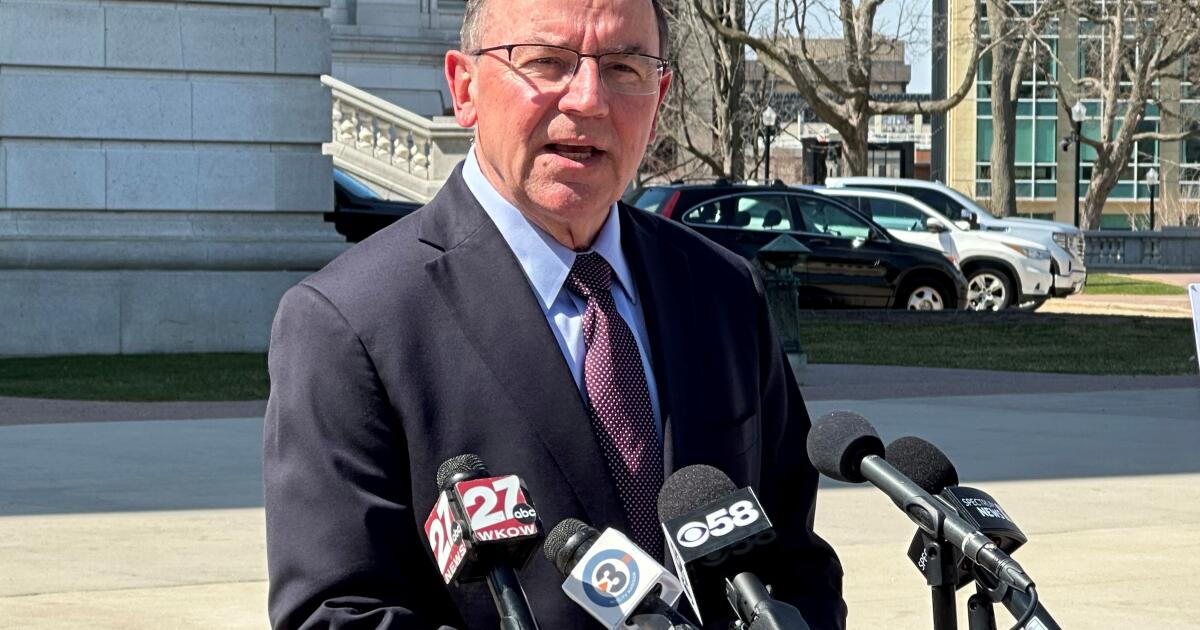
“We got our butts kicked,” said U.S. Rep. Tom Tiffany, who is running for governor.
He was referring to Democratic victories in campaigns for the Wisconsin Supreme Court and the mayor’s office in Waukesha, a conservative suburb outside Milwaukee. But some Republicans were also rattled by a special election in Georgia, where their candidate to replace Marjorie Taylor Greene in Congress won by a much slimmer margin than the party enjoyed in the past.
Taken together, the swings from red to blue added more data points to an increasingly clear picture of Democratic momentum heading into the November midterms, when control of the U.S. House, the U.S. Senate and state governments around the country are up for grabs.
“In rural, urban, red, blue, Democrats have overperformed everywhere,” said Jared Leopold, a Democratic consultant whose clients include Keisha Lance Bottoms, a candidate for Georgia governor. “That is a significant canary in the coal mine about what November of ’26 is going to look like.”
Some Republicans insisted there was no need to panic, and their fundraising remains stronger than Democrats’. Stephen Lawson, a Georgia strategist, said “the sky is not falling.”
But he also said his party is running behind where it has been in the past, and Republicans need to be “looking at these results carefully.”
‘A red alarm for Republicans’
Special elections can be notoriously unreliable as political benchmarks, but Democrats have consistently demonstrated surprising strength. They flipped a Texas state Senate district. They won a Florida state House seat in a district that includes President Trump’s Mar-a-Lago resort in Palm Beach.
Then they gained ground on Tuesday in the race to replace Greene, who resigned from Congress in January after a falling out with Trump.
Clay Fuller, the Republican candidate, prevailed by 12 percentage points. Two years ago, Greene won by 29 percentage points and Trump carried the district by almost 37 percentage points.
“That’s a red alarm for Republicans,” said Democratic strategist Meredith Brasher.
Fuller defeated Shawn Harris, who plans to challenge him again in November.
Jackie Harling, the district’s Republican chairwoman, said she believed that Greene’s resignation energized Democrats while her party is suffering from “election fatigue.”
“Marjorie Taylor Greene was like a freight train that you couldn’t stop, and when she pulled out, it gave Democrats hope and it gave them a shot at winning something they believed was unwinnable,” Harling said.
‘Slightly bluer side of purple’
Georgia has key races this year, including an open contest for the governor’s office. Sen. Jon Ossoff, a Democrat, is trying to defend his seat as well.
There’s reason to think that simmering discontent could boomerang on Republicans just two years after Trump harnessed voters’ anger with his comeback presidential campaign.
In November, Democrats defeated two Republican incumbents in statewide races for seats on the Public Service Commission, which regulates utilities. Rising electricity rates have been a fault line in recent campaigns, especially as enormous data centers are built to power artificial intelligence.
But Georgia Democratic Party Chair Charlie Bailey is trying to maintain modest expectations.
“We could cement ourselves, put ourselves, on the slightly bluer side of purple,” he said. ”We’re not going to overnight turn into Colorado.”
‘A very clear sign of momentum’
Wisconsin holds statewide elections for Supreme Court seats, and liberals expanded their majority with a 20-percentage-point blowout victory on Tuesday.
Democrats saw gains in red, blue and purple counties when compared with another judicial race last year, which was also won by the liberal candidate.
“This to me was a very clear sign of momentum and enthusiasm for Democrats in the fall,” said Wisconsin Democratic Party Chairman Devin Remiker.
The state has its own open race for governor this year, and Democrats are hoping to take control of the state Legislature and oust Republican U.S. Rep. Derrick Van Orden.
“It’s time for us to put this thing in overdrive,” said Mandela Barnes, a Democratic former lieutenant governor who is running for governor.
Milwaukee County Executive David Crowley, another Democratic candidate for governor, said it’s clear that “people are really upset with the Republican Party and their brand right now.”
“But that doesn’t mean that they’re automatically going to come over to the Democrats,” Crowley said. “And that’s why we have to continue to focus on the issues and speak to the values of all the voters here in the state of Wisconsin.”
‘A lot of anxiety’
Tiffany, the Republican candidate for governor in Wisconsin, cautioned against reading too much into Tuesday’s results.
He said “every election is unique,” and he wasn’t making any changes to his campaign. He said the key to winning will be to “paint that clear contrast of how we are going to help everyday Wisconsinites.”
But Democrats seemed to be making inroads, including in Waukesha. The city is located outside of Milwaukee in the Republican stronghold of Waukesha County.
Democrat Alicia Halvensleben, president of the city’s Common Council, defeated Republican Scott Allen, one of the most conservative members of the state Assembly.
She said Trump came up “a lot” when she was campaigning, although she thinks her victory came down to local issues and how the state legislature wasn’t addressing them.
“There’s so much uncertainty at the national level,” Halvensleben said. “I think that level of uncertainty is causing people a lot of anxiety, all the way down to the local level.”
Bauer, Amy and Cooper write for the Associated Press. Amy reported from Atlanta, and Cooper from Phoenix.