Business

United Airlines CEO approached American Airlines with merger plan

April 27 (UPI) — The chief executive officer of United Airlines confirmed Monday that he pitched a potential merger to American Airlines, but was turned down.

United CEO Scott Kirby said in a statement Monday that American Airlines rejected his proposal.

“I approached American about exploring a combination because I thought we could do something incredible for customers together,” Kirby wrote in the statement.

Kirby wrote that he was seeking “a willing partner that shared my big, bold vision.”

He said the plan was aimed at increasing coverage for customers, creating a globally competitive airline and growing the U.S. economy.

“I was hoping to pitch that story to American, but they declined to engage and instead responded by publicly closing the door,” he wrote. “And without a willing partner, something this big simply can’t get done.”

American Airlines CEO Robert Isom said last week that a merger with United would be anticompetitive and bad for customers.

Kirby had reportedly approached the Trump administration with his idea earlier this year, but President Donald Trump told CNBC last week that he would be against such a merger.

President Donald Trump speaks during a Health Care Affordability event in the Oval Office at the White House on Thursday. Trump announced announced a new drug price deal with Regeneron. Photo by Will Oliver/UPI | License Photo

Source link

Sen. Thom Tillis will vote to confirm Trump nominee for Fed chair

Sen. Thom Tillis, R-N.C., said on Sunday that he will vote to confirm President Donald Trump’s nominee for Federal Reserve chairman after the Department of Justice assured him it has ended its investigation into current chair Jerome Powell. Photo by Bonnie Cash/UPI | License Photo

April 26 (UPI) — U.S. Sen. Thom Tillis, R-N.C., said on Sunday that he will end his blockade of Kevin Warsh’s confirmation as Federal Reserve chair after the Department of Justice ended its investigation into current chair Jerome Powell.

U.S. Attorney Jeanine Pirro on Friday said the Justice Department was ending its investigation into Powell over the Fed’s budget for renovations to its headquarters and has threatened him with criminal charges over testimony he gave about the costs.

Tillis made the announcement during an interview on NBC News’ “Meet The Press,” because the department assured him that it has “completely and fully ended” the investigation.

He had previously said he would block all Trump nominees until the probe was dropped.

“We worked a lot over the weekend to make sure that we were very clear that we have assurances from the Department of Justice that I needed to feel like they were not using the department as a weapon to threaten the independence of the Fed,” Tillis told NBC News.

The Justice Department launched a criminal investigation into Powell in January after President Donald Trump questioned the Fed being over budget on renovations to its headquarters in Washington, D.C.

The investigation was condemned by several members of Congress as improper, including Tillis, because it was seen as politically motivated punishment from Trump for not setting interest rates at levels he preferred.

Pirro said Friday that she has asked the Federal Reserve’s inspector general to investigate the renovation costs, which she said is “billions of dollars” over budget, and that she expects a “comprehensive report” on the matter.

She noted, however, that she “will not hesitate to restart a criminal investigation should the facts warrant doing so.”

President Donald Trump and first lady Melania Trump participate in the 2026 White House Correspondents’ Association Dinner in Washington on April 25, 2026. Photo by Yuri Gripas/UPI | License Photo

Source link

‘Sloth World’ attraction will not open after 31 of its animals died

April 25 (UPI) — An attraction planned for Central Florida called Sloth World Orlando will not open after at least 31 of its sloths died during the last two years in a facility that had not been properly permitted.

Sloth World Orlando had imported at least 69 wild-caught sloths that it planned to put on display in an educational “slotharium,” but an investigation by The Sloth Conservation Foundation, The Sloth Institute and investigative reporters found the animals were being mistreated and dying, the organizations said.

Orange County, Fla., building inspectors had posted a stop-work order at a warehouse that Sloth World Orlando was storing its sloths because of alterations made to the building with permits, and because the last use permit issued for the building was for vehicle storage, the Orlando Sentinel reported.

Ben Agresta, who owns Sloth World Orlando, told Fox35Orlando, that he has ended plans for the slotharium and plans to file for bankruptcy after it was forced to give up its 13 surviving sloths in the wake of the reports.

The 13 sloths will live at the Central Florida Zoo until the Association of Zoos and Aquariums can help find long-term homes for them.

The two Costa Rica-based non-profits have been running a campaign about the facility and “following the initial press release, we received reports from former employees raising concerns about the welfare of the animals,” they said in a press release.

The organization’s report, published by Inside Climate News, found that at least 31 of Sloth World Orlando’s sloths died between December 2024 and February 2025 when they started importing the animals, and that another 24 slots remain unaccounted for.

A separate report from the Florida Fish and Wildlife Conservation Commission last year performed unannounced routine inspection of the storage facility that resulted in warnings about the sloths living conditions and improper records being kept on all of them.

Among the issues raised about the facility was the lack of power, heat or air conditioning and no water.

The state report also noted that in one shipment of 10 sloths wild-caught sloths, two arrived deceased, and the other eight appeared to be in poor health and later died as well.

Agresta said in a statement that allegations the animals were poorly treated are “false and inaccurate,” claiming instead that the company “lost sloths that had a virus with showed barely any symptoms and was undetectable even after necropsy.”

President Donald Trump speaks during a Health Care Affordability event in the Oval Office at the White House on Thursday. Trump announced announced a new drug price deal with Regeneron. Photo by Will Oliver/UPI | License Photo

Source link

Trump administration contemplates Spirit Airlines bailout

April 24 (UPI) — The Trump administration is working on a bailout of Spirit Airlines, which is in bankruptcy for the second time in a year, to keep it from shutting down.

President Donald Trump several times this week that the government may get involved in the situation — specifically highlighting his concerns about jobs and the airline industry — after increases in jet fuel cost made the airline’s situation even worse, CNBC and USA Today reported.

Spirit has not commented on the bailout negotiations, which would have to be approved by its creditors, but the administration has offered Spirit a $500 million loan, with the government receiving the right to own 90% of the company when it exits bankruptcy, CBS News reported.

“We’re thinking about doing it, helping them out, meaning bailing them out, or buying it,” Trump said on Thursday.

“I’d love to be able to save those jobs,” he said. “I’d love to be able to save an airline. I like having a lot of airlines so it’s competitive.”

Commerce Secretary Howard Lutnick has argued it is necessary for the government to step in and save Spirit because if it is shut down and liquidated during bankruptcy, at least 7,500 jobs will be lost.

The White House may use the Defense Production Act, which gives the government the ability to compel private companies to prioritize its contracts in the event of an emergency and to loan money to those companies, to give Spirit a loan.

The loan would make the government Spirit’s main debtor and, while the company is working its way through bankruptcy, the Department of Defense would use extra seats for transporting troops or moving other military cargo.

The union that represents Spirit’s ramp service employees, the International Association of Machinists and Aerospace Workers, urged the administration to prioritize employees at the airline, The Hill reported.

“IAM Union members at Spirit, and all frontline aviation workers, did not cause this crisis,” the union said in a statement.

“They should not be the ones forced to pay the price. Any federal assistance must prioritize protecting jobs, preserving pay and benefits, and maintaining the affordable air service that millions of Americans rely on,” the union statement said.

Spirit filed for chapter 11 bankruptcy protection in November 2024 after a judge blocked its proposed $3.8 billion merger with JetBlue Airlines in March of that year, and filed for bankruptcy again in 2025.

Spirit’s current bankruptcy plan includes the cost of jet fuel, which has roughly doubled for the company since the United States and Israel launched the war in Iran. The cost of fuel has also tanked their current business model, according to reports.

Spirit missed an interest payment this week, leading to it being warned that it could be in default with its creditors — to which Spirit has warned they may only have days to operate, which spurred the bailout talks.

The federal government already is working with the company’s creditors and has made a loan offer, CBS News reported, and Spirit has said it continues to operate normally, which includes deeply discounted flights.

President Donald Trump speaks during a Health Care Affordability event in the Oval Office at the White House on Thursday. Trump announced announced a new drug price deal with Regeneron. Photo by Will Oliver/UPI | License Photo

Source link

Maine Gov. Janet Mills vetoes bill pausing AI data center development

Maine Gov. Janet Mills on Friday vetoed a bill that would have paused construction of artificial intelligence data centers in the state because lawmakers in the Maine legislature refused a carve-out to the pause for an already in progress project there. File Photo CJ Gunther/EPA

April 24 (UPI) — Maine Gov. Janet Mills on Friday vetoed a bill that would have paused artificial intelligence data center construction in the state for 18 months.

Mills said she decided to veto it because it would have potentially harmed a permitted and in progress data center expected to create hundreds of jobs, both for construction and once the center opens.

The project, a $550 million data center in Jay, Maine, is a multi-year effort to redevelop the former Androscoggin Mill, which was damaged in a 2020 boiler explosion and then closed in 2023, took with it hundreds of jobs and 22% of the town’s tax revenue.

The bill would have been the first in the country restricting or slowing the spread of large-scale data centers required for power-hungry AI systems, which have driven up the cost of both electricity and water for residents living near them, NBC News and Politico reported.

“A moratorium is appropriate given the impacts of massive data centers in other states on the environment and electricity rates,” Mills said in a press release.

“But the final version of this bill fails to allow for a specific project in the Town of Jay that enjoys strong local support from its host community and region,” she said.

There are more than 5,000 data centers in the United States — more than any country in the world — and that number has grown significantly in the last four years as artificial intelligence has become a focus the tech industry.

While many state and local leaders have started to respond to concerns among residents about the huge amounts of electricity needed to power AI data centers and the huge amounts of water needed to keep them cool, as have some members of Congress.

As states have contemplated increased regulation and scrutiny from tech and AI companies, President Donald Trump at the same time has worked to keep the cuffs of tech companies because they “must be free to innovate without cumbersome regulation,” he said in December.

“Excessive state regulation thwarts this imperative,” Trump said in an executive order meant to prevent states from creating new regulations.

Mills said she worked with Maine’s legislature to carve out an exemption for the data center in Jay but was unsuccessful, so she vetoed the law.

The development in Jay, she said, is under contract and permitted, and is expected to create 800 construction jobs, more than 100 high-paying permanent jobs and “substantial tax revenue” for the Town of Jay.

In a letter informing the legislature that she planned to veto the bill, Mills said she plans to issue an executive order to establish a council to study the impacts — real and potential — of data centers in Maine.

“I believe it necessary and important to examine and plan for the potential impacts of large-scale data centers in Maine, as the use of artificial intelligence becomes more widespread,” Mills said.

“Given the serious conversations about data centers here and around the country, I believe this work should commence without delay,” she told legislators.

President Donald Trump speaks during a Health Care Affordability event in the Oval Office at the White House on Thursday. Trump announced announced a new drug price deal with Regeneron. Photo by Will Oliver/UPI | License Photo

Source link

US Justice Department drops criminal probe of Fed chair Jerome Powell | Business and Economy News

The announcement on Friday is expected to clear the path for the confirmation of his successor, Kevin Warsh.

The United States Department of Justice has ended its probe into US Federal Reserve chair Jerome Powell, clearing a major roadblock to the confirmation of his successor, Kevin Warsh.

US Attorney for the District of Columbia Jeannine Pirro said on X on Friday that her office was ending its probe into the Fed’s extensive building renovations because the Fed’s inspector general would scrutinise them instead.

Recommended Stories

list of 4 itemsend of list

Pirro, a Trump ally and the top federal prosecutor in Washington, DC, said she had instead asked the Fed’s internal watchdog, the Office of Inspector General, to examine cost overruns in renovations of the central bank’s Washington headquarters.

“The IG has the authority to hold the Federal Reserve accountable to American taxpayers,” Pirro said in a social media post. “I expect a comprehensive report in short order and am confident the outcome will assist in resolving, once and for all, the questions that led this office to issue subpoenas.”

The move could lead to a swift confirmation vote by the Senate for Warsh, a former top Fed official whom US President Donald Trump, a Republican, nominated in January to replace Powell. Powell’s term as chair ends May 15.

Senator Thom Tillis, a North Carolina Republican, had said he would oppose Warsh until the investigation was resolved, effectively blocking his confirmation.

The leadership transition at the world’s leading central bank could now proceed quickly.

Republicans praised Warsh during a Tuesday hearing even as Democrats questioned his independence from Trump, the lack of transparency around some of his financial holdings, and what they said was his flip-flopping on interest rates. Senator Elizabeth Warren of Massachusetts, the ranking Democrat on the committee, questioned if Warsh will be a “sock puppet“.

Still, Trump’s previous appointment to the Fed’s board of governors, Stephen Miran, was approved by the full Senate just 13 days after his nomination.

No evidence

The investigation was among several undertaken by the Department of Justice into Trump’s perceived adversaries. For months, it had failed to gain traction as prosecutors struggled to articulate a basis to suspect criminal conduct.

A prosecutor handling the case conceded at a closed-door court hearing in March that the government had not yet found any evidence of a crime, and a judge subsequently quashed subpoenas issued to the Federal Reserve.

The judge, James Boasberg, said prosecutors had produced “essentially zero evidence” to suspect Powell of a crime. Boasberg branded prosecutors’ justification for the subpoenas as “thin and unsubstantiated”.

More recently, prosecutors made an unannounced visit to a construction site at the Fed’s headquarters but were turned away, drawing a rebuke from a defence lawyer in the case who called the manoeuvre “not appropriate”.

Warsh said during the Senate hearing on Tuesday that he never promised the White House that he would cut interest rates, even as the president renewed his calls for the central bank to do so.

“The president never once asked me to commit to any particular interest rate decision, period,” Warsh said during the hearing. “Nor would I ever agree to do so if he had … I will be an independent actor if confirmed as chair of the Federal Reserve.”

Warsh’s comments came just hours after Trump, in an interview on CNBC, was asked if he would be disappointed if Warsh did not immediately cut rates and responded, “I would.”

The decision to abandon the investigation represents a rare pullback for a Department of Justice that over the last year has moved aggressively, albeit unsuccessfully, to prosecute public figures the president does not like.

Robert Hur, an lawyer for the Federal Reserve Board of Governors, did not immediately respond on Friday to an email seeking comment.

Source link

Coupang denies lobbying U.S. to pressure S. Korea

E-commerce firm Coupang on Friday denied allegations that it lobbied U.S. government officials to pressure South Korea after a data leak controversy. This February 27 photo shows a Coupang distribution center in Seoul. File Photo by Yonhap

E-commerce firm Coupang Inc. on Friday denied allegations that it lobbied U.S. government officials to pressure the South Korean government following a data leak controversy that emerged in November.

The company also rejected claims that its lobbying activities involved security-related issues, calling such assertions unfounded.

Citing disclosures under the U.S. Lobbying Disclosure Act (LDA), Coupang said its lobbying efforts focused on promoting economic cooperation between Seoul and Washington and expanding professional visa opportunities for South Koreans seeking employment in the United States.

The filings show the company also engaged with U.S. authorities on plans to expand investment and commercial activity in South Korea, Taiwan and Japan, without addressing security matters, Coupang said in a text message.

Coupang said it has prioritized communication on artificial intelligence (AI) innovation, investment, job creation and cross-border commerce involving the U.S. and other markets, including South Korea.

The company said it spent 1.6 billion won (US$1.09 million) on lobbying in the January-March period.

“Lobbying activities by both U.S. and South Korean companies are conducted within legal frameworks,” Coupang said, adding that major U.S. firms typically spend three to four times more than it does.

Copyright (c) Yonhap News Agency prohibits its content from being redistributed or reprinted without consent, and forbids the content from being learned and used by artificial intelligence systems.

Source link

Meta lines up layoffs while Microsoft offers buyouts | Business and Economy News

Meta will lay off 8,000 workers while Microsoft is offering buyouts to 8,750 people, a first for the Windows maker.

Meta is laying off about 8,000 workers, or about 10 percent of its workforce, the company has said as it continues to ramp up spending on artificial intelligence infrastructure and highly paid AI-expert hires.

On Thursday, the company said it was making the cuts for the sake of efficiency and to allow new investments in parts of its business, as first reported by Bloomberg, which also said the company will leave about 6,000 jobs unfilled.

Recommended Stories

list of 4 itemsend of list

Also on Thursday, Microsoft said it was offering voluntary buyouts to thousands of its US employees.

The software giant plans to make the offers in early May to about 8,750 people, or 7 percent of its US workforce, according to two people familiar with the plan who were not authorised to speak about it publicly.

While an alternative to the sudden layoffs removing tech workers from peers like Meta and Oracle, the savings are likely tied to a similar industry upheaval that is requiring huge spending on the costs of artificial intelligence.

Meta has already warned investors that its 2026 expenses will grow significantly — to the range of $162bn to $169bn — driven by infrastructure costs and employee compensation, particularly for the AI experts it has been hiring at eye-popping pay levels.

This week, Meta also said it was breaking ground on an AI-optimised data centre in Tulsa, Oklahoma, a $1bn investment and its 28th data centre in the US.

Wedbush analyst Dan Ives welcomed Meta’s cuts in a note to investors on Thursday.

He said he sees it as part of a strategy of using AI tools to “automate tasks that once required large teams, allowing the company to streamline operations and reduce costs while maintaining productivity, driving an increased need for a leaner operating structure”.

Microsoft, based in Redmond, Washington state, has spent billions of dollars on operating an ever-expanding global network of data centres that power cloud computing services, AI systems and its own suite of productivity tools, including the AI assistant Copilot.

CNBC reported earlier on Thursday on a memo from Microsoft’s chief people officer, Amy Coleman, announcing the voluntary retirement plan.

“Our hope is that this program gives those eligible the choice to take that next step on their own terms, with generous company support,” Coleman wrote, according to CNBC.

Meta stock fell 2.3 percent on Thursday, while Microsoft stock ended the day down 3.97 percent.

Source link

Why UAE Is Becoming the Global Hub for Entrepreneurs and Investors

In recent years, the United Arab Emirates (UAE) has transformed itself into one of the most attractive destinations for entrepreneurs, startups, and international investors. What used to be primarily known as an oil-driven economy has now evolved into a diversified, innovation-focused business hub with strong global connections.

For anyone considering international expansion, relocation, or asset structuring, the UAE offers a combination of strategic advantages that are difficult to match elsewhere. From tax optimization to ease of doing business, the country continues to attract companies from Europe, Asia, and beyond.

Strategic Location and Global Connectivity

One of the key reasons why the UAE stands out is its geographic position. Located between Europe, Asia, and Africa, it serves as a natural gateway for international trade. Major cities like Dubai and Abu Dhabi are well connected through world-class airports and seaports, making logistics and operations significantly more efficient.

This strategic positioning allows businesses to operate across multiple markets with minimal friction. Whether you’re running an e-commerce operation, a consulting firm, or a trading company, the UAE provides access to billions of consumers within a few hours’ flight.

Business-Friendly Environment

The UAE government has made significant efforts to create a pro-business environment. Over the past decade, regulations have been simplified, and bureaucratic barriers have been reduced.

Some of the key advantages include:

  • Fast company registration processes
  • Minimal reporting requirements compared to many Western jurisdictions
  • Strong legal framework protecting investors
  • Access to free zones with tailored business benefits

Entrepreneurs who previously struggled with complex regulatory systems in their home countries often find the UAE refreshingly straightforward.

If you’re exploring international expansion, understanding the process of company formation in uae is one of the first steps to unlocking these advantages.

Tax Efficiency and Financial Benefits

One of the most compelling reasons businesses move to the UAE is its tax structure. While global tax regulations are evolving, the UAE still offers highly competitive conditions:

  • 0% personal income tax
  • Competitive corporate tax rates
  • No capital gains tax in many cases
  • No withholding taxes

For founders and business owners, this translates into significantly higher retained earnings and better capital allocation.

However, it’s important to approach this strategically. Many entrepreneurs make the mistake of focusing only on “zero tax” narratives without understanding compliance requirements, substance rules, and international reporting obligations. Poor structuring can eliminate all the benefits you’re aiming for.

Free Zones vs Mainland: What Actually Matters

A common misconception is that choosing between free zones and mainland structures is just a formality. In reality, this decision has long-term consequences for your operations.

Free zones offer:

  • 100% foreign ownership
  • Simplified setup
  • Industry-specific ecosystems

Mainland companies provide:

  • Access to the local UAE market
  • Fewer restrictions on business activities
  • More flexibility in scaling

The right choice depends entirely on your business model. If you’re running a digital business or international service company, a free zone might be sufficient. But if you plan to operate locally or work with government contracts, mainland becomes necessary.

Most founders underestimate this decision and later face restructuring costs. That’s avoidable if the setup is done correctly from the beginning.

Reputation and Credibility

Beyond operational and tax benefits, the UAE also provides a strong reputational advantage. Having a company registered in Dubai or Abu Dhabi often enhances credibility when dealing with international partners.

Clients and investors tend to view UAE-based companies as more stable and globally oriented compared to entities registered in offshore or less regulated jurisdictions.

This matters especially in industries like:

  • Finance and consulting
  • E-commerce and trading
  • IT and digital services

A well-structured UAE company can significantly improve your positioning in competitive markets.

Banking and Financial Infrastructure

Opening a corporate bank account has become more complex globally, and the UAE is no exception. However, compared to many jurisdictions, it still offers relatively accessible banking solutions—if your structure and documentation are prepared correctly.

Key considerations include:

  • Clear business activity
  • Transparent ownership structure
  • Proof of business operations
  • Compliance with AML requirements

Many entrepreneurs fail at this stage not because the system is broken, but because they approach it unprepared. Proper planning significantly increases approval chances.

Scaling Opportunities

The UAE is not just a place to register a company—it’s a platform for scaling.

The country actively supports:

  • Startups and innovation hubs
  • Venture capital and investment funds
  • Tech and digital transformation initiatives

Dubai, in particular, has become a hotspot for founders building global products. Access to capital, talent, and infrastructure creates an environment where scaling is not just possible—it’s expected.

However, there’s a blind spot many entrepreneurs have: they move to the UAE expecting growth to happen automatically. It doesn’t. The environment amplifies good strategies, but it also exposes weak ones.

If your business model is flawed, the UAE won’t fix it—it will just make the problems more expensive.

Cost Considerations

While the UAE offers numerous advantages, it’s not a “cheap” jurisdiction.

Typical costs include:

  • Company registration fees
  • License renewals
  • Office requirements (depending on structure)
  • Visa costs

This is where many people miscalculate. They focus on tax savings but ignore operational expenses. The result? A setup that looks good on paper but doesn’t make financial sense.

The correct approach is to evaluate total cost vs. total benefit—not just taxes.

Long-Term Perspective

The biggest mistake entrepreneurs make when entering the UAE is treating it as a short-term hack rather than a long-term strategic move.

If you approach it purely as a tax-saving tool, you’ll likely:

  • Underinvest in structure
  • Ignore compliance
  • Face issues with banks or authorities

But if you treat it as a base for international growth, the UAE becomes one of the most powerful jurisdictions available today.

Final Thought

The UAE isn’t a magic solution—but it’s one of the few places where business, tax efficiency, global access, and infrastructure align at a high level.

Most people either overestimate it (“it solves everything”) or underestimate it (“just another offshore”). Both views are wrong.

The real advantage comes from execution:

  • Choosing the right structure
  • Setting up properly from day one
  • Aligning your business model with the environment

If done correctly, the UAE doesn’t just optimize your business—it changes the trajectory of it.

Source link

LG strengthens alliance with NVIDIA for AI

LG AI Research head Lim Woo-hyung (L) speaks with NVIDIA Vice President Bryan Catanzaro at the company’s head office in Seoul on Tuesday. Photo by LG Group

SEOUL, April 22 (UPI) — South Korea’s LG AI Research said that it has agreed to strengthen cooperation with NVIDIA to develop next-generation AI technologies and expand the ecosystem of its flagship AI model, EXAONE.

Toward that goal, LG AI Research’s chief Lim Woo-hyung met with NVIDIA Vice President Bryan Catanzaro, who visited Korea to attend the NVIDIA Nemotron Developer Days Seoul 2026.

The two companies have collaborated before. LG AI Research said that it has leveraged datasets of NVIDIA’s Nemotron open ecosystems to develop and upgrade its EXAONE models.

“Purpose-built, domain-specific models unlock the full value of AI by using culture- and language-specific data aligned with what makes nations and industries unique,” Catanzaro said in a statement.

“By integrating the LG AI Research EXAONE platform with NVIDIA Nemotron, organizations can create high-quality local models that advance sovereign AI initiatives-opening the door to new business opportunities and enhanced social services.”

Lim stressed that NVIDIA has been a key partner throughout the development of EXAONE.

“We will expand our collaboration with NVIDIA beyond research into a broader innovation ecosystem to deliver tangible sovereign AI outcomes that can be realized across industries,” he said.

As one of the leaders in South Korea’s sovereign AI project, LG Group has recently sought to accelerate the conglomerate’s AI transformation.

Earlier this month, for example, Chairman Koo Kwang-mo flew to Silicon Valley to meet with chiefs of global tech companies Palantir Technologies and Skild AI.

The share price of LG Corp., the holding company of LG Group, gained 0.95% on the Seoul bourse Wednesday.

Source link

March retail sales jump on higher gas prices, Commerce Department says

April 21 (UPI) — Retail sales rose by 1.7% in March mostly due to high gas prices from the ongoing conflict with Iran, the Commerce Department announced Tuesday.

It was the fastest monthly change in three years, according to a release.

In February, sales rose 0.7%.

Retail sales are seasonally adjusted but not for inflation. In March inflation rose by 0.9%, which was three times the February rate, according to the latest Consumer Price Index.

The war between the United States, Israel and Iran has caused gas prices to spike. The Strait of Hormuz, a critical transportation route for oil, has been closed to most traffic throughout the fighting. It has dramatically affected the price of gas in the United States and abroad.

Gas station sales jumped in March by 15.5% from February. Without gas station sales, retail rose 0.6% in March, which was at 0.7% in February.

Some categories were stronger. Furniture and home furnishing sales were up 2.2% in March.

Electronics and building materials held up well, too.

Gary Schlossberg, global strategist at Wells Fargo Investment Institute, said in commentary to investors on Tuesday: “Pressure on household budgets is being cushioned, for now, by sizable increases in tax refunds tied to last year’s legislation.”

Consumers adjusted their spending in other areas. Apparel sales were flat, and restaurant sales rose only 0.1%.

Gas prices likely caused that, said Dan North, Allianz Trade senior economist for North America.

“Gasoline is a thing you love to hate, because you have to buy it; there’s really no substitute,” North told CNN in an interview.

Eventually, consumers will deplete savings and tax refunds, and for lower-income Americans, it could be a struggle, North said.

“If we can wind this up, so to speak, in the next few months, the damage to the consumer and economy might not be so bad,” North said. “If you start stretching it out for months and months and toward the end of the year, then consumers and the rest of the economy get in trouble.”

Source link

Southwest jets take evasive action to avoid mid-air crash over Nashville

April 20 (UPI) — A Southwest Airlines flight arriving at Nashville International Airport over the weekend was directed into the path of another Southwest flight that was taking off, causing them to pass within 500 vertical feet of each other.

A flight arriving from Myrtle Beach, S.C., on Saturday evening initiated a go-around before landing because it was facing “gusty winds” during it’s approach, but air traffic controllers directed the crew into the path of another flight, USA Today, WSMV and WTVF reported.

The other flight was departing NIA on a parallel runway, which caused the close call, and “both flight crews responded to onboard alerts” because the two aircraft were 500 feet apart, the Federal Aviation Administration said in a statement.

Five hundred feet is equivalent to 1 2/3 football fields, including the end zones, or two Boeing 747s lined up nose-to-tail, which is half the 1,000-foot distance the FAA requires aircraft to maintain.

The air traffic controller who gave the errant order recognized the mistake and corrected himself with both flight crews, who had already responded to alerts from their Traffic Collision Avoidance System, devices that are standard on all commercial aircraft.

“We are engaged with the FAA as part of the investigation,” Southwest said in a statement.

“Southwest appreciates the professionalism of its Pilots and Flights Crews in responding to the event,” the company said. “Nothing is more importing to Southwest than the Safety of our Customers and Employees.”

Secretary of Health and Human Services Robert F. Kennedy, Jr. speaks during a House Appropriations Subcommittee on Labor, Health and Human Services, Education, and Related Agencies hearing on the budget for the Department of Health and Human Services in the Rayburn House Office Building near the U.S. Capitol on Thursday. Photo by Bonnie Cash/UPI | License Photo

Source link

FAA grounds New Glenn rocket after botched satellite release

The FAA has grounded Blue Origin’s New Glenn rocket because although its launch was successful, one of the engines on its second stage did not fire properly when it got to space, which resulted in the spacecraft releasing a communications satellite in too low of an orbit to be useful. Photo by Joe Marino/UPI | License Photo

April 20 (UPI) — The Federal Aviation Administration grounded Blue Origin‘s New Glenn rocket after it botched the release of a satellite following its successful launch two hours earlier.

The third launch of New Glenn and second landing of its reusable booster stage “Never Tell Me The Odds” on a drone ship in the Atlantic Ocean was a success in those terms, but the spacecraft delivered AST SpaceMobile’s BlueBird 7 satellite to an orbit too low for it to operate properly.

Blue Origin said Monday that it is leading an investigation into one of New Glenn’s engines producing insufficient thrust to reach the mission’s target orbit.

“While we were pleased with the nominal booster recovery, we clearly didn’t deliver the mission our customer wanted, and our team expects,” Blue Origin CEO Dave Limp said in a post on X.

The FAA, NASA, the National Transportation Safety Board and the U.S. Space Force also have been monitoring the situation and will require Blue Origin to complete its investigation and report on the engine anomaly, the Orlando Sentinel reported.

“A return to flight is based on the FAA determining that any system, process or procedure related to the mishap does not affect public safety,” the FAA said in explaining why it grounded the rocket.

The New Glenn-3 rocket launched around 7:30 a.m. EDT on Sunday morning, nailing the flight and landing portion of its mission, and successfully released the BlueBird 7 satellite once it reached orbit.

Because one of the two BE-3U engines that power New Glenn’s upper stage didn’t produce sufficient thrust on its second engine burn, which is meant to boost the spacecraft to its target orbit above Earth, it never got there.

Although the satellite was released and powered on properly, the off-nominal orbit — which was too low for it to be useful — AST said it would be jettisoned.

BlueBird 7 is one of 45 satellites that AST SpaceMobile hopes to get in orbit by the end of 2026 as part of a satellite-based cellular network designed to operate with standard smartphones.

The satellite would have been the companies eighth to reach orbit, and it’s share price Feller by more than 6% on Monday, The BBC reported.

Limp said Blue Origin is analyzing data as it conducts the investigation and is “in steady communication with the team at AST SpaceMobile.”

“We appreciate their partnership, and we’re looking forward to many flights together,” Limp said.

NASA’s Orion spacecraft, with the four-member Artemis II crew aboard, is seen under parachutes as it lands in the Pacific Ocean off the coast of California on Friday after its nearly 10-day journey around the Moon and back. NASA Photo by Bill Ingalls/UPI | License Photo

Source link

Venezuela in talks with Siemens, GE over power crisis

Avilio Troconiz (C), regional president of the Primero Justicia party in Zulia, speaks at a press conference in front of the Las Tarabas electrical substation in Maracaibo, Zulia state, Venezuela, on March 26. The party denounced the the electricity crisis, which has worsened in recent months. Photo by Henry Chirinos/EPA

April 20 (UPI) — Venezuela’s interim president, Delcy Rodríguez, said her government is talking with two major companies to address the country’s power crisis, citing recent diplomatic engagement with the United States.

“Thanks to that diplomatic dialogue, I can say we are now in direct contact with Siemens and General Electric to resolve the electricity problem in Zulia state,” Rodríguez said Sunday during a public event broadcast by state television.

She said the government decided to “open a new chapter in national political life” and in Venezuela’s international relations following a Jan. 3 U>S> military operation that captured President Nicolás Maduro and his wife, Cilia Flores.

Analysts say Zulia, a key oil-producing region in western Venezuela, is critical to the country’s hydrocarbons industry. Persistent electricity shortages have limited efforts to boost crude production, making restoration of the power system a strategic priority for economic recovery.

Situated at the western edge of the national grid, Zulia is the last region to receive electricity transmitted from the south. Failures in the transmission network often leave it disconnected. The system in the region operates at less than 40% of installed capacity.

According to local outlet El Tequeño, both companies conducted technical missions in March to assess Venezuela’s electrical infrastructure and present rehabilitation proposals.

The inspections included hydroelectric facilities in the Bajo Caroní complex in Bolívar state, following a February visit to Caracas by U.S. Energy Secretary Chris Wright.

Rodríguez made the remarks at the launch of a 13-day pilgrimage she called to demand the full lifting of economic sanctions imposed on Venezuela.

“Enough sanctions against the noble Venezuelan people,” she said, addressing the governments of the United States and Europe, according to Globovisión. She added that economic freedom is a sovereign right, not a concession from foreign powers.

The mobilizations began in Zulia, Amazonas and Táchira states and were led by Rodríguez, National Assembly President Jorge Rodríguez and ruling party leader Diosdado Cabello.

International sanctions have worsened Venezuela’s electricity crisis by limiting access to financing and technology needed to maintain and upgrade infrastructure.

A partial easing of U.S. sanctions on the oil and mining sectors has opened the door to talks with companies such as Siemens and General Electric to address those gaps.

Source link

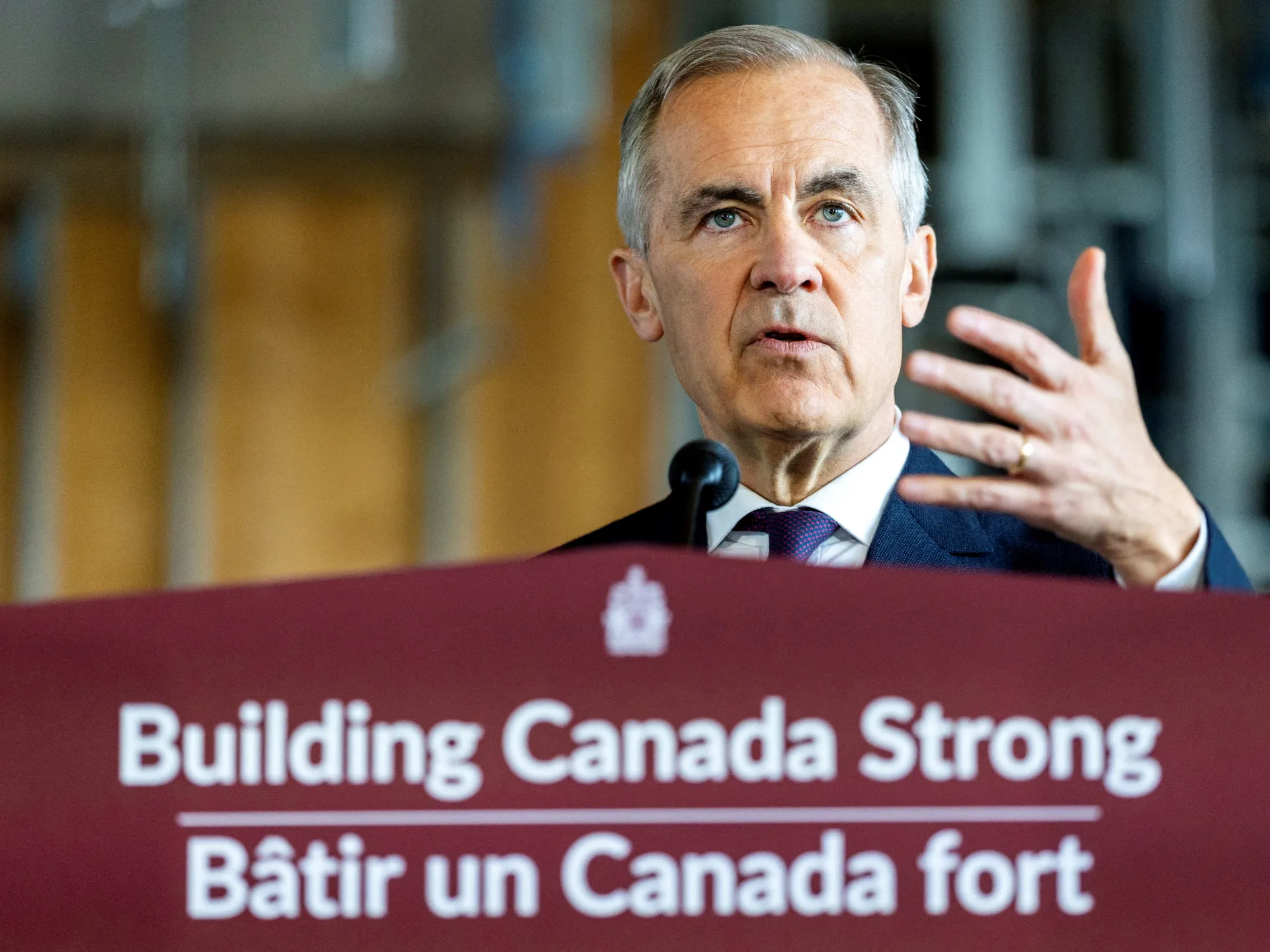
Canadian PM Mark Carney calls close trade ties to U.S. a ‘weakness’

April 19 (UPI) — Citing steep tariffs imposed by U.S. President Donald Trump, Canadian Prime Minister Mark Carney said Sunday his country’s historically close trade and economic ties to the United States have become a “weakness.”

In a video statement posted to YouTube, the Canadian leader asserted the United States has “fundamentally changed its approach to trade, raising its tariffs to levels last seen during the Great Depression.”

This has meant that “many of our former strengths, based on our close ties to America, have become our weaknesses — weaknesses that we must correct.”

Carney’s comments as Trump’s trade war with Canada has disrupted decades of cross border cooperation, triggered in part by a broad 10% tariff slapped by Washington onto all goods not excluded under the Canada-US-Mexico free trade agreement known as CUSMA.

Significantly higher U.S. levies have also been imposed on key strategic sectors, including a 50% tariff on Canadian products that are almost entirely made of steel, aluminum or copper, and a 25% tariff on products that are “largely” made of those metals.

Many types of Canadian heavy equipment also face a 15% tariff upon entry into the United States.

Ottawa says the effect of these measures has been profound, “displacing workers, disrupting supply chains, forcing companies to rethink where they source their materials and products, and causing uncertainty that is curbing investment.”

Although Canada still has the best deal of any U.S. trading partner in an era when Trump has used the threat of tariffs and against both allies and adversaries for strategic and political ends, “we cannot rely on our most important trade relationship as we once did. We must build our strength at home,” Carney said.

“Workers in our industries most affected by U.S. tariffs in autos and steel and lumber are under threat,” he added. “Businesses are holding back investments restrained by the pall of uncertainty that’s hanging over all of us.”

Triggered by the U.S. trade actions and Trump’s oft-repeated desire to annex Canada as the “51st state,” Carney’s Liberal Party government in January made a milestone deal with China to lower some of the tariffs imposed by one another on some of their trade goods.

Under that pact, China lowered its tariffs on Canadian agricultural products, while Canada slashed its tariffs on up to 49,000 electric vehicles that are made in China.

The deal was denounced by Trump, who threatened to impose a 100% tariff on all Canadian goods sent to the United States in response.

“China will eat Canada alive, completely devour it, including the destruction of their businesses, social fabric and general way of life,” the U.S. president asserted.

But Carney on Sunday again defended his expansion of trade away from the United States, saying, “We will attract new investment so we can build more for ourselves, striking new partnerships abroad so we can sell into new markets.

“It’s about taking back control of our security, our borders and our future.”

President Donald Trump meets with Canadian Prime Minister Mark Carney in the Oval Office of the White House in Washington on October 7, 2025. Photo by Shawn Thew/UPI | License Photo

Source link

Tariff refund portal to go live on Monday

April 19 (UPI) — U.S. Customs and Border Protection is expected to launch a website on Monday to process refund requests for some Trump administration tariffs, although there are limits to which ones will be processed.

The first phase of tariff refunds comes after the Supreme Court ruled in February that President Donald Trump could not use the International Emergency Economic Powers Act (IEEPA) to generate revenue by imposing tariffs.

Although Trump decided to use Section 122 of the Trade Act of 1974 to justify new tariffs after the Court’s decision, the administration still is required to refund duties collected under the now-nullified tariffs.

CBP has estimated that it owes about $166 billion in refunds, with the agency’s announcement of phase 1 expected to take care of the vast majority of expected claims, NPR reported.

The website is specifically aimed at letting businesses request refunds, and experts have said that consumers are unlikely to be affected by the refunds, CBS News reported.

“[The Consolidated Administration and Processing of Entries] is being deployed in phases, and CBP will launch the first phase of CAPE on April 20,” the agency said in an update last week.

“Phase 1 is limited to certain unliquidated entries and certain entries within 80 days of liquidation,” the agency said.

The refunds are linked to lawsuits filed in December by Costco and other companies — more than 50 companies brought filed suit for refunds — asking for duties to be returned to them if the Supreme Court ruled against the administration.

In March, CBP raised concern in court that it could not immediately handle refunding the duties based on 53 million entries from 330,000 importers who had paid tariffs as of March 4.

Secretary of Health and Human Services Robert F. Kennedy, Jr. speaks during a House Appropriations Subcommittee on Labor, Health and Human Services, Education, and Related Agencies hearing on the budget for the Department of Health and Human Services in the Rayburn House Office Building near the U.S. Capitol on Thursday. Photo by Bonnie Cash/UPI | License Photo

Source link

Cash shortages grip Yemen despite currency stabilisation | Business and Economy News

Mukalla, Yemen – The Yemeni government’s measures to curb the devaluation of the Yemeni riyal have finally borne fruit, but they have created another problem: A severe liquidity crunch.

The government’s central bank, based in the southern city of Aden, has shut down unauthorised exchange firms it says were involved in currency speculation, centralised internal remittances under a controlled system, and formed a committee to oversee imports and provide traders with hard currency.

Recommended Stories

list of 3 itemsend of list

These measures have helped curb the riyal’s freefall, from about 2,900 to the United States dollar months ago to about 1,500 today, a move that was initially welcomed. But the gains have been short-lived, as public frustration has grown over a worsening shortage of cash in riyals.

People across government-controlled cities such as Aden, Taiz, Mukalla and others have said they are facing an unprecedented shortage of Yemeni riyals in the market. Many, particularly those holding US dollars or Saudi riyals, said local banks and exchange firms are refusing to convert foreign currency, or are limiting daily exchanges to as little as 50 Saudi riyals per person, citing a shortage of local cash.

This has left many Yemenis unable to access cash or use their savings in hard currency at a time of mounting economic pressure, paralysing businesses and giving rise to a black market where traders exchange foreign currency at more unfavourable rates to the customer.

Businesses grind to a halt

Mohammed Omer, who runs a small grocery shop in Mukalla, said he has spent hours crisscrossing the city’s exchange firms trying to convert a few hundred Saudi riyals he received from customers. “I’ve gone from one exchange to another, and they refuse to exchange more than 50 riyals,” said Omer, a man in his early 50s with a salt-and-pepper goatee. “It’s a waste of time and effort – I’ve had to close my shop.”

Yemen has endured an economic meltdown for more than a decade, stemming from a war between the Saudi-backed government and the Iran-aligned Houthis that has killed thousands and displaced millions.

Alongside the fighting on the battlefield, the warring sides have targeted each other’s main sources of revenue, leaving both the Houthis and the government strapped for cash, struggling to pay public-sector salaries and fund basic services in areas under their control.

At a board meeting in March, the Central Bank in Aden said it was aware of the cash shortage and had approved several unspecified “short- and long-term” measures to address the problem, noting that it is pursuing “conservative precautionary policies” to stabilise the riyal and curb inflationary pressures.

Government employees have also complained that the cash-strapped Yemeni government is paying salaries in low-denomination banknotes – mainly 100 riyals – forcing them to carry their wages in bags.

Munif Ali, a government employee in Lahj, took to Facebook to express his frustration, posting a video of himself sitting beside large, tightly packed bundles of 100- and 200-riyal notes that he said he received from the central bank. Munif, like many Yemenis on social media, said traders are refusing to accept large quantities of low-value notes. “Merchants are refusing to recognise this,” Munif said, referring to the stacks of 100- and 200-riyal notes in front of him. “Legal action should be taken against them.”

People who have kept their savings in Saudi riyals, the de facto currency in parts of Yemen, as well as Yemeni expatriates who send remittances in hard currency to their families, and soldiers paid in Saudi riyals, are among those most affected by the cash shortage.

Finding workarounds

To cope with cash shortages and the refusal of exchange firms to convert hard currency, Yemenis have adopted a range of workarounds. Some rely on trusted shopkeepers who allow delayed payments, while others exchange foreign currency at local groceries or supermarkets, often at lower, unfavourable rates. Banks and exchange firms have also introduced online money transfers, which have helped ease the crisis for some.

In rural areas, where internet access is limited and exchange shops are scarce, the problem is even more acute.

Saleh Omer, a resident of the Dawan district in Hadramout, told Al Jazeera that he received a remittance of 1,300 Saudi riyals sent from Saudi Arabia. But the exchange firm that handed him the money refused to convert it into Yemeni riyals, citing a lack of cash, and advised him to try nearby shops.

With the official exchange rate at about 410 riyals to the Saudi riyal, a shopkeeper agreed – after repeated appeals – to exchange only 500 riyals, and at a lower rate of 400. “I nearly begged the shopkeeper to exchange 500 riyals,” Saleh said. To convert the remaining 800 riyals, he added, he would have to return another day and go from one shop to another. “We are suffering greatly just to convert Saudi riyals into Yemeni riyals.”

Connections matter

Well-connected individuals are often better positioned than others to navigate the cash shortage, with some relying on personal contacts at banks and exchange firms to access cash. Khaled Omer, who runs a travel agency in Mukalla, said most of his business transactions are conducted in Saudi riyals or US dollars. But when he needs Yemeni riyals to pay employees or cover utilities, he turns to a trusted contact at a local exchange firm. “We work with a money exchange trader when we need riyals to pay salaries or meet basic expenses,” Khaled told Al Jazeera. “Exchange companies say they are facing a liquidity crunch.”

On social media, Yemenis say some patients have been denied medication as health facilities refuse to accept payment in Saudi riyals, while exchange firms decline to convert the currency into Yemeni riyals.

In Taiz, Hesham al-Samaan said a local hospital refused to accept Saudi riyals from a relative of a patient, forcing him to roam the city in search of someone to exchange the money to pay for treatment. “Is there any justice for the people, oh government? Will anyone hold accountable those who refuse to exchange currency and exploit people’s needs?” al-Samaan wrote in a Facebook post that drew dozens of comments from others reporting similar experiences, including being denied medical services because they did not have local currency.

For traders who import goods from Saudi Arabia, the cash crisis has become something of a blessing in disguise, as Saudi riyals are increasingly available at discounted rates. A clothing trader in Mukalla told Al Jazeera that he accepts payments in both Yemeni riyals and Saudi riyals, partly to attract customers and partly to secure the foreign currency he needs for his business. “As a businessman who sells goods in Yemeni riyals, I benefit from the cash shortage,” he said on condition of anonymity. “Exchange companies that need local currency I hold sell me Saudi riyals at lower rates.”

Source link

Iran blocks Strait of Hormuz, fires on commercial ships

The Strait of Hormuz is closed again, this time by Iran. Two ships have reported being fired on in the strait Saturday. File Photo by Divyakant Solanki/EPA

April 18 (UPI) — Just one day after the Strait of Hormuz was declared open, Iran has blocked the passage again, citing “breach of promise” by the United States, and has begun firing on commercial ships.

Iran accused the United States of “banditry and piracy under the guise of a so-called blockade.”

“Until the United States ends its interference with the full freedom of movement for vessels traveling to and from Iran, the status of the Strait of Hormuz will remain under intense control and in its previous state,” Iran’s semiofficial Fars media said on X.

On Friday, Iranian Foreign Minister Seyed Abbas Araghchi said the Strait of Hormuz was open after a cease-fire in Lebanon.

But by Saturday morning, that had changed. President Donald Trump said the United States would continue blocking Iranian ships.

Gunboats fired on a tanker in the strait Saturday morning, CNN reported the United Kingdom Maritime Traffic Organization said.

The UKMTO said a tanker captain reported that it was “being approached by 2 [Islamic Revolutionary Guard Corps] gun boats,” about 20 nautical miles off the coast of Oman.

The captain said there had been no radio warning before the ship was fired on.

“Tanker and crew are reported safe,” UKMTO posted.

Just hours later, a container ship was hit by “unknown projectile which caused damage to some of the containers” about 25 nautical miles off the coast of Oman, CNN reported the UKMTO said. In the second event, the UKMTO did not say who was responsible for the attack. No fires or environmental damage have been reported.

Trump reported Saturday that talks between Iran and the United States were continuing but that “Iran got a little cute,” CNN reported.

“We have very good conversations going on,” Trump said. “They got a little cute, as they have been doing for 47 years.”

“They wanted to close up the strait again, as they’ve been doing for years. They can’t blackmail us,” the president said.

“We’re talking to them, and you know, we’re taking a tough stand. They killed a lot of people. A lot of our people have been killed,” Trump said.

On Friday, Trump told CBS News in a phone interview that Iran had “agreed to everything.”

He said that the United States would remove Iran’s enriched uranium but would not involve ground troops.

“No. No troops,” he said. “We’ll go down and get it with them, and then we’ll take it. We’ll be getting it together because by that time, we’ll have an agreement and there’s no need for fighting when there’s an agreement. Nice right? That’s better. We would have done it the other way if we had to.”

“Our people, together with the Iranians, are going to work together to go get it. And then we’ll take it to the United States,” he said.

But hours later, a spokesperson for Iran’s foreign ministry said in a statement, “Enriched uranium is as sacred to us as Iranian soil and will not be transferred anywhere under any circumstances. … Transferring uranium to the United States has not been an option.”

Source link

How Jazmin Gamble plans to rebuild Hawthorne High football

Football can teach many life lessons and no one knows that better than Jazmin Gamble, the new varsity head coach at Hawthorne High.

As a woman in a male-dominated profession, one could define her as a trailblazer — and that would be accurate — but while she acknowledges the historical significance of what she is doing, Gamble is not letting it distract her from the task at hand — turning around a program that has fallen on hard times.

“It’s less about proving a point and more about giving all these boys a better experience,” Gamble said. “I’m not downplaying the impact of it, rather I want to leverage the attention in a way that benefits the players and opens doors for them. I’m elated and honored that the district saw my vision and said ‘this girl can do that.’ I have to ask myself how I can use this opportunity to spotlight our team.”

Gamble, who turns 36 in June, is a running back and linebacker for the Los Angeles Legends in the Women’s National Football Conference, a full-contact professional league consisting of 16 franchises across the United States.

Gamble was selected defensive player of the year in 2024 and offensive player of the year in 2025 when she gained a league-leading 549 yards rushing (averaging 11.9 yards per carry) while scoring three touchdowns.

“I tore my ACL my first season and was on injured reserve, but I came back in 2022 and have been playing ever since,” she said. “We made the playoffs last season but lost in the first round. We’re 2-1 right now with three games left. We played our first home game at Long Beach Poly, so the boys got to see their coach in action. We won 23-0 and I scored a touchdown, but it got called back due to holding.”

Hawthorne High football coach Jazmin Gamble holds her right hand up as she calls for her players to huddle at practice.

Hawthorne High football coach Jazmin Gamble calls for her players to huddle during a recent practice.

(Steve Galluzzo / For The Times)

The Legends’ next home game is April 25 against the Utah Falconz at St. Anthony Sports Complex in Lakewood.

“This is my last year playing, but I’ve been wanting to transition more into coaching,” said Gamble, a certified personal trainer and fitness instructor who started a business 10 years ago called the Jazz Standard. “I first heard about the job through my coaching network and it sounded very appealing. I applied, I interviewed and I got it. Football takes up so much of your time and energy. I’ve done enough in this sport. This is a good time for me to stop, and although this is my first crack as a football head coach I’ve been coaching athletes for six or seven years, including some of my teammates, and they got better.”

A Bakersfield native, Gamble was an exceptional all-around athlete. Growing up she was a gymnast and a cheerleader. She played club volleyball, ran track and played basketball while attending four high schools, two in Bakersfield and two in the Bay Area, and graduated from Mt. Diablo High in Concord.

Upon moving to Los Angeles 13 years ago, she was in survival mode.

“I was homeless and slept in the back seat of my car for a couple of months until I got a job in human resources,” she recalled. “I started training and working in the fitness field and after struggling to make it for a few years I decided I wanted to be a business owner and things took off from there. Now I have 33 active clients that I see two to four times a week and even train the No. 2 rusher in the WNFC.”

Gamble lives in Inglewood but her business is in Gardena near Serra High, where she got involved behind the scenes with the flag football team before the sport was officially sanctioned by the CIF in 2023.

“A few of those girls trained with me and I learned to adopt a different schematic approach. Boys are playing football as early as 5 or 6 years old, whereas women are starting at 20 or even their early 30s and their bodies aren’t prepared for it. I didn’t start playing tackle until I was 31.”

Gamble is still assembling a staff but one of her assistants will be her brother, Kenneth Davis, a former receiver at Liberty High in Bakersfield.

Hawthorne does not have a junior varsity team. There were 29 players on the roster last year and nine graduated.

“On Day 1, I had 22 come to the weight room,” Gamble said. “Some players are in track right now, but in May I’ll have ‘em all. My strong suit is development so I’m ready for this. Right now, we’re at ground zero. We’ve only had a handful of practices, mainly conditioning. The boys have been super receptive. I’m just going to be me!”

Hawthorne went 2-8 last season, finishing fourth in the Ocean League and being outscored by 281 points. The Cougars were shut out three times.

“Jazmin’s a breath of fresh air,” said athletic director Mario Romero, who was involved in the hiring process. “She’s brought enthusiasm across the entire school community and I’m excited about where her leadership is going to take us.”

Hawthorne High football coach Jazmin Gamble shows her players how to run a drill during practice.

Hawthorne High football coach Jazmin Gamble shows her players how to run a drill during practice.

(Steve Galluzzo / For The Times)

Fifteen players showed up for a one-hour workout Wednesday at HalCap Field. One of them was quarterback Anthony Green, who played in the last two games as a sophomore last year after transferring from King/Drew and is the projected starter next season.

“She made a good impression,” he said. “I like the workouts — they’re very intense — and I like the competition. Coach expects a lot and she pushes us.”

Gamble put her players through a series of drills to test their stamina, quickness and technique. The penalty for walking was push-ups.

“Everything out here is earned … may the best man win!’ she shouted.

“Her practices are intense — she knows what she’s doing,” added junior linebacker Adrian Lopez, who was an All-League first teamer last fall. “She has a home game coming up and I think I’ll go out and watch. My goal for us is to have at least a .500 season and make the playoffs.”

Gamble is not the first female to coach varsity football at Hawthorne. Monique Boone was the varsity defensive line and assistant offensive line coach in 2021 under previous head coach Corey Thedford. However, overseeing the entire program puts Gamble in rarefied air.

What convinced Romero that Gamble was the right person for the job?

“Her background, her skill set and also the fact that she plays the sport herself at a high level,” he said.

Source link

FAA accepting bids for AI system to assist air traffic controllers

The FAA is considering bids to develop an artificial intelligence system that could help air traffic controllers predict and correct potential issues hours earlier than they currently can. File Photo by Caroline Brehman/EPA

April 18 (UPI) — The Federal Aviation Administration is working with three bidders to develop artificial intelligence software to help air traffic controllers manage flights across the nation’s airspace.

Transportation Secretary Sean Duffy discussed the effort during a media event on Friday, and said the goal is to help anticipate schedule conflicts and improve planning for bottlenecks at busy airports.

“This software, as they look at the flight paths, won’t see [potential issues] 15 minutes before it happens .. a controller will get a notice that they could change one of the airplane’s flight paths slightly and they can deconflict it an hour and a half or two hours before the conflict even happens,” Duffy said during a media event hosted by Semafor.

The program is aimed at fundamentally changing how airspace in the United States operates, The Air Current reported, and is a major part of the agency’s efforts at modernization and redesign.

The FAA has mounted an effort to see how AI can improve the functionality and safety of the country’s air traffic control systems, especially amid a growing shortage of controllers, at least partially because political debates that have hampered the agency’s funding.

The system that the FAA is looking to develop — called SMART, which stands for Strategic Management of Airspace Routing Trajectories — is part of a $32.5 billion modernization program that includes replacing hundreds of radars and growing its air controller staff, The Next Web reported.

Development of the new system, which follows a series of issues at airports across the country that have seen near-misses and actual crashes that have raised concerns among experts and travelers alike, is being bid on by the companies Palantir, Thales and Air Space Intelligence.

The system could begin to be operational some time later this year, with an update on progress expected from the Department of Transportation and FAA on April 21.

Secretary of Health and Human Services Robert F. Kennedy, Jr. speaks during a House Appropriations Subcommittee on Labor, Health and Human Services, Education, and Related Agencies hearing on the budget for the Department of Health and Human Services in the Rayburn House Office Building near the U.S. Capitol on Thursday. Photo by Bonnie Cash/UPI | License Photo

Source link

Mazzucato on the Iran war’s economic shock: Who pays the price? | Business and Economy

Redi Tlhabi speaks to economist Mariana Mazzucato on the Iran war’s economic fallout and who’s really paying the price.

The world is reckoning with the biggest oil supply disruption in history, one that has sent energy prices soaring, rattled stock markets and exposed the deep vulnerabilities of economies still hooked on fossil fuels. While millions face higher fuel and energy bills, top oil and gas companies are reportedly profiting about $30m per hour since the war began.

This week on UpFront, Redi Tlhabi speaks with renowned economist Mariana Mazzucato about what a genuine green industrial strategy looks like, why the World Bank has fallen short, and how her concept of the “common good economy” offers a new compass for governments navigating crises.

Source link

Judge blocks Trump administration’s pre-emptive lawsuit against Hawaii

April 17 (UPI) — A federal judge on Friday blocked a lawsuit against the state of Hawaii that the federal government filed to prevent it from suing oil companies.

The Department of Justice last year sued Hawaii to stop a suit against fossil fuel companies for the impact of climate change on the state, but Senior Judge Helen Gillmor of the U.S. District Court in Hawaii said they it has no standing, The Hill and The New York Times reported.

In the ruling, Gillmor said that an “abstract, theoretical future harm” is not a valid basis for a lawsuit because stating an intention to file suit — which the state’s governor declared on television that he planned to do — does not amount to “concrete harm” that would allow an entity to sue.

Gillmor blocked the lawsuit because the DOJ’s theory of harm would require predicting claims brought against unknown companies; predicting that the lawsuit would be successful; “guessing” that oil companies would react in specific way; and then hypothesizing that the reaction would somehow harm the United States’ commerce and future energy policy, she wrote in the 30-page decision.

The DOJ’s suit, which was filed by now-former Attorney General Pam Bondi, alleged that Hawaii’s action was a “burdensome and ideologically motivated” lawsuit that could cause “crippling damages” with the energy and climate policies the state allegedly is pursuing.

“We disagree with the Hawaii District Court’s ruling, which ignored Supreme Court precedent regarding the United States’ interest in the supremacy of federal law,” the DOJ’s principal deputy assistant attorney general Adam Gustafson said in a statement. “We are exploring all options.”

Source link