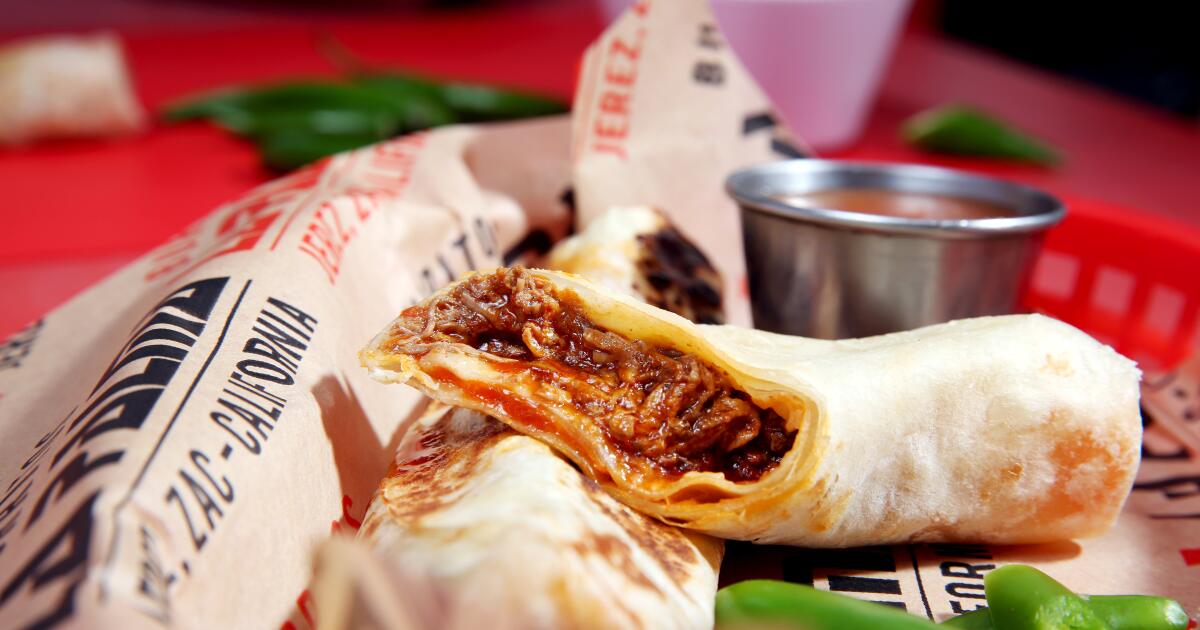
burrito

The best breakfast burritos in Los Angeles

Morning meals in Southern California restaurants link us to so many cultures and flavors: Taiwanese sticky rice fan tuan, Salvadoran huevos picados con loroco, fatteh hummus in Van Nuys, catfish and grits in Inglewood, blueberry pancakes with extra butter in Hollywood.

But to narrow L.A.’s essential daybreak dishes down to one icon? It is, without question, the breakfast burrito.

The origins of burritos, meals wrapped in flour tortillas for breakfast or otherwise, trace most reliably to Sonora, Mexico’s northwestern state where wheat has been cultivated since the 1500s. California’s Mexican foundations made the burrito’s presence in L.A. inevitable, though its omnipresence was surely sped along by California entrepreneur Duane Roberts, who introduced the frozen burrito for fast-food chains to heat and sell in 1956 — after he’d already found success supplying the original McDonald’s in San Bernardino with burger patties.

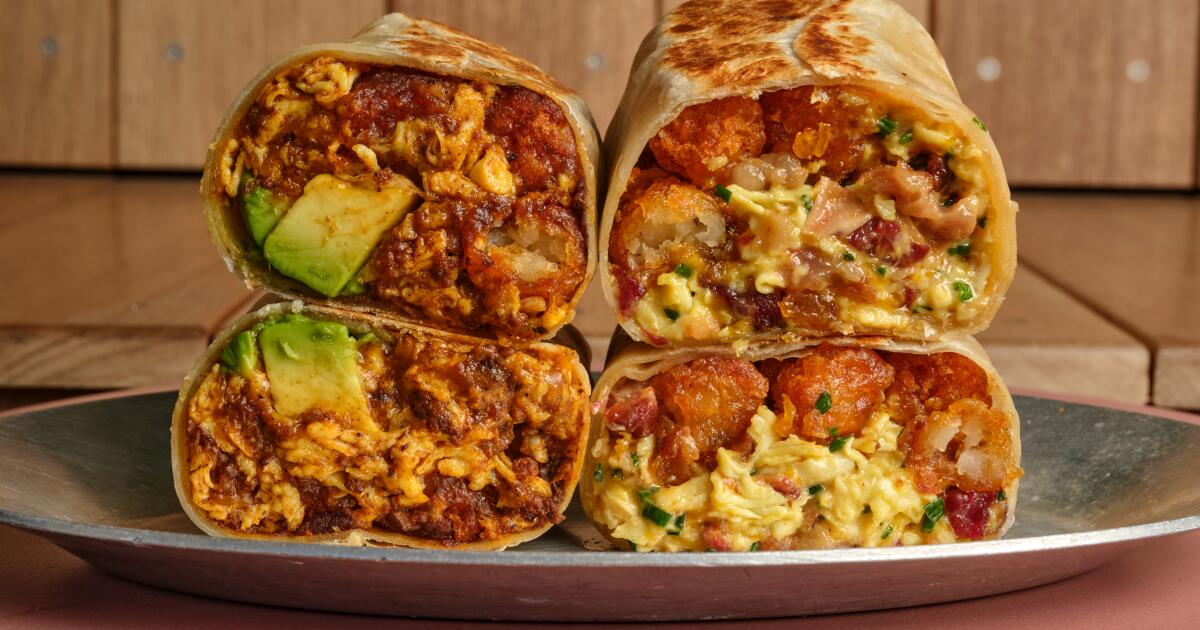
Discussions of the mid-20th-century industrial food complex are relevant here. If any one ingredient, beyond the all-important egg, defines our modern tastes in breakfast burritos, it is the inclusion of the Tater Tot, capitalized after Ore-Ida (now owned by Kraft Heinz) engineered the fried puffs from potato scraps in 1953 and trademarked the term.

Our tastes for breakfast burritos have only increased since the pandemic. Many newer businesses spun out of 2020-era pop-ups or at-home tinkering — and nearly all of them crunch with a telltale fluffy-crispness. Tater tots are now to the L.A. breakfast burrito what rice is to the Bay Area Mission-style burrito.

Still, many styles express themselves in our foil-wrapped torpedoes: Some are canvases for individual creative expression, some innovations that graft global cuisines, some basic energy bombs to fuel the day.

And yes, rising prices led to a viral argument about a $20 burrito in the summer 2026 political discourse. Among the following suggestions, you can find a $3.99 egg, potato and cheese burrito served from a takeout window in Atwater Village and a $26 knife-and-fork burrito stuffed with short-rib meat in Hancock Park; a majority is in the mid-range between $12 and $17.

To build your own best-of breakfast burrito list, you can always start with stalwarts like Cottage Corner in Burbank and Lucky Boy in Pasadena. These 16 favorites span businesses that have been open for six months to several decades. The regional options are overwhelming, and the mix is always fluctuating. (A Pasadena standout, BBAD, recently changed ownership and the quality plummeted, hopefully temporarily.) It’s hard to consider this roundup anything more than a continual work in progress.

Source link

Mexican food is exposing Trump as the weak-salsa TACO he is

In the grand buffet of problems explaining President Trump’s abysmal approval ratings, reserve a tray for Mexican food.

Americans are rightfully frustrated with the myriad consequences of the war with Iran he plunged us into, the rising cost of living, his pharaonic obsession with monuments to himself and his overall doddering state of mind.

But as this president afflicts the country with a prolonged civic bout of Montezuma’s Revenge, Mexican food’s role in the overall mess Trump has left us with is notable.

One of this country’s most popular cuisines has inadvertently spent this summer embarrassing Trump in fundamental ways — and I’m not just talking about TACO, the acronym referring to how Trump Always Chickens Out on his most bombastic claims and threats. The most prominent — and disgusting — example has been outbreak of foodborne illness traced back to popular Mexican restaurant chains that have sickened tens of thousands of Americans while Trump has shrugged and effectively told us to eat frijoles.

The Food and Drug administration traced an outbreak of cyclosporiasis, a parasite-born intestinal disease, to contaminated lettuce grown in Mexico by Salinas-based Taylor Fresh Foods that made its way to Taco Bell. The world’s biggest Mexican fast food chain quickly put out a statement that it removed all suspected lettuce from its restaurants and that “we encourage all relevant restaurants, retailers, and foodservice operators to do the same.”

If only the Trump administration was as proactive in caring for the well-being of Americans as the creators of Doritos Locos tacos and Crunchwrap Supremes.

It turned out that the Centers for Disease Control and Prevention’s Foodborne Diseases Active Surveillance Network told state inspectors last year that they were no longer required to report to the agency any instances of the parasite that causes cyclosporiasis they found in this country’s food supply. This was part of massive cutbacks at the CDC that reduced its staff by a quarter and cut billions of dollars in funding.

When reporters confronted Health and Human Services Secretary Robert F. Kennedy Jr. with these facts, he responded that such criticisms were “invalid” and that the cyclosporiasis outbreak was “under control.”

Make America Healthy Again? More like Make Americans Heave Always.

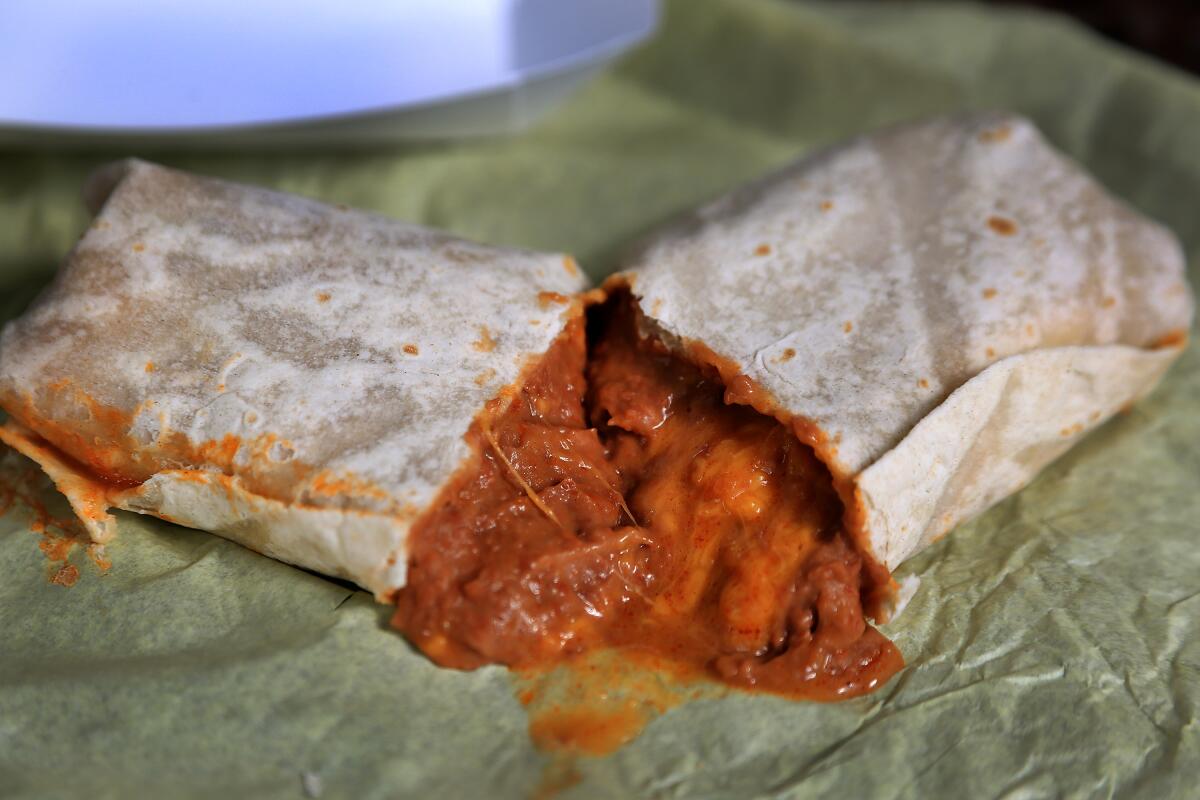
Al & Bea's bean and cheese burrito with green chile sauce.

A bean and cheese burrito with green chile sauce at Al & Bea’s in Boyle Heights.

(Kirk McKoy/Los Angeles Times)

On Aug. 4, the Food and Drug Administration revealed that a salmonella outbreak traced back to contaminated jalapeños imported from Mexico had left hundreds of Americans sick. But the feds were two weeks late to the news: By July 20, Chipotle had already removed all suspected jalapeños from its stores. Unlike the Trump administration, it had invested in food-safety tracking that quickly spotted the problem, a system implemented after the company suffered hundreds of millions of dollars in sales losses and a $25-million federal fine last decade due to repeated foodborne illnesses originating in its stores.

I’m no fan of Chipotle’s underwhelming hipster vibe or Taco Bell’s over-salted options, but they know what the Trump administration seems to not understand: Americans deserve to eat without worrying about whether they’ll get ill as a result. And they also know Americans especially like Mexican food, a cuisine dependent on exported produce that is now more expensive than ever because of Trump’s misguided tariffs and overall bellicosity to our Latin America trading partners.

You would think Trump himself would know: Remember the infamous photo he posted on Cinco de Mayo during his first term of him smiling at his desk appearing ready to chow down on a giant taco salad bowl?

Which leads to the second section of Trump’s combo plate of bad Mexican food news this year. On the same day the FDA belatedly disclosed the jalapeño salmonella outbreak, Turning Point USA spokesperson Andrew Kolvet posted on social media that a college student complained to him that “a burrito shouldn’t cost $20.” Kolvet correctly pointed out that many people currently feel the cost of living is too high, and rightfully suggested that Republican Party leaders should sympathize with such concerns lest they lose even more voters that they already have during Trump’s second term.

Instead, Trump toadies from Vice President JD Vance to Rep. Dan Crenshaw urged young people to eat instant ramen and live frugally instead of splurge on burritos. That provoked other conservative activists to smack down the MAGA Men for showing how out of touch they are with how expensive everything is right now.

Forget the Consumer Price Index: The cost of a burrito is the best way to judge how much the cost of living actually is. I haven’t regularly bought them for years because they’re just not worth it anymore.

A delicious, slender bean-and-cheese burrito with no sauce at the venerable Al & Bea’s in Boyle Heights is going for six bucks and change right now when it was about $2 cheaper two years ago. The gargantuan breakfast burritos at my favorite place to get one, Athenian III in Buena Park, run about $13. Even my go-to fast-food treat, a half-pound Del Taco bean-and-cheese burrito, costs $2.61 with tax at the closest location to my house.

Remember when they were about a dollar? I do.

As someone whose wife runs a restaurant, I don’t blame businesses for hiking their prices; I blame Trump. He campaigned two years ago on stopping and reversing the runaway inflation that was happening toward the end of the Biden administration and won over a lot of Mexican Americans as a result. But when those voters can’t even enjoy a carne asada burrito for lunch without thinking about whether they’ll have enough money for the rest of the week, that should worry Trump and his team as the November midterms approach.

That they’re collectively still blaming Biden shows how pendejos they are at best, and uncaring at worst.

Back to that 2016 Cinco de Mayo photo of himself enjoying a taco salad sold at his Trump Hotel in Manhattan. It was peak Trump: daring opponents to call him out for appropriating a hallmark of Cal-Mex dining while thinking Americans would see the move as a metaphor for the bounties of riches and good times Trump would usher in for this country.

A decade later, Trump just makes too many Americans want to run to the proverbial toilet and barf from all the slop he and his minions have cooked up for our country.

Source link

For college students, GOP’s $20-burrito debate is about more than lunch

A slew of online discourse unfolded last week after Turning Point USA spokesman Andrew Kolvet shared that a college-aged member of the conservative nonprofit told him, “A burrito shouldn’t cost $20.”

“Yeah, a lot of this is a hangover from COVID and Biden-era inflation, but the lived experience is the same: It just feels like basic things cost too much,” Kolvet wrote in the viral X post, which has racked up more than 3 million views.

The online controversy highlights a deep frustration for young adults in Los Angeles. While politicians appear to be debating inflation for their own ends, students are struggling with the reality of not being able to afford food.

A $20 burrito sounds “unjustifiable” to Klarissa Palacios, who graduated from USC in May with bachelor’s and master’s degrees in law, history and culture. While in school, Palacios interned at various city hall offices and said her hourly salary eventually reached $25 — a key consideration for college students, she said, because many young people determine a meal’s affordability based on how many work hours can pay it off.

With minimum wage in L.A. at $18.42 per hour as of July, college students earning this rate would need to work for more than an hour in order to pay for just one burrito, Palacios pointed out.

“I’m Mexican, so I grew up with free burritos at home, anytime I wanted. $20 is pretty steep,” she said. “I’m expected to eat three times a day. If I’m spending $20 per meal and I work eight hours, then that means I’m only really getting paid five hours.”

Noticing a need for affordable meals, Palacios and fellow USC student Josiah Herfurth spent this past semester hosting $10-per-person lunches at their college apartments, dubbing the offering Cafe 10:31. The idea budded from a survey they sent to fellow members of their campus ministry, which found that the leading reason students weren’t attending post-church lunches at restaurants ranging from In-N-Out to sit-down ramen spots was because they wanted to save money, not for a lack of transportation or time.

So Palacios and Herfurth began paying out of pocket for bulk Costco runs that fed as many as 40 people per event. On the menu? Tacos, chili, hot dogs and conversation.

“It started with being just a USC college student thing, and ended up being just a general young adults thing,” Herfurth said, referring to how word quickly spread to UCLA and Cal State Long Beach students, as well as the young adult community at their church.

Herfurth is used to meal prepping in bulk, and said it’s a common practice among college students hoping to cut costs. He and his roommates would use up to six stove burners at a time to prepare meals together, he said.

“It was always more fun for me when I could share something with someone else, and it also made things cheaper,” Herfurth said. “That was the key to me.”

As the online conversation around food affordability evolved, Rep. Dan Crenshaw (R-Texas) chimed in on X.

“Just hearing about this dumb $20 burrito debate so just thought I’d make the losers on social media angry before going to bed,” Crenshaw wrote. “Stop whining, get a job, eat ramen like the rest of us did in college, on a budget with four roommates.”

But Megan Monroe, who graduated from UCLA in June, said it’s unrealistic to eat packaged ramen like the iconic Cup Noodles brand for every meal.

“Just because someone else did it, doesn’t mean that was the right thing to do,” Monroe said. “Nutrition has come such a long way. … I think it’s for the best that we’re steering toward a better, nutritional diet.”

Still, Monroe is a stickler for keeping her diet affordable.

Even though UCLA’s dining halls are recognized as the best in the country, Monroe opted out of the campus meal plan her junior year. Her required freshman and sophomore year plans came out to about $9 per visit, but when she moved to an off-campus, university-owned housing complex, she had the choice to opt into a plan that would cost about $15 per visit. She deemed it too expensive.

“I was like, I can cook for less than that,” Monroe said.

Since her dining hall days, Monroe now makes one Trader Joe’s trip per week, which usually comes out to about $45. She typically has milk and cereal for breakfast and is known among friends to eat a homemade take on a classic deli combination “360 days of the year”: a cold sandwich, a piece of fruit and a bag of chips.

Monroe does dine out once per week, including for burritos — she favors the $11 burrito at Brother’s Cousins Tacos in Sawtelle.

In a burrito city like L.A., prices can range dramatically, such as Burritos La Palma’s $5 homestyle burritos, where the menu recommends ordering two or three per person for a satisfying meal. When former taco stand El Ruso opened its flagship in Studio City last month, burritos wrapped in 18-inch Sonoran flour tortillas and stuffed with rib-eye or chile Colorado were priced at $20 each. It’s not uncommon to find breakfast burritos that exceed $20, like the $24 wrap with beef machaca and shrimp offered on Daisy Margarita Bar’s weekend brunch menu.

For students at other universities, campus dining varies in affordability.

When Joshua Min started at Cal State Long Beach in 2025, a $315-million renovation project had just shut down its University Student Union through 2028.

In light of the closure shuttering certain food options on campus, the university gathered an array of local food trucks — with most meals within the $15 to $20 range, Min said. Not wanting to spend additional funds, he opted into a meal plan offered for commuter students like himself, with 50 meals for the 16-week semester that came to about $10 per meal.

Min said he had minimal complaints of the food itself; he often filled up his plate with chicken, rice, fruit and vegetables. But he found himself rationing the meal swipes, starting the semester conservatively and ending with extras, which he used by inviting his friends to come with him.

After that semester, Min opted to pack turkey or tuna salad sandwiches for school, using bulk ingredients that his family buys from Costco.

Min said he ultimately was disappointed at Cal State Long Beach’s selection of food trucks, as a student who prioritizes cutting his cost of living.

“It seemed like they just cobbled up these ideas at the last minute,” he said. “I respect the effort, but I think a lot of students were left unheard and hungry.”
Source link