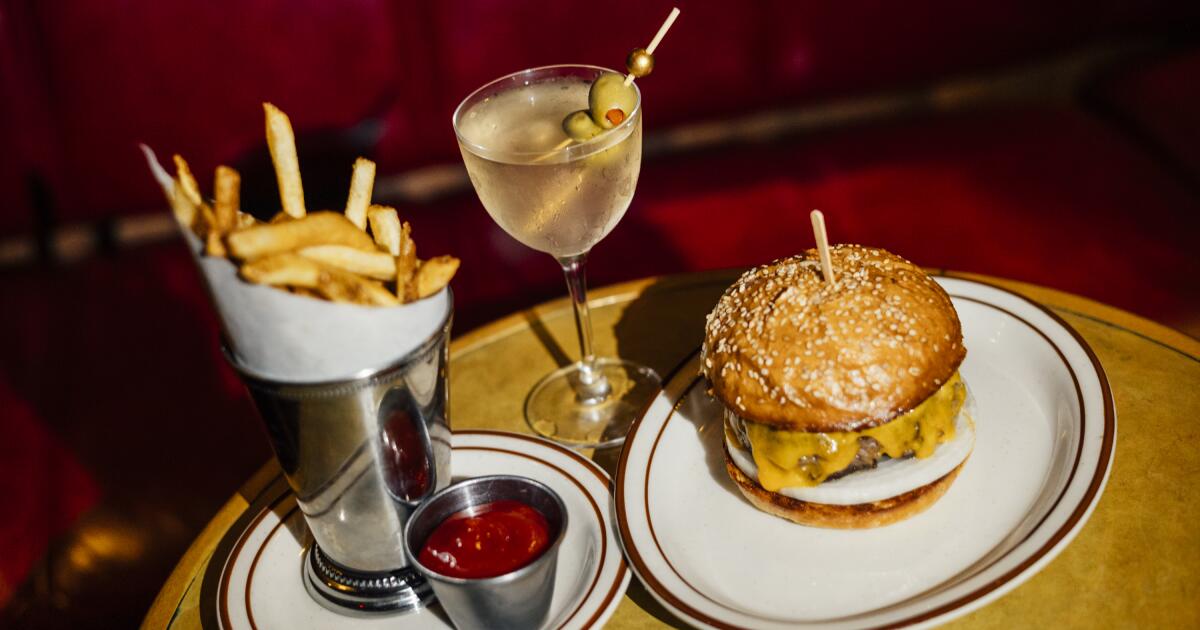
The best part of a Happy Meal is the toy that comes with your food. But now that you’re all grown up, you might be looking for a different type of treat.
In an effort to fill seats during off hours and typically slow nights, L.A.’s restaurants and bars are tempting patrons with discounted burger combos that replace toys with cocktails. It’s an adult take on a kid’s Happy Meal. These deals also address a growing concern among restaurant-goers regarding the price of dining out, a cost that has risen in recent years due to factors such as increased minimum wage, rising rents and inflated food costs.
And because it’s L.A., you can expect global interpretations of the classic comfort dish, including a Mexico City-inspired hamburguesa that’s turned a Monday industry night into a citywide destination, a New York-founded Korean restaurant serving a short-rib burger with gochujang aioli and a French-hued take with cognac sauce and optional fondue.
Treats — er, drinks — run the gamut from classic martinis and house wine to margaritas, ice-cold beer and makgeolli. Often overlapping with happy hour, be sure to take note of the specific days and hours each deal is offered.
Here are 16 burger-and-drink combos for those times your inner kid needs an adult happy meal.
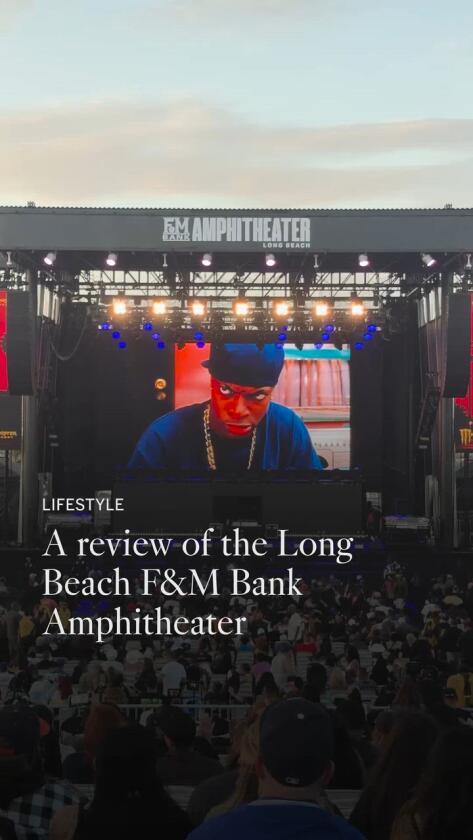
When I pulled into the parking lot near Long Beach’s F&M Bank Amphitheater with just 30 minutes until the opening of the show on a recent Friday, my heart raced.
“Do you think we’ll make it in time?” I asked my boyfriend, worried.
We were heading to Ice Cube and Mike Epps’ “Everyday’s Friday” concert and comedy show — a celebration of the cult classic “Friday” movie franchise — so a huge turnout was guaranteed. And ever since F&M Bank Amphitheater opened earlier this summer, my social media feeds have been flooded with complaints about Long Beach’s new temporary waterfront venue. Concertgoers have cited uncomfortable seating, sky-high parking rates and long shuttle wait times.
Share via
Those comments swirled in my head as I hustled toward the shuttle pickup line near the Pike Outlets. But to my surprise and relief, a bus arrived within a few minutes. After a roughly 15-minute drive through mild traffic, we made it to the venue just in time to see Epps tease a few audience members during his opening comedy segment.
The 11,000-seat F&M Bank Amphitheater has gotten a lot of buzz in the two months it’s been open, with conversations surrounding its funding, noise concerns in the neighborhood and the purpose of the venue for the city of Long Beach. My mission was simply to see what it’s like to experience a show. The verdict? If you’re not expecting luxury and you arrive with a healthy dose of patience, it’s a treat.
Here’s a rundown, starting with getting to the amphitheater. Because the venue doesn’t have its own parking lot, the options are rideshare, the bus, e-scooters, bikes (with storage available at the venue), taking a water taxi ($5 per way) or paying $55 for reserved spaces, then taking the free shuttle.
Walking inside felt less like entering a temporary venue and more like stepping into a mini music festival. The pathway toward the security checkpoint was adorned with a bright abstract mural, hanging lights and swaying palm trees. A display of lowriders greeted us alongside a massive mural of iconic scenes from the film “Friday,” including Cube and Chris Tucker’s legendary “Dammnnnn” moment. Deeper into the grounds, fans delighted in interactive art installations — from a replica of Pinky’s Records & Discs to Craig’s front porch. Nearby were even more classic lowriders that drivers made bounce and dance for the crowd. The layout made the space feel more expansive and interactive than just watching a performance.
The spacious F&M Bank Amphitheater felt like a mini music festival with food trucks, art installations and more.
(Daniel Rojas)
Food trucks and bars were scattered throughout, serving up tacos, burgers, hot dogs and other hand-held bites. I ordered a smashburger with fries — which was decent though the line moved slowly — and paired it with a cocktail, which was moderately priced by L.A. standards ($19 for premium liquor). Grab-and-go beers and seltzers were easily accessible although I didn’t spot any refillable water stations around the venue.
And a major thing to note is the venue’s only restrooms are Porta Potties. I was instantly grateful that I’d brought hand sanitizer as there weren’t any hand-washing stations near the entrance. Fortunately, a second portable toilet area deeper inside the venue had working sinks and held up well throughout the show.
Thousands of fans attended the “Everyday’s Friday” event, which celebrated the “Friday” movie franchise.
(Daniel Rojas)
Much like shows at the Hollywood Bowl, the concert kicked off a few minutes after 7 p.m. With our burgers and margaritas in hand, my boyfriend and I nestled into our seats in the center 300 section, which gave us a clear, unobstructed view of the stage. Thanks to the tiered bleacher-style seating, almost every seat in the house offers a great vantage point. The actual seats were hard and mildly uncomfortable, but we didn’t mind this because we stood up for most of the show. Some attendees opted to hang out at one of the many picnic tables sprinkled around the venue.
By the time Houston rap legend Scarface — who’s known for his use of heavy bass — hit the stage I realized just how crisp the sound quality was. Even when we left our seats for a quick bathroom break, I could still hear the music clearly. The sound combined with lasers and immersive backdrop visuals of scenes from the films elevated the show experience.
Thanks to the tiered bleacher-style seating, almost every seat in the venue offers a great vantage point of the stage.
(Eric Thayer / Los Angeles Times)
It’s difficult to ignore the picturesque views of the harbor and famed Queen Mary, particularly at sunset. (On certain concert days, the Queen Mary offers free admission.) It felt like the perfect setting for a show that celebrated the beloved film, its soundtrack and most importantly West Coast hip-hop culture.
About two-thirds into Ice Cube’s set, I noticed small groups of people sneaking toward the exit. Mindful of the online horror stories about post-show delays, my boyfriend and I decided to duck out early to beat the rush. By the time we made it outside, people were already power-walking toward an expanding line. Security seemed scrambled, first directing a large crowd of us to the far side of the pickup zone, which sparked confusion and frustration, then waving us back. Unlike the Hollywood Bowl, which has fleets of shuttles ready to go, F&M Bank Amphitheater’s shuttle operation felt a bit leaner. Still, a bus arrived within 10 minutes, and despite initially driving to the wrong drop-off spot, the driver quickly course-corrected and got us back on track.
V.I.P Records, a store that helped launch the careers of artists like Snoop Dogg and Warren G, had a booth at the event.
(Daniel Rojas)
As an avid concertgoer, I enjoyed the overall experience at the F&M Amphitheater. It delivered on all the key elements I look for in a show: pristine sound, engaging visuals and a seamless entry. While the venue still has some post-show shuttle kinks to smooth out — an expected growing pain for a new space — it successfully turns a temporary layout into a lively entertainment venue that could soon evolve into a permanent “Long Beach Bowl.” For music lovers and promoters alike, that’s worth celebrating.