budget request

Trump budget omits L.A. fire relief funds, drawing senators’ criticism

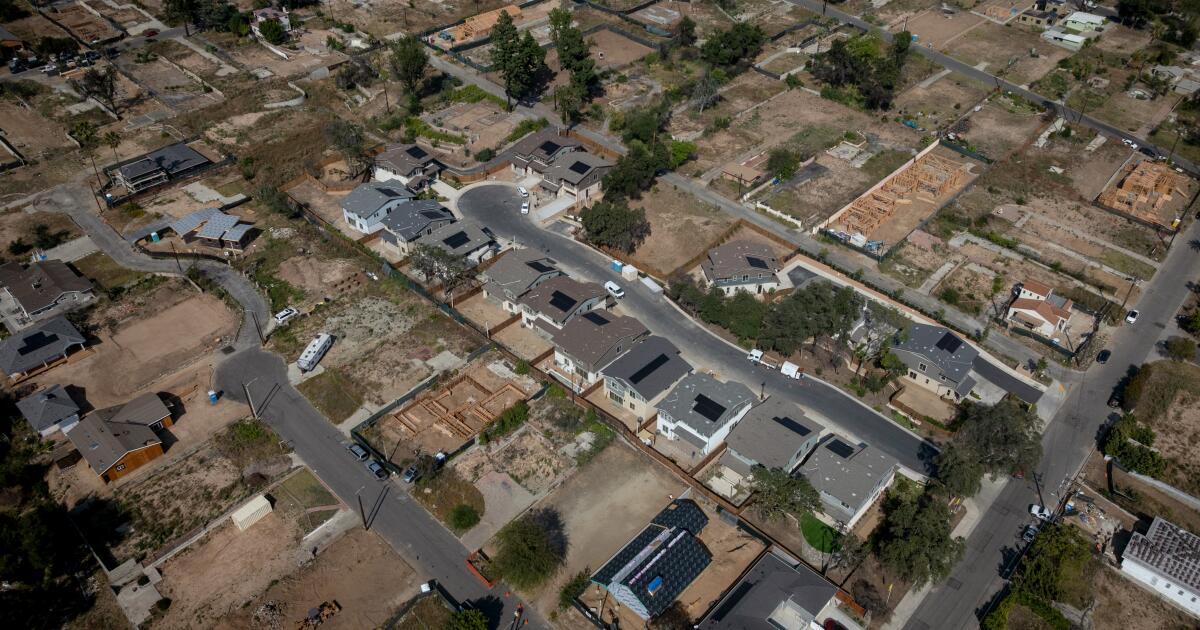
California’s two Democratic senators on Thursday criticized the Trump administration after it requested $87.6 billion from Congress to address some of the nation’s most “urgent needs” but omitted funding for victims of last year’s Los Angeles wildfires.

“Donald Trump’s desire to punish Los Angeles and the state of California for not voting for him, means once again that thousands of Angelinos are left watching this administration fight for anything but them, their businesses, and their communities,” Sens. Alex Padilla and Adam Schiff said in a joint statement.

“These fires did not discriminate based on party or political preference. Neither should this administration,” they added.

The omission is the latest strain in a yearlong standoff between California leaders and the Trump administration over federal disaster aid, and it comes after Los Angeles Mayor Karen Bass and Los Angeles County Supervisor Kathryn Barger met with President Trump at the Oval Office in April to request the funding.

At the meeting, Trump signaled his commitment to working with local officials to help with disaster recovery efforts. The officials asked for $16 billion that would be split between the city and county. The money would consist primarily of disbursements from the Federal Emergency Management Agency flagged for communities hit by the fires, part of a $33.9-billion wildfire relief funding request made by Gov. Gavin Newsom.

Two months later, those talks have yet to yield results sought by local leaders.

The budget request, submitted by the Office of Management and Budget on Wednesday, mostly seeks funding for the Pentagon to address costs related to the Iran war. It also includes $11.1 billion in economic assistance for American farmers, $1.4 billion to address the Ebola virus outbreak in Central Africa, $500 million to support “ongoing efforts to complete restorations and construction projects” across the nation’s capital and $1 billion to boost the pensions of workers at General Motors that were cut as a result of the automaker’s bankruptcy.

“I urge the Congress to take action on these important and urgent requests as soon as possible,” White House budget director Russell Vought wrote in a letter addressed to House Speaker Mike Johnson (R-La.).

Vought said the administration was open to discussing “additional relief for other urgent matters.” The White House did not immediately respond when asked why the budget request did not mention the Eaton and Palisades disaster relief funds.

State leaders, including Newsom, have repeatedly accused the Trump administration of stonewalling billions in wildfire aid. The governor visited Washington in December to meet with lawmakers, including three who serve on the Senate and House appropriations committees, to push for the funding.

The governor also attempted to meet with FEMA about the matter, but said his request was denied. Newsom, a political foe of Trump’s, would not say whether he had attempted to meet with Trump to talk about the recovery efforts.
Source link

After uncertainty, a good sign for 2028 Games transportation funding

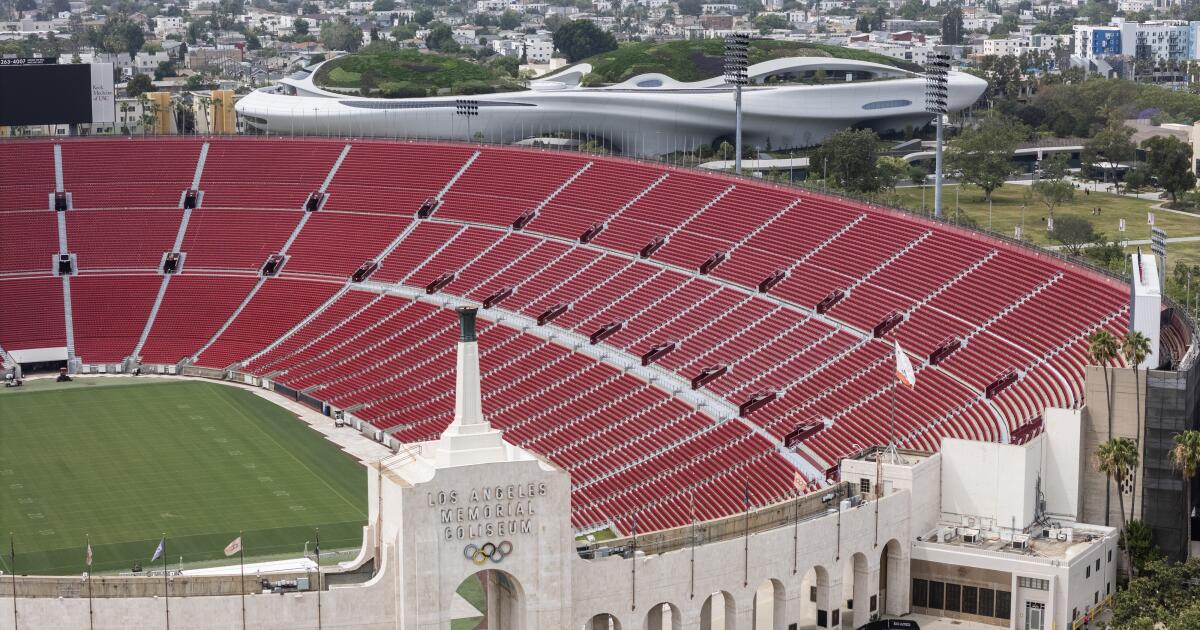
The House Appropriations Committee has approved $875 million to fund public transportation for the 2028 Olympic Games, a positive sign for LA28 after the exclusion of Olympics transit funding from President Trump’s fiscal year 2027 budget request this spring.

The funding must be passed by Congress in a future spending bill — part of a lengthy 2027 budgeting process that is underway now — but its approval in committee last week is a crucial signal of investment from Washington after weeks of uncertainty.

“We are encouraged by the House Appropriations Committee’s action,” spokesperson Maya Pogoda of the Los Angeles County Metropolitan Transportation Authority said in a statement, “and we look forward to continuing to work with the Senate and the White House to make America’s Games the best ever in history.”

LA Metro has sought $2 billion in federal funding for the planned transit service for the Games, which includes leasing buses, hiring drivers and building temporary depots. With the clock ticking to start projects that require significant lead time to be completed before the Games, the absence of any funding in Trump’s budget request in April had raised concerns among lawmakers and other stakeholders.

In recent weeks, the transit authority, the city and LA28 had publicly pressed for federal funding; LA28 Chief Executive Casey Wasserman reportedly met with lawmakers on Capitol Hill in April.

“The House Appropriations Committee’s most recent transportation bill is another positive signal of the continued bipartisan support in Congress to provide federal transit money for the Games,” LA28 spokesperson Jacie Prieto Lopez told The Times.

The inclusion of the funding in the bill conveyed bipartisan support for the Games, an event that Trump — who places an outsize importance on displays of patriotism — is likely to want to see go well during his tenure.

“This is on the American stage,” said former Los Angeles County Supervisor Zev Yaroslavsky, who was on the City Council during the 1984 Olympic Games. “The success of the Games are the success of the country.”

The Olympics item was included in the fiscal year 2027 transportation funding bill approved by the House Appropriations Committee last week. In its report, the committee noted that the funding is intended for all host cities, including those outside California.

“The 2028 games will put our nation on center stage, and this investment will help ensure that we are prepared to meet the moment and showcase why the United States is the best country in the world,” Rep. Steve Womack (R-Ark.), who chairs the subcommittee that put forth the bill, said in a statement.

The Games in Los Angeles are expected to draw massive crowds and will be the first Summer Olympics held in the United States since Atlanta hosted in 1996. More than 4 million tickets were sold during LA28’s first ticket release; a second ticket drop is coming in August.

The massive event requires federal involvement not just on funding but also on issues including athlete visas and the import of Olympic horses.

LA Metro has planned to lease 1,700 buses from transit agencies across the country, build three temporary transit depots and create dedicated traffic lanes for athletes, officials and others as required by the International Olympic Committee. Metro estimates that 1 million additional trips per day will be taken during the 16-day Games.

It’s crucial for federal funding to come through in a timely manner, Yaroslavsky said, particularly given the scope of the security and transportation considerations for the sprawling Games.

“The city and the LA28 committee need to know that this money is going to be made available,” Yaroslavsky said. “This has to be in place long before the Games start.”

Source link