Britains

Alaa Abdelfattah and Britain’s selective outrage | Human Rights

The intensity of the current backlash against Alaa Abdelfattah in Britain is striking – not because it reflects a renewed concern for justice, but because it exposes how selectively outrage is deployed.

Alaa, an Egyptian-British writer and activist, spent more than a decade in and out of Egyptian prisons following the 2011 uprising that toppled President Hosni Mubarak. His detention was marked by prolonged hunger strikes, denial of basic rights and treatment that human rights organisations described as cruel and degrading. He was released on September 23 after a years-long campaign by his mother, sister and close friends. A travel ban on him was lifted only this month, and he was able to join his family in the UK on December 26.

Alaa left behind a decade of repression in Cairo only to be welcomed in London with public attacks and a call for the revocation of his British citizenship and his deportation. Public hostility was whipped up by the uncovering of a social media post from 2010 in which Alaa said he considered “killing any colonialists … heroic”, including Zionists.

The tweet has been widely condemned, referred to the counter-terrorism police for review, and seized upon by politicians calling for punitive measures.

The speed and intensity of this reaction stand in stark contrast to the silence surrounding far more consequential statements and actions that the UK not only tolerates but actively enables.

This is what selective outrage looks like.

While Alaa’s words are dissected and framed as a moral emergency, the UK continues to host and collaborate with senior Israeli officials who have been accused of participating in and inciting genocide.

In July, for example, Israel’s air force chief Tomer Bar – the man who has overseen the carpet bombing of Gaza, destruction of hospitals, schools and homes and the extermination of entire families – was granted special legal immunity to visit the UK. Reporting by Declassified UK showed that this immunity shielded him from arrest for war crimes while on British soil.

There has been no comparable outcry over this.

Israeli President Isaac Herzog was also able to pay a visit to the UK in September and hold high-level meetings. This is the same man who, at the start of the genocide, suggested that the “entire [Palestinian] nation” is responsible and that “This rhetoric about civilians not aware, not involved – it’s not true.” This and other statements by Herzog have been collected in a large database that currently supports the genocide case against Israel at the International Court of Justice (ICJ).

Yet, despite being accused of incitement to genocide, the Israeli president entered the UK without a problem and was welcomed by Prime Minister Keir Starmer. Those quarters concerned about Alaa’s tweet displayed no outrage over the visit of a potential war criminal.

They have also been silent about British citizens who have travelled to serve in the Israeli military, including during Israel’s offensives in Gaza and the ongoing genocide. These operations, documented by the United Nations, Amnesty International and Human Rights Watch, have resulted in tens of thousands of civilian deaths, the destruction of hospitals and universities, and the devastation of entire neighbourhoods.

Despite extensive documentation of war crimes and crimes against humanity, and the ICJ’s warning of a serious risk of genocide, there has been no systematic investigation into whether British nationals may have been involved in violations of international law.

Again, there is little sustained outrage.

At the same time, the UK continues to license arms exports to Israel and to engage in political, military and intelligence cooperation. These policies have persisted even as international bodies have warned of grave humanitarian consequences and potential violations of international law. All of this unfolds with relatively little political cost.

And yet it is a decade-old tweet – not mass killing, not siege, not the destruction of civilian life on a vast scale, not incitement to genocide – that triggers political panic in the UK.

This contrast is not incidental. It reveals a hierarchy of outrage in which dissenting voices are policed and punished, and state violence is not, and in which public hostility is directed downward at individuals rather than upward at power. Alaa’s case shows how moral language is deployed selectively – not to restrain impunity, but to manage discomfort.

This asymmetry corrodes the credibility of the principles the UK claims to uphold. When human rights are defended selectively, they become tools of convenience rather than universal norms. When outrage is loud but inconsistent, it becomes performative. And when accountability is withheld from powerful allies, impunity hardens into policy.

Those who defend this approach often invoke “quiet diplomacy”, arguing that restraint is more effective than confrontation. Yet there is little evidence that silence has delivered accountability – either for Alaa or for civilians subjected to mass violence in Gaza. In both cases, discretion has functioned less as a strategy than as permission.

The UK has the tools to act differently: Suspending arms exports, investigating potential crimes by its nationals, conditioning cooperation on respect for international law, restricting visits by officials implicated in serious abuses. That these tools remain largely unused is itself revealing.

Until that changes, outrage will remain selective, accountability conditional, and impunity intact – widening the gap between the values the UK professes and the violence it continues to enable.

The views expressed in this article are the author’s own and do not necessarily reflect Al Jazeera’s editorial stance.

Source link

Village with Britain’s ‘prettiest cottage’ is ‘magical’ place to visit

North Yorkshire village is known as the ‘jewel of the moors’ and features the iconic Beck Isle Cottage – one of the most pictured buildings in Yorkshire

Nestled in a tranquil corner of Yorkshire, this village has earned quite the name for its famously charming cottages, lush greenery and unique food and shopping outlets.

Perched on the brink of the North York Moors lies Thornton-le-Dale, a picturesque spot often hailed as the ‘jewel of the moors’. Its historical allure continues to enchant visitors, making it a must-visit destination for those eager to discover North Yorkshire.

The village attracts many with its stunning thatched cottages, contributing to the quintessential English countryside ambiance, but one cottage stands out from the rest. Renowned for its charming thatched roof and storybook appeal, the iconic Beck Isle Cottage is a sight you won’t want to miss in the area.

As a grade II listed building, the cottage is not only a visual delight but also serves as a tangible piece of history, reflecting a bygone lifestyle in the moors. It remains one of the most photographed buildings in all of Yorkshire, as visitors fantasise about the twirling florals climbing up the brickwork and its impeccably manicured hedges.

Encircling the village is a wide variety of shops, cafes and pubs, making it the perfect place to wander around on a peaceful weekend. From quintessentially British pubs serving hearty meals and pints to cosy cafes offering baked treats, there’s something to suit every mood.

According to TripAdvisor reviews, the top-rated dining destination is the acclaimed Brandysnap Bistro in Thornton-le-Dale. A recent review described the restaurant as an “absolute gem” in the village.

They wrote: “Ate here last night… I can’t believe this absolute gem is only 2 miles from my house. Full house staff needs an award. Adam is a pure gentleman; his assistant Emma is of the highest praise. Claire, who does the cooking, is up there with the best. An absolute ‘Yorkshire feast’ of a mind-blowing establishment, recommended to everybody.”

Meanwhile, the beloved Cafe Bouchere keeps delighting guests, with one visitor commenting: “What a lovely place to eat. The owners were very welcoming and friendly. The food was delicious. The cafe was spotless, as were the toilets. I’d be more than happy to return on our next visit.”

Flowing through the village is the Thornton Beck, a winding waterway that brings serenity to those enjoying a peaceful walk along the curving lanes. For visitors seeking more challenging terrain, Thornton-le-Dale serves as an excellent gateway to the nearby North York Moors National Park.

The Thornton le Dale and Ellerburn Walk proves particularly popular, offering a two-mile circular journey that follows riverside field paths. The route leads to Ellerburn, where walkers can admire its historic church, before heading back via the road to this charming village.

The whole walk can take roughly an hour, but there are numerous opportunities to delve deeper into the countryside after a leisurely stroll around the village. Alternatively, some might opt for the Dalby Beck Yellow Trail or even embark on the Dalby Forest and Bridestones loop for a solid four-hour hike through the North York Moors National Park.

Source link

One county has been crowned Britain’s cosiest for pubs

Beavertown Brewery’s Cosy Pub Index has named Staffordshire as the top county for cosy pubs, beating traditional favourites with its impressive collection of welcoming venues

Christmas is nearly upon us, and it’s time to wrap up in a jumper and gather by the fire with those closest to us.

For countless people, the perfect winter scene features a softly lit, toasty and inviting space with beverages and the sound of crackling flames, offering shelter from the bitter weather outside.

Little wonder, then, that online searches for “cosy pubs” have jumped by almost 50% over the past month – and with this trend in mind, Beavertown Brewery examined the nation’s finest establishments based on several criteria to identify the top destinations.

Taking into account ceiling heights, lighting, warmth and festive decoration, their Cosy Pub Index named Staffordshire as Britain’s premier choice for the season, boasting an impressive 230 cosy pubs.

Derbyshire comes second with 196 venues, followed by Cheshire with 188, Cornwall with 186 and North Yorkshire with 182, reports the Express.

Staffordshire might not immediately spring to mind as a pub culture destination, but a swift glance at the region’s highest-rated establishments on TripAdvisor reveals they’ve been steadily enhancing their reputation for some time.

The county’s highest-rated pub is Osmar’s Table at The Fox Inn in Dosthill, awarded 4.9 stars and lauded for its “warm atmosphere” and a menu that appears tailor-made for festive occasions.

Close behind is The Feathers Inn in Lichfield, commended by guests for its laid-back ambience, substantial dishes and vibrant evenings. Next on the list is The Lazy Trout in Meerbrook, an incredibly sought-after venue that’s frequently fully booked, reviewers report.

Enthusiasts say it delivers that quintessential pub atmosphere whilst boasting views of the surrounding hills.

The Masons Arms in Stoke-on-Trent is distinguished as “a gem of a pub”, whilst The Blue Mugge in Leek completes the top five as a locally favoured, charming and reasonably priced venue with “fantastic” atmosphere.

“Everyone’s got a favourite pub they love to escape to when the cold hits”, explained Sam Millard, the brand’s Head of Innovation. “Winter is when pubs become rituals. It’s hard to resist the glow coming from a window filled with condensation, and the UK pub scene is arguably one of the best places in the world to throw your coat down onto a bench and keep warm with friends.”

The full county-by-county breakdown of prime cosy pub destinations reveals that the North and Midlands command the leading spots, whilst the South East is notably ranked lower.

Scottish havens for warmth such as Glasgow and Edinburgh offered 169 and 139 wintry watering holes respectively. Down in the South West, Dorset (169) edged ahead of Devon (161), with both trailing Cornwall.

The study also identifies a “cosy pub corridor” that could prove ideal for tourists, stretching from Cheshire across Derbyshire, Staffordshire, Gloucestershire and into the Cotswolds.

Source link

New chief of Britain’s MI6 warns of threat from Russian hybrid warfare

The use of hybrid warfare tactics was the most dangerous aspect of the threat posed by an “aggressive, expansionist and revisionist” Russia, MI6 chief Blaise Metreweli was set to say Monday in her first speech since taking over at Britain’s spy agency in October. File photo courtesy U.K. Foreign Office/EPA-EFE

Dec. 15 (UPI) — Incoming spy chief Blaise Metreweli will use her first speech as head of MI6, Britain’s foreign intelligence service, to warn of the grave threat from Russia, particularly from its use of hybrid warfare.

The agency’s first woman head was set to warn of what she called “an acute threat posed by an aggressive, expansionist and revisionist Russia” and that its use of cyberattacks and drones meant “the frontline was everywhere.”

Metreweli, who took over from the outgoing “C,” Sir Richard Moore, on Oct. 1, will detail incidents of hacking and flying of drones near vital infrastructure by Russian proxies as examples of its use of hybrid tactics.

Russia has been waging this type of low-grade war on Ukraine‘s Western allies since Russia’s full-scale invasion in 2022, according to analysts, flying drones into NATO airspace neighboring Ukraine, disrupting flights by allegedly flying drones near European airports and cutting undersea cables.

In Britain, this has included recruiting Britons to spy for it, allegedly paying individuals to carry out an arson attack on a factory in London owned by Ukrainians and pointing lasers at RAF jets tracking Russian spy ships.

Speaking at MI6 HQ in central London, Metreweli was expected to vow Britain would not let up its campaign to impede Russian President Vladimir Putin’s aggression against Ukraine, noting recent sanctions imposed on Russian organizations and individuals the government believes were involved in information warfare.

“The export of chaos is a feature not a bug in the Russian approach to international engagement; and we should be ready for this to continue until Putin is forced to change his calculus,” she is expected to say.

As expected, Metreweli, who previously served as MI6’s technology and innovation lead, made famous by the character “Q” in the James Bond movie franchise, will stress the key role technology must play going forward.

She will urge intelligence officers to become technology experts “not just in our labs, but in the field, in our tradecraft.”

“We must be as comfortable with lines of code as we are with human sources, as fluent in Python [the computer progamming language] as we are in multiple languages.”

In September, MI6 launched Silent Courier, a secure messaging platform on the dark web, enabling spies to anonymously upload information useful to British intelligence from anywhere in the world. A YouTube video tutorial accompanied the launch.

Britain was, Foreign Secretary Yvette Cooper said “bolstering their efforts with cutting-edge tech so MI6 can recruit new spies for the United Kingdom — in Russia and around the world.”

The service also carried the following disclaimer from the Foreign Office.

“MI6 advises individuals accessing its portal to use trustworthy VPNs and devices not linked to themselves, to mitigate risks which exist in some countries.

“Do not use a name, phone number or other data linked to your real identity when creating this account,” it added.

Source link

‘I visited Britain’s best Christmas market but it was lacking one important detail’

This year’s edition of a famous Christmas market has been the target of criticism, mainly for overlooking one important thing.

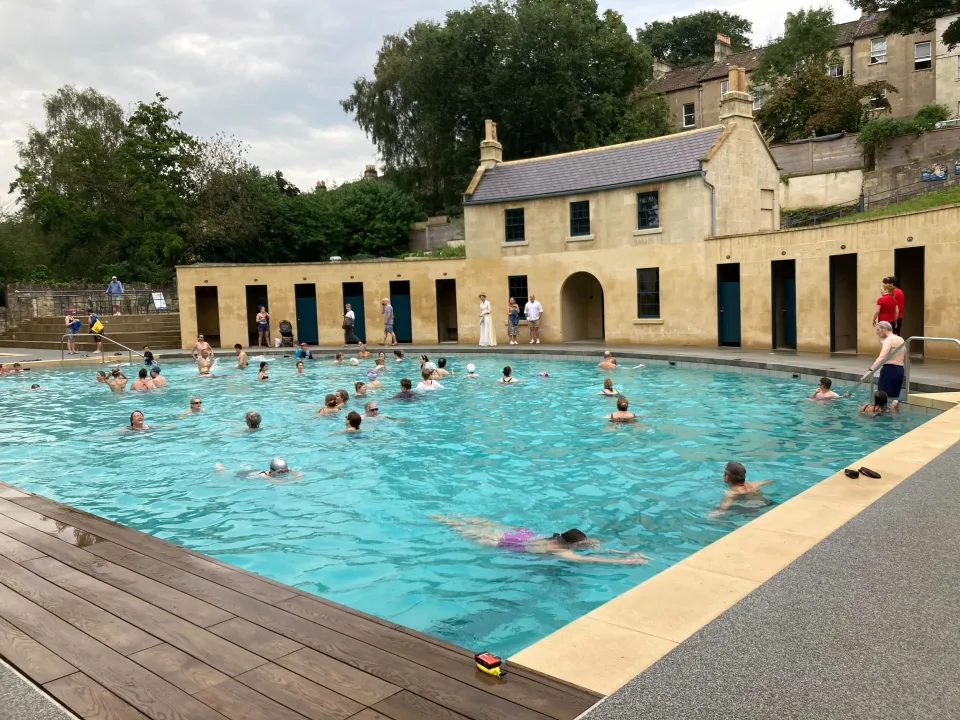
Forget London or Manchester — according to expert testing platform Which?, the best Christmas market in Britain is the one in Bath.

The historic city was voted Which? Readers’ favourite medium-sized city, and is renowned for hosting one of the UK’s biggest and most established Christmas markets every year, with over 200 stalls.

Which? praised the Bath Christmas Market for its reputation for offering good food, drink, and festive activities.

Visitors can browse everything from handmade wooden furniture and garden sculptures to knitwear, fragrances, and gifts for pets, while also sampling regional delicacies such as foraged jams and seasonal baked treats.

However, despite its accolades and picturesque setting, the market does not appear to please everyone. In a recent Mail on Sunday feature analysing UK Christmas markets, Bath was rated only “OK” for a weekday visit.

According to Jane Fryer’s feature, although the market was not as overcrowded as previous visitors had complained, it fell short of expectations in one key area: the lack of Christmas spirit. This included music, limited lighting, or the absence of traditional seasonal touches, such as Santa or entertainers.

She noted that many stalls sold everyday market items, such as bags, coats, and T-shirts, rather than the expected festive goods and crafts. While the occasional stall offering local arts and foods was “charming,” the overall impression was that the place felt much less Christmas-ready than it should.

She also highlighted a broader trend among visitors nationwide, noting complaints about high prices, repetitive stalls, and overcrowding at many festive markets.

Fryer reported a mix of reactions from Bath’s visitors. Some had travelled specifically to see the market and were delighted by the traditional mulled wine, local foods, and the town’s scenic backdrop. Others, however, expressed disappointment, describing the experience as “not very Christmassy” due to the lack of music or entertainment.

Across social media and travel review platforms, Bath has been widely labelled underwhelming this year — not only because of logistical or layout issues but, primarily, due to a perceived lack of festive atmosphere.

Elsewhere in her piece, Fryer praised other seasonal markets she visited, particularly those with strong visual theming, live entertainment, and an overall more festive ambience, highlighting how these elements can significantly enhance the visitor experience.

Source link