How low-budget movies are beating Hollywood’s most expensive bets
Two of the biggest box-office standouts of 2026 so far were not made by established studio directors or built on franchise IP.
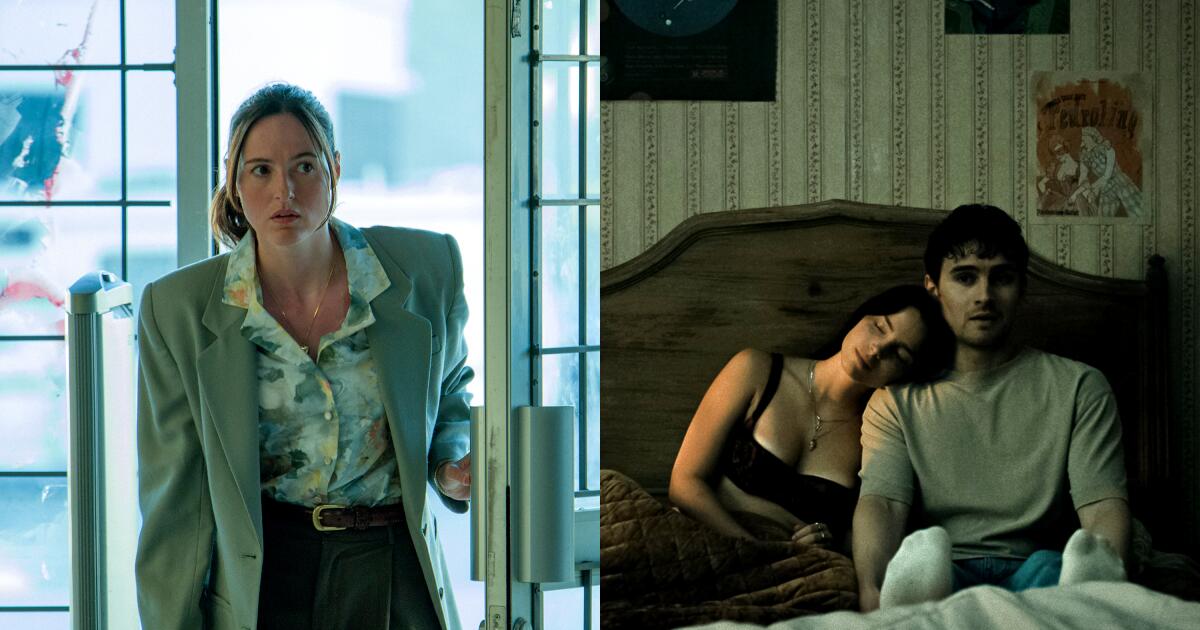
“Obsession” and “Backrooms” — horror films from internet-native directors in their 20s — have outperformed far more expensive studio releases.
The breakout success of these films has ignited debate across Hollywood about what made these movies so popular, especially among Gen Z moviegoers who haven’t been flocking to cinemas in recent years. Here’s what to know:
The numbers
”Obsession” was directed by 26-year-old Curry Barker, who got his start on YouTube with sketch comedy and horror shorts. Released May 15 by Focus Features, the film was made for just $750,000 but opened to a staggering $17 million and has improved on its debut every weekend since.
“Obsession” set an all-time horror record for the biggest fourth weekend for a film at the domestic box office, raking in $25.4 million. It now ranks as the year’s fifth most popular film, nearing $200 million domestically and roughly $295 million worldwide — ahead of Pixar’s “Hoppers” ($166 million) and Paramount’s “Scream 7” ($121 million), per Box Office Mojo.
“Backrooms,” from 21-year-old Kane Parsons — known on YouTube as Kane Pixels — drew on an online fascination with liminal spaces, leading audiences through an endless run of nearly indistinguishable rooms.
Released May 29 by A24 (known for such acclaimed films as “Moonlight” and Everything Everywhere All at Once”) on a reported $10-million budget, it opened to $81 million and crossed $100 million in under a week.
Within two and a half weeks, it had outgrossed the entire theatrical runs of horror films “Five Nights at Freddy’s 2,” “Smile” and “Scream 7.” It sits as 2026’s eighth-highest-grossing film.
Who is watching?
The audiences are young. In recent weeks, nearly 90% of “Backrooms’” viewers were under 35, with more than half under 25. Over “Obsession’s” first few weekends, 75% of the audience was 17 to 34, which is significant at a time when major studios have struggled to consistently get younger viewers to trek to the multiplex.
Why it’s working
Audiences have clearly latched onto the stories, said Jason Blum of Blumhouse–Atomic Monster, who worked on both films.
“There’s been an audience kind of waiting to get back to the movie theaters, and we in Hollywood really have not landed on what would get them back,” he told The Times in an interview this week.
Blum, who upended horror genre with the “Paranormal Activity” franchise, ties the success of “Backrooms” and “Obsession” to a connection to the directors’ origins.
Because the films were made by creators who speak to younger viewers daily on YouTube, he said, that generation “feels like they’re being spoken to.”
David Gross, an analyst at FranchiseRe, framed it as a new pipeline of talent and material. Creators can build large followings very inexpensively, he said, and their stories arrive further developed — which expedites the development and discovery process. He called internet-based storytelling “another additive source for material for movies.” Blum added that the films’ success could make studios more willing to bet on undiscovered directors who “might not have been considered” before.
Rosie Ramirez, chief marketing officer at Galaxy Theatres, said a young first-wave audience tends to generate buzz. More than a month after “Obsession” was released, she said, the Nevada chain’s four California locations are only now seeing a second wave of moviegoers curious about the hype.
Notably, the rise of these two films has unfolded in the shadow of major releases like Disney’s “Star Wars: The Mandalorian and Grogu,” and Mattel’s “Masters of the Universe,” both of which returned underwhelming numbers in their respective opening weekends.
Is it a trend or an anomaly?
Whether this marks a lasting shift or a fluke is unclear. May crossed $1 billion in box office — with “Backrooms” and “Obsession” doing much of the heavy lifting. Despite the improvement, the box office has yet to full return to pre-pandemic levels, with the summer tracking roughly 3.5% behind summer 2019, said Comscore’s Paul Dergarabedian.
And Dergarabedian questioned how the industry could replicate a success that, in his words, was “authentically and organically created” rather than manufactured: “It just happened,” he said.
Ramirez argued the broader summer slate — franchise tentpoles like “Toy Story 5” alongside some original surprises — points to a healthy box office regardless, a reminder that “it doesn’t always have to be the big summer blockbuster.”