AARON Paul has shared a gut-wrenching video of his Breaking Bad co-star, RJ Mitte, following his tragic death by suicide.
The actor best known for starring as Walter White Jr in the Emmy Award-winning show, died on Mondayin Brownsville, Texas, aged just 34.
Aaron Paul shared shared a video of Mitte talking about the importance of mental healthCredit: Instagram/@aaronpaulThe actor died in Texas aged 34, from suicideCredit: Getty
In an emotional tribute to his friend, Aaron said RJ’s strength and kindness was “blinding”.
Aaron shared a video of Mitte talking about the importance of taking care of one’s mental health.
Sign up for the Showbiz newsletter
Thank you!
The late actor lived with cerebral palsy and used his platform to raise awareness and champion people with disabilities.
RJ said in the video shared by Paul: “I hope y’all are doing well today in this time of uncertainty but I would like to talk to you a little about mental health.
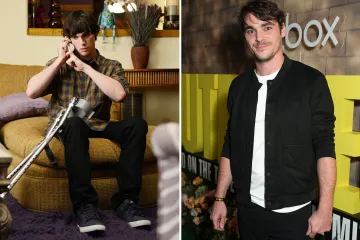
Aaron Paul and RJ Mitte at the premiere of the third season of Breaking BadCredit: GettyRJ Mitte shot to fame in Breaking Bad but struggled to land roles after the iconic show finishedCredit: Getty
“Its very important to take care of ones physical health but its equally as important to take care of one’s mental health.”
RJ said that “more often than not” people hide how they truly feel by saying “I’m fine” and “I’m good.”
He continued: “But its ok to not always be good.
“But its not ok to harbour that feeling, harbour those emotions.
Most read in Entertainment
The actor made his final appearance at the screening of ‘Talking To Strangers’ on September 30Credit: GettyBryan Cranston, Anna Gunn and Betsy Brandt, writer-producer Vince Gilligan, R.J. Mitte and Aaron Paul, after winning Best Series at the Golden GlobesCredit: Getty
“So I am hoping to inspire each and everyone that sees this video today.”
Aaron apologized for not realizing the pain his friend was experiencing.
He wrote: “I am so sorry you were hurting my friend. I wish we knew.”
“You constantly had a smile on your face and you took every single challenge that was given to you with such confidence and grace.
“I met you when you were a little boy and watched you grow into a beautiful young man.”
“What an absolute tragic loss.”
Aaron finished his post by encouraging anyone who is feeling lost, sad or uncertain about the future, to reach out for help.
He said: “We must suffocate the noise and focus on each other.”
The tribute from the star, best known for portraying Jesse Pinkman, followed the heartbreaking news that RJ was found dead by suicide at his home on Monday, as confirmed by his publicist.
RJ said in his final interview that he wanted to “keep living the dream” but added that “every dream could be a nightmare … just keep living it, just keep pushing forward”.
Bryan said: “I met him when he was only 14 years old when he was cast as Walter White Jr., a part he played with such joy and enthusiasm.
“Born with Cerebral Palsy, he never – ever – allowed that challenge to be an excuse for anything. He met the demanding shooting schedule head on with great determination.”
The actor, like his character Walter Jr, had cerebral palsy and said his greatest achievement in life had been “giving back”.
He said: “That’s really the greatest thing that ‘Breaking Bad’ has given me, is to be able to lend my voice to causes that make a meaningful impact that changes people’s lives.
“I think that’s one of the greatest things that I have and it’s not the awards.
“It’s not all of these things people assume come with this. It’s literally being able to impact someone’s life in a meaningful way that without that, wouldn’t have it.”
If you or someone you know is affected by any of the issues raised in this story, call or text the 988 Suicide & Crisis Lifeline at 988, chat on 988lifeline.org, or text Crisis Text Line at 741741.
How to get help
EVERY 90 minutes in the UK a life is lost to suicide It doesn’t discriminate, touching the lives of people in every corner of society – from the homeless and unemployed to builders and doctors, reality stars and footballers. It’s the biggest killer of people under the age of 35, more deadly than cancer and car crashes. And men are three times more likely to take their own life than women. Yet it’s rarely spoken of, a taboo that threatens to continue its deadly rampage unless we all stop and take notice, now. If you, or anyone you know, needs help dealing with mental health problems, the following organisations provide support: CALM, www.thecalmzone.net, 0800 585 858 Heads Together,www.headstogether.org.uk HUMEN www.wearehumen.org Mind, www.mind.org.uk, 0300 123 3393 Papyrus,www.papyrus-uk.org, 0800 068 41 41
Mitte, who grew up in Louisiana, was a young teen when he auditioned for the breakthrough role after moving to Los Angeles to support his younger sister’s acting career in 2005.
He had said that his first audition in Los Angeles was for a California state public service announcement for an anti-meth commercial.
“Fast forward to auditioning for Breaking Bad, which is still, in my opinion, an anti-meth thing because it doesn’t end well for anyone,” he said on the Joe Vulpis Podcast earlier this month.
His character was based on Gilligan’s late friend who had a more severe case of cerebral palsy and used forearm crutches, which Mitte did not require.
Mitte was seen as playing the role with honesty and accessibility, cracking jokes as a teen whose health condition was rarely mentioned in the series.
Breaking Bad aired on US cable broadcaster AMC for five seasons from 2008-13.
After shooting to fame, Mitte fought for more varied roles and complex depictions of characters with disabilities, both visible and invisible.
“Whenever awards season rolls around, we always hope to see a diverse group of projects that reflect all of us, in body and mind,” he told the BBC in 2021.
“Watching the awareness grow around disability representation has been great to see, but breakthroughs sometimes come in pieces and moments instead of larger change,” he said.
Mitte’s other on-screen credits include Hannah Montana, Switched at Birth, Westhampton and his latest project, Talking to Strangers, which came out earlier this year.
Additional reporting by Rebecka Pieder.
If you have been affected by the issues raised in this story help and support is available via the BBC Action Line.
AARON Paul has paid tribute to RJ Mitte saying he has been left “heartbroken” after the Breaking Bad star died, aged 34.
Mitte, who famously played Walter White Jr in the Emmy Award-winning show, tragically died on Monday in Brownsville, Texas.
Aaron Paul has paid tribute to RJ Mitte after the Breaking Bad star died, aged 34Credit: AP:Associated PressMitte portrayed the son of Bryan Cranston’s Walter White during the hit series’ five-year runCredit: Alamy
Paul – Mitte’s Breaking Bad co-star who played Jesse Pinkman – told The Hollywood Reporter: “I am at a loss. I am heartbroken over this news.
“RJ, I love you my friend. You will be missed. And to whoever happens to be reading this, please know you are loved, and you are not alone. Always remember that.”
Sign up for the Showbiz newsletter
Thank you!
Dean Norris, who also played alongside Mitte as his on-screen uncle Hank Schrader also paid tribute, saying: “Though RJ didn’t play my TV son, I always looked out for him as a young kid on set.
“He was a sweetheart of a young man and will be greatly missed. This is so heartbreaking, I can’t believe it. Thinking of him and his family.”
Mitte’s representative confirmed to TMZ on Monday that Mitte had tragically passed away in Texas.
They said: “It is with profound sadness that we share the tragic passing of beloved actor, philanthropist, and passionate disability rights advocate RJ Mitte.
“RJ Mitte was best known for his role as Walter ‘Flynn’ White Jr on AMC’s critically acclaimed, award-winning series Breaking Bad.
“Drawing from his own experience living with cerebral palsy, Mitte brought authenticity to the role and built a platform on disability awareness and inclusion.”
Most read in Entertainment
Paul said he was ‘heartbroken’ in a tribute to the TV starCredit: GettyMitte, who had cerebral palsy, became a leading disability rights activistCredit: Alamy
His cause of death was not immediately disclosed, however, the outlet reported that he died by suicide.
Mitte was born on August 21, 1992, in Jackson, Mississippi, and was diagnosed with cerebral palsy at just three-years-old.
But he used his stardom as a Hollywood actor to become a leading disability rights advocate.
He spent most of his childhood using crutches, but improved his ability to walk over his teenage years through sports and exercise.
He told Future of Personal Health: “My hope is to inspire a ‘never give up’ mentality.
“If there is something you want in life, pursue it no matter how hard it may be. Keep your dreams alive. Don’t lose sight of who you want to become.”
Off the set, Mitte served as a celebrity ambassador for several organizations, including United Cerebral Palsy and Shriners Children’s.
Dean Norris, who played alongside Mitte in Breaking Bad, said he was a ‘sweetheart of a young man’Credit: GettyMitte was cast in the role, aged 15, and went on to star in 56 episodes of the hit crime dramaCredit: Alamy
He was also the president of his own charity – The Mitte Foundation – which supported philanthropic efforts and community initiatives, challenging stereotypes around people with disabilities.
Breaking Bad – often credited as one of the best TV series of all time – aired on AMC for five seasons between 2008 and 2013, earning a staggering 58 Primetime Emmy nominations.
Mitte was cast in the leading role of Walter “Flynn” White Jr in 2008 at the age of 15, going on to star in 56 episodes of the hit crime drama.
He played the son of Bryan Cranston and Anna Gunn’s characters – Walter and Skyler White – and his character also had cerebral palsy, as Mitte drew on his own experience for the part.
A week before his sudden death, Mitte appeared on the Joe Vulpis Podcast, where he spoke about his early days in acting and his time on the show.
He called auditioning for Walt Jr “one of the longest auditions of my life”, saying he was one of the last characters to be cast in an audition process that took six months.
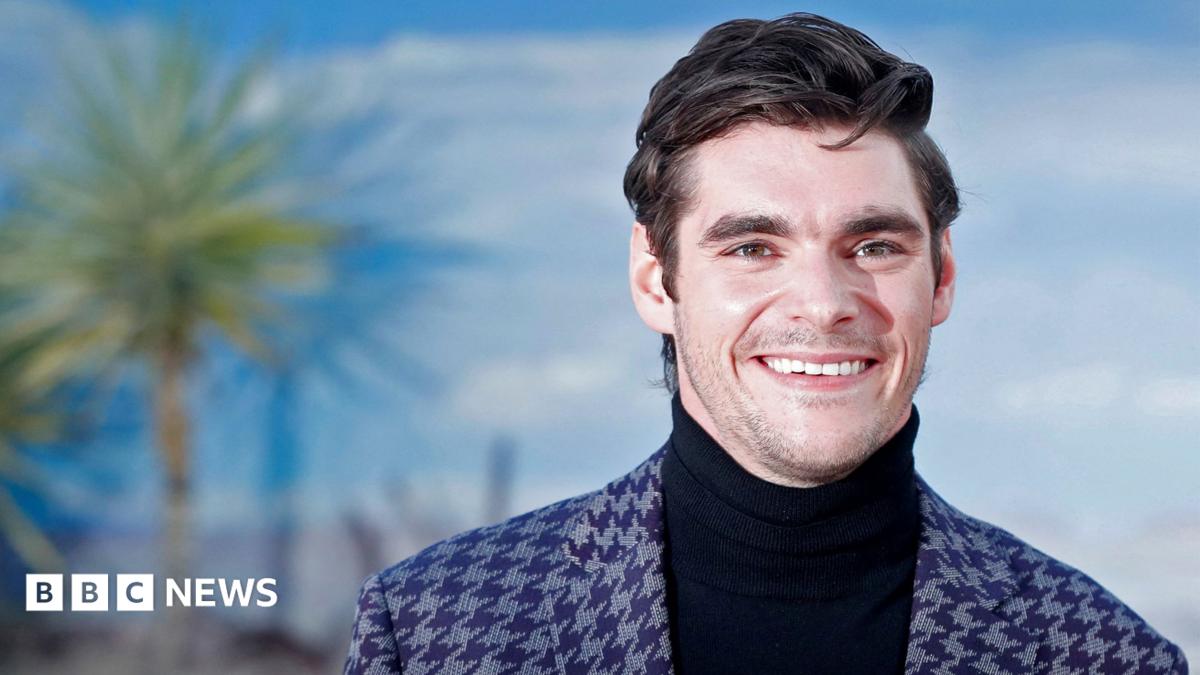
A year before his death, Mitte got engaged to his longtime girlfriend, Kennedy SuarezCredit: GettyRJ Mitte pictured at the screening of Talking To Strangers at the Fine Arts Theatre on September 30 in Beverly HillsCredit: Getty
Mitte added: “It was me versus another individual at the time. An hour later, Vince called me and goes, ‘Hey, RJ, you got the part. Pack your bags. Go back to Los Angeles, and come back to set. You’re already late. We’re already filming. We need you here’.
“And that was history for me.”
Reacting to the news of Mitte’s death, Vulpis said on social media: “I had the honor of sitting down with RJ Mitte not too long ago and I can genuinely say he was such a kind, incredible, and gentle soul.
“My heart goes out to his family and loved ones, and I wish them peace and privacy during this difficult time.”
Mitte’s breakout role came after starting his career in entertainment as an extra in shows such as Everybody Hates Chris and Hannah Montana.
It opened up further opportunities with the TV star going on to feature in shows including Switched at Birth and Netflix’s animated series The Guardians of Justice.
He also appeared in several films including the drama “Triumph” from 2021, which he also executive produced.
Mitte’s final public appearance came just days before he tragically passed away as he smiled on the red carpet for the premier of his new movie – Talking to Strangers – on September 30 in California.
He was a Screen Actors Guild spokesman for actors with disabilities and in 2013, he received the SAG-AFTRA Harold Russell Award.
A year before his death, Mitte got engaged to his longtime girlfriend, Kennedy Suarez, in October 2025.
At the time, Mitte gushed about starting a life together with Suarez, telling People: “I’m thrilled to have found my person, my partner in life who makes me want to be better, no matter what we’re doing.
“Kennedy is my everything and I can’t wait to officially start our life together and see what adventures life takes us on next.”
If you or someone you know is affected by any of the issues raised in this story, call or text the 988 Suicide & Crisis Lifeline at 988, chat on 988lifeline.org, or text Crisis Text Line at 741741.
RJ Mitte was diagnosed with cerebral palsy at the age of threeCredit: AlamyHe was best known for playing Walter White Jr. in Breaking BadCredit: Alamy
His cause of death was not immediately disclosed, however, TMZ reported that he died by suicide.
The star’s reps told Deadline: “It is with profound sadness that we share the tragic passing of beloved actor, philanthropist, and passionate disability rights advocate RJ Mitte.
Sign up for the Showbiz newsletter
Thank you!
“Drawing from his own experience living with cerebral palsy, Mitte brought authenticity to the role and built a platform on disability awareness and inclusion.”
RJ became a leading voice for disability rights in film and TV following his rise to fame with Breaking Bad.
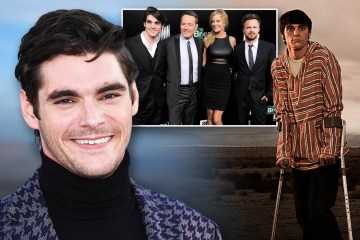
He was a leading voice for disability rights in film and TVCredit: AlamyBryan Cranston (L), Anna Gunn (C) and RJ Mitte (R) starring in Breaking Bad, 2008Credit: Alamy
When he was born in Louisiana, he was not breathing and suffered permanent brain damage as a result.
He was diagnosed with cerebral palsy – a neurological condition that affects movement, muscle tone, and motor skills – when he was three years old.
Doctors put his legs in casts to try to strengthen his feet and later he was fitted with leg braces.
RJ spent most of his childhood using crutches, but improved his ability to walk over his teenage years through sports and exercise.
Most read in Entertainment
RJ Mitte attends a screening of ‘Talking To Strangers’ at Fine Arts Theatre on September 30, 2026 in Beverly Hills, CaliforniaCredit: GettyRJ Mitte speaks live at BUILD Series London on January 24, 2017Credit: Getty
The actor previously opened up about his experiences undergoing physical, occupational and speech therapy, which he also started when he was three.
He told Future of Personal Health late last year about routines he used for managing his disability.
The star said: “Stretching has been one of the most important tools for me.
“I also rely on hot showers and baths to relax my muscles, especially to help manage spasticity.
He reportedly died by suicide, according to TMZCredit: AlamyRJ Mitte used crutches throughout most of his childhoodCredit: Shutterstock Editorial
“With my travel schedule, I’m not always near a gym, so I’ve learned to build small, sustainable routines that keep my body in balance.
“Finding what works for you, and blending those therapies into your daily life, can truly change everything.”
Giving advice to young people with disabilities, he said: “My hope is to inspire a ‘never give up’ mentality.
“If there is something you want in life, pursue it no matter how hard it may be.
RJ Mitte played Walter White Jr. in Breaking BadThe cast of Breaking Bad (L-R) RJ Mitte, Jonathan Banks, Bryan Cranston, Anna Gunn, Betsy Brandt, Dean Norris, Aaron Paul and Bob Odenkirk pictured in February 2024Credit: Getty
“Keep your dreams alive. Don’t lose sight of who you want to become.”
RJ, who got engaged last year to Kennedy Suarez, also credited his mum with his success in a 2009 interview.
Opening up about his early diagnosis, he told Ability Magazine: “They told me I was going to need a wheelchair because I couldn’t bend my legs.
“My mom stretched my legs and really pushed me to get to where I am today. Really, I owe my mom.”
He also said playing football helped him overcome his physical problems.
“What most helped me to get out of my braces was playing soccer,” he explained.
“I always wanted to play football… but because of my disability, my hand-eye coordination was off. I couldn’t do that. So I gradually started playing more and more soccer.”
RJ was a Screen Actors Guild spokesman for actors with disabilities, and a celebrity ambassador for United Cerebral Palsy.
In 2013, he received the SAG-AFTRA Harold Russell Award.
The TV star also featured in shows including “Switched at Birth”, and Netflix’s animated series “The Guardians of Justice”.
He starred in several films including the drama “Triumph” from 2021, which he also executive produced.
How to get help
EVERY 90 minutes in the UK a life is lost to suicide. It doesn’t discriminate, touching the lives of people in every corner of society – from the homeless and unemployed to builders and doctors, reality stars and footballers. It’s the biggest killer of people under the age of 35, more deadly than cancer and car crashes. And men are three times more likely to take their own life than women. Yet it’s rarely spoken of, a taboo that threatens to continue its deadly rampage unless we all stop and take notice, now. If you, or anyone you know, needs help dealing with mental health problems, the following organisations provide support: CALM, www.thecalmzone.net, 0800 585 858 Heads Together,www.headstogether.org.uk HUMEN www.wearehumen.org Mind, www.mind.org.uk, 0300 123 3393 Papyrus,www.papyrus-uk.org, 0800 068 41 41
If you or someone you know is affected by any of the issues raised in this story, call or text the 988 Suicide & Crisis Lifeline at 988, chat on 988lifeline.org, or text Crisis Text Line at 741741.
VOGUE Williams has clapped back at people mum-shaming her after she was accused of ‘breaking maternity laws’.
The Irish presenter welcomed her son Remy Valentine last month and has since returned to some of her work commitments, including co-hosting both of her podcasts.
Vogue Williams has clapped back at people who have been mum-shaming herCredit: Instagram/ @voguewilliamsShe recently welcomed a little boy and started up some of her work commitments again, including her podcastsCredit: My Therapist Ghosted Me
Chatting with comedian and Celebrity Traitors star Joanne McNally on this week’s episode of My Therapist Ghosted Me, Vogue‘s little one made an appearance.
Joanne said: “There’s the baby. Look at the baby. Forgot about him.”
Sign up for the Showbiz newsletter
Thank you!
Vogue then revealed that a fan accused her of breaking a maternity law by being out with her baby so soon, and clapped back at them with a healthy dose of sarcasm.
The star said: “Someone left a comment on my and Amber’s pod and they were like “a mother should not be out with their baby at all from a month old” blah blah blah. Like going on this rant about there’s a maternity law.
Vogue shares the little one with partner Spencer MatthewsCredit: PAThe couple already share three other children togetherCredit: Instagram / voguewilliams
“I was like, there’s no maternity law! And then I was like, hang on a second, I’m quite clearly in my bedroom with the baby as well.
“Anyway, I told her I agreed with her and that women should stay at home for at least one to two years with the baby after giving birth.
“She deleted the comment.”
The clap back comes shortly after Vogue flaunted her unbelievable body three weeks after birth.
Vogue has somehow already gained back the definition in her abs, which she flashed on Instagram while showing off a new clothing collection.
Remy came into the world on September 6, which Vogue announced in a post online.
Taking to Instagram, Vogue captured her baby son dressed in a blue cardigan as he slept soundly in his cot.
She also included pictures of her three older children with Spencer, Theodore, seven, Gigi, five, and Otto, three, as they surrounded their baby brother.
She captioned the post: “Remy Valentine Matthews.”
Confirming Remy’s arrival earlier that week, she wrote: “Our beautiful baby boy has arrived safely… The house is bursting with excitement, love and happiness and we couldn’t be more delighted.”
One month on from their year anniversary, people saw Noel walk into their home to find Harvey’s belongings in a bag and a photograph of them torn up on the floor. A clip from the episode was shared on Channel 5’s Instagram, which showed Millie kicking Harvey out.
As Millie explained, she had told Harvey they were ‘through’, her husband told the cameras he had gone back to his mum’s house as she told him to leave their home.
Elsewhere in the snippet, it showed mum Sue trying to help the pair reconcile as she called in an expert in family dynamics.
The clip on Instagram was captioned: “Millie kicks Harvey out after reaching breaking point. But when Sue brings in an expert and some home truths hit hard, will Harley finally change his ways?” However, it wasn’t long before people commented on the snippet of the episode, with many issuing the same complaint.
One person said: “This whole show is more and more staged.” As another added: “Never watched something so scripted and set up. Absolutely ridiculous. What are the chances Noel was with the camera crew and the photo was placed in the middle of the floor in the most obvious ripped up pile?”
Someone else wrote: “So staged now. I liked watching it a few years ago.” While a fourth added: “Love this programme, but it’s getting more like a soap opera these days. Can tell things are set up for the cameras… saying they are moving house. Which never happened. Millie’s door was left open, and a ripped photo was on the floor. So fake.”
Although one person defended the programme, adding: “It may be more scripted and edited, but the storylines aren’t fake if that’s what you’re suggesting. Not sure why a programme affects you so much.”
As another shared: “I love this. Well done to the Radfords for actually supporting even though he’s not their kid, what a beautiful support system Millie and he have, and what a beautiful thing to do for your grandkids! Just amazing parenting and support, thank you!!”
During the episode, it showed the pair make amends as Millie and Harvey have recently welcomed their fourth baby into the world. She shared the news on social media this week, telling viewers they had a little boy called Cooper-Jax
22 Kids and Counting is available to watch on Sundays on Channel 5 at 8pm