border

UK holidaymakers preparing for European border delays because of new entry-exit system

A new survey from Booking.com has revealed three in five people going on holiday to Europe are concerned about the long delays from the EU’s new border checks

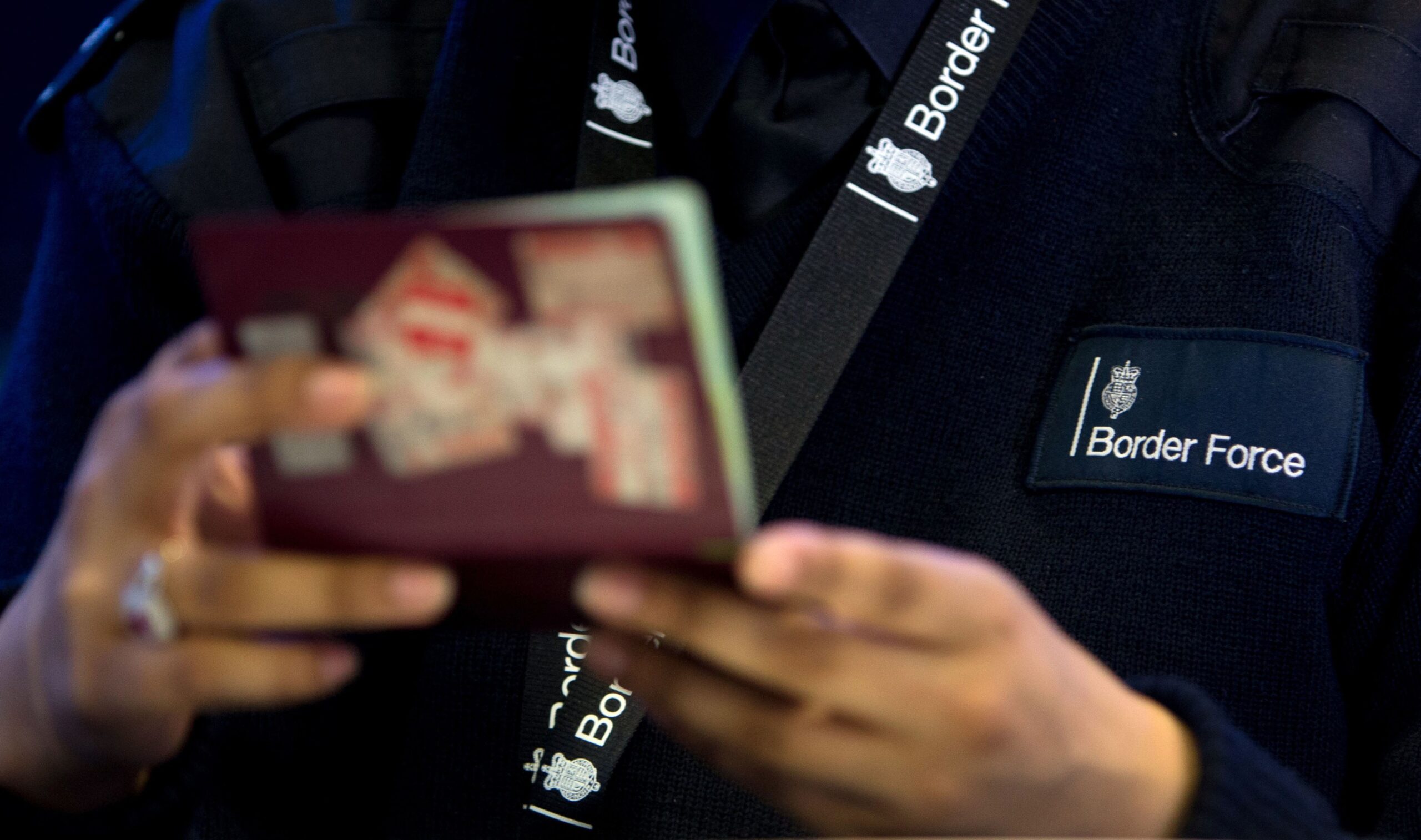
Three in five UK holidaymakers heading to Europe this year expect to be caught up in delays linked to the European Union’s new entry-exit system (EES).

Figures from a recent survey show that 59% of travellers believe they’ll be held up by the new system and fear they could miss their flights due to the border checks. EES involves people from third-party countries such as the UK having their fingerprints registered and photograph taken to enter the Schengen Area, which consists of 29 European countries, mainly in the EU.

For most UK travellers, the process is done at foreign airports. A poll commissioned by Booking.com revealed the worrying figures.

The representative body Airports Council International recently reporting that EES was causing delays of up to three hours, with airports in Spain, Portugal, France and Italy among the worst affected. Last month more than 100 easyJet passengers missed a flight from Milan Linate to Manchester as the border checks were ramped up at passport desks.

The survey indicated that 56% of UK travellers plan to arrive at airports earlier than usual in an attempt to avoid disruption, with 12% intending to arrive at least four hours before departure. More than half (52%) of respondents who have travelled to the EU since the introduction of EES said they experienced delays during their journey.

Meanwhile 43% said they were not delayed. Families and holidaymakers travelling to Europe during the May half-term break were told to make sure their passports are eligible for their dates and to keep items such as portable phone chargers and medication in their hand luggage.

Ryan Pearson, regional manager for the UK and Ireland at Booking.com, said: “May half-term is a key moment in the travel calendar, and we know many people are feeling anxious about how the new entry-exit system could impact their trip. We want to help travellers feel informed and prepared before they leave, whether that’s checking travel documents in advance or packing the right essentials in hand luggage in case of longer queues.

“Changes to the way we travel can understandably feel daunting, but we’re already seeing that many journeys are running smoothly. The key is preparation.”

Advantage Travel Partnership, a network of independent travel agents, reported earlier this month that demand for holidays in Greece has surged since the country revealed on April 17 it will not impose the requirements on UK travellers this summer. The south-eastern European country’s market share of UK holiday bookings rose from 7.7% in mid-April to 9.98% by the end of the month, Advantage Travel Partnership said.

EES was first introduced in October last year, with its roll out ramped up on April 10. EU rules currently allow the checks to be temporarily halted to avoid queues at peak periods.

Source link

Border wall construction is desecrating sacred Indigenous sites

White sage burning, Norma Meza Calles gathers guests at a Mexican wellness resort into a semicircle facing Kuuchamaa Mountain and asks everyone to close their eyes and feel its presence.

“This is sacred to us like a church for you all. The mountain is our healer, our psychologist,” said Meza Calles, a Kumeyaay Nation tribal leader who explains that in its creation story a shaman transformed into the mountain. “Here is where we gather strength to live in this difficult world.”
Then she calls for a moment of reflection. But the silence is pierced by the crushing of rock. U.S. federal contractors have been blasting and bulldozing Kuuchamaa, which straddles the U.S.-Mexico frontier, to make way for new sections of border wall.

Indigenous leaders say that in the Trump administration’s rush to build border wall segments, contractors are desecrating Native American sacred places and cultural sites at an unprecedented pace, more than 170 years after the international boundary split the territories of dozens of tribes.

Blasts on sacred mountain

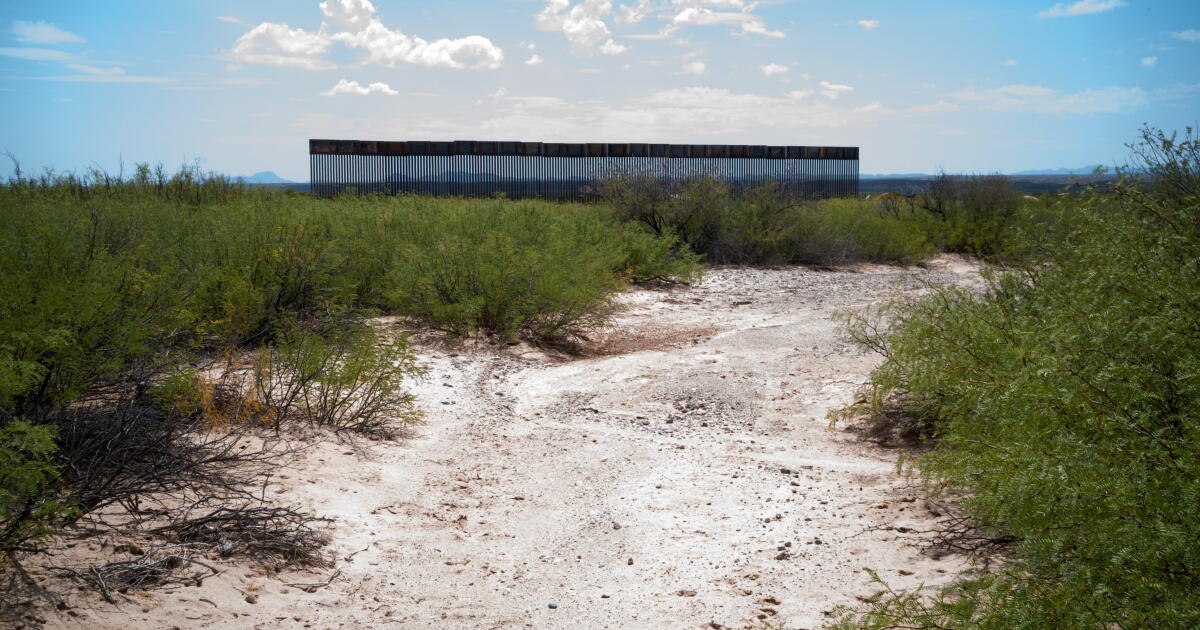
Wall construction has ramped up along the 1,954-mile border even as illegal crossings have plummeted to historic lows. Much of it began this year after the U.S. Department of Homeland Security waived cultural and environmental laws.

In California, explosions on Kuuchamaa, also known as Tecate Peak, send rocks hurtling down its Mexico side.

“We feel that in our DNA,” said Emily Burgueno, a California member of the Kumeyaay Nation, noting that “body” and “land” are the same word in the Kumeyaay language. Some tribal leaders met with Homeland Security officials to urge them to protect Kuuchamaa and are looking into legal action.

“No one ever consented or supported the use of dynamite on the mountain,” Burgueno said.

The nation consists of more than a dozen tribes in California and Mexico’s Baja California. The Kumeyaay have been working to block construction of the border wall since Trump’s first term.

In Arizona, Homeland Security contractors last month carved through a massive, 1,000-year-old fish-shaped geoglyph called Las Playas Intaglio. The rare drawing, etched into the desert floor much like Peru’s Nazca Lines, was created on a lava field in what is now the Cabeza Prieta National Wildlife Refuge.

Construction crews work on a new border wall segment on a steep slope.

Construction crews work April 24 on a new border wall segment near the end of a previously built section on Kuuchamaa Mountain, seen from Tecate, Mexico.

(Gregory Bull / Associated Press)

The Tohono O’odham Nation said it had pointed out the site on its ancestral land for contractors to avoid.

“This was a devastating and entirely avoidable loss,” Tohono O’odham Chairman Verlon Jose said in an April 30 statement. “There is nothing more important than our history, which is what makes us who we are as O’odham. The site was also an irreplaceable piece of the United States’ history, one none of us can ever get back.”

U.S. Customs and Border Protection said in a statement that a contractor “inadvertently disturbed” the site west of Ajo, Ariz., on April 23, but it vowed to protect the remaining portion. CBP Commissioner Rodney Scott is talking to tribal leaders to determine next steps.

Members of the Inter-Tribal Assn. of Arizona, which represents 21 tribes, traveled to Washington last month to lobby against a 20-foot secondary wall being built along that section of the border, as well as a primary 30-foot bollard wall planned on Tohono O’odham tribal lands.

They met with Homeland Security Secretary Markwayne Mullin, a Cherokee Nation member, who listened but made clear his intent is to build more border wall as fast as possible, the Tohono O’odham Nation said in a statement.

Hundreds of miles under contract

The Trump administration says the barriers are necessary to keep people and drugs from entering the U.S. illegally. It wants walls to cover at least 1,400 miles of the border.

Trump’s One Big Beautiful Bill Act last year devoted more than $46 billion to the effort.

CBP has awarded contracts or begun construction on over 600 miles of new border wall, with companion surveillance technology. A double wall is planned or under construction along an additional 370 miles.

In Arizona, where the Patagonia Mountains descend to the border, heavy machinery crawls along freshly graded roads to extend a double wall that could block a wildlife corridor for endangered ocelots and jaguars. Jaguars have long coexisted with the Tohono O’odham, who consider the species “spiritual guardians,” Austin Nunez, a tribal leader, said in a 2025 lawsuit that unsuccessfully challenged the Homeland Security waivers.

In Sunland Park, on New Mexico’s border with Mexico, crews this year set off blasts on Mt. Cristo Rey, a pilgrimage site topped with a limestone crucifix.

CBP is seeking to seize a strip of the mountain owned by the Roman Catholic Church for wall construction. The Diocese of Las Cruces asked a judge this month to deny the land transfer as an affront to religious liberties and the “faithful who seek to commune with God on Mount Cristo Rey.”

In western Texas, the federal government in February notified ranchers on the Rio Grande east of Big Bend National Park of its interest in their land that contains canyonland pictographs and petroglyphs, said Raymond Skiles, a retired Big Bend National Park ranger.

“There are pictographs, paintings of shaman figures and various things that we don’t know how to interpret,” said Skiles, describing the drawings on his family’s ranchlands.

After community backlash, CBP’s online planning map showed the 30-foot-wall plans were scrapped for surveillance technology, patrols and some vehicle barriers. A segment in the national park and neighboring Big Bend Ranch State Park would rely on technology alone.

CBP says it recognizes the importance of natural and cultural resources and is working to minimize the construction’s impact, including leaving drainage gates open in wildlife corridors for animal passage. Illegal border crossings have littered, polluted and trampled sensitive habitat, the agency says.

CBP also says 535 miles of remote, rugged border terrain will solely rely on detection technology.

Many tribes would prefer that to walls.

Norma Meza Calles, a Kumeyaay Nation leader, touches a branch.

Norma Meza Calles, a Kumeyaay Nation leader, leads a guided tour of traditional Kumeyaay uses for local plants at a wellness center in Tecate, Mexico.

(Gregory Bull / Associated Press)

Desecrating Native American sites is a felony

Tribes along the border “are all experiencing the same tragic desecration of our cultural and sacred sites,” said Burgueno, chair of the Kumeyaay Diegueño Land Conservancy, a nonprofit organization in California that works to protect Kumeyaay lands. “This is a great example of the federal government not following federal laws.”

Desecrating a sacred Native American site on U.S. federal or tribal land is a felony, punishable by imprisonment and fines. In 1992, the National Park Service listed Kuuchamaa Mountain in the National Register of Historic Places, giving it limited protection. It noted that “discarding or disturbing the mountain’s natural state would be sacrilegious.”

Rising 3,885 feet above sea level, Kuuchamaa has also captivated non-Native people.

Sarah Livia Brightwood Szekely said her father, Edmond Szekely, felt the mountain’s healing energy when he arrived in Tecate, Mexico, as a Hungarian Jewish refugee during World War II, and started the renowned wellness resort, Rancho La Puerta, which she now runs.

“There are all of these people that have a deep relationship with the mountain,” she said.

Meza Calles leads walks at Rancho La Puerta to teach guests about Kuuchamaa.

Traditionally, young men would spend 40 days at its base in a coming-of-age ceremony before becoming warriors or shamans, she said. Today’s rituals are shorter. People suffering from a death, debt, divorce or other difficulty seek Kuuchamaa’s healing, she said.

“It’s sad they are ruining the mountain,” she said. “We’ll see how far they go. Destiny is destiny. But the fight is not over.”

Watson and Lee write for the Associated Press and reported from Tecate and Santa Fe, N.M., respectively.

Source link

Can new Pakistan-Afghanistan tensions lead to another border clash? | Pakistan Taliban News

Both sides target each other despite a pause in fighting mediated in March.

Relations between Pakistan and Afghanistan have been tense since the Taliban took power in 2021.

On Monday, Pakistan summoned a senior Afghan diplomat after an attack claimed by the Pakistan Taliban, known by the acronym TPP. The group said it carried out two more attacks since, mostly against security forces.

Islamabad accuses Kabul of backing the fighters, which it denies.

The latest violence started with a major border skirmish in February. Mediation efforts by Saudi Arabia, Qatar, Turkiye and China led to a pause in the fighting.

But the two sides have continued to target each other. This includes a Pakistani strike on a drug rehabilitation centre that killed more than 250 people.

Will these breaches lead to a resumption of hostilities? And is lasting peace possible between the neighbours?

Presenter: James Bays

Guests:

Masood Khan – Former permanent representative of Pakistan, United Nations

Michael Kugelman – Senior fellow, Atlantic Council

Obaidullah Baheer – Adjunct lecturer, American University of Afghanistan

Source link

U.S. Border Patrol chief Michael Banks is resigning, in latest DHS leadership change

The head of U.S. Border Patrol, the agency tasked with securing the nation’s frontiers and increasingly tapped by the Trump administration for immigration operations in American cities, announced his resignation Thursday.

Michael Banks’ decision, announced in a Fox News interview and later confirmed by the Department of Homeland Security, is the latest leadership shake-up of officials implementing President Trump’s immigration crackdown and comes as the Republican administration appears to be recalibrating its approach.

“It’s just time,” Banks was quoted as saying in a report on the Fox News website. “I feel like I got the ship back on course from the least secure disastrous chaotic border to the most secure border this country has ever seen,” he said.

In a statement, the U.S. Customs and Border Protection commissioner, Rodney Scott, thanked Banks for his service “during one of the most challenging periods for border security.”

The White House did not immediately respond to a request for comment.

It was not immediately clear who will replace Banks. He led an agency at the forefront of Trump’s high-profile immigration enforcement efforts but kept a lower profile than some other officials such as Gregory Bovino, a now-retired commander who became a public face of the city operations.

CBP is one of the federal agencies that participated since last year in a series of immigration enforcement operations, carried out primarily in cities governed by Democrats —an effort that triggered a spike in arrests and led to the fatal shooting of two U.S. citizens in Minneapolis this year at the hands of federal immigration officers.

Banks’ resignation takes place two months after Markwayne Mullin, a former Republican senator from Oklahoma, became homeland security secretary. DHS oversees CBP and U.S. Immigration and Customs Enforcement, also known as ICE.

Banks is stepping down at the same time that ICE is also going through a leadership transition. Todd Lyons, the acting ICE director, is leaving later this month and will be replaced by David Venturella, who worked for years for private contractors before returning to government service.

CBP was established in 2003 and handles customs, immigration, and agricultural regulations to secure U.S. borders.

Banks returned to the Border Patrol last year after a long agency career that had never landed him in its senior ranks. His star had risen as border czar to Gov. Greg Abbott, R-Texas, during a period when illegal crossings reached record highs and the state launched a multibillion-dollar enforcement surge that led to turf battles with the Biden administration.

Banks kept a relatively low public profile as arrests for illegal crossings that have plunged to their lowest levels since the mid-1960s, a trend that began toward the end of that Democratic administration.

Banks did not appear publicly at the Border Security Expo this month in Phoenix, an annual conference at which government officials update contractors on the state of the border. Scott, who was Banks’ supervisor, is a close ally of Trump border czar Tom Homan and has acted more as the agency’s public face.

In the interview with Fox News, Banks said that after 37 years, “it’s time to enjoy the family and life.”

Source link

Cambodians struggle with displaced lives amid tense ceasefire with Thailand | Border Disputes News

Preah Vihear/Siem Reap provinces – When asked how she spends her day, 11-year-old Sokna rattled off a list of chores.

She first fetches water, then washes dishes and sweeps the leaves and dust from around the blue tarpaulin tent her family now calls home, in the grounds of a Buddhist pagoda in northwestern Cambodia.

Recommended Stories

list of 4 itemsend of list

Sokna and her sister have stopped attending school, their mother Puth Reen said, since moving to this camp for people displaced by the recent rounds of fighting between Thailand and Cambodia.

The two sisters are among more than 34,440 people who remain in displacement camps in Cambodia – 11,355 of whom are children – as of this month, according to the country’s Ministry of Interior.

“I tried to tell them to go to school, but they don’t go,” Puth Reen told Al Jazeera, explaining how precarious life had become since returning to live in Cambodia after fleeing neighbouring Thailand, where she had worked for many years, as the fighting started.

Like Puth Reen and her family, the future looks murky for the tens of thousands of Cambodians – including many schoolchildren – who are still in displacement camps, and their lives remain disrupted months after the last outbreak of fighting between Thailand and Cambodia.

Forced to flee their homes in areas where local troops are now stationed and on high alert, or in areas occupied by opposing Thai forces, Cambodia’s internally displaced say they are surviving off aid donations, while those more fortunate are transitioning from emergency tents into wooden stilted houses provided by the Cambodian government.

But with tension still evident between the leadership in Bangkok and Phnom Penh, the tenuous ceasefire along the Thai-Cambodia border means life cannot yet return to normality.

Some areas on the Cambodian border, such as the villages of Chouk Chey and Prey Chan in Banteay Meanchey province, have become rallying points for nationalists who post on social media about the Thai occupation of Cambodian territory. Their anger is directed at the large shipping containers and barbed wire that Thai forces have used to block access to villages once inhabited by Cambodians and occupied during fighting.

The Thai military-installed containers now form a sort of new frontier between the two countries.

The Cambodian military has also prevented people, such as local farmer Sun Reth, 67, from returning to their homes in front-line areas, which are still highly militarised zones, with troops ready at any moment for a new round of fighting.

“Now the Cambodian military base is just next to [my house],” Sun Reth said, adding that she was not allowed by authorities to sleep in her modest home or pick cashew nuts from her farm to sell for a little income.

Cambodian children more focused on ‘rumours’ of war

The long-held border dispute between Thailand and Cambodia erupted into two rounds of conflict last year, over five days in July and almost three weeks in December.

Dozens were reported killed on both sides, and hundreds of thousands of civilians fled their homes as both countries’ armed forces fired artillery, rockets, and, in the case of Thailand, conducted air strikes deep into Cambodian territory. Thailand has a modern air force, a military capability not possessed by its smaller neighbour.

Cambodian and Thai officials reached a ceasefire on December 27, but the situation remains tense five months on.

For families who fled the fighting, school continues for most children in the displacement camps, but parents say education is fragmented while their lives are still so unsettled.

Mothers at the Wat Bak Kam camp for the displaced in Preah Vihear province told Al Jazeera that primary school students can join classes at a local school, but high school students need to travel daily to the provincial capital, about 15km (9 miles) away.

(Danielle Keeton-Olsen/Al Jazeera)
Families living temporarily at the Wat Bak Kam internal displacement camp sit outside their tents, supplied by Chinese government aid [Roun Ry/Al Jazeera]

Now the rising cost of petrol, due to the US-Israel war on Iran, has made it even harder for teenaged students, who have access to motorcycles, to make the journey to school.

Kinmai Phum, technical lead for WorldVision’s education programme, which is providing support to the camps, said school dropout rates and children skipping classes have increased substantially among students from the displaced border regions.

Kinmai Phum said the situation is a perfect storm of problems: Displaced families have been forced to move around for shelters, schools and temporary learning spaces lack facilities, and some students have psychological trauma due to the conflict.

“Local authorities [are] concerned that many children may not return to school at all if displacement and economic hardship persist,” Kinmai Phum said.

(Danielle Keeton-Olsen/Al Jazeera)
Puth Reen, left, and her three daughters sit inside their tent in a camp for the displaced at Wat Chroy Neang Ngourn in Siem Reap province [Roun Ry/Al Jazeera]

Yuon Phally, a mother of two, said she had noticed the impact of the war on her daughter and son, who are in their first and third years in primary school.

When they return from school, Yuon Phally said, they tell her about rumours they had heard about Cambodia and Thailand resuming fighting.

“Their feeling is not fully focused on school; they focus more on these rumours,” she said.

Her children’s world was more impacted by the conflict because their father is a soldier stationed in the Mom Bei area of the border.

During the fighting in December, Yuon Phally said she could not convince her children to go to school because they all waited to see if their father would call on a mobile phone from the front line.

“I couldn’t hold back my tears, and that added more pressure onto my kids,” she said.

“They would ask about their dad and how he is doing now. Then they told me to eat rice. They understood my feelings.”

She said her children’s focus on their studies only improved after their father returned from fighting to the camp where they are staying, to rest and recover from sickness and injuries sustained in battle.

(Danielle Keeton-Olsen/Al Jazeera)
Two construction workers transport corrugated metal sheeting between the newly constructed resettlement houses for displaced Cambodians in Preah Vihear province [Roun Ry/Al Jazeera]

‘Who doesn’t want to have peace?’

Soeum Sokhem, a deputy village chief, told Al Jazeera how his home is located in the militarised “danger zone” along the border, but he feels compelled to return every few days to check on his house, tend crops, sleep an occasional night, and check in with other neighbours doing the same.

“I can’t just stay here”, he said of camp life.

“I have to go back.”

When asked how he felt about the border war, Soeum Sokhem said he had experienced so much war in Cambodia that he did not know how to describe his “inner feeling like I really want to”.

He then listed off all the conflicts he had lived through in Cambodia since the 1960s: The spill over into Cambodia from the US war in neighbouring Vietnam; the US bombing campaign in Cambodia; the genocidal Khmer Rouge regime, and the civil war that followed after Vietnam’s intervention to topple the regime’s leader Pol Pot in 1979, and which lasted until the mid-1990s.

Then in the 2000s, sporadic border fights with Thailand began, he said.

(Danielle Keeton-Olsen/Al Jazeera)
Soeum Sokhem at the internal displacement camp at Wat Bak Kam [Roun Ry/Al Jazeera]

Cambodia’s contemporary history has been anything but peaceful, a fact which might explain why the current Cambodian government so often speaks of peace. Government buildings and billboards proclaim the government’s unofficial motto: “Thanks for peace.”

“But who doesn’t want to have peace?” Soeum Sokhem said, after charting his life and the many conflicts he had lived through.

Now the 67-year-old said he once again hears gunfire occasionally when he returns to check on his home on the front line.

“Before, when I walked there, it was normal,” he said.

“But nowadays, I walk with fear when going back there.”

Source link

Italy and Portugal ‘to ditch EU border checks’ causing chaos for Brit tourists

Italy and Portugal have been tipped to follow Greece in scrapping the EU’s Entry/Exit System (EES) border checks at airports, which have caused chaos for some British holidaymakers

Travel experts believe Italy and Portugal could be the next two countries to ditch EU border checks at airports.

Many British holidaymakers are suffering delays at airports on continental Europe because of the rollout of new border rules. The EU’s Entry/Exit System (EES) involves people from external countries such as the UK having their fingerprints registered and photograph taken to enter the Schengen Area.

More than 100 easyJet passengers stuck in delays at passport desks at Milan Linate airport missed a flight to Manchester last month. Greece has already ditched the new rules for UK holidaymakers until September after they led to huge queues.

READ MORE: UK airline operating at major airports enters liquidation as flights cancelledREAD MORE: Indian airline industry warns ‘whole sector on verge of collapse’ over jet fuel

Airports in Portugal are reportedly already waving passengers through if queues get too big. Italy is expected to follow Greece and allow people to enter on a passport stamp as the May half-term looms. Places like Spain, France and Croatia could do the same.

Seamus McCauley, of travel company Holiday Extras, told the Mail: “The rollout has been an utter fiasco. British tourists are worth €3.5billion a year to the Greek economy and it has rightly decided it will not jeopardise that because EES is not working properly.”

He said it “seems certain” Italy and Portugal will do the same as Greece. He added: “After that the whole system could collapse like a house of cards, with Spain, France and Croatia coming to the same conclusion because nobody wants to see their tourist trade go to another country simply to comply with the EU.

“Greece broke ranks and Portugal keeps suspending the rules. Others are almost certain to follow. Something has to give.”

It comes as Ryanair says passengers who need to use its airport check-in or bag-drop services will be required to finish the process 20 minutes earlier.

The airline announced it will close the services an hour before the scheduled departure of a flight – compared to 40 minutes at the moment – to give passengers more time to get through security and passport checks.

This will reduce the “very small number of passengers” who miss their flight while stuck in queues, the carrier added. Ryanair’s website says passengers who fail to check in on time “may be denied boarding without refund”.

The new policy will be in place from November 10.

Source link

Appeals court says Trump’s asylum ban at the border is illegal, agreeing with lower court

An appeals court on Friday blocked President Trump’s executive order suspending asylum access, a key pillar of the Republican president’s plan to crack down on migration at the southern border of the U.S.

A three-judge panel from the U.S. Court of Appeals for the District of Columbia Circuit found that immigration laws give people the right to apply for asylum at the border, and the president can’t circumvent that.

The panel concluded that the Immigration and Nationality Act doesn’t authorize the president to remove the plaintiffs under “procedures of his own making,” allow him to suspend plaintiffs’ right to apply for asylum or curtail procedures for adjudicating their anti-torture claims.

“The power by proclamation to temporarily suspend the entry of specified foreign individuals into the United States does not contain implicit authority to override the INA’s mandatory process to summarily remove foreign individuals,” wrote Judge J. Michelle Childs, who was nominated to the bench by Democratic President Biden.

The White House didn’t immediately respond to a request for comment.

ACLU attorney Lee Gelernt said in a statement that the appellate ruling is “essential for those fleeing danger who have been denied even a hearing to present asylum claims under the Trump administration’s unlawful and inhumane executive order.”

Judge Justin Walker, a Trump nominee, wrote a partial dissent. He said the law gives immigrants protections against removal to countries where they would be persecuted, but the administration can issue broad denials of asylum applications.

Walker, however, agreed with the majority that the president cannot deport migrants to countries where they will be persecuted or strip them of mandatory procedures that protect against their removal.

Judge Cornelia Pillard, who was nominated by Democratic President Obama, also heard the case.

Source link

Spain takes action at 24 airports to tackle border control chaos and ease queues – full list

Passengers, especially from Britain, have been facing waits of up to three hours at border control, missing flights after new system was introduced

Spanish airports are taking steps to tackle border control chaos affecting British travellers, according to reports from the popular holiday destination. The European Union’s new Entry/Exit System became fully operational on April 10, 2026, and within hours, airports throughout the Schengen zone were plunged into turmoil. Passengers endured waits of up to three hours at border control, missed flights, and were left spending thousands arranging their own journeys home.

Several countries have already responded, with Greece temporarily suspending the new EES entry/exit border control system after non-EU passengers, particularly those from the United Kingdom, encountered lengthy queues. Now the Majorca Daily Bulletin reports that airport authority AENA has apparently directed staff to take whatever measures possible to streamline the process and cut waiting times.

According to VisaHQ, while officials at Madrid-Barajas, Barcelona-El Prat, Málaga, Alicante and Palma airports have confirmed the technology is functioning properly, they have admitted that passenger numbers during peak periods rapidly overwhelmed checkpoint capacity throughout Easter week. Based on guidance issued to frontline personnel on Tuesday evening, airports may temporarily redirect families and travellers with reduced mobility to conventional stamping queues when biometric queue waiting times surpass 25 minutes. They may also stagger flight arrivals through coordination with Aena’s slot management team, a measure already trialled in Málaga. These steps are reportedly “adjustments, not a suspension”, with biometric capture remaining compulsory for first-time registrants.

READ MORE: Spanish airport shuts for five weeks from tomorrow – Ryanair flights cancelled

The new EES system, which was initially introduced back in October, has faced substantial criticism from the travel industry and airlines, and several countries are said to be weighing up whether to follow Greece’s lead with the summer season mere weeks away and the travel sector having to contend with the Middle East crisis alongside threats of fuel shortages and rising airfares, which are doing little to bolster consumer confidence.

AENA airports

  • A Coruña (LCG)
  • Adolfo Suárez Madrid-Barajas (MAD)
  • Albacete (ABC)
  • Algeciras (AEI)
  • Alicante-Elche Miguel Hernández (ALC)
  • Almería (LEI)
  • Asturias (OVD)
  • Badajoz (BJZ)
  • Bilbao (BIO)
  • Burgos (RGS)
  • Ceuta (JCU)
  • César Manrique-Lanzarote (ACE)
  • Córdoba (ODB)
  • El Hierro (VDE)
  • Federico García Lorca Granada-Jaén (GRX)
  • Fuerteventura (FUE)
  • Girona-Costa Brava (GRO)
  • Gran Canaria (LPA)
  • Huesca-Pirineos (HSK)
  • Ibiza (IBZ)
  • Jerez (XRY)
  • Josep Tarradellas Barcelona-El Prat (BCN)
  • La Gomera (GMZ)
  • La Palma (SPC)

Budget carrier Ryanair this week announced that passengers requiring its airport check-in or bag-drop services will need to complete the process 20 minutes earlier. The airline confirmed it will close these services an hour before a flight’s scheduled departure – compared with 40 minutes at present – to allow passengers additional time to navigate security and passport checks. This will cut down on the “very small number of passengers” who miss their flight while caught in queues, the airline added. Ryanair’s website states that passengers who fail to check in on time “may be denied boarding without refund”.

The new policy will take effect from November 10 and follows the introduction of the EES.

The British travel association ABTA has said that alongside implementing the contingency measures, destinations and border authorities must do more to prepare for peak travel periods. This should include deploying additional border guards during the busiest times. Mark Tanzer, Chief Executive of ABTA – The Travel Association said: “The ambition of a project like EES means it was never going to go completely smoothly, and we were prepared for that.

“However, what is frustrating is that border authorities have it within their power to ease queues and deal with issues as they arise – but that doesn’t seem to be happening across the board. As we head towards peak travel periods, we’re urging border authorities to plan for busy periods and use the contingency measure available. It’s critical the Commission keeps a close eye on this.”

Ryanair chief marketing officer Dara Brady said the “small 20-minute change” will “allow these 20% of our customers who check in a bag more time to clear through airport security and passport queues, and get to their departure gate on time”. He added that this will be particularly important “during busy travel periods when some of these airport queues can be longer”. Numerous UK travellers are experiencing hold-ups at airports across continental Europe due to the introduction of new border regulations.

The EU’s Entry/Exit System (EES) requires visitors from non-member countries such as the UK to have their fingerprints recorded and photograph captured to enter the Schengen Area, which comprises 29 European countries, predominantly within the EU.

Earlier this month, over 100 easyJet passengers caught up in lengthy waits at passport control at Milan Linate airport missed their flight to Manchester. Ryanair has announced it is rolling out additional self-service bag drop kiosks throughout its network.

By October, more than 95% of the airports it operates from will be equipped with these facilities.

Source link

EU country suspends border system which has caused 4-hour delays

The country has chosen to abandon the new biometric security measures over concerns about queue chaos and flights taking off without passengers

Greece has suspended EU fingerprint and facial scans for British holidaymakers. The country has chosen to abandon the new biometric security measures over concerns about queue chaos sweeping across the continent. Queues have been hitting the country with four hours reported in many destinations, including Greece.

All travellers from the UK and other non-EU countries are supposed to be photographed and fingerprinted at EU airports and border crossings under the new entry and exit system (EES) introduced by Brussels.

Holidaymakers have been cautioned that the new security measure, which is now fully operational, could trigger airport delays of up to four hours. Eleni Skarveli, director of the Greek National Tourism Organisation in the UK, stressed that the decision would “ensure a smoother and more efficient arrival experience in Greece” and would “significantly reduce waiting times” while alleviating congestion at airports.

The EES is intended to replace manual passport stamping and better monitor the 90-day visa-free limit, but its introduction has caused havoc at some of Europe’s busiest airports.

A statement on the website of the Greek Embassy and posts on official social media channels said: “Update for British passport holders travelling to Greece. “In the framework of the implementation of the Entry/Exit System, as of 10 April 2026, British passport holders are exempt from biometric registration at Greek border crossing points.”

There was no further detail of how long the exemption would last, and FCDO travel advice for Greece has not been updated.

Luke Petherbridge, director of public affairs at travel trade organisation Abta, said: “While for many the travel experience remains smooth, we’re disappointed and frustrated to see some passengers being caught up in delays due to EES.

“Abta has been warning destinations and the (European) Commission for some time about the need for proactive steps to be taken to avoid delays, including the full use of contingency measures to stand down biometric checks at busier times, and adequate staffing especially at peak times.”

A total of 122 passengers were reportedly unable to board the flight from Milan Linate to Manchester on Sunday because of delays at passport desks caused by the ramp up of the EU’s Entry Exist System (EES).The 11am departure was held for 59 minutes before departing with the majority of seats empty.

One of the affected easyJet passengers, Kiera, 17, from Oldham, Greater Manchester, said she and her boyfriend arrived at Milan Linate airport at 7.30am on Sunday. She told the BBC: “We got to Border Control and it was a massive queue of people. I wasn’t feeling great anyway because I think I’d got food poisoning.

READ MORE: Full list of airports as easyJet warns of ‘longer queues’READ MORE: Major airline cancels hundreds of flights as ‘last resort’ over Iran fuel crisis

“At about 10.50am they brought some water over for people, and when we got to the front of the queue someone asked us if we were going to Manchester, and told us our flight had just gone.”

Vicky Chapman, 26, from Wirral, Merseyside, was booked on the flight with her family, including her five-year-old son.

She told the Liverpool Echo they arrived at the airport “with more than enough time” but were “refused entry through passport control”.

She continued: “We were then told that we are a ‘no show’ on our flight because we did not get to the gate on time, even though passport control had issues and they would not let us through.

“We were passed from pillar to post for three hours and no-one helped us. “It was so hot in the airport, people were vomiting, people were almost passing out.

“We’re being told that Tuesday is the earliest we can get back, and that we have to fly to Gatwick. We’ve had to pay out of pocket for an Airbnb.”

An easyJet spokesman said: “Due to delays in EES processing by border authorities, some passengers departing from Milan Linate on Sunday experienced very long waiting times at passport control.

“We held flight EJU5420 from Milan to Manchester for nearly an hour to give passengers extra time but it had to then depart due to crew reaching their safety regulated operating hours.

“Customers who missed the flight have been offered a free flight transfer.

“We continue to urge border authorities to ensure they make full and effective use of the permitted flexibilities, for as long as needed while EES is implemented, to avoid these unacceptable border delays for our customers.

“While this is outside of our control, we are sorry for any inconvenience caused.”

Of the 156 passengers reportedly booked on the return flight to Manchester, just 34 made it on board – leaving a staggering 122 stranded in Italy. EasyJet subsequently issued an apology over the incident.

At three of the UK’s “juxtaposed” border controls in Dover, Folkestone and London St Pancras, the pricey EES kiosks remain unconnected to the French police aux frontières IT system. These issues are not expected to be resolved until September, according to the Independent.

Greece is heavily dependent on British tourism, particularly at its bustling island hotspots such as Corfu, Crete and Rhodes, which can welcome upwards of 2,000 UK passengers daily during peak season.

The decision by Athens is widely regarded as a move to offer reassurance to British holidaymakers, and could encourage other Mediterranean nations to follow its lead. Greece is yet to confirm an end date. for its EES exemption for British travellers.

Holidaymakers are already considering switching their summer holiday plans this year, according to travel industry experts.

“Because of the war in the Middle East, Europe is seeing a big increase in interest as a holiday destination this year,” an ABTA spokesman said.

ABTA added that Greece was anticipated to be the fifth most-visited destination by Britons this summer, trailing behind Spain, France, Italy and the USA.

The spokesman said: “I think it’s too early to say what this change might mean for the number of people visiting, particularly as decisions on where to go are based on a number of factors.”

It’s thought travellers now weighing up a continental break may pivot towards Greece to sidestep potential headaches caused by the new scheme. “Greece for me this summer then, was thinking of Tenerife, but no way I’m putting up with those queues and chaos,” one man posted on X.

Another person added: “I work in the travel industry, already had customers worried about this new system believe me, Greece will benefit from this stand!” While a third chimed in: “Perfect – off to the Greek islands this summer – common sense prevails!”

Source link

Musical ‘Mexodus’ highlights the journey of freedom seekers in Mexico, which abolished slavery in 1829

History textbooks often include the story of the Underground Railroad, an organized network of secret routes, places and people that guided enslaved populations from the South to abolitionist Northern states.

However, less is known about the underground railroad that ran southbound to Mexico. But one live-looped musical is unearthing that hidden history, one beat at a time.

Co-created and performed by Brian Quijada and Nygel D. Robinson, “Mexodus” tells the fictional story of Henry, who evades his capture by fleeing Texas across the Rio Grande. After a near fatality, he is saved by Carlos, a farmer and former combat medic battling his own trauma from the Mexican-American War. Together they form solidarity, despite social, racial and political strains plaguing both sides of the border.

Following its off-Broadway run at the Daryl Roth Theatre in New York City, the hip-hop and bolero-infused musical directed by David Mendizábal will open at the Pasadena Playhouse stage July 8 and run until Aug. 2. But for history buffs and musical enthusiasts alike, a sonically richer version filled with sound effects of the musical airs exclusively on Audible today, April 16.

The idea for “Mexodus” first came to Brian Quijada — playwright, actor and composer behind “Where Did We Sit on the Bus?,” “Kid Prince and Pablo” and “Somewhere Over the Border” — when reading a 2018 article on History.com about the estimated 5,000 to 10,000 enslaved individuals that escaped the American South for freedom in Mexico, though some researchers estimate that number to be higher.

“My parents crossed the border undocumented in the late 1970s, so I think I’ve always been fascinated with writing immigration stories,” Quijada said. “The reason that this story attracted me was because it’s like a reverse border story, but I also knew that it wasn’t my story to tell so I sat on it for a long time.”

Quijada bookmarked the article until he met Robinson — a performer at Berkeley Rep, Baltimore Center Stage, Shakespeare Theater Company, Mosaic Theater and writer and composer of “Santa Claus Is Comin’: A Motown Christmas Revue” and “R&J: Fire on the Bayou” — at an actor-musician conference weeks before the start of the COVID-19 pandemic. They were the only actors-musicians of color in the room, listening in on conversations about how one should audition for musicals like “Once,” “Million Dollar Quartet,” which typically center white storylines.

“We kind of looked at each other and we’re like, ‘we don’t really belong here,’” said Quijada, who invited Robinson to take part in “Mexodus” during the pandemic shutdown. The first iteration of the project was as a mixtape.

The musical edge of “Mexodus” hinges on live looping, a recording and playback technique where a sound is repeated and then layered (think Justin Bieber’s solo performance of “Yukon” at the 2026 Grammy Awards). Physically, both Quijada and Robinson’s characters have to pick up a guitar, record it, then play the drum set and run to the bass. “ It’s pretty labor-intensive,” Quijada said.

“I think Brian and I are artists in this way, like various people of color, where it’s like, no one else is gonna do it for me, so I can do it all by myself,” Robinson said.

There’s also a more dramaturgical, meta reason for the loop, which follows a four chord structure throughout the piece, set in both 1851 and present day.

“The looping shows you that there’s not much difference between 1851 and 2026,” Robinson said. “We just keep finding ourselves in a loop and like maybe a sound is in that wasn’t there before. Maybe another sound is added, but it’s still the same four chord structure that has been happening in this country for all existence.”

In 2010, the U.S. National Park Service outlined a possible runaway route stretching on the Camino Real de la Tejas between Natchitoches, La., to Monclova, Mexico. Still, it is unclear how organized the underground railroad heading to Mexico truly was, the Associated Press reported in 2020, with archives destroyed in a fire and sites along the path abandoned.

In 2024 the Jackson Ranch Church and Martin Jackson Cemetery in San Juan, Texas — which are part of a ranch owned by interracial couple Nathaniel Jackson and Matilda Hicks — were recognized by the U.S. National Park Service for serving as a gateway to freedom in Mexico.

Other Texas couples alongside the border— including interracial abolitionist couple Ferdinand Webber and Silvia Hector — aided enslaved people in their pursuits to reach Mexico, which had abolished slavery in 1829, while Texas was still part of the country.

Fears surrounding the Mexican government’s attempts to abolish slavery led to the formation of the Republic of Texas in 1836 and its eventual annexation to the United States by 1845; records also show that American slave owners would head down to Mexico to kidnap formerly enslaved individuals, according to USC historian Alice Baumgartner, who wrote about it in her 2020 book “South to Freedom: Runaway Slaves to Mexico and the Road to the Civil War.”

A database by the Texas Runaway Slave Project, which found listings for 2,500 runaways across various Texas newspapers from the 1840s through the 1860s, also documents the frequented journey to Mexico.

Slavery in the U.S. wouldn’t be officially abolished until 1865 with the ratification of the 13th Amendment to the Constitution.

“I was also really intimidated by the amount of research that I would have to do to write this piece because at the time back [between 2017 and 2020], [researchers] were just beginning to uncover a lot of this,” Quijada said.

Nygel D. Robinson and Brian Quijada in "Mexodus."

Themes of racism — including anti-Blackness in the Latino community — oppression and resistance are woven throughout “Mexodus,” which since its debut in 2023 at the Baltimore Center Stage/Mosaic Theater Company in Washington, D.C., has been making viewers aware of the little-known history.

Robinson recalled how one Black woman came up to him after the show to let him know she believed in Trump’s border wall.

“I got nervous, but she was like, ‘after seeing this, I’m realizing that there’s something trying to convince me of that.’ And I’m like, yes!” said Robinson. “I’m like, this is good. This is good. We started you somewhere. Wow.”

The pair hope that amid all the dark news circulating around the world — and the traumatic, historical themes interlaced in “Mexodus” — the existence of this piece of art can be a glimmer of hope and joy for the future of both Black and brown communities.

“ I need you all to see the truth, but we’re gonna try and dance anyway,” Robinson said.

Source link

Thune: Senate may vote next week on ICE, Border Patrol funding

April 14 (UPI) — A budget resolution to fund federal immigration enforcement could hit the Senate floor by next week, Senate Majority Leader John Thune said Tuesday, as Republicans seek to bypass Democratic demands for reforms to Immigration and Customs Enforcement and Border Patrol.

Federal funding for Immigration and Customs Enforcement and Border Patrol lapsed on Feb. 14 after Republicans agreed with the Democrats to remove the Department of Homeland Security from a larger spending package and avert a government shutdown.

Neither agency has been funded through regular DHS appropriations since, though they continue operating through other, emergency funding.

Democrats began demanding reforms to the federal immigration enforcement agencies before agreeing to restore funding after two U.S. citizens were killed by federal immigration officers amid President Donald Trump‘s aggressive immigration crackdown.

Amid a stalemate in negotiations, Republicans are considering passing three years of funding for the agencies through a complicated legislative mechanism called a budget reconciliation bill that permits certain spending legislation to pass with a simple majority rather than 60 votes, Thune told reporters Tuesday in the Capitol.

“Republicans are going to stand with our Border Patrol, with our law enforcement agencies and we’re going to ensure that they are funded, not only today but well into the future,” Thune, R-S.D., said.

Sen. Lindsey Graham, R-S.C., is preparing the resolution to fund the agencies that will be followed by the reconciliation bill “to ensure the job gets done,” he said.

Democrats have blocked funding for ICE and Border Patrol until reforms — including requiring judicial warrants and banning officers from wearing masks — are made, but the reconciliation bill tactic could ensure funding without any votes from Democratic lawmakers.

The same tactic was used last year to pass Trump’s sweeping spending and tax cut bill, which provided $75 billion for ICE.

“All of the things that the Democrats made this about, which was supposed to be about reforms to the way that ICE and Border Patrol operate — they get none of that,” Thune said.

“And now, we’re going to fund those agencies for three years into the future. The only thing the Democrats got out of this was they now own the issue of open borders and defund law enforcement.”

Republicans hold a narrow 53-47 majority in the Senate, with two independents caucusing with the Democrats, as well as a 218-213 majority in the House.

The Senate has twice passed bipartisan bills to fund DHS aside from ICE and Border Patrol, which the House has balked at. Democrats blame the Trump administration’s influence on the lower chamber.

“Republicans are dragging the Senate through a partisan circus just to avoid basic accountability for ICE and Border Patrol,” Senate Minority Leader Chuck Schumer told reporters at the Capitol during a separate press conference on Tuesday.

He said Democrats will continue to push for immigration enforcement reforms.

“So, the pattern, unfortunately, with this administration is clearer and clearer,” the veteran New York Democrat said. “Chaos abroad — the war; chaos at home with not funding DHS with reforms. A failed war overseas, a manufactured crisis here in Washington — in both cases Republicans aren’t leading, they are following orders.”

Source link