Potocari, Bosnia and Herzegovina – In a grassy valley dotted with white gravestones, thousands of people gathered to mark 30 years since the Srebrenica massacre on Friday.
Seven victims of the 1995 genocide, some of whose remains were only discovered and exhumed in the past year from mass graves uncovered in Liplje, Baljkovica, Suljici and Kamenicko Brdo, were buried during the sombre anniversary on Friday.
Limited remains of one of the victims, Hasib Omerovic, who was 34 when he was killed, were found and exhumed from a mass grave in 1998, but his family delayed his burial until now, hoping to recover more.
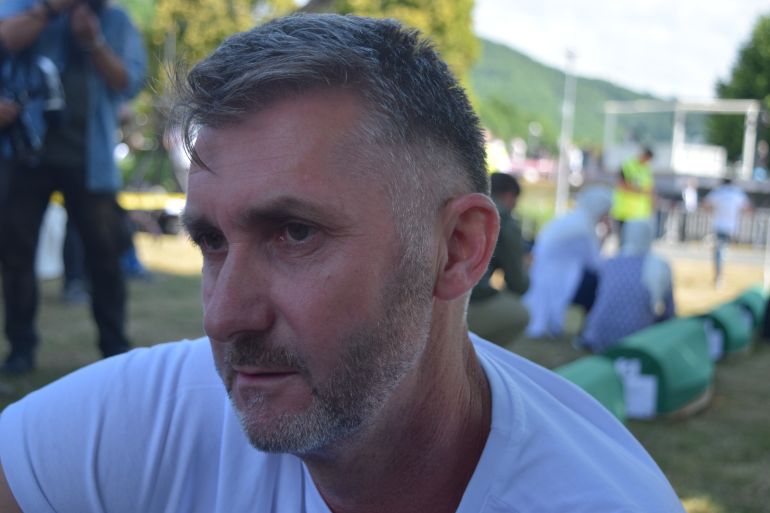
Zejad Avdic, 46, is the brother of another of the victims being buried. Senajid Avdic was just 19 when he was killed on July 11, 1995. His remains were discovered in October 2010 at a site in Suljici, one of the villages attacked that day by Bosnian Serb forces.
“When the news came, at first, I couldn’t – I didn’t – dare tell my mother, my father. It was too hard,” Avdic told Al Jazeera, referring to the moment he learned that some of his brother’s remains had been found.
“What was found wasn’t complete, just a few bones from the skull.”
Zejad Avdic, 46, is the brother of one of the Srebrenica victims buried on Friday, Senajid Avdic, who was just 19 when he was killed [Urooba Jamal/Al Jazeera]
Families like Avdic’s have waited decades for even a fragment of bone to confirm their loved one’s death. Many have buried their loved ones with only partial remains.
The Srebrenica massacre was the crescendo of Bosnia’s three-year war from 1992 to 1995, which flared up in the aftermath of Yugoslava’s dissolution, pitting Bosnian Serbs against the country’s two other main ethnic populations – Croats and Muslim Bosniaks.
On July 11, 1995, Bosnian Serb forces stormed the enclave of Srebrenica, a designated United Nations-protected safe zone, overrunning the Dutch UN battalion stationed there. They separated at least 8,000 Bosniak men and boys from their wives, mothers and sisters, slaughtering them en masse.
Thousands of men and boys attempted to escape through the surrounding woods, but Serb forces chased them through the mountainous terrain, killing and capturing as many as they could. Women and children were expelled from the city and neighbouring villages by bus.
Thousands of people attended the commemoration for victims of the massacre on Friday, which began with a congregational Islamic prayer – men, women and children prostrating in unison among the rows of gravestones.
After the prayer, the remains of the victims, who have been identified using extensive DNA analysis, were carried in green coffins draped with the Bosnian flag.
The coffins were lowered into newly prepared graves. At each site, groups of men stepped forward to take turns covering the caskets with soil, shovelling from nearby mounds in a solemn conclusion to the proceedings.
After the remains had been buried, the victims’ families crowded around the sites, wiping away their tears as an imam recited verses over the caskets.
Men take turns covering the caskets with soil, shovelling from nearby mounds of dirt [Urooba Jamal/Al Jazeera]
‘I will keep coming as long as I’m alive’
Fikrera Tuhljakovic, 66, attends the memorial here each year, but this year her cousin was among the victims being buried.
She said she is determined to ensure he is remembered and that all of the victims are never forgotten.
“I will keep coming as long as I’m alive,” Tuhljakovic told Al Jazeera.
Forensic scientists and the International Commission on Missing Persons have, in the decades since the mass killings, worked to locate the remains of those killed.
More than 6,000 victims have been buried at the memorial site in Potocari, but more than 1,000 remain missing.
A woman mourns during the burial of her loved one [Urooba Jamal/Al Jazeera]
In 2007, the International Court of Justice (ICJ) declared the events in Srebrenica and the surrounding area a genocide. Bosnian Serb leaders Radovan Karadzic and Ratko Mladic were both convicted of genocide, war crimes and crimes against humanity and sentenced to life in prison.
In total, the tribunal and courts in the Balkans have sentenced almost 50 Bosnian Serb wartime officials to more than 700 years in prison for the genocide.
But many accused remain unpunished. Denial of the genocide also continues – especially among political leaders in Serbia and the Serb-majority entity of Republika Srpska, which was established in the northeast of the country at the start of the war in 1992 with the stated aim of protecting the interests of the Serbs of Bosnia and Herzegovina.
According to Emir Cica, Islamic Relief’s Bosnia country director, international institutions have not done enough to prevent events like Srebrenica from happening again, with similar atrocities happening in Gaza at the moment.
“When we see what has happened, for example, in Gaza, it is very painful for us because we understand this [experience],” Cica told Al Jazeera.
For Avdic, Gaza is indeed a painful reminder of history repeating itself.
“Today we are burying our victims of genocide, and today in Gaza, genocide is happening, too,” he said solemnly.
“I don’t know what kind of message to send; there’s no effect on those in power who could actually do something.”
The Srebrenica Genocide Memorial in Potocari [Urooba Jamal/Al Jazeera]
The US has closed its ports of entry to Mexican cattle for fear of the parasitic, flesh-eating worm spreading north.
Mexican President Claudia Sheinbaum has denounced a decision by the United States to once again suspend imports of her country’s cattle over a flesh-eating parasite called the screwworm.
On Thursday, Sheinbaum used her morning news conference to call fears of the worm overblown. She pointed out that a single case in the eastern state of Veracruz had prompted the import pause.
“From our point of view, it is a totally exaggerated decision to close the border again,” Sheinbaum said.
At the centre of the cross-border debate is the New World screwworm, a species endemic to the Caribbean and parts of South America. It had previously been eradicated from the northernmost part of its range, in Central and North America.
The US, for instance, declared it eliminated from the country in 1966.
But the parasite may be making a comeback, leaving the US government alarmed about its potential impact on its cattle and beef sector, a $515bn industry.
The New World screwworms appear when a variety of parasitic flies, Cochliomyia hominivorax, lay their eggs near wounds or sores on warm-blooded animals. Most commonly, its hosts are livestock like horses or cattle, but even household pets or humans can be infested.
Each female fly is capable of laying hundreds of eggs. When the eggs hatch, they release larvae that tunnel into the flesh of their hosts, often causing incredible pain.
Unlike maggots from other species, they do not feed on dead flesh, only living tissue. If left untreated, infestations can sometimes be deadly.
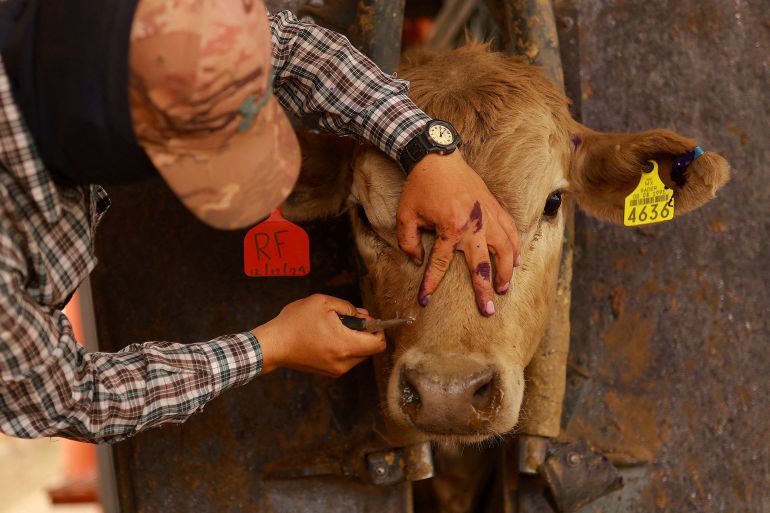
Animal health worker Eduardo Lugo treats the wounds of a cow in Nuevo Palomas, Mexico, on May 16 [Jose Luis Gonzalez/Reuters]
The fear of New World screwworms expanding northwards has caused the US to halt shipments of Mexican cattle several times over the past year.
In late November, it put in place a ban that lasted until February. Then, on May 11, Secretary of Agriculture Brooke Rollins announced the US would once again bar entry to Mexican cattle after the “unacceptable northward advancement” of the bug.
A port of entry in Arizona was slated to reopen to Mexican cattle starting on Monday. But that plan was suspended under a new announcement on Wednesday, which implemented the cattle ban once more, effective immediately.
“The United States has promised to be vigilant — and after detecting this new NWS [New World screwworm] case, we are pausing the planned port reopening’s to further quarantine and target this deadly pest in Mexico,” Rollins said in a statement.
The statement explained that the US hopes to eradicate the parasite, pushing its encroachment no further than the Darien Gap, the land bridge in Panama that connects South and Central America.
It also asserted that the US Department of Agriculture (USDA) was “holding Mexico accountable by ensuring proactive measures are being taken”.
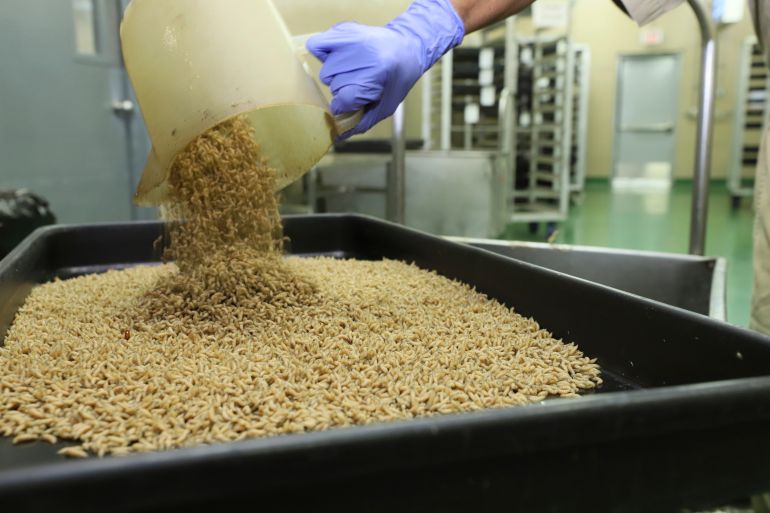
A worker drops New World screwworm fly larvae into a tray at a facility that breeds sterile flies in Pacora, Panama [Handout/COPEG via AP Photo]
Part of its strategy will be to release male flies — lab-raised and sterilised through radiation — from airplanes in Mexico and the southern US. Female flies can mate only once, so if they pair with a sterile fly, they will be unable to reproduce.
The same strategy has been deployed in the past to control the New World screwworm, as an alternative to more hazardous methods like pesticides that could affect other animals.
In a social media post on June 30, Rollins touted gains in recent weeks, including “over 100 million sterile flies dispersed weekly” and “no notable increase” in screwworm cases in eight weeks.
She thanked her Mexican counterpart, Julio Berdegue, for his help.
“He and his team have worked hand in hand with our @USDA team since May 11 to get these ports reopened. We are grateful,” she wrote.
Thousands of protesters have gathered in Thailand’s capital to demand the resignation of Prime Minister Paetongtarn Shinawatra amid growing anger over a leaked phone call with former Cambodian Prime Minister Hun Sen.
Demonstrators took to the streets on Saturday, outraged by a June 15 conversation in which Paetongtarn urged Hun Sen – the current Cambodian Senate president who still wields considerable influence in his country – not to listen to “the other side” in Thailand, including an outspoken Thai army general who she said “just wants to look cool”.
The army commander was in charge of an area where a border clash last month led to one Cambodian soldier being killed. The man was killed on May 28 following an armed confrontation in a contested area.
The leaked phone call with Hun Sen was at the heart of Saturday’s protest and has set off a string of investigations in Thailand that could lead to Paetongtarn’s removal.
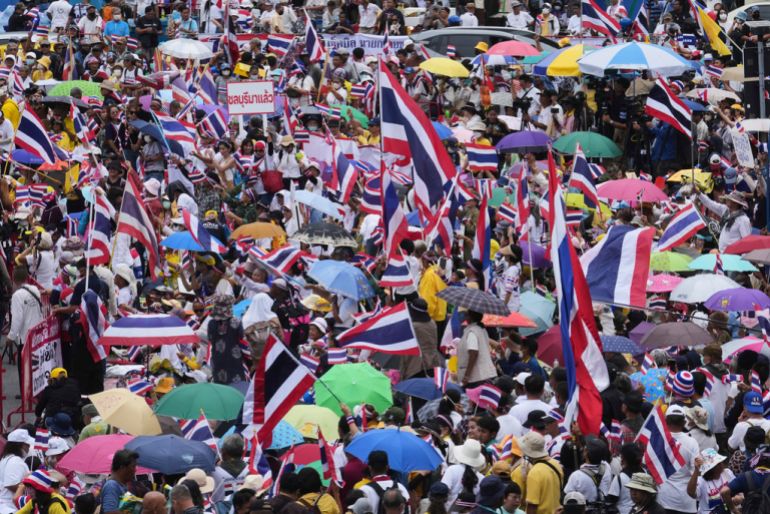
Protesters held national flags and signs as they occupied parts of the streets around the Victory Monument in central Bangkok. At a huge stage set up at the monument, speakers expressed their love for Thailand following the intensified border dispute.
“It looks like this is going to be a pretty well-attended rally, certainly a loud voice … Lots of speeches, lots of whistles, lots of noise, all calling in full voice for Prime Minister Paetongtarn to resign,” said Al Jazeera’s Tony Cheng, reporting from Bangkok. “They say this conversation has undermined Thailand, has undermined the military, and they are insisting that she step down – it does put her in a very tricky position.”
Protesters gather at Victory Monument demanding Thailand’s Prime Minister Paetongtarn Shinawatra resign, in Bangkok, Thailand [Sakchai Lalit/AP]
Many of the leading figures in the protest were familiar faces from a group popularly known as Yellow Shirts, whose clothing colour indicates loyalty to the Thai monarchy. They are longtime foes of Paetongtarn’s father, former Prime Minister Thaksin Shinawatra, who reportedly has a close relationship with Hun Sen.
“The political scientists we’ve been speaking to over the last couple of days think it is going to be very difficult for Paetongtarn to survive as prime minister, but the problem then is who would replace her,” Cheng said.
Hun Sen addresses supporters
In Cambodia, Hun Sen on Saturday promised to protect his country’s territory from foreign invaders and condemned what he called an attack by Thai forces last month.
At a 74th anniversary celebration of the foundation of his long-ruling Cambodian People’s Party, Hun Sen claimed the action by the Thai army when it engaged Cambodian forces was illegal.
He said the skirmish inside Cambodian territory was a serious violation of country’s sovereignty and territorial integrity, despite Cambodia’s goodwill in attempting to resolve the border issue.
“This poor Cambodia has suffered from foreign invasion, war, and genocide, been surrounded and isolated and insulted in the past but now Cambodia has risen on an equal face with other countries. We need peace, friendship, cooperation, and development the most, and we have no politics and no unfriendly stance with any nation,” Hun Sen said in an address to thousands of party members at the event in the Cambodian capital, Phnom Penh.
There is a long history of territorial disputes between the countries. Thailand is still rattled by a 1962 International Court of Justice ruling that awarded Cambodia the disputed territory where the historic Preah Vihear temple stands. There were sporadic though serious clashes there in 2011. The ruling from the UN court was reaffirmed in 2013, when Yingluck was prime minister.
The scandal has broken Paetongtarn’s fragile coalition government, costing her Pheu Thai Party the loss of its biggest partner, the Bhumjaithai Party.
The departure of Bhumjaithai left the 10-party coalition with 255 seats, just above the majority of the 500-seat house.
Paetongtarn also faces investigations by the Constitutional Court and the national anticorruption agency. Their decisions could lead to her removal from office.
Sarote Phuengrampan, secretary-general of the Office of the National Anti-Corruption Commission, said on Wednesday that his agency is investigating Paetongtarn for a serious breach of ethics over the Hun Sen phone call. He did not give a possible timeline for a decision.
Reports said the Constitutional Court can suspend Paetongtarn from duty pending the investigation and could decide as early as next week whether it will take the case. The prime minister said on Tuesday she is not worried and is ready to give evidence to support her case.
“It was clear from the phone call that I had nothing to gain from it, and I also didn’t cause any damage to the country,” she said.
The court last year removed her predecessor from Pheu Thai over a breach of ethics.
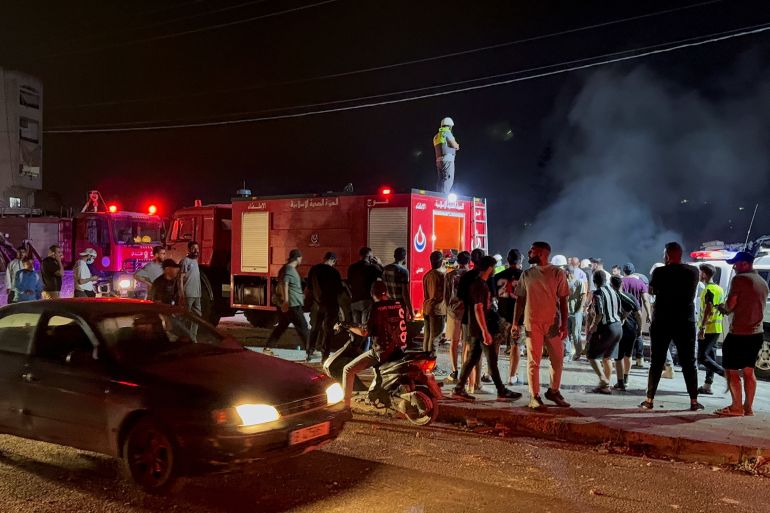
Lebanese state media reports civilian casualties after Israeli attack on residential apartment building in Nabatieh.
At least one person has been killed and more than a dozen others were wounded in Israeli air attacks on southern Lebanon, the health ministry has said, as the Israeli military said it struck sites linked to the armed group Hezbollah.
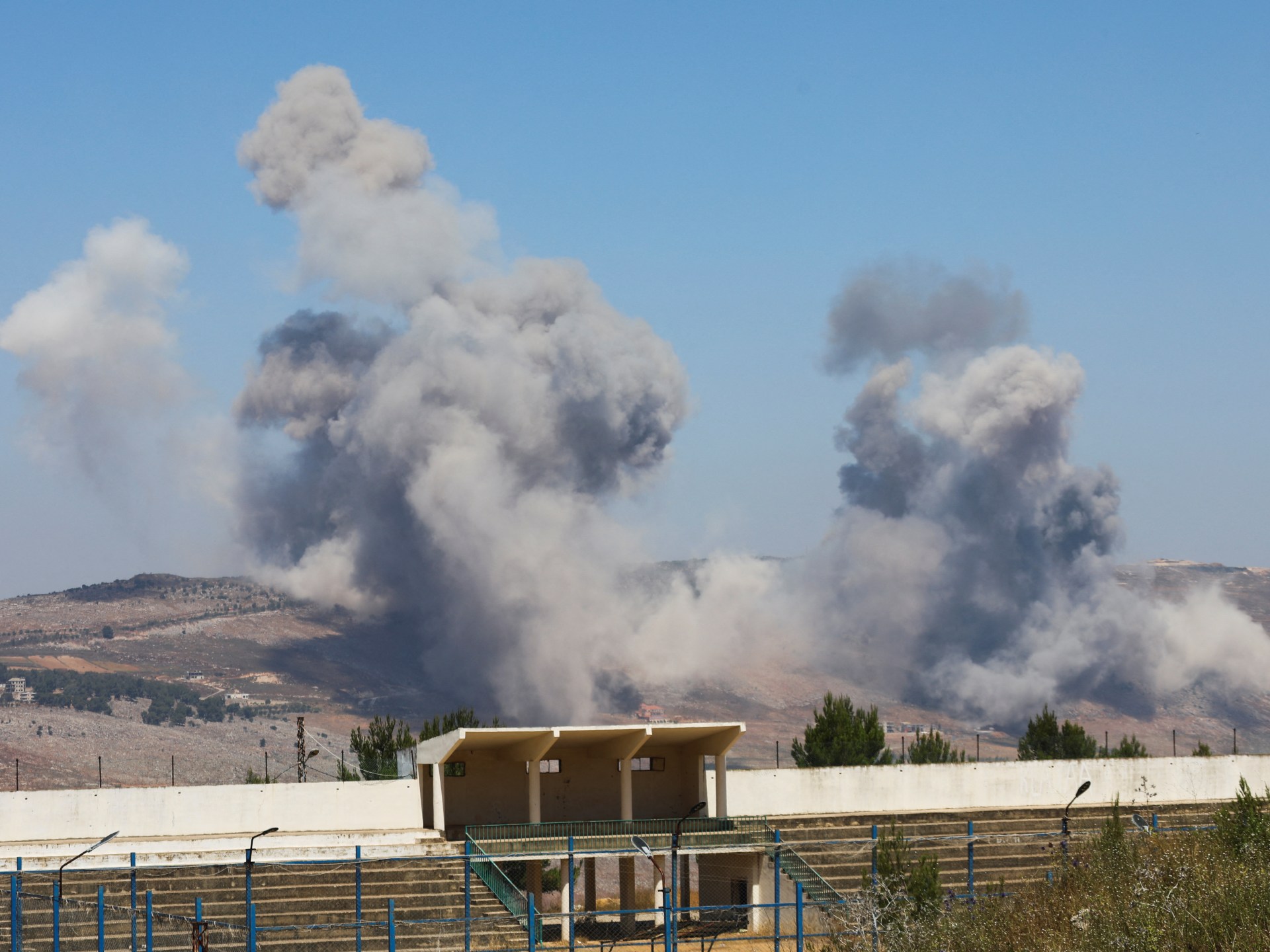
In a report on Friday, Lebanon’s state-run National News Agency cited the country’s health ministry saying that a woman and 13 other people were targeted in an air raid that hit a residential apartment building in Nabatieh. Seven others were wounded in air raids on the outskirts of the city, it added.
The Israeli army said its fighters attacked an underground site used by Hezbollah for its fire and defence system in Belfort, a site in the Nabatieh governorate. The military said it identified attempts by the Lebanese group to resume activities there after Israel had taken it out of use in the past.
The resumption of activities there would have been in breach of the November truce agreed by the two sides, which halted more than a year of fire exchanges and nearly two months of an all-out war.
Later on Friday, the Israeli army spokesman said that Lebanese reports that an Israeli drone hit a residential building, causing civilian injuries, “were inaccurate”.
In a post on X, Avichay Adraee said that “the explosion that damaged the civilian building was caused by a rocket located at the Hezbollah site, which detonated as a result of the Israeli strike”.
He accused Hezbollah of “continuing to store its aggressive rockets near residential buildings and Lebanese civilians, thereby putting them at risk”.
Footage shared on social media, and verified by Al Jazeera’s Sanad fact-checking agency, shows large plumes rising from the hill where Israeli aircraft struck their target, as the roar of jets is heard overhead.
Lebanon’s President Joseph Aoun on Friday accused Israel of continually violating the US-brokered ceasefire deal by keeping up strikes on Lebanon.
The ceasefire deal stipulates that southern Lebanon must be free of any non-state arms or fighters, Israeli soldiers must leave southern Lebanon as Lebanese troops deploy there and all fire across the Lebanese-Israeli border must stop.
Israeli troops remain in at least five posts within Lebanese territory and its air force regularly launches air raids, which it claims target rank and file Hezbollah members or people affiliated with the group.
Rwanda and the Democratic Republic of the Congo are expected to sign a United States-mediated peace deal on Friday following several months of conflict that has killed thousands of people and displaced millions in resource-rich eastern DRC.
Neither country is formally at war, but the DRC accuses its neighbour, Rwanda, of backing the M23 rebel group, which is waging war in eastern DRC. Rwanda denies this charge.
In January, a deadly offensive by the rebels – aided by Rwandan forces, according to a United Nations expert panel – escalated a decades-long conflict in eastern DRC. The M23 has since seized the strategic cities of Goma and Bukavu, and its attacks have raised fears of a regional war.
The peace agreement comes amid reports that the US is considering investments in the mineral-rich region in return for security and calm in an area where dozens of militias vying for resource control have operated since the mid-1990s.
Here’s what we know about the peace agreement to be announced:
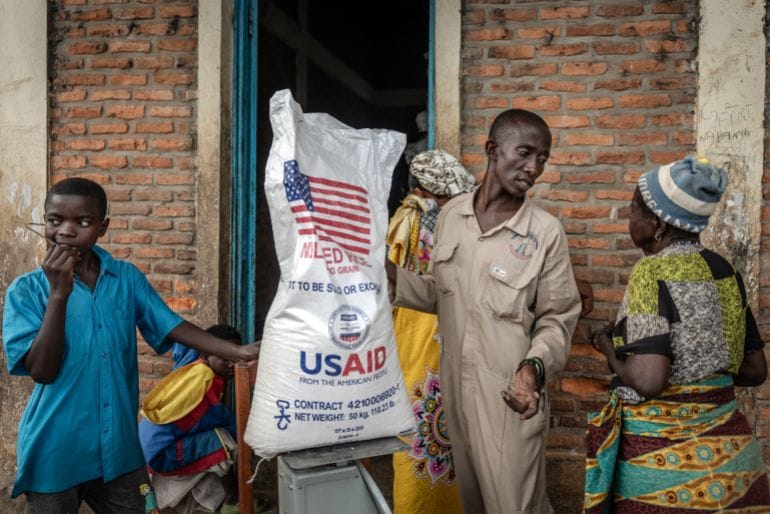
A Burundian official from the Office for the Protection of Refugees speaks with newly arrived Congolese refugees awaiting relocation while weighing a sack of rice delivered by the now-dismantled United States Agency for International Development (USAID) at the Cishemere Transit Centre near Buganda, on May 6, 2025 [Luis TATO/AFP]
What’s the background to the crisis?
The DRC and Rwanda conflict dates back to the Rwandan genocide of Tutsis and centrist Hutus in 1994.
Following the overthrow of the genocidal government by the Rwandan Defence Forces, Hutu genocidaires fled into the neighbouring DRC’s poorly governed eastern region. They hid among civilian refugees and continued to launch attacks on Rwanda.
Kigali’s attempts to attack those forces led to the First and Second Congo Wars (1996-1997 and 1998-2003). Rwanda and Uganda were accused of targeting Hutu civilians, and looting and smuggling the DRC’s coffee, diamonds, timber, coltan and gold. Other neighbours similarly interfered, choosing Rwanda or the DRC’s side.
Eastern DRC has been in the throes of low-level conflict since then. More than six million people have been killed, and millions have been displaced. At least 100 armed groups taking advantage of a security vacuum operate in the area and control lucrative mines. The DRC has one of the world’s largest reserves of coltan and cobalt. It is also rich in gold, tantalum, tin and tungsten, which are critical for tech gadgets.
M23, which first emerged in 2012, is one of those forces. The group mostly comprises Congolese Tutsi soldiers who fought in the war and were to be integrated into the army. In 2011, they revolted, claiming ethnic discrimination in the force. M23 now says it is defending the rights of Congolese Tutsis. However, critics accuse the group of being a front for Rwanda’s ambitions to control the region – a charge that Kigali rejects. President Felix Tshisekedi has also accused longtime Rwandan leader Paul Kagame of backing the group.
A 2022 United Nations expert report noted that Rwanda is actively backing the M23 and that about 3,000 to 4000 Rwandan troops are on the ground in the DRC. The US has also said that Rwanda backs the group. Rwanda counters the allegations by accusing the DRC of working with other armed groups like the Democratic Forces for the Liberation of Rwanda (FDLR), a Hutu rebel outfit. Kinshasa insists that it does not work with the group.
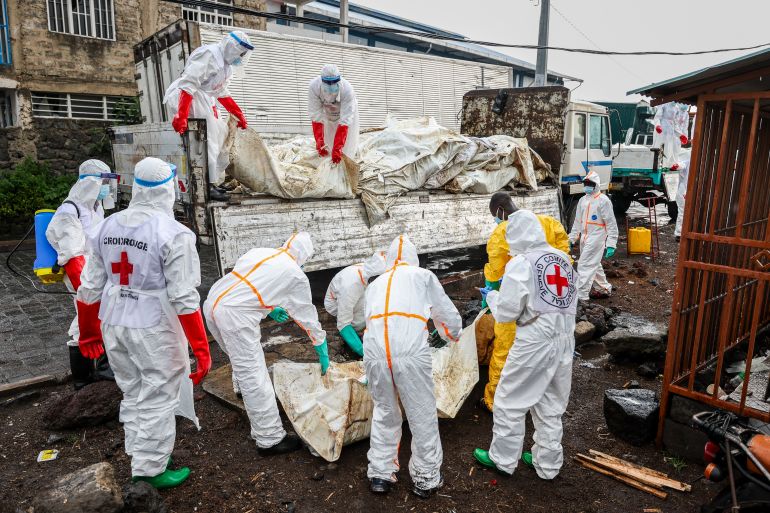
Members of the Congolese Red Cross and volunteers offload victims of the recent conflict before burying them in a cemetery in Goma, Democratic Republic of the Congo, on February 4, 2025 [EPA-EFE]
Why did the conflict resurface?
M23, which was initially pushed back with the help of a UN force, resurfaced in 2022 with a series of violent, sporadic attacks. In January 2025, it launched a lightning offensive, armed with heavy artillery, seizing towns in quick succession and promising to march on Kinshasa.
An alliance of the Congolese Defence Forces, the FLDR, and a force from the Southern African Development Community (SADC) attempted to push the group back. In May, the SADC forces withdrew.
African Union-led mediation attempts like the Luanda Peace Process (2022) and the Nairobi Peace Process (2023) have failed to end the violence, as each side blames the other for violating ceasefires. In March, President Joao Lourenco of Angola, who attempted to strike a deal for months, stepped down as official mediator.
Meanwhile, the European Union has cut military aid to Rwanda and the United States has imposed sanctions on key Rwandan army officials for their involvement in the conflict.
In April, US Secretary of Defence Marco Rubio began negotiations with DRC Foreign Minister Therese Kayikwamba Wagner and her Rwandan counterpart, Olivier Nduhungirehe.
Qatar is also involved in the mediation. Tshisekedi and Kagame met Qatar’s emir in Doha in rare first face-to-face talks in March.
What’s in the peace agreement?
A full draft of the agreement to be signed on Wednesday has not been made available.
Earlier drafts during the negotiation process included standard provisions like:
Either side’s respect for territorial integrity and a cessation of hostilities.
Disengagement, disarmament and conditional integration of non-state armed groups.
The return of refugees and displaced persons.
Earlier in April, the US Department of State released conditions that would guide the negotiations, although it is not confirmed if they were included in the final agreement. They were categorised as such:
Sovereignty: Both sides agreed to recognise and respect each other’s territorial borders.
Security: Both committed to not supporting any armed groups and to establishing a joint security mechanism to target militias.
Economic issues: Both countries agreed to use existing regional framework structures, such as the East African Community, to expand transparent trade and investment opportunities, including those to be facilitated by “the US government or US investors” in mineral supply chains, hydropower development and national park management.
Is the deal a bargaining chip for DRC’s minerals?
Some critics have raised fears that the US could use the deal as leverage for greater access to the DRC’s minerals. Such a scenario, they warn, could cause a replay of the violence of past decades, when the DRC’s minerals were a major draw for interfering foreign governments.
These fears are rooted in a February pitch from the Tshikekedi government to the US. The DRC offered a minerals-for-security deal to Washington, essentially asking the US government to oversee the stability of eastern DRC in exchange for minerals.
US envoy to Africa Massad Boulos confirmed on a trip to DRC in April that Washington was interested in a mineral deal. Talks have been ongoing in parallel with the Rwanda-DRC peace deal, according to some reports, although there are no details yet.
Under President Donald Trump, Washington is racing to secure supplies of minerals used to manufacture high-tech gadgets and weapons.
“The intertwining of peace and mineral interests is deeply alarming, echoing a tragic and persistent pattern in the DRC’s history,” analyst Lindani Zungu wrote in an opinion piece for Al Jazeera, recalling how colonial rulers exploited the DRC’s resources, and how its neighbours did the same during the Congo wars.
“This ‘peace deal’ risks becoming another instrument of neo-colonialism,” Zungu warned. “In this context, foreign capital is used not to build, but to extract – deepening the divide between resource-rich African nations and wealthy consumer economies.”
Will this fix the DRC crisis?
Questions remain over how this deal will fix myriad tensions in the DRC. The draft agreements do not mention remediation or resolution processes.
Chief among the issues, analysts say, is the overall weak governance and justice system in the country that historically sees corrupt officials and perpetrators of injustice go scot-free. Analysts point to some politicians in the country who were part of the Congo wars and who did not face trials.
Both the M23 and the Congolese armed forces have been accused of atrocities, including extrajudicial killings and sexual assault. One M23 rebel leader, Corneille Nangaa, was the head of the country’s elections commission before he fell out with President Tshisekedi over alleged “backroom deals” related to contested 2018 general elections. In December 2023, he announced that his Congo River Alliance was joining M23.
Another cause of tension is the discrimination that Congolese Tutsis say they face in the DRC, in the form of ethnic killings and workplace discrimination, among others. The minority group is largely associated with Rwanda, and hate speech by politicians canvassing for votes often inflames tensions with local Congolese. The M23 claims to be fighting for this group, although critics say that’s a pretext to justify its violence.
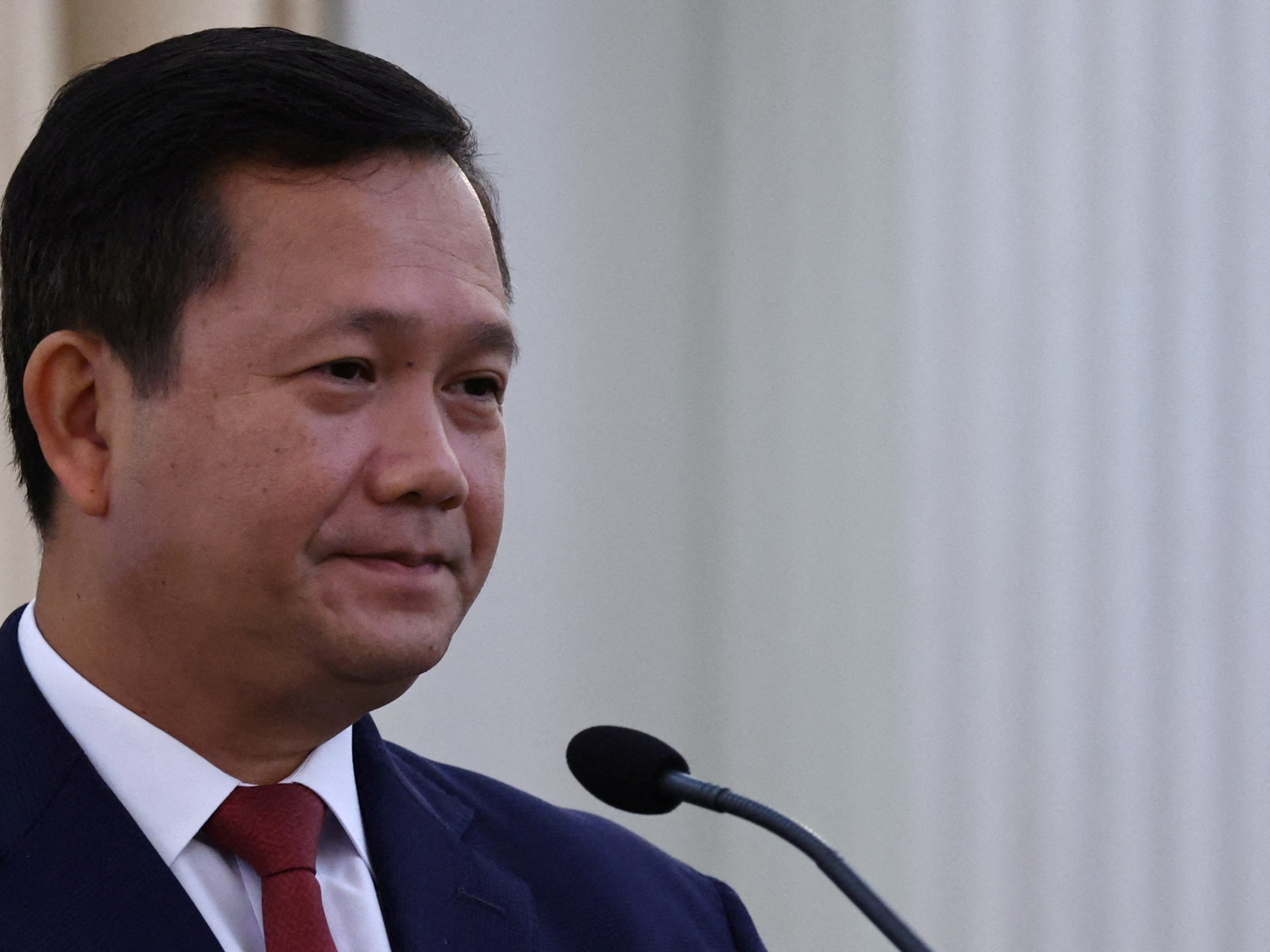
Cambodia’s PM Hun Manet announced that the decision would take effect from midnight on Sunday.
Cambodia has announced it will stop all fuel imports from its neighbour Thailand as relations have plunged to their lowest ebb in more than a decade after a Cambodian soldier was killed last month in a disputed area of the border.
Prime Minister Hun Manet announced the decision on Sunday, posting on social media that it would take effect from midnight.
Manet said energy companies would be able to “import sufficiently from other sources to meet domestic fuel and gas demands” in the country.
Separately, on Sunday, Cambodia’s Foreign Ministry urged its citizens not to travel to Thailand unnecessarily. Concurrently, Thailand’s consular affairs department warned Thais in Cambodia to avoid “protest areas”.
The ongoing escalation between the two countries began last month after a brief exchange of gunfire in the disputed border area killed a Cambodian soldier.
For more than a century, Cambodia and Thailand have contested sovereignty at various un-demarcated points along their 817km (508-mile) land border, which was first mapped by France when it colonised Cambodia in 1907.
But following the soldier’s death, the two countries have taken several measures to secure their borders, with both announcing closures of border checkpoints and crossings.
Leaked phone call
The border dispute created wider political turmoil after a leaked phone call on Wednesday between Thailand’s Prime Minister Paetongtarn Shinawatra and the former Cambodian leader, Hun Sen, who remains a powerful influence in his nation.
During the call, the Thai premier told Hun Sen that she was under domestic pressure and urged him not to listen to “the opposite side”, including a prominent Thai military commander at the border.
Soon after the leak, a major coalition partner, the Bhumjaithai Party, quit the ruling alliance, overshadowing Paetongtarn’s premiership.
But on Sunday, the Thai leader said all coalition partners have pledged support for her government, which she said would seek to maintain political stability to address threats to national security.
Following a meeting with her coalition partners, she said, “The country must move forward. Thailand must unite and push policies to solve problems for the people.”
A rally has, nevertheless, been called for June 28 to demand that Paetongtarn, the daughter of influential former Prime Minister Thaksin Shinawatra, resign.
Thai PM refuses to be ‘bullied’ as tension flares in a long-running dispute that turned deadly last month.
Cambodia has threatened to halt imports of fruit and vegetables from Thailand unless its neighbour lifts border restrictions as tempers flare during a long-running dispute that turned deadly last month.
The ban will take effect if Thailand doesn’t lift all border crossing restrictions within 24 hours, Cambodian Senate President Hun Sen said in a televised speech on Monday. The announcement followed weekend talks that had aimed to defuse the tensions.
“If the Thai side does not open border crossings to normalcy today, tomorrow, we will implement throughout the border a ban on the imports of fruit and vegetables to Cambodia,” said Hun Sen, a former prime minister and father of the current premier.
Thai Prime Minister Paetongtarn Shinawatra retorted that her country would not be bullied or threatened and warned that “unofficial” communication would harm diplomatic efforts.
“Messages via unofficial channels do not bring good results for both countries,” she said after meeting Thai military commanders and officials from the Ministries of Defence and Foreign Affairs.
The rhetoric and diplomatic efforts come after decades of arguments over border territories have flared up.
On May 28, soldiers exchanged fire in a disputed area known as the Emerald Triangle, where the borders of Cambodia, Thailand and Laos meet. A Cambodian soldier was killed during the skirmish.
The Thai and Cambodian armies both said they acted in self-defence but agreed to reposition their soldiers in a bid to avoid future confrontations. However, heightened tensions remain.
Bangkok has tightened border controls since the clash and threatened to close the border and cut off electricity supplies to Cambodia.
Phnom Penh ordered troops on Friday to stay on “full alert” and announced it would cease buying Thai electric power, internet bandwidth and produce while also ordering local television stations not to screen Thai films.
Little progress
Amid the rise in diplomatic temperature, officials from the two countries met over the weekend in Phnom Penh to discuss their conflicting territorial claims.
While both sides said the meeting was held in a good atmosphere, it appears little progress was made.
The dispute dates back to the drawing of their 820km (510-mile) frontier, largely done during French colonial rule of Indochina from 1887 to 1954.
Parts of the land border are undemarcated and include ancient temples that both sides have contested for decades. The region has seen sporadic violence since 2008, resulting in at least 28 deaths.
Cambodia on Sunday formally asked the International Court of Justice (ICJ) to help resolve the dispute in four areas, including the site of last month’s clash and three others where ancient temples are located.
Cambodia has repeatedly asked Thailand to join the case, but Bangkok insists on a bilateral solution. It rejected a 2013 ICJ ruling that a disputed area next to the Preah Vihear temple belongs to Cambodia.
Both countries have agreed to participate in another round of meetings on border issues in Thailand in September.
The talks come after troops from the two countries exchanged fire last month, killing one Cambodian soldier.
Thailand says talks with neighbouring Cambodia had “made progress” in resolving a long-running border dispute that last month devolved into clashes, leading both countries to mobilise troops on the border.
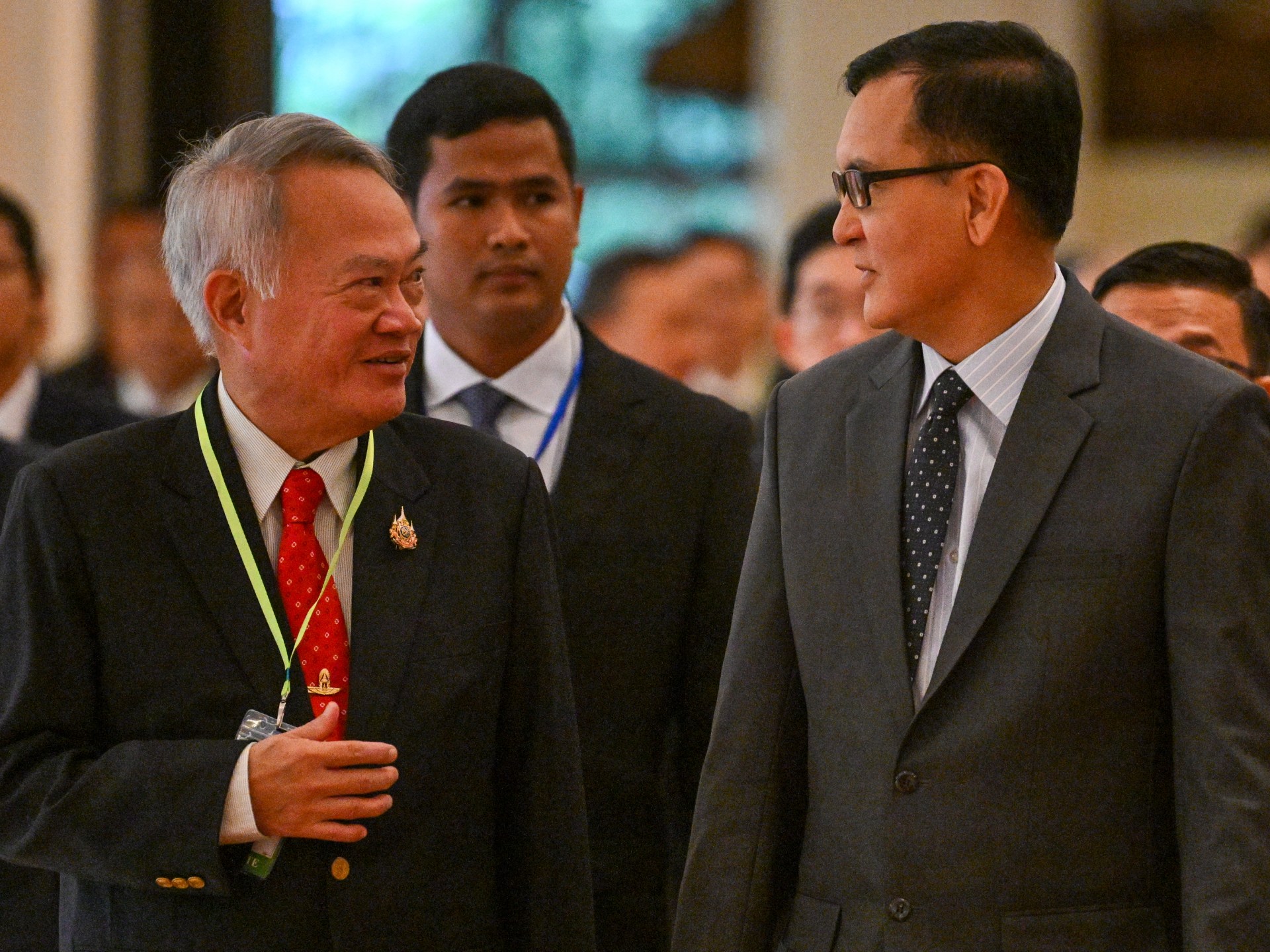
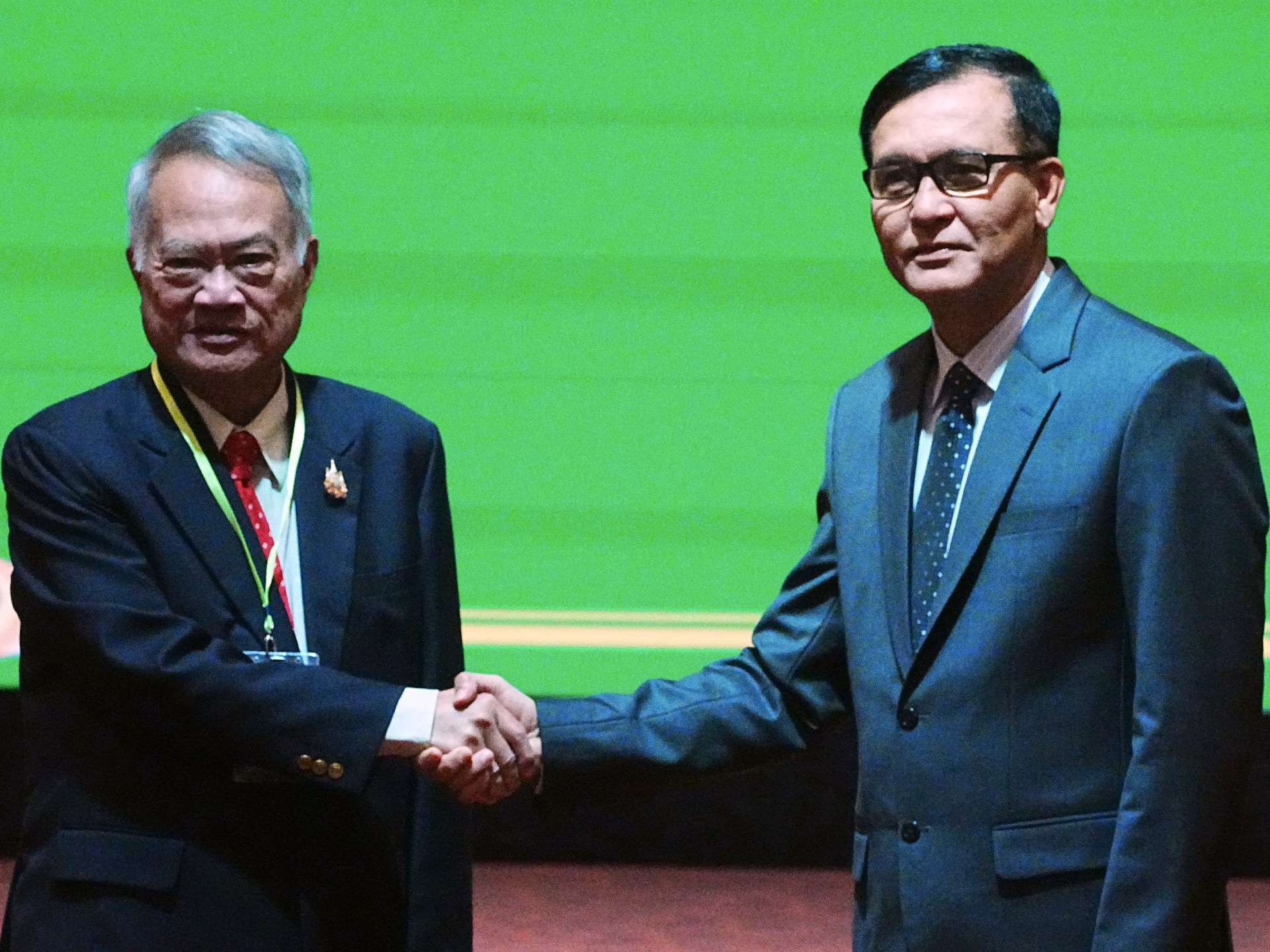
A Thai delegation led by foreign ministry adviser Prasas Prasasvinitchai and a Cambodian contingent headed by Lam Chea, minister of state in charge of the Secretariat of Border Affairs, met on Saturday in the Cambodian capital Phnom Penh to try to resolve the spat.
The meeting came after troops from the two countries exchanged fire last month in an area known as the Emerald Triangle, where the borders of Cambodia, Thailand and Laos meet, with one Cambodian soldier killed.
Thailand’s foreign ministry said the Joint Boundary Commission meeting had “made progress in building mutual understanding” between the two countries.
Ministry spokesman Nikorndej Balankura said in a news conference that “diplomatic dialogue remains the most effective way forward”, adding that talks would go into Sunday.
A resolution is not expected this weekend and it was unclear when the outcome would be announced.
The Thai and Cambodian armies both said they had acted in self-defence during the exchange of fire on May 28, but agreed to reposition their soldiers to avoid future confrontations.
In recent days, Thailand has tightened border controls with Cambodia, which in turn has asked its troops to stay on “full alert”.
Despite both countries pledging dialogue to handle the issue and calm nationalist fervour, Bangkok has threatened to close the border and cut off electricity supplies to its neighbour.
Phnom Penh announced it would cease buying Thai electric power, internet bandwidth and produce. It has also ordered local television stations not to screen Thai films.
Filing complaint with ICJ
The dispute between Thailand and Cambodia dates to the drawing of the 820-km (510-mile) frontier, largely done during the French occupation of Indo-China from 1887 to 1954. Parts of the land border are undemarcated and include ancient temples that both sides have contested for decades.
The region has seen sporadic violence since 2008, resulting in at least 28 deaths.
Cambodian Prime Minister Hun Manet announced earlier this month that Cambodia would file a complaint with the International Court of Justice (ICJ) over four disputed border areas, including the site of the latest clash. Thailand, however, has insisted on a bilateral solution.
Hun Manet said in a Facebook post on Friday that the four areas and the border restrictions would not be discussed at Saturday’s talks, adding the government would send an official letter to the ICJ on Sunday on its plan to file the case.
“Cambodia awaits Thailand to clarify its official position at [Saturday’s] meeting on whether Thailand will join Cambodia in referring the four areas to the ICJ,” he said.
Influential former strongman premier Hun Sen, Hun Manet’s father, has criticised Thailand’s military for restricting border crossings and has accused generals and Thai nationalists of fanning the tensions.
“Only extremist groups and some military factions are behind these issues with Cambodia because, as usual, the Thai government is unable to control its military the way our country can,” he said late on Thursday.
The ICJ ruled in 2013 that a disputed area next to Preah Vihear temple belonged to Cambodia, but Thailand says it does not accept the ICJ’s jurisdiction.
Japan said J-15 warplanes operating from two Chinese aircraft carriers in the Pacific carried out risky manouvres around patrol planes.
Japan has protested to Beijing over what was described as Chinese fighter jets’ “near-miss” manoeuvres near Japanese maritime patrol planes over the Pacific where China’s two operational aircraft carriers were spotted deployed simultaneously for the first time last weekend.
Japan’s Kyodo news agency reported on Thursday that a Chinese J-15 warplane from the Shandong aircraft carrier flew within 45 metres (147 feet) of a Japanese P-3C maritime surveillance plane and made other “dangerous manoeuvres” during incidents on Saturday and Sunday.
“We have expressed serious concern to the Chinese side and solemnly requested prevention of recurrence,” Japan’s Chief Cabinet Secretary Yoshimasa Hayashi said.
According to Japan’s defence ministry, P-3C aircraft, belonging to Japan’s Maritime Self-Defense Force based on the island of Okinawa, were conducting surveillance over international waters in the Pacific when they encountered Chinese warplanes.
On Saturday, a J-15 from the Shandong chased a Japanese P-3C patrol aircraft for about 40 minutes. Then, on Sunday, a J-15 fighter chased a P-3C for 80 minutes, crossing in front of the Japanese aircraft at a distance of only 900 metres (2,952 feet), the ministry said.
“Such abnormal approaches by Chinese military aircraft could potentially cause accidental collisions,” the defence ministry said in a statement on Wednesday, attaching close-up images of the J-15 jet it took on Sunday. There was no damage to the Japanese planes or harm caused to the aircraft crew, the ministry added.
Hayashi, the top Japanese government spokesperson, said Tokyo will maintain communications with Beijing at various levels and will also ensure the monitoring of airspace around Japan’s territories continues.
The last time a similar incident was reported was more than a decade ago in May and June 2014, when Chinese Su-27 fighter jets flew within 30 metres (98 feet) of Japan’s military planes.
The Kyodo news agency also reported that the Shandong aircraft carrier conducted takeoff and landing drills on Monday to the north of Japan’s southernmost Okinotori Island, inside the country’s exclusive economic zone (EEZ). The Liaoning carrier was also spotted inside the EEZ on Saturday before moving outside the zone where it also conducted takeoffs and landings on Sunday.
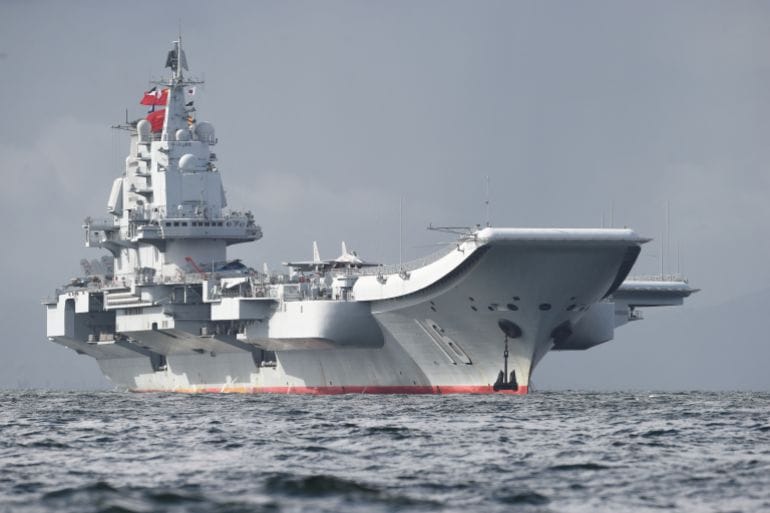
China’s first aircraft carrier Liaoning, arrives in Hong Kong waters, in July 2017 [File: Anthony Wallace/AFP]
In a brief firefight at the end of May, a Cambodian soldier was killed along the countries’ shared border.
Thai and Cambodian forces are expected to return to their previously agreed-upon positions on the border after the two governments reinforced their military presence following an eruption of violence that killed a Cambodian soldier.
Thai Defence Minister Phumtham Wechayachai said on Sunday that both sides hoped the thorny border issue could be fully resolved through a meeting on Saturday of the Joint Boundary Committee, which was set up to facilitate bilateral negotiations.
But Cambodian Foreign Minister Prak Sokhonn reiterated that his government had called on the International Court of Justice to resolve the border dispute.
“Given the complexity, historical nature and sensitivity of these disputes, it is increasingly evident that bilateral dialogue alone may no longer suffice to bring about a comprehensive and lasting solution,” Sokhonn said.
However, Thailand has said it does not recognise the court’s jurisdiction and proposes to settle the matter through bilateral negotiations.
The two countries have, for more than a century, contested sovereignty over undemarcated points along their shared border when France mapped out Cambodia in 1907 when it was a French colony.
Since 2008, when fighting first broke out over an 11th-century Hindu temple, bouts of violence have sporadically occurred, resulting in the deaths of at least 28 people.
In the most recent outbreak on May 28, a Cambodian soldier was killed in the disputed border region between Cambodia’s Preah Vihear province and Thailand’s Ubon Ratchathani province.
While the Thai and Cambodian militaries agreed to quell tensions, Cambodia said it could keep its troops in the area despite Thailand urging it to leave.
On Saturday, the Thai army took control of the “opening and closing” of all border crossings it shares with Cambodia, referring to a “threat to Thailand’s sovereignty and security”.
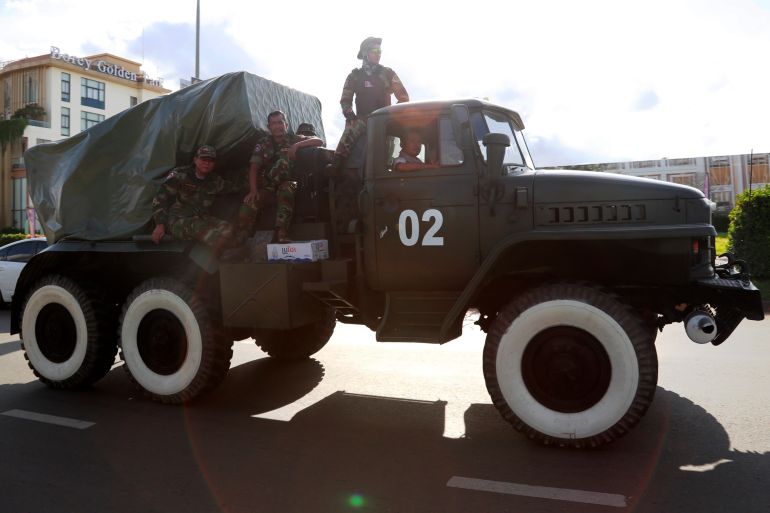
Cambodian soldiers ride on a self-propelled multiple rocket launcher in Phnom Penh, Cambodia, on May 28, 2025 [Kith Serey/EPA]
According to government data, Thailand operates 17 official border crossings along the shared 817km (508-mile) frontier.
Earlier on Sunday, the army shortened operating hours at 10 border crossings.
Defence Minister Phumtham Wechayachai says Thailand reinforces military presence in response to Cambodia move.
Thailand has reinforced its military presence along a disputed border with Cambodia following an increase in troops on the other side, the Thai defence minister has said.
Tensions between the two Southeast Asian countries have been rising since a Cambodian soldier was killed on May 28 in a brief skirmish in an undemarcated border area.
Since the incident, the two governments have been exchanging carefully worded statements committing to dialogue.
Thailand’s Defence Minister Phumtham Wechayachai, who also serves as deputy prime minister, said on Saturday that Cambodia had rejected proposals in bilateral talks held on Thursday that could have led to a de-escalation.
“Furthermore, there has been a reinforcement of military presence, which has exacerbated tensions along the border,” Phumtham said in a statement.
“Consequently, the Royal Thai Government has deemed it necessary to implement additional measures and to reinforce our military posture accordingly.”
He did not provide further details on the extent of reinforcements by either side.
There was no immediate comment from Cambodia.
In a separate statement on Saturday, the Thai army said Cambodian civilians had also repeatedly made incursions into Thailand’s territory.
“These provocations, and the buildup of military forces, indicate a clear intent to use force,” the Thai army said, adding it would take control of all Thai checkpoints along the Cambodia border.
Thailand and Cambodia have for more than a century contested sovereignty at various undemarcated points along their 817km (508-mile) land border.
Tension escalated in 2008 over an 11th-century Hindu temple, leading to skirmishes over several years and at least a dozen deaths, including during a weeklong exchange of artillery fire in 2011.
On Monday, Cambodia’s Prime Minister Hun Manet said the government would file a complaint with the International Court of Justice (ICJ) over the border dispute.
“Cambodia hopes that the Thai side will agree with Cambodia to jointly bring these issues to the International Court of Justice… to prevent armed confrontation again over border uncertainty,” Hun Manet said during a meeting between MPs and senators.
Thailand has not recognised the ICJ’s jurisdiction since 1960 and has instead called for bilateral talks.
Efforts have been made by Malaysian Prime Minister Anwar Ibrahim, who is the current chair of the Southeast Asian ASEAN bloc, and China to reduce tensions, but the border remains disputed.
A meeting of the Cambodia-Thailand Joint Boundary Commission – which addresses border demarcation issues – is scheduled for June 14.
Thailand’s military said it had gathered ‘worrisome’ indications that Cambodia has stepped up its military readiness.
Thailand’s military has said it is ready to launch a “high-level operation” to counter violations of its sovereignty, offering its strongest comments yet following the re-eruption of a long-running border dispute with Cambodia.
In a statement on Thursday night, the Thai military said its intelligence had gathered “worrisome” indications that Cambodia has stepped up its military readiness along their shared border.
“The army is now ready for a high-level military operation in case it is necessary to retaliate against the violation of sovereignty,” the statement said.
“Operations of units at the border have been conducted carefully, calmly and based on an understanding of the situation to prevent losses on all sides, but at the same time, are ready to defend the country’s sovereignty to the fullest extent if the situation is called for,” the statement added.
The top brass of Thailand’s armed forces are scheduled to hold a closed-door meeting on Friday afternoon, while the country’s army, navy and air force have also raised their combat readiness, according to the Thai Public Broadcasting Service (Thai PBS).
Colonel Chainarong Kasee, a commander of Thailand’s 12th infantry regiment of the Royal Guards, said his troops have been ordered to check that all equipment is in good working order, Thai PBS also reports.
On May 28, Cambodia’s Ministry of National Defence said Thai troops shot and killed one of its soldiers during a brief firefight in a disputed border region between Cambodia’s Preah Vihear province and Thailand’s Ubon Ratchathani province.
The ministry accused Thai soldiers of opening fire first on a Cambodian military post in the contested border zone. Thailand’s Minister of Defence Phumtham Wechayachai said Cambodian forces opened fire first.
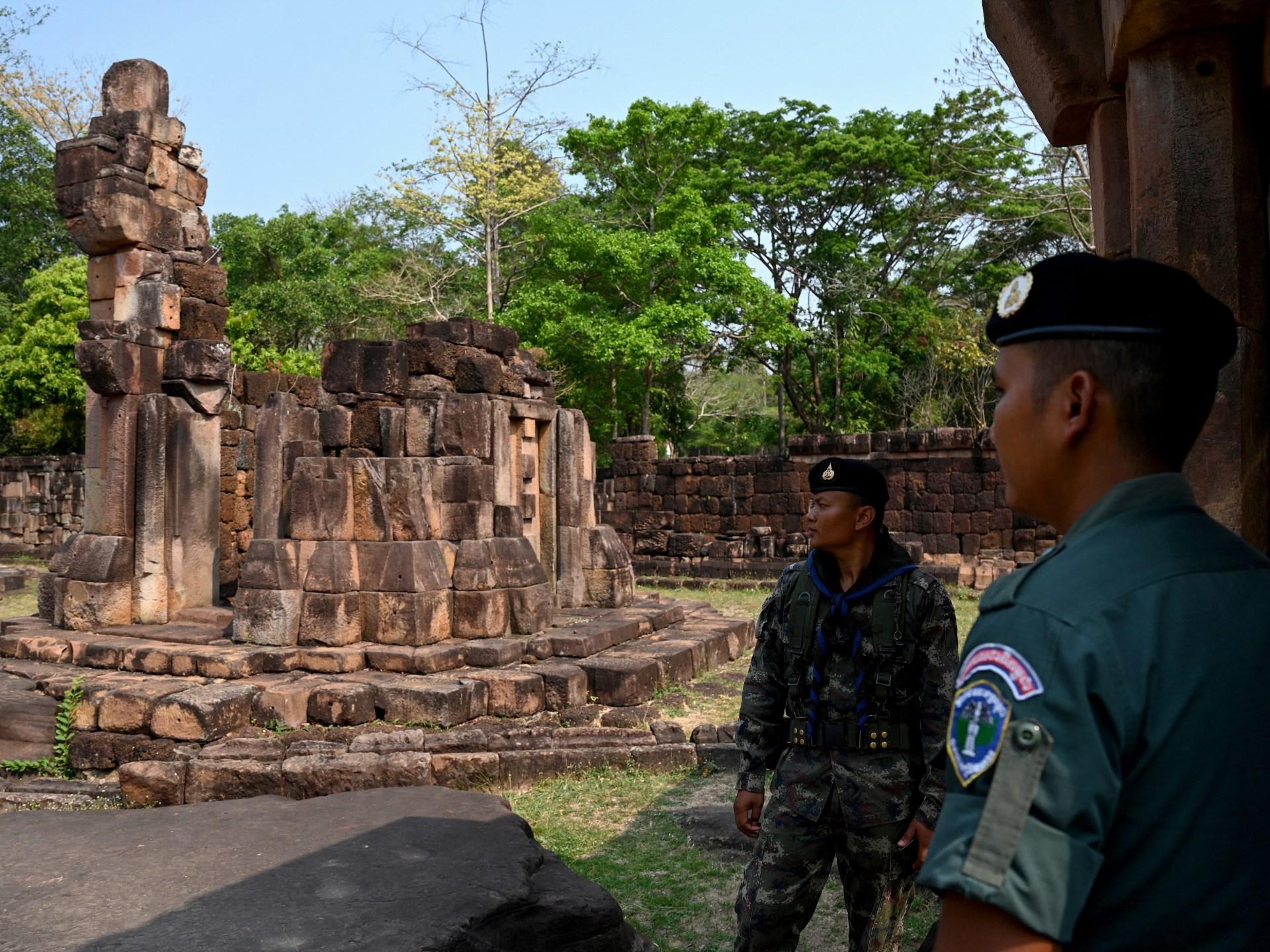
The Southeast Asian neighbours have repeatedly clashed in Preah Vihear’s border region over the years, where a 900-year-old temple sits at the heart of a decades-long dispute that has stirred nationalist sentiment on both sides of the border.
Several deadly clashes took place in the area between 2008 – the year Cambodia registered the temple as a UNESCO World Heritage Site – and 2011, killing about 40 people, including five civilians.
A 2013 ruling by the International Court of Justice (ICJ) upheld a 1962 judgement by the same body awarding part of the land around Preah Vihear temple to Cambodia and instructing Thailand to withdraw its personnel stationed in the area.
Cambodian Prime Minister Hun Manet, the son of long-ruling former leader Hun Sen, has said Cambodia will file disputes over four parts of the border to the ICJ for adjudication and asked for Thailand’s cooperation in the process.
Thailand, which has not recognised the ICJ’s jurisdiction since 1960, has instead called for bilateral talks.
“Thailand and Cambodia already have existing bilateral mechanisms to address these issues,” Thailand’s government said in a statement.
“Thailand reiterates its position as a neighbour committed to resolving issues peacefully and based on international law, treaties, and agreements … as well as satellite imagery and other verified evidence,” the statement added.
A meeting of the Cambodia-Thailand Joint Boundary Commission – which addresses border demarcation issues – is slated for June 14.
Flies hovered over the blackened and swollen bodies of men and boys, lying side-by-side on a piece of tarpaulin, in blood-soaked combat fatigues, amid preparations for a rushed cremation in the Tamu district of Myanmar’s Sagaing region, bordering India.
Quickly arranged wooden logs formed the base of the mass pyre, with several worn-out rubber tyres burning alongside to sustain the fire, the orange and green wreaths just out of reach of the flames.
Among the 10 members of the Pa Ka Pha (PKP), part of the larger People’s Defence Forces (PDF), killed by the Indian Army on May 14, three were teenagers.
The PKP comes under the command of the National Unity Government (NUG), Myanmar’s government-in-exile, comprising lawmakers removed in the 2021 coup, including legislators from Nobel Laureate Aung San Suu Kyi’s National League for Democracy party.
It mostly assists the PDF – a network of civilian militia groups against the military government – which serves, in effect, as the NUG’s army.
The Indian Army said that on May 14, a battalion of the country’s Assam Rifles (AR) paramilitary force patrolling a border post in the northeast Indian state of Manipur, killed 10 men armed with “war-like stores” who were “suspected to be involved in cross-border insurgent activities”. The battalion, the Indian Army said, was “acting on specific intelligence”.
The Indian soldiers were stationed at the border in Chandel, a district contiguous with Tamu on the Myanmar side of the frontier. Manipur has been torn by a civil war between ethnic groups for the past two years, and Indian authorities have often accused migrants from Myanmar of stoking those tensions.
However, disputing the Indian version of the May 14 events, the exiled NUG said its cadres were “not killed in an armed encounter within Indian territory”. Instead, it said in a statement, they were “captured, tortured and summarily executed by” Indian Army personnel.
For nearly five years since the coup, political analysts and conflict observers say that resistance groups operating in Myanmar, along the 1,600km-long (994 miles) border with India, have shared an understanding with Indian forces, under which both sides effectively minded their own business.
That has now changed with the killings in Tamu, sending shockwaves through the exiled NUG, dozens of rebel armed groups and thousands of refugees who fled the war in Myanmar to find shelter in northeastern Indian states. They now fear a spillover along the wider frontier.
“Fighters are in panic, but the refugees are more worried – they all feel unsafe now,” said Thida*, who works with the Tamu Pa Ah Pha, or the People’s Administration Team, and organised the rebels’ funeral on May 16. She requested to be identified by a pseudonym.
Meanwhile, New Delhi has moved over the past year to fence the international border with Myanmar, dividing transnational ethnic communities who have enjoyed open-border movement for generations, before India and Myanmar gained freedom from British rule in the late 1940s.
“We felt safe [with India in our neighbourhood],” said Thida. “But after this incident, we have become very worried, you know, that similar things may follow up from the Indian forces.”
“This never happened in four years [since the armed uprising against the coup], but now, it has happened,” she told Al Jazeera. “So, once there is a first time, there could be a second or a third time, too. That is the biggest worry.”
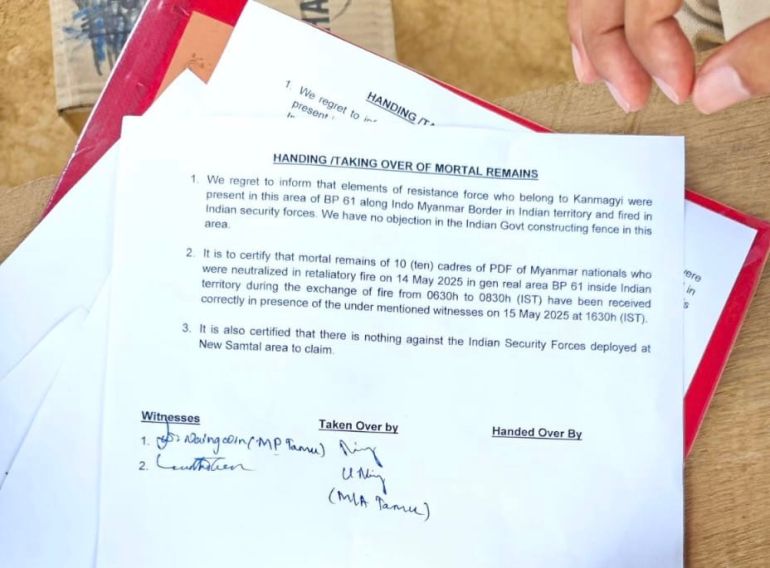
A document that the officials in Tamu, Myanmar, said that Indian security forces gave to them to sign, in order to be get back the bodies [Photo courtesy the National Unity Government of Myanmar]
‘Proactive operation or retaliation?’
On May 12, the 10 cadres of the PKP arrived at their newly established camp in Tamu after their earlier position was exposed to the Myanmar military. A senior NUG official and two locals based in Tamu independently told Al Jazeera that they had alerted the Indian Army of their presence in advance.
“The AR personnel visited the new campsite [on May 12],” claimed Thida. “They were informed of our every step.”
What followed over the next four days could not be verified independently, with conflicting versions emerging from Indian officials and the NUG. There are also contradictions in the narratives put out by Indian officials.
On May 14, the Indian Army’s eastern command claimed that its troops acted on “intelligence”, but “were fired upon by suspected cadres”, and killed 10 cadres in a gunfight in the New Samtal area of the Chandel district.
Two days later, on May 16, a spokesperson for India’s Ministry of Defence said that “a patrol of Assam Rifles” was fired upon. In retaliation, they killed “10 individuals, wearing camouflage fatigues”, and recovered seven AK-47 rifles as well as a rocket-propelled grenade launcher.
Five days later, on May 21, the Defence Ministry identified the killed men as cadres of the PKP. The ministry spokesperson further noted that “a patrol out to sanitise the area, where fence construction is under way along the [border], came under intense automatic fire”, with the intent “to cause severe harm to construction workers or troops of Assam Rifles to deter the fencing work”.
Speaking with Al Jazeera, a retired Indian government official, who has advised New Delhi on its Myanmar policy for a decade, pointed out the dissonance in the Indian versions: Did Indian soldiers respond proactively to intelligence alerts, or were they reacting to an attack from the rebels from Myanmar?
“It is difficult to make sense of these killings. This is something that has happened against the run of play,” the retired official, who requested anonymity to speak, said. The contradictions, he said, suggested that “a mistake happened, perhaps in the fog of war”.
“It cannot be both a proactive operation and retaliation.”
Al Jazeera requested comments from the Indian Army on questions around the operation, first on May 26, and then again on May 30, but has yet to receive a response.
Thura, an officer with the PDF in Sagaing, the northwest Myanmar region where Tamu is too, said, “The [PKP cadres] are not combat trained, or even armed enough to imagine taking on a professional army”.
A photo of one of the rebel fighters killed by Indian security forces [Courtesy of the National Unity Government of Myanmar]
‘Taking advantage of our war’
When they were informed by the Indian Army of the deaths on May 16, local Tamu authorities rushed to the Indian side.
“Assam Rifles had already prepared a docket of documents,” said a Tamu official, who was coordinating the bodies’ handover, and requested anonymity. “We were forced to sign the false documents, or they threatened not to give the corpses of martyrs.”
Al Jazeera has reviewed three documents from the docket, which imply consent to the border fencing and underline that the PDF cadres were killed in a gunfight in Indian territory.
Thida, from the Tamu’s People’s Administration Team, and NUG officials, told Al Jazeera that they have repeatedly asked Indian officials to reconsider the border fencing.
“For the last month, we have been requesting the Indian Army to speak with our ministry [referring to the exiled NUG] and have a meeting. Until then, stop the border fencing process,” she said.
Bewildered by the killings, Thida said, “It is easy to take advantage while our country is in such a crisis. And, to be honest, we cannot do anything about it. We are the rebels in our own country — how can we pick fights with the large Indian Army?”
Above all, Thida said she was heartbroken. “The state of corpses was horrific. Insects were growing inside the body,” she recalled. “If nothing, Indian forces should have respect for our dead.”
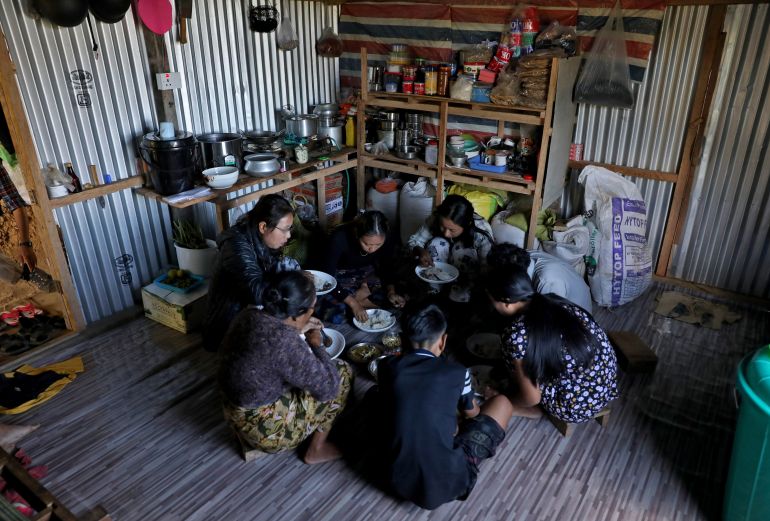
Refugees from Myanmar who fled the country after the military takeover eat a meal inside a house at Farkawn village near the India-Myanmar border, in the northeastern state of Mizoram, India, November 21, 2021. Experts and community members say the border killings have added to the anxiety of the thousands of undocumented Myanmar refugees who have made India their home [FILE: Rupak De Chowdhuri/ Reuters]
Border fencing anxieties
Angshuman Choudhury, a researcher focused on Myanmar and northeast India, said that conflict observers “are befuddled by these killings in Tamu”.
“It is counterintuitive and should not have happened by any measure,” he said.
The main point of dispute, the border fencing, is an age-old issue, noted Choudhary. “It has always caused friction along the border. And very violent fiction in the sense of intense territorial misunderstandings from groups on either side,” he said.
When New Delhi first moved last year to end the free movement regime, which allows cross-border movement to inhabitants, Indigenous communities across India’s northeastern states of Mizoram, Nagaland, Manipur and Arunachal Pradesh were left stunned. Members of these communities live on both sides of the border with Myanmar – and have for centuries.
Political analysts and academics note that the border communities on either side reconciled with the idea of India and Myanmar because of the freedom to travel back and forth. Erecting physical infrastructure triggers a kind of anxiety in these transnational communities that demarcation on maps does not, argued Choudhary.
“By fencing, India is creating a completely new form of anxieties that did not even exist in the 1940s, the immediate post-colonial period,” Choudhary said. “It is going to create absolutely unnecessary forms of instability, ugliness, and widen the existing fault lines.”
Last year, the Indian home minister, Amit Shah, said that border fencing would ensure India’s “internal security” and “maintain the demographic structure” of the regions bordering Myanmar, in a move widely seen as a response to the conflict in Manipur.
Since May 2023, ongoing ethnic violence between the Meitei majority and the Kuki and Naga minority communities has killed more than 250 people and displaced thousands. The state administration has faced allegations of exacerbating the unrest to strengthen its support among the Meitei population, which the government has denied.
Prime Minister Narendra Modi’s Bharatiya Janata Party (BJP) government and the Manipur state government, also under the BJP, have blamed the crisis in Manipur in part on undocumented migrants from Myanmar, whom they accuse of deepening ethnic tensions.
Now, with the killings in Tamu, Choudhary said that Indian security forces had a new frontier of discontent, along a border where numerous armed groups opposed to Myanmar’s ruling military have operated — until now, in relative peace with Indian troops.
The deaths, he said, could change the rules of engagement between Indian forces and those groups. “Remember, other rebel groups [in Myanmar] are also watching this closely,” he said. “These issues can spiral quickly.”
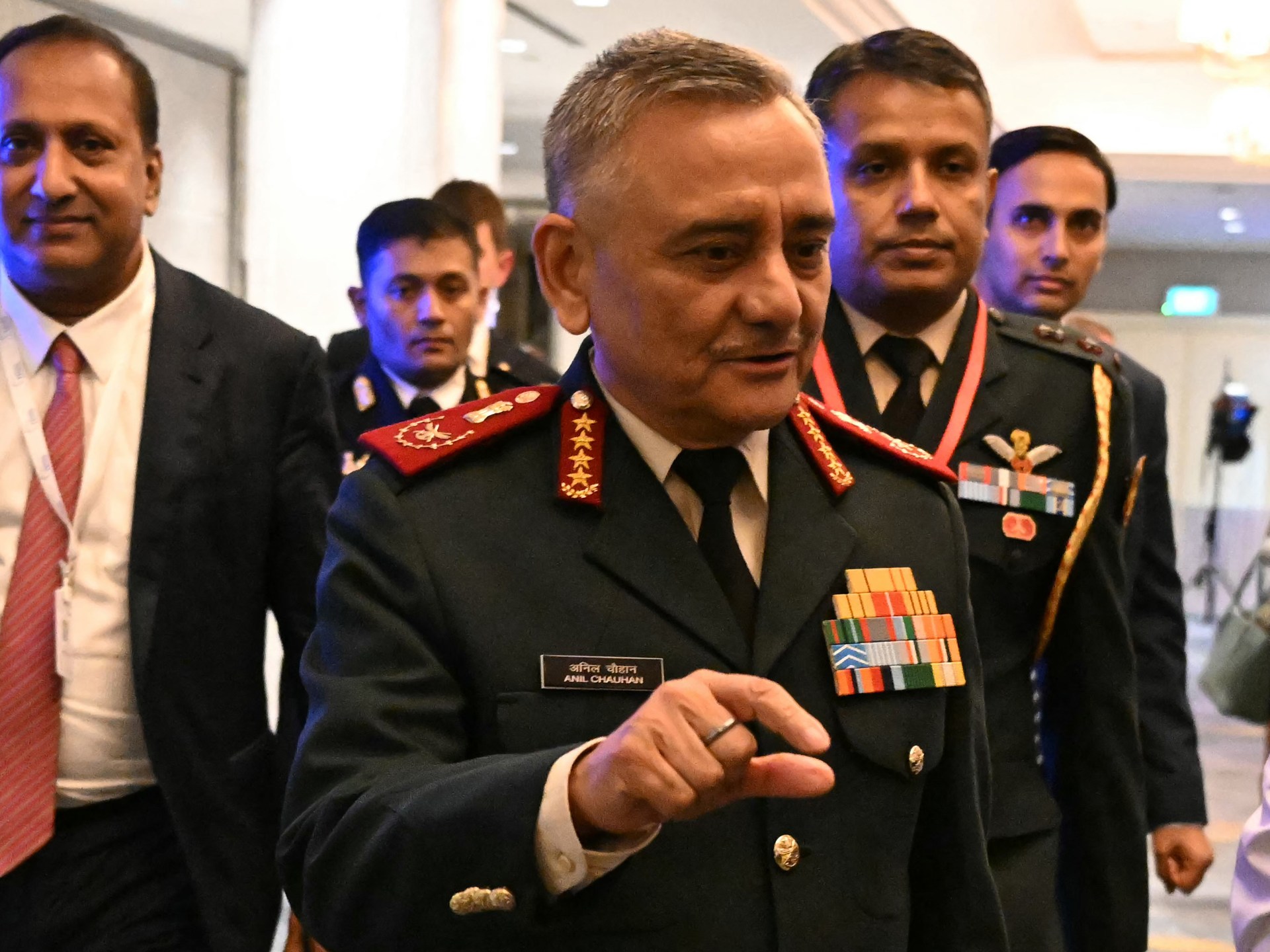
General Anil Chauhan, India’s chief of defence staff, has admitted that an unspecified number of fighter jets were shot down during its conflict with Pakistan last month.
The acknowledgement of aerial losses by the country’s highest ranking general comes weeks after the two South Asian neighbours were engaged in their heaviest fighting in decades, which involved fighter jets and cruise missiles.
Indian officials had previously refused to confirm or deny Pakistani claims of downing Indian jets. The conflict was triggered after gunmen killed 26 tourists in India-administered Kashmir’s Pahalgam town on April 22.
India’s first official admission of a loss of fighter jets came during Chauhan’s interviews on the sidelines of the Shangri-La Dialogue security forum in Singapore.
What was the conflict between India and Pakistan?
India carried out strikes on what it called “terror infrastructure” in Pakistan and Pakistan-administered Kashmir on May 7 in retaliation for the Pahalgam attack. India blamed armed groups backed by Pakistan for the April 22 attack.
An armed group called The Resistance Front (TRF) claimed responsibility for the Pahalgam killings. India accused the TRF of being an offshoot of the Pakistan-based armed group Lashkar-e-Taiba (LeT). Pakistan denied involvement, condemning the Pahalgam attack and calling for a neutral investigation.
India claimed to have targeted at least six cities in Pakistan and Pakistan-administered Kashmir on the first day of the conflict. Pakistan initially asserted that it had downed six Indian fighter jets in retaliation. But a senior Pakistan official told Al Jazeera five Indian aircraft were lost in the aerial battle.
India did not confirm or deny the Pakistani claims. “Losses are a part of combat,” Air Marshal AK Bharti, India’s director general of air operations, said at a news conference on May 11.
The Indian embassy in China called reports of the downing of jets “disinformation”.
After that, tit-for-tat cross-border attacks across the Line of Control (LoC), the de facto border between India- and Pakistan-administered Kashmir, rattled the region, renewing fears of a nuclear war.
On May 10, United States President Donald Trump announced that the two countries had reached a ceasefire, potentially averting a “nuclear disaster”. India and Pakistan have given competing claims on casualties in the fighting, but more than 70 people were killed on both sides.
Both India and Pakistan claim Kashmir in full but administer only parts of the Muslim-majority Himalayan territory.
Here is what Chauhan said in recent interviews with the Reuters news agency and Bloomberg TV:
On the downing of Indian fighter jets
Chauhan admitted that India suffered air losses on the first day of fighting without giving details.
In an interview with Reuters, he said: “What was important is why did these losses occur and what we’ll do after that.”
The Indian general said that after the losses, the Indian army “rectified tactics” and then went back on May 7, 8 and 10 “in large numbers to hit airbases deep inside Pakistan, penetrated all their air defences with impunity, carried out precision strikes”. He added that the Indian air force “flew all types of aircraft with all types of ordnances” on May 10.
Islamabad acknowledged that its airbases suffered some minimal losses but denied that it lost any planes.
When a Bloomberg reporter asked Chauhan about Pakistan’s claims that six Indian jets were downed, Chauhan responded that this information was incorrect.
He went on to say: “What is important is … not the jets being downed but why they were downed.” Some media outlets inferred that his statement appeared to imply that a number of jets were lost in the aerial battle.
The general did not provide details about the number of jets downed or specifics about what these rectified tactics were.
The Pakistani military said India did not fly its fighter jets in the conflict again after suffering the air losses.
On the risks of nuclear war
Media reports suggested that some attacks were near Pakistan’s nuclear sites but the nuclear infrastructure itself was not a target.
“Most of the strikes were delivered with pinpoint accuracy, some even to a metre [3.3ft] to whatever was our selected mean point of impact,” Chauhan said in the interview with Reuters.
Chauhan had previously provided assurances that India was not considering using nuclear weapons during the conflict. The chairman of Pakistan’s joint chiefs of staff, General Sahir Shamshad Mirza, has done the same for his country.
“I think there’s a lot of space before that nuclear threshold is crossed, a lot of signalling before that. I think nothing like that happened. There’s a lot of space for conventional operations which has been created, and this will be the new norm,” Chauhan said.
The Indian general added that on both sides, the most “rational people are in uniform” during conflict because they understand the consequences of “this kind of conflict”.
“I found both sides displaying a lot of rationality in their thoughts as well as actions. So why should we assume that in the nuclear domain there will be irrationality on someone else’s part?”
On Chinese role
The Indian chief of defence staff said that while Pakistan enjoys a close alliance with China, there was no sign that Beijing helped Islamabad during the conflict.
China sits on India’s northern and eastern borders and controls a barely inhabited northeastern zone in Kashmir called Aksai Chin.
“We didn’t find any unusual activity in the operational or tactical depth of our northern borders, and things were generally all right,” Chauhan said.
When Chauhan was asked whether China provided Pakistan with intelligence information such as satellite imagery, the Indian general responded by saying that such information is commercially available and Pakistan could have obtained it from China or other sources.
However, Chauhan said “almost 80 percent of the equipment” in Pakistan has been procured from China in the past few years.
From 2020 to 2025, China supplied 81 percent of Pakistan’s arms imports, according to the Stockholm International Peace Research Institute.
Chinese jets got a boost after media reports said Pakistan used Chinese-manufactured J-10C fighter jets in the air battle. The Chinese government did not officially confirm that the J-10C jets were used to down Indian jets, but China Central Television, a state broadcaster, posted on social media on May 17 that the jets achieved actual combat results for the first time.
What’s next
Chauhan said that while hostilities have ceased, India would “respond precisely and decisively should there be any further terror attacks emanating from Pakistan”. He added that this will be a new normal for India.
“So that has its own dynamics as far [as] the armed forces are concerned. It will require us to be prepared 24/7.”
The president of the main opposition Indian National Congress party said Chauhan’s admission warrants a review of India’s defence preparedness.
“There are some very important questions which need to be asked. These can only be asked if a Special Session of the Parliament is immediately convened,” Mallikarjun Kharge wrote in an X post on Saturday.
Referring to Indian Prime Minister Narendra Modi, he added: “The Modi Govt has misled the nation. The fog of war is now clearing.”
“We salute [the Indian military’s] resolute courage and bravery,” Kharge said. “However, a comprehensive strategic review is the need of the hour.”
The Congress party has called the Pahalgam attack a “security and intelligence failure” and sought accountability, given that India-administered Kashmir is directly governed from New Delhi.
Russia has confirmed it will send a delegation to Istanbul, but Kyiv has not yet accepted the proposal.
Russian drone and missile attacks on Ukraine have killed at least two people, according to officials, as Ukraine ordered the evacuation of 11 more villages in its Sumy region bordering Russia.
Russian troops launched an estimated 109 drones and five missiles across Ukraine on Friday and overnight, the Ukrainian air force said on Saturday, adding that three of the missiles and 42 drones were destroyed and another 30 drones failed to reach their targets without causing damage.
The attacks came amid uncertainty over whether Kyiv will take part in a new round of peace talks early next week in Istanbul.
In the Russian attacks on Saturday, a child was killed in a strike on the front-line village of Dolynka in the Zaporizhia region, and another was injured, Zaporizhia’s Governor Ivan Fedorov said.
“One house was destroyed. The shockwave from the blast also damaged several other houses, cars, and outbuildings,” Fedorov wrote on Telegram.
A man was also killed by Russian shelling in Ukraine’s Kherson region, Governor Oleksandr Prokudin wrote on Telegram.
Moscow did not comment on either attack.
Meanwhile, authorities in Ukraine’s Sumy region said they were evacuating 11 villages within a roughly 30-kilometre (19-mile) range from the Russian border.
“The decision was made in view of the constant threat to civilian life as a result of shelling of border communities,” the regional administration said on social media.
Ukrainian President Volodymyr Zelenskyy has said some 50,000 Russian troops have amassed in the area with the intention of launching an offensive to carve out a buffer zone inside Ukrainian territory.
Ukraine’s top army chief, Oleksandr Syrskii, said on Saturday that Russian forces were focusing their main offensive efforts on Pokrovsk, Torets and Lyman in the Donetsk region, as well as the Sumy border area.
Syrskii added that Ukrainian forces are still holding territory in Russia’s Kursk region – a statement Moscow has repeatedly denied.
The evacuations and attacks came just two days before a possible meeting between Kyiv and Moscow in Istanbul, as Washington called on both countries to end the three-year war.
Russia has confirmed it will send a delegation, but Kyiv has not yet accepted the proposal, warning the talks would not yield results unless the Kremlin provided its peace terms in advance.
Zelenskyy said Saturday it was still not clear what Moscow was planning to achieve at the meeting and that so far, it did not “look very serious”.
Cambodian and Thai officials claim soldiers from other side opening fire first in latest deadly border clash between the neighbours.
Cambodia’s leader has called for calm in the country a day after a soldier was killed in a brief clash with troops from neighbouring Thailand, in a disputed zone along the Thai-Cambodia border.
In a written statement on Thursday, Prime Minister Hun Manet said people should not “panic over unverified material being circulated”, and reassured the country that he did not want a conflict between Cambodian and Thai forces.
“For this reason, I hope that the upcoming meeting between the Cambodian and Thai army commanders will produce positive results to preserve stability and good military communication between the two countries, as we have done in the past,” said Hun Manet, who is currently on a visit to Tokyo.
“Even though I am in Japan … the command system and hierarchy for major military operations such as troop movements remain under my full responsibility as prime minister,” he added.
Cambodia’s Ministry of National Defence said on Wednesday that one of its soldiers was killed in a brief firefight with Thai troops, in a disputed border region between the country’s Preah Vihear province and Thailand’s Ubon Ratchathani province.
The ministry accused Thai soldiers of opening fire first on a Cambodian military post that had long existed in the contested border zone.
Cambodian soldiers ride on a self-propelled multiple rocket launcher in Phnom Penh, Cambodia, on May 28, 2025, as tension ramps up with Thailand [Kith Serey/EPA]
However, Thailand’s Minister of Defence Phumtham Wechayachai said Cambodian forces in the area had opened fire first, adding they had previously dug a trench in the area in an effort to assert Cambodia’s claim over the disputed territory, local media reported.
“I have been informed that the return fire was necessary to defend ourselves and protect Thailand’s sovereignty. I have instructed caution. Although the ceasefire holds, both sides continue to face each other,” the minister said, according to Thailand’s The Nation newspaper.
The Nation also reported that Thailand’s Prime Minister Paetongtarn Shinawatra spoke with her counterpart, Hun Manet, and both were working to lower the temperature on the dispute.
“We don’t want this to escalate,” the Thai prime minister was quoted as saying.
Cambodia and Thailand have a long history of disputes along their mutual border, including armed clashes that broke out in 2008 near Cambodia’s Preah Vihear Temple, which was listed as a UNESCO World Heritage Site that year. Fighting also broke out along the border in 2011.
The Associated Press news agency reports that in February, Cambodian troops and their family members entered an ancient temple along the border and sang the Cambodian national anthem, leading to a brief argument with Thai troops.
The incident was recorded on video and went viral on social media.
These are the key events on day 1,184 of Russia’s war on Ukraine.
Here is where things stand on Friday, May 23:
Fighting
Ukrainian drones disrupted air traffic around Moscow, grounding planes at several major airports on Thursday, as 35 drones targeting the city were downed, according to Russia’s Ministry of Defence.
According to the ministry and Moscow mayor’s office, a total of 46 Ukrainian drones targeted Russia’s capital, while an additional 70 drones were launched against other targets across the country.
Russia launched 128 drones at Ukraine overnight, according to Ukraine’s air force, with 112 of those drones either shot down, jammed or were lost en route to their targets.
Russia said that 12 civilians were injured in a “massive” Ukrainian strike on the town of Lgov in Russia’s Kursk region.
Valerii Zaluzhnyi, the former top commander of Ukraine’s military who was known for clashing with Ukrainian President Volodymyr Zelenskyy, said it was unlikely Ukraine would be able to return to the borders with Russia it held from 1991 until the Russian invasion of 2014. Even keeping Ukraine’s borders up until Russia’s full-scale invasion in 2022 may also not be possible, he said.
“I hope that there are not people in this room who still hope for some kind of miracle or lucky sign that will bring peace to Ukraine, the borders of 1991 or 2022 and that there will be great happiness afterward,” Zaluzhnyi told a forum in Kyiv.
Russia said it has received a list of names from Ukraine for a prisoner of war swap. A swap of 1,000 prisoners from each side was agreed to during a meeting last week between Russian and Ukrainian officials in Istanbul aimed at ending the war.
Regional security
Finland said it is closely monitoring a Russian military build-up along its 1,340km (832-mile) joint border with Russia. Finland closed the border with its neighbour in December 2023 when 1,000 migrants crossed its frontier without visas.
Economy
Following a meeting in Canada this week, the G7’s finance ministers said they would explore further sanctions on Russia if it fails to reach a ceasefire with Ukraine. They also said they will work to ensure “no countries or entities” that fuelled “Russia’s war machine” will be able to benefit from Ukraine’s reconstruction.
Moscow is moving to block foreign companies returning to Russia from accessing “buyback” options for assets left there when they pulled out following the 2022 invasion of Ukraine. The bill before Russia’s legislature allows “Russian citizens and companies to refuse to return assets to foreign investors, subject to a number of conditions”.
Israeli attacks come as residents of Lebanon’s southern districts prepare to vote in municipal elections on Saturday.
Lebanese Prime Minister Nawaf Salam has denounced a wave of Israeli attacks across southern Lebanon, calling on the international community to pressure Israel to respect a ceasefire reached in November with Lebanese group Hezbollah.
Lebanon’s official National News Agency (NNA) said on Thursday that the Israeli military struck a building in Toul, a town in the Nabatieh governorate. The army had earlier warned residents to evacuate the area around a building it said was used by Hezbollah.
Lebanese media outlets also reported Israeli bombardment in the towns of Soujod, Touline, Sawanna and the Rihan Mountain – all in the country’s south.
In a statement, Salam’s office said the Israeli attacks come at a “dangerous” time, just days before municipal elections in Lebanon’s southern districts on Saturday.
The contests are expected to be dominated by Hezbollah and its allies, and there have been growing concerns about the safety of voters, especially in border towns, amid the continued Israeli occupation of parts of southern Lebanon.
“Prime Minister Salam stresses that these violations will not thwart the state’s commitment to holding the elections and protecting Lebanon and the Lebanese,” his office said in its statement.
People and civil defence members gather near the site of the Israeli strike in Toul, May 22 [Ali Hankir/Reuters]
As part of the November ceasefire agreement, Hezbollah fighters were to pull back north of the Litani River and dismantle military infrastructure south of that demarcation line.
For its part, Israel was to withdraw all forces from Lebanon but it has kept troops in parts of south Lebanon. It argues it must maintain a presence there for “strategic” reasons.
The truce was based on a UN Security Council resolution that says Lebanese troops and UN peacekeepers should be the only people to bear arms in southern Lebanon, and calls for the disarmament of all non-state groups.
On Thursday, the Israeli military said its forces had carried out several strikes targeting Hezbollah sites and killed one fighter in the southern Lebanon town of Rab el-Thalathine.
Hezbollah did not immediately comment on the Israeli army’s claim.
Separately, a shepherd was injured in a different Israeli attack nearby, the NNA reported.
The Israeli military said its forces also “struck a Hezbollah military site containing rocket launchers and weapons” in the Bekaa Valley in northeastern Lebanon.
The NNA described Israel’s attacks as some of the heaviest since the ceasefire went into effect.


![A woman mourns the burial of her loved one [Urooba Jamal/Al Jazeera]](https://www.aljazeera.com/wp-content/uploads/2025/07/DSC_0952-1752247869.jpg?w=770&resize=770%2C513&quality=80)




![A document that the officials in Tamu, Myanmar, said that Indian security forces gave to them to sign, in order to be get back the bodies [Photo courtesy the National Unity Government of Myanmar]](https://www.occasionaldigest.com/wp-content/uploads/2025/06/Handing-over-doc-1748844077.jpg)
![A photo of one of the rebel fighters killed by Indian security forces [Courtesy of the National Unity Government of Myanmar]](https://www.occasionaldigest.com/wp-content/uploads/2025/06/PKP-cadre-1748844189.jpg)