Jared Freid finds his comedy calling in new Netflix hour ‘The Family Plan’
Jared Freid remembers the moment he found his true calling in comedy.
Oddly it came after he’d already found success with his debut Netflix special “37 & Single” in 2023, which allowed him to live the stand-up dream of making it to a big streamer. But then that moment passed and the Boston-bred comic was once again starting from square one scrounging for joke ideas. That’s when he decided to dig up an old story he’d told on stage about his dad body-shaming him during a family outing in Delrey Beach, Fla.
“We’re sitting at the beach, and my dad asked me how much I weighed, and I was so mad about it,” Freid remembers. Seething at his dad for poking at his body insecurities, the comedian dealt with his emotions like any good millennial — by podcasting about it. Venting the story that took only about a minute to tell on a microphone led to more fights with his aging boomer parents soon after when they heard the episode.

-
Share via
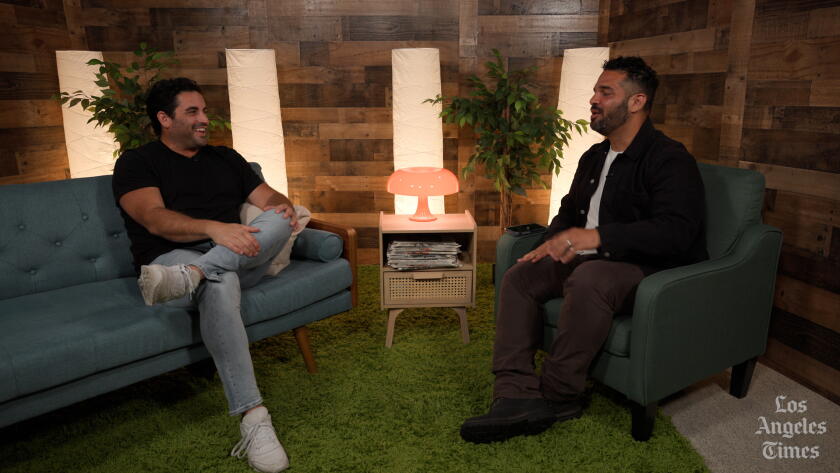
Jared Freid sits down with LA Times Entertainment Editor Nate Jackson to discuss his new Netflix hour, “The Family Plan,” which turns a beach blowup with his dad into a sharply observed, big-hearted look at boomer-millennial family warfare and reconciliation.
Scrolling back through that memory, Freid said something clicked when he thought about the alarmingly close relationship millennials still have with their parents in adulthood including still being on the family cellphone plan. “I can pay my own cellphone bill, but I’m still on their family plan,” he said. “That says something about the millennial/boomer relationship, in my opinion. We’re weirdly attached to our parents, and in a way that no other generations were tied like that, like not mushed together.”
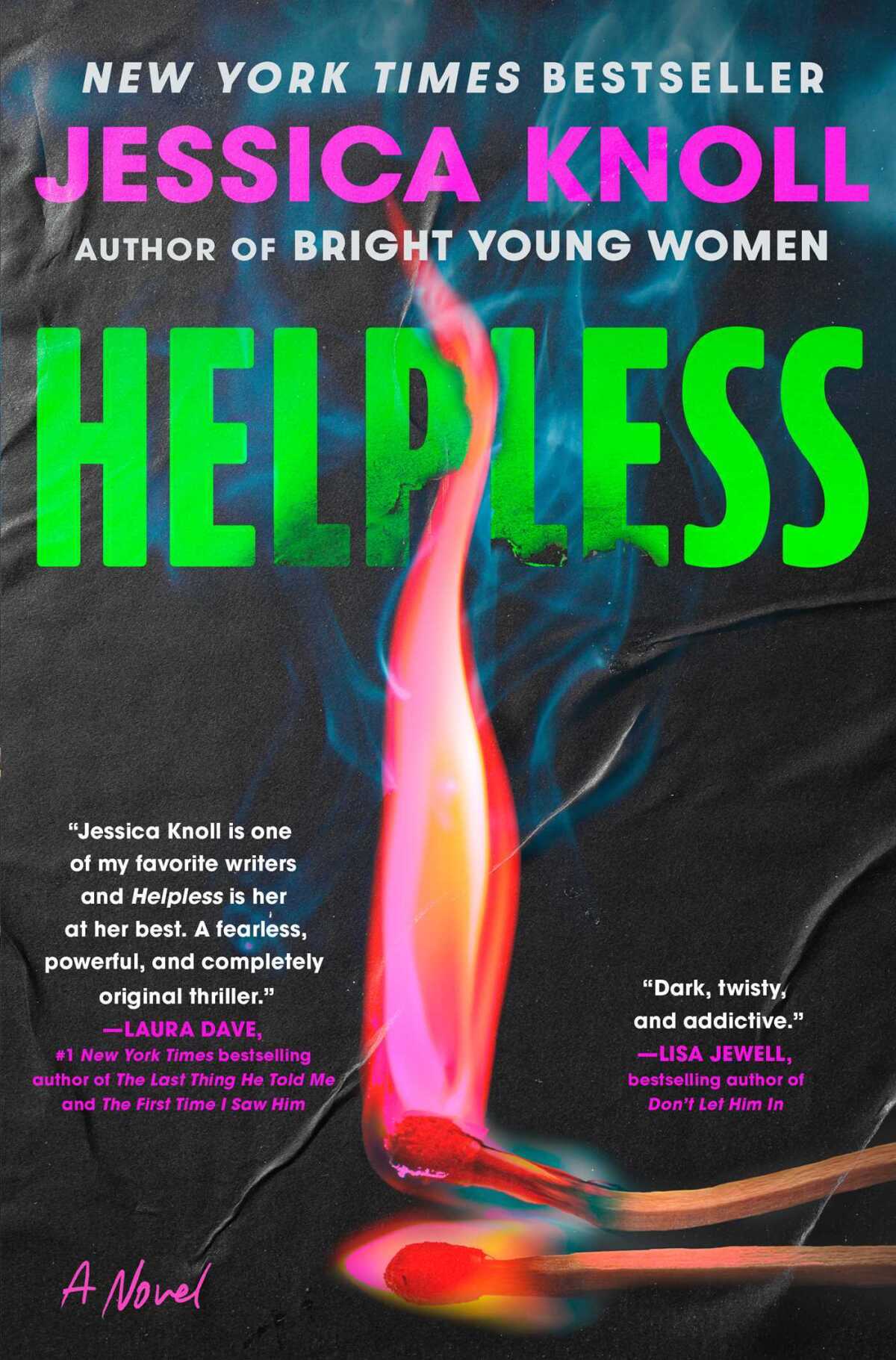
Extending his one-minute bit into a full hour in his new Netflix special “The Family Plan” (out on Tuesday) took two and a half years of dedication polishing the story and seeing it start to resonate on tour at shows around the world. It also required him understanding that what underlies the struggles between millennials and their parents is how shockingly alike they are despite being constantly annoyed by each other. Freid now says his goal is to be a family-friendly comedian for families that usually aren’t friendly with each other but can easily agree on that fact while they laugh at jokes about themselves.
This interview was edited for length and clarity.
Your new one-hour special was inspired by a one-minute story you’ve told about a fight with your dad at the beach. You tapped into something really universal with the strife between boomer parents and their millennial children — a real tug of war for power that’s happening in a lot of people’s lives right now.
Totally, I and I feel it, especially because we can talk back to [our boomer parents] in a respectful way. We can have debates. You’re finding out your parents are just people too. I started telling people on my podcast, “Bring your parents.” This special is to be enjoyed with your family. You’d see a guy with his dad [at one of my shows], point at him and go “[Jared’s] talking about you!” That made me feel so good. I did it in Canada, Australia, New Zealand, Europe, I did it everywhere, and it was always just unbelievable how much people related to it and now it’s how I want to do comedy. This is who I am. This special means so much to me. It’s been a fight to get it out. I wanted it on a platform like Netflix because I want parents to watch it with their kids. It’s hard enough to get your parents on your Netflix account. Imagine getting them to watch a special on YouTube? They’re not going to do it. So I need this to be in a place where boomers and millennials can share it with each other and enjoy it together.
As an adult, what’s been the most interesting thing about seeing what things you picked up from your parents despite constantly arguing with them?
We’re exactly the same. We’re so alike that that’s probably why my dad’s asking me how much I weigh at the beach because I also look like him. It’s almost like an argument with yourself. I’m a version of him, and he’s a version of me. I have a lot of empathy for my parents. I’m 41, no kids, never married. They had to grow up while having a kid. I can’t understand that.
Right now there’s a lot of talk about divorcing your parents going around. I also can’t understand that for a second, because it’s not in my nature. For so many of the things that I go through in my life and feel frustrated by, [my parents] are, they’re my conscience a lot of times. Like when I wonder whether I should go right or left, I hear my mom in my head like, “You’re gonna go right? Why would you go right? You always go right. You’re lazy.” I hear them. I feel like I understand them more now, being older.

From selling life insurance in New York to headlining global tours and hit podcasts, Freid has built a devoted, largely female fan base that treats his stand-up like family therapy.
(Christina House / Los Angeles Times)
Every generation has their obstacles, and we’re constantly looking at each saying “Oh, you have it easy, no you have it easy!” But in your special, it kind of comes out that there’s obstacles for every group.
Totally. I don’t do comedy to make anyone feel bad. I do it to make people laugh and enjoy. And like it was cool to see a family would come to me to take a picture afterwards, and then the parents would be like, “We’re the boomers you’re making fun of.” I’m making fun of them, but I’m also making fun of ourselves [as millennials]. And I think it strikes a balance between the two because it does show that I love my family. I love how I grew up. I love that you know the people in my life. That doesn’t mean you can’t be totally angered by them.
Where did you cut your teeth in comedy?
I started in New York. I was selling life insurance and annuities in New York, and I was writing funny emails to friends. Any time we were on the same group email, Gmail, or G Chat it was always “what did we do last weekend, and what are we going to do this weekend?” And then you just make fun of each other. Anytime someone would write back “Oh my God, I’m dying at my desk. That made me laugh so hard,” I was like, “That that feels like drugs. How do I get that?” I started doing open mics, and I kind of treated it like grad school. I did improv, sketch, and storytelling. I took all these classes, and just to see what I liked, because I just wanted to be funny for my friends. Plus I could go to open mics at night, so you could add that in and feel forward momentum.
Being a millennial comedian right now seems very much like being stuck between two worlds of having the old model of success in comedy you learned from your idols and then you have people who are younger than you who are blowing up just by like posting a random video.
What you’re saying is completely right. Like we’d look up to these guys like Colin Quinn on his show “Tough Crowd,” that’s the table I wanted to sit at, and I wanted to hang out with those guys and bust each other’s chops, that’s what comedy is. I always could see myself at that table, but I also understood that table is kind of earned. You don’t just get to it because you’re funny. When I started, you could count the comedians on one hand that could do theaters, without being on a TV show. You know, there was like Brian Regan, Kathleen Madigan, Jim Gaffigan. These people weren’t on TV, but they had their audience, so it was very different to be a stand-up. Earthquake is in that group. Then you look at the sitcom people who get to do stand-up because they were on a sitcom, like you know Seinfeld and you know Ray Romano, and these are great stand-ups.

A millennial comic wedged between club legends and viral upstarts, Freid uses candid stories and crowd work to bridge generational divides — including in L.A.’s intimate, under-the-radar comedy rooms.
(Christina House / Los Angeles Times)
How did podcasting allow you to grow your career in a different way?
I thought “well, I’m listening to these podcasts. I should start a podcast.” And I was downloading podcasts in 15-minute increments to my iPod Nano. I love talk radio. I grew up on WEI in Boston. I love sports, I like sports talk, I like high energy shows. At that time, I thought everyone had one, but now I look like I started early. I can do a podcast where I can speak directly to people who might want to come to my shows. I didn’t even think of ads. I wasn’t thinking of that stuff. I was just [thinking] I can talk right to someone who likes what I do, and I would team up with these websites… I was trying to do this internet stuff, understanding there was power there. I was caught between two worlds, working on my stand-up as kind of my nighttime job, and then doing these podcasts and contributing wherever I could as a daytime job.
When you started working with Betches Media through podcasting on shows like “U Up?” [with platform co-founder Jordana Abraham] it opened up a lane for you to suddenly grow a female audience in a way that seemed natural despite being out of the ordinary for most straight male comedians. What’s that been like to grow that type of audience?
It’s weirdly gratifying. It’s not what I was like angling towards. I think if I was angling towards a female audience as a stand-up, it wouldn’t work. I think that it would be a lie. I’m so happy with it. I feel really thankful because you know the [founders of] Betches [Abraham, Aleen Dreksler and Samantha Fishbein] they’re my sisters. The audience is family like when they come to shows I know them, you know, that’s like a beautiful thing and I think especially in the world of stand-up where all you hear about is like the Manosphere and the Rogan types, and a lot of stand-up comedy is men dragging a girlfriend to someone they think is funny because they get an ego puff out of showing a woman who they know is to be funny. And my shows are very different. It’s women bringing their boyfriends, women who now bring their husbands, couples coming together, and I love it.
Lastly, what cellphone family plan are you and your parents currently on?
Oh, we’re on T-Mobile. I’m getting kicked off by my dad currently.
Because you’re too famous?
Yeah, he’s like it’s getting embarrassing for him. I could pay for it myself. I just like, now I got to go to the store, I gotta go do it. It’s annoying.