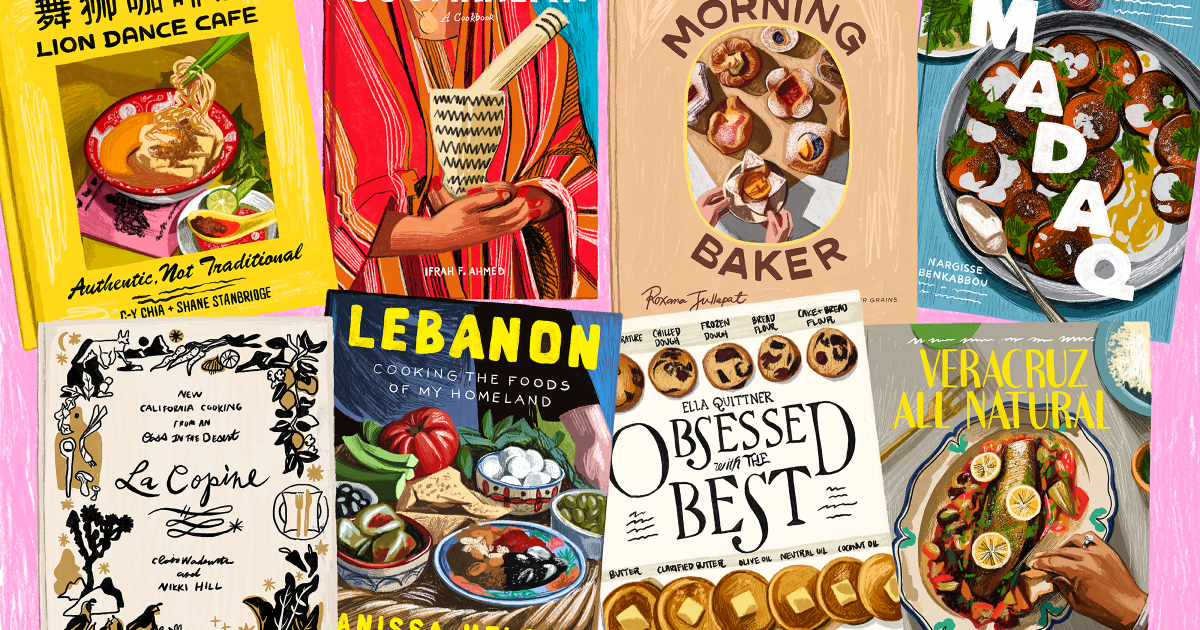
Pastry chef, baker and champion of whole grains Roxana Jullapat opened Friends & Family in East Hollywood nine years ago, a forerunner among a new wave of artisanal bakeries in Los Angeles. Her first book, “Mother Grains,” served as an introduction to baking with freshly milled ancient grains such as rye, barley, buckwheat, corn, oat, rice, sorghum and local wheat. Her follow-up cookbook, “Morning Baker,” centers the same whole grains with an emphasis on incorporating them into easy, everyday bakes and weekend projects, from muffins and scones to viennoiserie and naturally leavened and yeasted breads, along with French toast, pancakes, waffles, doughnuts and quiche. With the first book, “I didn’t anticipate that people were so ready and hungry for cooking and baking with grains,” she said recently. “They were ingredients they already had in their kitchen.” The follow-up book is also a snapshot of Friends & Family’s morning bake, the daily production of several dozen kinds of pastries that fill the pastry case to overflowing. There are recipes that are easy to jump into, and there is a chapter devoted to whole-grain croissants, made with spelt and whole wheat. A primer on her favorite flours and recommended millers is a vital resource.
Sixteen years ago, writer and academic Daniela Gerson met her future wife Talia Inlender at a mutual friend’s birthday party in Los Angeles. Although Gerson came with a date, she felt a strong pull toward Inlender, an immigration lawyer who shared Gerson’s passion for narratives of exile both past and present. As it turned out, Inlender’s grandparents hailed from Zamosch, the same town in Poland where Gerson’s grandparents lived. As Jews, both families were caught in the double bind of Hitler’s genocidal reign of terror and Stalin’s scorched earth campaign through Eastern Europe and Central Asia. Countless thousands were displaced, tortured and killed, but what became of Gerson and Inlender’s ancestors?
This is what Gerson set out to discover in a five-year journey that took her to Poland, Austria, Uzbekistan and Ukraine, sifting for clues that would culminate in the writing of her new book “The Wanderers.” I chatted with Gerson about her families’ extraordinary tale of resilience and survival.
You’re reading Book Club
An exclusive look at what we’re reading, book club events and our latest author interviews.
By continuing, you agree to our Terms of Service, which include arbitration and a class action waiver. You agree that we and our third-party vendors may collect and use your information, including through cookies, pixels and similar technologies, for the purposes set forth in our Privacy Policy such as personalizing your experience and ads.
✍️ Author Chat
Your grandparents were in perpetual exile for almost a decade. They have to leave Poland to escape Hitler’s purges, only to wind up in Ukraine, which results in them being sent to a gulag in Siberia. They had slipped Hitler’s noose but wound up in Stalin’s crosshairs.
I hesitate whenever I’m speaking about it, but it’s one of those things where I’m like, was it the worst thing that ever happened to them? Because their firstborn son had just died, and so that was horrific. They’re mourning their firstborn son, who died immediately of disease upon arriving in Ukraine, [then] almost immediately they’re packed into these cattle cars, with lice crawling all over them. People are sleeping on top of each other, throwing dead bodies out of the train. … The journey takes weeks and they find themselves in this desolate forest hell.
But what’s interesting is this was somehow the better alternative to Poland. As you point out in the book, those who endured the gulag wound up with a higher survival rate than those that remained in Poland.
The deportation saved their lives, and it saved probably about a hundred thousand Jewish lives. It wasn’t just Jews, though. Stalin was also targeting Polish Catholics, and thousands of these prisoners also survived the gulag.
You went to Lviv with your wife to research your family’s exile there, at a time when Ukraine was already at war with Russia. What was the country like when you were there?
It was an odd dissonance. Lviv is just an incredible city. Everywhere were signs of war, but also of people enjoying life. You felt the pain. When I was there, a friend of one of my colleagues was killed. And there was an attack the day after I left. But at the same time, music was everywhere in the streets. Couples were out. The city was beautiful — you could feel both the joy of life and the intensity of war all at once.
Jumping forward in your grandparents’ story: After the war ends in 1946, they go back to Poland, only to be faced with pogroms. After all the forced repatriation and deprivation, they can’t even go home. Why did they not try to go to America?
Not everyone wanted to move to America; some people wanted to move back to Poland. Then Stalin moved the borders of Poland and all of these people are being relocated, the returned people from the Soviet Union, Jews and Polish Catholics, are getting moved to western Poland, what they called Reclaimed Territory. And they face another pogrom there.
Your book is being published at a time when antisemitism is on the rise around the world.
I think it’s become a real issue. It’s an incredibly challenging time to talk about both being Jewish and what it means, and why antisemitism has been so persistent throughout Jewish history, but then to also look separately at the Israeli government’s actions and be able to talk about both separately. To perhaps be in opposition to the Israeli government actions, but also to say the Jews should have rights like any other people. It’s not a binary issue.
“The Wanderers” has a remarkable coda, when your father, who was born when your grandparents were in exile, winds up becoming a lawyer investigating Nazi war crimes.
My father had worked at the U.S. Department of Justice when he was invited to be the first trial attorney for the newly formed Office of Special Investigations. It prosecuted Nazi collaborators who had lied about their participation on immigration forms. He valued the experience deeply but only lasted a year there, ready to move on for a new experience as he often did in his far-reaching and peripatetic career. Toward the end of his life he would reflect upon how the immigration trespasses of the Nazi collaborators he prosecuted were not very different from his own parents’, even if their World War II pasts were very different.
(Los Angeles Times illustration; images from Briscoe Savoy and Viking)
Actor-turned-memoirist Andrew McCarthy has published “Who Needs Friends,” a book about male friendship in a time of social isolation. “Men have no monopoly on loneliness, but it is a massive issue,” McCarthy tells Malina Saval.
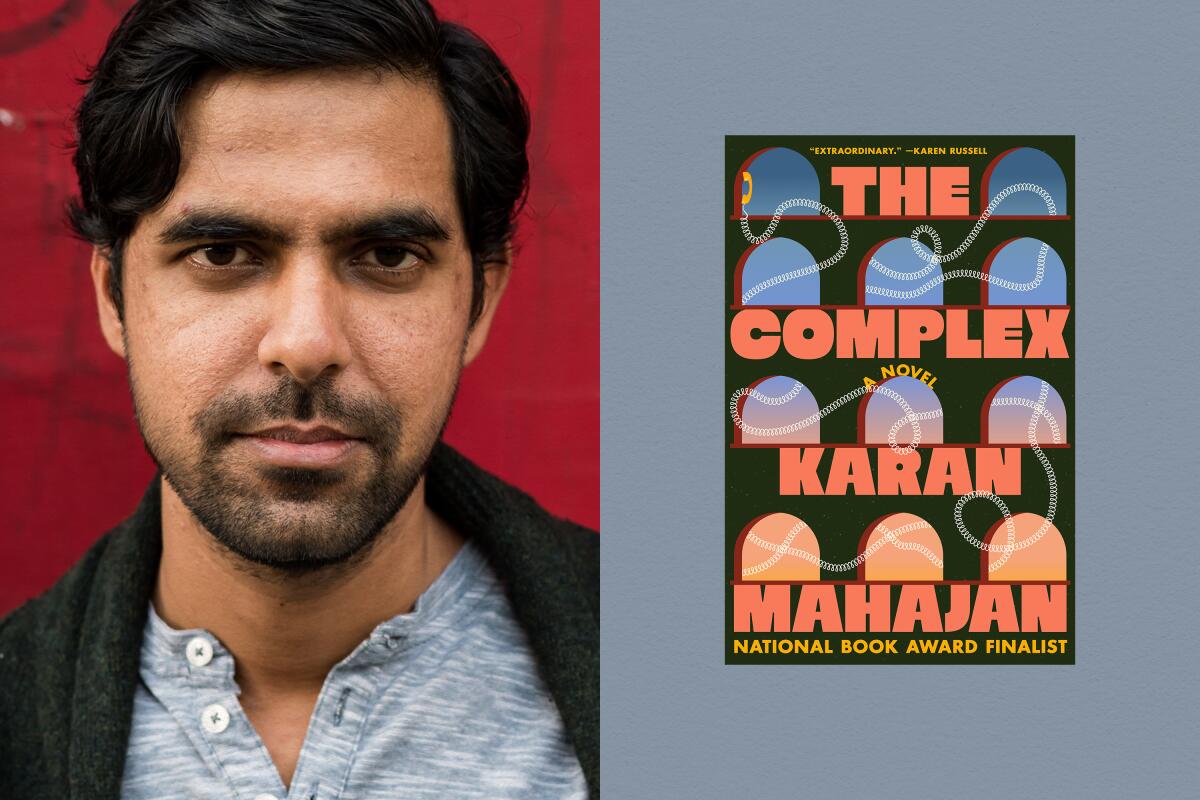
“The Complex” revisits the roiling cultural wars of ’80s and ’90s India, when reformists clashed with the repressive policies of the country’s ruling regime. “The book itself was written in solitude and edited in silence because I was trying to mentally travel back in time to 1980s and 1990s India,” author Karan Mahajan tells Sibani Ram.
Thirty-one years after publishing “Bird by Bird,” her beloved guide to writing well, Anne Lamott has now dropped “Good Writing” with her husband, Neal Allen. In a joint interview with Meredith Maran, Lamott and Allen discuss the book’s origins: “I carried around these rules for improving sentences for years,” says Allen. “I think a lot of writers do a book because they notice it’s not out there, and why isn’t it? And then they shrug, ‘Well, I guess it’s up to me.’”
Finally, Paula L. Woods interviews four mystery novelists about their buzzy new books.
📖 Bookstore Faves
The Ripped Bodice is an independent bricks-and-mortar bookstore in Culver City specializing in romance novels.
(Joel Barhamand/For the Times)
Established by sisters Leah Koch and Bea Hodges-Koch in 2016, the Ripped Bodice in Culver City has become a go-to bookstore for romance fiction, which is one of the few literary genres that has been exploding thanks to the romantasy genre and its standard-bearer, author Sarah J. Maas. I talked to general manager Taylor Capizola about the books that customers are excited about right now.
Who are your customers?
We cater to romance lovers and skeptics alike, priding ourselves on finding the perfect romance book for anyone. While most of our customers are romance enthusiasts, we often get visitors who heard about our store through word-of-mouth or social media, so it’s become a bit of a destination location for residents of Los Angeles and tourists as well.
Sarah J. Maas, the queen of romantasy, has two new novels being published later this year. Is excitement already building for that?
Romantasy is currently one of the biggest and most popular genres in all of literature. Excitement is already building around independent bookstore exclusive editions of Maas’ books, potentially signed copies and special events to launch both books. This includes midnight release parties, which we have done for other book releases, including Maas’ third book in the “Crescent City”series. While we haven’t officially announced a midnight release party, it is in the works so we can ensure these books get into readers’ hands as quickly as possible, all while having fun doing it!
Why are romance fiction fans still shopping at your store, as opposed to downloading digital books?
Brick-and-mortar bookstores endure in the digital age for several reasons, but we pride ourselves on being not only a place to buy books, but also a community space. Third spaces are disappearing quickly, and we take that responsibility incredibly seriously, offering multiple author signing events every single week as well as book clubs, craft nights, comedy nights and more. It’s important to have a space where people with like-minded interests can meet, hang out and collectively indulge in their beloved hobbies.
Covered marquees. Downed statues. Painted-over murals. A canceled holiday.
California has effectively exorcised César Chávez from the public sphere just weeks after a New York Times investigation found two women who said the legendary labor leader sexually assaulted them when they were teenage girls in the 1970s. Just as explosive was the revelation by his longtime lieutenant, Dolores Huerta, that he raped her in the 1960s.
You’re reading the Essential California newsletter
L.A. Times reporters guide you through the most important news, features and recommendations of the morning.
By continuing, you agree to our Terms of Service, which include arbitration and a class action waiver. You agree that we and our third-party vendors may collect and use your information, including through cookies, pixels and similar technologies, for the purposes set forth in our Privacy Policy such as personalizing your experience and ads.
My prediction for the next place we’ll see a Chávez purge: books about him, which number into the dozens and span from academic treatises to children’s tales. But before critics relegate those texts to the banned section, folks should read some of them to see how writers helped establish the Chávez myth and propagated it for decades.
The books that created the Chávez legend
The tendency to elevate him above other activists was there from the start. In 1967, John Gregory Dunne published “Delano: The Story of the California Grape Strike,” which saw the author (and husband to Joan Didion) capture the essence of el movimiento in its earliest days through on-the-ground reporting and interviews with Chávez, whom Dunne described in the introduction as “the right man at the right place at what was, sadly, both the right and the wrong time.”
Famed writer Peter Matthiessen cemented Chávez’s image as a humble hero fighting a lone, brave battle against philistine farmers with a two-part New Yorker profile that became the basis for 1969s “Sal Si Puedes: Cesar Chavez and the New American Revolution.” That narrative continued with Jacques Levy’s 1975 release “Cesar Chavez: Autobiography of La Causa.” Talk about getting too close to the subject: The author’s archived papers disclosed he served as Chávez’s literal notetaker during the 1970 negotiations that ended the grape strike and led to the UFW’s first union contracts.
Chávez came under strong scrutiny
Rose-tinted biographies tellingly stopped around the time Chávez created a commune in what’s now currently the César E. Chávez National Monument in Keene and began to target perceived enemies within the UFW. Critics instead appeared in the media — one of the first was a 1979 Reason article that alleged he was misusing federal funds and contained the prescient line, “Many people will be reluctant to believe anything that could cast a shadow over this man.”
Other critical dispatches included pieces in the L.A. Times, Village Voice and one in the Sacramento Bee so damning in its indictment of how Chávez had, on his own, sabotaged the movement so many associated with him that its author, Marcos Breton, recently wrote how Chávez was left “hostile and angry” by his simple questions.
In the wake of Chávez’s decline and eventual death in 1993, authors created a new genre: Saint César. Titles like “Cesar Chavez and the Common Sense of Nonviolence,” “Conquering Goliath: Cesar Chavez at the Beginning” (by his mentor, Fred Ross Sr., the most important California organizer you’ve never heard of) and “The Rhetorical Career of César Chávez” pushed forth the gospel of their subject as a plainspoken prophet out of the Good Book.
Chávez inspired millions — but those books will now forever read as hollow and sadly myopic.
Rethinking the Chávez myth
True reappraisals of Chávez and his work wouldn’t start until after former Times editor and reporter Miriam Pawel published a 2006 series for this paper that showed the ugly, domineering side of Chávez and the UFW’s decline. Six years later, longtime activist Frank Bardacke simultaneously praised and damned Chávez in his “Trampling Out the Vintage: Cesar Chavez and the Two Souls of the United Farm Workers.” Though a good read, it pales in importance and poignant lyricism to two double whammies that dropped in 2014: “From the Jaws of Victory The Triumph and Tragedy of Cesar Chavez and the Farm Worker Movement” by Dartmouth College professor (and my distant cousin!) Matthew Garcia and Pawel’s own “The Crusades of Cesar Chavez: A Biography.”
Garcia and Pawel are now making media appearances and writing essays to opine on where they think Chávez went wrong. Expect updates to all of these books and so many others in the months and years to come — if they’re ever published again.
Today’s top stories
Red diamond rattlesnakes are among species in the Golden State. One reptile expert who relocates snakes says her phone has been “ringing off the hook.”
(Christina House/Los Angeles Times)
Weird rattlesnake season
Unseasonably warm March weather triggered an unusually active rattlesnake season in California, with experts fielding record calls about sightings statewide.
Two fatal bites in Southern California in March and 77 Poison Control calls in three months far exceed typical annual patterns.
Those former Californians said the move saved them almost $700 in monthly housing costs, and they became 48% more likely to own a home in their new state.
Minimal snow in California mountains
More big stories
Commentary and opinions
This morning’s must read
Other great reads
For your downtime
(Stella Kalinina / For The Times; Bill Addison / Los Angeles Times; Stephanie Breijo / Los Angeles Times; Kayla Bartkowski / Los Angeles Times)
Going out
Staying in
A question for you: How are you celebrating Easter this year?
Dodgers pitcher Shohei Ohtani delivers during the second inning of a 4-1 win over the Cleveland Guardians at Dodger Stadium on Tuesday night.
(Ronaldo Bolaños/Los Angeles Times)
Today’s great photo is from Times photographer Ronaldo Bolaños at Tuesday night’s Dodgers’ game. Shohei Ohtani battled through the rain to throw a one-hit gem in the Dodgers’ 4-1 win over the Cleveland Guardians.
Have a great day, from the Essential California team
Jim Rainey, staff reporter Hugo Martín, assistant editor Kevinisha Walker, multiplatform editor Andrew Campa, weekend reporter Karim Doumar, head of newsletters
1. The Night We Met (Indie Exclusive Edition) by Abby Jimenez (Hachette Book Group: $30) Friendship, missed connections and life-altering split-second decisions converge after one fateful night.
2. The Correspondent by Virginia Evans (Crown: $28) A lifelong letter writer reckons with a painful past.
3. Kin by Tayari Jones (Knopf: $32) The bond between two lifelong friends in the South is tested as they take different paths in life.
4. Heart the Lover by Lily King (Grove Press: $28) A woman reflects on a youthful love triangle and its consequences.
5. Vigil by George Saunders (Random House: $28) A spirit guide must shepherd the soul of a dying, unrepentant oil tycoon into the afterlife as he confronts his legacy of corporate greed all while supernatural visitors demand a reckoning.
6. Brawler by Lauren Groff (Riverhead Books: $29) A collection of short stories tackling the relentless battle between humanity’s dark and light angels.
7. Judge Stone by James Patterson and Viola Davis (Little, Brown & Co.: $32) The bestselling author and Oscar-winning actor team up for a small-town legal thriller.
8. Half His Age by Jennette McCurdy (Ballantine Books: $30) A teenager embarks on a secret relationship with her teacher.
9. Once and Again by Rebecca Serle (Atria Books: $27) A family of women have an astonishing gift: the ability to redo one moment in their lives.
10. Daughter of Egypt by Marie Benedict (St. Martin’s Press: $29) A young woman in the 1920s unearths the truth about a forgotten pharaoh, rewriting both of their legacies forever.
…
Hardcover nonfiction
1. A World Appears by Michael Pollan (Penguin Press: $32) An exploration of consciousness and a meditation on the essence of our humanity.
2. Strangers by Belle Burden (The Dial Press: $30) A woman explores her marriage, its end and the man she thought she knew.
3. The Best Dog in the World by Alice Hoffman (editor) Fourteen authors celebrate the life-changing bond with their canine companions in a collection of essays. (Scribner: $22)
4. Young Man in a Hurry by Gavin Newsom (Penguin Press: $30) The California governor tells his origin story.
5. You with the Sad Eyes by Christina Applegate (Little, Brown & Co.: $32) The actor opens up about her tumultuous childhood, her five-decade-long career and the MS diagnosis that upended it all.
6. Kids, Wait Till You Hear This! by Liza Minnelli (Grand Central Publishing: $36) The entertainment legend shares her story.
7. One Day, Everyone Will Have Always Been Against This by Omar El Akkad (Knopf: $28) Reckoning with what it means to live in a West that betrays its values.
8. Lessons From Cats for Surviving Fascism by Stewart Reynolds (Grand Central Publishing: $13) A guide to channeling feline wisdom in the face of authoritarian nonsense.
9. History Matters by David McCullough (Simon & Schuster: $27) A posthumous collection of essays from the Pulitzer-winning historian.
10. Writing Creativity and Soul by Sue Monk Kidd (Knopf: $29) A look at the mysteries, frustrations and triumphs of being a writer.
…
Paperback fiction
1. Project Hail Mary by Andy Weir (Ballantine: $22)
2. Theo of Golden by Allen Levi (Atria Books: $20)
3. Dungeon Crawler Carl by Matt Dinniman (Ace: $20)
4. Martyr! by Kaveh Akbar (Vintage: $20)
5. I Who Have Never Known Men by Jacqueline Harpman (Transit Books: $17)
6. Remarkably Bright Creatures by Shelby Van Pelt (Ecco: $20)
7. Heated Rivalry by Rachel Reid (Carina Press: $19)
8. Tomorrow, and Tomorrow, and Tomorrow by Gabrielle Zevin (Vintage: $19)
9. Parable of the Sower by Octavia E. Butler (Grand Central: $20)
10. The God of the Woods by Liz Moore (Riverhead Books: $19)
…
Paperback nonfiction
1. The Beginning Comes After the End by Rebecca Solnit (Haymarket Books: $17)
2. The Artist’s Way by Julia Cameron (TarcherPerigee: $24)
3. The Wager by David Grann (Vintage: $21)
4. I’m Glad My Mom Died by Jennette McCurdy (Simon & Schuster: $20)
5. All About Love by bell hooks (William Morrow Paperbacks: $17)
6. The Demon of Unrest by Erik Larson (Crown: $22)
7. Raising Hare by Chloe Dalton (Vintage: $21)
8. Slouching Towards Bethlehem by Joan Didion (Farrar, Straus & Giroux: $18)
9. Braiding Sweetgrass by Robin Wall Kimmerer (Milkweed Editions: $22)
10. When the Going Was Good by Graydon Carter (Penguin Books: $22)
An Airbnb stay in someone’s garage doesn’t exactly sound like the height of luxury, but one British lad put it to the test and couldn’t believe what he saw when the shutter went up
Karl Grafton and Julie Delahaye Travel Editor & Commercial Content Lead
16:31, 30 Mar 2026Updated 16:35, 30 Mar 2026
This article contains affiliate links, we will receive a commission on any sales we generate from it. Learn more
(Image: Jam Press/@zacjonesliverpool)
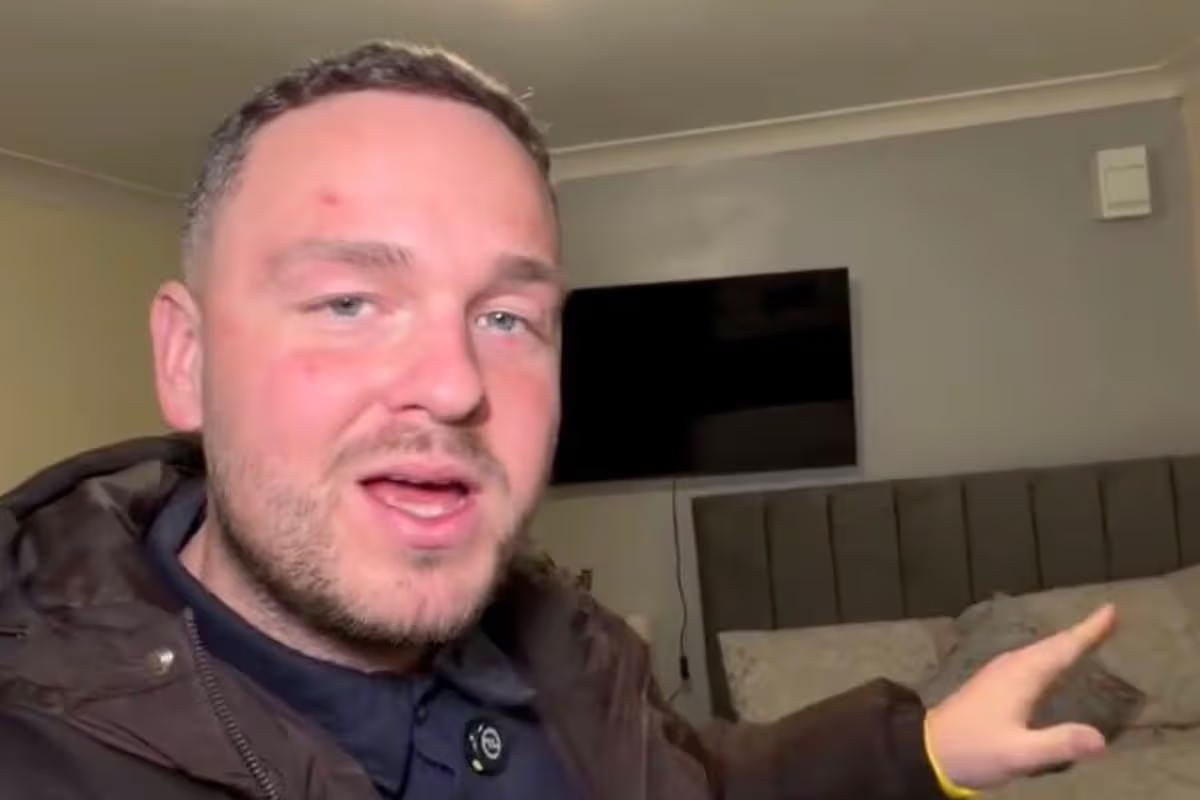
If you tell someone you’ve booked a stay on Airbnb, most people will picture a pretty cottage or cosy flat. However for one UK holidaymaker, he actually booked out someone’s garage for an overnight stay.
Reviewer Zac Jones shared a video of his experience on TikTok, which has since garnered around 2.8million views, after he checked in for a stay at a garage in Bradford.
In the short clip Zac arrives for an evening check-in, standing outside the garage shutters. He phones up the owner who appears to open the shutter remotely. Instead of a grimy garage – which you’d rightfully expect to see – the shutters reveal a brick wall and front door.
Once inside, it turns out that Zac may have lucked out with what could be one of Britain’s plushest garages. He summed up his reaction in two words: “Pleasantly surprised”.
Instead of a car, storage boxes or a general mess that you’d find in most people’s homes, this garage has been decked out with modern flooring, and comes complete with a bed, bathroom with shower and toilet, a sofa, TV and even a fridge and microwave as reported by creatorzine.com.
Zac added: “Someone has put a lot of effort in. It’s got snacks, and tea and coffee-making facilities. Shout out to the owner of this place. This has been one of my most interesting check-ins in a while.”
Content cannot be displayed without consent
As for keeping warm? The room appears to have all the modern comforts you’d need, including a radiator that Zac said was already on, with an extra plug-in radiator for those who might want extra warmth.
The garage in Bradford, West Yorkshire is available for £30 for a night. In the comments, overall people were fairly impressed with the offering. One person said: “For the price, it actually looks good.”
Another viewer added: “30 quid! “I’ve stayed in worse for 100.” A third agreed, describing the property as a “bargain”. However, a few pointed out that the garage doesn’t have windows which would leave them feeling a little closed in, with some questioning the planning permission that would have been obtained to build the room in the first place.
Of course if you are thinking of a stay in Bradford, there are plenty of other Airbnb stays you can book which are entire homes, and not a room in a garage. For a similar price to the £30-a-night garage stay, you can also find hotel rooms from £38 a night with Skyscanner.
Have you got a quirky stay or holiday story you want to share? Email us at webtravel@reachplc.com.
1. The Correspondent by Virginia Evans (Crown: $28) A lifelong letter writer reckons with a painful past.
2. Kin by Tayari Jones (Knopf: $32) The bond between two lifelong friends in the South is tested as they take different paths in life.
3. Vigil by George Saunders (Random House: $28) A spirit guide must shepherd the soul of a dying, unrepentant oil tycoon into the afterlife as he confronts his legacy of corporate greed all while supernatural visitors demand a reckoning.
4. Heart the Lover by Lily King (Grove Press: $28) A woman reflects on a youthful love triangle and its consequences.
5. Lost Lambs by Madeline Cash (Farrar, Straus & Giroux: $28) A family comes undone in a small coastal town.
6. Once and Again by Rebecca Serle (Atria Books: $27) A family of women have an astonishing gift: The ability to redo one moment in their lives.
7. Judge Stone by James Patterson and Viola Davis (Little, Brown & Co.: $32) The bestselling author and Oscar-winning actor team up for a small-town legal thriller.
8. Lady Tremaine by Rachel Hochhauser (St. Martin’s Press: $29) A reimagining of the myth of the evil stepmother at the heart of “Cinderella.”
9. Sisters in Yellow by Mieko Kawakami (Knopf: $30) The tumultuous bonds of sisterhood are explored in the gritty Tokyo of the 1990s.
10. Brawler by Lauren Groff (Riverhead Books: $29) A collection of short stories tackling the relentless battle between humanity’s dark and light angels.
…
Hardcover nonfiction
1. The Best Dog in the World by Alice Hoffman (editor) Fourteen authors celebrate the life-changing bond with their canine companions in a collection of essays. (Scribner: $22)
2. Strangers by Belle Burden (The Dial Press: $30) A woman explores her marriage, its end and the man she thought she knew.
3. A World Appears by Michael Pollan (Penguin Press: $32) An exploration of consciousness and a meditation on the essence of our humanity.
4. You with the Sad Eyes by Christina Applegate (Little, Brown & Co.: $32) The actor opens up about her tumultuous childhood, her five-decade-long career and the MS diagnosis that upended it all.
5. Young Man in a Hurry by Gavin Newsom (Penguin Press: $30) The California governor tells his origin story.
6. Good Writing by Neal Allen and Anne Lamott (Avery: $27) Two writers show you how to turn a worthy sentence into a memorable one.
7. One Day, Everyone Will Have Always Been Against This by Omar El Akkad (Knopf: $28) Reckoning with what it means to live in a West that betrays its values.
8. Mobilize by Shyam Sankar, Madeline Hart (Bombardier Books: $30) A Palantir executive’s call to strengthen America’s industrial base.
9. Kids, Wait Till You Hear This! by Liza Minnelli (Grand Central Publishing: $36) The entertainment legend shares her story.
10. Stay Alive by Ian Buruma (Penguin Press: $35) An account of life in Berlin from 1939 to 1945 under a murderous regime.
…
Paperback fiction
1. Project Hail Mary by Andy Weir (Ballantine: $22)
2. Theo of Golden by Allen Levi (Atria Books: $20)
3. Heated Rivalry by Rachel Reid (Carina Press: $19)
4. Dungeon Crawler Carl by Matt Dinniman (Ace: $20)
5. The Lion Women of Tehran by Marjan Kamali (Gallery Books: $19)
6. The Antidote by Karen Russell (Vintage: $19)
7. Hamnet by Maggie O’Farrell (Vintage: $19)
8. I Who Have Never Known Men by Jacqueline Harpman (Transit Books: $17)
9. Stone Yard Devotional by Charlotte Wood (Riverhead Books: $19)
10. The God of the Woods by Liz Moore (Riverhead Books: $19)
…
Paperback nonfiction
1. The Demon of Unrest by Erik Larson (Crown: $22)
2. Raising Hare by Chloe Dalton (Vintage: $21)
3. The Art Thief by Michael Finkel (Vintage: $18)
4. All About Love by bell hooks (William Morrow Paperbacks: $17)
5. The Beginning Comes After the End by Rebecca Solnit (Haymarket Books: $17)
6. Miracles and Wonder by Elaine Pagels (Vintage: $20)
7. On Tyranny by Timothy Snyder (Crown: $14)
8. The Wager by David Grann (Vintage: $21)
9. The Backyard Bird Chronicles by Amy Tan (Knopf: $36)
10. I’m Glad My Mom Died by Jennette McCurdy (Simon & Schuster: $20)
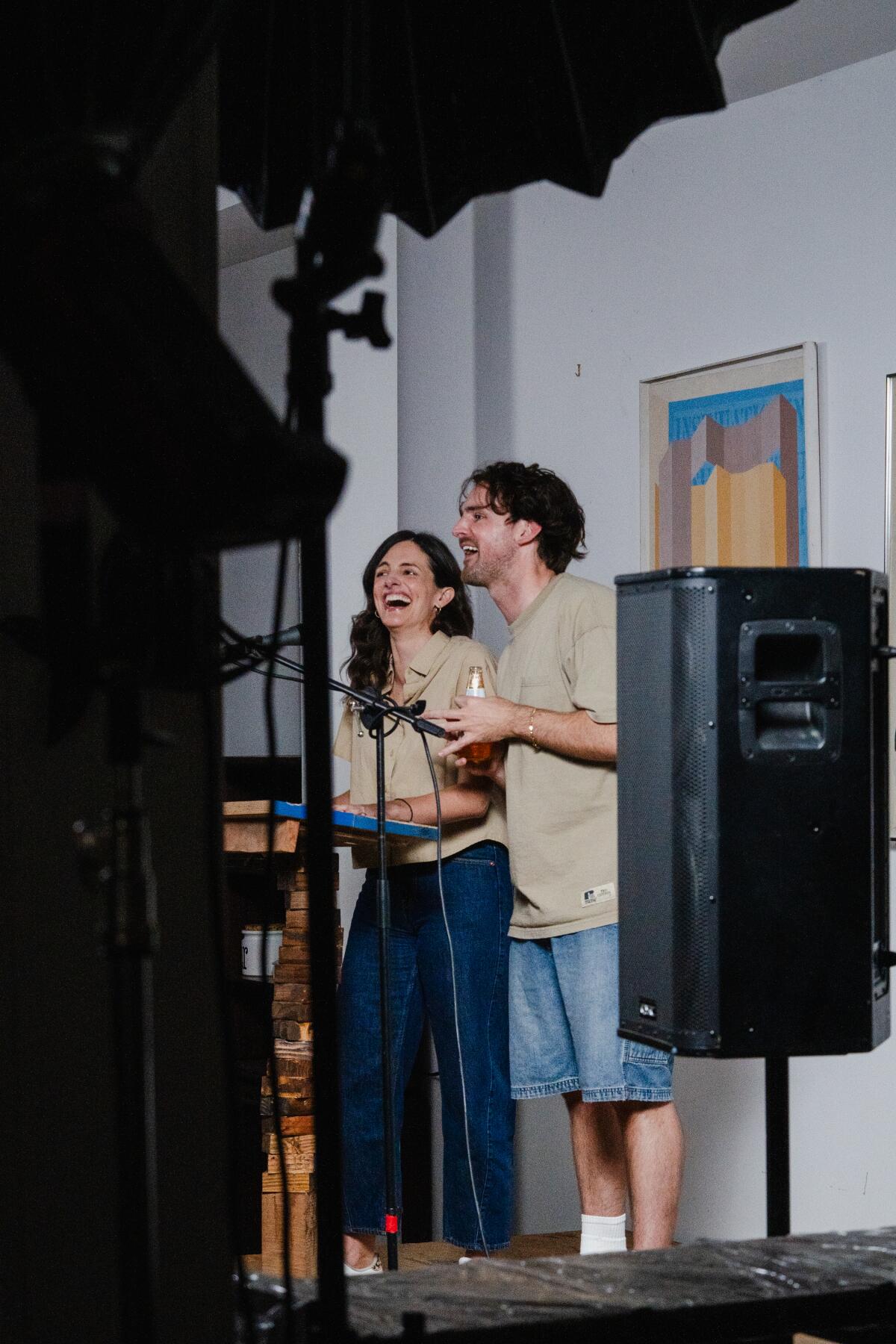
“What happened to my dreams? Simply put: they changed,” reads Phil Augusta Jackson aloud to a crowd in a furniture store. Tonight’s theme is change. From a podium, the television writer reflects on the long, thorny odyssey of his career. A pinball machine blinks in the background. Behind him, dreamy abstract prints hang on the wall, their shapes seeming to melt in the unseasonable spring heat.
Alongside mid-century furnishings and art in Echo Park, siblings Madeline Walter and Evan Walter host their wildly popular reading series, Essays. It’s a warm spring night. In a tender essay, Evan considers what he’s inherited from his idiosyncratic father. “I scream-sneeze like him now,” he reads. “It feels like a mess figuring out what parts of your parents you’re going to keep.”
In March 2024, the Walter siblings began the reading series in a friend’s backyard. “It was cold and wet, and we were so nervous nobody would come,” says Madeline. Since then, the show has moved through a series of venues before settling into a home at The Hunt Vintage. In just two years, it has grown into a local phenomenon, regularly drawing crowds of more than 150 people into the singular space.
The idea for Essays took shape during a conversation about creative constraints. Both writers and comedians, the siblings wanted to host a show that pushed beyond snappy punchlines and polished half-truths. “The objective is different from just being funny,” Madeline says. “It’s to tell me about yourself. Tell me something you’re thinking about.”
Siblings Madeline and Evan Walter host a popular monthly reading series called Essays at Echo Park’s Hunt Vintage.
(Ryan Wall )
Like many readings across Los Angeles, Essays taps into a growing appetite for sincerity. “People are really craving a space where you can be funny, be vulnerable, laugh at yourself — and where there’s an earnestness,” Evan says. That sensibility feels familiar to them. They grew up in what Madeline describes as a “very NPR-coded household that loved David Sedaris-style stuff.” She adds: “Doing something in the essay space feels like a surprising return to form.”
“One of my roommates describes it as a church-like experience, because everything is just so emotionally0driven and connective,” says Kaitlyn Kilmer, a longtime attendee.
The legacy of the series has begun to ripple outward. Their reading series has created a complementary Substack. Kilmer is now hosting a reading in her living room among friends.“We decided that we wanted to do our own, so I gathered a few friends who had been fans of the Essays show,” she says.
Essays exists in a larger network of reading series that make up Los Angeles’ diverse and ever-evolving literary scene. “There are so many readings now,” explains non-fiction writer Diana Ruzova, who frequently attends readings. “I’m not mad at it, though, mostly grateful that L.A. has a thriving literary community.”
In Los Feliz, Skylight Books continues to host intimate book launches for some of the most anticipated literary releases, drawing local favorites and celebrities.
“Our vibe is cozy,” says Mary Williams, general manager of Skylight Books. “We set up chairs under the big tree that grows in the middle of the store, and we hope this is a go-to place for our community to see their favorite authors while mingling with other book lovers.”
Elsewhere, at Heavy Manners Library, the tone of literary events leans more toward the experimental. “Experimental, unpolished writing can be shared and reflected on in an accessible, communal setting,” says program assistant Jane Shin.
This spring, literary events across the city run the gamut — from independent book fairs to poetry workshops, from the bizarre to the deeply vulnerable — welcoming everyone from curious newcomers to die-hard bookworms.
Jane Fallon has revealed she has undergone surgery following her breast cancer diagnosisCredit: X/JaneFallonThe presenter and author is recovering back home after her opCredit: X/JaneFallonJane has been with Ricky Gervais for over 40 yearsCredit: Getty Images – Getty
Now, Jane has confirmed that her operation is over and assured fans she is feeling in high spirits after the procedure.
Sharing some snaps of herself from hospital, Jane wrote to X: “So… I had my op today.
“I’m feeling remarkably fine, which is possibly the drugs & that might also explain why I’m cross eyed in pic 4).
“I had quite a lovely couple of hours drinking tea & reading the brilliant @CatSteadman ‘s new one (more on that later).”
Revealing her breast cancer diagnosis earlier this month, Jane assured fans not to “panic” and said her prognosis was “excellent”.
She said on Instagram: “About a month ago I was diagnosed with breast cancer – very early stage thankfully & the prognosis is excellent.
“I had a routine mammogram a week before Christmas. I had no symptoms but the brilliant radiographer spotted something iffy & sent me for further tests & eventually a biopsy.
“Since then I’ve had more mammograms, more biopsies and an MRI so they can pinpoint the problem area precisely. It’s been a lot, I’m not going to lie.”
The star added that she has been under “incredible” care.
Jane said that she will know the outcome of the surgery in 8-10 daysCredit: X/JaneFallonJane shared her diagnosis news earlier this month, revealing that she had no symptoms priorCredit: Getty
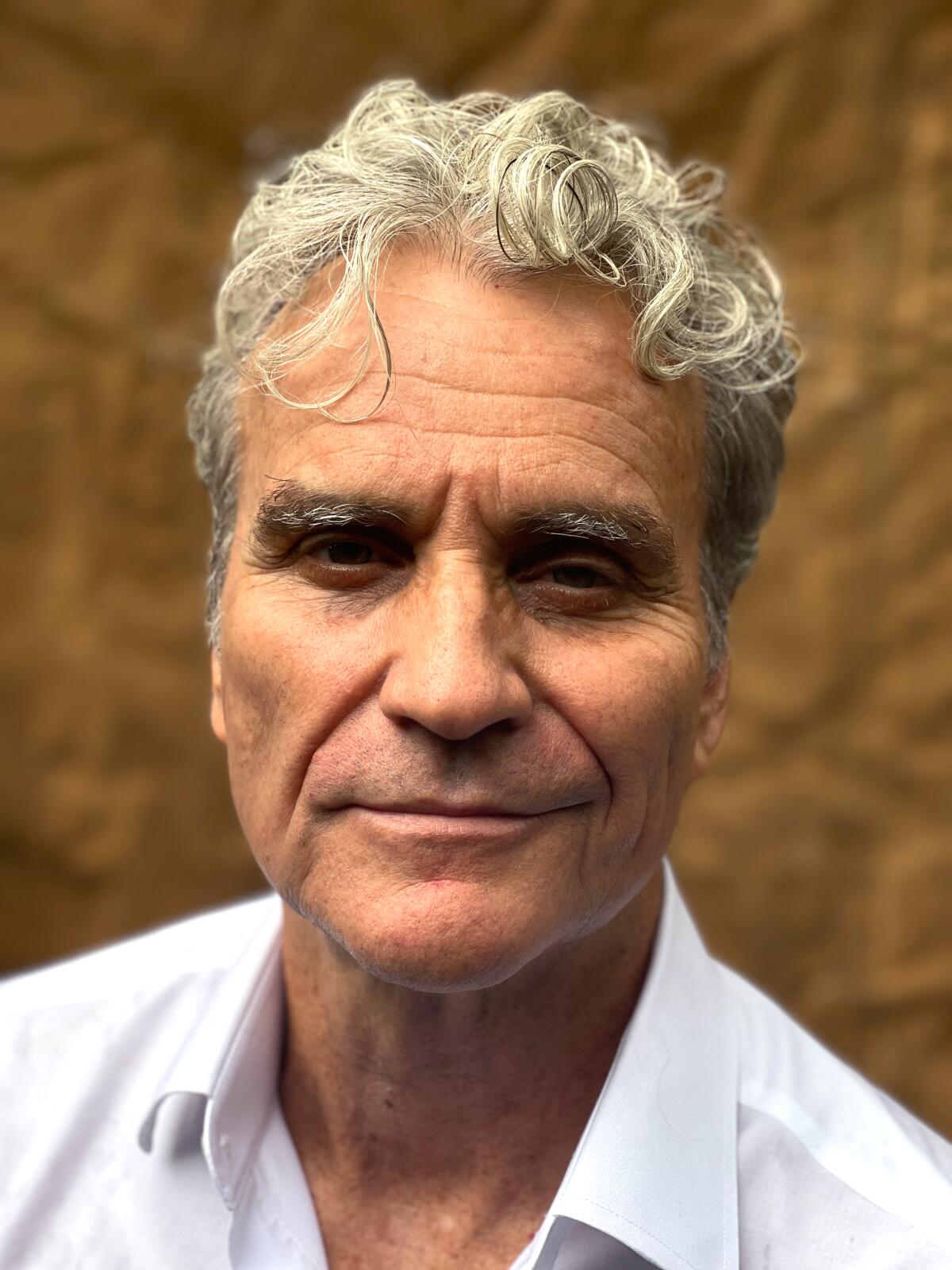
Tom Junod has devoted his long and distinguished career to writing about other people. He won two National Magazine Awards as a star feature writer for Esquire, GQ and ESPN: The Magazine, covering everything from athletes and movie stars to the victims of 9/11 with his elegant prose style. However, it took Junod years before he could tackle the toughest subject of all: His father, Lou, a decorated World War II veteran who fashioned himself as a kind of suburban Sinatra.
He was a hard-drinking philanderer who carried with him a complicated legacy that Junod untangles in his memoir “In the Days of My Youth I Was Told What It Means to Be a Man.” I spoke with Junod about fathers and sons, and the difficulty of excavating his family’s fraught history.
You’re reading Book Club
An exclusive look at what we’re reading, book club events and our latest author interviews.
By continuing, you agree to our Terms of Service, which include arbitration and a class action waiver. You agree that we and our third-party vendors may collect and use your information, including through cookies, pixels and similar technologies, for the purposes set forth in our Privacy Policy such as personalizing your experience and ads.
✍️ Author Chat
You pondered this book for years. Was there a moment when you finally said, “Right, time to write this now”?
There was definitely a moment, when my brother Michael had lunch with a woman named Muntu Law, who was one of my father’s lovers. It was the late summer of 2015. She told him, “Of course, you know your Dad and I had an affair for 11 years.” And he didn’t know that. He called me immediately after and asked me if I knew about the affair and I said yes. He asked me why I hadn’t told him, and I responded that I both knew and didn’t know. I knew it the moment Muntu stood up at my father’s funeral.
You intuited it?
Yes. There was a split there that I needed to reconcile and explore. There was too much unresolved stuff.
Your father’s story is shot through with a lot of tragedy. What is the writing process like for you? Was it an unburdening, a catharsis or something else?
When you unburden yourself, what you wind up doing is taking up much heavier burdens, which is what the book was. But it’s very interesting, because now I’m talking about my father with people in my family, and some of these discussions are difficult, but at least I’m talking about him with them. It was mostly pain, writing the book. Exposing your secrets isn’t particularly a relief, but it allows you to carry on your life without the necessity of being silent.
Tom Junod untangles his father’s complicated legacy in his memoir “In the Days of My Youth I Was Told What It Means to Be a Man.”
(Lee Crum)
Your Dad is emblematic of this kind of postwar American male that served in the war and came home flush with triumph and a kind of male privilege. Would you agree?
To the absolute max. My dad was an extreme character, and I think what the war did for a lot of men was it allowed them to reinvent themselves and create themselves. I look at my dad as a completely self-created phenomenon.
He clearly carried himself like a star.
There’s a line in the book where I say that Dad was the only celebrity I’ve ever known.
What’s remarkable is that you broke the cycle. You write about your marriage to your wife, Janet, in the book, whom you met in college. You have been together for over 40 years.
I think a lot of people are surprised by that when they read the book. People just thought I had it, you know — that I was successful and I was able to handle difficult situations. Back in the summer, I gave a copy to my friend, Lisa Hanselman, who I worked with at Esquire and GQ for a long time. And she called me up one morning and just said, “I didn’t know.” And that meant a lot to me. In my mind, it’s one of those things that justifies the effort it took to write the book.
(This Q&A was edited for length and clarity.)
📰 The Week(s) in Books
In “AlphaPussy,” Gina Gershon’s real-life stories deal with “themes of manipulation, survival, and moving around and being able to stand on your own two feet.”
(Evelyn Freja / For The Times)
Mark Athitakis is agog over Lauren Groff’s new story collection “Brawler,” a book that “blends the depth of the long view and the drama of the pivotal moment.”
Acclaimed nonfiction writer Daniel Okrent has written “Stephen Sondheim: Art Isn’t Easy,” a short, sharp biography of Stephen Sondheim for Yale’s “Jewish Lives” series, and Julia M. Klein approves. “[Okrent] seeks to liberate Sondheim’s reputation from the encrustation of myth and to demystify his relationships, while offering a succinct analysis of his achievements,” she writes.
Actor Gina Gershon has written a freewheeling memoir called “AlphaPussy,” which looks back on her San Fernando Valley childhood as a proving ground for dealing with male toxicity as a woman in Hollywood. “I’m not that tough,” Gershon tells Cat Woods. “But I’d learned how to maneuver a lot just from growing up in the Valley, and it was a crazy time to be living there. So I thought about the stories that led me to be able to steer myself through toxicity.”
Finally, Yvonne Villarreal sat with Christina Applegate to discuss her new memoir, “You With the Sad Eyes.” “This book is not cathartic for me — let’s just go there,” Applegate says. “I just needed to dump this s— out somewhere.”
📖 Bookstore Faves
Casita Bookstore in Long Beach prioritizes stories from unrepresented and marginalized voices, says owner Antonette Franceschi-Chavez.
(Antonette Franceschi-Chavez)
An inviting literary haven in Long Beach, Casita Bookstore prioritizes stories from underrepresented and marginalized voices from the BIPOC, immigrant, LGBTQ+ communities and what store owner Antonette Franceschi‑Chavez calls “other historically silenced communities.” I spoke with Franceschi‑Chavez about what readers are excited about now.
What kind of clientele do you get in the store, typically?
Our clientele is wonderfully diverse, but they share a common desire for stories, knowledge and community that center voices often underrepresented in mainstream spaces. We see a strong mix of local community members, educators, families and young readers, along with writers, activists and creatives who are drawn to our focus on books by [underrepresented and marginalized writers].
What’s selling right now?
That’s a difficult question, because we get a wide range of reader personalities. I can say that one of the top-selling trends in adult reading right now is dystopian fiction. Some of the top sellers in our bookstore are “Parable of the Sower” by Octavia Butler, “Chicano Frankenstein” by Daniel Olivas and Agustina Bazterrica’s “Tender Is the Flesh.”
Is there still a place for bookstores as community builders?
Of course! Indie bookstores are vital community hubs. Even in the digital age, bookstores provide physical spaces for connection, conversation and shared experience. You can’t replicate that type of connection online. We’re also living in a time when voices are being silenced or punished for speaking out about social justice, oppressive actions and, overall, what’s right. Bookstores are here to lend their spaces, share those stories and bring attention to needed causes. I’ve seen many bookstores, including ours, function as fundraising and donation hubs, protest art spaces, open-mic venues to allow for communities to unite in shared social causes.
Shaun Ryder on the beach in 2000Credit: Denis JonesShaun with wife Joanne and kids, Pearl and Lulu in 2017Credit: Matthew Pover – The SunShaun at a Happy Mondays gig in 2000Credit: Julian Makey
But, then again, putting the potty-mouthed and straight-talking singer on live telly is always a risk.
In an exclusive interview with The Sun, the Mancunian reveals that ITV did not appreciate his story of a drugs raid that happened when he was up for a Brit award in 1996.
Back then, Shaun’s other band, Black Grape, had been nominated for British Breakthrough Act.
Shaun says: “I told him I went to score and the gaff where I went to score got raided by the police as I’m scoring and the cops cottoned on who I was.
“And I’m saying, ‘Oh, I’m getting a Brit Award here’ and they let me go.
“They busted a heroin house and they let me go because I was up for a Brit Award.”
You might think that Shaun, who has already published two autobiographies, has no fresh stories.
But the singer, who has a new memoir out now and who is writing material for Happy Mondays’ first album in 20 years, always has plenty of tales to tell.
In his latest book, 24 Hour Party Person, he recalls facing down what he believes was a killer orangutan, escaping a gun battle and being held hostage by an armed robber.
There are also numerous car crashes from which he somehow escaped alive.
Shaun, who quit drugs aged 40 after 20 years of substance abuse, admits: “I have used up more than nine lives.”
It could all have ended shortly after Happy Mondays’ first album, Squirrel And G-Man Twenty Four Hour Party People Plastic Face Carnt Smile (White Out), came out in 1987.
Shaun, who was not famous at that point, went to Amsterdam to live for a short while.
He remembers: “Some nutcase we knew from Manchester, who was doing armed robberies and was then in Amsterdam, hijacked a load of people, put them in the canal and shot them and then turned up at the gaff where we were staying and held us hostage for a day or two.”
Luckily, Shaun managed to talk the robber into letting them go.
But there was no way of having a nice discussion with a great ape that appeared in front of Shaun on a Barbados beach when he was recording Happy Mondays’ fourth album in 1992.
At the time there were stories in the local Press about a dangerous orangutan, nicknamed Jack the Ripper, on the loose.
Shaun claims: “This thing just dropped out of the trees right in front of me. It was a f***ing big orangutan.”
Telling himself “don’t show any fear”, the musician stood tall and shouted, “Grrr, arrrgh, f*** off, just f*** right off”, at the animal.
Remarkably, the orangutan did as it was told.
Orangutans are not native to the Caribbean, so there is a good chance it was indeed Jack the Ripper.
And Shaun, who was “smoking up to 50 rocks of crack cocaine a day” in Barbados, insists it was not a hallucination.
Bez at a Happy Mondays gig in 2000Credit: Julian MakeyDuring one trip to Jamaica, Shaun and Kermit found themselves in the middle of a gun battle while trying to buy drugs
The album, Yes, Please!, failed to generate enough sales to justify the £150,000 spent making it and the following year the Happy Mondays broke up.
Shaun formed Black Grape in 1993 with his dancer mate Bez and rapper pal Paul “Kermit” Leveridge.
But it did not help keep him out of trouble.
During one trip to Jamaica, he and Kermit found themselves in the middle of a gun battle while trying to buy drugs.
He recalls: “I was going scoring and someone got shot, shot in the head. We just ran for it. If you’re a junkie going scoring, that’s the sort of s**t you come across.”
It was getting together with third wife Joanne which finally helped Shaun give up drugs and stop boozing.
They had dated briefly before Happy Mondays had hits, but he says: “She blew me out.”
Joanne, who now manages the TV part of his career — which has included two appearances on I’m A Celebrity . . . Get Me Out Of Here! — remained in the same circle as him.
The couple got together more than 20 years ago and married in 2010.
They have two daughters, Pearl, 17, and Lulu, 18.
Shaun, who also has four other children with previous partners, says: “She reeled me in and it’s a good job. “She didn’t let me get away with half of the stuff.
“If she hadn’t I’d have just carried on with crashing, but once I hit 40, I was determined to give up drugs anyway.”
His older children had to deal with his absences and spells in rehab.
But the youngest two have grown up in a more stable environment.
Shaun, who is also stepdad to Joanne’s son Oliver, explains: “I’ve still got two kids at home, so for the last 18 years, I’m just Dad.
“They’ve grown up coming and watching us at music festivals, and they’ve seen me in the jungle, but they’ve never seen that Shaun Ryder who’s off his nut.
“I pick them up from college and all that sort of thing, and drop them off. I’m the f***ing taxi service.
“In this house, you know, we don’t even have booze or anything, so, we’ve just been like a normal f***ing mad family for the past 18 years or whatever.”
Shaun says he did not see much of his older children and admits he was not a good dad to them.
But he says: “I’ve had really no trouble off my kids, I’ve been very lucky with the kids.”
This year is going to be an important one for Shaun.
Apart from the book and new album out next year, he is doing a Q&A tour and is on the road with Happy Mondays.
The return to the studio is due to former Creation Records label boss Alan McGee.
Shaun reveals: “I’m writing it now. Alan McGee wanted a new Mondays album, so Alan usually gets what he wants.”
An orangutan like the one Shaun says attacked himCredit: Getty
When it comes out, it will be 40 years since the Manchester group’s first release in 1987.
These days various health problems, including a recent bout of pneumonia, means performing is harder than ever for Shaun.
One legal substance that has helped keep him on the road is the fat jab Ozempic.
Shaun says: “You just raid the medicine cabinet, don’t you, and get on with it, so the show must go on.
“I have an overactive thyroid, so even if I ate f***ing lettuce and tomatoes, I would be big.
“Since I started on the injections my thyroid started to get better.”
If Shaun has his way he will keep performing until the Grim Reaper finally catches up with him.
And the singer would settle for dying on stage, like the comedian Tommy Cooper.
He says: “In this game, you’re doing some Tommy Cooper style, you know what I mean?
“As long as you enjoy it, do what you do, f***ing do it and I still do.
“I’ll still make music and go play music out there until I f***ing drop dead on stage.
“It’s a good place to go, innit? To drop dead on stage, singing Kinky Afro.”
Shaun’s new book 24 Hour Party Person is available from awaywithmedia.com.
Shaun’s new book 24 Hour Party Person is available from awaywithmedia.comCredit: Supplied
The event will feature authors, poets, artists and podcasters across panels, book signings, cooking demonstrations and screenings. This year’s lineup includes comedian Larry David, actor and Booker Prize judge Sarah Jessica Parker, musician Lionel Richie, Beyoncé’s mother and multihyphenate Tina Knowles, bestselling author and social critic Roxane Gay and News & Documentary Emmy- and Peabody-nominated scholar Reza Aslan, among others.
Scheduled for April 18 and 19, the literary festival will feature more than 550 storytellers and nearly 100 panels across the University of Southern California’s campus.
Other notable personalities include: Pat Benatar, Blippi, Mark Harmon, David Duchovny, Susan Lucci, Jennie Garth, Hannah Brown, Anne Lamott, Chanel Miller, Lisa Rinna, Stephanie Garber, Jon Klassen, Mac Barnett, Meghan Quinn, Hayley Kiyoko, Megan McDonald, Elyse Myers, Eli Rallo, Raegan Revord and Molly Jong-Fast.
As part of the Ideas Exchange speaker series, Richie will sit down with Times Pop Music Critic Mikael Wood, to discuss “Truly,” Richie’s new memoir. The book explores the singer’s upbringing in Alabama and his rise to stardom, including performing with the Commodores.
This year’s event will debut the Audiobook and Podcast Stage presented by Spotify, hosting talent like “Crimes of The Times” host and Times writer Christopher Goffard and “Remarkably Bright Creatures” bestselling author Shelby Van Pelt. The festival will also screen a preview of the Hulu show “Rivals,” which will be followed by a discussion between producer and writer Dominic Treadwell-Collins and actor Nafessa Williams.
At the Times Food Stage, Cassandra Peterson, known for her work as Elvira, will be demoing from her book “Elvira’s Cookbook From Hell.” Culinary influencer Cassie Yeung will also be stopping by to discuss recipes from her new Asian takeout cookbook “Bad B*tch in the Kitch.”
The festival will kick off April 17 with The Times hosting the 46th annual L.A. Times Book Prizes at Bovard Auditorium. The ceremony will honor Amy Tan with the Robert Kirsch Award for lifetime achievement, We Need Diverse Books with the Innovator’s Award and Adam Ross with the Christopher Isherwood Prize for Autobiographical Prose. The prizes recognize 61 works in 13 categories.
General admission to the festival is free. Friend of the Festival packages, which include panel reservations, parking and merchandise, are currently on sale.