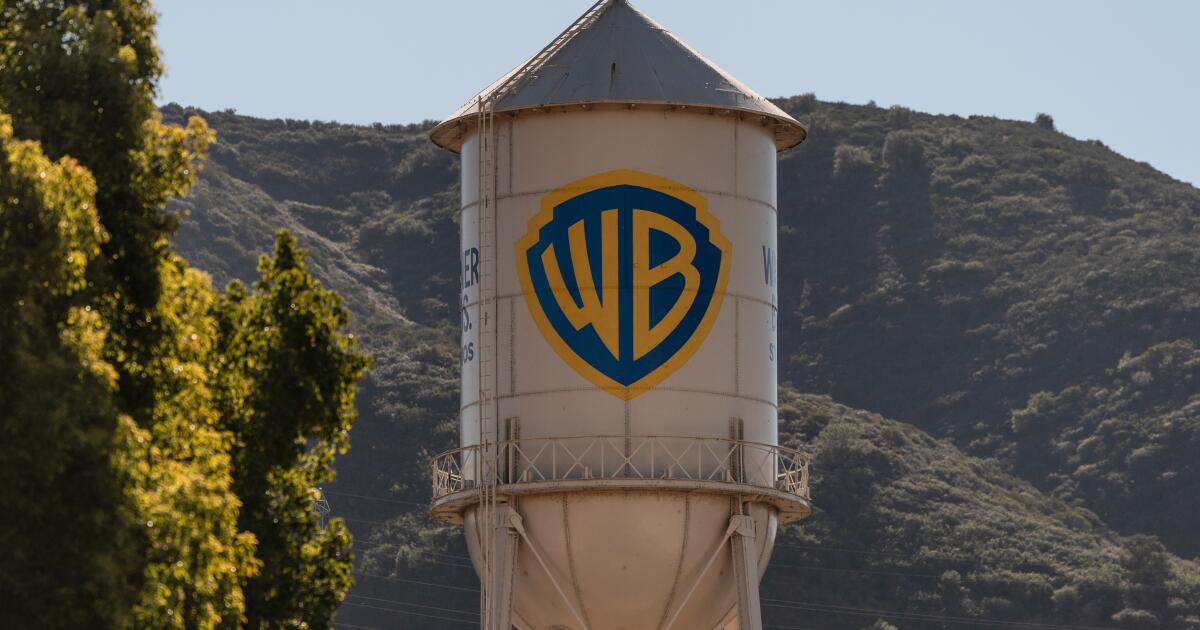
After a bitter standoff, Paramount Skydance and California Atty. Gen. Rob Bonta have made progress in settlement talks that could push Hollywood’s massive merger over the finish line, people familiar with the matter said Friday.
The two sides have quietly been negotiating a truce to end the antitrust lawsuit brought by Bonta and 11 other Democratic state attorneys general — a legal volley that has threatened to derail Paramount’s $111-billion takeover of Warner Bros. Discovery.
It’s not clear how close to a resolution the two sides are, but talks in recent days have been constructive, one of the knowledgeable sources said.
Paramount Chief Executive David Ellison is highly motivated to end the court battle with Bonta before Oct. 1, when his company will be obligated to make a higher payout — an extra $7 million a day — to Warner Bros. Discovery shareholders on top of the $81 billion the company has already agreed to pay.
For weeks, Ellison and his team have been ratcheting up political heat on Bonta to abandon his lawsuit, including threatening to pull Paramount out of Hollywood — a scenario that has rattled state and local lawmakers who desperately want to bring film jobs back to Los Angeles, not lose thousands more.
Paramount declined to comment.
A spokesperson for Bonta’s office said in a statement: “Potential settlement talks are confidential. We cannot confirm or deny whether settlement talks are occurring or their alleged substance.”
Both sides have incentives to settle. Ellison, who has leaned on his family’s connections to President Trump and Washington Republicans, would like to avoid taking on more debt for the already highly leveraged deal. And he is eager to close the transaction and take the reins at Warner Bros. before the midterm elections.
Bonta has been on a winning streak with favorable rulings against the Trump administration and social media giant Meta, and he doesn’t want to overplay his hand or risk having his coalition of state attorneys fall apart.
Paramount Skydance will meet with California Atty. Gen. Rob Bonta’s representatives next month for court-ordered settlement talks that could clear a path for David Ellison’s $111-billion takeover of Warner Bros. Discovery.
The two sides will convene for two days, Oct. 14 and Oct. 15, according to court documents filed this week.
The talks come as both sides look for ways to resolve the pitched battle over Hollywood’s industry-reshaping deal, which would put HBO, CBS, CNN, TBS, Food Network, Comedy Central and the Paramount and Warner Bros. studios under one roof. Bonta and 11 other Democratic state attorneys general sued in July to block it, and Ellison’s team has been stoking political pressure on Bonta to retreat.
Bonta canceled preliminary last month after details of a session on ground rules leaked, accusing Paramount of “playing games” by violating a confidentiality agreement and spreading misinformation.
Bonta’s Paramount case appears to have ruffled the Trump administration. He sued one month after the U.S. Justice Department blessed the merger without demanding concessions — a decision he said showed federal officials were not doing their jobs to enforce antitrust law. This week the department weighed in on Paramount’s side.
“The United States enforces the federal antitrust laws and has a strong interest in their correct application,” the Justice Department said in a Tuesday filing, describing its unique position to bring antitrust actions. Its “statement of interest” argued that the plaintiffs had sued as “private persons,” who must clear higher hurdles than the federal government.
The department also asked the judge to force California, the other states and the Writers Guild of America to post a $1.88-billion bond, covering fees Paramount would owe Warner Bros. Discovery shareholders if the deal isn’t finalized by Oct. 1. Paramount agreed to the so-called ticking fees earlier this year, confident the deal would sail through regulatory review. Bonta’s office said Wednesday it stands by its earlier filings arguing it should not have to post the bond. A hearing is set for Sept. 24.
Paramount’s chief legal officer, Makan Delrahim, has been quarterbacking the campaign for Warner Bros. Discovery. He served as Trump’s antitrust chief in his first administration, when he led an unsuccessful effort to block AT&T’s takeover of the company, then known as Time Warner Inc. That 2018 deal was the first of two acquisitions that saddled Warner Bros. with instability, strategic misfires and a mountain of debt, paving the way for the Paramount bid — which would mark the third time in a decade the storied studio has changed hands.
Trump has been eager for Ellison to shake up CNN, a Warner property, following his reboot of CBS News, which has coincided with diminished ratings at “60 Minutes”.
Ellison’s company has won approvals from more than 65 international regulators, and Paramount expects the Trump-appointed Federal Communications Commission leadership to sign off on a foreign ownership arrangement that would give Middle Eastern royal families a nearly 50% equity stake in the merged company. Bonta’s lawsuit is the remaining obstacle to closing.
Paramount Skydance Chief Executive David Ellison faces a pivotal decision: Should he uproot his Hollywood studio — the birthplace of such film classics as “Sunset Boulevard,” “The Godfather” and “Beverly Hills Cop”?
Paramount floated shifting its home base to Tennessee or Texas in July, hoping to deter California Atty. Gen. Rob Bonta from waging a legal battle to block Paramount’s $111-billion acquisition of Warner Bros. Discovery.
Bonta rejected the tactic, calling it “blackmail.” His antitrust lawsuit, filed in collaboration with 11 other Democratic state attorneys general, has since stalled the largest Hollywood merger in decades and put Ellison in a jam.
The 43-year-old tech scion — a film aficionado who has spent two decades building his career in Hollywood — has told associates he doesn’t want to leave L.A. But he has signaled that he’s prepared to sell the historic studio lots and move Paramount’s and Warner Bros.’ operations from California if the merger isn’t finalized by next month, according to people familiar with the situation who were not authorized to comment.
“It would be devastating,” Assemblymember Rick Chavez Zbur, who represents a district that includes the Melrose Avenue movie lot and neighborhoods near Warner Bros. in Burbank, said of a Paramount move. “We need to do everything we can to protect these important jobs in California’s iconic industry.”
Paramount declined to comment.
Ellison is frustrated after securing approvals from more than 65 regulators worldwide for the mammoth merger that would bring HBO, CNN, CBS, Comedy Central, MTV and TBS under the same roof.
“California is the fourth-largest economy in the world and the best place to do business,” a spokesman from Bonta’s office said. “Strong antitrust enforcement is essential so everyone can benefit from a vibrant economy.”
A federal judge in Oakland temporarily blocked the deal, prompting Paramount to agree not to finalize the acquisition until after a trial or June 1, whichever comes first. Settlement talks collapsed in late August after Bonta accused Paramount of leaking and misrepresenting their discussions.
Paramount has plenty at stake. U.S. District Judge Araceli Martínez-Olguín set the trial for March, but the company urgently needs the valuable Warner assets to better compete against tech behemoths. And beginning Oct. 1, Paramount must increase its payout to Warner Bros. Discovery shareholders by $7 million a day, so-called ticking fees that will heap more debt onto the highly leveraged transaction.
Paramount asked the judge to require California and other plaintiff states, including Nevada, Oregon and New York, along with the Writers Guild of America (which also sued) to post a $1.88-billion bond that could compensate Paramount for ticking fee costs. A hearing is set for Sept. 24.
For weeks, Paramount’s most potent weapon has been its in-the-works plan to leave L.A.
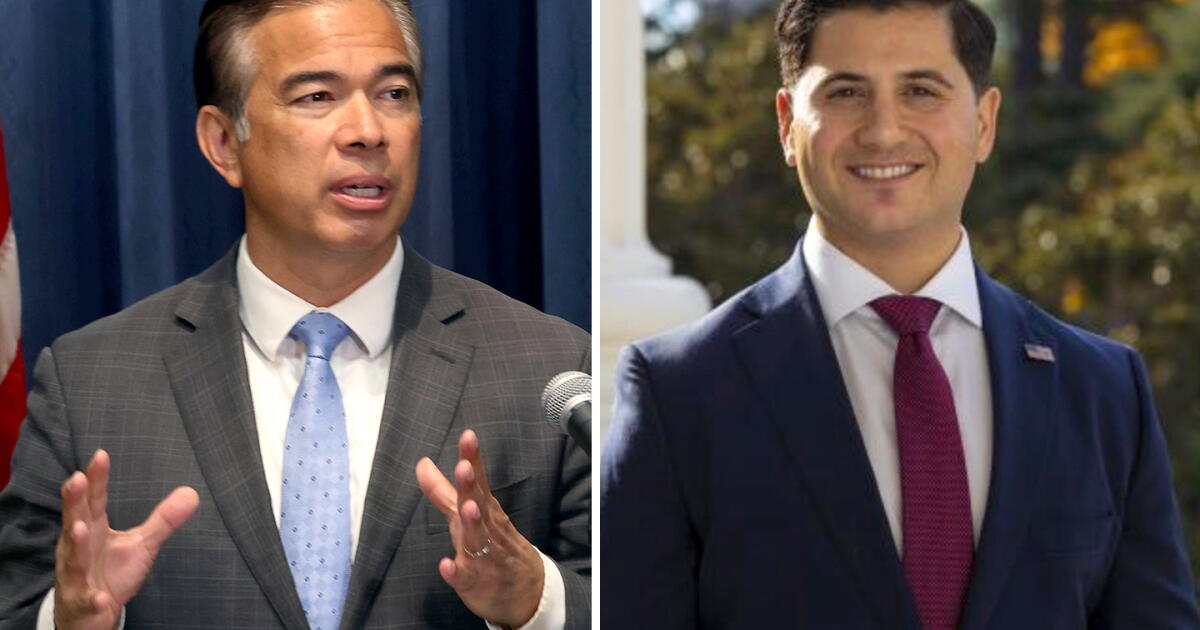
Lobbying has been intense, prompting a parade of politicians led by Gov. Gavin Newsom, L.A. Mayor Karen Bass and gubernatorial nominee Xavier Becerra to urge the two sides to settle the lawsuit.
“It’s a game of chicken,” Kevin Klowden, an economist and managing director at the Melcene Advisory firm, said in an interview. “But I’m not dismissing the threat because it is very real.”
Relocating from Los Angeles would allow Ellison’s cash-hungry media company to qualify for lucrative tax incentives offered by another state. Ellison’s short list includes Tennessee, Texas and Georgia. But leaving its longtime home would be costly for Paramount too, given how much of the talent and deal-making remains concentrated around L.A.
Tennessee’s Department of Economic and Community Development declined to discuss its negotiations with Paramount, but in a statement a spokesperson said the state “remains committed to working with companies across a wide range of industries that are exploring opportunities to invest and grow in Tennessee.”
Early this month, a pro-merger group was set to hold a news conference outside Paramount, but it moved its gathering to a warehouse a few blocks away after anti-merger activists planned a counterprotest.
The pro-merger organization, Neighbors for Strong Communities, was incorporated in Washington, D.C., in June and has lobbed text messages to Californians urging them to press Bonta to drop the case.
Speakers were concerned with just one issue: What would happen should Paramount pull out?
“What are we going to do with all these people who have invested their lives and many generations into building something here?” asked Keyla Wood, who moved from Mexico to L.A. about a decade ago after getting her start in Spanish-language soap operas.
“It’s been one thing after the other: The pandemic, the strikes and then it was the fires,” said Wood, who has worked as a stand-in for Eva Longoria and Salma Hayek. “So many people never work again.”
David Ellison is deciding whether to leave Hollywood.
(Bloomberg via Getty Images)
L.A.’s very identity is at stake, added Daniela Kelly, an actor and dancer who arrived from Brazil two decades ago.
“Everyone in the world sees Los Angeles and Hollywood as the platform for their dreams,” Kelly said. “Imagine if a huge studio with 100 years of history here just leaves? What will we be?”
Businesses like Kelly’s small Kreashen Studios USA, which provides video and podcasting space in Marina del Rey, depends on the region’s entertainment economy.
“It’s difficult financially right now to keep open,” she said. “So I’m pro having Paramount stay because this is the center, the heart of Hollywood.”
But deal opponents and some experts say the merger would actually worsen L.A.’s already bleak production picture.
Paramount has promised to cut $6 billion in expenses — a figure that doesn’t factor in the cost of ticking fees, which would add $650 million each quarter to the $81 billion that Paramount had anticipated paying Warner shareholders.
“We’ve seen from previous mergers that jobs have been lost,” L.A. City Councilmember Adrin Nazarian said at a City Hall event recently.
“When you look at the economic impact, it’s pretty staggering,” Kelly LoBianco, the department director, said in a recent interview. “An estimated $4 billion in economic output lost, and another $550 million lost in tax revenue at the local, state and federal level.”
The merger also could erase $79 million in tax revenue to Los Angeles County even if Paramount stays in L.A., she said.
But state and county tax revenue would plummet further should Paramount dispatch hundreds of its workers to Tennessee or some other state, Klowden said.
“If Ellison moves all the management out and all of the productions out, you’re talking about potentially tens of thousands of jobs,” Klowden said. “That, bluntly, isn’t just devastating to L.A. That becomes devastating to everybody.”
A report commissioned by Paramount from Los Angeles Economic Development Corp. predicted even steeper losses of at least 28,000 jobs should the studio move its entire operation out of state, according to a draft report given to Politico.
Under a less dire scenario, Paramount could shift its corporate headquarters to another state to qualify for incentives but still maintain large staffs in the creative hubs of Los Angeles and New York, where the company has its legal headquarters.
When the Ellison family acquired Paramount from the Sumner Redstone family last year, Ellison shifted operations to L.A., where he and other key executives work on the Melrose Avenue lot.
The threat to pull up stakes has created a disconnect after Ellison has spent more than a year touting how his family’s growing collection of media properties would strengthen traditional Hollywood.
The relocation campaign echoes a tactic used by software giant Oracle Corp., co-founded by Ellison’s billionaire father, Larry Ellison. For three decades, Oracle thrived in Redwood City, Calif., but in 2020, the company moved its headquarters to Austin, Texas, joining other California tech firms leaving in protest of the state’s high taxes.
The elder Ellison announced in 2024 that Oracle would be moving again, this time to Nashville, although that relocation hasn’t been finalized.
Paramount would risk leaving behind a skilled talent pool filled with experienced production workers and entertainment executives, Klowden said.
Fleeing L.A. could prompt “a talent bleed-out,” Klowden said. “Creative types are like: ‘Would I feel comfortable moving there?’ And, ‘What if I move there and something goes wrong? There would be nowhere else for me to go.’”
He pointed to Nissan’s 2006 U.S. headquarters move to the Nashville area from Gardena in L.A.’s South Bay, which dramatically reset the automaker’s workforce as fewer than half of its Southern California employees made the trek to Tennessee.
On Friday, a magistrate judge told both sides to identify dates in late October to meet for court-ordered settlement talks.
Each has motivations to settle — including avoiding a years-long court fight. Bonta has said Paramount must be willing to part with assets to alleviate market concentration, which could lead to a sale of Warner’s New Line Cinema, which has rights to “The Lord of the Rings” and “The Conjuring” franchises, and potentially cable channels such as CNN, Food Network or Cartoon Network.
Paramount, as part of a settlement, could abandon plans to leave L.A.
“All of the parties need to understand what this [issue] means to workers and small businesses,” Zbur, the local Assembly member, said. “I’m hopeful for a settlement that assures that Paramount and Warner Bros. will maintain their operations and remain a significant economic and employment force in Los Angeles.”
Times staff writer Cerys Davies contributed to this report.
A federal judge again Friday blocked the U.S. Postal Service from enacting President Trump’s sweeping new mail ballot rules for the November election, finding that the Postal Service lacks such authority over elections and that neither it nor states such as California are capable of implementing the changes without causing chaos and disenfranchising voters.
U.S. District Judge Indira Talwani noted that election officials from across the country told the court that it is “likely impossible” to comply with the rules, which “makes disenfranchisement more than likely, if not probable” if the Postal Service were to proceed with them.
Talwani’s order — her latest of several halting the plan since this summer — came after a Postal Service whistleblower alleged the agency’s new computer systems for the project are fundamentally flawed; a top Postal Service official acknowledged a key online portal was unfinished; and the Trump administration filed an emergency petition asking the U.S. Supreme Court to allow the plans to proceed anyway.
All this unfolded this week as some of the first mail ballots of the election cycle started going out.
The new rules — which Trump required in a March executive order — would require states to submit complete voter lists to the Postal Service and to adopt new ballot envelopes with individualized voter bar codes designed by the Postal Service, and empower the Postal Service to reject any mail ballots that don’t match those lists.
Trump’s executive order also required the Department of Homeland Security to develop its own lists of eligible citizen voters, ostensibly to be compared against the state lists.
Trump has said the changes are necessary to combat widespread voter fraud, including by non-citizens, though independent election experts say there is no evidence that such fraud exists in large numbers.
Leading Democrats and elections officials in California and other states say the new rules constitute an unlawful federal overreach into state-run elections and a thinly veiled effort by the Trump administration to suppress the vote in a midterm election the GOP is poised to lose.
Talwani, an appointee of President Obama, agreed, finding that the states and voting rights groups are likely to succeed in their claims that the U.S. Constitution reserves the right to regulate elections to the states and Congress — not the executive branch.
Talwani issued her order after holding a contentious hearing in federal court in Boston on Thursday, where she questioned the Postal Service and the dozen conservative-led states supporting it on their ability to implement the changes in time for the Nov. 3 elections. She also heard from California, other liberal-led states and voting rights groups that it would be impossible.
California Atty. Gen. Rob Bonta, whose office is helping lead the states’ challenge, hailed Talwani’s order as a crucial reprieve.
“We’ve now secured longer-term relief that will keep the USPS changes blocked while our case moves forward,” Bonta said in a statement to The Times. “We will continue to take all steps to stop the Trump Administration from trampling on voting rights and restricting mail voting.”
Bonta’s office also criticized Department of Justice attorneys for rushing to the Supreme Court before Talwani could issue her order or the U.S. 1st Circuit Court of Appeals could weigh in on an appeal the department had already filed on the matter.
Walter Garcia, a Bonta spokesman, said the Justice Department had “flouted standard procedural rules” by approaching the high court before the lower courts had weighed in, despite the fact that the Postal Service acknowledged Thursday that it was not ready to launch its new portal.
“It defies common sense that they would seek emergency relief from the U.S. Supreme Court when USPS is unprepared to implement the rule now,” Garcia said.
State law requires that all registered voters be sent a ballot in the mail, and more than 80% of California voters have used those ballots to vote in recent elections.
In its emergency petition to the Supreme Court, the Trump administration argued that an earlier temporary restraining order by Talwani to halt the new rules from taking effect was “baseless” and would cause “serious irreparable harm” to the federal government, states and voting public.
“To forestall those harms and protect the public interest, this Court should grant an immediate stay, making clear to States that they should begin efforts to comply if they have not done so already,” wrote Solicitor Gen. D. John Sauer.
The swirl of litigation has created uncertainty around the Nov. 3 election. It also reflects the Trump administration’s desperate race to get the lower court orders lifted and the new rules implemented in time for that election — the rushed nature of which was a prime focus of the whistleblower.
The unidentified Postal Service employee alleged in a statement released Tuesday by congressional Democrats and submitted in court by Bonta’s office that the agency has been rushing to implement the changes — in defiance of an earlier court order — using “an entirely new and untested set of IT systems” that could cause “catastrophic problems” and disenfranchise millions of voters nationwide.
The Postal Service in a statement Friday said that while its system was developed on an “accelerated schedule,” quality and security standards “were not compromised,” and the agency stands behind “both the rigor of our process and the resulting system.”
At Thursday’s hearing, Talwani appeared frustrated when a Justice Department attorney was unable to tell her the status of the portal.
In a subsequent declaration hours later, Steven W. Monteith, the Postal Service’s chief customer and marketing officer, said officials were still making “refinements” to the portal, but anticipated being able to make it available “for voluntary use by sometime next week.”
Talwani previously issued an order blocking the Postal Service changes from being implemented in California and more than 20 other suing states in June. The Trump administration appealed that decision to the 1st Circuit, which declined to lift it, and then on an emergency basis to the U.S. Supreme Court. In early August, Talwani issued a second ruling for the League of Women Voters and other voting rights groups, blocking the changes nationwide.
On Aug. 24, the Supreme Court set aside Talwani’s order in the states’ case, finding that the states’ challenge was essentially premature because the Postal Service had yet to formally initiate the changes or require state compliance. However, the court explicitly noted that it was not reaching any conclusions as to the legality of the pending rules themselves. “On that score, time will tell,” it said.
The states and voting rights groups promptly filed new lawsuits challenging the legality of the rules, which the Postal Service formally issued Aug. 21. And it is in those cases that Talwani issued her ruling Friday.
She wrote that the voting rights groups had standing to challenge the Postal Service rules nationwide in part because the “chaos” created by the rules’ stiff deadlines significantly interfered with their mission to provide voters with accurate and reliable information about how to vote — and whether to use mail ballots to do so.
David Becker, executive director of the nonpartisan Center for Election Innovation & Research, said in remarks prior to Talwani’s Friday order that he was “very, very confident” that the Postal Service changes will be blocked for the upcoming elections, and that “mail voting is going to go forward as conveniently and securely as it always has.”
That’s in part because election officials nationwide are “telling the courts that even if they wanted to, they could not implement it,” he said — including in a legal filing Becker helped nearly 100 local elections officials from red and blue states file in separate litigation challenging the rules.
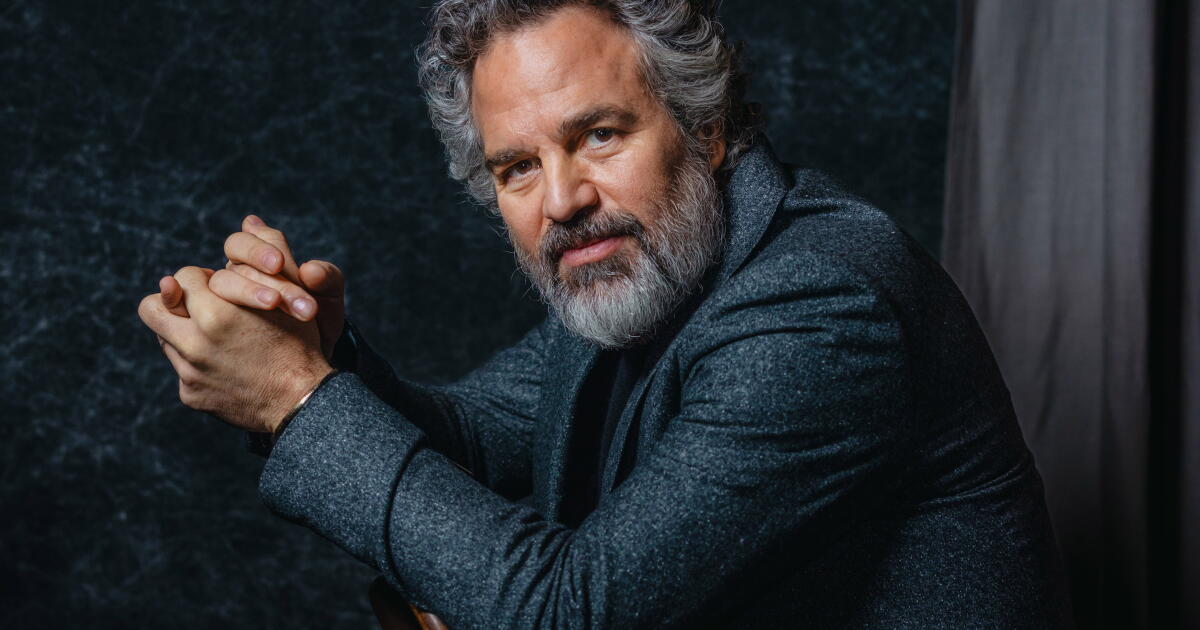
Dozens of Jewish artists are defending Mark Ruffalo after Paramount Skydance branded the actor’s criticisms about software company Oracle Corp. as “antisemitic tropes.”
Ruffalo has long been an irritant to Paramount as he is a leading figure in a high-profile Hollywood campaign to block the merger. In an Instagram post late last month, Ruffalo blasted Larry Ellison’s Texas-based software company Oracle for assisting with technology to help Israeli military efforts, including in Gaza — a conflict that Ruffalo and other progressive activists have opposed because of the killing of Palestinians.
In an open letter, signed by more than 150 filmmakers, academics, writers and even a few rabbis, the group denounced “the outrageous smear campaign against our respected colleague Mark Ruffalo.”
“Enough with the false and dangerous weaponization of charges of antisemitism against those who are brave enough to point out the obvious: that the assault on the Palestinian people and the assault on our liberties at home are deeply interconnected, and there is nothing antisemitic about recognizing that fact,” the group wrote.
Tuesday’s letter was signed by several high-profile filmmakers, including Joel Coen, Hannah Einbinder, Tony Kushner, Lisa Cholodenko, Ilana Glazer, Frances Fisher, Todd Haynes and Sarah Kunstler.
The group tied David Ellison’s merger ambitions to his billionaire father’s expansive network of businesses, which now include TikTok. Larry Ellison is personally guaranteeing the equity needed for Paramount to buy Warner Bros. Discovery, and the family will become controlling owners of the merged entity.
However, the Hollywood merger is stalled because of an antitrust lawsuit brought by California Atty. Gen. Rob Bonta and 11 other Democratic state attorneys general, including from New York, New Mexico, Colorado, Nevada and Oregon. Paramount agreed to pause the transaction until the court case can be decided.
A trial is set for March 2 in Oakland, but Paramount has been agitating for industry leaders and politicians to pressure Bonta to force a settlement that would allow the deal to go through.
“The proposed merger of Paramount and Warner Brothers Discovery is no mere combination of two huge multinational companies,” the group wrote in the letter. “Yes, it will destroy thousands upon thousands of livelihoods. Yes, it will further consolidate the oligarchic control of our media (witness the gutting of CBS News). Yes, it will strangle competition and creativity in film and television production and distribution.”
The group painted the Paramount-Warner Bros. merger as “part of a larger project of tech-driven domination, a project Larry Ellison and his partners have never been shy about trumpeting — and one they themselves have explicitly linked to their support for the ongoing depredations being visited on the people of Palestine and their silencing of critics of those horrors,” the group wrote.
Paramount declined to comment.
The merger fight has grown increasingly ugly in recent weeks after Paramount threatened to leave California if Bonta continued his court fight to unravel the deal. Paramount suggested it would pull up stakes from its Melrose Avenue film studio as soon as this fall.
Then, on Aug. 21, the company accused Ruffalo of injecting “antisemitic tropes” into the opposition campaign to thwart the industry-reshaping merger that would bring HBO, CBS News, CNN, TBS and the Warner Bros. and Paramount film and TV studios under the same roof.
Leaders of prominent Jewish organizations, including the Simon Wiesenthal Center and the Anti-Defamation League, came to Paramount’s defense, blasting the Emmy-winning actor known for playing the Hulk and roles in productions for HBO.
Ruffalo defended himself, saying he was not being antisemitic. He said he was speaking out against Oracle’s use of technology to assist Israel’s military in the war in Gaza, “what we now have come to see as a genocide, which was built on an apartheid system of oppression powered by Oracle,” Ruffalo wrote in his post.
Paramount leaders have branded some of the opposition to the deal as “antisemitic.”
“Pointing out the crucial connections between what is happening in Gaza and what is happening in Hollywood is the exact opposite of antisemitism,” the group wrote in the open letter. “It is, for us, the very essence of Jewish ethical duty.”
The letter cited recent polls that reflect a majority of “American Jews now agree that Israel is committing war crimes in Gaza; and four in ten even agree that these crimes amount to genocide,” the group wrote. “Do those attacking Mark Ruffalo as an antisemite seriously believe that all these American Jews are antisemites too?”
Two of the highest-ranking law enforcement officials in California are publicly sparring over the integrity of state elections, trading barbs on social media that highlight the fierce partisan divide on the issue heading into the November midterms.
In a post to X on Wednesday, First Assistant U.S. Atty. Bill Essayli, the top federal prosecutor in Los Angeles, accused California Atty. Gen. Rob Bonta, the state’s highest-ranking law enforcement official, of fighting to “preserve non-citizens’ access to mail ballots” and “shield fraudsters and illegals from accountability.”
On Thursday, Bonta fired back, accusing Essayli of being “more interested in currying favor with a desperate wannabe dictator” — a reference to President Trump — “than upholding the law himself.”
Bonta and Essayli’s back-and-forth followed an announcement from Bonta that California and 24 other Democratic-led states were suing to block the U.S. Postal Service from implementing new nationwide rules on mail ballots that were developed at Trump’s behest.
Late Thursday, a federal judge sided with the states, issuing a temporary restraining order halting the implementation of those rules as the litigation continues. An appeal is likely.
Such a public and personal rift between Bonta and Essayli is highly unusual and has broader implications, given the California Department of Justice and the U.S. Attorney’s Office in Los Angeles coordinate on statewide law enforcement initiatives and traditionally maintain a cordial relationship.
They have worked together in recent years to target Los Angeles street gangs trafficking guns and drugs statewide, as well as international drug syndicates trafficking fentanyl and other narcotics through L.A.
The U.S. Justice Department at times finds itself on the opposing side of litigation involving local or state law enforcement partners, including in cases in which it investigates local police departments for civil rights violations and forces them into consent decrees, as it has done with the Los Angeles Police Department.
However, it is extremely rare for U.S. attorneys and top state law enforcement officials to engage in direct attacks on each other’s integrity — or the integrity of state voting processes, which both are tasked with defending. Federal prosecutors in particular have historically sought to avoid the appearance of political partisanship and rarely taken aim at elected officials over policy matters.
That tradition certainly has faltered under Trump, who has filled the Justice Department with outspoken loyalists who make no secret of their allegiance to him. And Essayli, the administration’s embattled appointee to lead one of the largest federal prosecutor’s offices in the country, has been no exception.
Essayli did not respond to a request for comment on the public exchange Thursday.
A spokesperson for Bonta’s office, which has sued this Trump administration more than 85 times, said in a statement that office staff regularly work with the U.S. Justice Department and federal prosecutors to keep Californians safe, and that work won’t stop “just because some are dead set on politicizing our work and theirs.”
At a news conference this week touting major crime declines in the state, Bonta said partnerships with both local and federal law enforcement remain a vital part of public safety in the state.
“That remains the secret sauce — the magic — when it comes to making our communities more safe. Working together, collaborating, sharing intel and resources and teaming up,” he said. “That remains a priority and is behind a lot of our success.”
Still, the new Postal Service rules sparked a clash. The rules require states to submit lists of eligible voters to the Postal Service and to use new ballot envelopes with digital bar codes that would allow the Postal Service to identify and reject ballots that don’t match those lists. Trump requested the changes as part of a broader executive order in March to combat what he claims is widespread voter fraud across the country and particularly in big blue states such as California.
Independent election experts say there is zero evidence of such problems existing in significant numbers. The Trump administration has said that is because states are keeping voter rolls secret and refusing to cooperate with federal efforts to vet them for noncitizens and other ineligible voters.
On Monday, the U.S. Supreme Court lifted a separate lower court ruling blocking the Postal Service changes, on the grounds that they had yet to be implemented and had not yet caused any harm to the states challenging them. The high court made clear, however, that it was not weighing in on the substance or merits of the rules themselves.
Essayli has long made allegations of voter fraud in California, and lawyers in his office were involved in an unsuccessful lawsuit in which the Justice Department sought California’s unredacted voter rolls. After the Supreme Court issued its ruling, and Gov. Gavin Newsom pledged the state would sue again, Essayli responded to defend the administration’s efforts.
“These measures wouldn’t be necessary if states like California didn’t allow non-citizens to easily register to vote and get mail ballots,” he wrote. “We are actively identifying ineligible citizens on California’s dirty voter rolls and will soon announce criminal arrests related to our election fraud investigation.”
Essayli’s office did not respond to a request for information on those alleged arrests or its broader investigation.
Then, on Wednesday, Bonta, who is seeking reelection in November, announced the latest lawsuit challenging the merits of the Postal Service rules, which he noted had been formally issued last week. He called the rules “an unlawful overreach that shows just how far President Trump will go to control elections,” and the state’s lawsuit an effort to “protect election integrity.”
Essayli soon replied, writing, “What election integrity? You’re fighting to preserve non-citizens’ access to mail ballots. I’ve never seen a state AG fight this hard to shield fraudsters and illegals from accountability. Imagine if he used his efforts to protect citizens.”
On Thursday morning, Bonta replied. “Simply untrue. We’re fighting to uphold the constitution and protect California’s right to administer our own elections,” he wrote.
“If you’re really concerned with election integrity, might I suggest starting with Donald Trump who: asked for 10,000+ votes from election officials in Georgia, fueled January 6, seized ballots, and issued two blatantly unlawful elections executive orders,” Bonta said.
After he lost the 2020 presidential election to Joe Biden, Trump called Georgia Secretary of State Brad Raffensperger and asked him to “find 11,780 votes” for Trump to swing the state from Biden to him.
A later congressional investigation found that Trump provoked his supporters into attacking the U.S. Capitol on Jan. 6, 2021, in an attempt to prevent the certification of Biden’s win. This January, the FBI raided and seized ballots from an election center in Fulton County, Ga. — a focus of Trump’s 2020 election denial.
“Trump has repeatedly shown he’ll stop at nothing to interfere in our elections. He’s repeatedly broken the law, so we’ve repeatedly taken him to court,” Bonta continued in his post. “Unfortunately, it appears that the First Assistant is more interested in currying favor with a desperate wannabe dictator than upholding the law himself.”
In agreeing late Thursday to halt the Postal Service rules, U.S. District Judge Indira Talwani wrote that the court did not have “any evidence regarding fraudulent absentee or mail-in voting” before it, and that the Postal Service’s “interest in correcting an unsubstantiated problem through likely unconstitutional means is dwarfed by the overwhelming risk of pervasive disenfranchisement of citizens who need access to mail ballots in order to vote.”
Bonta, back on X, praised the ruling, writing, “President Trump must keep his hands off our elections.”
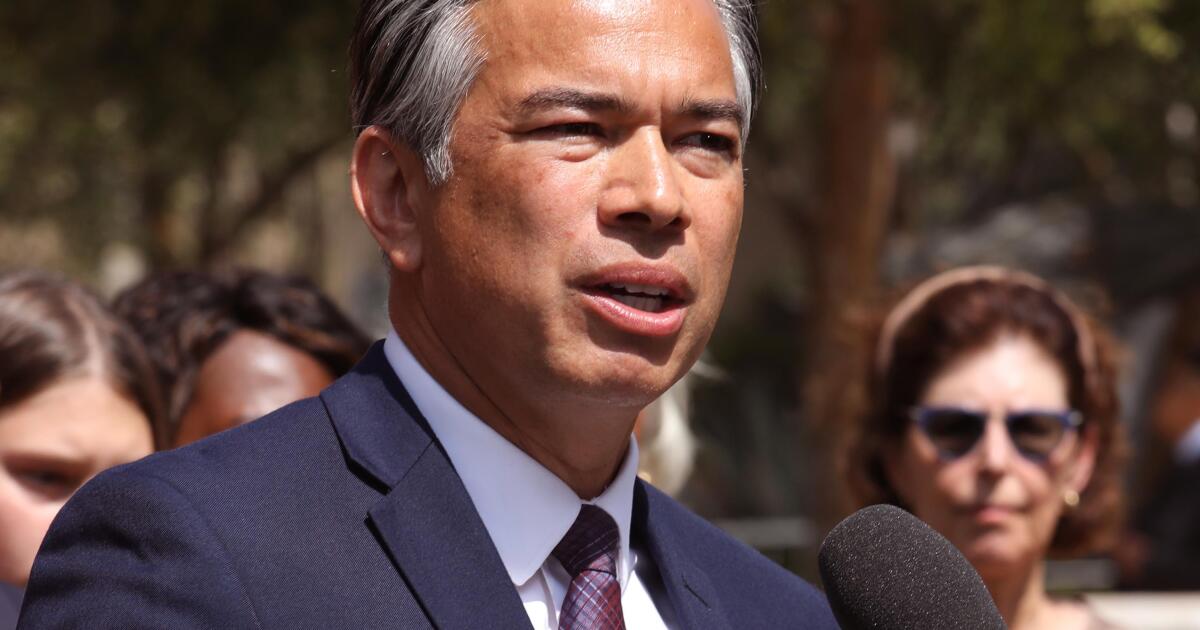
California Atty. Gen. Rob Bonta made it clear Tuesday he holds the power to extract major concessions in the battle over the proposed Paramount-Warner Bros. merger.
A day after canceling settlement talks, Bonta said he remains open to meeting with Paramount Skydance executives to find remedies to resolve the antitrust lawsuit stalling David Ellison’s $111-billion takeover, but called on the company to end its “amateur hour” conduct.
“If you want to have an adult, legitimate, serious settlement discussion — no problem,” Bonta said during an appearance in Los Angeles. “But if you want to play games, we’ve got better things to do.”
That wasn’t the issue, Bonta said, specifically pointing to leaks about the settlement talks that appeared in various news outlets.
Some reports suggested Bonta’s office sought the negotiations amid withering political pressure. Gov. Gavin Newsom, Los Angeles Mayor Karen Bass and Xavier Becerra, the Democratic nominee for governor, have separately urged a settlement to end the antitrust fight.
Bonta set the record straight: “Paramount reached out to us to have settlement discussions,” he said. “They asked for them.”
Bonta’s beef was that the substance of the nascent negotiations appeared in newspaper articles despite both sides agreeing to hold confidential talks, Bonta said, adding that crossed the line. The Wall Street Journal reported that California’s top prosecutor planned to ask Paramount for agreements to keep Warner Bros. and the Paramount Pictures film studios separate units as well as an agreement to sell some cable channels.
“We thought they were reaching out to us in good faith … unfortunately, they violated the rules of engagement,” Bonta said. “They leaked lies to the press while we were in settlement negotiations. That’s not okay … That is amateur hour.”
Paramount declined to comment. On Monday, Paramount denied it was the source of the leaks.
Bonta’s comments appeared as a show of strength after major court wins.
The coalition of attorneys general, who also represent New York, New Mexico, Colorado, Nevada and Oregon, last month won a temporary restraining order that blocked Paramount from closing the deal. Rather than lose in a hearing over a more consequential preliminary injunction, Paramount voluntarily agreed that it would not finalize the transaction until after the trial or by June 1, whichever date comes first.
U.S. District Court Judge Araceli Martínez-Olguín set a March 2 trial, which was in line with the plaintiff states’ request. Paramount had lobbied for a November date.
“We are winning in this lawsuit,” Bonta said. “They have eight of the biggest law firms in the country, making every imaginable argument under the sun. And they lost, the judge said: ‘You are likely to lose this case’… the states are likely to succeed on the merits.”
“If they are willing to clean things up, put a lid on their lying leaks and engage in a way that is sincere and in good faith, we will be where we always are … happy to meet,” Bonta said.
Staff writer Kevin Rector contributed to this report.
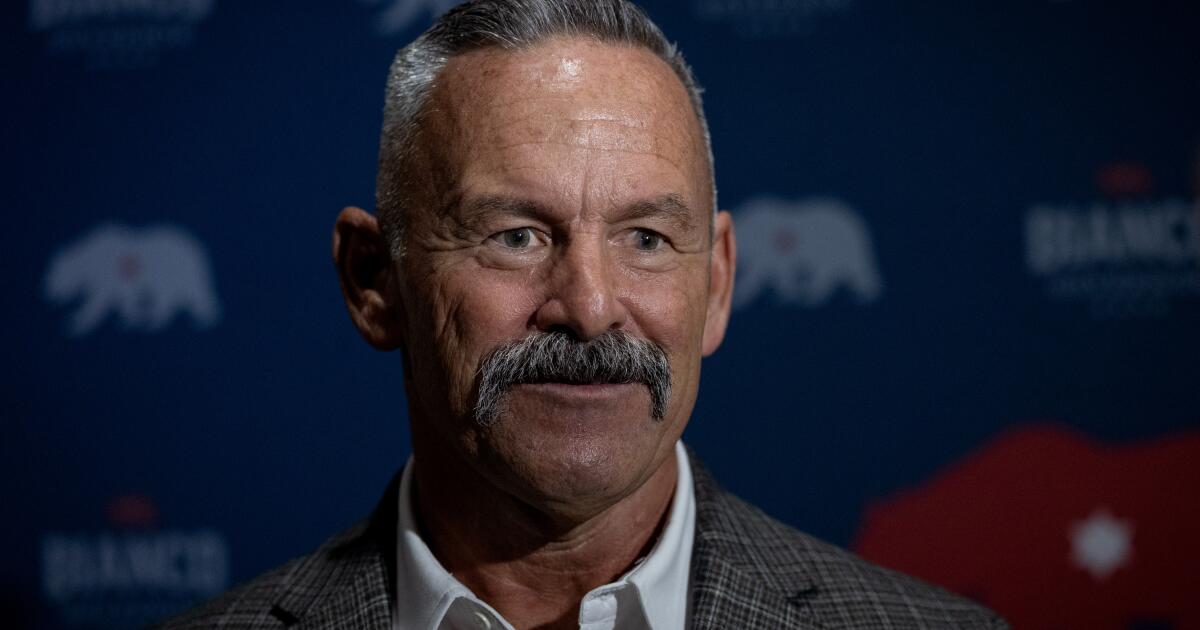
Undaunted by reality, and likely law, Bianco announced he was going to have his deputies recount the votes, even though this kind of interference in the chain of custody of ballots never had occurred anywhere in the United States.
This unprecedented seizure of ballots — something election-denier-in-chief President Trump has been hinting at trying himself for years — quickly became a national news story, and a national concern.
With midterms looming and more than one MAGA sheriff out there, what would stop another conspiracy-minded, badge-wearing maverick from doing something similar this November, potentially throwing our national election into turmoil?
The specter of Bianco setting a precedent for like-minded conspiracists to follow prompted two significant lawsuits — one led by the election experts at the UCLA Voting Rights Project and the other from state Atty. Gen. Rob Bonta.
The state Supreme Court heard arguments in those cases Monday, and while we’ll have to wait for the official rulings, things did not seem to go well for the sheriff.
What surprised me most, or maybe just relieved me, was how thin Bianco’s arguments were to support his actions. In the end, his legal team came with little more than contortions and cartwheels, trying to twist Bianco’s overreach into existing law.
His lawyer, Bradley Hertz, attempted to argue that legislators, when crafting laws protecting ballots, meant different rules to apply to investigations of elections preceding formal prosecutions. If that sounds confusing, it’s because it is.
Hertz seemingly was trying to convince the court that Bianco legally could pull his shenanigans as long as he didn’t actually find criminal wrongdoing, which would trigger a different set of rules.
“That seems bizarre,” Justice Goodwin H. Liu said during a back-and-forth with Hertz.
Indeed.
But it was Justice Joshua Groban who hit at the national implications of what Bianco had done — and what it could mean for the midterms if this court ruled in his favor.
“It seems like under your broad view of the warrant power … the sheriff could could seize ballots even before election day, right?” Groban asked. “Even before they were counted.”
It’s terrible to have ballots seized after they’re counted. It’s devastating if they were to be taken before there was an official tally, because how would anyone trust that there hadn’t been tampering? Simply seizing uncounted ballots, no matter what happens next, would create such paranoia and uncertainty that the election results almost certainly would be called into question — something that could play into the favor of, say, a wannabe authoritarian who fears he’s likely to lose a fair vote count.
Even Hertz seemed to acknowledge such a scenario was bad.
“If search warrants were allowed during the election or preelection, that would obviously wreak havoc,” he said. “There would be, kind of, a cat out of the bag, so to speak. You can’t count ballots if they’re not in the possession of the registrar.”
But then Hertz tried to come up with logic that what Bianco was arguing wouldn’t mean that ballots could be seized anytime, anyhow, and that instead courts could find a way to allow seizing only after the official count. The court did not seem convinced that this was a good idea, or that that is what the law should or did allow.
If that case didn’t go well for Bianco, it was the second case brought by Bonta that really might end up being a hard loss.
For years, decades really, in California and across the country, there has been a group of sheriffs who have argued they are a law onto themselves because they are elected, not hired or appointed. Some of these sheriffs argue that they are literally above federal law.
In California, there has at times been momentum to rein in this line of thinking by creating clear boundaries in law, but the state Legislature always has backed down in the face of opposition from law enforcement.
One potential curb on sheriffs’ power comes from a single line in our state Constitution that seems to say the state attorney general has supervisory power over them. But the meaning and power of this particular clause has long been debated and seldom invoked.
Bonta, however, invoked it against Bianco, claiming the the sheriff had to back off the ballot-seizing because Bonta had authority to order him to stop. Bianco did stop, to his credit. But the standoff was heard by the court Monday and likely will force clarity on an issue that has long lacked it.
Here again, the justices seemed amenable to Bonta’s argument that sheriffs, at least to some extent, answer to him as the state’s chief law enforcement officer. But the justices seemed far more cautious on this issue, and even the state’s attorney conceded that “it’s actually pretty remarkable how little our Constitution says about county sheriffs.”
If Bianco loses on this issue, it would be huge. It would mean that Bianco not only overstepped his power by seizing the ballots, but that he also had forever lessened the power of California sheriffs by clarifying they do answer to the attorney general. I’m sure that will be very popular with other sheriffs.
We’ll see what the justices say, but at least it seems likely that this embarrassing chapter of California election history will end in favor of the law, and democracy.
Maybe Bianco really does believe his conspiracy theories. After all, “there are some people who believe they had breakfast with Elvis on Sunday,” pointed out Chad Dunn, who argued the case for the Voting Rights Project.
“We can’t satisfy them,” Dunn warned.
More importantly, we shouldn’t — even when they wear a badge. Our laws already have robust protections for elections, and rogue sheriffs aren’t one of them.
A prominent Latino group is raising fresh concerns about Paramount Skydance’s proposed acquisition of Warner Bros. Discovery, saying the blockbuster deal would crush Latino workers and small businesses that support Hollywood.
In an open letter to California Atty. Gen. Rob Bonta, the League of United Latin American Citizens urged the state’s top prosecutor to continue his legal fight to block Paramount’s proposed $111-billion takeover of the media company that owns HBO, CNN, HGTV and the Warner Bros. film and television studios.
“No state has more to lose from this disastrous merger … than California,” LULAC National President Roman Palomares and Chief Executive Juan Proaño wrote in the six-page letter sent to Bonta late Sunday.
Thousands of jobs would be lost, and Latino voices could be squelched should the deal go through as it is drawn, the LULAC leaders said.
“The current form of the consolidation would have a devastating and unacceptable impact on Latinos, including those who reside in the Los Angeles community,” they wrote, noting Latinos make up 40% of the state’s population and nearly half of Los Angeles County, where HBO and the Paramount and Warner Bros. studios are based.
Paramount’s proposed merger has carved deep divisions and become increasingly contentious.
In recent days, Gov. Gavin Newsom, Los Angeles Mayor Karen Bass and Democratic gubernatorial nominee Xavier Becerra publicly pressured Bonta to settle the lawsuit to avoid a drawn-out court fight.
Politicians have been reacting to Paramount’s threat to move its studio, and potentially Warner Bros., from Hollywood to Tennessee or Texas unless Bonta backs down.
Theater owners and two major Hollywood unions — the Directors Guild of America and the International Alliance of Theatrical Stage Employees — have joined the parade pleading for a settlement. But the Writers Guild of America and Teamsters have steadfastly opposed the merger, warning about its potential impact on working writers and film crews.
Paramount Chief Executive David Ellison was set Monday to meet Bonta and others representing the 12 states that sued to block the transaction. But Bonta abruptly canceled the mediation session, accusing Paramount of “playing games,” leaking details and making misrepresentations about the talks despite agreeing to keep them confidential.
Paramount later denied that it was the source of the leaks.
Paramount didn’t immediately comment on the LULAC letter, but previously has touted the merger as a way to build a stronger competitor amid a pullback in local production. The company said it would “invest $30 billion annually in production and release at least 30 films a year,” a commitment that would lead to “more jobs over time, and ultimately, a stronger, more durable entertainment industry for generations to come.”
“To have it thrown in your face that Paramount will leave Los Angeles if they don’t get what they want is really just tantamount to a threat … one that will be devastating to Latinos,” Proaño said in an interview with The Times.
“There is a significant number of small businesses — Latino small businesses — and Latino residents, employees and workers that support this industry,” Proaño said. “We’ve been invisible, we’ve been silent — but we wanted to make sure that LULAC is not silent in this moment.”
In its letter, LULAC pointed to Hollywood’s most recent mergers, including Discovery’s 2022 acquisition of WarnerMedia from AT&T, saying such tie-ups underscore how media consolidation tramples over Latino voices, particularly when companies resort to job eliminations and other cost cuts to balance the expense of a corporate takeover.
After Warner Bros. Discovery Chief Executive David Zaslav took the helm, his company plodded through years of turmoil and massive layoffs. The movie “Batgirl,” which was set to feature a young Afro-Latina as lead actor, was shelved to gain tax benefits. Warner also canceled “Gordita Chronicles,” a TV show about an immigrant Dominican family, despite solid viewership.
Latino families make up “a significant portion of the film and television industry audience,” the letter said, adding that Motion Picture Assn. data show Latinos annually attend more movies per person in theaters than any other demographic group.
“Hollywood returns almost nothing for that loyalty,” the letter said. “Latino characters filled only 5 percent of speaking roles across 1,300 top-grossing films.”
“These and other harms are not collateral to the antitrust case,” LULAC’s letter said. “They are consequences of the diminished competition that will result. Every studio absorbed by a rival is one fewer buyer for a script, one fewer employer for a crew and one fewer distributor willing to bet on a story its franchise slate does not need.”
Warner Bros. Discovery nearly drowned in debt that it took on to finance its $43-billion buyout from AT&T in 2022. Ellison’s proposed Warner Bros. takeover also will be heavily leveraged with nearly twice the debt that resulted from Zaslav’s previous deal.
David Ellison has lined up nearly $80 billion in debt financing to buy out Warner investors. The tech scion is relying on a guarantee from his billionaire father, Oracle co-founder Larry Ellison, and $24 billion in equity financing from three Middle Eastern sovereign wealth funds, representing the royal families of Saudi Arabia, Qatar and Abu Dhabi.
The deal comes one year after the Ellison family bought Paramount, which had been on the ropes because of significant under-investment over the years.
“Paramount followed the same script: within months of closing its Skydance merger in August 2025, it laid off roughly 2,000 employees, about ten percent of its workforce, just after dismantling its diversity programs earlier that year,” the LULAC letter reads.
“This time, Zaslav’s going to walk away with a billion-dollar parachute and Paramount may end up with these crown jewels assets when it comes to movie-making and television programming,” Proaño said.
California Atty. Gen. Rob Bonta abruptly pulled out of a planned mediation session Monday to seek a resolution to the antitrust lawsuit that has stalled Paramount’s blockbuster $111 billion merger with Warner Bros. Discovery.
Bonta, in a statement, cited Paramount’s alleged leaking and misrepresenting information the two sides discussed during a preliminary session Friday.
Representatives of Bonta and Paramount Skydance came together late last week to set ground rules for Monday’s meeting, which was to involve Paramount Skydance Chief Executive David Ellison.
One of the rules had been confidentiality of the mediation process.
“I have pulled down this meeting,” Bonta said in a statement. “As I have said before, generally for all cases, I prefer to resolve disputes in the boardroom, not the courtroom. As I’ve also said, if the opposing party in litigation wants to meet in good faith to make a sincere effort to resolve the case.”
Bonta went on to say “Not only did Paramount leak the alleged substance of the settlement discussions, but they misrepresented these discussions, demonstrating a lack of good faith.
“As soon as Paramount stops playing games and engages sincerely, my office is happy to meet again.”