Palestinian, Jewish and Indigenous groups say they will launch constitutional challenge to anti-protest laws described as ‘rushed’.
The state of New South Wales (NSW) will have the toughest gun laws in Australia as well as wide-reaching new restrictions on free speech in the wake of the Bondi Beach mass shooting, which left 15 people dead.
Less than two weeks after the attack on a Jewish celebration, new legislation was passed by the state’s legislative assembly in the early hours of Wednesday morning, including restrictions that appear to target speech in solidarity with Palestinians.
Recommended Stories
list of 4 itemsend of list
Notably, the Terrorism and Other Legislation Amendment Bill 2025 gives police powers to restrict public protests for up to three months “following a terrorism declaration”, while the public display of symbols of prohibited organisations will be banned.
“Once a declaration is made, no public assemblies can be authorised in designated areas, including by a court and police will be able to move people on if their behaviour or presence obstructs traffic or causes fear, harassment or intimidation,” the NSW government said in a statement.
In the statement, NSW Premier Chris Minns and other top officials said that the sweeping changes would involve a review of “hate speech” and the words “globalise the Intifada” were singled out as an example of speech that will be banned. The term is often used in solidarity with Palestinians and their civil struggle against Israeli military occupation and illegal settlement expansion, dating back to the 1980s.
Minns acknowledged that the new laws involved “very significant changes that not everyone will agree with” but he added, “our state has changed following the horrific anti-Semitic attack on Bondi Beach and our laws must change too.”
He also said that new gun laws, which restrict certain types of guns to use by farmers, would also help to “calm a combustible situation”.
Constitutional challenge
Three NSW-based pro-Palestinian, Indigenous and Jewish advocacy groups said on Tuesday, before the final vote on the legislation, that they would be “filing a constitutional legal challenge against the draconian anti-protest laws”.
Palestine Action Group Sydney said in a statement shared on Facebook that it was launching the challenge together with the Indigenous group Blak Caucus and Jews Against the Occupation ’48.
“These outrageous laws will grant NSW Police sweeping powers to effectively ban protests,” the Palestinian advocacy group said, accusing the NSW government of “exploiting the horrific Bondi attack to advance a political agenda that suppresses political dissent and criticism of Israel, and curtails democratic freedoms”.
Changes to the state’s protest laws also come just months after more than 100,000 people marched over the Sydney Harbour Bridge in protest against Israel’s genocidal war on Gaza, after a court overturned an attempt by the Minns government to try to stop the peaceful protest from taking place.
Following the huge display of public support for ending Israel’s war on Gaza, Australia joined more than 145 other UN member states in recognising Palestinian statehood at the United Nations in September this year, much to the outrage of Israeli officials.
Within hours of the Bondi attack, Israeli Prime Minister Benjamin Netanyahu, who is wanted for alleged war crimes by the International Criminal Court (ICC), linked the shooting to Australia’s recognition of Palestinian statehood.
UN special rapporteur Ben Saul, who is also an international law chair at the University of Sydney, criticised Netanyahu’s comments.
Saul, whose UN mandate focuses on ensuring human rights are protected while countering terrorism, called for a “measured response to the Bondi terrorist attack”.
“Overreach does not make us safer – it lets terror win,” Saul said in a post on social media.
Heroes to be honoured
Australia’s Prime Minister Anthony Albanese said on Wednesday that he plans to create a special honours list to recognise the people who rushed in to try to stop the two attackers as they targeted the Hanukkah celebration at Bondi Beach on December 14.
Australian public broadcaster the ABC reported those honoured would likely include Australian-Syrian shop owner Ahmed al-Ahmed, as well as Boris and Sofia Gurman, a local couple who tried to stop the gunmen but were among those killed in the attack.
While al-Ahmed has been widely hailed as a hero around the world, less is known about a second Muslim man who ran in to help, even as he was tackled by bystanders because he was mistaken for being an attacker.
The man’s lawyer, Alisson Battisson, says that her client, whom she did not name, is a refugee who is potentially facing deportation due to a past criminal record, despite his repeated attempts to help stop the Bondi attack.
Former Australian Prime Minister John Howard attends the National Day of Reflection vigil and commemoration for the victims and survivors of the Bondi Massacre at Bondi Beach in Sydney, Australia, 21 December 2025. Photo by Dean Lewins/EPA
Dec. 21 (UPI) — Seven days after a mass shooting devastated Bondi Beach, Australians gathered on Sunday for a national day of reflection.
The commemorations come as Prime Minister Anthony Albanese faces intense public scrutiny and has ordered an urgent investigation into the nation’s intelligence and police frameworks.
The tragedy, which claimed 15 lives during a Hanukkah seaside event, is the deadliest mass shooting Australia has seen in nearly three decades.
Authorities have officially classified the massacre — which killed a 10-year-old girl, a British rabbi and a Holocaust survivor, among others — as a terrorist act aimed at the Jewish community.
As the clock struck 6:47 p.m., marking the exact moment the first shots rang out the previous Sunday, a minute of silence was observed. Mourners at Bondi Beach and across the country stood in unison to honor the fallen, according to the BBC.
The atmosphere in Sydney was one of high alert, NBC News reported, with a massive security detail involving rooftop snipers and water patrols.
The Sydney Opera House also paid tribute, illuminating its iconic sails with candle projections to mark the day of mourning.
Despite the somber occasion, Albanese met a hostile reception, NBC News reported. Sections of the crowd booed the prime minister upon his arrival, a sign of the growing friction between the government and the grieving Jewish community.
The BBC also reported that one protester shouted, “Blood on your hands,” while security personnel had to intercept an individual attempting to approach the prime minister.
In an acknowledgment of the criticism, Albanese said during the observation that he accepts his share of responsibility as the nation’s leader.
Addressing the crowd, David Ossip, president of the New South Wales Jewish Board of Deputies, delivered a eulogy.
“Like the grass here at Bondi was stained with blood, so, too, has our nation been stained,” Ossip said, per NBC News. “We have landed up in a dark place.”
Ossip also shared a message of resilience from Ahmed al-Ahmed, a Syrian-Australian shop owner who was injured while heroically disarming one of the gunmen.
From his hospital bed, al-Ahmed’s message to the mourners was, “The Lord is close to the broken-hearted. Today I stand with you, my brothers and sisters.”
Unlike Albanese, New South Wales Premier Chris Minns was met with applause, the BBC reported.
Minns offered a blunt apology for the state’s inability to prevent the shooting, stating, “The government’s highest duty is to protect its citizens. And we did not do that one week ago.”
He further warned that the tragedy exposed a “deep vein of antisemitic hate” that the country must now confront.
After the ceremony, the federal government pivoted toward legislative action.
Albanese announced a comprehensive review of federal intelligence and law enforcement to determine if current powers are sufficient for the modern security landscape. He characterized the “ISIS-inspired” attack as proof of a shifting threat environment.
Additionally, the government has committed to a massive national gun buyback initiative, the scale of which has not been seen since the 1996 Port Arthur massacre.
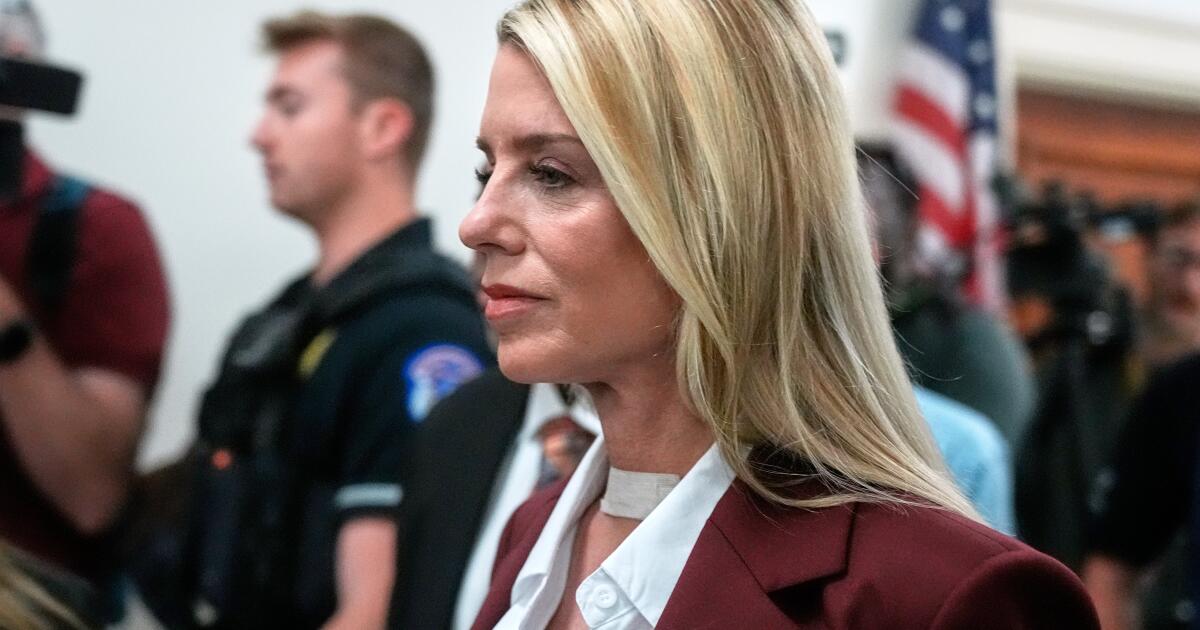
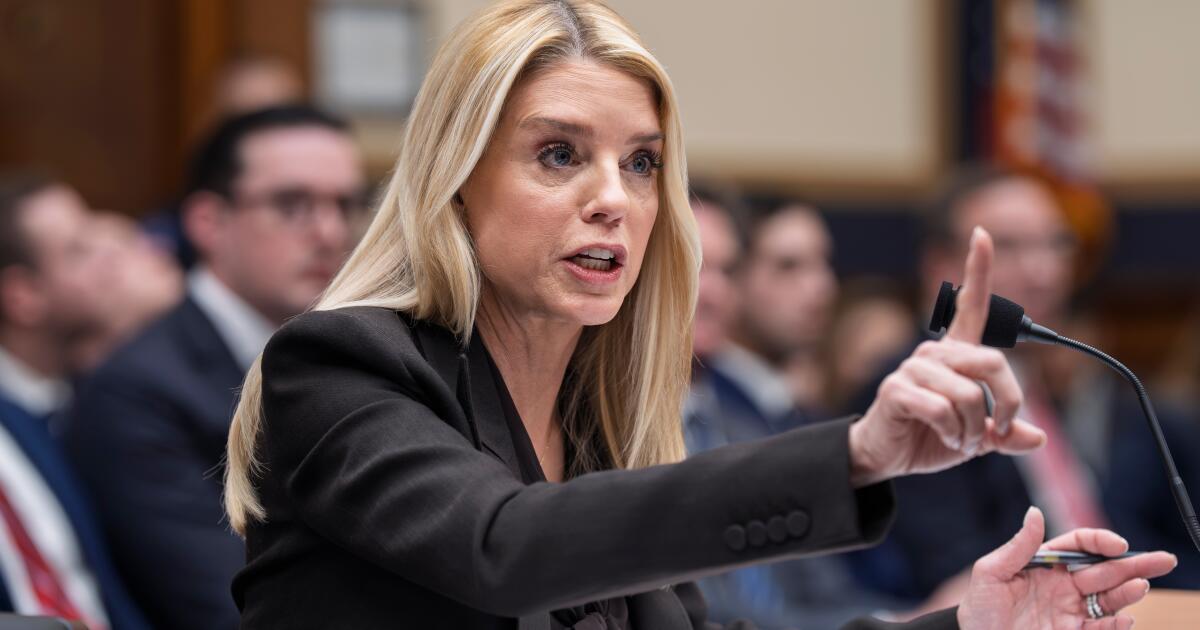
WASHINGTON — Lawmakers unhappy with Justice Department decisions to heavily redact or withhold documents from a legally mandated release of files related to Jeffrey Epstein threatened Saturday to launch impeachment proceedings against those responsible, including Pam Bondi, the U.S. attorney general.
Democrats and Republicans alike criticized the omissions, while Democrats also accused the Justice Department of intentionally scrubbing the release of at least one image of President Trump, with Senate Minority Leader Chuck Schumer (D-N.Y.) suggesting it could portend “one of the biggest coverups in American history.”
Trump administration officials have said the release fully complied with the law, and that its redactions were crafted only to protect victims of Epstein, a disgraced financier and convicted sex offender accused of abusing hundreds of women and girls before his death in 2019.
Rep. Ro Khanna (D-Fremont), an author of the Epstein Files Transparency Act, which required the release of the investigative trove, blasted Bondi in a social media video, accusing her of denying the existence of many of the records for months, only to push out “an incomplete release with too many redactions” in response to — and in violation of — the new law.
Khanna said he and the bill’s co-sponsor, Rep. Thomas Massie (R-Ky.), were “exploring all options” for responding and forcing more disclosures, including by pursuing “the impeachment of people at Justice,” asking courts to hold officials blocking the release in contempt, and “referring for prosecution those who are obstructing justice.”
“We will work with the survivors to demand the full release of these files,” Khanna said.
He later added in a CNN interview that he and Massie were drafting articles of impeachment against Bondi, though they had not decided whether to bring them forward.
Massie, in his own social media post, said Khanna was correct in rejecting the Friday release as insufficient, saying it “grossly fails to comply with both the spirit and the letter of the law.”
The lawmakers’ view that the Justice Department’s document dump failed to comply with the law echoed similar complaints across the political spectrum Saturday, as the full scope of redactions and other withholdings came into focus.
The frustration had already sharply escalated late Friday, after Fox News Digital reported that the names and identifiers of not just victims but of “politically exposed individuals and government officials” had been redacted from the records — which would violate the law, and which Justice Department officials denied.
Among the critics was Rep. Marjorie Taylor Greene (R-Ga.), who cited the Fox reporting in an exasperated post late Friday to X.
“The whole point was NOT to protect the ‘politically exposed individuals and government officials.’ That’s exactly what MAGA has always wanted, that’s what drain the swamp actually means. It means expose them all, the rich powerful elites who are corrupt and commit crimes, NOT redact their names and protect them,” Greene wrote.
Senior Justice Department officials later called in to Fox News to dispute the report. But the removal of a file published in the Friday evening release, capturing a desk in Epstein’s home with a drawer filled of photos of Trump, reinforced bipartisan concerns that references to the president had been illegally withheld.
In a release of documents from the Epstein family estate by the House Oversight Committee this fall, Trump’s name was featured over 1,000 times — more than any other public figure.
“If they’re taking this down, just imagine how much more they’re trying to hide,” Schumer wrote on X. “This could be one of the biggest coverups in American history.”
Several victims also said the release was insufficient. “It’s really kind of another slap in the face,” Alicia Arden, who went to the police to report that Epstein had abused her in 1997, told CNN. “I wanted all the files to come out, like they said that they were going to.”
Trump, who signed the act into law after having worked to block it from getting a vote, was conspicuously quiet on the matter. In a long speech in North Carolina on Friday night, he did not mention it.
However, White House officials and Justice Department leaders strongly pushed back against the notion that the release was somehow incomplete or out of compliance with the law, or that the names of politicians had been redacted.
“The only redactions being applied to the documents are those required by law — full stop,” said Deputy Atty. Gen. Todd Blanche. “Consistent with the statute and applicable laws, we are not redacting the names of individuals or politicians unless they are a victim.”
Other Republicans defended the administration. Rep. James Comer (R-Ky.), chair of the House Oversight Committee, said the administration “is delivering unprecedented transparency in the Epstein case and will continue releasing documents.”
Epstein died in a Manhattan jail awaiting trial on sex trafficking charges. He’d been convicted in 2008 of procuring a child for prostitution in Florida, but served only 13 months in custody in what many condemned as a sweetheart plea deal for a well-connected and rich defendant.
Epstein’s crimes have attracted massive attention, including among many within Trump’s own political base, in part because of unanswered questions surrounding which of his many powerful friends may have also been implicated in crimes against children. Some of those questions have swirled around Trump, who was friends with Epstein for years before the two had what the president has described as a falling out.
Evidence has emerged in recent months that suggests Trump may have had knowledge of Epstein’s crimes during their friendship.
Epstein wrote in a 2019 email, released by the House Oversight Committee, that Trump “knew about the girls.” In a 2011 email to Ghislaine Maxwell, who was convicted of conspiring with Epstein to help him sexually abuse girls, Epstein wrote that “the dog that hasn’t barked is trump. [Victim] spent hours at my house with him … he has never once been mentioned.”
Trump has ardently denied any wrongdoing.
The records released Friday contained few if any major new revelations, but did include a complaint against Epstein filed with the FBI back in 1996 — which the FBI did little with, substantiating longstanding fears among Epstein’s victims that his crimes could have been stopped years earlier.
Sen. Adam Schiff (D-Calif.), one of the president’s most consistent critics, wrote on X that Bondi should appear before the Senate Judiciary Committee to explain under oath the extensive redactions and omissions, which he called a “willful violation of the law.”
“The Trump Justice Department has had months to keep their promise to release all of the Epstein Files,” Schiff wrote. “Epstein’s survivors and the American people need answers now.”
How do we talk about antisemitism after the Bondi shooting?
Na’amod co-founder Em Hilton, raised in Bondi, says Jews must resist retreat, find moral courage, and build bonds with Muslims, Palestinians, and other threatened communities.
Albanese said Australia has more guns now than 30 years ago, when the country’s deadliest-ever mass shooting took place.
Australia will launch a national gun buyback scheme, Prime Minister Anthony Albanese has announced, as the country continues to come to terms with the deadly attack on a Jewish holiday event at Sydney’s Bondi Beach that left 15 people dead.
Albanese called the plan the country’s biggest gun buyback since 1996 – the year of Australia’s deadliest mass shooting in modern history, the Port Arthur massacre in the island state of Tasmania – and said authorities will purchase surplus, newly-banned and illegal firearms.
Recommended Stories
list of 3 itemsend of list
“Right now, there are more guns in Australia than there were during Port Arthur. We can’t allow that to continue,” Albanese told a news conference on Friday, adding that there are currently more than four million firearms in the country.
“Non-citizens have no need to own a gun. And someone in suburban Sydney has no need to own six … The terrible events of Bondi show we need to get more guns off our streets,” he said.
Albanese added that authorities in Australia’s states and territories will be tasked with collecting the weapons and processing payments for surrendered firearms under the scheme. Federal police will then be responsible for destroying them.
“We expect hundreds of thousands of firearms will be collected and destroyed through this scheme,” Albanese added.
Aided by some of the toughest gun restrictions globally, Australia has one of the lowest gun homicide rates in the world.
Restrictions were tightened after a lone gunman, armed with semiautomatic weapons, killed 35 people at the Port Arthur tourist site almost 30 years ago.
The massacre shocked the country, with authorities soon after launching a major gun amnesty and buyback scheme that removed more than 650,000 newly-prohibited firearms from circulation.
‘We need to do more to combat this evil scourge’
Sunday’s shooting in Sydney’s Bondi Beach area – in which two attackers, named as father and son Sajid Akram and Naveed Akram, went on a shooting spree and killed 15 people – has had a similarly jolting impact on Australian society as the Port Arthur massacre and prompted self-reflection.
Albanese said 50-year-old Sajid – who was shot dead at the scene – and 24-year-old Naveed – who was charged with “terrorism” and murder offences after he awoke from a coma on Tuesday – were inspired by “Islamic State ideology”.
On Thursday, Albanese announced tougher hate speech laws as he acknowledged the country had experienced a rising tide of anti-Jewish hate since the Hamas-led October 7, 2023, attacks on Israel, and Israel’s genocidal war on Gaza.
Albanese said rising anti-Semitism in Australia “culminated on Sunday in one of the worst acts of mass murder that this country has ever seen”.
“It was an attack on our Jewish community – but it was also an attack on the Australian way of life,” he said.
“Australians are shocked and angry. I am angry. It is clear we need to do more to combat this evil scourge, much more,” he added.
The prime minister also announced on Friday that Australia will hold a national day of reflection this Sunday – one week after the mass shooting.
Albanese urged Australians to light candles at 6:47pm (07:47 GMT) on Sunday, December 21 – “exactly one week since the attack unfolded”.
“It is a moment to pause, reflect, and affirm that hatred and violence will never define who we are as Australians,” he told reporters.
Earlier on Friday, hundreds of people plunged into the ocean off Bondi Beach in another gesture to honour the dead.
Swimmers and surfers paddled into a circle as they bobbed in the gentle morning swell, splashing water and roaring with emotion.
“They slaughtered innocent victims, and today I’m swimming out there and being part of my community again to bring back the light,” security consultant Jason Carr told the AFP news agency.
“We’re still burying bodies. But I just felt it was important,” the 53-year-old said.
“I’m not going to let someone so evil, someone so dark, stop me from doing what I do and what I enjoy doing,” he said.
Surfers and swimmers congregate in the surf at Bondi Beach as they participate in a tribute for the victims of Sunday’s Bondi Beach attack, in Sydney, on December 19, 2025 [David Gray/AFP]
The Australian government has announced a gun buyback scheme in the wake of the Bondi Beach attack – its deadliest mass shooting in decades.
The scheme is the largest since the Port Arthur massacre in 1996, which left 35 people dead and prompted Australia to introduce world-leading gun control measures.
Fifteen people were killed and dozens injured on Sunday when two gunmen, believed to have been motivated by “Islamic State ideology”, opened fire on a Jewish festival at the country’s most iconic beach.
On Friday police said a group of men who were arrested in Sydney after travelling from the state of Victoria had “extremist Islamic ideology”.
Police allege Sunday’s attack, which they have declared a terrorist incident, was committed by a father-son duo. Naveed Akram, 24, has been charged with 59 offences, including 15 counts of murder and one of committing a terrorist act. His father Sajid was killed during the attack.
The day after the shooting, national cabinet – which includes representatives from the federal government and leaders from all states and territories – agreed to tighten gun controls.
Speaking to media on Friday, Prime Minister Anthony Albanese said there are now more than 4 million firearms in Australia – more than at the time of the Port Arthur massacre.
“We know that one of these terrorists held a firearm licence and had six guns, in spite of living in the middle of Sydney’s suburbs… There’s no reason why someone in that situation needed that many guns.
“We need to get more guns off our streets.”
Earlier on Friday, a senior New South Wales police officer told national broadcaster ABC seven men arrested by counter terrorism police in Sydney on Thursday evening may have been on their way to Bondi.
Tactical officers swarmed on the group, who had travelled from Victoria and were known to police there, in dramatic scenes in the suburb of Liverpool.
NSW Police Deputy Commissioner David Hudson said “some indication” that Bondi was one of the locations they were considering visiting, but “with no specific intent in mind or proven at this stage”.
Rarely used national security powers were relied upon to swoop before their plans developed.
“We made the decision that we weren’t going to … take any chances in relation to what they might be doing,” he said.
Officers found a knife, but no guns or other weapons, Mr Hudson added.
Philippine official said ‘a mere visit’ to the country does not support claims the men underwent ‘terrorist training’.
There is no evidence the suspected gunmen in the deadly Bondi Beach attack received military training in the southern Philippines, Manila’s national security adviser has said, as Australia announced plans to introduce measures to tighten the country’s hate speech laws.
In a Wednesday statement, Philippine National Security Adviser Eduardo Ano confirmed the two suspects in Sunday’s attack in Sydney, Australia – which saw 15 people killed after gunmen opened fire at a Jewish event – were in the country from November 1 to 28 this year.
Recommended Stories
list of 3 itemsend of list
Ano said immigration records showed that 50-year-old Sajid Akram and his 24-year-old son Naveed Akram travelled via the Philippine capital Manila to Davao City on the southern island of Mindanao. He added that Sajid had entered the country on an Indian passport, while Naveed entered on an Australian one.
Ano added that there was “no evidence” that the men had received “any form of military training” while in the country.
“A mere visit does not support allegations of terrorist training, and the duration of their stay would not have allowed for any meaningful or structured training,” he said.
The men mostly stayed in their hotel rooms when in Davao, according to a report by local news outlet MindaNews. Staff at the hotel said the pair checked in on November 1 and rarely went out for more than an hour at a time during their almost monthlong stay.
Australian authorities announced on Wednesday that Naveed Akram had been charged with 59 offences for his role in the attack, including murder and terror charges, when he woke from his coma. Sajid Akram, his father, was shot dead by police at the scene.
Ano also suggested that reports describing Mindanao – a Muslim-majority region in the Catholic-majority country, plagued by a decades-long secessionist conflict – as a “hotspot for violent extremism or Islamic State ideology” were “outdated and misleading”.
“Since the 2017 Marawi Siege, Philippine security forces have significantly degraded ISIS-affiliated groups in the country,” he said, referring to a five-month battle in which the ISIL-inspired Maute group seized the southern city and fought government forces.
“The remnants of these groups have been fragmented, deprived of leadership, and operationally degraded,” Ano added.
A 2014 peace agreement, which saw rebels drop their secessionist aspirations in exchange for a more powerful and better-funded Muslim autonomous region called Bangsamoro, has also brought a degree of calm to Mindanao.
‘Also an attack on the Australian way of life’: Anthony Albanese
On Thursday, Australian Prime Minister Anthony Albanese pledged to introduce new legislation cracking down on hate speech in response to the Bondi Beach attack, as he acknowledged that Australia had witnessed an increase in anti-Semitism since the Hamas-led October 7, 2023, attacks on Israel, and Israel’s genocidal war on Gaza.
Announcing the new measures at a news conference, Albanese said his government will seek to introduce legislation making it easier to charge people promoting hate speech and violence – including religious preachers – while new powers will be created to cancel or reject visas of people who spread “hate and division”.
The legislation would also develop a regime to target organisations whose leaders engage in hate speech, Albanese added.
Albanese said rising anti-Semitism “culminated on Sunday in one of the worst acts of mass murder that this country has ever seen”.
“It was an attack on our Jewish community – but it was also an attack on the Australian way of life. Australians are shocked and angry. I am angry. It is clear we need to do more to combat this evil scourge, much more,” he said.
New South Wales Premier Chris Minns said on Wednesday he would recall the state parliament next week in order to pass urgent reforms on gun laws.
US President Donald Trump said he was standing by his White House chief of staff, Susie Wiles, after Vanity Fair magazine published interviews in which Wiles revealed internal tensions in Trump’s administration and painted an unflattering picture of the roles played by some of the president’s inner circle.
Trump, who regularly describes Wiles as the “most powerful woman in the world”, told the New York Post on Tuesday that he has full confidence in his chief of staff and that she had “done a fantastic job”.
Recommended Stories
list of 4 itemsend of list
Vanity Fair published two articles based on the interviews, giving insights into what Wiles thinks about other key figures in Trump’s second presidency.
Speaking about Trump, Wiles described the teetotaling president as having “an alcoholic’s personality” and an eye for vengeance against perceived enemies.
“He has an alcoholic’s personality,” Wiles said of Trump, explaining that her upbringing with an alcoholic father prepared her for managing “big personalities”.
Trump does not drink, she noted, but operates with “a view that there’s nothing he can’t do. Nothing, zero, nothing”.
In his defence of Wiles, Trump said she was right to describe him personally as having an “alcoholic’s personality”, even though he does not drink alcohol.
“I’ve often said that if I did, I’d have a very good chance of being an alcoholic,” Trump said. “I have said that many times about myself, I do. It’s a very possessive personality,” he said.
White House Chief of Staff Susie Wiles, centre, stands with US Army members during US President Donald Trump’s visit to Fort Bragg in North Carolina, in June 2025 [Evelyn Hockstein/Reuters]
Speaking on the Trump administration’s failure to quickly deliver its promise to share information related to convicted sex offender Jeffrey Epstein, Wiles suggested that Trump’s attorney general, Pam Bondi, had failed to clearly read the situation with the public.
“First, she gave them binders full of nothingness,” Wiles said of Bondi, noting that Vice President JD Vance had more fully grasped how important the issue was to some people, since he is himself “a conspiracy theorist”.
Of Trump’s inclusion in the Epstein files, Wiles said, “We know he’s in the file”, but claimed the file did not show him doing “anything awful”.
Referring to other members of the Trump administration, Wiles called Russ Vought, the chief of the White House Office of Management and Budget, a “right-wing absolute zealot” and branded tech tycoon Elon Musk an “odd, odd duck”, Vanity Fair said.
On Ukraine, Wiles said that Trump believes Russian President Vladimir Putin “wants the whole country”, despite Washington’s push for a peace deal.
Wiles also affirmed that Trump wants to keep bombing alleged drug boats in the waters off the coast of Venezuela until that country’s leader, Nicolas Maduro, “cries uncle”.
In a post on X, Wiles called the Vanity Fair story “a disingenuously framed hit piece on me and the finest President, White House staff, and Cabinet in history”, saying it omitted important context and selectively quoted her to create a negative narrative.
Other members of Trump’s inner circle also defended Wiles after the articles were published.
Vance said in a speech in Pennsylvania that he and Wiles had “joked in private and in public” about him believing conspiracy theories.
“We have our disagreements, we agree on much more than we disagree, but I’ve never seen her be disloyal to the president of the United States,” Vance said.
White House press secretary Karoline Leavitt told reporters outside the West Wing that Wiles was “incredible” and accused Vanity Fair of the “bias of omission”, while Secretary of Defense Pete Hegseth said on X that there was “absolutely nobody better!” than Wiles.
WASHINGTON — Susie Wiles, President Trump’s understated but influential chief of staff, criticized Atty. Gen. Pam Bondi’s handling of the Jeffrey Epstein case and broadly defended the president’s aggressive second administration in a series of interviews published Tuesday in Vanity Fair.
Wiles told the magazine in a wide-ranging, revealing series of conversations that she underestimated the scandal involving Epstein, the disgraced financier, but sharply criticized how Bondi managed the case and the public’s expectations.
After the story was published, Wiles disparaged it as a “disingenuously framed hit piece on me and the finest President, White House staff, and Cabinet in history.”
“Significant context was disregarded and much of what I, and others, said about the team and the President was left out of the story,” she wrote in a social media post. “I assume, after reading it, that this was done to paint an overwhelmingly chaotic and negative narrative about the President and our team.”
Wiles did not deny the comments that were attributed to her.
In her rebuttal, Wiles argued that Trump had accomplished more in 11 months than any president had in eight years because of his “unmatched leadership and vision.”
“None of this will stop our relentless pursuit of Making America Great Again!” she said.
Press secretary Karoline Leavitt also rose to Wiles’ defense, writing on the X platform that, “President Trump has no greater or more loyal advisor than Susie. The entire Administration is grateful for her steady leadership and united fully behind her.”
In the interview, Wiles said Trump wants to keep bombing alleged drug boats in the waters off the coast of Venezuela until that country’s leader, Nicolas Maduro, “cries uncle.”
And at one point said she and Trump had a “loose agreement” that his retribution campaign would end before the first 90 days of his second term — but it continues well beyond the three-month mark.
Trump tapped Wiles after she managed his winning 2024 campaign. She is the first woman to ever serve as White House chief of staff and is known for shunning the spotlight. It is rare for her to speak as extensively and openly as she did about the president to the magazine, which published its lengthy interview with her — and other members of the White House staff and the Cabinet. Wiles has been speaking to Vanity Fair since just before Trump took office last January.
Asked about Epstein, Wiles said hadn’t really paid attention to “whether all these rich, important men went to that nasty island and did unforgivable things to young girls.”
She said she has read the Epstein file and that Trump is “not in the file doing anything awful.” He and Epstein were friends before they had a falling out.
The Justice Department is facing a Friday deadline to release everything it has on Epstein after Trump, after objecting to the release, signed legislation requiring that the papers be made public.
Wiles criticized Bondi’s handling of the case, going back to earlier in the year when she distributed binders to a group of social media influencers that included no new information about Epstein. That led to even more calls from Trump’s base for the files to be released.
“I think she completely whiffed on appreciating that that was the very targeted group that cared about this,” Wiles said of Bondi. “First she gave them binders full of nothingness. And then she said that the witness list, or the client list, was on her desk. There is no client list, and it sure as hell wasn’t on her desk.”
Wiles, over the series of interviews, described the president behind the scenes very much as he presents himself in public: an intense figure who thinks in broad strokes yet is often not concerned with the details of process and policy. She added, though, that he has not been as angry or temperamental as is often suggested, even as she affirmed his ruthlessness and determination to achieve retribution against those he considers his political enemies.
Trump, she said, has “an alcoholic’s personality,” even though the president does not drink. But the personality trait is something she recognizes from her father, the famous sports broadcaster Pat Summerall.
“High-functioning alcoholics or alcoholics in general, their personalities are exaggerated when they drink. And so I’m a little bit of an expert in big personalities,” she said, adding that Trump has “a view that there’s nothing he can’t do. Nothing, zero, nothing.”
On Venezuela, Wiles said Trump wants to keep the pressure on Maduro.
“He wants to keep on blowing boats up until Maduro cries uncle. And people way smarter than me on that say that he will.” Her comment, though, seemed to contradict the administration’s position that the strikes are about stopping drugs and saving American lives, not regime change.
She said the administration is “very sure we know who we’re blowing up.”
The continued strikes and mounting death toll have drawn scrutiny from Congress, which has pushed back and opened investigations.
Wiles described much of her job as channeling Trump’s energy, whims and desired policy outcomes — including managing his desire for vengeance against his political opponents, anyone he blames for his 2020 electoral defeat and those who pursued criminal cases against him after his first term.
“We have a loose agreement that the score settling will end before the first 90 days are over,” Wiles said early in his administration, telling Vanity Fair that she does try to tamp down Trump’s penchant for retribution.
Later in 2025, she pushed back. “I don’t think he’s on a retribution tour,” she said, arguing he was operating on a different principle: ”‘I don’t want what happened to me to happen to somebody else.’ And so people that have done bad things need to get out of the government. In some cases, it may look like retribution. And there may be an element of that from time to time. Who would blame him? Not me.”
Asked about the prosecution of New York Attorney General Letitia James for mortgage fraud, Wiles allowed: “Well, that might be the one retribution.”
Superville and Barrow write for the Associated Press. Barrow reported from Atlanta.
Australia’s government is fending off political attacks from inside and outside the country after the Bondi massacre. Israeli leaders and interest groups have been condemned for trying to politicise the killings, as Soraya Lennie explains.
Philippine armed forces advance into Marawi city on the southern island of Mindanao amid fierce fighting with foreign Islamist fighters and local rebels allied to ISIS in May 2017. The then-President and former mayor of Davao City, Rodrigo Duterte, declared martial law in the region days later. Australian police believe the Bondi terror attack suspects received training from militants on the island. File photo by Francis R. Malasig/EPA
Dec. 16 (UPI) — The two suspects in the deadly mass terror attack in Bondi Beach in Sydney over the weekend spent most of November in the southern Philippines, where they allegedly received military-style training from Islamic militants.
The Philippine Bureau of Immigration told ABC News on Tuesday that the father and son, Sajid Akram, 50, and Naveed Akram, 24, arrived in the Philippines from Australia on Nov. 1, giving Davao on the southern island of Mindanao as their destination.
“They left the country on Nov. 28, on a connecting flight from Davao to Manila, with Sydney as their final destination,” said Immigration Bureau spokesperson Dana Sandoval.
Australian national security officials said investigators were now looking at the duo’s links to an international jihadist network after a senior counterterrorism officer said the pair underwent terrorist training on the island.
The development came hours after Prime Minister Anthony Albanese declared that the pair were motivated by “Islamic State ideology” after the discovery by police of flags of the jihadist group and improvised explosive devices in the suspects’ car.
Philippine and Australian officials said they were working together to establish exact details of where the pair stayed and their movements with Australian Foreign Minister Penny Wong and her Philippine counterpart Maria Theresa Lazaro vowing to “keep each other closely informed” of progress in the investigation into Sunday’s attack targeting Jews celebrating Hanukkah.
“The Philippines stands firmly in solidarity with Australia and underscores strong Philippine-Australia cooperation in security and law enforcement matters. We reaffirm our support for efforts that protect communities from intolerance, hatred, and violence,” said Lazaro.
The largely Muslim region of the predominantly Catholic country has been a base for Islamic militants for decades after terror camps relocated there from the Afghanistan-Pakistan border in the 1990s, with the Philippine military at war with the secessionist Moro Islamic Liberation Front and Moro Islamic Liberation Front before that.
In 2017, ISIS fighters laid siege to the city of Marawi in Mindanao for five months, prompting the central government in Manila to launch an all-out military offensive to regain control.
A New South Wales health department spokesman said 22 people were still being treated for their injuries in the hospital, nine of whom were in a critical condition following the shooting attack in which 15 people were killed.
The victims included children, survivors of the Holocaust and two rabbis.
Authorities said Akram Naveed, who was shot and wounded by police, had regained consciousness in the hospital. The elder Akram was shot dead by police at the scene.
South Africans honor Nelson Mandela
Large crowds gather outside Nelson Mandela’s former home in the Johannesburg suburb of Houghton to pay their respects on December 7, 2013. Mandela, former South African president and a global icon of the anti-apartheid movement, died on December 5 at age 95 after complications from a recurring lung infection. Photo by Charlie Shoemaker/UPI | License Photo
Australia’s spy agency has revealed that one of the men who carried out the country’s worst massacre in three decades was investigated for links to ISIL. Police say Naveed Akram and his father Sajid targeted Jewish Australians celebrating Hanukkah at the country’s most famous beach.
Australian Prime Minister Anthony Albanese speaks to the media during a press conference on Monday, a day after a mass shooting at Bondi Beach, in Sydney, Australia. Photo by Steven Markham/EPA
Dec. 15 (UPI) — Prime Minister Anthony Albanese said Monday that his government will seek to strengthen Australia’s already stringent gun laws after a father-and-son duo killed 15 people and injured 40 others on Sunday in one of the country’s worst-ever shootings.
“People’s circumstances change. People can be radicalized over a period of time. Licenses should not be in perpetuity,” he told reporters during a Monday press conference.
The shooters have not been identified, although authorities have said the father was 50 years old and the son 24.
They are alleged to have opened fire late Sunday afternoon into crowds of people at the iconic Australian tourist destination. The 50-year-old father was shot and killed by police at the scene. The 24-year-old son has been hospitalized in serious but stable condition.
Authorities are investigating the shooting as a terrorist attack targeting Australia’s Jewish community during Hanukkah celebrations.
Six firearms have been confiscated by the New South Wales Joint Counter Terrorism Team, which is investigating the shooting.
The NSW Police Force said in a statement Monday that three firearms and two improvised explosive devices were located at the scene following the shooting and are undergoing forensic examination.
Search warrants executed Sunday night at two homes, one in Bonnyrigg and another in Campsie, uncovered two additional firearms.
A sixth firearm and a third improvised explosive device were discovered Monday at the Bondi crime scene, NSW Police Force said.
Authorities said earlier Monday that the 50-year-old alleged shooter is a licensed firearms holder and that they are investigating to confirm that the six firearms confiscated are the six he is licensed to have.
Albanese said Monday that he will take to the National Cabinet later that afternoon a proposal to empower agencies to examine what can be done to strengthen Australia’s gun laws.
“If we need to toughen these up, if there’s anything we can do, I’m certainly up for it,” he said.
The identities of the alleged shooters have not been made public. Home Affairs Minister Tony Burke told reporters that the 24-year-old son is an Australian-born citizen, and that the father had arrived in the country in 1998 on a student visa, which was then transferred to a partner visa in 2001. He has been on resident return visas since.
Asked what country the father was a native of, Burke declined to answer, saying he has not been cleared by police to make that information public.
Albanese said the son was known to police, and first came to their attention in October 2019.
“He was examined on the basis of being associated with others and the assessment was made that there was no indication of any ongoing threat or threat of him engaging in violence,” he said.
The probing of the son was the product of those he was associated with rather than anything he had done, he said, adding that the investigation was conducted over a six-month period.
NSW Police Commissioner Mal Lanyon earlier Monday told reporters that “there was very little knowledge of either of these men by the authorities.”
“The person had a firearms license for a number of years for which there were no incidents,” he said.
Former England captain Michael Vaughan has described hearing gunshots during Sunday’s terrorist attack at Bondi Beach as “terrifying”.
Vaughan, who is in Australia commentating on the Ashes, was locked inside a restaurant “a few hundred yards from Bondi” for several hours alongside his wife, sister-in-law, two daughters, and a friend.
The 51-year-old, who is staying in nearby Coogee and had spent the day with his family watching his son’s cricket match, was on his phone outside the restaurant when he heard what he thought was “fireworks” coming from the beach before being told to get inside by a bouncer.
Authorities have confirmed that at least 15 civilians, including one child, have been killed in the attack, which targeted a Hanukkah celebration on the beach held by Sydney’s Jewish community.
Speaking to BBC Radio 5 Live, Vaughan said: “Yesterday was a surreal day that I don’t really want to go through again.
“I’m deeply saddened by everything that has gone on.
“To be 300 yards away, in a pub locked away, scary times.
“I look at Bondi and Sydney in particular – it’s like my second home. Australia is an amazing country, and it’s probably one of the countries in the whole world where I always say it’s the safest. It’s the safest place.”
Police have confirmed a father and son were the alleged shooters, with the older man killed at the scene and the other in hospital in a critical condition.
Writing in The Telegraph, external, Vaughan added: “Like most people, I have been at home watching terrorist attacks unfold in London, or Manchester, near where I live.
“That all feels very close to home, and is scary. But to be so close that you can hear it happening is terrifying.”
Australian Prime Minister Anthony Albanese has pledged a review of his country’s gun laws and added support for Jewish Australians, as his government faces scrutiny following a deadly shooting at Sydney’s Bondi Beach.
On Monday afternoon, Albanese faced reporters to answer questions about the shooting, which took place a day earlier, during a local Hanukkah celebration. At least 15 people have died, including a 10-year-old girl, and dozens are reported injured.
Recommended Stories
list of 4 itemsend of list
“What we saw yesterday was an act of pure evil, an act of terror, an act of anti-Semitism: an attack on the first day of Hanukkah, targeted at the Jewish community,” Albanese said in prepared remarks, after visiting the crime scene.
“A dark day in Australia’s history, on what should have been a day of light.”
The Australian government has yet to name the suspected attackers, identifying them only as a 50-year-old man and his 24-year-old son. The father died in a shootout with police, while the son is currently being treated at a local hospital.
Hanukkah is sometimes called the Festival of Lights, and in Monday’s news conference, Albanese encouraged Australians to participate in a show of solidarity with the country’s Jewish community.
“I would urge and join with others who have urged Australians across the country to light a candle, put it in their front window tonight at 6:47pm [19:47 GMT] to show that light will indeed defeat darkness – part of what Hanukkah celebrates, of course,” he said. “We are stronger than the cowards who did this.”
But while Albanese and other officials urged calm, critics questioned whether the government had done enough to curtail both anti-Semitism and gun violence.
Netanyahu spurs scrutiny
One of Albanese’s highest-profile critics in the wake of the attack was Israeli Prime Minister Benjamin Netanyahu.
The right-wing Israeli leader blamed Albanese’s centre-left government for failing to protect Australia’s Jewish community. He also linked the shooting to Australia’s recent decision to recognise Palestinian statehood.
“Your call for a Palestinian state pours fuel on the anti-Semitic fire,” Netanyahu said in remarks directed at Albanese, voicing sentiments he later repeated in a social media post.
“It emboldens those who menace Australian Jews and encourages the Jew hatred now stalking your streets.”
Those remarks fuelled outrage and accusations that Netanyahu was leveraging the tragedy for political aims.
In a post on social media, UN special rapporteur Ben Saul also criticised Netanyahu for linking Australia’s recognition of Palestinian statehood to Sunday’s shootings.
“I am disgusted that the Israeli PM links Australia’s principled support for a Palestinian State with yesterday’s terrorist attack in Bondi,” said Saul, who also serves as an international law chair at the University of Sydney.
“Australia has taken extensive measures to prevent anti-semitism,” Saul added.
When asked on Monday morning about Netanyahu’s remarks, Albanese said his focus was on bringing people together.
“This is a moment for national unity,” the Australian prime minister told reporters in Sydney. “This is a moment for Australians to come together. That’s precisely what we’ll be doing.”
He also said his government would beef up funding and support to protect Jewish community members, including covering the costs of guard services.
“We’re extending the funding for the National Council for Jewish Community Security and its state-based community security groups, to provide overall security cover to the Jewish community,” Albanese said.
“We’re also working with Jewish community organisations to see how we can best support charity efforts, including through tax-deductible status for donations.”
Mourners gather by floral tributes at the Bondi Pavilion in Sydney on December 15, 2025 [Saeed Khan/AFP]
Australia’s gun reforms under scrutiny
Albanese also told reporters on Monday afternoon that he would be convening a meeting of state premiers to discuss “tougher gun laws, including limits on the number of guns that can be used or licensed by individuals”.
“People’s circumstances change. People can be radicalised over a period of time. Licences should not be in perpetuity,” said Albanese.
His remarks follow questions about the six guns recovered from the scene of the shooting and the revelation that the 24-year-old suspect had previously come under police scrutiny.
Officials have repeatedly said the 50-year-old suspect had “met the eligibility criteria for a firearms licence”, and that the 24-year-old was previously not deemed to be a threat.
Australia introduced some of the world’s strictest gun laws, including bans on automatic and semiautomatic rifles and shotguns, after a shooter killed 35 people in the Tasmanian town of Port Arthur in 1996.
The 1996 reforms, introduced under former Prime Minister John Howard, were hailed as a success after Australia saw no mass shootings occur for close to two decades.
However, according to a recent report from the Australia Institute, the implementation of the laws has lapsed in recent years, with more guns now in the country than before 1996.
On Monday, Albanese said the reforms had “made an enormous difference” and were a “proud moment” of bipartisan action, but that reviews were now needed to ensure better coordination between states.
Chris Minns, the premier of New South Wales, where the shooting took place, also told reporters on Monday he would be reviewing gun laws.
“We want to make sure that prospective reform and change in New South Wales has a lasting impact,” Minns said. “It’s not the last time I’ll be mentioning it, and you can expect action soon.”
Sunday’s shooting at Bondi Beach follows several other mass shootings in recent years, including a 2022 attack in Wieambilla, Queensland, linked to Christian fundamentalist ideology that left six people dead.
An Australian man was also responsible for the attack in 2019 that killed 51 people at a mosque in Christchurch, New Zealand, where semiautomatic weapons are still sold.
At around 18:47 local time (07:47 GMT) on Sunday, New South Wales Police received reports that shots had been fired at a park in Bondi Beach, Sydney.
In the minutes that followed, footage filmed by bystanders shows two gunman appearing to fire a volley of shots towards a park from a bridge.
Police say 15 people, including 10-year-old girl, were killed in the shooting. One of the gunman is also dead.
World news correspondent Joe Inwood pieces together verified footage of the incident to show how Australia’s worst mass shooting in nearly three decades unfolded.
A mass shooting at a Jewish festival at Bondi Beach in the Australian city of Sydney has killed at least 11 people and wounded 29 in what was a grisly, rare occurrence for the country.
Authorities said the “terrorist” incident on Sunday was “designed to target Sydney’s Jewish community on the first day of Hanukkah” as hundreds of people gathered for an event called Chanukah by the Sea.
The Australian leader condemned the “targeted” attack, saying: “What was unleashed today is beyond comprehension.”
Albanese also addressed the Jewish community directly.
“As prime minister, on behalf of all Australians, to the Jewish community: We stand with you, we embrace you and we reaffirm tonight that you have every right to be proud of who you are and what you believe,” Albanese said. “You have the right to worship and study and work and live in peace and safety.
“You should never have to endure the loss that you have suffered today. We will dedicate every resource required to make sure you are safe and protected.”
Australian Prime Minister Anthony Albanese attends a press conference following a shooting at Bondi Beach, at Parliament House in Canberra, Australia, December 14, 2025 [Lukas Coch/AAP via Reuters]
New Zealand
In neighbouring New Zealand, Chris Luxon, its prime minister, reiterated the two countries’ close bond.
“Australia and New Zealand are closer than friends. We’re family. I am shocked by the distressing scenes at Bondi, a place that Kiwis visit every day. My thoughts and the thoughts of all New Zealanders are with those affected,” Luxon said.
United States
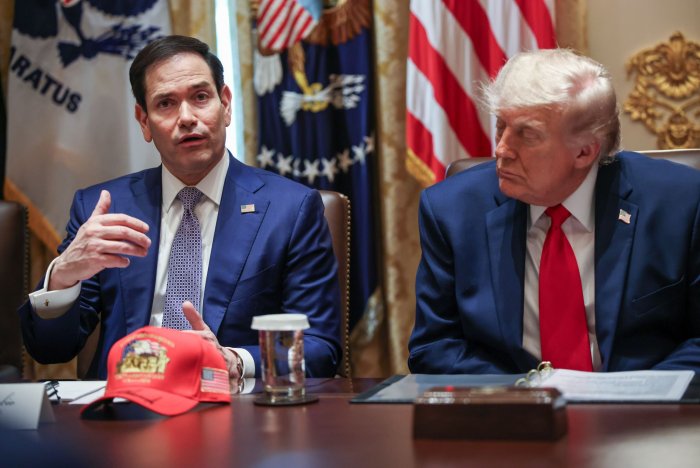
The US “strongly condemns” the attack, Secretary of State Marco Rubio said.
“Antisemitism has no place in this world. Our prayers are with the victims of this horrific attack, the Jewish community, and the people of Australia,” he wrote in a post on X.
United Nations
UN Secretary-General Antonio Guterres said he was “horrified” by the “heinous” shooting.
“I am horrified and condemn today’s heinous deadly attack on Jewish families gathered in Sydney to celebrate Hanukkah,” he posted on X.
“My heart is with the Jewish community worldwide on this first day of Hanukkah.”
Israel
Israeli President Isaac Herzog described the attack as “cruel”.
“Our brothers and sisters in Sydney have been attacked by vile terrorists in a very cruel attack on Jews who went to light the first candle of Hanukkah on Bondi Beach,” Herzog said in a statement.
“Time and again we called on the Australian government to take action and fight against the enormous wave of antisemitism that is plaguing Australian society,” he also said in a post on X.
At least one Israeli national is among those who have been killed in the shooting, according to a statement by Israel’s Foreign Ministry.
It also said that an Israeli national was wounded.
Palestine
The Palestinian Foreign Ministry condemned the shooting and said it “reiterates its firm rejection of all forms of violence, terrorism and extremism, which contradict humanitarian values”.
It expressed its “full solidarity” with “friendly Australia”.
United Kingdom
Keir Starmer, the UK’s prime minister, stated: “Deeply distressing news from Australia. The United Kingdom sends our thoughts and condolences to everyone affected by the appalling attack in Bondi Beach.”
Britain’s King Charles
Charles, the ceremonial head of state for Australia, reacted to the deadly shooting in Bondi Beach.
“My wife and I are appalled and saddened by the most dreadful antisemitic terrorist attack on Jewish people attending Chanukah celebration at Bondi Beach,” the king said in a statement posted on X.
Germany
Friedrich Merz, Germany’s chancellor, said he was shocked by the incident.
“The anti-Semitic attack at Bondi Beach during Hanukkah leaves me utterly shocked. My thoughts are with the victims and their families. This is an attack on our shared values. We must fight anti-Semitism – here in Germany and around the world,” Merz said.
France
Emmanuel Macron, France’s president, said his country would continue to fight against anti-Semitism.
“France extends its thoughts to the victims, the injured and their loved ones. We share the pain of the Australian people and will continue to fight relentlessly against anti-Semitic hatred, which hurts us all wherever it strikes,” Macron said.
The Netherlands
Dick Schoof, the Dutch prime minister, stated: “Shocking and alarming reports from Australia of a horrific attack in Sydney that has left many people dead or injured. I have conveyed my sympathy and support to Prime Minister Albanese on this dark day for Australia.”
Finland
Alexander Stubb, Finland’s president, extended his condolences to Australia’s Jewish population.
“Tonight’s terrorist attack on the Hanukkah celebration at Bondi Beach was shocking and devastating. Our thoughts are with the families and loved ones of the victims as well as the whole Jewish community in Australia,” Stubb said.
Police work on a street after a shooting incident at Bondi Beach in Sydney on December 14, 2025 [David Gray/AFP]
Iran
Tehran denounced the “terror” incident, Ministry of Foreign Affairs spokesman Esmaeil Baghaei said.
“We condemn the violent attack in Sydney, Australia. Terror and killing of human beings, wherever committed, is rejected and condemned,” Baghaei said on X.
European Union
European Commission President Ursula von der Leyen said she was “shocked” by the shooting.
“I send my heartfelt condolences to the families and loved ones of the victims.”
Kaja Kallas, the EU’s foreign policy chief, said the “appalling act of violence against the Jewish community must be unequivocally condemned”.
Norway
Jonas Gahr Store, Norway’s prime minister, said he was “shocked by the horrific attack at Bondi Beach, Australia, during a Jewish Hanukkah event”.
Italy
Giorgia Meloni, Italy’s prime minister, said she “firmly” condemns “any form of violence and anti-Semitism”.
“Italy expresses its sorrow for the victims, stands in solidarity with their relatives, the injured and the Jewish communities, and renews its friendship towards the Australian people,” Meloni said.
Spain
Jose Manuel Albares, Spain’s foreign minister, said he was “horrified” by the attack.
“My solidarity with the victims and their loved ones, with the people and government of Australia. Hate, anti-Semitism and violence have no place in our societies.”
Republic of Ireland
Helen McEntee, Ireland’s foreign minister, said: “I want to express my shock and horror at the anti-Semitic attack on a Jewish community celebrating first day of Hanukkah. … All my thoughts are with the victims and their loved ones and the people of Australia.”
Qatar
Qatar’s Ministry of Foreign Affairs denounced the attack and extended its condolences to the families affected.
“Qatar renews its position condemning violence, terrorism and criminality whatever the motives,” the ministry said.
Turkiye
The Turkish Foreign Ministry “strongly condemned” the attack.
It offered condolences to the families of those who lost their lives and to the Australian people, and wished a speedy recovery to the injured.
“As Turkiye, we reiterate our principled stance against all forms and manifestations of terrorism and our commitment to cooperation in combating this global threat,” the ministry said in a statement.
Lebanon
Lebanese President Joseph Aoun said: “Just as we condemn and reject attacks on any innocent civilian in Gaza, southern Lebanon, or any region of the world, we condemn, by the same principle and duty, what happened in Sydney.
“The responsibility for these tragedies lies with the systems that spread ideas of hatred, extremism, rejection of the other, and the violent pursuit of religious, ethnic, or political monopoly systems … Just as it falls on what fuels those contexts of injustice, oppression, and absence of justice in our current world.”
UK’s chief rabbi
The UK’s chief rabbi has called the shooting an “unspeakable tragedy”.
In a social media post, Ephraim Mirvis, who serves as the head rabbi for the United Hebrew Congregations of the Commonwealth, said: “Absolutely heartbreaking news is emerging of an unspeakable atrocity.”
The rabbi called for people to “join me in praying for everyone affected by this heinous act.”
Australian National Imams Council
A major Australian Muslim organisation condemned the Bondi Beach shooting as a “horrific” act of violence.
“Our hearts, thoughts and prayers are with the victims, their families, and all those who witnessed or were affected by this deeply traumatic attack,” the Australian National Imams Council said in a statement.
“This is a moment for all Australians, including the Australian Muslim community, to stand together in unity, compassion, and solidarity,” it added.
Muslim World League
The Muslim World League said it “strongly condemns the terrorist attack targeting a gathering of Australian citizens in Sydney”.
In a statement, the international non-governmental Islamic organisation quoted its Secretary General Mohammad bin Abdulkarim Al-Issa as saying that Muslim people “reject terrorism and violence in all their forms”.
Saudi Arabia
The Saudi Foreign Ministry said the kingdom condemns the “terrorist attack” in Sydney and reaffirmed its stance against all “forms of violence, terrorism and extremism”.
The kingdom said it wished a speedy recovery to those injured.
United Arab Emirates
The UAE’s Foreign Ministry said the country “strongly condemns such criminal acts” and maintains its consistent rejection of “all forms of violence and terrorism” aimed at undermining security and stability.
“The Ministry also expressed its sincere condolences and sympathy to the families of the victims, and to the government and people of Australia, as well as its wishes for a speedy recovery for the injured,” it said in a statement.
Jordan
Jordan’s Foreign Ministry condemned the attack, with ministry spokesperson Fouad al-Majali affirming the country’s full solidarity with “friendly Australia” and its rejection of “all acts of violence and terrorism” that seek to destabilise security.
New York City Mayor-elect Zohran Mamdani
Mamdani called the attack a “vile act of anti-Semitic terror”.
“Another Jewish community plunged into mourning and loss, a holiday of light so painfully reduced to a day of darkness,” he said. “This attack is merely the latest, most horrifying iteration in a growing pattern of violence targeted at Jewish people across the world.”
Police first responders speak to members of the public at the scene of a mass shooting at Bondi Beach
The Government has issued a travel warning for UK citizens after the terror attack in Australia. At least 12 people have been killed and 29 injured in a terrorist attack targeting a Jewish celebration at Bondi Beach in Sydney.
Two individuals armed with guns opened fire on a crowd in the Archer Park area of Bondi Beach at 6.47pm local time on Sunday, New South Wales Police said. The attack has been declared a terrorist incident targeting a Hanukkah celebration at a park next to the beach on the first day of the Jewish festival of lights, the force confirmed.
New South Wales Premier Chris Minns told a press conference: “At approximately 6.47 this evening, two individuals began firing on crowded a group of families on Bondi Beach at Archer Park. I very sadly need to report that, as of now, there are at least 12 individuals that have been killed.
“This attack was designed to target Sydney’s Jewish community on the first day of Hanukkah, what should have been a night of peace and joy celebrated in that community with families and supporters, has been shattered by this horrifying evil attack.”
Police in the UK are stepping up patrols in Jewish communities. A Met Police spokesman said: “While there is no information to suggest any link between the attack in Sydney and the threat level in London, this morning we are stepping up our police presence, carrying out additional community patrols and engaging with the Jewish community to understand what more we can do in the coming hours and days.
“We always encourage the public to be vigilant at events and in public places. If you see anything suspicious, trust your instincts and tell us.”
Hanukkah, also known as Chanukah, is an eight-day festival of light usually observed in December.
Foreign Secretary Yvette Cooper has told any British people caught up in the Bondi Beach shooting to contact the consulate for support.
In a post on X, she said: “The scenes from Bondi Beach are deeply shocking and distressing. My thoughts are with everyone affected and Australia’s emergency services.
“British nationals should follow local police and authorities’ advice and can contact the British Consulate General Sydney for support.”
The UK Foreign Office site reads: “Terrorists are likely to try to carry out attacks in Australia.” It adds: ” There is a high threat of terrorist attack globally affecting UK interests and British nationals, including from groups and individuals who view the UK and British nationals as targets. Stay aware of your surroundings at all times.”
The Foreign Office said: ” Attacks could be indiscriminate, including in places visited by foreign nationals. You should be vigilant, keep up to date with local media reports and follow the advice of local authorities.”
At least 11 people have been killed and more than two dozen wounded in a mass shooting at Sydney’s Bondi Beach, Australian officials said, adding that one of the suspected attackers was killed while another one was in critical condition.
New South Wales Police Commissioner Mal Lanyon said on Sunday, 29 people were injured, including two police officers, in what he declared a “terrorist incident”.
The shooting occurred at about 6:47pm (07:47 GMT) near the Bondi Pavilion during a Hanukkah celebration attended by more than 1,000 people, Lanyon said.
“I’ve also authorised special powers under Section 5 and Section 6 to ensure that if there is a third offender – and we are currently investigating that at the moment – we will make sure that we prevent any further activity. Section 6 allows us to investigate today’s incident,” he said.
In a televised news conference, Prime Minister Anthony Albanese called the deadly shooting a “targeted attack on Jewish Australians on the first day of Hanukkah”.
Albanese said the “evil” that was unleashed at Bondi Beach is “beyond comprehension”.
“An attack on Jewish Australians is an attack on every Australian, and every Australian tonight will be – like me – devastated by this attack on our way of life.”
One of the world’s most famous beaches, Bondi is typically crowded with locals and tourists, especially on warm weekend evenings.
Video shared on X shows the dramatic moment a bystander disarms a gunman during a mass shooting at Sydney’s Bondi Beach that has left a dozen people dead and injured. The suspect gets away then joins another shooter who continues firing from a bridge.